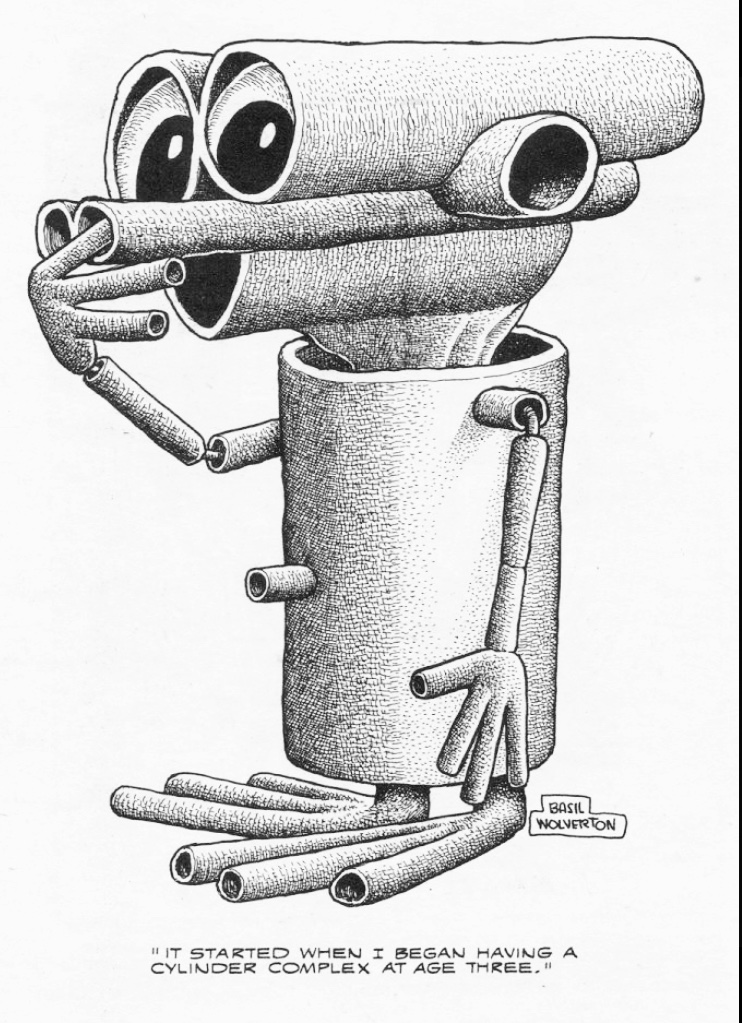
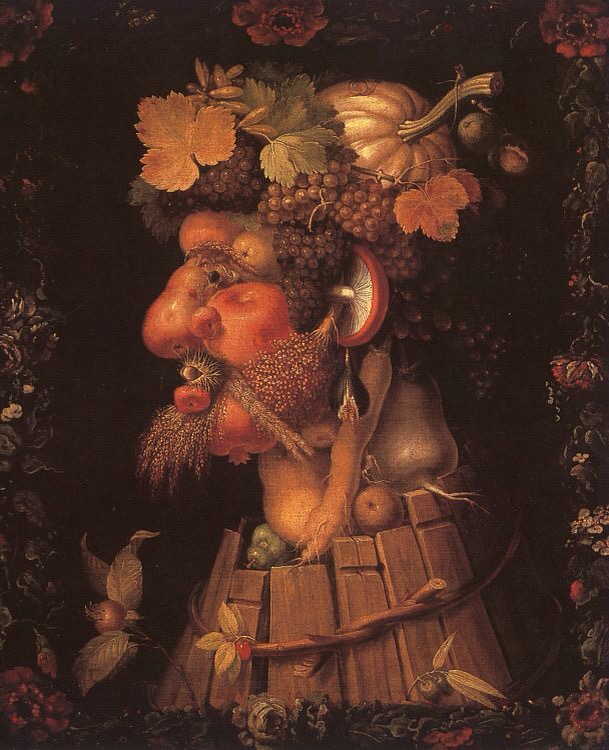
“Biological Supremacy” — Tom Clark

IMG_3225

“minipops 67 [120.2][source field mix],” a new Aphex Twin jam

Dmitry Samarov’s Where To? (Book Acquired, 8.22.2014)

IMG_3209

Where To? A Hack Memoir is Dmitry Samarov’s sequel to Hack.

Publisher Curbside Splendor’s blurb:

Dmitry Samarov’s illustrated memoir captures encounters with drunken passengers, overbearing cops, unreasonable city bureaucracy, his fellow cabdrivers, a few potholes, and other unexpectedly beautiful moments. Accompanied by dozens of Samarov’s original artworks—composed during traffic jams, waits at the airport, and lulls in his shifts—the stories in Where To? provide a street-level view of America from the perspective of an immigrant painter driving a cab for money.

I interviewed Dmitry about his art and his writing a few years ago, and he described Hack:

Hack started as a zine around 2000 as a way for me to make sense of my three years driving a cab in Boston (1993-1997). It was called Hack because the license to operate a taxi in Boston was called a Hackney Carriage License and they used to call cabbies hacks in the old days. It was my first attempt at writing outside of school homework assignments and there really wasn’t much writing, it was mostly pictures. Those pictures were a challenge too because, as I’ve said, I work primarily from direct observation and the only way to do these were from memory. These illustrations were made to work together with the words, not to stand on their own and that has continued to be the case through the whole history of Hack.

I started driving a taxi in Chicago in 2003 and revived Hack as a blog late in 2006. To my surprise, it got notice pretty quickly from some in the local press—Whet Moser, then of theChicago Reader especially—-and my high school pal John Hodgman mentioning it in a magazine didn’t hurt either. That got it noticed by a publicist at University of Chicago Press named Levi Stahl. He bought a copy of my self-published compilation (see the third one down) and eventually pitched Hack as a book to his employers. They published it in October 2011.

Pine Forest II — Gustav Klimt

“Indiscretion” — Guy de Maupassant

“Indiscretion”

by 

Guy de Maupassant

They had loved each other before marriage with a pure and lofty love. They had first met on the sea-shore. He had thought this young girl charming, as she passed by with her light-colored parasol and her dainty dress amid the marine landscape against the horizon. He had loved her, blond and slender, in these surroundings of blue ocean and spacious sky. He could not distinguish the tenderness which this budding woman awoke in him from the vague and powerful emotion which the fresh salt air and the grand scenery of surf and sunshine and waves aroused in his soul.
She, on the other hand, had loved him because he courted her, because he was young, rich, kind, and attentive. She had loved him because it is natural for young girls to love men who whisper sweet nothings to them.
So, for three months, they had lived side by side, and hand in hand. The greeting which they exchanged in the morning before the bath, in the freshness of the morning, or in the evening on the sand, under the stars, in the warmth of a calm night, whispered low, very low, already had the flavor of kisses, though their lips had never met.
Each dreamed of the other at night, each thought of the other on awaking, and, without yet having voiced their sentiments, each longer for the other, body and soul.
After marriage their love descended to earth. It was at first a tireless, sensuous passion, then exalted tenderness composed of tangible poetry, more refined caresses, and new and foolish inventions. Every glance and gesture was an expression of passion. Continue reading ““Indiscretion” — Guy de Maupassant”

Harpies in the Forest of Suicides — Gustave Doré

gustave_dore_dante_the_harpies_wood

Still Life and Street — M.C. Escher

Words block up our path (Nietzsche)

words

Who cares? (Peanuts)

who cares

Lars Iyer’s Wittgenstein Jr (Book Acquired, 8.29.2014)

IMG_3208

Lars Iyer’s latest is now available in hardback from Melville House. Iyer discussed the novel a bit with me when I interviewed him last year:

Wittgenstein Jr? A difficult novel to write, not least because it is my first attempt at pure fiction. I had the safeguard of basing it on the life of the real Wittgenstein, replaying it in a Cambridge University of the present. But I had to dream up characters, narrative incident, narrative colour… Above all, I had to find new rhythms of writing, which fit my version of Wittgenstein himself, and fit his students. Everything is about rhythm!

There’s high despair and low humour – a lot of humour. There’s romance. There’s paranoia. There’s utopianism: dreams of friendship, of politics, of meaning. There’s lyricism. There’s madness. There’s anti-Cambridge-dons invective. There’s dance. There are songs (all novels should have songs). There are long walks in the snow. Allusions to Paul, paraphrases of rabbinical commentaries on the Bible, quotes from Wallace Stevens, from Goethe, lines from Pretty Woman… Dramatic re-enactments of great philosophical deaths…

We could probably maybe add the novel to David Markson’s list from Vanishing Point:

“The Truth about Sancho Panza” — Franz Kafka

IMG_0100

Lucy Hessel Reading — Edouard Vuillard

Reflection — Kit Williams

One might eat the bones as well as the flesh

The Fourteenth Remove

Now must we pack up and be gone from this thicket, bending our course toward the Baytowns; I having nothing to eat by the way this day, but a few crumbs of cake, that an Indian gave my girl the same day we were taken. She gave it me, and I put it in my pocket; there it lay, till it was so moldy (for want of good baking) that one could not tell what it was made of; it fell all to crumbs, and grew so dry and hard, that it was like little flints; and this refreshed me many times, when I was ready to faint. It was in my thoughts when I put it into my mouth, that if ever I returned, I would tell the world what a blessing the Lord gave to such mean food. As we went along they killed a deer, with a young one in her, they gave me a piece of the fawn, and it was so young and tender, that one might eat the bones as well as the flesh, and yet I thought it very good. When night came on we sat down; it rained, but they quickly got up a bark wigwam, where I lay dry that night. I looked out in the morning, and many of them had lain in the rain all night, I saw by their reeking. Thus the Lord dealt mercifully with me many times, and I fared better than many of them. In the morning they took the blood of the deer, and put it into the paunch, and so boiled it. I could eat nothing of that, though they ate it sweetly. And yet they were so nice in other things, that when I had fetched water, and had put the dish I dipped the water with into the kettle of water which I brought, they would say they would knock me down; for they said, it was a sluttish trick.

From A Narrative of the Captivity and Restoration of Mrs. Mary Rowlandson.

Eleanor — Harry Callahan

callahan

Does Werner Herzog ever get bored?

Capture

The Cunning Little Vixen — Maurice Sendak

20140630-154100-56460891.jpg