Night — Ferdinand Hodler

“Indian River” — Wallace Stevens

indian river

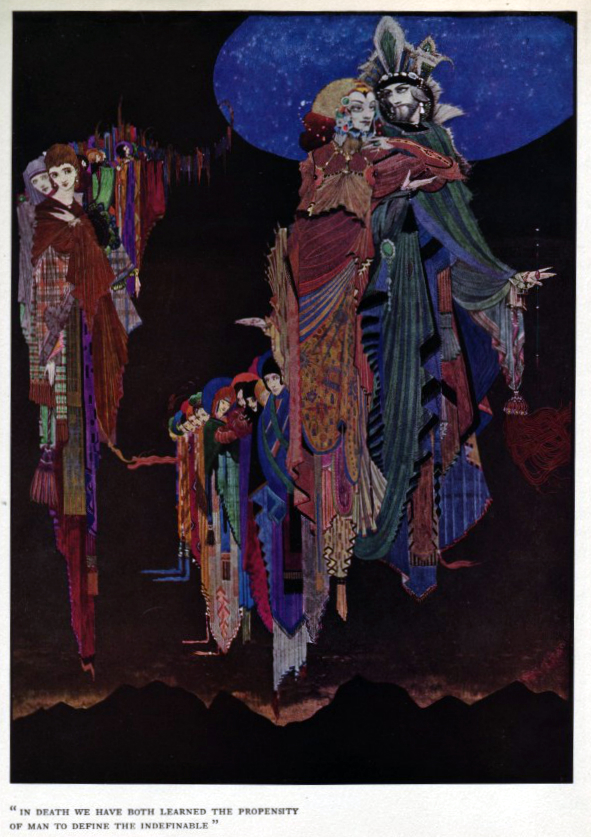
“In death we have both learned the propensity of man to define the indefinable” (Harry Clarke)

clarke

A kind of prayer.

prayer

Courtesan Reading — Kikugawa Eizan

eizan

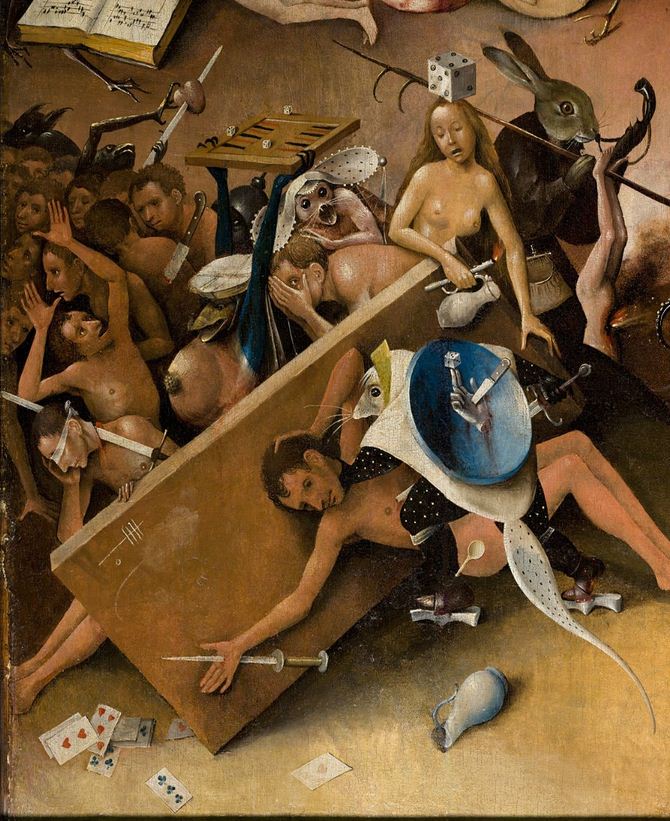
Rabbit, Upper-Right Corner (Bosch)

Don’t let’s do anything.

dont

The Gospel According to St. Matthew — Pier Paolo Pasolini (Full Film)

Golgotha — Edvard Munch

Easter in Shakespeare

From Thomas Firminger Thiselton-Dyer’s indispensable volume Folk-lore in Shakespeare:

Easter. According to a popular superstition, it is considered unlucky to omit wearing new clothes on Easter Day, to which Shakespeare no doubt alludes in “Romeo and Juliet” (iii. 1), when he makes Mercutio ask Benvolio whether he did “not fall out with a tailor for wearing his new doublet before Easter.” In East Yorkshire, on Easter Eve, young folks go to the nearest market-town to buy some new article of dress or personal adornment to wear for the first time on Easter Day, as otherwise they believe that birds—notably rooks or “crakes”—will spoil their clothes. In “Poor Robin’s Almanac” we are told: “At Easter let your clothes be new, Or else be sure you will it rue.” Some think that the custom of “clacking” at Easter—which is not quite obsolete in some counties—is incidentally alluded to in “Measure for Measure” (iii. 2) by Lucio: “his use was, to put a ducat in her clack-dish.” [649] The clack or clap dish was a wooden dish with a movable cover, formerly carried by beggars, which they clacked and clattered to show that it was empty. In this they received the alms. Lepers and other paupers deemed infectious originally used it, that the sound might give warning not to approach too near, and alms be given without touching the person. A popular name for Easter Monday was Black Monday, so called, says Stow, because “in the 34th of Edward III. (1360), the 14th of April, and the morrow after Easter Day, King Edward, with his host, lay before the city of Paris; which day was full dark of mist and hail, and so bitter cold, that many men died on their horses’ backs with the cold. Wherefore unto this day it hath been call’d the Blacke Monday.” Thus, in the “Merchant of Venice” (ii. 5), Launcelot says, “it was not for nothing that my nose fell a-bleeding on Black Monday last at six o’clock i’ the morning.”

Springtime (Bunny Boy) — Norman Rockwell

Ben Jonson’s Egg Wine

From Books and my food: with literary quotations and original recipes for every day of the year by Elisabeth Luther Cary and Annie Maria Jones

Bunny Pit (Perry Bible Fellowship)

PBF077-Bunny_Pit

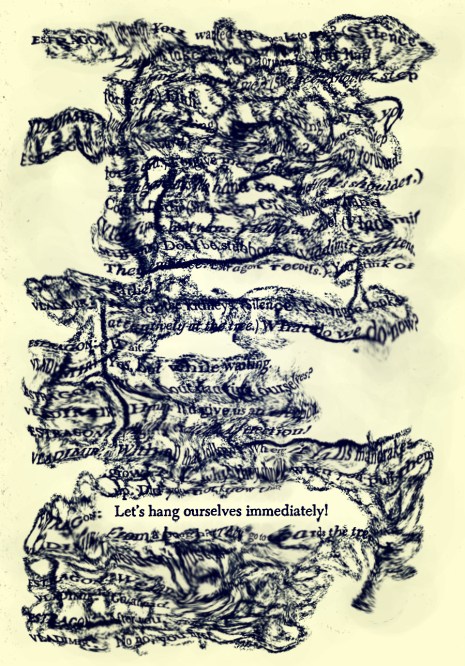
Let’s hang ourselves immediately!

hang

Five Angora Rabbits — Theo van Hoytema

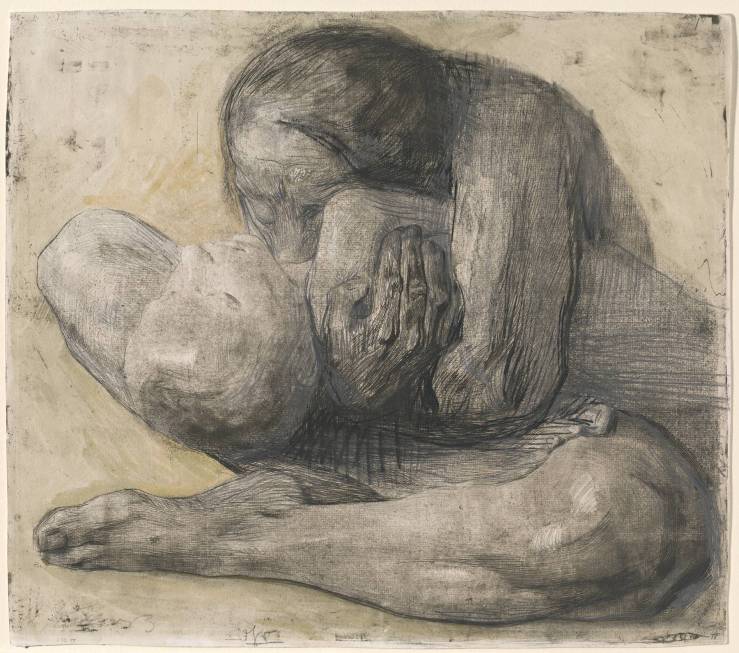
Käthe Kollwitz kept painting poor people (Kollwitz/Vollmann)

kathe-kollwitz4

She worked without reference to the fiery proto-Cubism of those years, the representational, classical past as dead as the Second Reich itself, dead, dead!—as dead as the Tsarist officers who’d now sunk beneath their own weedy mucky parade grounds so that the Party of Lenin and Stalin could march across their moldering faces. Since 1912 she had kept a room on Siegmund-shof for her plastic arts. That was where she would create the mourning woman out of stone. Mostly she carved, etched, and painted in that flat on Weissenbürgerstrasse. Those were the years when the figures in other people’s paintings began to go ever flatter, more garish, more distorted, the colors hurtful to her although she liked some of the galloping calligraphic riders in Kandinsky. Grosz’s desperately angry caricatures, the X-ray bitterness of Otto Dix, not to mention abstract constructivism; she didn’t swim with that tide. Käthe Kollwitz kept painting poor people, starving people (white figures in dark fields, dark chalk on brown Ingres paper), raped women, mothers with dying children, mothers with dead children. In the end she depicted mainly herself, her stricken, simian face thinking and grieving. She too was a mother with a dead child.

From William Vollmann’s Europe Central.

How to Spell the Alphabet — Tauba Auerbach

HowtoSpelltheAlphabet