The Emigrants — Remedios Varo

“The Alchemist” — H.P. Lovecraft

“The Alchemist” by H.P. Lovecraft

High up, crowning the grassy summit of a swelling mound whose sides are wooded near the base with the gnarled trees of the primeval forest, stands the old chateau of my ancestors. For centuries its lofty battlements have frowned down upon the wild and rugged countryside about, serving as a home and stronghold for the proud house whose honoured line is older even than the moss-grown castle walls. These ancient turrets, stained by the storms of generations and crumbling under the slow yet mighty pressure of time, formed in the ages of feudalism one of the most dreaded and formidable fortresses in all France. From its machicolated parapets and mounted battlements Barons, Counts, and even Kings had been defied, yet never had its spacious halls resounded to the footstep of the invader.

But since those glorious years all is changed. A poverty but little above the level of dire want, together with a pride of name that forbids its alleviation by the pursuits of commercial life, have prevented the scions of our line from maintaining their estates in pristine splendour; and the falling stones of the walls, the overgrown vegetation in the parks, the dry and dusty moat, the ill-paved courtyards, and toppling towers without, as well as the sagging floors, the worm-eaten wainscots, and the faded tapestries within, all tell a gloomy tale of fallen grandeur. As the ages passed, first one, then another of the four great turrets were left to ruin, until at last but a single tower housed the sadly reduced descendants of the once mighty lords of the estate.

It was in one of the vast and gloomy chambers of this remaining tower that I, Antoine, last of the unhappy and accursed Comtes de C——, first saw the light of day, ninety long years ago. Within these walls, and amongst the dark and shadowy forests, the wild ravines and grottoes of the hillside below, were spent the first years of my troubled life. My parents I never knew. My father had been killed at the age of thirty-two, a month before I was born, by the fall of a stone somehow dislodged from one of the deserted parapets of the castle, and my mother having died at my birth, my care and education devolved solely upon one remaining servitor, an old and trusted man of considerable intelligence, whose name I remember as Pierre. I was an only child, and the lack of companionship which this fact entailed upon me was augmented by the strange care exercised by my aged guardian in excluding me from the society of the peasant children whose abodes were scattered here and there upon the plains that surround the base of the hill. At the time, Pierre said that this restriction was imposed upon me because my noble birth placed me above association with such plebeian company. Now I know that its real object was to keep from my ears the idle tales of the dread curse upon our line, that were nightly told and magnified by the simple tenantry as they conversed in hushed accents in the glow of their cottage hearths. Continue reading ““The Alchemist” — H.P. Lovecraft”

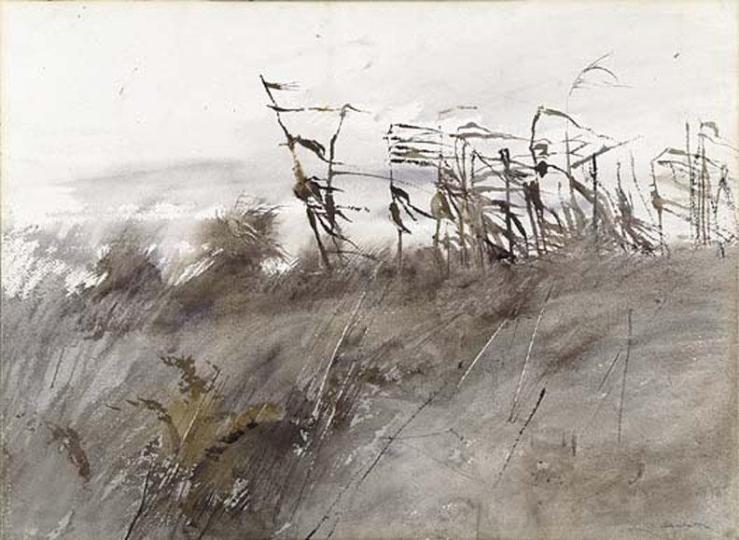
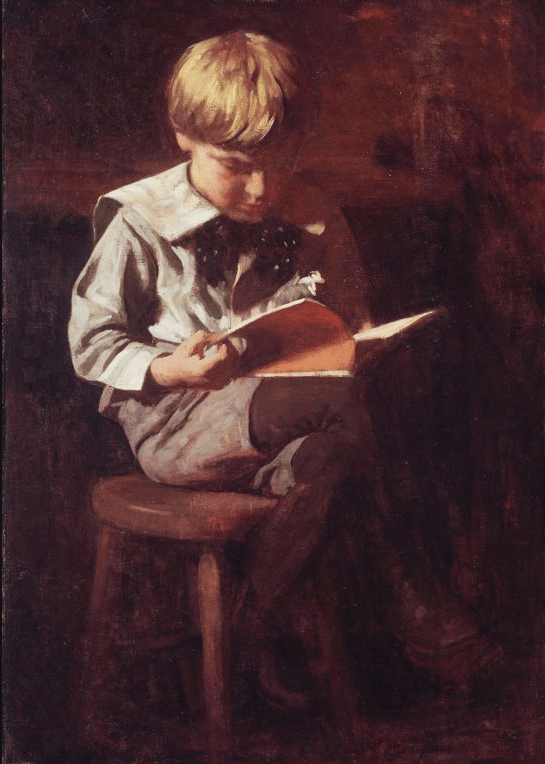
Repose — Bernard Fleetwood-Walker

repose

Hawk on a Ceremonial Stand — Katsushika Hokusai

Nature’s Nightmare, A Study of David Foster Wallace’s Oblivion (Book Acquired, 10.12.2013)

20131013-093333.jpg

I was psyched when Greg Carlisle’s Nature’s Nightmare: Analyzing David Foster Walalce’s Oblivion showed up in the mail. (You might recall Carlisle as the author of Elegant Complexity, a study of Infinite Jest). Blurb from publisher Slideshow Media Group:

Carlisle gives an in-depth narrative analysis of each story: “Mr. Squishy,” “The Soul is Not a Smithy,” “Incarnations of Burned Children,” “Another Pioneer,” “Good Old Neon,” “Philosophy and the Mirror of Nature,” “Oblivion,” and “The Suffering Channel.” Carlisle’s methodical approach walks readers through Wallace’s thematic interests and situates Oblivion in the broader arc of Wallace’s career. Every passage of each story is analyzed in terms of 1) interrelation of narrative form and content, 2) relation of story to the theme of oblivion, 3) recurring thematic motifs in Wallace’s work, and 4) assessment of content in relation to Infinite Jest and The Pale King. The book includes nine charts that illustrate narrative devices Wallace employs throughout the stories. Jason Kottke called Elegant Complexity the reference book for Infinite Jest and now Nature’s Nightmare is the primary reference work for Oblivion.

I read the introduction and first chapter, covering “Mr. Squishy,” this weekend, and Carlisle’s perceptive analysis made me want to reread the story. Of course, I had to scan over the chapter for “Good Old Neon,” maybe my favorite Wallace story and arguably his best piece of writing. Here’s the diagram from that chapter (did I neglect to mention that there are diagrams?):

20131013-093341

Full review forthcoming.


Portrait of Friedrich Nietzsche — Edvard Munch

“The Good Man” (Nietzsche)

goodman

Perseus Rescuing Andromeda — Piero di Cosimo

“A Poison Tree” — William Blake

poison

Stairs — Rein Jansma

Rein Jansma, Stairs

One or the Other — Thomas Bayrle

The Sopranos Debate Christopher Columbus’s Cultural Legacy (NSFW)

Also, Howard Zinn on Columbus Day.

[Editorial note: Yeah. I know. I post this like every Columbus Day. I still like it though].

“I / Must lie” — Dylan Thomas

dt

From Dylan Thomas’s series of pattern poems, Vision and Prayer.

Billy Collins’s Aimless Love (Book Acquired, 10.08.2013)

20131013-093256.jpg

Aimless of Love, new from Billy Collins this month. Blurb:

From the two-term Poet Laureate of the United States Billy Collins comes his first compilation of new and selected poems in twelve years. Aimless Love combines more than fifty new poems with selections from four previous books—Nine Horses, The Trouble with Poetry, Ballistics, and Horoscopes for the Dead. Collins’s unmistakable voice, which brings together plain speech with imaginative surprise, is clearly heard on every page, reminding us how he has managed to enrich the tapestry of contemporary poetry and greatly expand its audience. His work is featured in top literary magazines such as The New YorkerPoetry, and The Atlantic, and he sells out reading venues all across the country. Appearing regularly in The Best American Poetryseries, his poems appeal to readers and live audiences far and wide and have been translated into more than a dozen languages. By turns playful, ironic, and serious, Collins’s poetry captures the nuances of everyday life while leading the reader into zones of inspired wonder. In the poet’s own words, he hopes that his poems “begin in Kansas and end in Oz.” Touching on the themes of love, loss, joy, and poetry itself, these poems showcase the best work of this “poet of plenitude, irony, and Augustan grace” (The New Yorker).

Sample:

20131013-093309.jpg


“New Continent” — Georges Perec

Le Prince Thomas de Savoie Carignano — Anton Van Dyck

Leda and the Swan — Cy Twombly