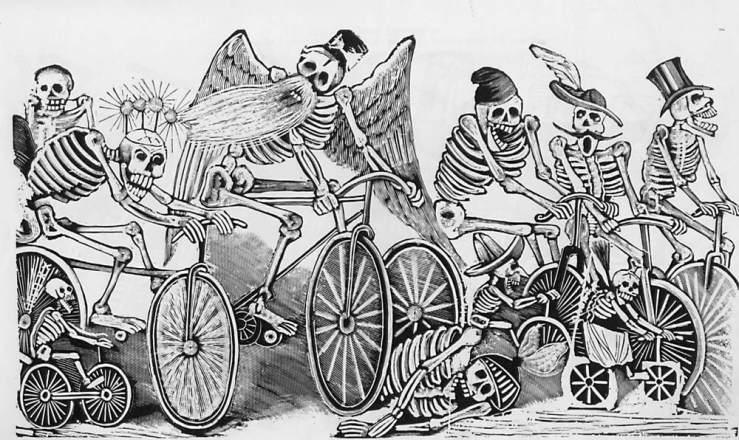
Calavera with Skeleton Cyclists — José Guadalupe Posada

cyclists

(More calaveras).

The Book of Men (Book Acquired, 10.25.2013)

20131027-125451.jpg

The Book of Men  is curated (and not, curiously, edited, which is the word I thought we used, but hey, whatever) by Colum McCann. Publisher’s blurb:

To help launch the literary nonprofit Narrative 4, Esquire asked eighty of the world’s greatest writers to chip in with a story, all with the title, “How to Be a Man.”

The result is The Book of Men, an unflinching investigation into the essence of masculinity.

The Book of Men probes, with the poignant honesty and imagination that only these writers could deliver, the slippery condition of manhood. You will find men striving and searching, learning and failing to learn, triumphing and aspiring; men who are lost and men navigating their way toward redemption. These stories don’t just explore what it is to be a man or how to achieve manliness, but ultimately what it is to be a human—with all of its uncertainty, complexity, clumsiness, and beauty.

With contributions from literary luminaries as diverse as the subjects they capture, and curated by the editors of Esquire, National Book Award winner Colum McCann, and Narrative 4, a global nonprofit devoted to using storytelling as a means to empathy, The Book of Men might not teach you how to negotiate a deal or mix a Manhattan, but it does scratch at that most eternal of questions: What is a man?

Lots of shorties here. Here’s Chimamanda Ngozi Adichie’s entry:

Our Sundays always tasted like peppers that flared hot in the rice and soups and stews. We sat in the kitchen, knees fresh from pews, and watched our houseboy pounding them in pairs. He held the phallic pestle—thump thump thump—while we coughed and spluttered with watery eyes. Nobody tastes them raw, it wasn’t wise. But we did, and then we’d shout and jump to the fridge for ice.
My mom sang an Igbo song about strong women. It wasn’t too trite, but it told of places she didn’t know, streams, goddesses, women who couldn’t read. Women like that would squeeze peppers, I heard, and force them between their daughters’ legs—“so they’ll stop following boys.” But Eros was good for sons. No peppers to curb sons’ paths to manhood.


The Day of the Dead — Diego Rivera

Isle of Shoals — Childe Hassam

Fantastical Fictive Beers

big

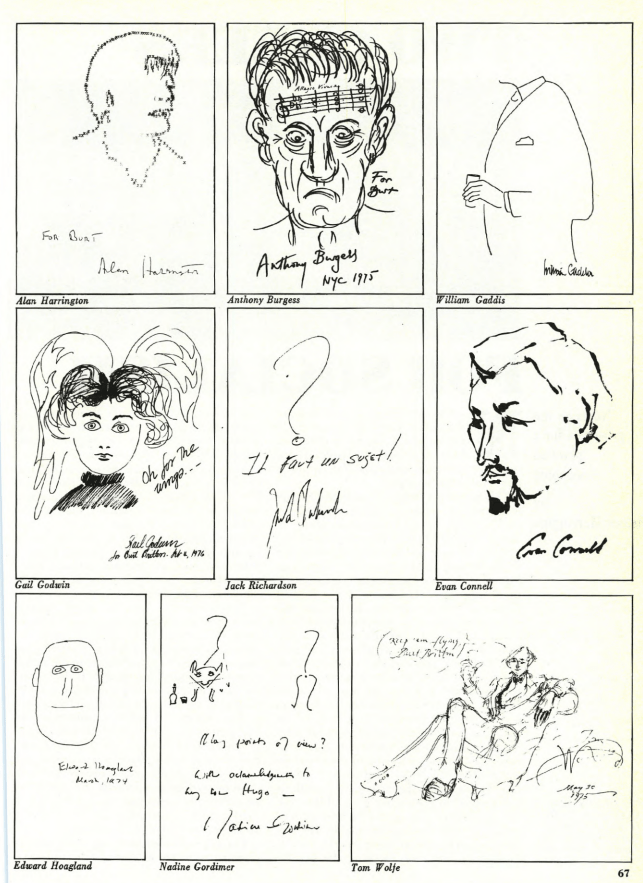
The Self-Portraits of Nine Authors

portraits

Wolf Sausage — Jean-Michel Basquiat

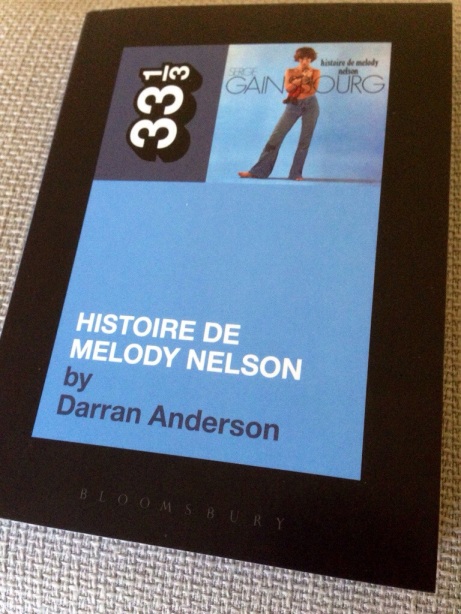
Serge Gainsbourg’s Histoire de Melody Nelson Gets the 33 1/3 Treatment (Book Acquired, 10.23.2013)

20131027-130605.jpg

Things I am a fan of: Serge Gainsbourg, Darran Anderson, and the 33 1/3 series. The 33 1/3 imprint focuses on specific albums, and the results are usually far more engaging than standard biographical fare. Histoire de Melody Nelson is the series’s latest entry; here, Darran Anderson takes on Serge Gainsbourg’s dark, moody, sexy, weird album (listen to it/see it here). I still remember the first time I heard Melody, back in college. Gainsbourg’s track with a breathy, orgasmic Brigitte Bardot “Je t’aime… moi non plus” was pretty much a party standard for my friends and me, and “Bonnie & Clyde” found its way onto plenty of mixtapes in the late ’90s. These bubblegum vamps didn’t really prepare me for Melody. I remember going to a friend’s apartment; he had just bought the album and had it playing on repeat. Dark, spacious, very short and full of strange shifts, from orchestral bombast to odd moments of quiet, the album made me feel weird. Such a weird album is a worthy topic for a book, and Anderson’s entry is a marvelous description and analysis of the artistic, cultural, and philosophical sources that Gainsbourg synthesized in Melody. Check out some of Anderson’s blog entries; they provide a compelling overview of his book:

The Origins of Melody – Nabokov’s Lolita, Barbarella, Boris Vian, Sibelius, Mondo Cane.

The Avant Garde or Nothing – Gainsbourg and Vannier as innovators and a focus on their lost classics.

Initials O.G. – Serge Gainsbourg’s Hip-hop afterlife.

Connan Mockasin – Kiwi Psychedelia and the Ghost of Melody Nelson.

The book’s blurb:

Outside his native France, the view of Serge Gainsbourg was once of a one-hit wonder lothario. This has been slowly replaced by an awareness of how talented and innovative a songwriter he was. Gainsbourg was an eclectic, protean figure; a Dadaist, poète maudit, Pop-Artist, libertine and anti-hero. An icon and iconoclast.

His masterpiece is arguably Histoire de Melody Nelson, an album suite combining many of his signature themes; sex, taboo, provocation, humour, exoticism and ultimately tragedy. Composed and arranged with the great Jean-Claude Vannier, its score of lush cinematic strings and proto-hip hop beats, combined with Serge’s spoken-word poetry, has become remarkably influential across a vast musical spectrum; inspiring soundtracks, indie groups and electronic artists. In recent years, the album’s reputation has grown from cult status to that of a modern classic with the likes of Beck, Portishead, Mike Patton, Air and Pulp paying tribute.

How did the son of Jewish Russian immigrants, hounded during the Nazi Occupation, rise to such notoriety and acclaim, being celebrated by President François Mitterand as “our Baudelaire, our Apollinaire”? How did the early chanson singer evolve into a musical visionary incorporating samples, breakbeats and dub into his music, decades ahead of the curve? And what are the roots and legacy of a concept album about a Rolls Royce, a red-haired Lolita muse, otherworldly mansions, plane crashes and Cargo Cults?

 

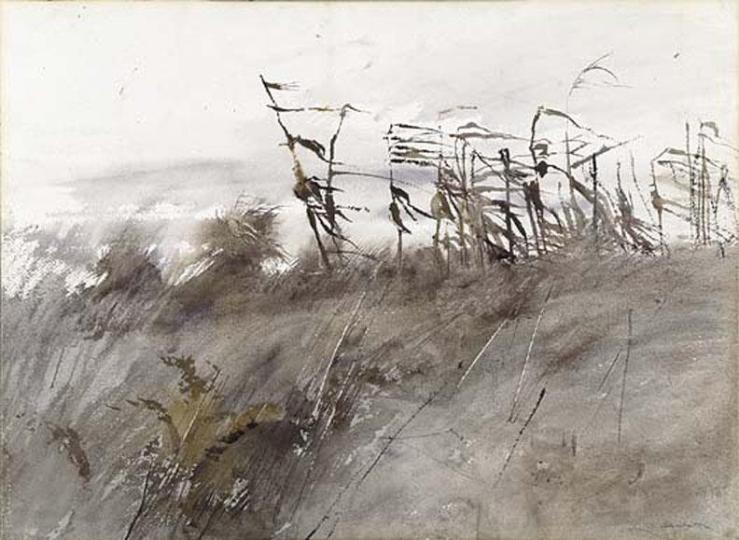
November First — Andrew Wyeth

andrew-wyeth-november-first

“The Non-Entity” — William Carlos Williams

wcw

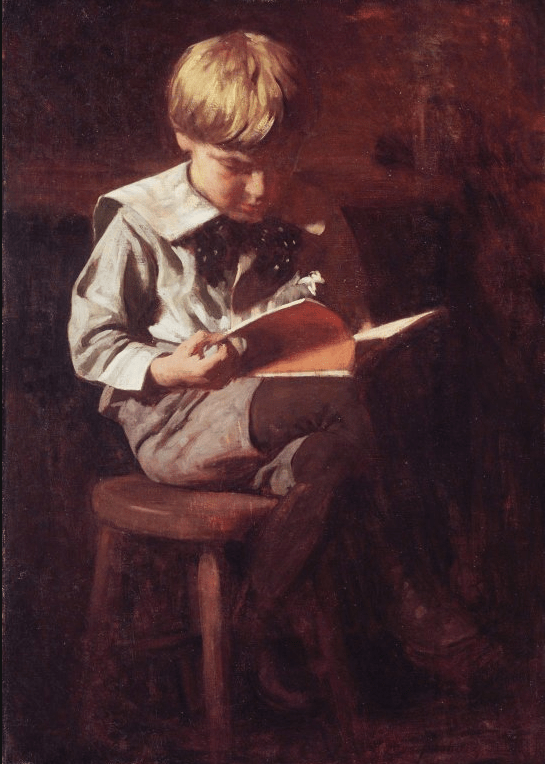
Boy Reading — Thomas Pollock Anshutz

anshutz

Werner Herzog Talks About His Film Nosferatu

nosferatu_1979_poster_02

Watch the full version of Werner Herzog’s Nosferatu (with English subtitles).

Jack O’ Lanterns 2013

20131031-070249.jpg

20131031-070307.jpg

William Burroughs and His Hatchet-Carved Jack O’ Lantern

burroughs jack o lantern

(Via).

“…a face worthy of a murderer” (From Hell)

A page from Alan Moore and Eddie Campbell’s outstanding graphic novel From Hell, an encyclopedic account of the Jack the Ripper murders. In this scene, our evil protagonist Dr. Gull undergoes a transcendent experience, and appears to William Blake, inspiring The Ghost of a Flea. 

Blake’s The Head of the Ghost of a Flea

I pulled the image of From Hell from this fantastic detailed review by Miguel at St. Orberose (far better than my own my own meager tackle at writing about the book). Plenty more images there, along with a comprehensive analysis of (what I take to be) Moore’s best work.

“All the wild witches” (Yeats)

yeats

Halloween — Grandma Moses