Crow Lodge of Twenty-five Buffalo Skins — George Catlin

“It’s all about the light, you control the light, you control the effect, capisci?” (Pynchon’s Against the Day)

Luca Zombini liked to explain the business, at various times, to those of his children he deluded himself were eager to learn, even someday carry on, the act. “Those who sneer at us, and sneer at themselves for paying to let us fool them, what they never see is the yearning. If it was religious, a yearning after God—no one would dream of disrespecting that. But because this is a yearning only after miracle, only to contradict the given world, they hold it in contempt.

“Remember, God didn’t say, ‘I’m gonna make light now,’ he said, ‘Let there be light.’ His first act was to allow light in to what had been Nothing. Like God, you also have to always work with the light, make it do only what you want it to.”

He unrolled an expanse of absolute fluid blackness. “Magician-grade velvet, perfect absorber of light. Imported from Italy. Very expensive. Dyed, sheared, and brushed by hand many, many times. Finished with a secret method of applying platinum black. Factory inspections are merciless. Same as mirrors, only opposite. The perfect mirror must send back everything, same amount of light, same colors exactly—but perfect velvet must let nothing escape, must hold on to every last little drop of light that falls on it. Because if the smallest amount of light you can think of bounces off one single thread, the whole act—affondato, vero? It’s all about the light, you control the light, you control the effect, capisci?”

I think we get a fairly concise illustration of some of Against the Day’s major themes here: light, invisibility, perception, control, etc.


Two Fun Stanley Kubrick Coloring Pages

cwoshining

(Via/about).

Here is Not the Place for Nostalgia — Ged Quinn

The Day of Judgment — Jean-Leon Gerome

Check Out a New Digital Exhibit on William H. Gass

gass

Very cool site: William H. Gass: The Soul Inside the Sentence. Where you can–

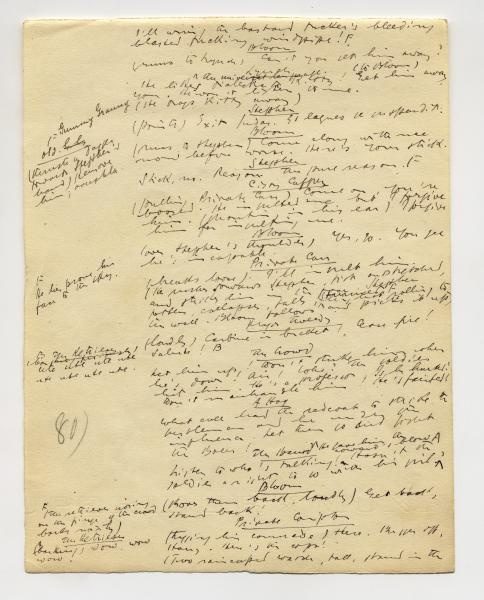
Explore drafts of published and unpublished writings, recordings of his interviews and readings, photographs and scans of important documents and objects that have shaped his life. You will also find an essay, “My Memories of the Service,” which Gass wrote specifically for this digital exhibit.

Lots of great photos, including lots of pics of Gass’s book shelves, which is the sort of thing you might like to nerd out over (I did, anyway), and all the slides Gass used to accompany his “The Surface of the City” lecture. The site even shares a digital gallery of a scrapbook of reviews, articles, ads, and photos that Gass created in the 1950s and ’60s. Also: report cards, a map Gass drew of places he went in the navy, letters, poems, essays, all kinds of manuscripts, etc. etc. etc.

gass2


A Voyage to the Moon — Gustave Doré

Tale of Tales — Yuriy Norshteyn

July — Fairfield Porter

“Love Letter Written in a Burning Building” — Anne Sexton

“Love Letter Written in a Burning Building” by Anne Sexton—

I am in a crate, the crate that was ours,
full of white shirts and salad greens,
the icebox knocking at our delectable knocks,
and I wore movies in my eyes,
and you wore eggs in your tunnel,
and we played sheets, sheets, sheets
all day, even in the bathtub like lunatics.
But today I set the bed afire
and smoke is filling the room,
it is getting hot enough for the walls to melt,
and the icebox, a gluey white tooth.

I have on a mask in order to write my last words,
and they are just for you, and I will place them
in the icebox saved for vodka and tomatoes,
and perhaps they will last.
The dog will not. Her spots will fall off.
The old letters will melt into a black bee.
The night gowns are already shredding
into paper, the yellow, the red, the purple.
The bed – well, the sheets have turned to gold –
hard, hard gold, and the mattress
is being kissed into a stone.

As for me, my dearest Foxxy,
my poems to you may or may not reach the icebox
and its hopeful eternity,
for isn’t yours enough?
The one where you name
my name right out in P.R.?
If my toes weren’t yielding to pitch
I’d tell the whole story –
not just the sheet story
but the belly-button story,
the pried-eyelid story,
the whiskey-sour-of-the-nipple story –
and shovel back our love where it belonged.

Despite my asbestos gloves,
the cough is filling me with black and a red powder seeps through my
veins,
our little crate goes down so publicly
and without meaning it, you see, meaning a solo act,
a cremation of the love,
but instead we seem to be going down right in the middle of a Russian
street,
the flames making the sound of
the horse being beaten and beaten,
the whip is adoring its human triumph
while the flies wait, blow by blow,
straight from United Fruit, Inc.

A Follower of Grolier — Julian Alden Weir

Illustrated Borges Manuscript

borges

(Via).

Orson Welles and Peter O’Toole on Hamlet

Don Quixote — Katsuhiro Otomo

quixote katsuhiro otomo

Gordon Lish on John the Posthumous (Book Acquired, 6.26.2013)

20130630-091606.jpg

Some folks I know and whose taste I trust told me about Jason Schwartz, whose new novel (“novel” is not the right word) John the Posthumous is forthcoming from OR Books (the final cover art, which you can see via OR’s site, is much nicer than the reader copy above).

The book bears blurbs from Sam Lipsyte and Ben Marcus and Gordon Lish—so that should be enough for you. (It was enough to pique me).

What is it about? Violence. Cuckoldry. Murder. Satan. Ritual. Animals. Beds. Etc. I don’t know. I’m a little over half way through, and I keep rereading it compulsively, rereading the sentences. Schwartz’s prose approaches a dark, poetic logic of substitutions and omissions that is probably best left unexplicated, but I’ll do a write up after the Fourth of July anyway. Here’s Lish’s praise (a short story in itself):

 20130630-091646

And two samples from the book (context is unimportant; or, rather everything—that is, the context of the entire book, in that the book is its own idiom, if you follow (or don’t)):

20130630-091623.jpg

20130630-091641.jpg


In Heaven Everything Is Fine — Ged Quinn

(Via/more).

“The Goblins” — William Gass

Capture