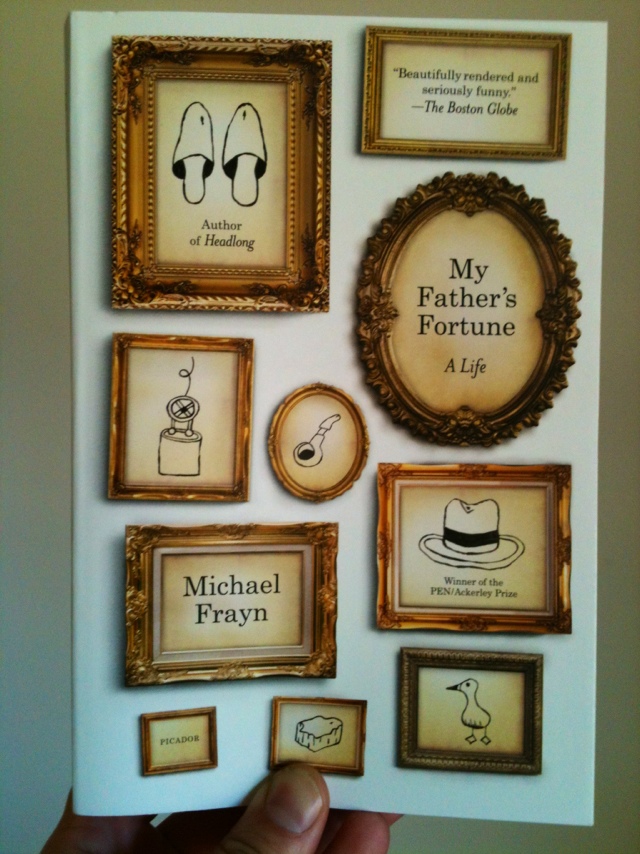
Book Acquired, 12.12.2011

20111214-204653.jpg

Michael Frayn’s memoir My Father’s Fortune. Publisher Picador’s (trade paperback) description:

Winner of the PEN/Ackerley Prize

Award-winning playwright and novelist Michael Frayn “makes the family memoir his own” (The Daily Telegraph) as he tells the story of his father, Tom Frayn. A clever lad, an asbestos salesman with a winning smile and a racetrack vocabulary, Tom Frayn emerged undaunted from a childhood spent in two rooms with six other people, all of them deaf. And undaunted he stayed, through German rockets, feckless in-laws, and his own increasing deafness; through the setback of a son as bafflingly slow-witted as the father was quick on his feet; through the shockingly sudden tragedy that darkened his life. As Peter Kemp wrote in The Sunday Times (London), “Frayn has never written with more searching brilliance than in his quest for his past.”

Costanza’s Christmas Card

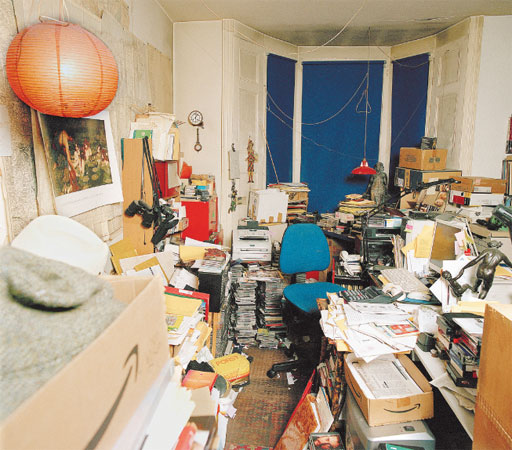
“Here You See Some of the Clutter but You Can’t See the Danger” — Russell Hoban’s Writing Room

(From The Guardian’s Writer’s Rooms series)

RIP Russell Hoban

Russell Hoban, author of Riddley Walker and other cult classics, died last night at the age of 86. The first “review” I ever wrote on this site was for Riddley Walker (the review is so bad that I won’t link to it out of shame); that was back when Biblioklept’s primary mission was to document stolen books. I stole the book from a dear friend and subsequently lent it to a student who never returned it. Oh, the circle of theft! Riddley Walker is the sort of book that begs to be stolen (or never returned, or passed on to another). It’s an apocalyptic Huckleberry Finn, a coming of age story set against the backdrop of a new dark age. Riddley Walker is deeply weird and strongly strange; I don’t know what a “cult” novel is, but I know of no better example.

Riddley Walker might be Hoban’s most famous work (aside from his children’s works, including the Frances the Badger series), but readers who stopped there would do well to pick up some of his earlier books. The Lion of Boaz-Jachin and Jachin-Boaz is a fantasy piece about fathers, sons, and map-making; Kleinzheit, a baffling schizophrenic novel, explores death and illness in an animistic world; Pilgermann plumbs the medieval intersection of Judaism, Christianity, and Islam, narrated through the eyes of the ghost of a castrated European Jew on a bizarre holy quest—it’s like Hieronymous Bosch on LSD.

The Guardian has a short but lucid biographical obit for Hoban, which ends with Hoban contemplating how death might affect his career:

Death, Hoban predicted in 2002, would “be a good career move”. “People will say, ‘yes, Hoban, he seems an interesting writer, let’s look at him again’,” he said.

The grim humor there was always part of Hoban’s program, and I hope that he’s right: I hope that folks who haven’t heard of Hoban will pick up Riddley Walker, and perhaps those who haven’t read beyond that book will make time to read another.

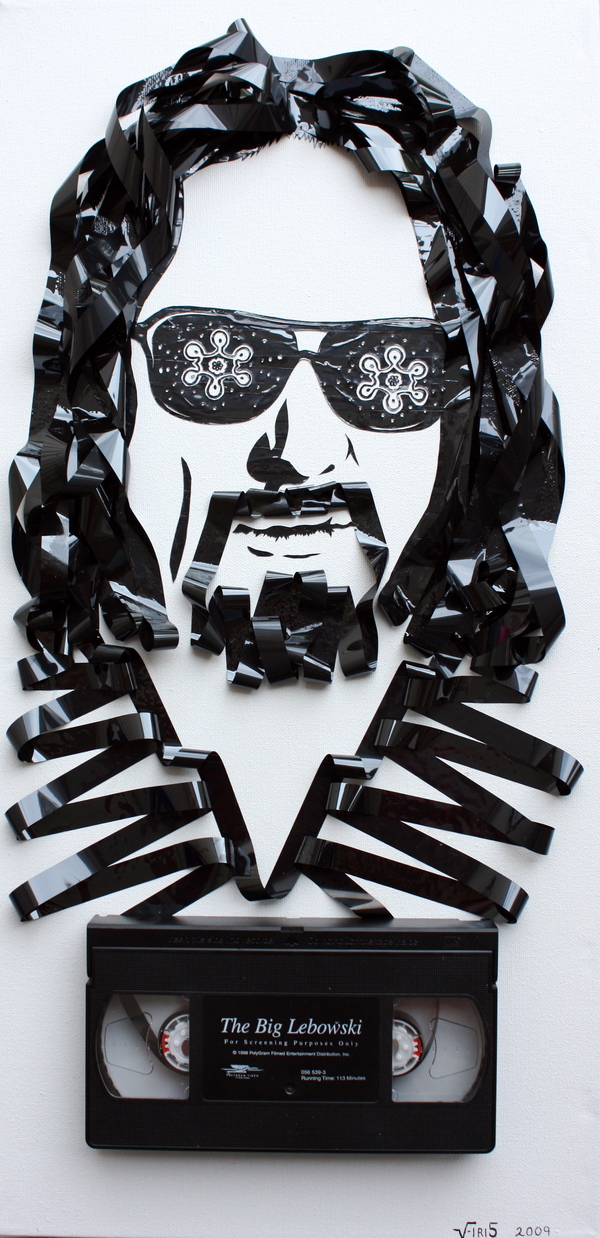
Analog Lebowski

The Dude Abides -- Erika Iris Simmons

(I know we all saw this a few years ago, but damn, I just love it).

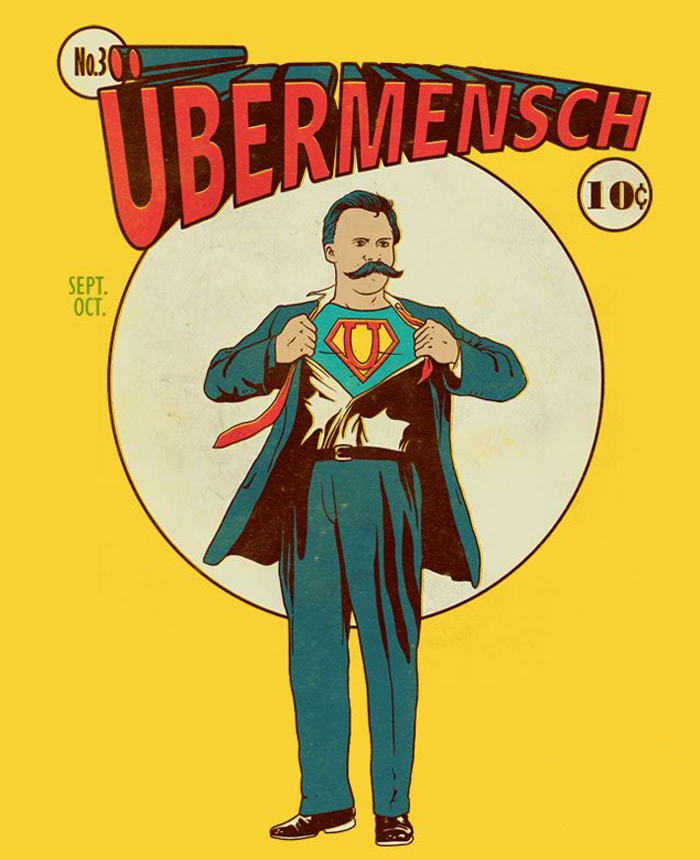
Übermensch Comics #3

Read Nathaniel Hawthorne’s Short Story “The Christmas Banquet”

“The Christmas Banquet,” a tale from Nathaniel Hawthorne (from Mosses from an Old Manse; it might be, like, an allegory or something):

“I HAVE HERE attempted,” said Roderick, unfolding a few sheets of manuscript, as he sat with Rosina and the sculptor in the summer-house–“I have attempted to seize hold of a personage who glides past me, occasionally, in my walk through life. My former sad experience, as you know, has gifted me with some degree of insight into the gloomy mysteries of the human heart, through which I have wandered like one astray in a dark cavern, with his torch fast flickering to extinction. But this man–this class of men–is a hopeless puzzle.”

“Well, but propound him,” said the sculptor. “Let us have an idea of him, to begin with.”

“Why, indeed,” replied Roderick, “he is such a being as I could conceive you to carve out of marble, and some yet unrealized perfection of human science to endow with an exquisite mockery of intellect; but still there lacks the last inestimable touch of a divine Creator. He looks like a man, and, perchance, like a better specimen of man than you ordinarily meet. You might esteem him wise–he is capable of cultivation and refinement, and has at least an external conscience–but the demands that spirit makes upon spirit, are precisely those to which he cannot respond. When, at last, you come close to him, you find him chill and unsubstantial–a mere vapor.”

Continue reading “Read Nathaniel Hawthorne’s Short Story “The Christmas Banquet””

“Fleck the Walls” — Ren & Stimpy

“Letter from Santa Claus” — Mark Twain

Hey, didn’t we just accuse Mark Twain of dissing Santa? Dude had a heart, of course. Here’s a letter he ghost wrote for St. Nick to his beloved daughter Susie:

Palace of St. Nicholas
In the Moon
Christmas Morning

MY DEAR SUSIE CLEMENS:

I have received and read all the letters which you and your little sister have written me by the hand of your mother and your nurses; I have also read those which you little people have written me with your own hands–for although you did not use any characters that are in grown peoples’ alphabet, you used the characters that all children in all lands on earth and in the twinkling stars use; and as all my subjects in the moon are children and use no character but that, you will easily understand that I can read your and your baby sister’s jagged and fantastic marks without any trouble at all. But I had trouble with those letters which you dictated through your mother and the nurses, for I am a foreigner and cannot read English writing well. You will find that I made no mistakes about the things which you and the baby ordered in your own letters–I went down your chimney at midnight when you were asleep and delivered them all myself–and kissed both of you, too, because you are good children, well trained, nice mannered, and about the most obedient little people I ever saw. But in the letter which you dictated there were some words which I could not make out for certain, and one or two small orders which I could not fill because we ran out of stock. Our last lot of kitchen furniture for dolls has just gone to a very poor little child in the North Star away up, in the cold country above the Big Dipper. Your mama can show you that star and you will say: “Little Snow Flake,” (for that is the child’s name) “I’m glad you got that furniture, for you need it more than I.” That is, you must write that, with your own hand, and Snow Flake will write you an answer. If you only spoke it she wouldn’t hear you. Make your letter light and thin, for the distance is great and the postage very heavy.

There was a word or two in your mama’s letter which I couldn’t be certain of. I took it to be “a trunk full of doll’s clothes.” Is that it? I will call at your kitchen door about nine o’clock this morning to inquire. But I must not see anybody and I must not speak to anybody but you. When the kitchen doorbell rings, George must be blindfolded and sent to open the door. Then he must go back to the dining room or the china closet and take the cook with him. You must tell George he must walk on tiptoe and not speak–otherwise he will die someday. Then you must go up to the nursery and stand on a chair or the nurse’s bed and put your car to the speaking tube that leads down to the kitchen and when I whistle through it you must speak in the tube and say, “Welcome, Santa Claus!” Then I will ask whether it was a trunk you ordered or not. If you say it was, I shall ask you what color you want the trunk to be. Your mama will help you to name a nice color and then you must tell me every single thing in detail which you want the trunk to contain. Then when I say “Good-by and a merry Christmas to my little Susie Clemens,” you must say “Good-by, good old Santa Claus, I thank you very much and please tell that little Snow Flake I will look at her star tonight and she must look down here–I will be right in the west bay window; and every fine night I will look at her star and say, ‘I know somebody up there and like her, too.’ ” Then you must go down into the library and make George close all the doors that open into the main hall, and everybody must keep still for a little while. I will go to the moon and get those things and in a few minutes I will come down the chimney that belongs to the fireplace that is in the hall–if it is a trunk you want–because I couldn’t get such a thing as a trunk down the nursery chimney, you know.

People may talk if they want, until they hear my footsteps in the hall. Then you tell them to keep quiet a little while till I go back up the chimney. Maybe you will not hear my footsteps at all–so you may go now and then and peep through the dining-room doors, and by and by you will see that thing which you want, right under the piano in the drawing room-for I shall put it there. If I should leave any snow in the hall, you must tell George to sweep it into the fireplace, for I haven’t time to do such things. George must not use a broom, but a rag–else he will die someday. You must watch George and not let him run into danger. If my boot should leave a stain on the marble, George must not holystone it away. Leave it there always in memory of my visit; and whenever you look at it or show it to anybody you must let it remind you to be a good little girl. Whenever you are naughty and somebody points to that mark which your good old Santa Claus’s boot made on the marble, what will you say, little sweetheart?

Good-by for a few minutes, till I come down to the world and ring the kitchen doorbell.

Your loving SANTA CLAUS
Whom people sometimes call “The Man in the Moon”

“27 Sounds Manufactured in a Kitchen” — John Cage

Mark Twain Disses Santa Claus

In Chapter 31 of his travel piece A Tramp Abroad, Mark Twain wonders (in typical cynical fashion) why dear ole Saint Nick, who abandoned his kids, should deserve a loving reputation:

Presently we passed the place where a man of better odor was born. This was the children’s friend, Santa Claus, or St. Nicholas. There are some unaccountable reputations in the world. This saint’s is an instance. He has ranked for ages as the peculiar friend of children, yet it appears he was not much of a friend to his own. He had ten of them, and when fifty years old he left them, and sought out as dismal a refuge from the world as possible, and became a hermit in order that he might reflect upon pious themes without being disturbed by the joyous and other noises from the nursery, doubtless.

Judging by Pilate and St. Nicholas, there exists no rule for the construction of hermits; they seem made out of all kinds of material. But Pilate attended to the matter of expiating his sin while he was alive, whereas St. Nicholas will probably have to go on climbing down sooty chimneys, Christmas eve, forever, and conferring kindness on other people’s children, to make up for deserting his own. His bones are kept in a church in a village (Sachseln) which we visited, and are naturally held in great reverence. His portrait is common in the farmhouses of the region, but is believed by many to be but an indifferent likeness. During his hermit life, according to legend, he partook of the bread and wine of the communion once a month, but all the rest of the month he fasted.

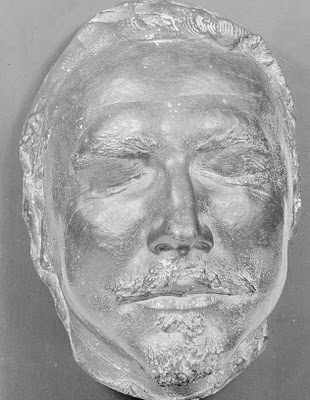
Ezra Pound’s Death Mask

(Yes, yes; we know it’s a life mask. We use the term “death mask” for editorial reasons).

“Brave New World Is Our Idea of Heaven” — A Passage from Michel Houellebecq’s Novel The Elementary Particles

The following passage from Michel Houellebecq’s novel The Elementary Particles is part of a dialog between half brothers Michel and Bruno. Otherwise, context unimportant:

When Bruno arrived at about nine o’clock, he had already had a couple of drinks and was eager to talk philosophy. “I’ve always been struck by how accurate Huxley was in Brave New World,” he began before he’d even sat down. “It’s phenomenal when you think he wrote it in 1932. Everything that’s happened since simply brings Western society closer to the social model he described. Control of reproduction is more precise and eventually will be completely disassociated from sex altogether, and procreation will take place in tightly guarded laboratories where perfect genetic conditions are ensured. Once that happens, any sense of family, of father-son bonds, will disappear. Pharmaceutical companies will break down the distinction between youth and old age. In Huxley’s world, a sixty-year-old man is as healthy as a man of twenty, looks as young and has the same desires. When we get to the point that life can’t be prolonged any further, we’ll be killed off by voluntary euthanasia; quick, discreet, emotionless. The society Huxley describes in Brave New World is happy; tragedy and extremes of human emotion have disappeared. Sexual liberation is total—nothing stands in the way of instant gratification. Oh, there are little moments of depression, of sadness or doubt, but they’re easily dealt with using advances in anti-depressants and tranquilizers. ‘Once cubic centimeter cures ten gloomy sentiments.’ This is exactly the sort of world we’re trying to create, the world we want to live in.

“Oh, I know, I know,” Bruno went on, waving his hand as if to dismiss an objection Michel had not voiced. “Everyone says Brave New World is supposed to be a totalitarian nightmare, a vicious indictment of society, but that’s hypocritical bullshit. Brave New World is our idea of heaven: genetic manipulation, sexual liberation, the war against aging, the leisure society. This is precisely the world that we have tried—and so far failed—to create.”

“Sybil, You Were Raped by Santa Claus” (Ellison’s Invisible Man)

From Ralph Ellison’s Invisible Man, a shocking, weird, gross, Christmasy reference near the end of the book. The context is that, in 1950s America, Sibyl, a white woman, wants the narrator, a black man, to fulfill her rape fantasy. Page 522 of my edition–

“A Nice, Modest, Ethical Suicide” — Slavoj Žižek

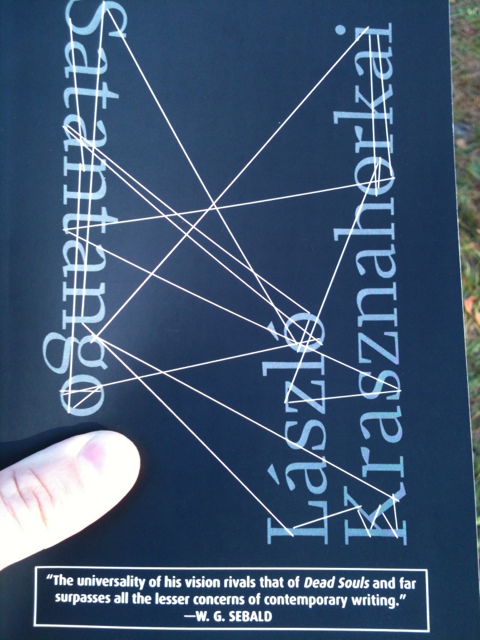
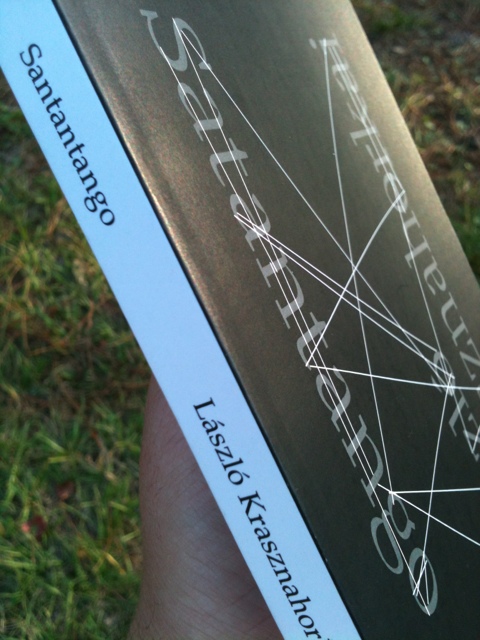
Book Acquired, 12.06.2011 — Or, I Photograph My Reader’s Copy of Satantango in the Cheap Showiness of Nature

20111208-172836.jpg

Damn. Check this out. László Krasznahorkai’s novel Satantango, the title of which does not apparently include diacritical marks in its new (first published!) English translation.

Publisher New Direction’s description:

Already famous as the inspiration for the filmmaker Béla Tarr’s six-hour masterpiece, Satantango is proof, as the spellbinding, bleak, and hauntingly beautiful book has it, that “the devil has all the good times.” The story of Satantango, spread over a couple of days of endless rain, focuses on the dozen remaining inhabitants of an unnamed isolated hamlet: failures stuck in the middle of nowhere. Schemes, crimes, infidelities, hopes of escape, and above all trust and its constant betrayal are Krasznahorkai’s meat. “At the center of Satantango,” George Szirtes has said, “is the eponymous drunken dance, referred to here sometimes as a tango and sometimes as a csardas. It takes place at the local inn where everyone is drunk. . . . Their world is rough and ready, lost somewhere between the comic and tragic, in one small insignificant corner of the cosmos. Theirs is the dance of death.” “You know,” Mrs. Schmidt, a pivotal character, tipsily confides, “dance is my one weakness.”

New Directions has a fantastic record when it comes to lit in translation, and Satantango has been long anticipated by English-reading audiences, due in large part to Béla Tarr’s movie (which is more like seven and a half hours, which I meant to watch this summer but couldn’t because I want to watch it with no interruptions, but I have kids and a wife, so, hey).

I got into it a bit last night, and, I don’t know if it’s just the advance reader copy I got or what, but there are no paragraph breaks, which is a grueling rhetorical technique, a big dare to readers, really (see also: W.G. Sebald’s Austerlitz (note: Sebald blurbs Satantango)). The advance reader copy also has a delightful typo on the spine, one that makes the book sound like, I dunno, if Santana made a tango record. Or maybe Santa n’ Tango for ever (Cash will no doubt be jealous). More to come.
20111208-172845.jpg

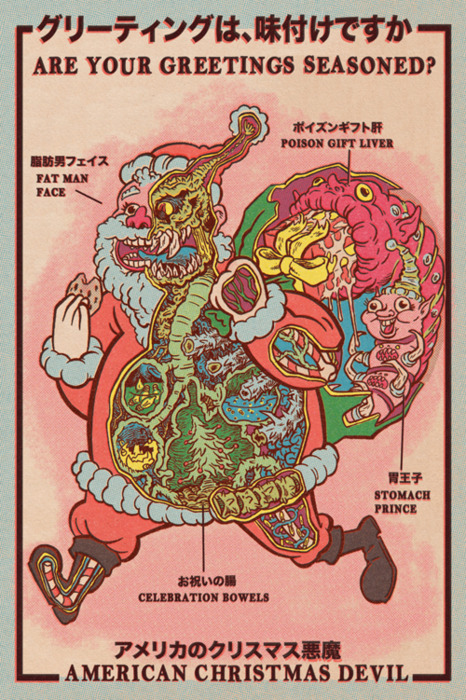
American Christmas Devil: Celebration Bowels, Fat Man Face, Poison Gift Liver, and Stomach Prince