“Funeral Home” — Daniel Johnston

RIP Daniel Johnston, 1961-2019

I saw only one tower standing to the south, and that one ringed with fire | Denis Johnson

At the moment, I was heading anywhere at all for breakfast, but when I heard the desk clerk’s radio playing news that an aircraft, I assumed a sightseeing plane, had struck Tower Two of the World Trade Center, I decided to jump on the number 3 subway half a block west, and go have a look.

As I headed toward Eighth Avenue I tried calling Mark Ahearn about lunch, but my cellphone only hammered out a rapid-fire beep. Please don’t ask me how this can be true: I traveled through the busy lobby and walked for half a long block on a crowded Manhattan street and then boarded the World Trade Center subway completely unaware that I was participating in a citywide disaster, and moving toward its center.

The World Trade Center station came a few stops south of Twenty-Third Street, but we didn’t get there. After Christopher Street the train halted in the tunnel and waited, humming. It gave a screech, lurched backward slightly, and stopped again. Somehow the general news had infiltrated the sealed subterranean environment that something historically enormous was happening very nearby, and it got quiet in our compartment, and almost everybody entered into a small, desperate battle with a worthless cellphone. The train moved forward and gained speed, but began braking long before Houston Street, the next station, where it halted with several rear cars sticking out behind into the tunnel. For a tense minute, whoever spoke only whispered. Then came a shout—“Tell us what’s going on!” and others raised the same cry until we heard the conductor’s PA saying something about the tracks, the tracks…“Due to the catastrophe, this train will not go farther. Please exit out the forward cars onto the platform. Do not go onto the tracks.” We were all on our feet, maneuvering selfishly, angling for the doors. But the doors didn’t open. The engine stopped. “Open the doors! Open the doors!” The engine started. A man shouted, “Just everybody stand still!” People from the car behind had pried their way into ours, and somebody almost went down. A woman said, “Stop that, you fool!” A man in front of me pushed a teenage boy beside him. With the meat of his fist he began beating the back of the boy’s head. And I jumped into the fray, didn’t you, Harrington, like a monkey, yes you did, and got yourself an elbow in the eye. The doors to the compartment flew open and people clambered out onto the station’s platform, where a dreadlocked man in a crimson athletic suit jumped up and down on a bench as if it were a trampoline, screaming “God, see what we’re doing to each other down here.” When I came up into the street, dizzy and one-eyed, I couldn’t get my bearings. I saw only one tower standing to the south, and that one ringed with fire. I asked a man nearby—“Where are we? I can’t see the other tower.” He said, “It fell” and I said, “No it didn’t.” He didn’t argue. We stood in the middle of the street with thousands of other people, all of us motionless, like a frozen parade, all silent. I began to believe the man. We watched the flames spreading through the building’s upper stories over the course of about twenty minutes, and then the eighteen-hundred-foot structure seemed to curtsy and dip left, and then it went down.

I turned around and looked at the people behind me. I saw shocked laughter, weeping, horror, bewilderment. The young man next to me bawled at the top of his lungs. I was afraid to ask him if he had a loved one in the buildings afraid to talk to him at all, but he raised his agonized, Christly face to me and suddenly laughed, saying, “Buddy, you are working on one heck of a black eye.” We stood far from the buildings—at least a mile, I’d say—far enough that we didn’t feel the ground shake, and we heard nothing but sirens, and official-sounding voices screaming, “Get out of the street! Stay out of the street!” and others too—“They’re attacking the Capitol!—the Pentagon!—the White House!”

Cop cars and ambulances heaped with dust and chunks of concrete came at us out of the south. I started walking that direction, I don’t know why, but I soon realized I was the only person heading downtown, and then the tide of panic pressing toward me was too heavy to go against, and I turned around and let it take me north.

From Denis Johnson’s short story “Doppelgänger, Poltergeist.” Collected in The Largesse of the Sea Maiden, 2017.


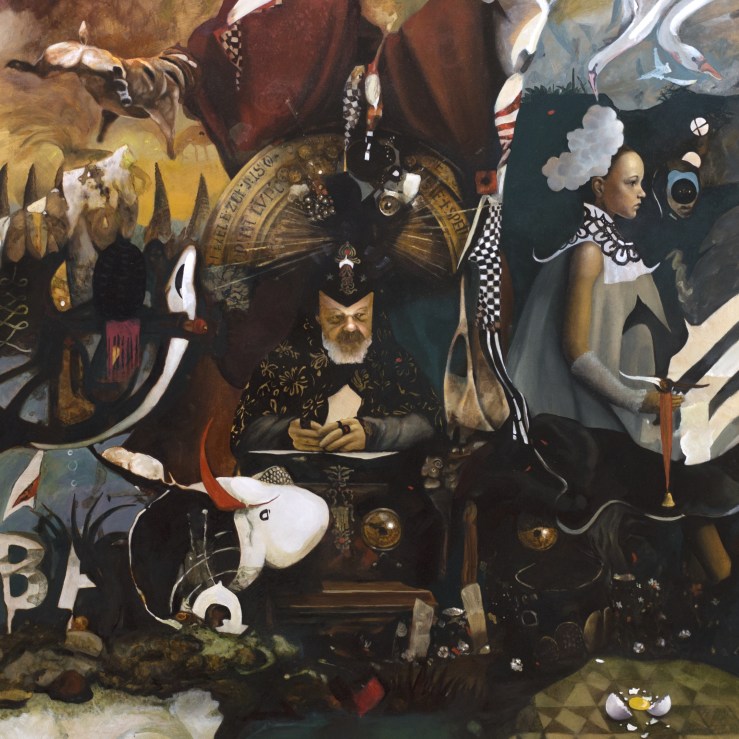
Judge — Pavel Guliaev

pavel1Judge, 2019 by Pavel Guliaev (b. 1967)

The Mysterious Water — Ernest Biéler

dtndw-nucaa7jeo

L’Eau mystérieuse (The Mysterious Water), 1911 by Ernest Biéler (1863–1948)

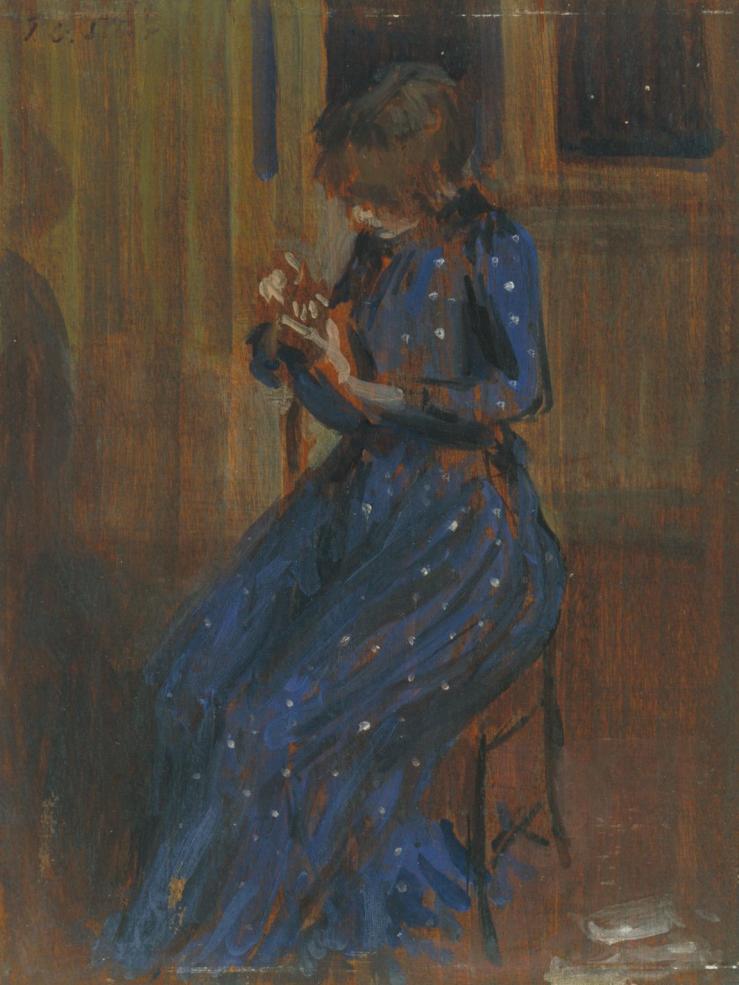
Girl in a Blue Dress — Philip Wilson Steer

Girl in a Blue Dress c.1891 by Philip Wilson Steer 1860-1942

Girl in a Blue Dress, c. 1891 by Philip Wilson Steer (1860–1942)

That magnificent, life-loving hedonist of a nose (From the Strugatsky Brother’s novel The Doomed City)

Andrei gazed at Chachua’s nose. Immense and hooked, with a web of crimson veinlets covering its bridge and bunches of coarse black hairs protruding from its nostrils, this nose lived a life of its own, apart from Chachua. It obviously just didn’t want to know about the concerns of Investigator Chachua. It wanted everyone around it to quaff ice-cold Kakhetian wine out of large glasses, following it down with juicy kebabs and moist, crunchy green herbs and salads; it wanted everyone to dance, clutching the hems of their sleeves in their fingers, with passionate cries of “Ássa!” It wanted to bury itself in fragrant blonde hair and hover above sumptuous naked breasts . . . Oh, it wanted many things, that magnificent, life-loving hedonist of a nose, and its multitudinous desires were all candidly expressed in its various independent movements and changes of color, and the range of sounds that it emitted!

From Andrew Bromfield’s translation of Arkady Strugatsky and Boris Strugatsky’s novel The Doomed City.

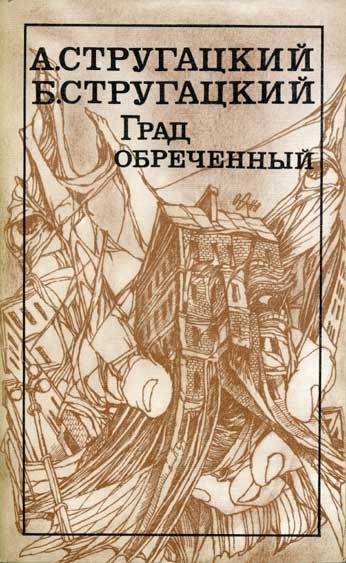
This nose description has little if anything to do with the plot. It simply amused me. This is the original 1989 cover:

d093d180d0b0d0b4_d0bed0b1d180d0b5d187d0b5d0bdd0bdd18bd0b9

Posted in Art

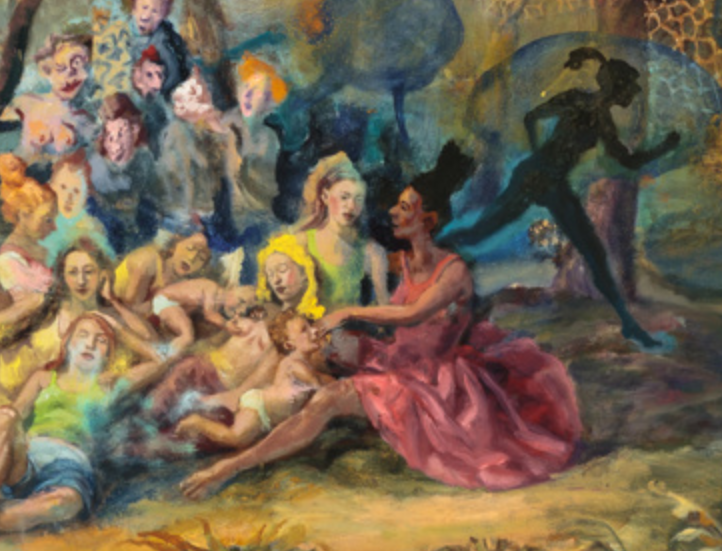
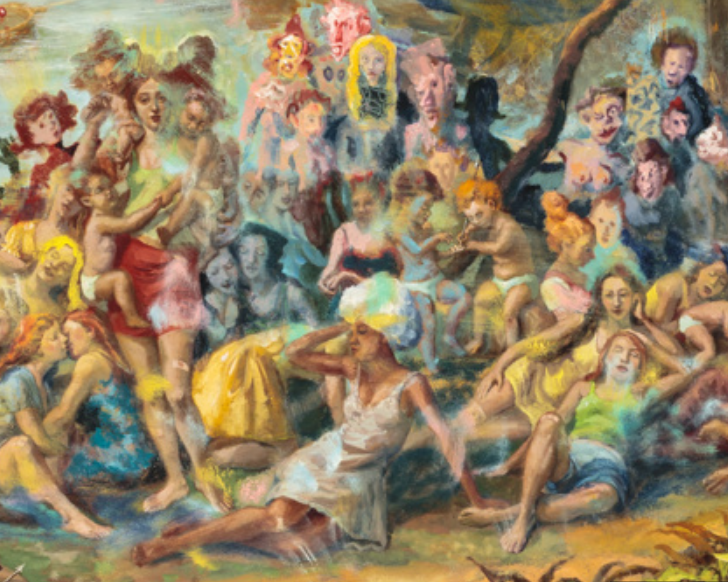
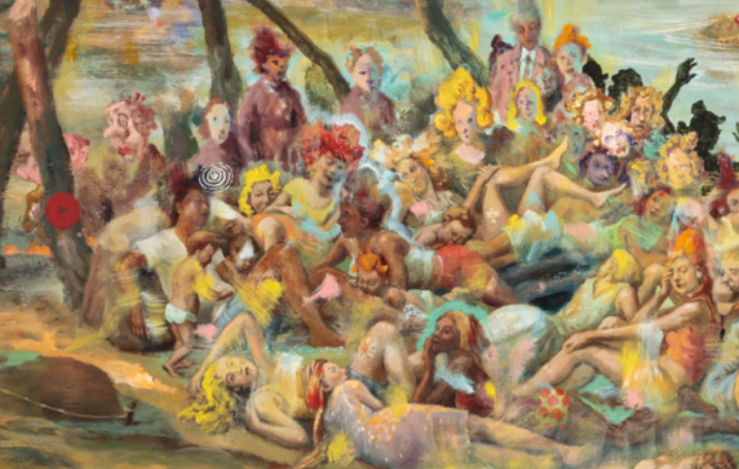
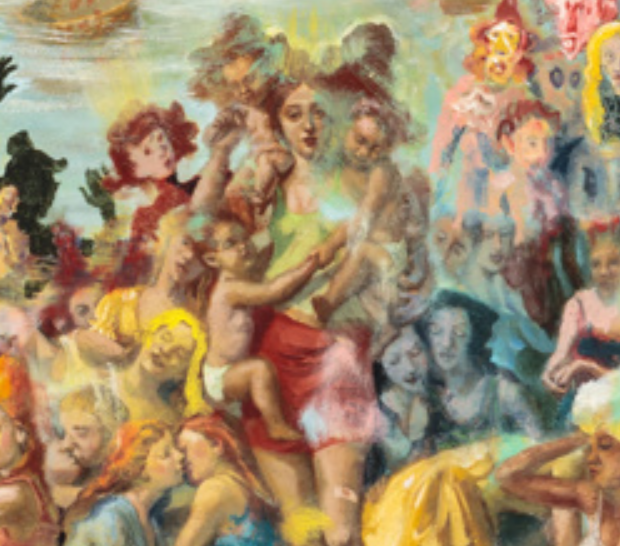
Girl Party — Julie Heffernan

af5b193893d5bb41-_sp_2539-large

Screenshot 2019-09-09 at 3.36.17 PMScreenshot 2019-09-09 at 3.36.03 PMScreenshot 2019-09-09 at 3.35.41 PM

Screenshot 2019-09-09 at 3.36.34 PM

Girl Party, 2019 by Julie Heffernan (b. 1956)

The Green Hammock — John Lavery

2012_cks_05941_0182_000sir_john_lavery_rsa_rha_ra_the_green_hammock

The Green Hammock, c. 1905 by John Lavery (1856–1941)

“Ex Cathedra” — Joaquim Maria Machado de Assis

“Ex Cathedra”

by

Joaquim Maria Machado de Assis

translated by

Rhett McNeil


“Godfather, you’ll go blind from that, sir.”

“What?”

“You’re going to go blind. Reading is so sad. No sir, give me that book.”

Caetaninha took the book out of his hands. Her godfather paced around and then went into his study, where there was no lack of books. He closed the door behind him and kept reading. That was his vice. He read excessively; he read morning, noon, and night, during lunch and dinner, before going to sleep, after bathing; he read as he walked, read standing up, read in his house and in his barn; he read before reading and he read after reading; he read all sorts of books, but especially books on law (in which he’d received his degree), mathematics, and philosophy. Lately, he’d also been reading up on the natural sciences.

Worse than going blind, he went crazy. It was near the end of 1873, in Tijuca, when he started to show signs of mental disturbance; but, since the episodes were minor and few, his goddaughter only started to notice the difference in March or April of 1874. One day, over lunch, he interrupted his reading to ask her:

“What’s my name again?”

“What’s your name, godfather?” she repeated, astonished. “Your name is Fulgencio.”

“From this day forth, my name will be Fulgencius.”

And, burying his face in the book, he went on reading. Caetaninha mentioned the episode to the slave women, who admitted that they’d had their doubts about him for some time, that he hadn’t seemed well. Just imagine how fearful she was; but her fear soon passed, leaving only compassion behind, which increased her affection for him. His mania was also limited and docile, and was only related to books. Fulgencio lived for the written word, the printed word, doctrines, abstract thought, principles, and formulas. He eventually passed from mere superstition to true hallucination of the theoretical. One of his maxims was that liberty would not die, so long as there was a single piece of paper on which to declare it. So one day, waking up with the idea of improving the condition of the Turks, he wrote a constitution for them and sent it to the British diplomat in Petrópolis as a gift. On another occasion, he set about studying the eyes in anatomy books to verify whether they were really able to see, and concluded that they were.

Tell me, readers, whether, under such conditions, Caetaninha’s life could have been a happy one? It’s true that she wanted for nothing, because her godfather was rich. He had been the one who’d raised her, from the age of seven, when he lost his wife. He had taught her to read and write, French, and a little bit – so as not to say almost nothing – of history and geography, and had charged the domestic slaves with teaching her embroidery, lace-making, and sewing. There’s no denying any of that. But Caetaninha had turned fourteen and, if, in the early years, her toys and the slaves were enough to entertain her, she was now at an age when toys go out of style and slaves hold no interest, when no amount of reading or writing can transform a solitary house in Tijuca into a paradise. She went out sometimes, but rarely, and always in a rush. She never went to the theater or to dances, never made or received visits. Whenever she saw a cavalcade of men and women on horseback out in the street, her soul would ride pillion on one of the horses and ride off with them, leaving only her body behind, right next to her godfather, who kept on reading. Continue reading ““Ex Cathedra” — Joaquim Maria Machado de Assis”

Big Mouth — James Rieck 

d76acca418263049bf94750802f8a6a9

Big Mouth, 2018 by James Rieck (b. 1965)

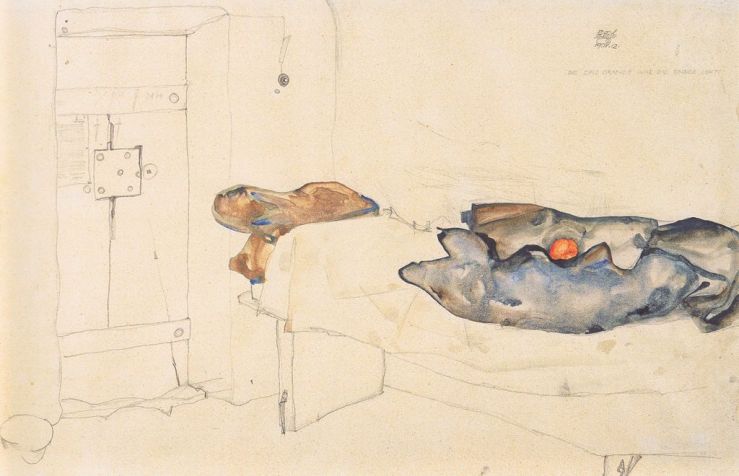
The Single Orange Was the Only Light — Egon Schiele

1024px-egon_schiele_-_die_eine_orange_war_das_einzige_licht19-4-1912

The Single Orange Was the Only Light, 1912 by Egon Schiele (1890-1918)

Simulacra — Agostino Arrivabene

simulacra

Simulacra, 2015 by Agostino Arrivabene (b. 1967)

A review of Keiler Roberts’ Rat Time

Screenshot 2019-09-03 at 3.34.45 PM

Let’s start with the title. Rat Time is a great title.

What is Rat TimeRat Time is a graphic novel—or graphic autofiction, or graphic discursive memoir—I’m not really sure what genre it fits into, nor does that matter—Rat Time is a very funny and often moving book by cartoonist Keiler Roberts.

And so what is “rat time”? Rat time is the time that Keiler shares with her daughter Xia and their rats Sammy and Mateo Too. “We eat dinner, then rat time, then bed time,” Xia explains to her classmates during show and tell.

Screenshot 2019-09-03 at 3.40.35 PM

When poor Sammy dies though, “rat time” takes on a different meaning. “It’s not a time of day,” Xia declares. “It’s the time when had rats.” Keiler optimistically points out that “We still have Mateo Too.” (Care to guess what happened to Mateo One?)

The early vignettes in Rat Time intersplice rat time with riffs from Keiler’s therapy sessions, calls and visits with her parents, and child memories. Although Rat Time’s structure might be at times oblique and discursive, Roberts’ pacing and pages are often surprisingly traditional and darkly comic, as in this little episode, in which Keiler recalls a pet’s death:

Screenshot 2019-09-03 at 12.00.14 PM

Initially, Rat Time appears to have an elliptical structure. Vignettes and riffs and one-pagers succeed each other without the usual narrative linking devices we might expect from a traditional graphic novel. Roberts’ humor is so dry too that for the first few pages the tone of Rat Time may be difficult to comprehend. The more I read though, the more I laughed, and the more I cared about Keiler and her daughter.

Roberts’ mines her life for material, and the material is often painful, coming out in unexpected ways. We learn that rat time originated as a coping mechanism, a response to a recent diagnosis of multiple sclerosis:

Screenshot 2019-09-03 at 3.44.08 PM.png

Rat Time features scenes of Keiler going to the hospital for blood work, or visiting a chiropractor for treatment, all with a wonderfully droll humanity that resonates with just how damn specific the moments are. We also see Keiler in her therapist’s office, and see how her friends and family react to her bipolar disorder, as well as how she manages it. Making oatmeal seems to provide Keiler a lot of comfort, and while I’m not a fan of oatmeal myself, I deeply relate to her feelings on breakfast:

Screenshot 2019-09-03 at 12.22.04 PM

Some of my favorite parts of Rat Time hover around Keiler’s experiences as an art instructor. There’s an intense pathos to Keiler-as-teacher, even when she seems mean:

Screenshot 2019-09-03 at 4.00.28 PM

Keiler’s teaching vignettes are balanced with her own memories of teachers past. Roberts frames these moments with the clarity of detail that telegraphs raw honesty. There’s the gym teacher who humiliated her on the bus to the bowling alley, the art teacher who showed the class a cadaver, and the political science professor who earned Keiler’s admiration for “stating a truth so plainly” (namely, “I know this would be more interesting if I were entertaining, but it’s worse if I try.”)

Screenshot 2019-09-03 at 4.19.43 PM

Roberts’ spare, plain style is effective in achieving her punchlines, but it can also affect the reader with a strange poignancy:

Screenshot 2019-09-03 at 1.03.02 PM

At one point, Roberts includes a polished piece in Rat Time, which creates a wonderful moment of narrative dissonance, a strange reverberation between Keiler the hero-narrator of Rat Time and Roberts the author-illustrator of Rat Time.

Screenshot 2019-09-03 at 4.22.59 PM

Indeed, a major theme of Rat Time is storytelling itself. Keiler wants to be a writer of fiction, but it seems like her own life is far more interesting than the ideas she brainstorms. Rat Time is perhaps Roberts’ way of sussing out why her genre is ultimately autobiographical.

Screenshot 2019-09-03 at 4.35.53 PM

Rat Time, like any good autobiography, is crammed with life, brimming with vivid moments that feel authentic and real. Often funny and sometimes painful, Roberts’ book is sweet without sentimentality, sour without caustic meanness, and generous to both its subjects and its readers. Highly recommended.

Rat Time is new from Koyama Press.



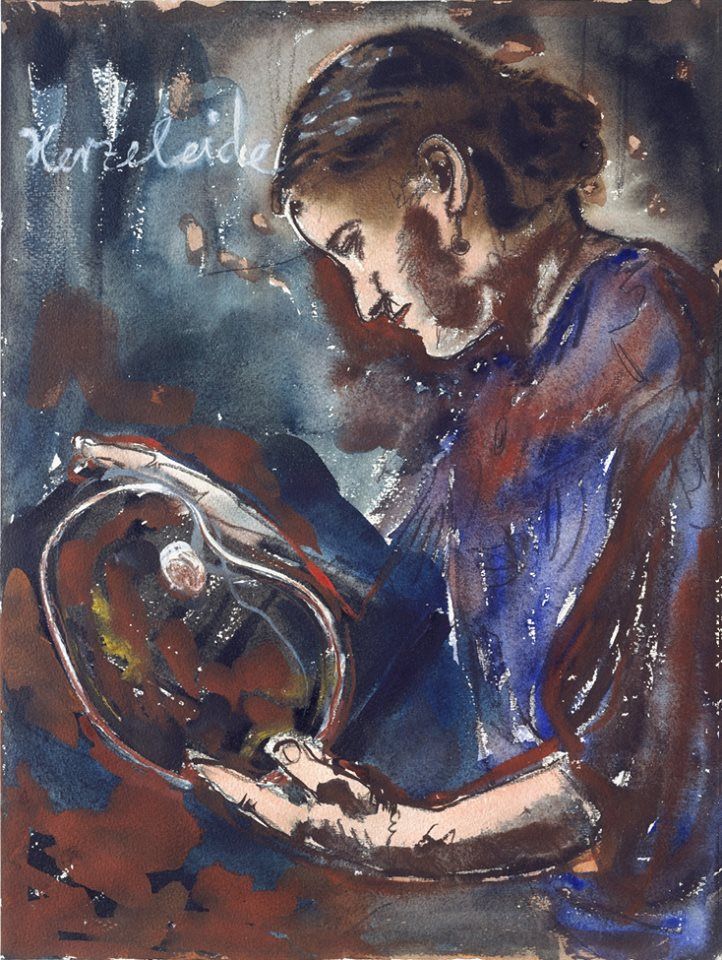
Herzeleide — Anselm Kiefer

a8b5a4a46601df5547244daf3a4c585e

Herzeleide,1979 by Anselm Kiefer (b. 1945)

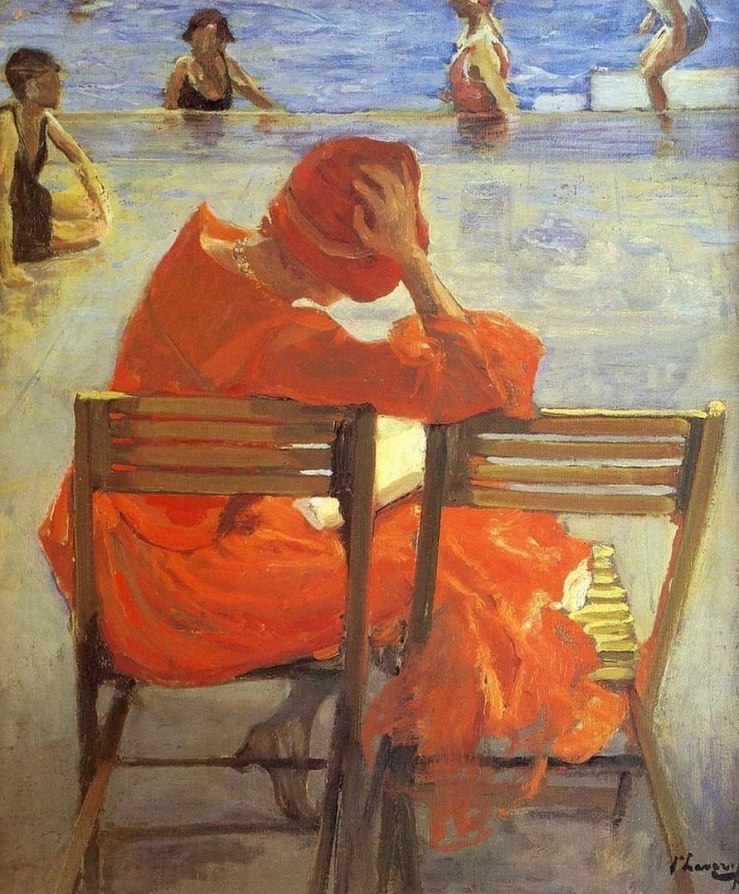
Girl in a Red Dress Reading by a Swimming Pool — John Lavery

64575156_321670722042429_6261493289650389959_n

Girl in a Red Dress Reading by a Swimming Pool, 1887 by John Lavery (1856–1941)

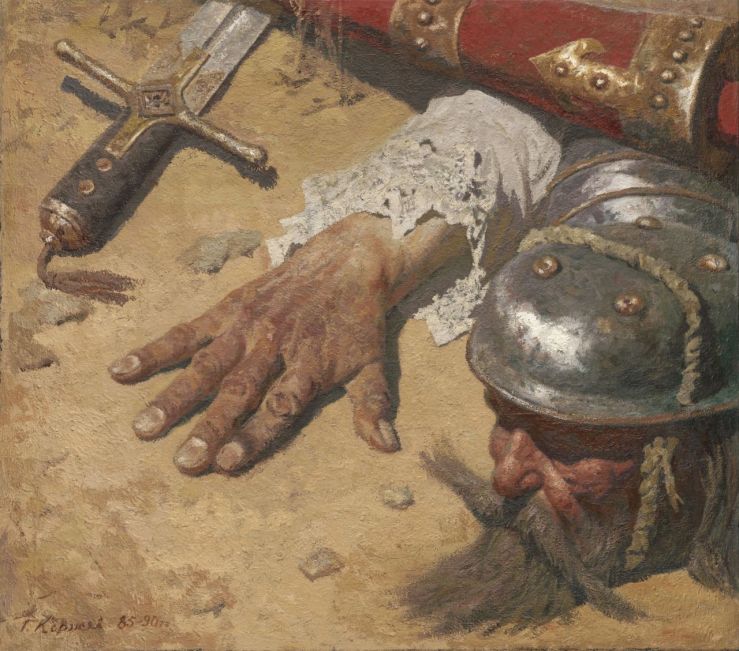
Don Quixote — Gely Korzhev

dcf0fc9e10c6b900ef6fb8176d54bb6e

Don Quixote, 1990 by Gely Korzhev (1925-2012)

Formae (Lithos) — Judy Nimtz

formae_lithos_web

Formae (Lithos) by Judy Nimtz