Three Books

2019-10-20_185738_1

Taking Care by Joy Williams. 1985 trade paperback from Vintage Contemporaries. Cover design by Lorraine Louie. Cover illustration by Rick Lovell.

I read this book earlier this year. It’s really great. I reviewed it on this site, writing—

These are stories of domestic doom and incipient madness, alcoholism and lost pets. There’s humor here, but the humor is ice dry, and never applied as even a palliative to the central sadness of Taking Care. Williams’ humor is something closer to cosmic absurdity, a recognition of the ambiguity at the core of being human, of not knowing. It’s the humor of two girls eating chips on a beach, unable to decide if the people they are gazing at are drowning or just having a good time.

2019-10-20_185738_3

Norwood by Charles Portis. 1985 trade paperback by Vintage Contemporaries. Cover design by Lorraine Louie. Cover illustration by Rick Lovell.

Norwood isn’t the best book I’ve read so far this year but it is the book I most enjoyed reading, and after reading it, I sought everything else by Portis (consuming everything so far except the late novel Gringos, which I’m sort of holding onto as like…I dunno? A consolation prize at some point? Is that grim?). I picked Norwood up on a wonderful whim this summer, possibly simply because it was a Vintage Contemporaries edition (and slim). I’m so glad I did. Great read.

2019-10-20_185738_2

Cathedral by Raymond Carver. 1989 trade paperback from Vintage Contemporaries. Cover design by Lorraine Louie. Cover illustration by Garnet Henderson.

This was the first Vintage Contemporaries edition I ever bought. I bought it when I was maybe 17, sometime in the late nineties, I guess, and I was always vaguely embarrassed of the cover, especially when I used it in not one but two college courses at the end of that decade (Carver was still very cool in that era. He seems to have fallen out of favor. Good for him!) Henderson’s ultra-literal cover of the story “Cathedral” is…something. (I still prefer Lovell’s whimsical work, which is more, uh, I dunno, metaphysical (?)). I circled four short story titles on the table of contents for some reason: “A Small Good Thing,” “Where I’m Calling From,” “Vitamins,” and “Cathedral.” All great numbers. I also am fond of “Feathers” and “Chef’s House,” but I didn’t circle those titles. The rest of the stories I don’t remember, although I’m sure I read them at least once or twice.

The Bootleggers — Edward Hopper

edwardhopper-thebootleggers

The Bootleggers, 1925 by Edward Hopper (1882-1967)

From “Our History of Art” — Chris Ware

Three panels from “Our History of Art,” by Chris Ware. From the 2005 Pantheon collection The Acme Novelty Library.

Appears the Man — Ivan Albright

default-2

Appears the Man, 1980 by Ivan Albright (1897-1983)

Drew Lerman’s Snake Creek

2019-10-14_163321

I got a copy of Drew Lerman’s Snake Creek strips a few weeks ago and have been reading a strip a day, or sometimes reading two or four strips a day, or sometimes reading no strips a day.

Snake Creek comprises the first volume of Snake Creek comix created by Lerman between the summers of ’18 and ’19. Lerman made one each day, as far as I can tell, which, like props.

The heroes of Snake Creek are maybe-human Dav (an altar-ego for Lerman?) and maybe walkin-talkin potato/maybe-mutant Roy, who spend their days and nights strolling the beaches, riffing on life, and extemporizing poems and songs. They take up with a dog and one point, and later encounter strange ducks. (I’m sure there’s more—I’ve been trying, like I said, to limit myself to a few strips a day.) It’s all a big anarchic kick.

2019-10-14_163456

Snake Creek has an absurdist and occasionally nihilist bent, flavors I love. Never too bitter, the strip’s sweetness is anchored in the weird friendship betwixt Dav and Roy, who wander and wonder along a Miami Beach that Lerman turns into a kind of desert island running on Prospero’s magic.

2019-10-14_163605

Snake Island’s chords and rhythms resonate with Walt Kelly’s Pogo, another Floridaish strip, as well as George Herriman’s zany strip Krazy Kat. Lerman seems like a willing descendant of Kelly and Herriman, but Snake Island is also wholly contemporary, a comic that begins with a discussion of old G-chats.

I’m really digging the collection, and I hope not to gobble it up too fast.

2019-10-14_163713

Shelter — Jennifer Cronin

jennifercronin-shelter

Shelter, 2011 by Jennifer Cronin

Girl Reading a Newspaper — Louis Anquetin

Girl Reading a Newspaper 1890 by Louis Anquetin 1861-1932

Girl Reading a Newspaper, 1890 by Louis Anquetin (1861–1932)

Three Books

2019-10-13_183112

The Last Days of Louisiana Red by Ishmael Reed. 1974 first edition hardback from Random House. No designer credited, but the jacket flap indicates that the cover design was “suggested” by Ishmael Reed. I reviewed Louisiana Red earlier this year on this site.

2019-10-13_182907

Blue Beard by Max Frisch. English translation by Geoffrey Skelton. 1983 first edition hardback from HBJ. Design by Amy Hill.

2019-10-13_182945

Stanley Elkin’s Greatest Hits by Stanley Elkin. Foreword by Robert Coover. 1980 first edition hardback from E.P. Dutton. Cover design by Janet Halverson.

Genius of the River Chases Away The Frenzy of Art — Jillian Denby

genius

Genius of the River Chases Away The Frenzy of Art, 2017 by Jillian Denby (b. 1944)

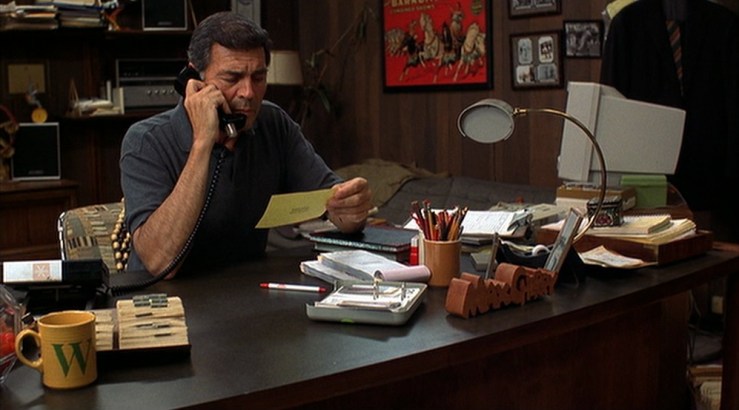
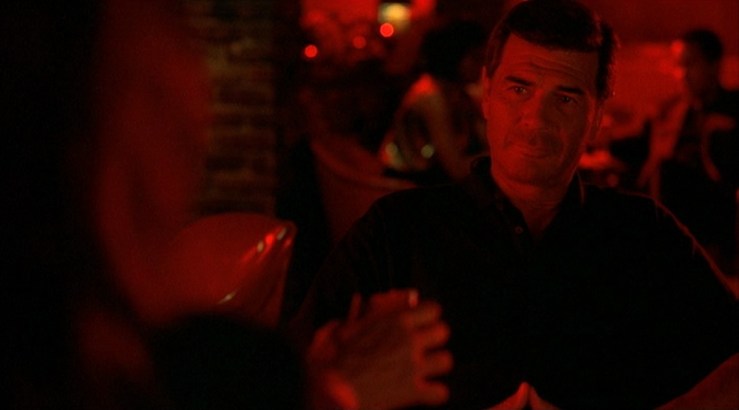
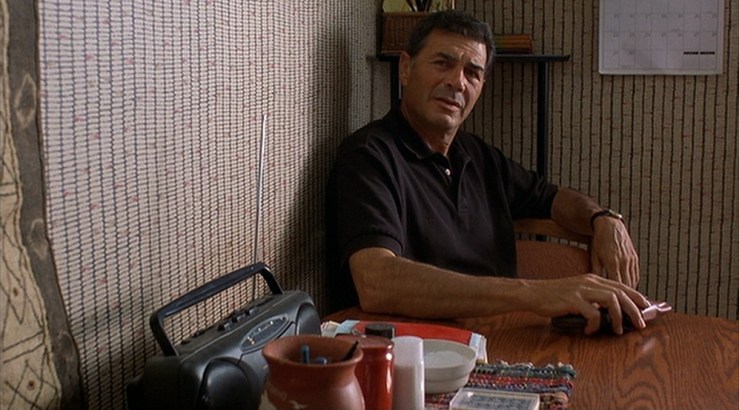
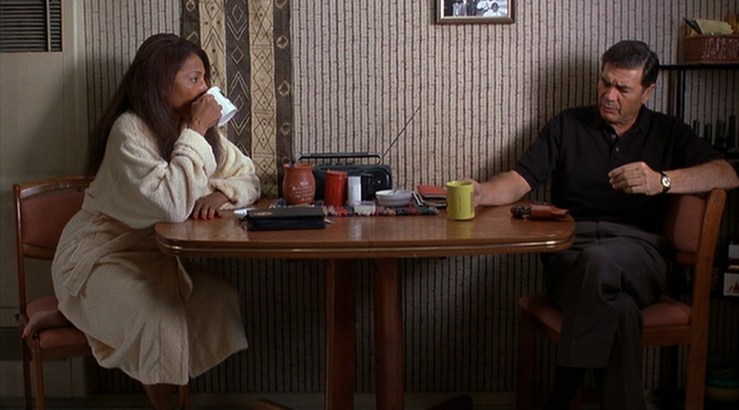
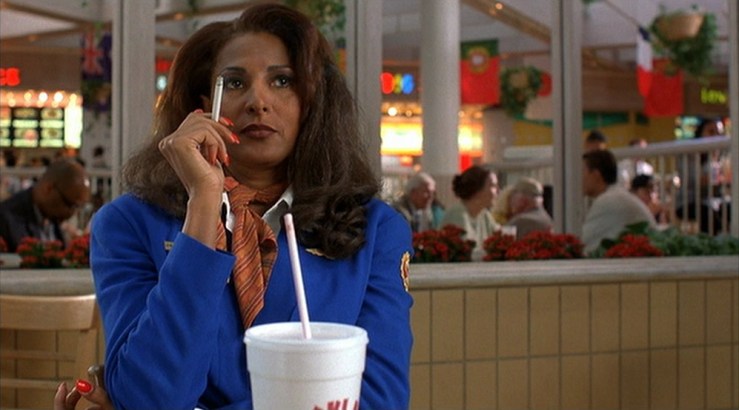
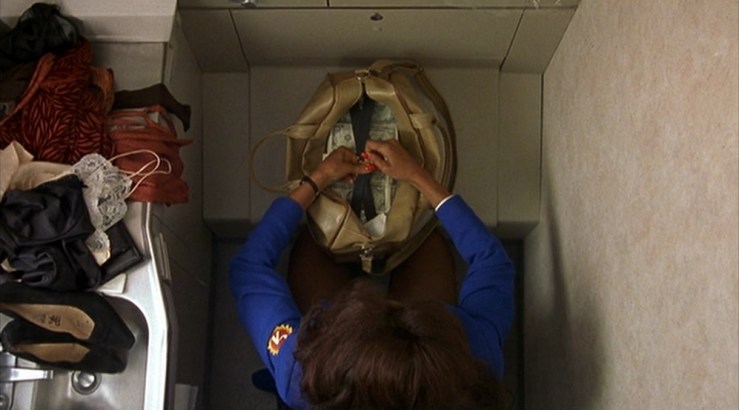
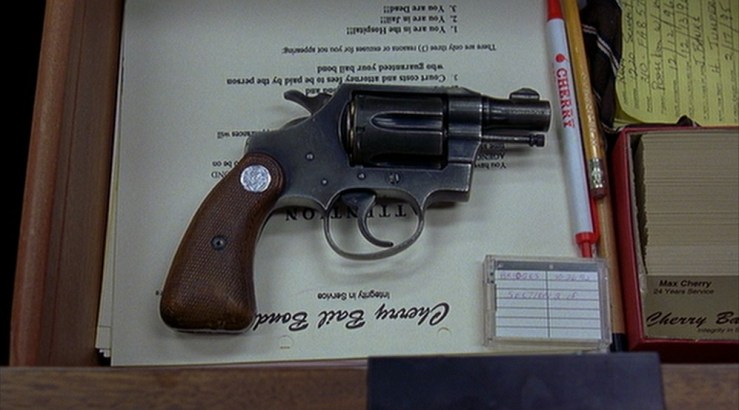
25 still frames from Quentin Tarantino’s Jackie Brown

64 (393)01 (522)03 (521)05 (522)08 (522)20 (532)21 (532)24 (532)25 (532)26 (532)27 (532)28 (531)30 (531)31 (528)32 (530)37 (529)43 (522)53 (498)54 (494)56 (484)58 (479)59 (475)62 (434)63 (410)65 (357)

From Jackie Brown, 1997. Directed by Quentin Tarantino with cinematography by Guillermo Navarro. Via Film Grab. RIP Robert Forster.

Nude Reading — Roy Lichtenstein

Nude Reading 1992 by Roy Lichtenstein 1923-1997

Nude Reading, 1994 by Roy Lichtenstein (1923–1997)

Reader — Gerhard Richter

3928

Reader, 1994 by Gerhard Richter (b. 1932)

“American Gothic” — John Stone

“American Gothic”

by

John Stone


Just outside the frame
there has to be a dog
chickens, cows and hay

and a smokehouse
where a ham in hickory
is also being preserved

Here for all time
the borders of the Gothic window
anticipate the ribs

of the house
the tines of the pitchfork
repeat the triumph

of his overalls
and front and center
the long faces, the sober lips

above the upright spines
of this couple
arrested in the name of art

These two
by now
the sun this high

ought to be
in mortal time
about their businesses

Instead they linger here
within the patient fabric
of the lives they wove

he asking the artist silently
how much longer
and worrying about the crops

she no less concerned about the crops
but more to the point just now
whether she remembered

to turn off the stove.


1200px-grant_wood_-_american_gothic_-_google_art_project
American Gothic, 1930, Grant Wood

Volleyballer V — Jansson Stegner

jansson-stegner-2

Volleyballer V, 2009 by Jansson Stegner (b. 1972)

Untitled (Reader) — Francine Van Hove

DeJClwbX0AAAc3m (1)

Untitled by Francine van Hove (b. 1942)

Three Books

2019-10-06_172659

Negrophobia by Darius James. Cover design by Katy Homans, employing All Cats Are Black in the Dark by Natasha Xavier. Trade paperback, NYRB, 2019.

Darius James’s Negrophobia, first published in 1992, is ugly, hilarious, abject, and gritty, a deep comic dive into American racism and the ways that massculture and urban living propagate and feed off of racism. NYRB’s blurb rightfully compares the novel to the work of William S. Burroughs and Ishmael Reed, but, in its hallucinatory film script form (an apocalyptic angles), it also recalls Aldous Huxley’s overlooked novel Ape in Essence. I loved it and am too much of a coward to attempt a real review.


2019-10-06_172524

The Haunting of Hill House by Shirley Jackson. Cover photograph by W. Eugene Smith; designer uncredited. Penguin Classics US trade paperback, 2006.

Jackson’s spooky 1959 novel has some of the best opening lines of a novel I’ve read in recent years. Hills’ final section answers to its weird opening, dramatizing fraught consciousness in turmoil, disintegrating in a ping-pong free indirect style that leaves the reader stunned, puzzled, and wishing for an extra chapter against his better judgment.

2019-10-06_172844

Berlin Alexanderplatz by Alfred Döblin. English translation by Michael Hoffmann. Book design by Katy Homans, featuring Georg Grosz’s painting Down with Liebknecht (1919). NRYB trade paperback, 2018.

I picked up Döblin’s 1929 Berlin Alexanderplatz on a whim a while ago at a bookstore and picked it up off the shelf today on a different whim and laughed in sympathy through the first two chapters. It’s a long book but I think I’ll keep going.


Watermelon — Rufino Tamayo

default-1

Watermelon, 1952 by Rufino Tamayo (1899-1991)