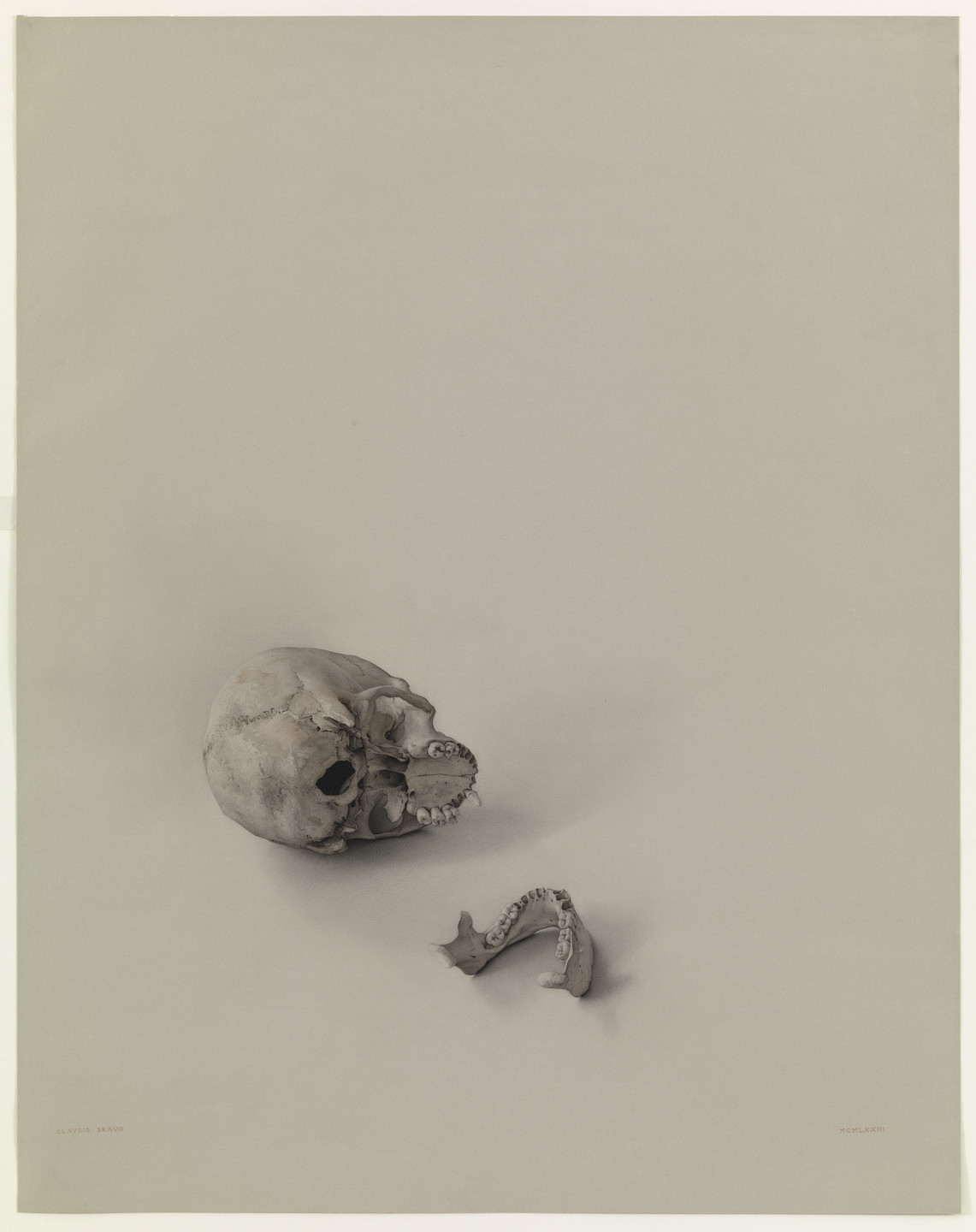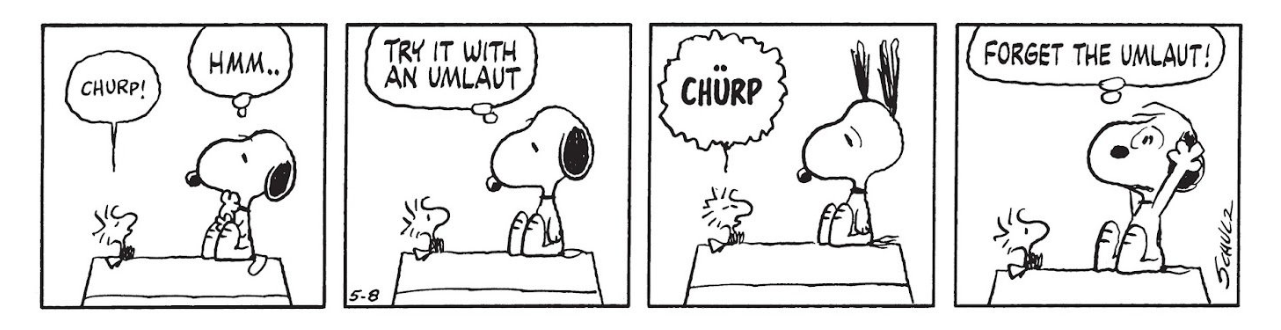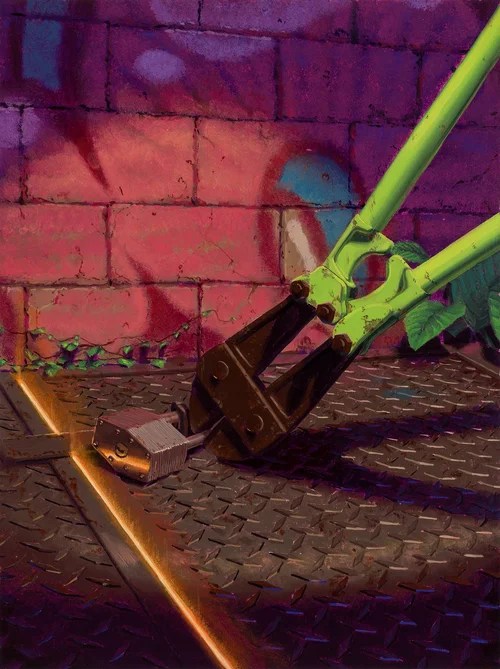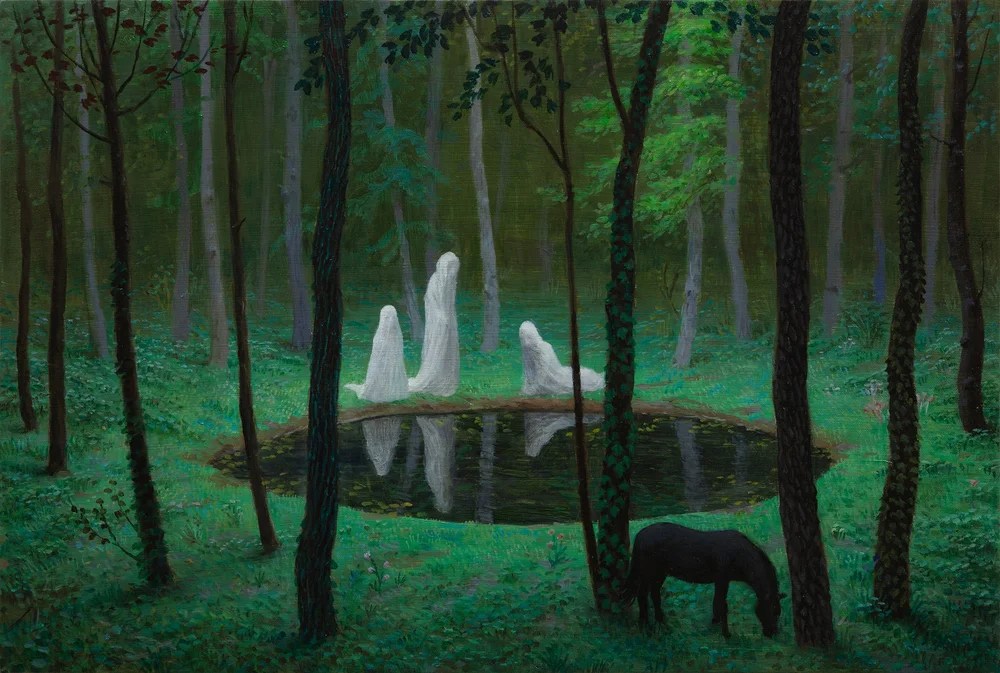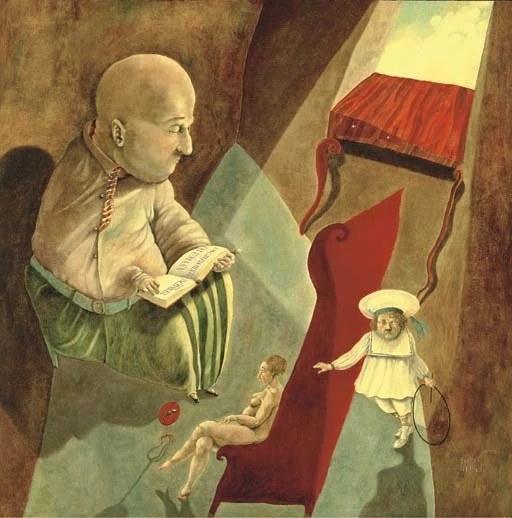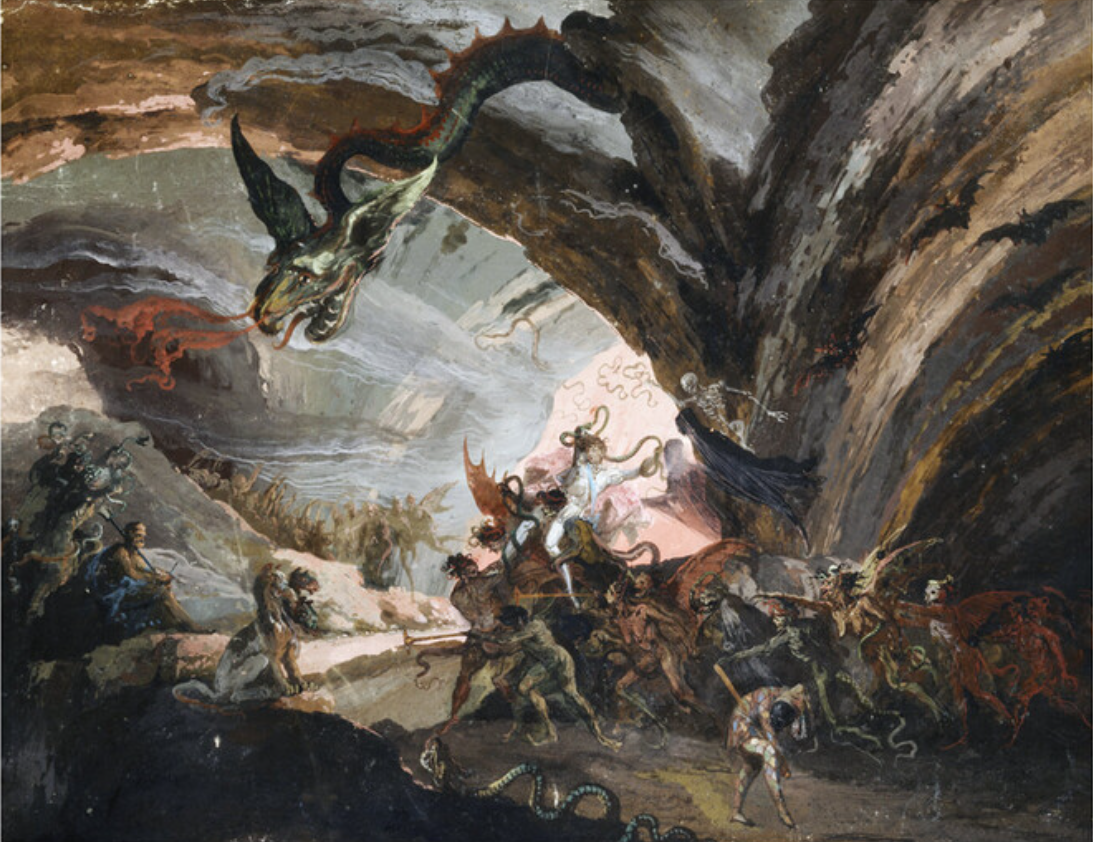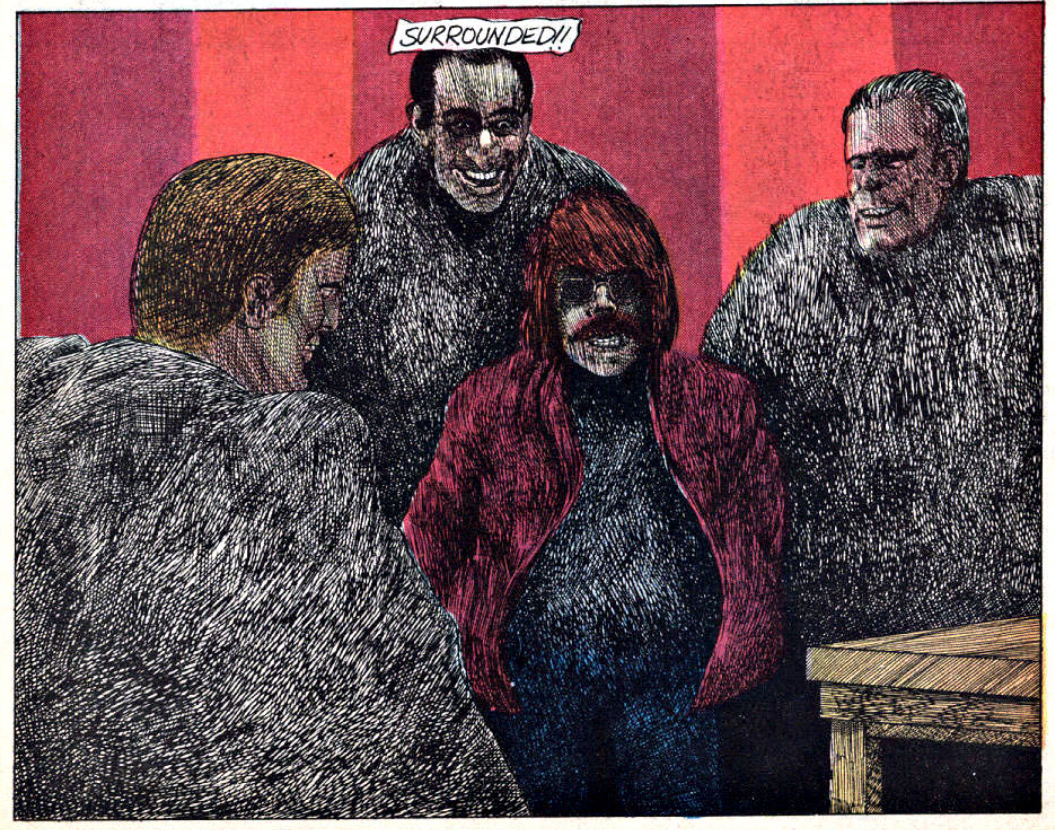
Drinker — Bill Hay

Drinker, 1989 by Bill Hay (b. 1956)

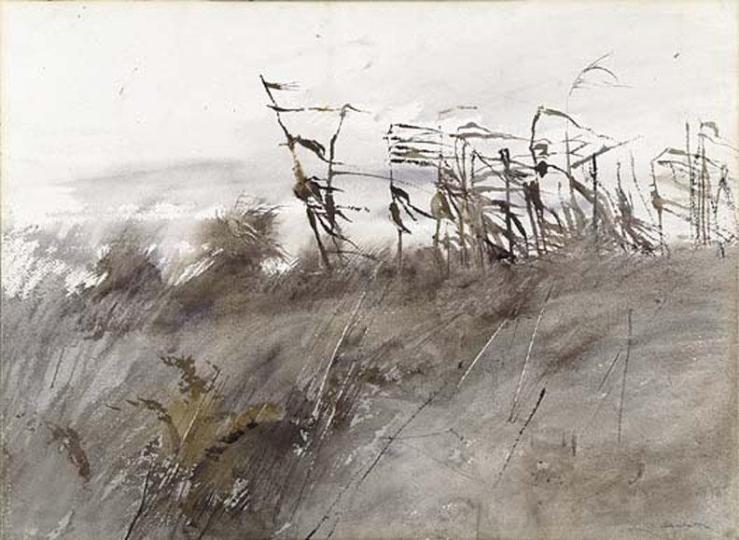
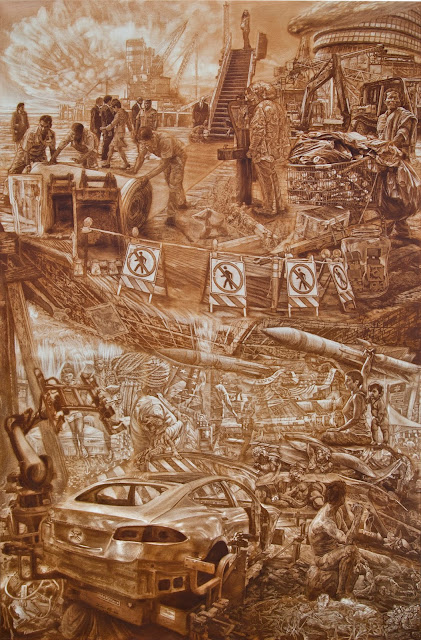
Hazardous Beauty — Jan Nelson

Hazardous Beauty, 1983 by Jan Nelson (b. 1955)

43 minutes of This Heat playing live in 1980

Chris Ware contributes to the U.S. Postal Service’s “250 Years of Delivering Stamps” collection; unites philatelists and pannapictagraphists

Chris Ware’s contribution to the U.S. Postal Service’s anniversary series is available in a few weeks. Stick one on a postcard and mail it to me.

4 July 2025

Posted in Art

Blog about recent (non)reading

I read one novel in May 2025, the historical graphic biography The Woman with Fifty Faces: Maria Lani and the Greatest Art Heist That Never Was, by Jon Lackman and Zack Pinson. I think it was the only book I’ve read in full in the past two months. It was excellent and I owe it a full review.

I’ve read so so so many Wikipedia pages lately, tunneling down there almost every night (even all night) over the last six weeks. Last night I think I started, for some reason I can’t recall, on Julia Lennon’s page, maybe around eleven pm, and a few hours later I was reading about the visual systems of cuttlefish (this is when my wife woke up and told me to go to sleep). I didn’t start Leonora Carrington’s The Stone Door and I didn’t finish Augusto Monterroso’s The Rest Is Silence, even though they were on my cute little night stand.

I read a big chunk of The Rest Is Silence last Monday at the beach. I took my son and his friends there; despite their claims to being “goth” (or whatever, false claims) they wanted to hang out all day at Hannah Park. So we did that. I walked for a few miles and then discreetly drank a carton of sauvignon blanc and almost finished The Rest Is Silence and then promptly forgot all of the feeling of having read it, having replaced that feeling with the blazing Florida heat (a heat obscured by a heavy gray Atlantic breeze). There was a camp of young musicians wading in the water. I don’t know how I recognized them as teenage musicians, other than years of recognizing such persons in public — the same way I can recognize, say, college football coaches out for barbecue on a Saturday afternoon or late Friday. Some people just look like some people. I chatted with one of the music camp coaches. A lot of these kids hadn’t ever been to the ocean, he assured me, which he didn’t have to. Their movements against the waves showed it. I’m sure they are all graceful with their chosen instruments. Like I said, the slim novella was gone. The sand covered it over (this is a stupid metaphor; I am all rotten inside lately).

I have also not finished Paul Kirchner’s The Bus 3, mostly because I wanted to not finish it, to save it for a different shade of my disposition that is sure to arrive any day now. I love what Paul Kirchner has done, and I have never felt the strips whimsical; or, rather, their whimsy struck me as wise, a sharper whimsy. I’m having a hard time laughing lately.

I read a big chunk of an anthology called The New Gothic about three weeks ago. It was in the house we — we my family, my wife and kids — were staying at in Minori, a smallish town in the Amalfi Coast of Italy. We spent the first fifteen days of June in Italy to celebrate my daughter’s 18th birthday and high school graduation. In a lovely little house on the side of a mountain (maybe it was a big hill, I’m a Florida boy), in a small shelf of mostly non-English language books, I picked out The New Gothic and read tales by Coover, Carter, Vollmann and others. The book is a love letter to Poe, really, with a wonderful introductory essay by editors Bradford Morrow and Patrick McGrath.

The story that really stood out though was Lynne Tillman’s “A Dead Summer.” This particular paragraph made me cry:

The Mets were doing better, but with so many new players on the team, she didn’t have the same relationship to them. Her dead friend had loved the Mets too. Sometimes she watched a game just for him, as if he could use her as a medium. She was sure his spirit was hovering near her, especially at those times. But she did not speak of this to her boyfriend who was talking about breaking up. That night she let him gag her. She didn’t have anything to say anyway, not anything worthwhile. She read that the Ku Klux Klan had marched in Palm Beach.

The story is about grief and bad dreams set against a terrifying American political backdrop. The notion of witnessing something so that one’s dead friend might use your eyes as a medium is what did me in. I’ve had such thoughts a few times in the last two months after my best friend died unexpectedly, moments where I thought I might somehow channel his spirit to, say, listen to the new Pulp record. But I don’t think he’s haunting me.

(I didn’t steal The New Gothic from the house in Minori, although I thought about it for two or three minutes.)

I have almost finished reading the stories in Debbie Urbanski’s collection Portalmania (it is a “collection” but I suspect it is a stealth novel — about escapes, transitions, aesexuality, monsters, uh, portals, etc.). Review to come. (I will absolutely get might shit together, any day now.)

I read and reviewed Mauro Javier Cárdenas’s American Abductions back in March. It’s only in this stack — this organizing picture that I use as an outline — because it is the most timely novel in America right now. It is a novel I read, loved, and highly recommend. Its narrative power surpasses the timeliness I’ve imposed upon it.

I was, what?, maybe 200, 225 pages? into Stephen Dixon’s massive novel Frog before I abandoned it. I was really loving it, its tics, repetitions, its noisy monotonous howl, its droll jabs at normal fucking people. It could have been one of my favorite novels ever, I think, but I’m not sure I’ll ever wade back in. I tried a few times, but it’s all enmeshed with some bad intense feelings I felt in early May.

Which is what? I guess? another way of saying that reading is just a series of feelings for me now. Maybe at some point I thought of reading novels as an intellectual exercise, and maybe at one point I turned that into an ideal of an aesthetics of reading — but I don’t care about any of that shit now.

I believe in reading for

pleasure

pain

other feelings, in between and otherwise.

Flying Fish — Ōno Bakufu

Flying Fish, 1938 by Ōno Bakufu (1888-1976)

Señor Mustache Mustache Who Has Two Faces — Leonora Carrington

Illustration for “The Monster of Chihuahua,” from The Milk of Dreams by Leonora Carrington (1917 – 2011)

Untitled — Enzo Cucchi

Untitled, 2014 by Enzo Cucchi (b. 1949)

The Disappeared — Ken Unsworth

The Disappeared, 1988 by Ken Unsworth (b. 1931)

The Night Heron — Lionel Lindsay

The Night Heron, 1935 by Lionel Lindsay (1874-1961)

Reputed Fair — Jesse Mockrin

Reputed Fair, 2023 by Jesse Mockrin (b. 1981)

The Cake Woman — Paula Rego

The Cake Woman, 2004 by Paula Rego (1935–2022)

Judith with the Head of Holofernes — Cristofano Allori

Judith with the Head of Holofernes, 1613 by Cristofano Allori (1577–1621)

Two (or really three) by Henrik Pontoppidan (Books acquired, early May 2025)

NYRB is publishing new English language translations of works by Henrik Pontoppidan. The big boy is Pontoppidan’s opus A Fortunate Man; the much-slimmer The White Bear actually collects two novellas, The White Bear and The Rearguard. All three translations are the effort of Paul Larkin.

NYRB’s copy for The White Bear

The White Bear follows the fate of the odd, gangly, red-bearded Thorkild Müller. Born in rural Jutland and destined for the ministry, Thorkild proves to be a poor student and is assigned to a remote Inuit tribe in Greenland. There, with his mythic-looking staff and dogskin skullcap, he becomes known as the White Bear—a beloved legend among the locals and a freewheeling embarrassment to his fellow priests. Grown old, he returns to Denmark, where again his flock adores him while his fellow men of cloth try to tame the “whirling dervish in their midst.” In the end Thorkild mysteriously disappears, presumably back to the snow wilderness of Greenland.

And The Rearguard:

The Rearguard, on the other hand, is a marriage story. Newlyweds Jørgen Hallager and Ursula Branth are as different as night and day. The brash son of a poor village teacher, Jørgen is an avowed socialist whose revolutionary beliefs translate into his work as a painter of social realism; Ursula comes from a conservative, upper-middle-class family. At first, as they start their married life in Rome, they each try to change the other’s worldview with arguments and threats, but as time wears on and they wear each other down, it becomes clear there can be no reconciliation. It is a tragic tale of art and idealism, individuality and love.

And the big guy:

A Fortunate Man tells the story of Per Sidenius, a Lutheran pastor’s son who revolts against his family and flees the backwaters of Jutland for Copenhagen. Per is handsome, ambitious, and hungry for the technological future of the twentieth century. He studies engineering and draws up plans for a new port and new canals, for harnessing wind and wave energy to transform Denmark into a commercial giant. Fully persuaded of his own genius, Per first repels and then attracts Jakobe Salomon, a young Jewish woman whose family is eager to underwrite his plans. They fall in love and get engaged; gradually Jakobe opens Per’s eyes to the wider world. Meanwhile, he also falls under the spell of Dr. Nathan, a popular philosopher who rails against the conservative powers that be. But ultimately these powers win out, Per’s relationship with Jakobe founders, and he goes home to Jutland and marries a pastor’s daughter. Though fortunate, he is never happy.
One of the last great nineteenth-century novels and Henrik Pontoppidan’s masterpiece, A Fortunate Man anatomizes and skewers Danish society, from the small towns to the metropolis. Paul Larkin’s dazzing translation brings out the wide range and full force of a novel admired by Georg Lukács and praised by Ernst Bloch as “one of the foundational texts of world literature.”

Sunday Comix

Cover art for ZAP Comix #7 by Spain Rodriguez, 1973

A review of Gisèle Prassinos’s collection of surreal anti-fables, The Arthritic Grasshopper

img_7667

I can’t remember which particular Surrealist I was googling when I learned about Gisèle Prassinos. I do know that it was just a few weeks ago, and I’ve had an interest in Surrealist art and literature since I was a kid, so I was a bit stunned that I’d never heard of her before now—strange, given the origin of her first publication. In 1934, when she was 14, Prassinos was “discovered” by André Breton, and the Surrealists delighted in what they called her “automatic writing.” (Prassinos would later reject that label, and go as far as to declare that she had never been a surrealist). Her first book, La Sauterelle arthritique (The Arthritic Grasshopper) was published just a year later.

1-work
Prassinos reading her work to the Surrealists; photograph by Man Ray


I somehow found a .pdf of one of her stories, “A Nice Family,” a bizarre little tale that runs on its own surreal mythology. The story struck me as simultaneously grandiose and miniature, dense but also skeletal. It was impossible. Surreal. I wanted more.

Luckily, just this spring Wakefield Press released The Arthritic Grasshopper: Collected Stories, 1934-1944, a new English translation of a 1976 compendium of Prassinos’s tales, Trouver sans checher. The translation is by Henry Vale and Bonnie Ruberg, whose introduction to the volume is a better review and overview than I can muster here. Ruberg offers a miniature biography, and shares details from her letters and visits with Prassinos. She situates Prassinos within the Surrealists’ gender biases: “For a young writer such as Prassinos, being involved with the surrealists would have meant gaining access to resources like publishers, but it also would have meant being fetishized and marginalized.” Ruberg characterizes Prassinos’s tales eloquently and accurately—no simple feat given the material’s utter strangeness:

Taken collectively, their effect is a piercing cackle, a complete disorientation, rather than an ethical lesson. The politics of these stories are absurdist. They upend the world by making children dangerous, by reanimating the dead, by letting the carefully tended domestic deform, foam, and melt. No social structure holds power in the world of these stories—not on the basis of gender, or nationality, or class. The force that reigns is chaos.

Let’s look at that reigning chaos.

In “The Sensitivity of Others,” one of the earliest tales in the volume, we get the sparest narrative action seemingly possible: A speaker walks forward. And yet dream-nightmare touches impinge on all sides and on all senses. The opening line shows a world that is never stable, and if monsters and other dangers lurk just on the margins of our narrator’s shifting path, so do wonders and the promise of strange knowledge. Here’s the tale in full:

img_7666

I still have no idea what to make of the punchline there at the end, but those final images—a father, a faulty library, a power failure—hang heavy against the narrator’s trembling walk.

Many of Prassinos’s anti-fables conclude with such apparent non sequiturs, and yet the final lines can also cast a weird light back over the previous sentences. In “Photogenic Quality,” a dream-tale about the act of writing itself, the final line at first appears as sheer absurdity. A man receives a pencil from a child, whittles it into powder, blots the powder on paper, and throws the paper in the river (more things happen, too). The tale concludes with the man declaring, “Brass is made from copper and tin.” It’s possible to enjoy the absurdity here on its own; however, I think we can also read the last line as a kind of Abracadabra!, magic words that describe an almost alchemical synthesis—a synthesis much like the absurd modes of transformative writing that “Photogenic Quality” outlines.

img_7664

You’ll see above one of Allan Kausch’s illustrations for The Arthritic Grasshopper. Kausch’s collages pointedly recall Max Ernst’s surreal 1934 graphic novel Une semaine de bonté (A Week of Kindness). Kausch’s work walks a weird line between horror and whimsy; images from old children’s books and magazines become chimerical figures, sometimes cute, sometimes horrific, and sometimes both. They’re lovely.

img_7663

Surreal figures shift throughout the book—monks and kings, daughters and mothers, deep sea divers and knights and salesmen and talking horses—all slightly out of place, or, rather, all making new places. Even when Prassinos establishes a traditional space we might think we recognize—often a fairy trope—she warps its contours, shaping it into something else. “A Marriage Proposal,” with its unsuspecting title, opens with “Once upon a time” — but we are soon dwelling in impossibility: “the garter snake appeared in the doorway, arm in arm with the snail, who was slobbering with happiness.” Other stories, like “Tragic Fanaticism,” immediately condense fairy tales into pure images, leaving the reader to suss out connections. Here is that story’s opening line: “A black hole, a little old woman, animals.” At five pages, “Tragic Fanaticism” is one of the collection’s longer stories. It ends with a four line poem, sung by five red cats to the old woman: “Go home and burn / Darling / You’re the only one we’ll love / Trash Bin.”

I still have a number of stories to read in The Arthritic Grasshopper. I’ve enjoyed its tales most when taken as intermezzos between sterner (or compulsory) reading. There’s something refreshing in Prassinos’s illogic. In longer stretches, I find that I tire, get lazy—Prassinos’s imagery shifts quickly—there’s something even picaresque to the stories—and keeping up with its veering rhythms for tale after tale can be taxing. Better not to gobble it all up at once. In this sense, The Arthritic Grasshopper reminds me strongly of another recently-published volume of surreal, imagistic stories that I’ve been slowly consuming this year: The Complete Stories of Leonora CarringtonIn their finest moments, both of these writers can offer new ways of looking at art, at narrative, at the world itself.

I described Prassinos’s tales as “anti-fables” above—a description that I think is accurate enough, as literary descriptions go—but that doesn’t mean there isn’t something that we can learn from them (although, to be very clear, I do not think literature has to offer us anything to learn). What Prassinos’s anti-fables do best is open up strange impossible spaces—there’s a kind of radical, amorphous openness here, one that might be neatly expressed in the original title to this newly-translated volume—Trouver sans checher—To Find without Seeking.

In her preface (titled “To Find without Seeking”) Prassinos begins with the question, “To find what?” Here is a question that many of us have been taught we must direct to all the literature we read—to interrogate it so that it yields moral instruction. Prassinos answers: “The spot where innocence rejoices, trembling as it first meets fear. The spot where innocence unleashes its ferocity and its monsters.” She goes on to describe a “true and complete world” where the “earth and water have no borders and each us can live there if we choose, in just the same way, without changing our names.” Her preface concludes by repeating “To find what?”, and then answering the question in the most perfectly (im)possible way: “In the end, the mind that doesn’t know what it knows: the free astonishing voice that speaks, faceless, in the night.” Prassinos’s anti-fables offer ways of reading a mind that doesn’t know what it knows, of singing along with the free faceless astonishing voice. Highly recommended.

[Ed. note–Biblioklept originally ran this review in August of 2017.]