Heimito von Doderer’s The Strudlhof Steps (Book acquired, 15 Nov. 2021)

Heimito von Doderer’s The Strudlhof Steps is forthcoming in translation by Vincent Kling from NYRB. Their blurb:

The Strudlhof Steps is an unsurpassed portrait of Vienna in the early twentieth century, a vast novel crowded with characters ranging from an elegant, alcoholic Prussian aristocrat to an innocent ingenue to “respectable” shopkeepers and tireless sexual adventurers, bohemians, grifters, and honest working-class folk. The greatest character in the book, however, is Vienna, which Heimito von Doderer renders as distinctly as James Joyce does Dublin or Alfred Döblin does Berlin. Interweaving two time periods, 1908 to 1911 and 1923 to 1925, the novel takes the monumental eponymous outdoor double staircase as a governing metaphor for its characters’ intersecting and diverging fates. The Strudlhof Steps is an experimental tour de force with the suspense and surprise of a soap opera. Here Doderer illuminates the darkness of passing years with the dazzling extravagance that is uniquely his.

Barthelme/Calvino/Garner/Jackson (Books acquired, 19 Nov. 2021)

Spent a spare hour this afternoon at the local used bookshop.

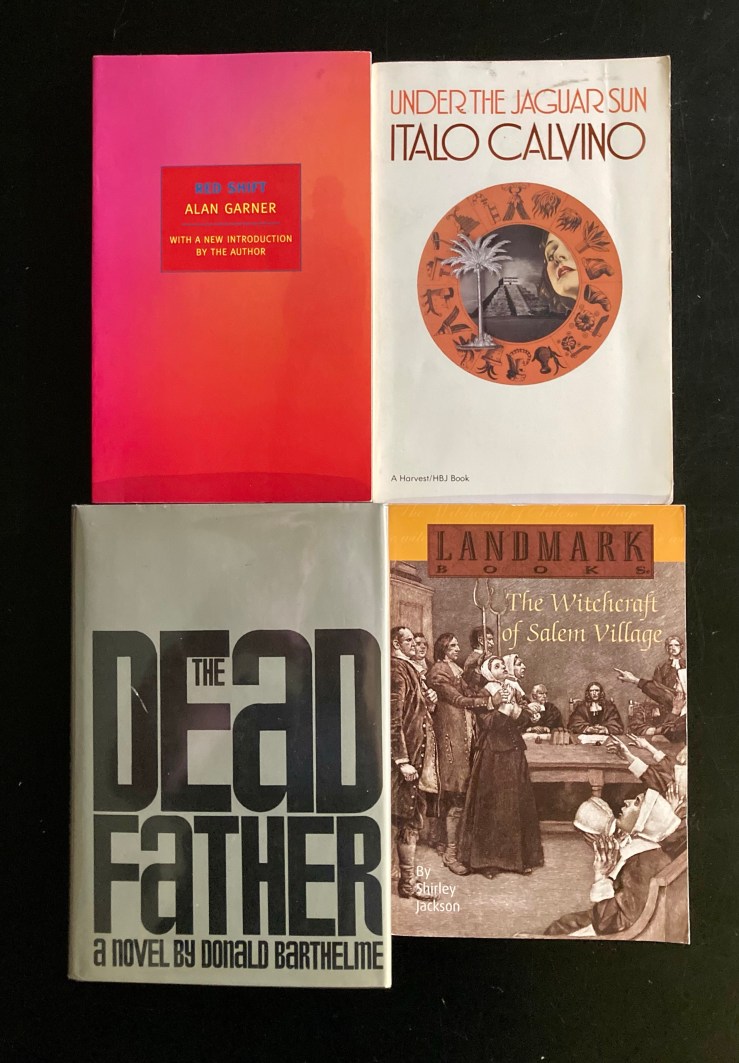
A few months ago I found a first edition of Donald Barthelme’s collection Forty Stories. This afternoon I picked up a first edition of my favorite Barthelme novel, The Dead Father. The jacket design–by Ruth Ansel–is really cool, which doesn’t really come through in the photograph. The back cover simply reverses the silver-black set up of the front cover; the spine reads bottom to top instead of top to bottom, like most U.S. titles.

I’ve never read Under the Jaguar Sun by Italo Calvino, but I picked it up because I enjoyed rereading three by Calvino earlier this year (and it’s very short and has a cool cover by Malcolm Tarlofsky).

I’d never heard of Alan Garner’s 1973 novel Red Shift until today. I always pull NYRB spines out, and the novel’s description on the back caught my attention. Part of the description:

In second-century Britain, Macey and a gang of fellow deserters from the Roman army hunt and are hunted by deadly local tribes. Fifteen centuries later, during the English Civil War, Thomas Rowley hides from the ruthless troops who have encircled his village. And in contemporary Britain, Tom, a precocious, love-struck, mentally unstable teenager, struggles to cope with the imminent departure for London of his girlfriend, Jan.

The blurb from Ursula K. Le Guin (“A bitter, complex, brilliant book”) made me pick it up. I love the NYRB cover, which has a My Bloody Valentine feeling to it, at least to me, but I also am a big proponent of genre covers–sci-fi/fantasy covers that might not be as “respectable” as the “literary” crossover covers that adorn works that live a second life. So I trekked over to the sci-fi/fantasy section to see if I could find another edition of Red Shift. This is what I found:

I regret not looking for the artist’s name now. I dig the Ballantine cover, but the NYRB edition was far more readable in the end.

From the sci-fi/fantasy section, I somehow wandered into U.S. history, staring at an endcap titled “Salem witchcraft.” I did not know that Shirley Jackson wrote a book about Salem—or Salem Village, as she points out in her initial note—a place that is not the same place as Salem—I did not know that Jackson wrote a book about the Salem (Village) witchcraft trials. I picked it up and started in and didn’t want to stop.

Apparently it’s a children’s book.

Ed Skoog’s Rough Day (Book acquired, 13 Nov. 2021)

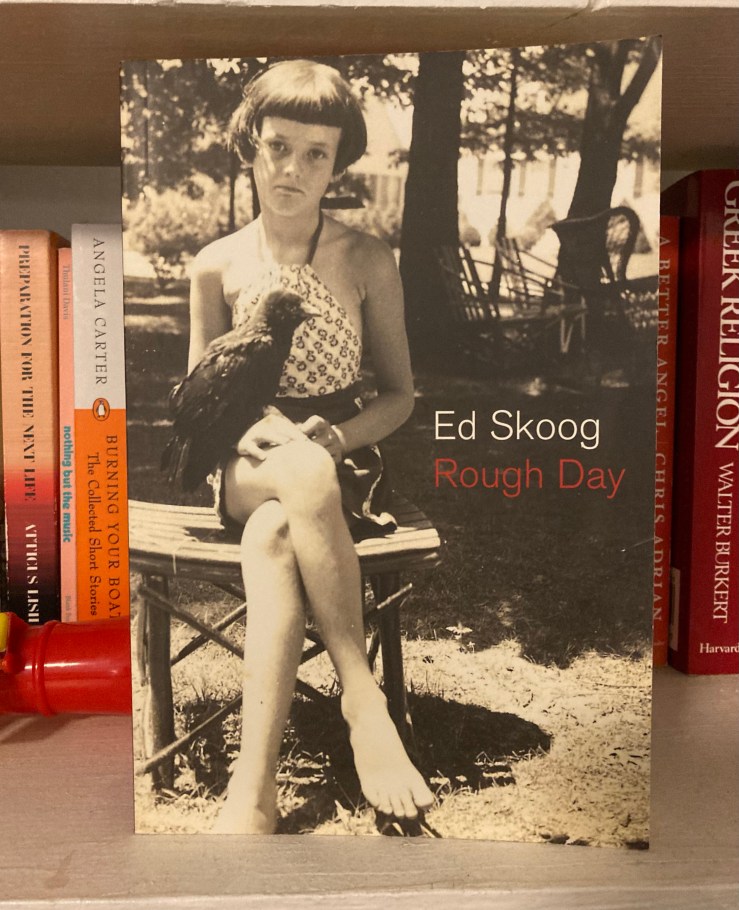
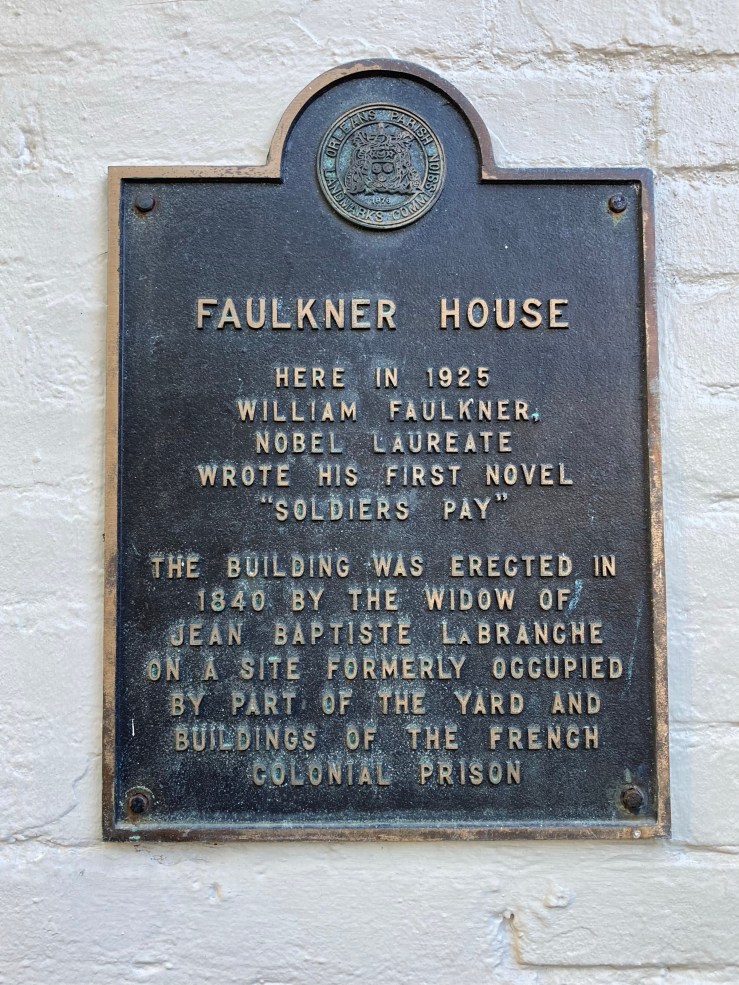
So we had a great long weekend with some friends in New Orleans. We stayed in Marigny—great food, great music, maybe too many drinks—but made it into the quarter for a few hours midday Saturday. I led our little group to Jackson Square where we respectfully finished our Bloody Marys before entering St. Louis Cathedral. My real aim though was Faulkner House Books on Pirate Alley right by the cathedral. Faulkner House imposed a strict four-guests-at-a-time policy, so my friends found a bar while I browsed. The stock in the small store is impeccable. Plenty of NYRB titles, a cadre of hardback Bolaños (including almost all of the poetry available in English), more Anne Carson than I’ve ever seen in a store. (I didn’t make it to Faulkner House when I visited NOLA in late 2016, but in 2012 I got some good stuff.) This time, I picked up a signed copy of Ed Skoog’s Rough Day, which seemed fitting—I’d scheduled a post that day of his poem “Run the Red Lights.”

After I finished up I headed to a bar on the outskirts of the Quarter to meet my friends, but first popped in to Arcadian Books & Prints on Orleans St.—perhaps the most chaotic bookstore I’ve ever been to. 

As always, I loved NOLA and look forward to returning sooner rather than later.

Nastassja Martin’s In the Eye of the Wild (Book acquired, late Oct. 2021)

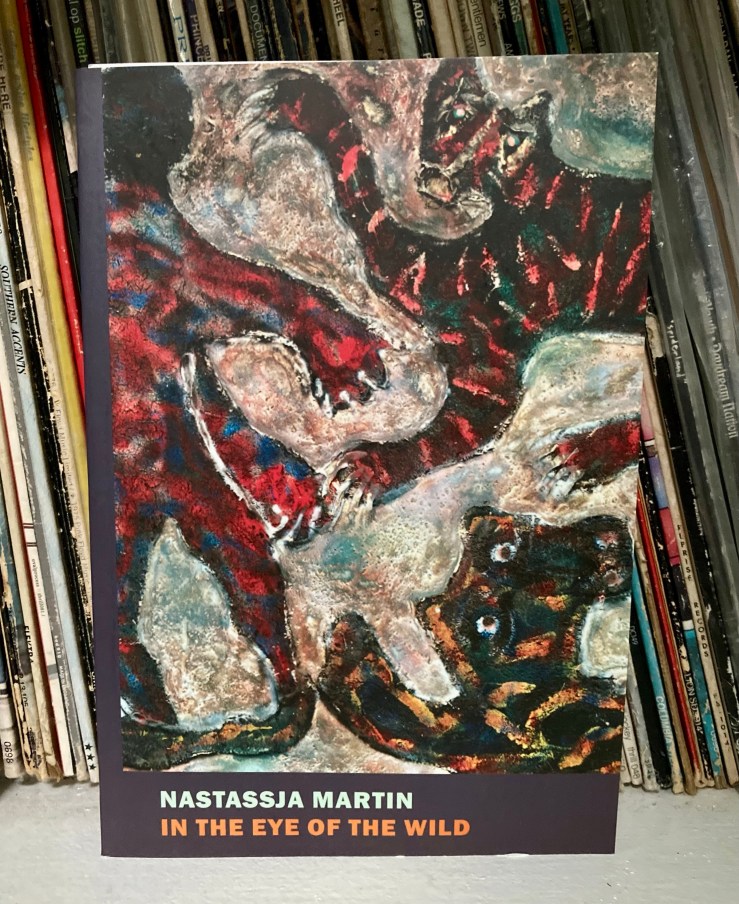
Nastassja Martin’s In the Eye of the Wild is out in a few weeks from NYRB in a translation by Sophie R. Lewis. I dove in this morning and it’s engrossing stuff. Any book that begins with a bear mauling the author is off to a weird start. Here’s NYRB’s blurb:

In the Eye of the Wild begins with an account of the French anthropologist Nastassja Martin’s near fatal run-in with a Kamchatka bear in the mountains of Siberia. Martin’s professional interest is animism; she addresses philosophical questions about the relation of humankind to nature, and in her work she seeks to partake as fully as she can in the lives of the indigenous peoples she studies. Her violent encounter with the bear, however, brings her face-to-face with something entirely beyond her ken—the untamed, the nonhuman, the animal, the wild. In the course of that encounter something in the balance of her world shifts. A change takes place that she must somehow reckon with.

Left severely mutilated, dazed with pain, Martin undergoes multiple operations in a provincial Russian hospital, while also being grilled by the secret police. Back in France, she finds herself back on the operating table, a source of new trauma. She realizes that the only thing for her to do is to return to Kamchatka. She must discover what it means to have become, as the Even people call it, medka, a person who is half human, half bear.

In the Eye of the Wild is a fascinating, mind-altering book about terror, pain, endurance, and self-transformation, comparable in its intensity of perception and originality of style to J. A. Baker’s classic The Peregrine. Here Nastassja Martin takes us to the farthest limits of human being.

Paul Griffiths’ Mr. Beethoven (Book acquired, October 2021)

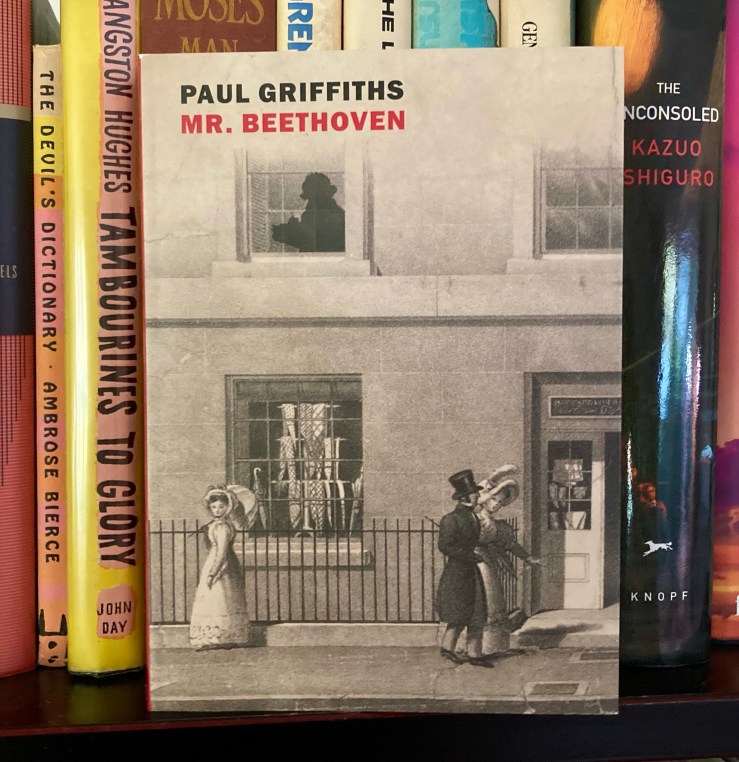
Paul Griffiths’ novel Mr. Beethoven is new this week from NYRB. Their blurb—

It is a matter of historical record that in 1823 the Handel and Haydn Society of Boston (active to this day) sought to commission Beethoven to write an oratorio. The premise of Paul Griffiths’s ingenious novel is that Beethoven accepted the commission and traveled to the United States to oversee its first performance. Griffiths grants the composer a few extra years of life and, starting with his voyage across the Atlantic and entry into Boston Harbor, chronicles his adventures and misadventures in a new world in which, great man though he is, he finds himself a new man. Relying entirely on historically attested possibilities to develop the plot, Griffiths shows Beethoven learning a form of sign language, struggling to rein in the uncertain inspiration of Reverend Ballou (his designated librettist), and finding a kindred spirit in the widowed Mrs. Hill, all the while keeping his hosts guessing as to whether he will come through with his promised composition. (And just what, the reader also wonders, will this new piece by Beethoven turn out to be?) The book that emerges is an improvisation, as virtuosic as it is delicate, on a historical theme.


The Old People (Book acquired, Sept. 2021)

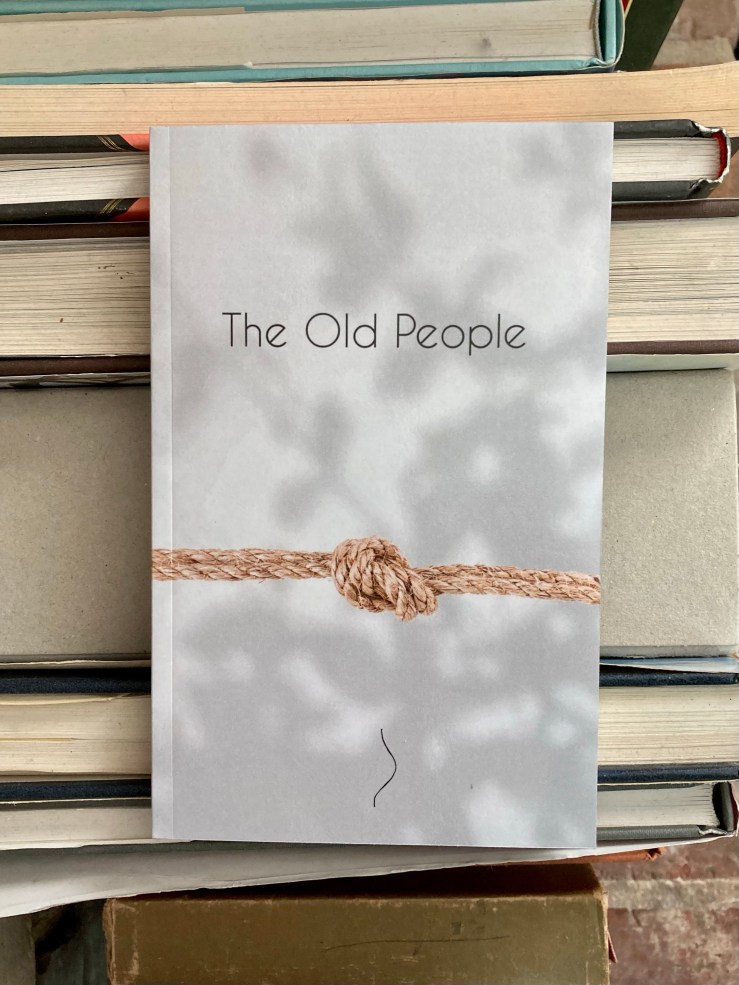
The Old People is a 2014 novel by A.J. Perry. The Old People gets a new life thanks to Carrying Woman Originals, an imprint of Cow Eye Press, which also published Perry’s novel Cow Country a few years ago.  As you can see in the photo above, Perry’s name is not on the cover. There’s no blurb on the back. Perry’s name shows up on the editions page and then on a second title page that faces the edition page (but not on the first title page).

I was under metaphorical water in September when The Old People arrived, having decided to recommit to doing a good job at my job, by which I mean trying to provide much more feedback and coaching and general mental attendance to my students than I think I was giving in the last (covid-drenched) semesters, all the while worrying about the utter idiocy of Florida Fall 2021’s Death Campaign. Anyway, I stacked it in a growing stack of other TBR copies and retreated into Barthelme’s stories I’d already read a few times when I made the time to read for pleasure.

I moved the stack around today, dropping The Old People to the floor. I picked it up, decided to read the opening pages, and then kept reading. It’s really good! I mean, it’s a really strange thing. It’s a book about tying a knot, which I guess is a metaphor, but it’s really focused on that metaphor’s concrete component. Pages and pages of digging holes and tying knots. I’m not sure exactly what The Old People reminds me of, but it taps into the intersection of myth and anthropology, all without being precious or pretentious (so far, anyway). I hunted down a blurb on Cow Eye’s site:

Since the beginnings of darkest silence the people of a mythical island have spent their days tying the ancient knot that binds them to their past. To tie this knot they must dig a hole; to dig a hole they first must have fire; and to make a fire that is hot enough for hole digging, the knot that they have been tying must finally be tied. From silence to mud to rope to knot to wood to words to fire, the Old People will work to tie their knot under the cool shade of the island’s original knotmaking.


Barthelme/Delany/Rivera Garza (Books acquired, 24 Sept. 2021)

For a few months I’ve been slowly unloading boxes from my grandmother’s old house at my beloved used bookstore, browsing a bit, and coming back with books I don’t need.

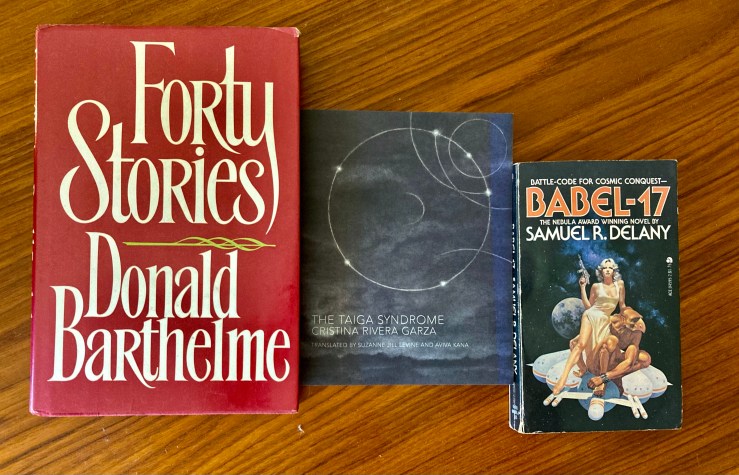
Last Friday I found a hardback first edition of Barthelme’s Forty Stories, which is cool (it’s much more handsome and plain than the paperback Penguin Contemporary Fiction edition I have). I’ve been re-reading Barthelme’s Sixty Stories and writing blog posts about them that no one reads for a few weeks now.

I also picked up Cristina Rivera Garza’s novel The Taiga Syndrome, in translation by Suzanne Jill Levine and Aviva Kana. Here’s publisher Dorothy’s blurb:

A fairy tale run amok, The Taiga Syndrome follows an unnamed Ex-Detective as she searches for a couple who has fled to the far reaches of the earth. A betrayed husband is convinced by a brief telegram that his second ex-wife wants him to track her down—that she wants to be found. He hires the Ex-Detective, who sets out with a translator into a snowy, hostile forest where strange things happen and translation betrays both sense and one’s senses. Tales of Hansel and Gretel and Little Red Riding Hood haunt the Ex-Detective’s quest into a territory overrun with the primitive excesses of Capitalism—accumulation and expulsion, corruption and cruelty—though the lessons of her journey are more experiential than moral: that just as love can fly away, sometimes unloving flies away as well. That sometimes leaving everything behind is the only thing left to do.

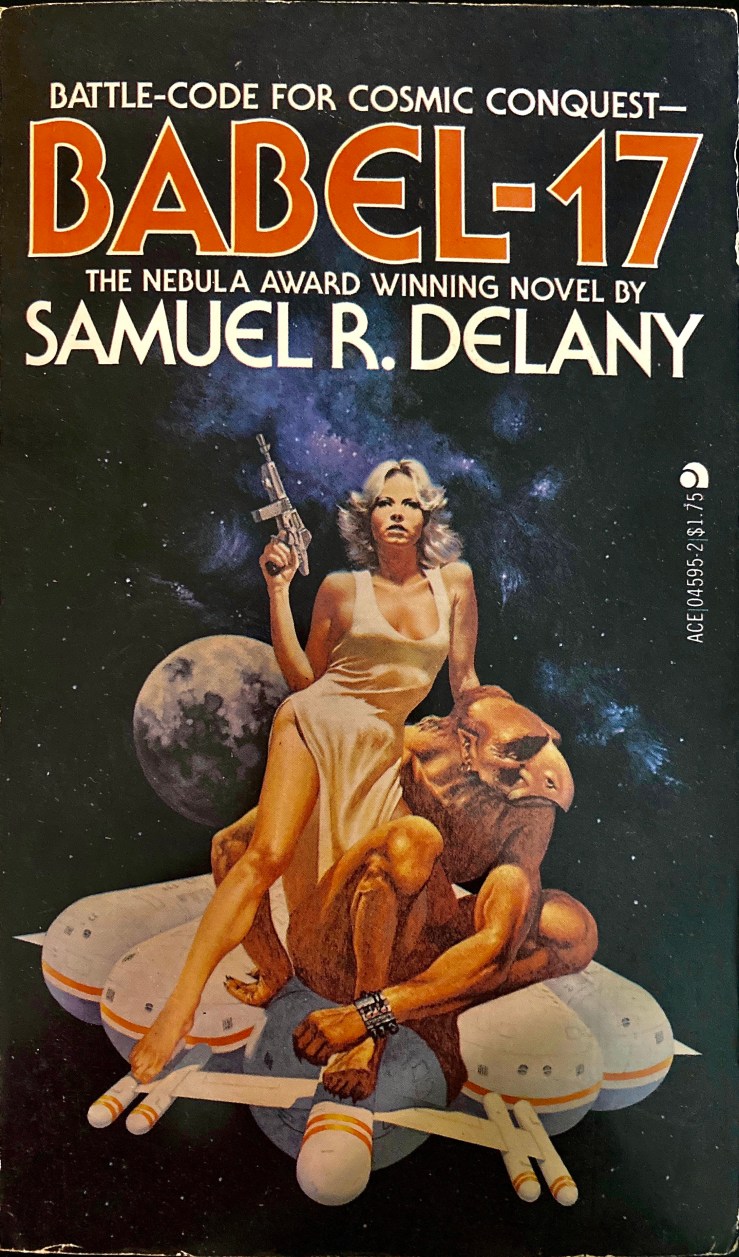
I picked up Samuel R. Delany’s novel Babel-17 too, maybe in part of a continued attempt to get into his stuff, despite stall outs, shrugs, and, Hey, that was okays, and maybe just because of this cover:

The book’s Wikipedia entry notes that, “Rush drummer and lyricist Neil Peart noted that Babel-17 was one of his early literary influences, and was an important part of the crafting of the band’s hugely successful 2112 album.”

Well there you go.

Jean Giono’s The Open Road (Book acquired like last week or maybe the end of the week before; I can’t remember, September’s been rough)

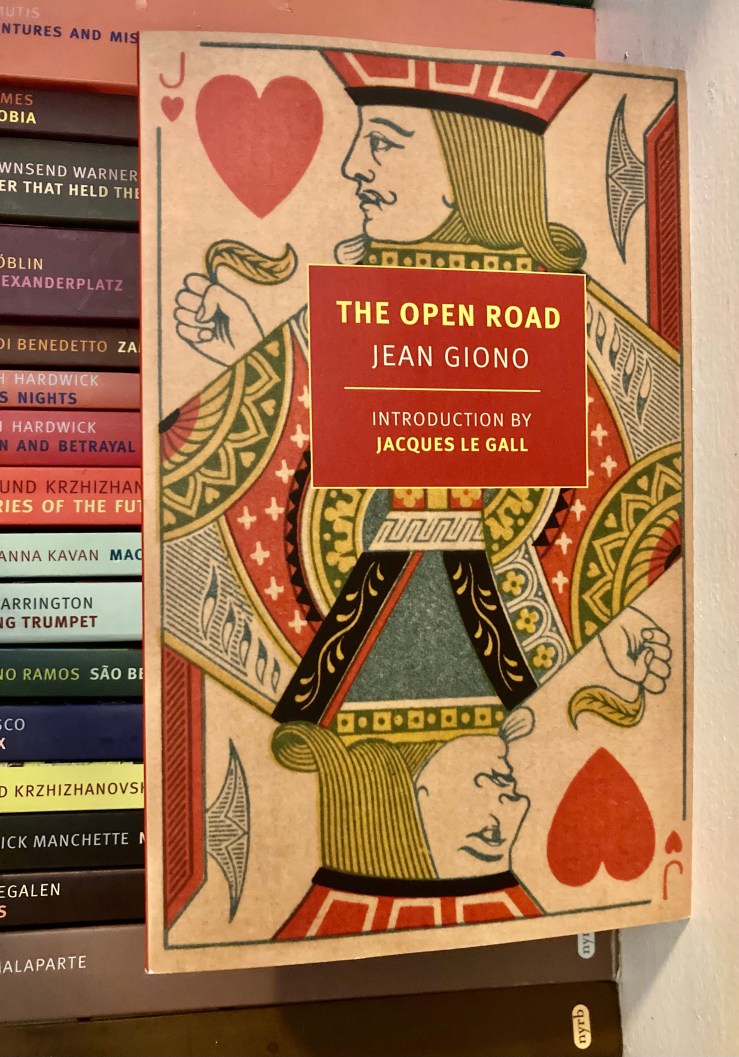
I’m a big fan of picaresque novels about con artists. Jean Giono’s The Open Road is forthcoming in translation by Paul Eprile from NYRB. Their blurb:

The south of France, 1950: A solitary vagabond walks through the villages, towns, valleys, and foothills of the region between northern Provence and the Alps. He picks up work along the way and spends the winter as the custodian of a walnut-oil mill. He also picks up a problematic companion: a cardsharp and con man, whom he calls “the Artist.” The action moves from place to place, and episode to episode, in truly picaresque fashion. Everything is told in the first person, present tense, by the vagabond narrator, who goes unnamed. He himself is a curious combination of qualities—poetic, resentful, cynical, compassionate, flirtatious, and self-absorbed.

While The Open Road can be read as loosely strung entertainment, interspersed with caustic reflections, it can also be interpreted as a projection of the relationship of author, art, and audience. But it is ultimately an exploration of the tensions and boundaries between affection and commitment, and of the competing needs for solitude, independence, and human bonds. As always in Jean Giono, the language is rich in natural imagery and as ruggedly idiomatic as it is lyrical.

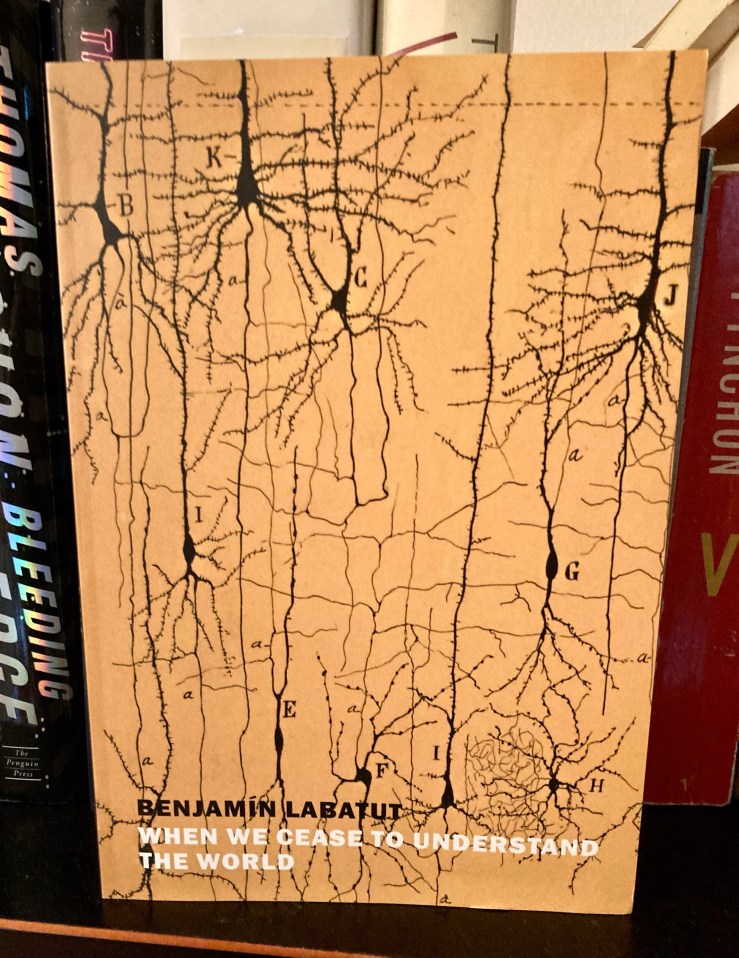
Benjamín Labatu’s When We Cease to Understand the World (Book acquired, 11 Sept. 2021)

Benjamín Labatut’s Booker shortlisted When We Cease to Understand the World is forthcoming in the US from NYRB this fall in translation by Adrian Nathan West. The book bears blurb’s from Geoff Dyer, Mark Haddon, and Philip Pullman and Barack Obama put it on his 2021 summer reading list.

NYRB’s blurb:

When We Cease to Understand the World is a book about the complicated links between scientific and mathematical discovery, madness, and destruction.

Fritz Haber, Alexander Grothendieck, Werner Heisenberg, Erwin Schrödinger—these are some of luminaries into whose troubled lives Benjamín Labatut thrusts the reader, showing us how they grappled with the most profound questions of existence. They have strokes of unparalleled genius, alienate friends and lovers, descend into isolation and insanity. Some of their discoveries reshape human life for the better; others pave the way to chaos and unimaginable suffering. The lines are never clear.

At a breakneck pace and with a wealth of disturbing detail, Labatut uses the imaginative resources of fiction to tell the stories of the scientists and mathematicians who expanded our notions of the possible.

Papa Hamlet (Book acquired, 20 Aug. 2021)

Papa Hamlet is kind of a weird one. This is the first time Arno Holz and Johannes Schlaf’s collaborative 1889 German novel has appeared in English, thanks to translator James J. Conway and publisher Rixdorf Editions. Here’s their blurb:

Adultery, vulgarity, disordered lives on the brink of collapse: the feverish existence of failed actor Niels Thienwiebel shocked German readers when Papa Hamlet was first published in 1889. In declaiming the soliloquies of his most famous role, ‘the great Thienwiebel’ finds delusional refuge from the squalid room he shares with despondent wife Amalie and infant son Fortinbras. But it was the radical style as much as the moral outrage of this novella that so confounded contemporaries. Reflecting their own bohemian Berlin milieu, Arno Holz and Johannes Schlaf showed the dream of the self-authored life turning to nightmare through apathy and self-absorption. Originally credited to a fabricated Norwegian writer, Papa Hamlet signalled the explosive arrival of Naturalism while also pointing ahead to Modernism; its appropriations, irony and play of identity even foretold Postmodernism. Appearing for the first time in English, it is teamed here with an early incarnation of the same narrative by Schlaf alongside further collaborations with Holz. Together their fearless candour and anarchic ingenuity reveal another side to German Naturalism that is well overdue for rediscovery.

Just four years in duration, the collaboration between Arno Holz (1863-1929) and Johannes Schlaf (1862-1941) created a revolution in form and content which exerted a huge influence on German literature. As well as Papa Hamlet their partnership produced the play The Selicke Family, a number of shorter prose works and an autobiographical comic. After living and working in bohemian isolation just outside Berlin, the pair split acrimoniously in 1892 and continued sniping at each other for decades as they moved on from their Naturalist origins. Arno Holz was something of a tragic figure, consumed with bitterness; works like his verse collection Phantasus were years head of their time yet security eluded him. The more amenable Johannes Schlaf enjoyed greater success but his posthumous reputation suffers from his later embrace of the Nazis. Neither writer has previously appeared in English.

Read an excerpt here.

Abe/Melchor/Schwartz (Books acquired, 13 Aug. 2021)

Got some books today.

Last month I wrote a little bit about slowly converting hundreds of my grandmother’s books into store credit. I still have a closet full of boxed books. In the post I linked to above, I wrote about picking up Kobo Abe’s Secret Rendezvous, which I still haven’t read, which didn’t stop me from picking up two more today.

I ordered a copy of his most famous novel, The Woman in the Dunes (translation by E. Dale Saunders), on the recommendation of the bookseller who rang up Secret Rendezvous for me. (We chatted about Ballard and a few other writers and I recommended Martin Bax’s overlooked novel The Hospital Ship.) I picked it up today. The Vintage International edition I got includes wonderful illustrations by Machi Abe, like the one below (unfortunately the art director did not choose to adapt one for the cover):

I also got Beasts Head for Home (translation by Richard F. Calichman), an earlier less-celebrated novel.

I’d been wanting to read Fernanda Melchor’s Hurricane Season (translation by Sophie Hughes), so I ordered it as well. It’s been compared to both 2666 and Faulkner, so I have high expectations. (Flicking through it recalls Krasznahorkai or Sebald or Bernhard—big long paragraphless chunks.)

I also picked up Francie Schwartz’s memoir Body Count, somewhat at random, based on the title and the spine. It was shelved incorrectly (or maybe correctly?) in “General Fiction.” I opened it to see that it was a first edition, 1972, dedicated to Norman Mailer. Unless I’m wrong, it’s one of only two editions, the other being a British hardback copy. Flicking through it, the chapter titles, the mostly-written-in dialogue prose, and the general themes of sex drugs rocknroll interested me enough to look it up while I was in the store. The first google hit was for an Amazon listing pricing the book at over a thousand dollars, so I left with it. The main attraction for this book seems to be a brief affair Schwartz had with Paul McCartney. I read through some of those bits, and they seem juicy enough I guess.

I’ll read either the Melchor or Abe’s The Woman in the Dunes next. (I finished Carol Emshwiller’s novel Mister Boots this morning and loved it. Not sure if I’ll ever get my shit together enough to write a real review again though. Peace.)


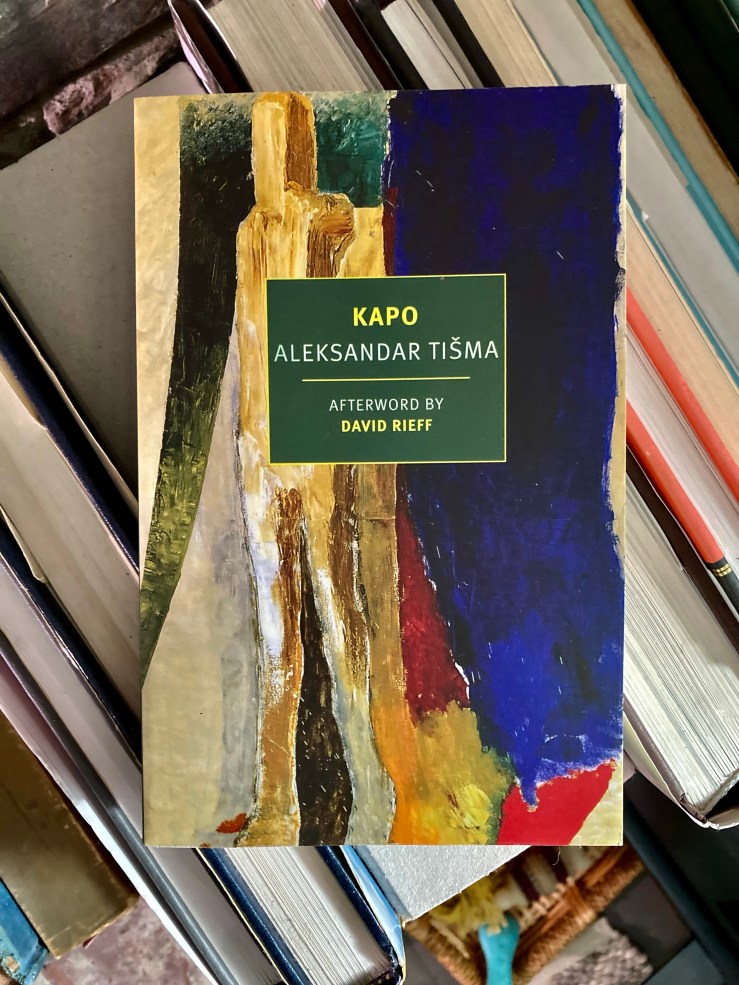
Aleksandar Tišma’s Kapo (Book acquired, 10 Aug. 2021)

Aleksandar Tišma’s Kapo is forthcoming from NYRB in translation by Richard Williams. NYRB’s blurb:

The Book of Blam, The Use of Man, Kapo: In these three unsparing novels the Yugoslav author Aleksandar Tišma anatomized the plight of those who survived the Second World War and the death camps, only to live on in a death-haunted world. Blam simply lucked out—and can hardly face himself in the mirror. By contrast, the teenage friends in The Use of Man are condemned to live on and on while enduring every affliction. Kapo is about Lamian, who made it through Auschwitz by serving his German masters, knowing that at any moment and for any reason his “special status” might be revoked.

But the war is over now. Auschwitz is in the past. Lamian has settled down in the Bosnian town of Banja Luka, where he has a respectable job as a superintendent in the railyard. Everything is normal enough. Then one day in the paper he comes on the name of Helena Lifka, a woman—like him a Yugoslav and a Jew—he raped in the camp. Not long after he sees her, aged and ungainly, Lamian is flooded with guilt and terror.

Kapo, like Tišma’s other great novels, is not simply a document or an act of witness. Tišma’s terrible gift is to see with an artist’s dispassionate clarity how fear, violence, guilt, and desire—whether for life, love, or simple understanding—are inextricably knotted together in the human breast.

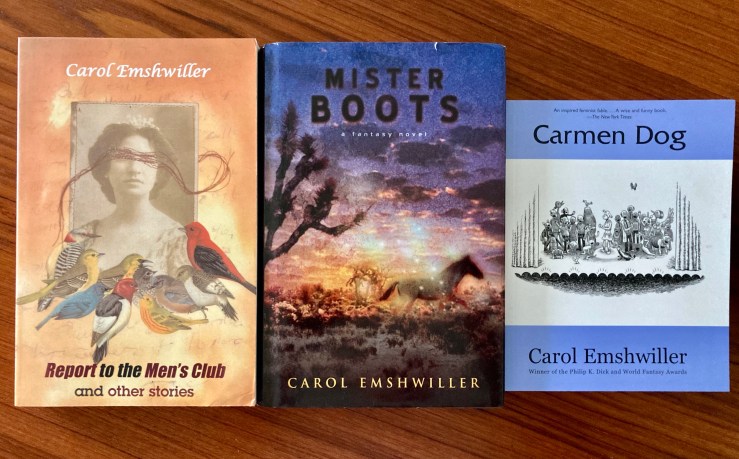
Three by Carol Emshwiller (Books acquired, sometime last week)

Small Beer Press had a warehouse sale last month, so I ordered two by the late avant-garde sci-fi writer Carol Emshwiller. I ordered Carmen Dog, which is what I take to be her most lauded novel, based on this blurb from Ursula Le Guin:
Carol is the most unappreciated great writer we’ve got. Carmen Dog ought to be a classic in the colleges by now . . . It’s so funny, and it’s so keen.

The pub’s blurb:

The debut title in our Peapod Classics line, Carol Emshwiller’s genre-jumping debut novel is a dangerous, sharp-eyed look at men, women, and the world we live in.

Everything is changing: women are turning into animals, and animals are turning into women. Pooch, a golden setter, is turning into a beautiful woman–although she still has some of her canine traits: she just can’t shuck that loyalty thing–and her former owner has turned into a snapping turtle. When the turtle tries to take a bite of her own baby, Pooch snatches the baby and runs. Meanwhile, there’s a dangerous wolverine on the loose, men are desperately trying to figure out what’s going on, and Pooch discovers what she really wants: to sing Carmen.

I also ordered a story collection, Report to the Men’s Club. Small Beer’s blurb:

 What if the world ended on your birthday — and no one came? What if your grandmother was a superhero? What if the orphan you were raising was a top-secret weapon, looked like Godzilla, and loved singing nursery rhymes? What if poet laureates fought to the death, in stadiums?

A day or two before they showed up, I found a copy of Emshwiller’s 2005 novel Mister Boots in the YA section of my local bookshop. I launched into it and I don’t think it necessarily reads as YA-as-genre, but it’s the kind of weird shit I would’ve loved to get a hold of as a sixteen year old. Blurb:

Bobby Lassiter has some important secrets—but it’s not as if anyone’s paying attention. It’s the middle of the Depression, and while Bobby’s mother and older sister knit all day to make money, Bobby explores the California desert around their home. That’s how Bobby finds Boots. He’s under their one half-dead tree, halfdead himself. Right away he’s a secret, too—a secret to be fed and clothed and taken care of, and even more of a secret because of what he can do. Sometimes Boots is a man. Sometimes he’s (really, truly) a horse. He and Bobby both know something about magic—and those who read this book will,

Le Guin also blurbs this book.

I hate to admit that I had never heard of Emshwiller until last month. In a strange moment of synchronicity, Joachim Boaz, who blogs at Science Fiction and Other Suspect ruminations, reviewed a bunch of older Emshwiller stories this July. On twitter, he described Emshwiller as “an author who should be a feminist science fiction icon.” I’m excited to read more.

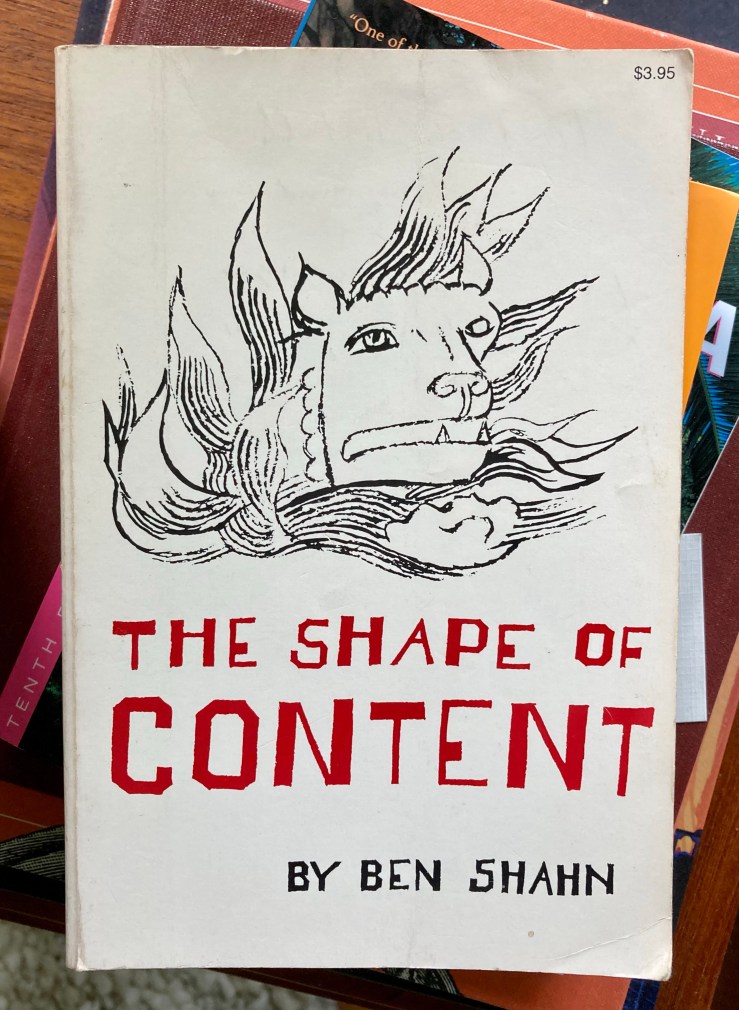
Ben Shahn’s The Shape of Content (Book acquired, 23 July 2021)

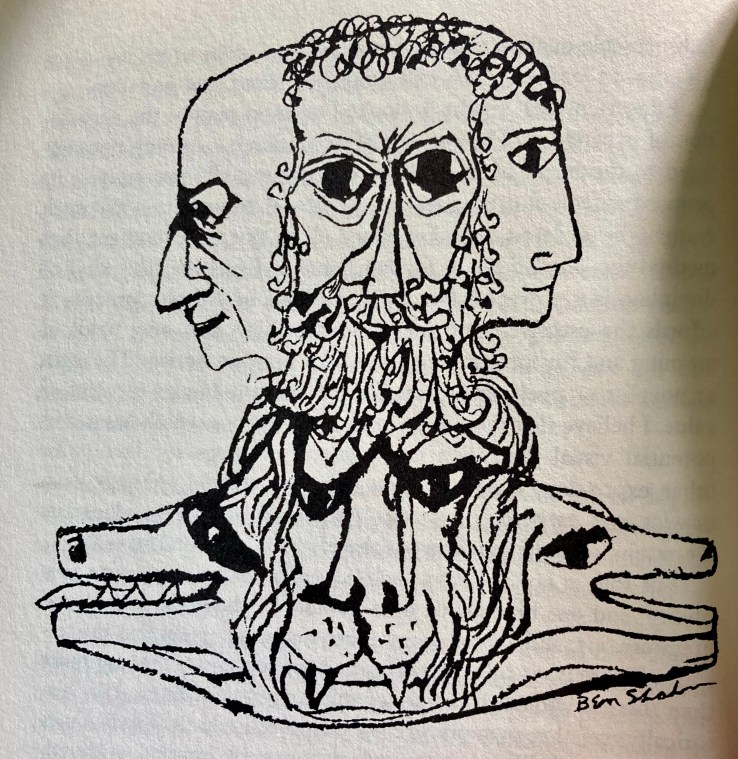
I went by my favorite used bookstore the other week to pick up the copy of Tatyana Tolstoya’s novel The Slynx last week. (I’m halfway through it, and it’s fantastic stuff—dirty, cruel, funny, unexpectedly moving—like a filthy generative loam that isn’t exactly poisonous, but will certainly yield side effects.) After seeing this diagram earlier in the week, I looked for a copy of Thomas C. Oden’s 1969 multidisciplinary

text Structure of Awareness. I was unsuccessful there, but I did spy something called The Shape of Content by the artist Ben Shahn. I’ve long been a fan of his work, so I picked it up and thumbed through. I ended up reading most of it this weekend.

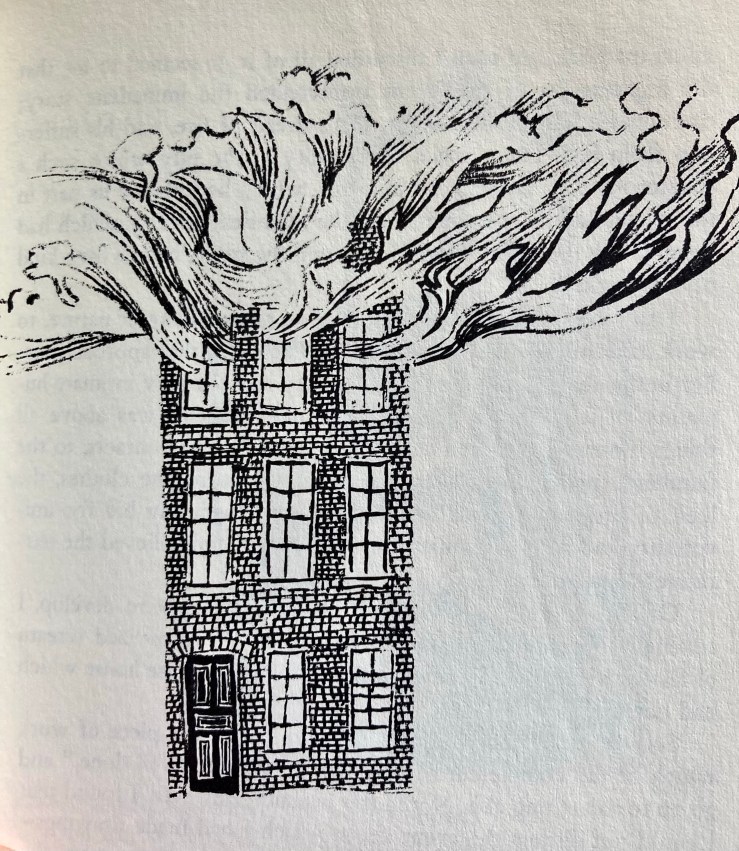
The Shape of Content (the title now is not exactly ironic, I guess) collects a series of lectures Shahn gave to Harvard students in the late 1950s. The first lecture is a somewhat boring apologia, a kind of What the hell am I doing here?, but the following material is good stuff, if not exactly fresh. There are plenty of illustrations too, mostly unrelated to the, uh, content of the words (although they are of course intimately related). Illustrations like the one above, and this one, below, make the 144 pager seem, well, kinda short.

Here’s Harvard UP’s blurb:

In his 1956–57 Charles Eliot Norton Lectures, the Russian-born American painter Ben Shahn sets down his personal views of the relationship of the artist―painter, writer, composer―to his material, his craft, and his society. He talks of the creation of the work of art, the importance of the community, the problem of communication, and the critical theories governing the artist and his audience.

Tatyana Tolstaya’s The Slynx (Book acquired, 23 July 2021)

I’ve been wanting to read Tatyana Tolstoya’s post-apocalyptic novel The Slynx for a few years now. I finally broke down and ordered a copy through my local book store, and started it yesterday—fantastic stuff: gross, grimy, raw, inventive, perplexing, upsetting, and very very funny. Jamey Gambrell’s translation transmits the playful noisy distortions that must surely be in the original Russian. I’m about fifty pages in, and so far it reminds me of the Strugatski brothers’ stuff—pessimistic, wry, earthy, as well as Russell Hoban’s Riddley Walker, and Gely Korzhev’s mutant paintings.

Here’s NYRB’s blurb:

Two hundred years after civilization ended in an event known as the Blast, Benedikt isn’t one to complain. He’s got a job—transcribing old books and presenting them as the words of the great new leader, Fyodor Kuzmich, Glorybe—and though he doesn’t enjoy the privileged status of a Murza, at least he’s not a serf or a half-human four-legged Degenerator harnessed to a troika. He has a house, too, with enough mice to cook up a tasty meal, and he’s happily free of mutations: no extra fingers, no gills, no cockscombs sprouting from his eyelids. And he’s managed—at least so far—to steer clear of the ever-vigilant Saniturions, who track down anyone who manifests the slightest sign of Freethinking, and the legendary screeching Slynx that waits in the wilderness beyond.

Tatyana Tolstaya’s The Slynx reimagines dystopian fantasy as a wild, horripilating amusement park ride. Poised between Nabokov’s Pale Fire and Burgess’s A Clockwork Orange, The Slynx is a brilliantly inventive and shimmeringly ambiguous work of art: an account of a degraded world that is full of echoes of the sublime literature of Russia’s past; a grinning portrait of human inhumanity; a tribute to art in both its sovereignty and its helplessness; a vision of the past as the future in which the future is now.

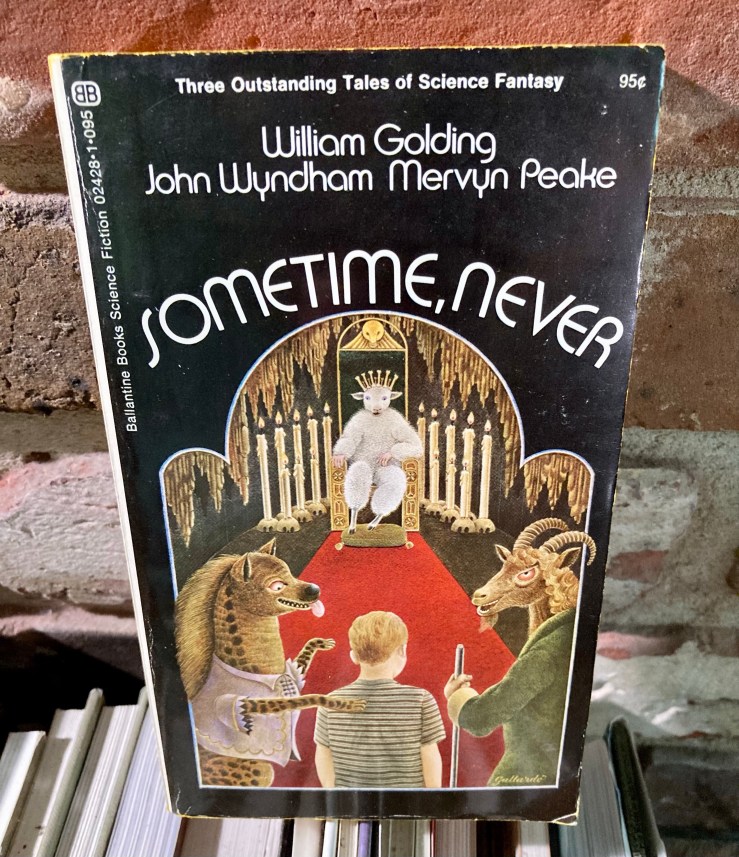
Sometime, Never (Book acquired, 15 July 2021

Mervyn Peake’s Gormenghast trilogy was one of my favorite reads last year, so when I spotted a used copy of the anthology Sometime, Never, I picked it up. Along with novellas by William Golding (Envoy Extraordinary) and John Wyndham (Consider Her Ways), this 1956 includes Peake’s Boy in Darkness, a novel that takes place between the first two Gormenghast books. Gervasio Garvado’s cover illustration seems to depict Peake’s tale. Blurb:

Each of the three tales of imagination in this book is by a master of the art, and in each there is incident and invention enough to surpass most full-length novels.

Envoy Extraordinary, by William Golding, tells of a barbarian genius who arrives in ancient Rome with three inventions–and the results are appalling.

Consider Her Ways, by John Wyndham, presents a shocking and utterly convincing picture of a world of women–without men.

Boy In Darkness, by Mervyn Peake, is a venture into a dream-like world of strangeness and terror–quite unlike anything you have ever read, and unforgettable.

Kobo Abe’s Secret Rendezvous (Book acquired, 8 July 2021)

So well my grandmother has Alzheimer’s and we’ve had to move her to a memory care facility and pack up all the many many things in her house and so on and etc., the house she’s lived in forever, or at least for close to what I conceive of as forever, and it’s been painful and I’m not writing about it here or now, but she was a reader, still is a reader, although she doesn’t remember what she reads, although I guess I don’t remember most of what I read, but I do remember the feeling of reading a certain book, or at least the feeling of the feeling of reading a certain book, but I don’t know what it’s like for her to read now, I just know that she loved reading—not the kind of stuff I like, but a reader nonetheless, and so well now anyway I have boxes and boxes of her books to go trade in for store credit at the local shop, a thing, the trading I mean, that I try to do slowly, one box (or sometimes bag) at a time, so as not to overburden the kindly bookbuyers, who seem to be always dealing with box after box after musty box of books obtained in similar situations (i.e., grandmothers, grandfathers, beloved old great uncles and strange wonderful aunts, you know the type, who, for whatever sad reason, no longer require books in such a volume)—and so like I don’t bring in but one or two bags or boxes at a time, a strategy that also gives me some small license to browse and browse and browse and


And so last Thursday I picked up Kobo Abe’s 1977 novel Secret Rendezvous. I’ve always wanted to read Abe—specificically his first novel, Inter Ice Age 4, but I’ve never found it. (I have found his most famous novel, Woman in the Dunes, but for whatever reason failed to pick it up.) Secret Rendezvous, in English translation by Juliet Winters Carpenter, seems to be a surrealistic tale of “a man’s desperate search for his vanished wife in a vast underground hospital.” The blurb on the back also mentions a test-tube baby, an impotent health administrator, and a nymphomaniac. Maybe I’ll read it next.