
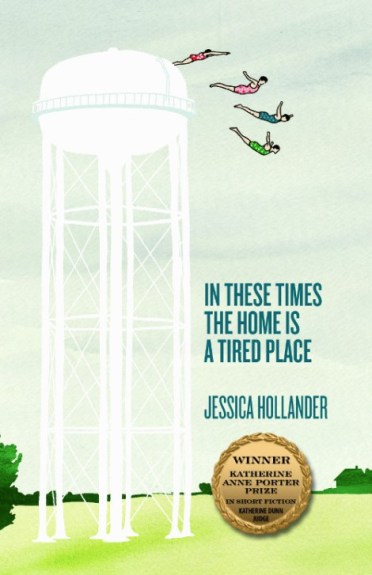
 I was deeply impressed by the short stories in Jessica Hollander’s In These Times the Home Is a Tired Place (University of North Texas Press). In my review, I wrote that
Every story in Jessica Hollander’s début collection In These Times the Home Is a Tired Place feels thoroughly real, deeply authentic, and if we already know the contours of these plots—perhaps having lived some of them ourselves—Hollander makes us experience them anew with her bristling, strange sentences. Hollander writes here of families on the brink and families broken, families fragmenting and families forgetting. She conjures domestic spaces limned with ghosts and memories, children and parents who aren’t quite sure how to be a family, but who nevertheless try—even if trying is really just imagining.
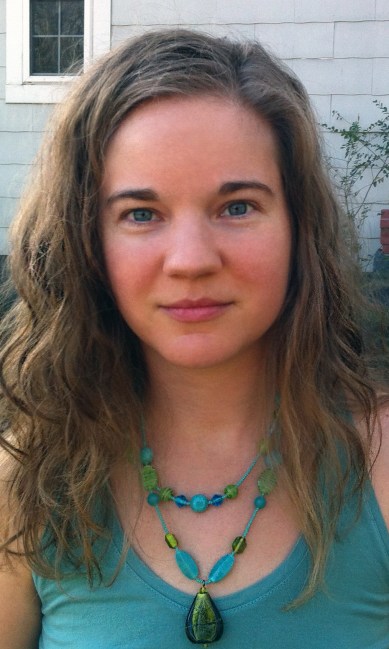
Jessica was kind enough to discuss her writing with me over a series of emails, sharing her thoughts on sentences, families, and zombies.
Biblioklept: When did you start working on the stories that make up In These Times the Home Is a Tired Place? The collection feels really unified in its tone, themes, and images. Many of the stories were published in different journals and magazines before they were collected—did you always envision them collected? Were there stories you left out that you felt didn’t fit?
Jessica Hollander: I worked on a lot of these stories while in my MFA program, so over four years, though a couple date back even further than that. I was interested in trying out new voices and forms, but I kept examining similar questions and anxieties, just from different angles. During the years I wrote most of these stories, I lived through a lot of “big” moments – marriage, parenthood, home-ownership – and writing was a way to deal with some of my anxieties in doing what our society tells us we should do. I constantly questioned why I wanted these things—if I really wanted them or if I’d only been conditioned to want them. I thought a lot about identity and what happens to it once you start taking on roles with so much cultural baggage attached to them, as I became a wife, a mother, etc., which is why in some of the stories the characters are even referred to by these titles. It’s a battle between the role and their individuality.
I didn’t think about writing the stories for a collection. I knew I was “worrying” particular subject matter that was important to me, and it was exciting to see trends in tone and imagery develop, but it wasn’t until I’d accumulated a mass of work that I started sifting through it. And many stories were left out that didn’t seem to fit or that years later didn’t interest me as much anymore.
Biblioklept: One thing I love about the stories in the collection is how they take on those “big” moments you mention—how alienating it is all of a sudden to inhabit a new role that’s already been socially scripted in some way. Do your stories start from those conflicts, or from something else? I mean, do you start by trying to write (through, against, about) the anxieties, or do the stories germinate in other ways?
JH: Most of the time I don’t have a clear idea of what I’m going to write about. I’ll start with a character or a small scene inspired by something I saw or experienced, but often I’ll start with style—wanting to try out a modular story or write about characters who have titles instead of names or I’ll want to try a particular point of view I haven’t written from in awhile or I will write a sentence and see if I’m interested in the voice. I have to be interested in the sentence level to push a story further, so sentences come before themes or even character for me. But that’s what was strange and exciting about the stories that came together to form this collection—I seemed to keep worrying over these similar themes, anxieties over identity and role-shifts, but it wasn’t planned. I guess that’s the part of writing that the subconscious has a bigger hand in. A lot of my extended family was surprised when they read the collection because the stories seemed so pessimistic about things like family and connections between people. They tell my parents, “But she had such a happy childhood!” And now they see me, and I am married and have kids and (besides general anxieties) I am happy (though it’s hard to write that word without quotations—what does “happy” mean?). And of course these stories are fiction, it isn’t me, but it all still comes from me and things I’m thinking about on some level.
Biblioklept: I can imagine those family reactions—because the stories seem so real, so true, so authentic. But I think a lot of that authenticity originates from the sentences, which you bring up here. In many of the stories, the reader gets a whole story out of just a sentence or two, and part of that story comes from the disconnect between the way a character might perceive the world and the way that the other sentences have represented that world—like the poor babysitter of the title story. Is the sentence as important to you as a reader as it is to you as a writer?
JH: The sentence is important to me as a reader. There was a time when I didn’t really even think about what language could do to a story—I only noticed macro-level things like plot and character, then later I got more interested in image and metaphor. Now, to me, it seems like the central energy of a piece comes from the sentences. If I’m not interested in the writing, if there’s no strangeness or surprises or just some poetic sense of words interacting with each other, I rarely stick around to find out about plot and character.
Biblioklept: I think the sentences in your collection mediate the tension between the simultaneous reality/irreality of domestic life, of the weirdness of being in a family—that a family is a set of contingent relationships, never stable. In one of our earlier emails, you mentioned working on new material with a “hyper-real semi-comic tone but with some darker threads” and that there might be “zombies and haunted houses and things” in your latest work. Is this a conscious shift away from the content of your collection, which focuses so much on families?
JH: Oh, no, the stories I’m working on now are still all about family and relationships, but I’m having some fun drawing from the female gothic tradition, examining the dark sides of domestic life and pressures of social/gender roles. Gothic literature is interested in what’s unexplainable, both inside and outside of us, and looks at impulses based in emotion and not logic. There’s hauntings from the past and monsters inside of us, battles between logic and emotion, repressing feelings that later manifest destructively, and humans being drawn to the sublime and the numinous: things that inspire both fear and awe, that remind us of our own demise, but encourage us to see beauty in sadness, death, and suffering. So certainly relevant to families!
Biblioklept: You teach writing now here in the South—do you think that the Southern Gothic tradition has influence you at all? Why do you think that we so strongly identify Southern lit as Gothic?
JH: Gothic is often about hauntings from the past, and I think a lot of people view the south as haunted, by slavery and economic disparities and the war. A lot of southern gothic writers (Faulkner, O’Connor, Williams) confront or critique southern romanticism, a longing for the old south as a magical place where chivalry and passionate emotions thrived that was unfortunately corrupted/destroyed by outsiders and modernity. But we know the old south was not so beautiful as that; it was of course a complex place where a lot of dark things passed between humans. Classic Gothic literature (Frankenstein, Dracula, Castle of Otranto, Edgar Allan Poe’s work) is romantic, too, with long passages about the sublimity of nature and characters moved by strong emotions (including grief, despair, anger, and love), but Gothic always exposes the dark urges of humans, and how people inevitably contribute to their own demise.
Biblioklept: What authors do you encourage your students to read?
JH: I’m really conscious of exposing students to a lot of different styles of writing, from traditional realism to postmodern experiments, so we can talk about how choices different authors make in terms of language, image, structure, portrayal of reality, and so on shape theme and meaning. This seems like the best way to prepare students to make conscientious choices when defining their own aesthetic interests and to recognize the wide variety of options available to them. Toward the realism side of things, I like Michael Cunningham, Dan Chaon, and Jennifer Egan; for maximalism, Alice Munroe; Lorrie Moore, Miranda July and Raymond Carver I use for hyper-realism and minimalism; Christine Schutt for lyricism; Sherman Alexie, Haruki Murakami, and Kellie Link for magical realism and surrealism; Jessica Hagedorn and Michael Martone for formalism; and George Saunders and Stacey Richter for absurdism. And it depends on the class. I use different authors for the gothic class and for the linked story workshop I’m teaching now, but I always try for variety.
Biblioklept: Have you ever stolen a book?
JH: I haven’t stolen a book from a store or library, but there’s one book that I borrowed and never returned: the Complete Stories by Flannery O’Connor. When I lived in North Carolina a few years, I lent a writer friend my copy of Salinger’s Catcher in the Rye, which she amazingly hadn’t read, and she lent me the O’Connor book, which amazingly I hadn’t read. I was happy with the one I ended up with. She must’ve been, too, or maybe she forgot we’d switched, but we never swapped those books back to each other. Maybe it foreshadowed my move further south to Alabama and my interest in dark humor and gothicism.








 Biblioklept