“Art” — Ralph Waldo Emerson

“Art” by Ralph Waldo Emerson

Because the soul is progressive, it never quite repeats itself, but in every act attempts the production of a new and fairer whole. This appears in works both of the useful and the fine arts, if we employ the popular distinction of works according to their aim either at use or beauty. Thus in our fine arts, not imitation but creation is the aim. In landscapes the painter should give the suggestion of a fairer creation than we know. The details, the prose of nature he should omit and give us only the spirit and splendor. He should know that the landscape has beauty for his eye because it expresses a thought which is to him good; and this because the same power which sees through his eyes is seen in that spectacle; and he will come to value the expression of nature and not nature itself, and so exalt in his copy the features that please him. He will give the gloom of gloom and the sunshine of sunshine. In a portrait he must inscribe the character and not the features, and must esteem the man who sits to him as himself only an imperfect picture or likeness of the aspiring original within.

What is that abridgment and selection we observe in all spiritual activity, but itself the creative impulse? for it is the inlet of that higher illumination which teaches to convey a larger sense by simpler symbols. What is a man but nature’s finer success in self-explication? What is a man but a finer and compacter landscape than the horizon figures,—nature’s eclecticism? and what is his speech, his love of painting, love of nature, but a still finer success,—all the weary miles and tons of space and bulk left out, and the spirit or moral of it contracted into a musical word, or the most cunning stroke of the pencil?

But the artist must employ the symbols in use in his day and nation to convey his enlarged sense to his fellow-men. Thus the new in art is always formed out of the old. The Genius of the Hour sets his ineffaceable seal on the work and gives it an inexpressible charm for the imagination. As far as the spiritual character of the period overpowers the artist and finds expression in his work, so far it will retain a certain grandeur, and will represent to future beholders the Unknown, the Inevitable, the Divine. No man can quite exclude this element of Necessity from his labor. No man can quite emancipate himself from his age and country, or produce a model in which the education, the religion, the politics, usages and arts of his times shall have no share. Though he were never so original, never so wilful and fantastic, he cannot wipe out of his work every trace of the thoughts amidst which it grew. The very avoidance betrays the usage he avoids. Above his will and out of his sight he is necessitated by the air he breathes and the idea on which he and his contemporaries live and toil, to share the manner of his times, without knowing what that manner is. Now that which is inevitable in the work has a higher charm than individual talent can ever give, inasmuch as the artist’s pen or chisel seems to have been held and guided by a gigantic hand to inscribe a line in the history of the human race. This circumstance gives a value to the Egyptian hieroglyphics, to the Indian, Chinese and Mexican idols, however gross and shapeless. They denote the height of the human soul in that hour, and were not fantastic, but sprung from a necessity as deep as the world. Shall I now add that the whole extant product of the plastic arts has herein its highest value, as history; as a stroke drawn in the portrait of that fate, perfect and beautiful, according to whose ordinations all beings advance to their beatitude? Continue reading ““Art” — Ralph Waldo Emerson”
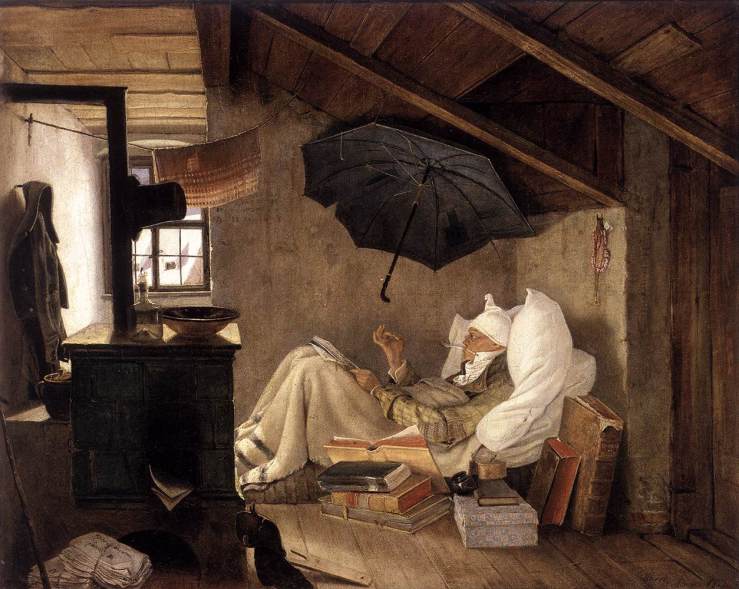
The Poor Poet — Carl Spitzweg

the-poor-poet-1837

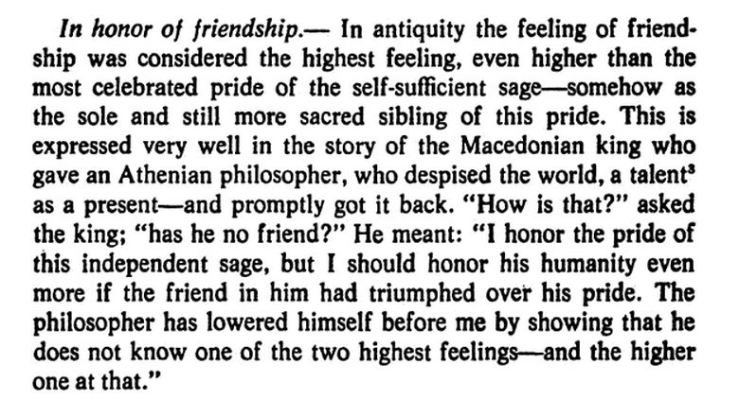
“In Honor of Friendship” — Nietzsche

Capture

Benjamin Black’s Vengeance (Book Acquired, 3.06.2013)

20130308-110039.jpg

Vengeance, the latest in Benjamin Black’s Quirke series. From Janet Maslin’s New York Times review last year:

Vengeance” once again leads Quirke into his favorite kind of trouble: “yet another morass of human cupidity and deceit,” involving the deaths of powerful men and the foxy insolence of their glamorous widows. It breaks no new ground.

But why should Benjamin Black tamper with a winning formula? The crimes aren’t graphic or even terribly central. And the detecting questions don’t count for much. The books are far more notable for malaise, atmospherics, sexual chemistry and vast amounts of swirling tobacco smoke and mind-muddling alcohol, without which justice could apparently never prevail.

Vengeance is new in trade paperback from Picador.


Against the Day — Luc Tuymans

“On Being Idle” — Jerome K. Jerome

“On Being Idle” by Jerome K. Jerome

Now, this is a subject on which I flatter myself I really am au fait. The gentleman who, when I was young, bathed me at wisdom’s font for nine guineas a term—no extras—used to say he never knew a boy who could do less work in more time; and I remember my poor grandmother once incidentally observing, in the course of an instruction upon the use of the Prayer-book, that it was highly improbable that I should ever do much that I ought not to do, but that she felt convinced beyond a doubt that I should leave undone pretty well everything that I ought to do.

I am afraid I have somewhat belied half the dear old lady’s prophecy. Heaven help me! I have done a good many things that I ought not to have done, in spite of my laziness. But I have fully confirmed the accuracy of her judgment so far as neglecting much that I ought not to have neglected is concerned. Idling always has been my strong point. I take no credit to myself in the matter—it is a gift. Few possess it. There are plenty of lazy people and plenty of slow-coaches, but a genuine idler is a rarity. He is not a man who slouches about with his hands in his pockets. On the contrary, his most startling characteristic is that he is always intensely busy.

It is impossible to enjoy idling thoroughly unless one has plenty of work to do. There is no fun in doing nothing when you have nothing to do. Wasting time is merely an occupation then, and a most exhausting one. Idleness, like kisses, to be sweet must be stolen. Continue reading ““On Being Idle” — Jerome K. Jerome”

Cubby Controller — David Jien

David_Jien_Cubby_Controller_2012_2097_412

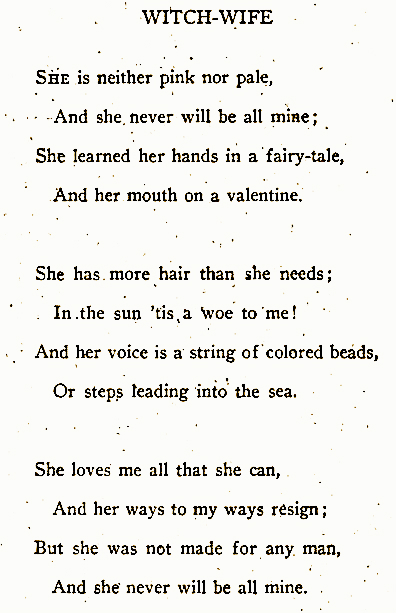
“Witch Wife” — Edna St. Vincent Millay

witchwife

Self-Portrait in the Green Bugatti — Tamara de Lempicka

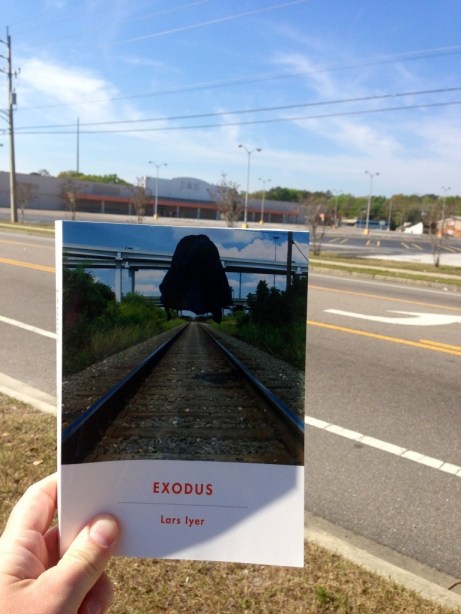
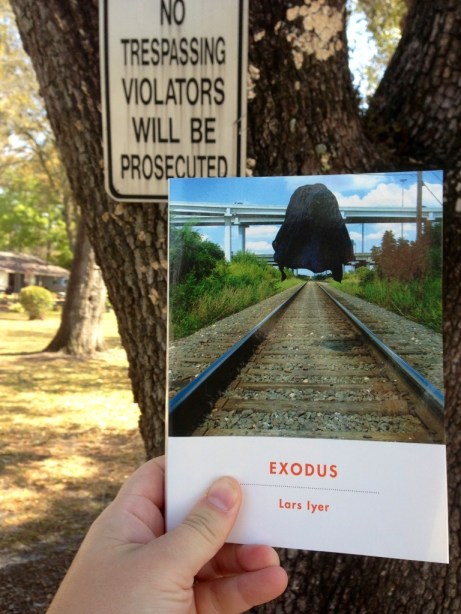
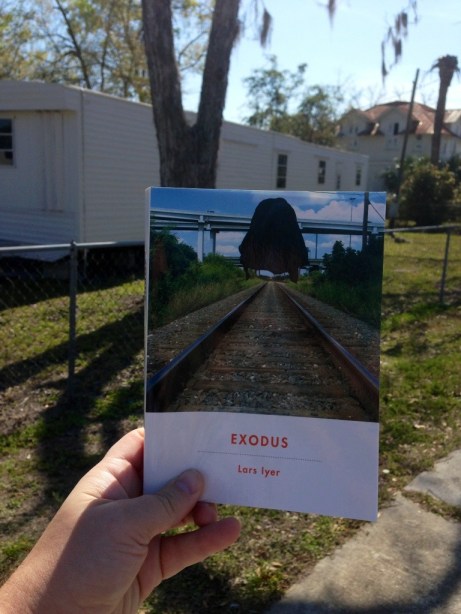
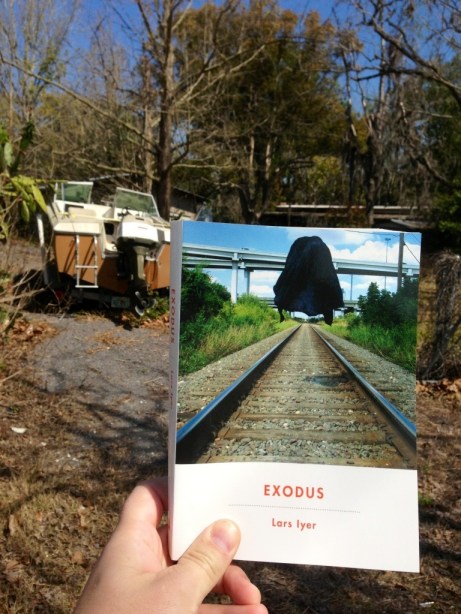
This Is Not a Review of Lars Iyer’s Exodus

20130309-113841.jpg
Exodus with Trash and Sticks
20130309-113851.jpg
Exodus with Stream
20130309-113900.jpg
Exodus with Abandoned Kmart
20130309-113937.jpg
Exodus with Empty Patriotic Chairs Facing Little League Baseball Game
20130309-114003.jpg
Exodus with Empty Lot with Litter
20130309-114013.jpg
Exodus with Canadian Geese and Retention Pond
20130309-114024.jpg
Exodus with No Trespassing Sign
20130309-114035.jpg
Exodus with Stray Shopping Cart Behind Dumpster
20130309-114047.jpg
Exodus with Immobile Mobile Home
20130309-114100.jpg
Exodus with Boat
20130309-114110.jpg
Exodus with Cacti
20130309-114126.jpg
Exodus with Clapboard Church

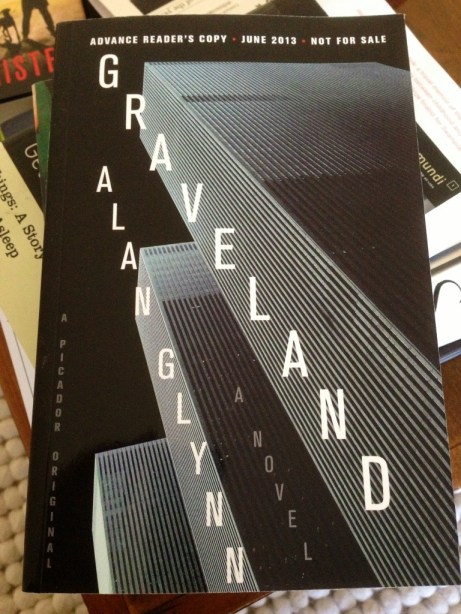
Graveland (Book Acquired, 2.28.2013)

20130308-110013.jpg

Graveland, a thriller from Alan Glynn, comes out this summer. Here’s publisher Picador’s blurb:

On a bright Saturday morning, a Wall Street investment banker is shot dead while jogging in Central Park. Later that same night, one of the savviest hedge-fund managers in the city is gunned down outside a restaurant. Are these killings a coordinated terrorist attack, or just a coincidence? Investigative journalist Ellen Dorsey has a hunch they’re neither, and her obsessive attention to detail leads her to an unexpected conclusion. Days later, when an attempt is made on the life of another CEO, the story blows wide open—and Ellen’s theory is confirmed. Racing to stay ahead of the curve, she soon encounters Frank Bishop, a recession-hit architect, whose daughter’s disappearance is tied to the murders.

Set deep in a shadow world of crooked business deals and radical politics, Alan Glynn’s Graveland is a mind-blowing thriller.

“The Return” — Joseph Conrad

“The Return” by Joseph Conrad

The inner circle train from the City rushed impetuously out of a black hole and pulled up with a discordant, grinding racket in the smirched twilight of a West-End station. A line of doors flew open and a lot of men stepped out headlong. They had high hats, healthy pale faces, dark overcoats and shiny boots; they held in their gloved hands thin umbrellas and hastily folded evening papers that resembled stiff, dirty rags of greenish, pinkish, or whitish colour. Alvan Hervey stepped out with the rest, a smouldering cigar between his teeth. A disregarded little woman in rusty black, with both arms full of parcels, ran along in distress, bolted suddenly into a third-class compartment and the train went on. The slamming of carriage doors burst out sharp and spiteful like a fusillade; an icy draught mingled with acrid fumes swept the whole length of the platform and made a tottering old man, wrapped up to his ears in a woollen comforter, stop short in the moving throng to cough violently over his stick. No one spared him a glance.

Alvan Hervey passed through the ticket gate. Between the bare walls of a sordid staircase men clambered rapidly; their backs appeared alike—almost as if they had been wearing a uniform; their indifferent faces were varied but somehow suggested kinship, like the faces of a band of brothers who through prudence, dignity, disgust, or foresight would resolutely ignore each other; and their eyes, quick or slow; their eyes gazing up the dusty steps; their eyes brown, black, gray, blue, had all the same stare, concentrated and empty, satisfied and unthinking.

Outside the big doorway of the street they scattered in all directions, walking away fast from one another with the hurried air of men fleeing from something compromising; from familiarity or confidences; from something suspected and concealed—like truth or pestilence. Alvan Hervey hesitated, standing alone in the doorway for a moment; then decided to walk home. Continue reading ““The Return” — Joseph Conrad”

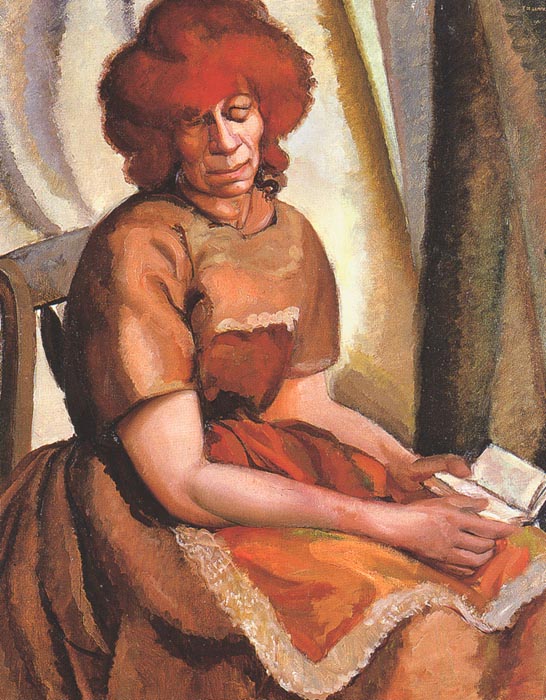
Redheaded Woman Reading — Tamara de Lempicka

redheaded-woman-reading-1922

See The Corner, David Simon’s Dress Rehearsal for The Wire

Continue reading “See The Corner, David Simon’s Dress Rehearsal for The Wire”

The Penguin Guide to Children and Hallucinogens

Children and hallucinogens

From Scarfolk Council, one of the finest sites I’ve seen in sometime. Their self-description:

Scarfolk is a town in North West England that did not progress beyond 1979. Instead, the entire decade of the 1970s loops ad infinitum. Here in Scarfolk, pagan rituals blend seamlessly with science; hauntology is a compulsory subject at school, and everyone must be in bed by 8pm because they are perpetually running a slight fever. “Visit Scarfolk today. Our number one priority is keeping rabies at bay.” For more information please reread.

The site’s got this wonderfully weird Wickerman / Ballard / Prisoner vibe to it. Very cool stuff.


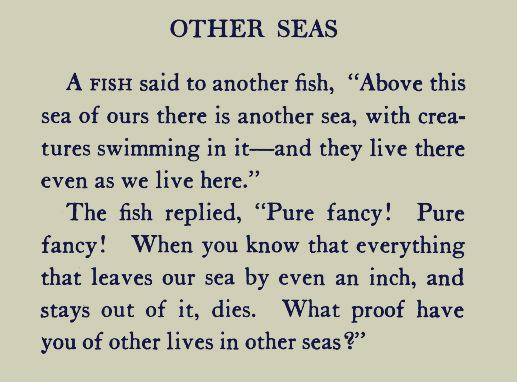
“Other Seas” — Kahlil Gibran

Capture

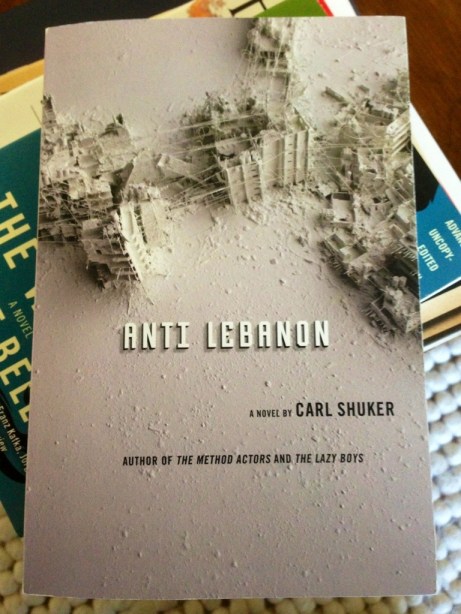
Anti Lebanon (Book Acquired, 3.07.2013)

20130308-110219.jpg

Dipped into this one this morning—first chapter—and so far so good: Carl Shuker’s Anti Lebanon is simultaneously weird and very readable, a mix that reminds me very much of William Gibson. Great cover too. Full review to come, but for now, here’s publisher Counterpoint Press’s blurb:

It is the Arab Spring and the fate of the Christians of the Middle East is uncertain. The many Christians of Lebanon are walking a knife-edge, their very survival in their ancestral refuge in doubt, as the Lebanese government becomes Hezbollah-dominated, while Syria convulses with warring religious factions. Anti Lebanon is a cross-genre political thriller and horror story embedded within these recent events, featuring a multiethnic Christian family living out the lingering after-effects of Lebanon’s civil war as it struggles to deal with its phantoms, its ghosts, and its vampires.

Leon Elias is a young and impoverished Lebanese man whose older sister had joined a Christian militia and has been killed. He becomes caught up in the recent “little war” in Beirut, when the Shi’a resistance/militia Hezbollah takes over most of the city. In this milieu—the emptied streets of Christian east Beirut, the old shell-scarred sandstone villas, the echoing gunfire—he becomes involved, only partly by choice, in the theft of a seriously valuable piece of artisanal jewelry, and is bitten—like a vampire—by its Armenian maker.

Events take a ghostly and mysterious turn as the factions jostling for power in Beirut begin to align against him and his family, and he is forced to flee the sullied beauty of that wonderful and pitiful country, in this story of love and loss, of the civil war and the Arabization of the “Switzerland of the Middle East,” and of contemporary vampires—beings addicted to violence, lies, and baser primal drives.

Carl Shuker is a remarkable writer. A storyteller in the tradition of Celine and J. G. Ballard, no one alive writes better sentences. Anti Lebanon will delight his fans and entrance anyone new to his fine work.