“I Found His Name Carved into the Wooden Desk Where I Sat” — Harold Brodkey on Tennessee Williams

Harold Brodkey talks Tennessee Williams—and other St. Louis writers—in his interview with The Paris Review

INTERVIEWER

You grew up in St. Louis, which has a reputation for spawning writers—Eliot, Inge, Williams, Burroughs . . .

BRODKEY

People in St. Louis talked, oddly enough, like simpler Eliots, inhibited William Burroughses, and shy Tennessee Williamses. Williams and I had the same high school English teacher.

INTERVIEWER

Did she say Williams was a pretty good student?

BRODKEY

She said he was a horrible person. I found his name carved into the wooden desk where I sat. Tennessee Williams was the obverse of Eliot, and at the same time was like him. When I was at Harvard I’d get drunk and I’d recite Eliot and I’d sound like a character in Williams. I don’t think I honestly ever saw a Williams play, or reacted to one as a member of the audience because I identify so with the background out of which the work comes. All of the writers from St. Louis have a vaguely similar dependence on metaphor . . . Burroughs, Fred Seidel . . .

I do think, seriously but without much study, that the influence of Eliot, and the influence of Eliot’s becoming famous, did affect people like Williams and William Inge. I knew Inge in New York at the Actors’ Studio. Tennessee Williams and I used to swim at the West Side Y together but we never spoke to each other.

INTERVIEWER

Did you ever clap as he walked by, cheer for him?

BRODKEY

No. At bottom there’s a dishonesty in artists.
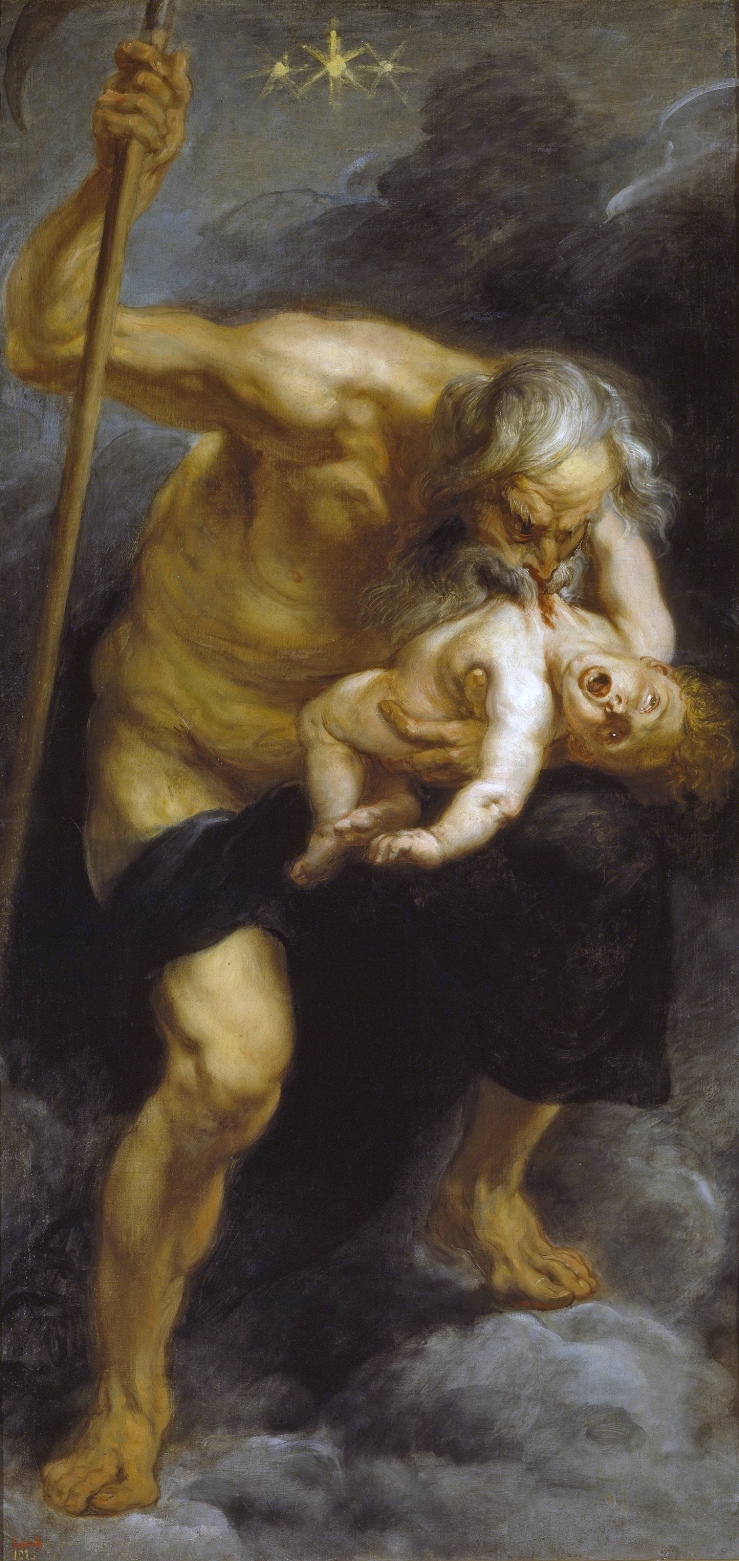
Saturn Devouring His Son — Peter Paul Rubens

Six (More) Stoner Novels (And a Bonus Short Story)

One year ago, to celebrate 4/20, Sam Munson at the Daily Beast wrote an article praising “The Best Stoner Novels.” Not a bad list—Wonder Boys, sure, Invisible Man, a bit of a stretch, The Savage Detectives, a very big stretch, but sure, why not. Anyway, six more stoner novels (not that we advocate the smoking of the weed)—

Junkie, William Burroughs

Burroughs’s (surprisingly lucid) early novel Junkie may take its name from heroin, but it’s full of weed smoking. Lesson: weed smoking leads to heroin. And the inevitable search for yage.

Inherent Vice, Thomas Pynchon

Doc Sportello, the wonky PI at the off-center of Pynchon’s California noir, is always in the process of lighting another joint, if not burning his fingers on the edges of a roach. A fuzzy mystery with smoky corners.

Infinite Jest, David Foster Wallace

Hal Incandenza, protagonist of Wallace’s opus, spends much of his time hiding in the tunnels of Enfield Tennis Academy, feeding his bizarre marijuana addiction, which is, in many ways, more of an addiction to a secret ritual than to a substance. Hal’s hardly the only character in IJ who likes his Mary Jane; there’s a difficult section near the novel’s beginning that features a minor character preparing to go on a major weed binge. His pre-smoking anxiety works as a challenge to any reader seeking to enter the world of Infinite Jest.

The Lord of the Rings, J.R.R. Tolkien

I’m pretty sure “pipe-weed” isn’t tobacco.

Chronic City, Jonathan Lethem

I kind of hated Chronic City, a novel where characters seem to light up joints on every other page. It seems to have been written in an ambling, rambling fog, absent of any sense of immediacy, urgency, or, uh, plot. Bloodless stuff, but, again, very smoky.

Stoner, John Williams

Okay. Stoner has nothing to do with marijuana. But, hey, it’s called Stoner, right?

Bonus short story: Raymond Carver’s “Cathedral”

Carver’s classic story features a myopic narrator who comes up against his own shortcomings when he meets an old friend of his wife, a blind man who ironically sees deeper than he does. After drinking too much booze, they spark up, share a doob, and take in a documentary about European cathedrals. Great stuff.


Roberto Bolaño on Blood Meridian

A slice of Roberto Bolaño’s review of Cormac McCarthy’s Blood Meridian (from New Directions’ forthcoming Between Parentheses, a collection of Bolaño’s essays, newspaper columns, and other ephemera)——

Blood Meridian is also a novel about place, about the landscape of Texas and Chihuahua and Sonora; a kind of anti-pastoral novel in which the landscape looms in its leading role, imposingly—truly the new world, silent and paradigmatic and hideous, with room for everything except human beings. It could be said that the landscape of Blood Meridian is a landscape out of de Sade, a thirsty and indifferent landscape ruled by strange laws involving pain and anesthesia, laws by which time often manifests itself.

Sally Potter and Tilda Swinton Discuss Their Film Orlando

Orlando — Virginia Woolf

The plot of Virginia Woolf’s novel Orlando hangs on two key conceits: the title character transforms from male to female; the title character is immortal. Orlando has been a staple of gender studies courses since before such courses existed, and is in many ways the pioneer text (or one of the pioneer texts) of an entire genre. And that’s great and all—there are plenty of stunning passages where Woolf has her character explore what it means to be a man and what it means to be a woman and how power and identity and all that good stuff fits in—but what I enjoyed most about Orlando was its rambling, satirical structure.

Orlando functions like an inverted picaresque, detailing the adventures of an aristocrat who finds him- (and then her-) self flung into every sort of damn predicament: Elizabethan intrigues; ice-skating during the Great Frost; a dalliance with a Russian princess; an attempt at artistic patronage; an attempt at art; an ambassadorship in Constantinople; an encounter with the Fates (I suspect); time with a band of gypsies; time with Alexander Pope; a marriage to the great sea captain Marmaduke Bonthrop Shelmerdine; and, finally (if that adverb might apply to an apparent immortal), the publication of her great small work The Oak Tree. Sorry to laundry-list plot points, but, gosh, don’t you want to read this now—or at least listen to the audiobook, like I did?

Woolf seems to be channeling Voltaire’s Candide at all times, subtly ridiculing era after era, until Orlando finally emerges into Woolf’s (Modernist) present—it’s the fuzziest moment of the novel for our protagonist, as if she, or the author operating behind her, cannot parse out the post-industrial landscape. It’s also the moment at which Woolf’s prose becomes its most fluid and free—its most Woolfian, I suppose.

I thoroughly enjoyed Clare Higgins’s smart, confident reading of this unabridged production (BBC/Chivers). At not quite nine hours long, it’s a great way to spend a few afternoons of chores or gardening, or perhaps a week’s commute. It made me fish out Mrs. Dalloway, which I haven’t read since my undergrad days, and shove it into a “to read” stack. It also prompted me to revisit Sally Potter’s admirable 1992 film adaptation starring Tilda Swinton, whose very being seems like call and cause enough for an Orlando movie. I recommend both the audiobook and the film. Great stuff.

Who’s Afraid of Kathy Acker? (Film Trailer)

“Now I Was a Great Squid God” — A Weird Passage from Jonathan Littell’s Weird Novel, The Kindly Ones

I’ve been listening to  an audiobook of Jonathan Littell’s strange novel about an SS officer, The Kindly Ones, and this passage made me dig out my paperback copy in order to share the weirdness—

Finally I dozed off and had a strange, striking dream. Now I was a great Squid God, and I was ruling over a beautiful walled city of water and white stone. The center, especially, was all water, and tall buildings rose up all around. My city was peopled with humans who worshipped me. I had delegated part of my power and authority to one of them, my Servant. But one day I decided I wanted all these humans out of my city, at least for a while. The order went out, propagated by my Servant, and immediately droves of humans started fleeing out the gates of the city, to wait in hovels and shantytowns out in the desert beyond the walls. But they didn’t leave fast enough to my liking, and I began to thrash violently, churning back up the water of the center with my tentacles, then coiling them back and bearing down on swarms of terrible humans, lashing out and roaring with my terrible voice: Out! Out! Out!” My Servant ran frantically about, commanded, guided, prompted the sluggish, and in this way the city emptied out. But in the buildings closest to the walls and farthest from the water where I was giving vent to my divine rage, some groups of humans were not heeding my commands. These were foreigners, not really aware of my existence, of my power over this city. They had heard the evacuation orders, but thought them ridiculous and were ignoring them. My Servant had gone to see these groups one after another, to convince them diplomatically to leave: such as this conference of Finnish officers, who protested that they had rented teh hotel and conference room and paid in advance, and wouldn’t leave just like that. With them, my Servant had to lie skillfully, explaining for instance that there was an alert, a grave security problem, and that they had to evacuate for their own safety. I found this deeply humiliating, since the real reason was my Will; they were supposed to leave just because I wanted it, not because they were coaxed. My rage increased. I thrashed about and roared more violently than ever, sending great waves crashing through the city.

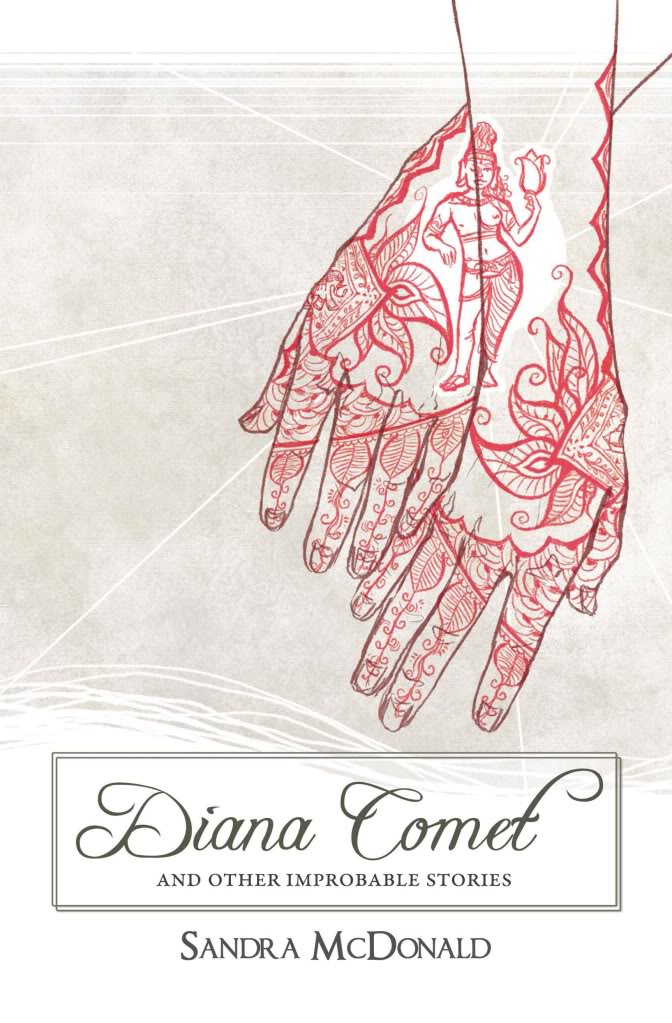
Diana Comet and Other Improbable Stories — Sandra McDonald

Fantasy gets a bad rap. While science-fiction has enjoyed something of a restoration of sanctified hipness in recent years, thanks in part to the genre-bending efforts of authors like David Foster Wallace and Jonathan Lethem, as well as a reappraisal of the works of authors like Philip K. Dick and Margaret Atwood, novels that find themselves classified in the fantasy genre can often be outright dismissed as having no artistic or literary merit. Amazingly, even the work of king daddy J.R.R. Tolkien still finds itself in need of critical defense from time to time. And while fantasy certainly has more than its fair share of rote genre exercises, including countless copycat cash-ins, it’s also an imaginative space buzzing with invention and the capacity for social commentary. Sandra McDonald’s Diana Comet and Other Improbable Stories exemplifies the best kind of invention and social commentary that we might expect from post-modern fantasy.

Diana Comet collects fifteen stories connected via shared motifs, characters, and settings. McDonald crafts a world that inverts or displaces our own. This world, with its lands like New Dalli and Massasoit, is slightly decentered from our own: we find familiar iterations of our history here—there’s war and imperialism, colonialism and poverty, homophobia and racism—but the idioms are all slightly off, displaced enough be paradoxically familiar and alienating at the same time. “Diana Comet and the Lovesick Cowboy,” for instance, seems set in a 19th-century American milieu amidst a civil war (there’s even a poet named Whit Waltman), yet the transposition, articulate as it is, is also nebulous, disturbing even. McDonald’s spare distortion forces the reader to reconsider his own notions of cultural history, and she does this to great effect, whether taking on gender ideologies (“Diana Comet and the Disappearing Lover”), homophobia (“The Fireman’s Fairy”), or racism (“Fay and the Goddesses”). None of these issues are presented glibly, didactically, or clumsily; indeed, it’s through the slightest distortions of fantastic imagination that the reader must re-examine his own society through McDonald’s reflective lens. Most of the stories end with enumerated discussion questions, often silly or whimsical, that serve to puncture the seriousness of the tales; they sometimes force details from our “real” world into the texts of Diana Comet in a way that’s doubly disconcerting. It’s a meta-textual gambit that pays off, however, both in belying any self-seriousness to the narrative proper as well as establishing a thin membrane between fantasy and reality—a membrane of questions that allows the reader to “play,” to disrupt that boundary through his or her own imagination.

McDonald’s world-building in Diana Comet never comes at the expense of good storytelling. With a few exceptions, most of the stories here piece together the frame of a world, leaving the reader’s imagination to fill in most of the gaps. Most of the stories seem to take place in an iteration of the nineteenth century, but some to be set earlier, later, and even in a displaced future, like “Kingdom Coming,” a playful apocalypse tale. McDonald’s expositive restraint does wonders; too many writers of inventive fiction feel the need to tell the reader every single detail and nuance of their worlds. I think here of Ursula K. LeGuin’s marvelous novel The Left Hand of Darkness, a book toward which I believe Diana Comet bears considerable comparison, particularly with respect to the exploration of how gender and sexuality functions in a society. While LeGuin’s book is terrific and fully-realized, she spends a bit too much narrative energy transmitting every detail of that realization to her audience. Diana Comet is rewarding in its gaps and mysteries, as well as its ability to evoke a sense of the uncanny in its reader. Oh, I should probably add that McDonald can write; her prose is elegant, lively, wry, and spare.

Diana Comet is a smart, thoughtful post-modern fantasy that may appeal to the kids out there who have outgrown the narrative simplicity of Harry Potter and are looking for a challenge; it will undoubtedly appeal to fans of writers like LeGuin and Atwood, writers who know how to channel narrative traditional tropes of imaginative fiction through distortion and ambiguity and force their readers to think, even as they entertain. Recommended.

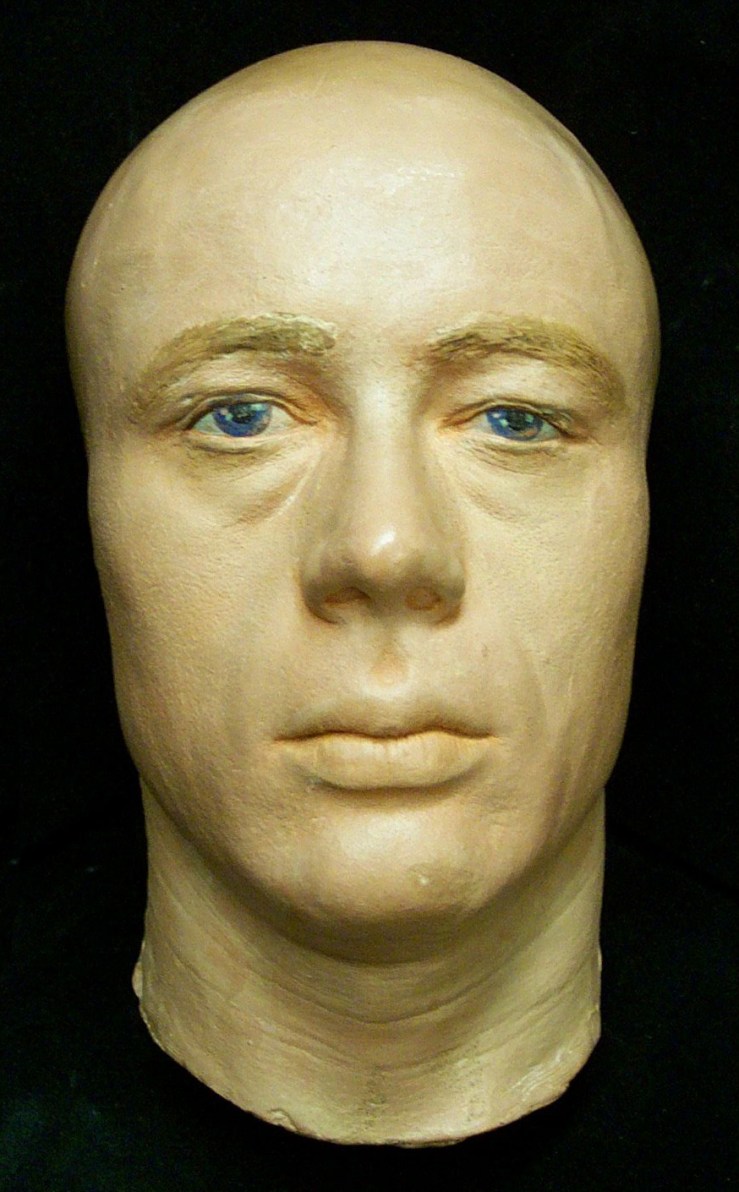
James Dean’s Death Mask

J.R.R. Tolkien, In His Own Words (1968 BBC Documentary)

From the BBC series In Their Own Words: British Authors. Fantastic 1968 documentary: Tolkien walks about Oxford, shares insights on his work, looks at trees, and contemplates his love of beer. Great stuff.

“Toolin’ Around” — Barry Hannah’s Tuscaloosa

Barry Hannah takes John Oliver Hodges on a tour of Tuscaloosa and shows him the shack where he wrote Ray; he also shares some wild stories from his alcoholic past. Read more at the Oxford American.

We Peruse the Latest Issue of Oxford American: Barry Hannah, Eudora Welty, Black Republicans, and Fried Green Tomatoes

The spring issue of Oxford American is out now, sporting a Barry Hannah cover. In addition to a review of Hannah’s Long, Last, Happy: New and Collected  Stories, the issue features eight pages of remembrances by Hannah’s students, fans, and friends (along with pictures, of course). In fact, John Oliver Hodges’s review of Long, Last, Happy is really a memoir itself. Here’s an anecdote he shares—

Barry called me his amanuensis, and as such I heard him talk a bit about his feelings on fathers and sons and beautiful women, heartache, football, stool softener, and Krystal hamburgers. On the day that Ole Miss beat Gainesville, 31-30, it happened that we were in Tuscaloosa. To celebrate the win, we drove around the town in his silver Chrysler, his pistol in its holster under the seat. He gave me the grand tour, and as I drove, I videotaped him talking beside me, drinking a Budweiser tallboy (a rare treat to lessen the abiding pain), and smoking a USA, his brand. As we approached the green shack by the tracks where he wrote Ray, he said, “It was probably the saddest time in my life.”

(Quick editorial note: I’m glad that Hannah and Hodges could celebrate Ole Miss’s narrow victory, but Tebow and the Gators did go on to win every other game of the season, including the SEC Championship and the BCS title bowl. So there).

In addition to the Hannah stuff, there’s a great essay on fried green tomatoes, a look at what it means to be a black Republican, an appreciation of Southern hip-hop, stories and poems, and a series of letters by Eudora Welty, including her hilarious application to The New Yorker. Good stuff.

While I’m shilling for Oxford American, I might as well point out that they’re hosting a Summit for Ambitious Writers this June. It’s on top of a freaking mountain! Biblioklept fave Wells Tower will be there. Sounds cool.

Melville House Publishes Imre Kertész’s “Missing” Novel, Fiasco

Melville House has just published Imre Kertész’s Fiasco, available for the first time in English translation (Tim Wilkinson). Fiasco is the final part of a trilogy, along with Fatelessness and Kaddish for an Unborn Child, that tells the story of the author’s time in the Auschwitz and Bunchenwald concentration camps, and his eventual return to an alien home. When I interviewed Melville House publisher Dennis Loy Johnson last year, he was enthusiastic about the book—

We’re doing another one with Kertész next year, which is a big novel called Fiasco. He wrote a trilogy years ago about his experience in the camps. What was he, fifteen or something, when he was sent to Auschwitz-Birkenau, working in a Nazi factory trying to turn coal into gasoline? And he wrote a novel called Fatelessness about that and another one called Kaddish for an Unborn Child. And Knopf published Kaddish and Fatelessness but they never published Fiasco. So we’re really excited about that.

I haven’t read Fatelessness or Kaddish, but I very much enjoyed Kertész’s novella The Union Jack, and I’ve been enjoying Fiasco as well so far. It’s a strange novel, beginning with a 100 page prologue of sorts detailing “the old boy” (surely Kertész) riffling through a cabinet full of old sketches, half-formed ideas, and old papers in the hopes of generating a new novel, a novel that will save his name from sinking into oblivion—a fate he wishes to avoid for (apparently) purely monetary reasons. This prologue is recursive, full of parenthetical asides, diversions, and a general Kafkaesque anxiety about the narrative proper, the Auschwitz story, I suppose, that I guess will begin with chapter one (on page 119!). Anyway, more to come.

“I Rarely Remember a Book About Which I Have Had Such Violent Arguments” — W.H. Auden Reviews J.R.R. Tolkien

From the Oh, This Exists? Department — W.H. Auden’s 1956 New York Times review of J.R.R. Tolkien’s The Return of the King. It’s a fantastic review that defends Tolkien’s literary authenticity against his many haters, using Erich Auerbach’s groundbreaking work Mimesis as a central arguing point. Here’s Auden’s intro, but again, I recommend reading the whole review—

In “The Return of the King,” Frodo Baggins fulfills his Quest, the realm of Sauron is ended forever, the Third Age is over and J. R. R. Tolkien’s trilogy “The Lord of the Rings” complete. I rarely remember a book about which I have had such violent arguments. Nobody seems to have a moderate opinion: either, like myself, people find it a masterpiece of its genre or they cannot abide it, and among the hostile there are some, I must confess, for whose literary judgment I have great respect. A few of these may have been put off by the first forty pages of the first chapter of the first volume in which the daily life of the hobbits is described; this is light comedy and light comedy is not Mr. Tolkien’s forte. In most cases, however, the objection must go far deeper. I can only suppose that some people object to Heroic Quests and Imaginary Worlds on principle; such, they feel, cannot be anything but light “escapist” reading. That a man like Mr. Tolkien, the English philologist who teaches at Oxford, should lavish such incredible pains upon a genre which is, for them, trifling by definition, is, therefore, very shocking.

Vampire — Edvard Munch

“Good Luck Editing This” — Outtakes from David Foster Wallace’s ZDF Interview