The Complete Short Stories of Mark Twain

TheCompleteShortStoriesOfMarkTwain

1971 Bantam edition.

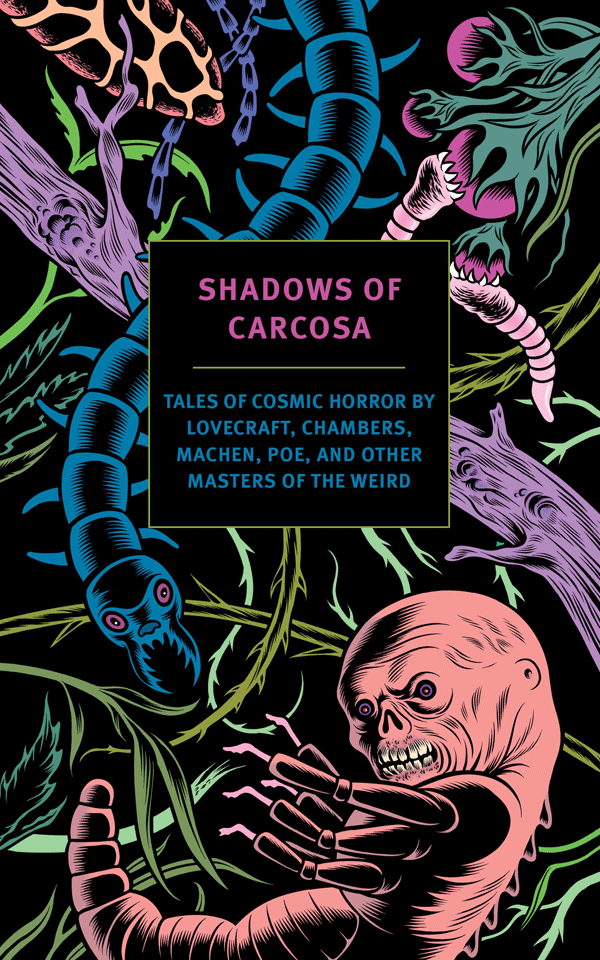
Charles Burns’s Shadows of Carcosa Cover

productimage-picture-shadows-of-carcosa-456

Nude Reading on the Seashore — William Orpen

Saint Jerome Reading with the Lion — Andrea Mantegna

Evan Dara (Books acquired 1.28/29/2015)

IMG_4990

Girl Reading — Georges Valmier

Selections from One-Star Amazon Reviews of Harper Lee’s To Kill a Mockingbird

[Ed. note: The following citations come from one-star Amazon reviews of Harper Lee’s novel To Kill a Mockingbird. (See also: Thomas Pynchon’s Mason & Dixon, Chinua Achebe’s Things Fall Apart, Mary Shelley’s Frankenstein, Thomas Pynchon’s Gravity’s RainbowGeorge Orwell’s 1984, Herman Melville’s Moby-Dick, James Joyce’s Ulysses and David Markson’s Wittgenstein’s Mistress). I’ve preserved the reviewers’ own styles of punctuation and spelling].

the prejudice part was good

A classic american piece of caca

A court case is hardly a thrilling idea.

It mainly compared people to Mockingbirds

it was just like any other book, nothing special.

It uses unutterable words and displeasing language.

I’m not rascist at all, so don’t make that assumption either.

Worst book ever written, a disgrace to American Liturature

Well, at least it was in my own language. Otherwise, it sucked.

I reckon this be anoth’r classic that doesn’t deserve that status.

I don’t like these kinds of books anyway, but I was assigned to read it! Yuk!

Simply put, this is a novel about racism written for people who received their knowledge about racism from this book!

If people would just leave old prejudices to heal themselves, it would all be better, and best of all, this book wouldn’t exist

In 1960 Harper Lee published To Kill A Mockingbird. About thrity years earlier William Faulkner had published the short story Dry September. ITS THE SAME STORY.

Although the author had some good points, I must say that this book sucked a big fat one star. I thought it was horribly thought out and it was considerably a snoozer. I seriously feel asleep readin this

I could write a novel that had notecard characters–even the narrator seemed a little hollow, and Boo Radley was just deus ex machina with a clever, sleepy-southern-town name–and no one would care.

this novel features the archetypal White hero with few flaws, his perfect children, the maid with just the right amount of “colored wisdom,” a black amn who is little more than a dullard, and the evil redneck who actually commited the crime!

It’s an uneven paste-job of short stories and pieces by Harper Lee promoted by her liberal New York publishing friends.

It is a very interesting and great book!!!!! I expecially liked how they talked of people standing up for what is right!! NOT!!!!!!!!!!!!!

I kept hoping that they would get to the point and give me some instructions, but I still don’t know how to kill a mockingbird.

Thanks to all my friends who had to tourchure threw reading this disgrace and supporting me in not likeing the book.

Who really cares about a little girl that goes around the neighborhood doing things like spying on her albino neighbor.

Dissgusting beyond belief. Harper Lee owes an apology to untold numbers of girs, women, and families.

The rednecks are evil, the blacks are victims, and the self-righteous Atticus is too good to be true.

In a just world Harper Lee and her acolytes would be forced to live in the Hell the helped create.

i know slavery was bad and judging blacks and all that is bad but like come on were over it

By the way, DO NOT BUY, because if i find it in your house i won’t think to kindly of you.

All the book consists of is a middle-class family in the south with a few weird neighbors.

Scout and her brother, Jem, grow up while some wierd stuff happens all around them.

the charecters were poorly developed and obviously fake

no excimet in besides when it was in the court spot

I find no point in writing a book about segregation

I don’t see why this book is so fabeulos.

This book is very nasty
Woman Reading — Jean Metzinger

tumblr_nih4a8006G1suuc8do1_1280

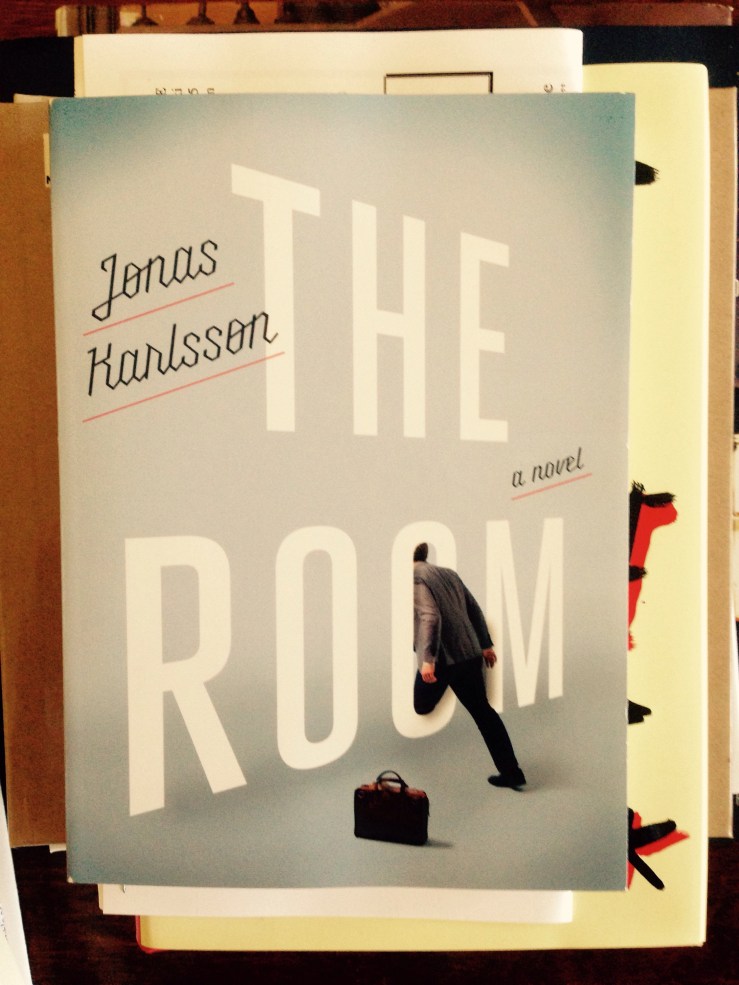
Jonas Karlsson’s The Room (Book acquired some time last week)

IMG_4955

Jonas Karlsson’s novel The Room comes out later this month from Random House. Their blurb:

Funny, clever, surreal, and thought-provoking, this Kafkaesque masterpiece introduces the unforgettable Bjorn, an exceptionally meticulous office worker striving to live life on his own terms.
 
Bjorn is a compulsive, meticulous bureaucrat who discovers a secret room at the government office where he works–a secret room that no one else in his office will acknowledge. When Bjorn is in his room, what his co-workers see is him standing by the wall and staring off into space looking dazed, relaxed, and decidedly creepy. Bjorn’s bizarre behavior eventually leads his co-workers to try and have him fired, but Bjorn will turn the tables on them with help from his secret room.
Debut author Jonas Karlsson doesn’t leave a word out of place in this brilliant, bizarre, delightful take on how far we will go–in a world ruled by conformity–to live an individual and examined life.

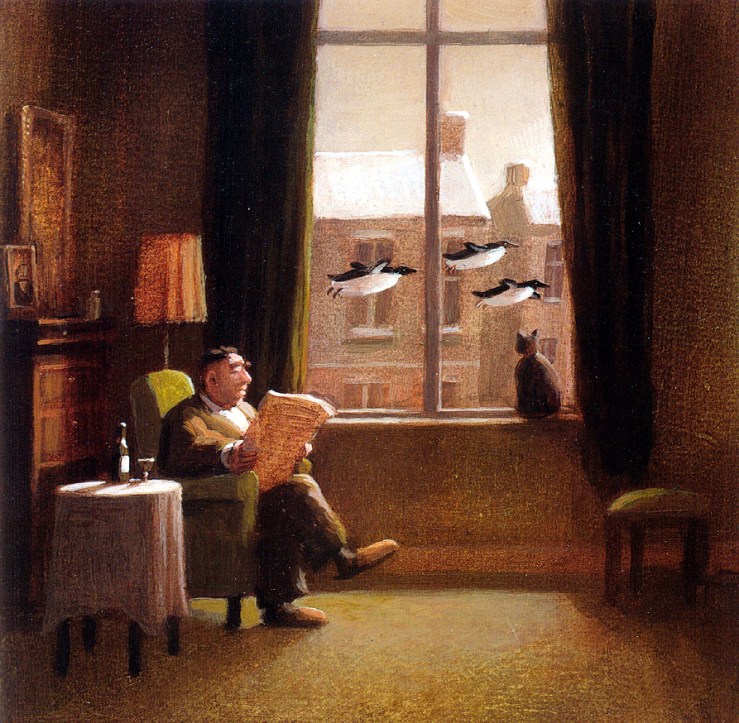
February — Michael Sowa

february

Reading There Will Be Blood as the expanded epilogue to Blood Meridian

Watching (again) Paul Thomas Anderson’s 2007 film There Will Be Blood last night, it struck me that the film can be read as an expansion of the epilogue to Cormac McCarthy’s 1985 novel Blood Meridian.

Here is that infamously perplexing passage, a strange note that punctuates the devastating infanticidal horror at the novel’s core:

In the dawn there is a man progressing over the plain by means of holes which he is making in the ground. He uses an implement with two handles and he chucks it into the hole and he enkindles the stone in the hole with his steel hole by hole striking the fire out of the rock which God has put there. On the plain behind him are the wanderers in search of bones and those who do not search and they move haltingly in the light like mechanisms whose movements are monitored with escapement and pallet so that they appear restrained by a prudence or reflectiveness which has no inner reality and they cross in their progress one by one that track of holes that runs to the rim of the visible ground and which seems less the pursuit of some continuance than the verification of a principle, a validation of sequence and causality as if each round and perfect hole owed its existence to the one before it there on that prairie upon which are the bones and the gatherers of bones and those who do not gather. He strikes fire in the hole and draws out his steel. Then they all move on again.

I’ve heard numerous interpretations of this passage over the years. Many of the interpretations dwell on the metaphorical power of the epilogue—it’s the final gnostic clue in the Judge’s web of mysteries; it’s the Promethean redemption of humanity against the Judge’s evil; it’s the spirit of civilization that will measure and conquer the bloody West, a progressive new dawn; it’s Cormac McCarthy’s signature, his designation of himself as the writer who carries the fire.

I’m fine with all of these interpretations, for I foolishly take Judge Holden at his word when he points out that, “Your heart’s desire is to be told some mystery. The mystery is that there is no mystery.” Let me eschew the symbolic then, at least momentarily, for the literal.

The epilogue’s literal imagery suggests a man working with post hole diggers: Is he building a fence? Constructing telegraph poles? Exploring? Surveying? Whatever his intentions, he marks and measures the land.

Whether the digger is a leader or not, he has followers, “the wanderers in search of bones” as well as “those who do not search.” Bones of what? Are the searchers hunting relics? (To revert to the metaphorical—sorry—are these bones the dead eyes Emerson warned us not to look through?). Or are the bones something else—dinosaur bones, Texas tea, carbon, fuel?

there will be blood

So There Will Blood and there will be bones: Daniel Day-Lewis’s Daniel Plainview, a misanthropic, near-malevolent, and ultimately murderous oil man—what I want to say is that he is (a failed version of) McCarthy’s Epilogue Digger. Is not There Will Be Blood  a film about digging, about holes, falling in holes, dying in holes, striking fire from holes? And is not There Will Be Blood also a film about the abjection of holes—the oil, the mud, the muck, the blood that coats hands and faces, eyes, lips, ears burst? Of the recapitulation of the hole as the primal space for culture—a fertile, generative, fecund, deadly space? The hole as the space of shame and possibility? Daniel Plainview, surveying California, marking lines for his followers to follow, striking oil, striking fire. No?

There-Will-Be-Blood-daniel-day-lewis-859163_427_321

We might see in Paul Thomas Anderson’s film a repetitious revision of McCarthy’s novel—a recasting of sorts, with Plainview possessed by Glanton’s maniacal spirit—and Glanton in turn possessed by the spirit of the Judge, the dark omnipresent bad father. Both film and novel mediate their Oedipal dramas in an utterly masculine world. Blood Meridian affords more speaking roles to women than There Will Be Blood does, but both see fit to discharge any notion of a mother from the Oedipal contests they depict, rendering the kid in each narrative the warden of strange gangs, strange wanderers. Anderson allows H.W. to suffer but live and perhaps thrive, to find a mate, to escape into new and alien territory, outside of the holes his surrogate father has dug. Our would-be hero of Blood Meridian, the kid, dies in an outhouse, an abject hole.

And Daniel Plainview—he murders the false priest (which the judge failed to do—although Tobin was a true priest though ex-priest), murders a version of himself—another brother, another Abel. He’s not a good guy. If we read McCarthy’s epilogue through his latest novel, The Road, or even through some of the lines in No Country for Old Men, we can see that “the good guys” are charged with carrying the fire—and is this not what the Epilogue Digger is doing? Carrying the fire, freeing the fire from the earth? Plainview would like to carry the fire, to generate new life, new communities, but he fails, he falls, he crumbles. He abandons his child, and then denies his child. “I’m finished!”

Am I finished? I’m now more confused than when I started this riff. The germ of the idea woke with me this morning—the alien landscape of PTA’s film seemed to restage for me moments in McCarthy’s novel in some waking dream—and like a dream seemed perfectly illogically logical. But bound up in my language I’m not so sure. What I did detect in the film, last night, that I had previously perhaps missed, or maybe forgotten, was how admirable Daniel Plainview often is, especially early on in the film—decisive, bold, asserting his own agency and working with his own hands, he’s a Nietzschean figure. But his paranoia gives way to madness and corruption. Okay. I’m finished.

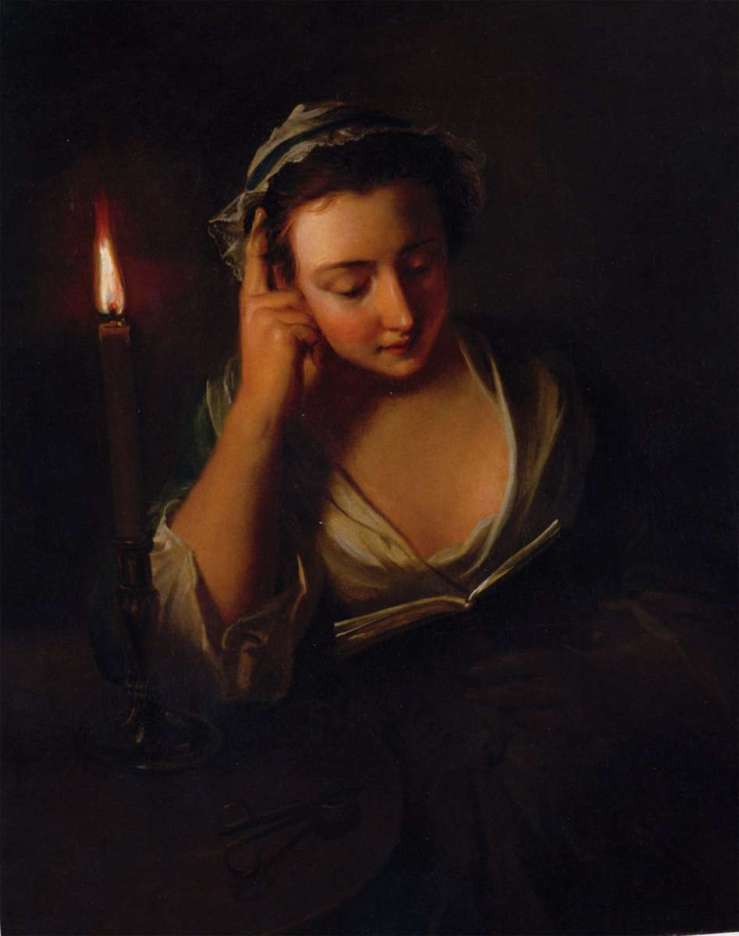
A Young Girl Reading by Candlelight — Philip Mercier

tumblr_nfocfu0dSZ1rrnekqo1_1280

Hong Chau as Jade (Inherent Vice film poster)

inherent_vice_jade

(More stylized Inherent Vice posters).


Twilight — Angelo Morbelli

images158

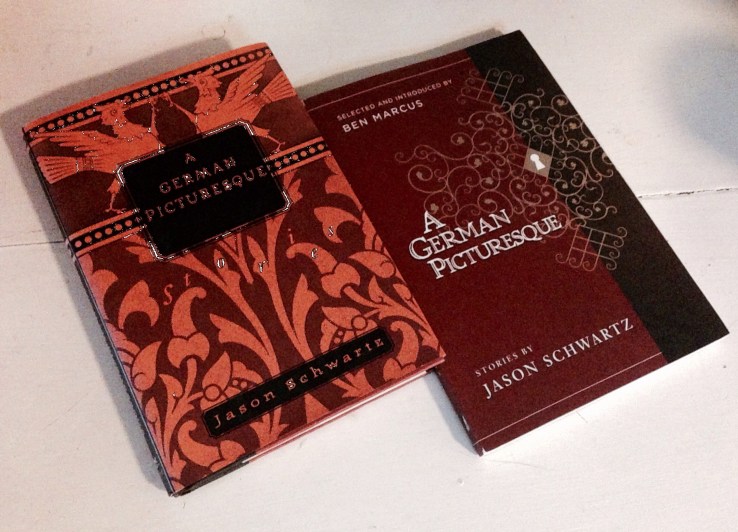
A German Picturesque (Book acquired, 1.23.2014)

2015/01/img_4947.jpg

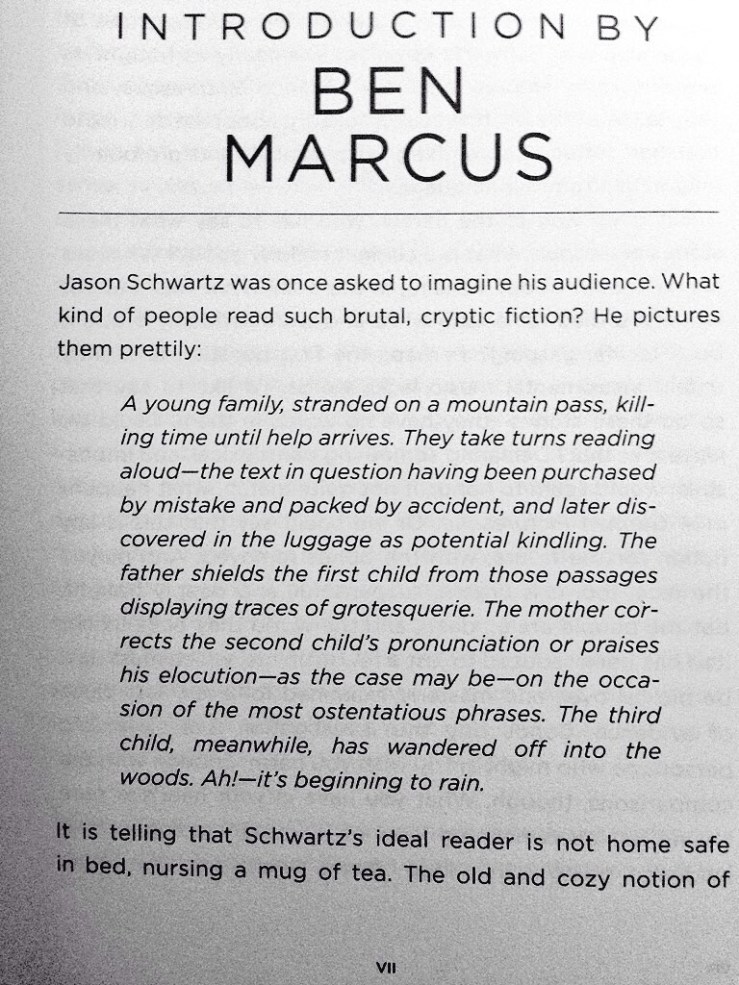
Pharos is reissuing Jason Schwartz’s debut collection A German Picturesque, pictured on the right, above, by the original. The title was selected and introduced by Ben Marcus, who quotes from the interview Schwartz granted me last year—

2015/01/img_4923.jpg

I actually think that it was this review which led to Ben Marcus consenting to talk with me over the phone for an hour in December. I’ve been typing that interview very slowly and swear it’s on the horizon. Painful dreadful anxious work. Interview with Marcus to come. Review of Schwartz to come.

An article on cemeteries, and other ideas from Nathaniel Hawthorne’s Note-Books

The spells of witches have the power of producing meats and viands that have the appearance of a sumptuous feast, which the Devil furnishes: But a Divine Providence seldom permits the meat to be good, but it has generally some bad taste or smell,–mostly wants salt,–and the feast is often without bread.


An article on cemeteries, with fantastic ideas of monuments; for instance, a sundial;–a large, wide carved stone chair, with some such motto as “Rest and Think,” and others, facetious or serious.


“Mamma, I see a part of your smile,”–a child to her mother, whose mouth was partly covered by her hand.


“The syrup of my bosom,”–an improvisation of a little girl, addressed to an imaginary child.


“The wind-turn,” “the lightning-catch,” a child’s phrases for weathercock and lightning-rod.


“Where’s the man-mountain of these Liliputs?” cried a little boy, as he looked at a small engraving of the Greeks getting into the wooden horse.


When the sun shines brightly on the new snow, we discover ranges of hills, miles away towards the south, which we have never seen before.


To have the North Pole for a fishing-pole, and the Equinoctial Line for a fishing-line.

From Nathaniel Hawthorne’s American Note-Books.

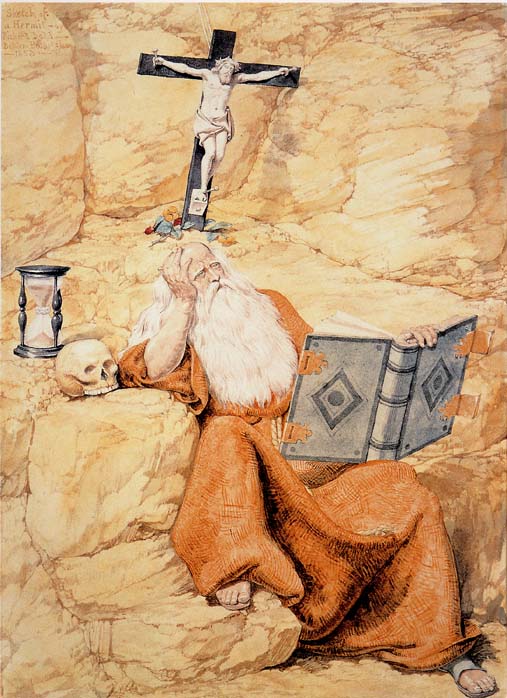
A Hermit — Richard Dadd

a_hermit-large