In which I read Playboy for the Thomas Pynchon article

A couple of days ago I posted a brief excerpt from Jules Siegel’s March 1977 Playboy profile “Who is Thomas Pynchon… And Why Did He Take Off With My Wife?” The excerpt came from an excerpt posted on the Pynchon-L forum, but most of the article had been removed at the (apparent) request by Siegel. Several folks sent me the whole article though (thanks!) and I read it.
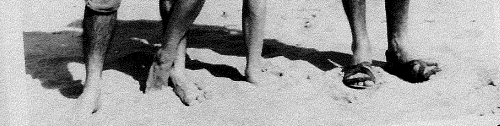
Screenshot 2015-05-01 at 8.54.40 AM
Some of these feet may or may not belong to Thomas Pynchon

Siegel was briefly a Cornell classmate of Pynchon’s in 1954, and they remained friends (in Siegel’s recollection) for at least two decades after. During this time, Siegel claims that Pynchon wrote him dozens of letters, which were ultimately sold at auction (along with much of Siegel’s property) to help pay for a hip replacement. Material from the letters soak into Siegel’s sketch of Pynchon’s progress, along with several stoned/drunken adventures that would not be out of place in V. or Mason & Dixon or Gravity’s Rainbow, or really, any person’s young life.

A competitive anxiety reverberates under the piece. “We were friends, maybe at some points best friends, very much alike in some important ways,” Siegel writes. “We were both writers,” he boldly writes. Siegel reminds us that “In Mortality and Mercy in Vienna, Pynchon’s first published short story, the protagonist is one Cleanth Siegel,” but protests he doesn’t see himself in that hero.

The competitive anxieties culminate in the big reveal that (spoiler!) Thomas Pynchon had an affair with Siegel’s second wife Chrissie. There’s probably a Freudian reading we can append to the details that Siegel offers about Pynchon’s sexual prowess: “He was a wonderful lover, sensitive and quick, with the ability to project a mood that turned the most ordinary surroundings into a scene out of a masterful film—the reeking industrial slum of Manhattan Beach would become as seen through the eye of Antonioni, for example.”

Or maybe these unsexy details are just a sign of Playboy’s editorial hand. Wedged gracelessly between ads for vibrators and nude greeting cards, Siegel’s lines often reek of 1970’s Playboy’s rhetorical house style, a kind of frank-but-(attempted)-sensual glossiness that contrasts heavily with Pynchon’s own sex writing. At times I found myself reading Siegel’s prose in one of Will Ferrell’s more pompous accents.

Even worse is the casual sexism of the piece—which again, may be attributable to Playboy’s editors. Siegel, on his first wife (sixteen when he married her): “She was so wonderful a lover, generous and easily aroused, but I was too callow then to appreciate her.” Of his second wife: “It is easy to underestimate her intelligence, but it is a mistake. She is obviously too pretty to be serious, conventional wisdom would have you believe.” Of one of Pynchon’s girlfriends: “Susan has red hair and is breathtakingly beautiful, with the voluptuous body of a showgirl. Like Chrissie, she is much brighter than she looks.”

More interesting, obviously, are the (supposedly) real-life details that inform Pynchon’s fiction. Siegel notes some of the contents of Pynchon’s Manhattan Beach apartment: “A built-in bookcase had rows of piggy banks on each shelf and there was a collection of books and magazines about pigs.” Pigs, of course, are a major motif of Gravity’s Rainbow. Another detail that seems to connect to GR: “On the desk, there was a rudimentary rocket made from one of those pencil-like erasers with coiled paper wrappers that you unzip to expose the rubber. It stood on a base twisted out of a paper clip.” Siegel lets us know that he knocked the rocket down. Pynchon puts it back together; Siegel knocks it down again.

(Parenthetically: Siegel’s evocation of Pynchon’s Manhattan Beach days fits neatly into my picture of Inherent Vice).

In accounting details of Pynchon’s alleged affair with his wife, Chrissie, Siegel shares the following:

Once, out on the freeway, she told him that we had all gone naked at the commune, he professed to find that incredible and dared her to take off her blouse right there. She did. A passing truck hooted its horn in lewd applause. He loved her Shirley Temple impersonations—On the Good Ship Lollipop sung and danced like a kid at a birthday party. They talked about running away together.

It is hardly possible here not to recall the episode early in Gravity’s Rainbow wherein Jessica Swanlake removes her blouse in the car on a dare from Roger Mexico. Is Siegel daring the reader to extrapolate further? Extrapolation, paranoid connections—isn’t this part of Pynchonian fun?

In that spirit, I’ll close with my favorite moment from the article.

“You know the W.A.S.T.E. horn in The Crying of Lot 49? The symbol of the secret message service? Every weirdo in the world is on my wave length. You cannot understand the kind of letters I get. Someone wrote to tell me that the very same horn was the symbol of a private mail system in medieval times. I checked it out at the library. It’s true. But I made it up myself before the book was ever published, before I ever got that letter.”

The lines are supposedly from Pynchon himself. Siegel even puts them in quotation marks—so they must be real, right?
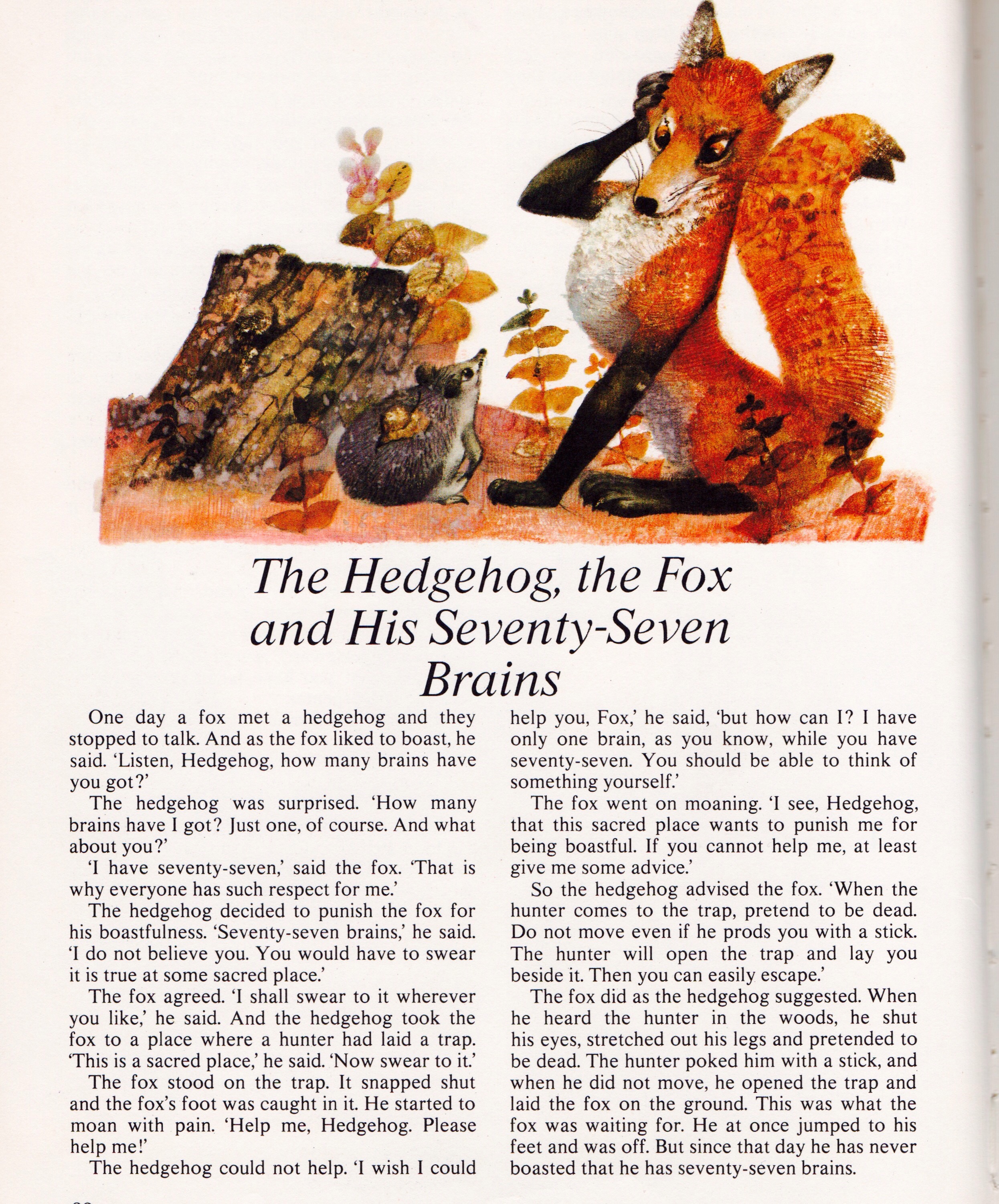
“The Hedgehog, the Fox and His Seventy-Seven Brains”

image

A Serbian fairy tale retold by Alena Benesova and translated into English by Ruth Shepherd. The marvelous illustration is by Karel Franta. From Animal Fairy Stories.


History is an attempt to make the past seem stable (William Carlos Williams)

Screenshot 2015-04-30 at 2

“On Being in Love” — Jerome K. Jerome

“On Being in Love”

by

Jerome K. Jerome

You’ve been in love, of course! If not you’ve got it to come. Love is like the measles; we all have to go through it. Also like the measles, we take it only once. One never need be afraid of catching it a second time. The man who has had it can go into the most dangerous places and play the most foolhardy tricks with perfect safety. He can picnic in shady woods, ramble through leafy aisles, and linger on mossy seats to watch the sunset. He fears a quiet country-house no more than he would his own club. He can join a family party to go down the Rhine. He can, to see the last of a friend, venture into the very jaws of the marriage ceremony itself. He can keep his head through the whirl of a ravishing waltz, and rest afterward in a dark conservatory, catching nothing more lasting than a cold. He can brave a moonlight walk adown sweet-scented lanes or a twilight pull among the somber rushes. He can get over a stile without danger, scramble through a tangled hedge without being caught, come down a slippery path without falling. He can look into sunny eyes and not be dazzled. He listens to the siren voices, yet sails on with unveered helm. He clasps white hands in his, but no electric “Lulu”-like force holds him bound in their dainty pressure.

No, we never sicken with love twice. Cupid spends no second arrow on the same heart. Love’s handmaids are our life-long friends. Respect, and admiration, and affection, our doors may always be left open for, but their great celestial master, in his royal progress, pays but one visit and departs. We like, we cherish, we are very, very fond of—but we never love again. A man’s heart is a firework that once in its time flashes heavenward. Meteor-like, it blazes for a moment and lights with its glory the whole world beneath. Then the night of our sordid commonplace life closes in around it, and the burned-out case, falling back to earth, lies useless and uncared for, slowly smoldering into ashes. Once, breaking loose from our prison bonds, we dare, as mighty old Prometheus dared, to scale the Olympian mount and snatch from Phoebus’ chariot the fire of the gods. Happy those who, hastening down again ere it dies out, can kindle their earthly altars at its flame. Love is too pure a light to burn long among the noisome gases that we breathe, but before it is choked out we may use it as a torch to ignite the cozy fire of affection. Continue reading ““On Being in Love” — Jerome K. Jerome”

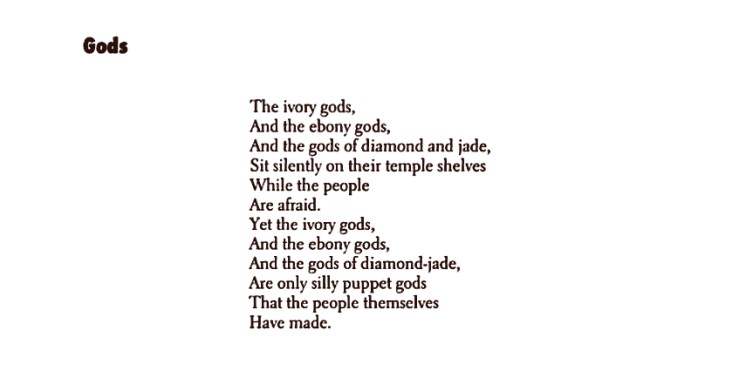
“Gods” — Langston Hughes

Screenshot 2015-04-28 at 4

Selections from One-Star Amazon Reviews of Roberto Bolaño’s 2666

[Editorial note: Today is Roberto Bolaño’s birthday–he would’ve turned 62. The following citations come from one-star Amazon reviews of his masterpiece 2666. To be clear, I am a huge fan of 2666—I’ve written about it extensively on this site. But I never posted a review on Amazon. More one-star Amazon reviews.].

***

Awful.

Boring!

Nothing.

No Point.

No Story.

No characters.

This is not a story.

Felt it was too dark.

endless culs-de-sac

There is no premise

Numbing dumbness.

As a Literature major,

incoherent and rambling

Disconnected and tedious.

The joke is on me, I guess.

written in a type of journalese

this novel (if it can be called that)

an obtuse novel with no real point.

I would rather stick forks in my eyes

stilted, awkward, and difficult to read

I would prefer to be boiled alive in oil.

900 pages of words that mean nothing.

multiple pages are spent describing dreams

delivers little if any enjoyment to the reader.

900 pages of distinctly non-literary masochism

I hated the spewing of authors I’d never heard of.

The writing or words are geared towards intellectuals.

Imagine this: you’re dreaming a dream that never ends.

it’s one of those pretentious books for pretentious people

a sprawling, formless, utterly pretentious bloated drudge

bloated streams of consciousness which negate themselves

no subtle meassage that is worthy of discussion or thought

I can see how this might have been written by a very ill man.

boring, repetitive, pointless, misogynistic, indulgent blather

I’ve never experienced a book which was so devoid of reward.

little or no substance in terms of an overall message or theme

a pointless study of odd obsessions and the meaningless of life

On xx date, the body of xxx was found, mutilated in the dumps.

I spent most of my time looking up defintions to 100’s of words.

this book is a GRUESOME and HORRIFICALLY VIOLENT book.

Bolano could not care less what the general public thinks of his book

has little of note to say about the meaning of life or the human condition

I am hard pressed to believe that the other reviewers even read this book.

The largest section of the book is basically 300+ pages of autopsy reports.

You will read the words “vaginally and anally raped” over and over and over

This book would make a great table leg, coaster, or booster seat for a small child. Continue reading “Selections from One-Star Amazon Reviews of Roberto Bolaño’s 2666”

Tom Pynchon was quiet and neat and did his homework faithfully

Tom Pynchon was quiet and neat and did his homework faithfully. He went to Mass and confessed, though to what would be a mystery. He got $25 a week spending money and managed it perfectly, did not cut class and always got grades in the high 90’s. He was disappointed not to have been pledged to a fraternity, but he lacked the crude sociability required for that. Besides, he had his own room at Cascadilla, one of the more pleasant dormitories, not tight College Tudor tile but pre-Civil War Victorian, high-ceilinged and muted. Fraternity houses offered neither the charm nor the privacy, and he was, if anything, a very private person.

From Jules Siegel’s March 1977 Playboy profile “Who is Thomas Pynchon… And Why Did He Take Off With My Wife?”  Steven Weisenburger references the article a few times in his Companion, so I gave it a Googlin’.

The first part of the article is posted on the Pynchon-L mailing list; but the latter parts are removed.

I’d be happy to read the whole thing if someone wants to…you know, send it to me. (Thanks!)

“Storm” — H.D.

storm

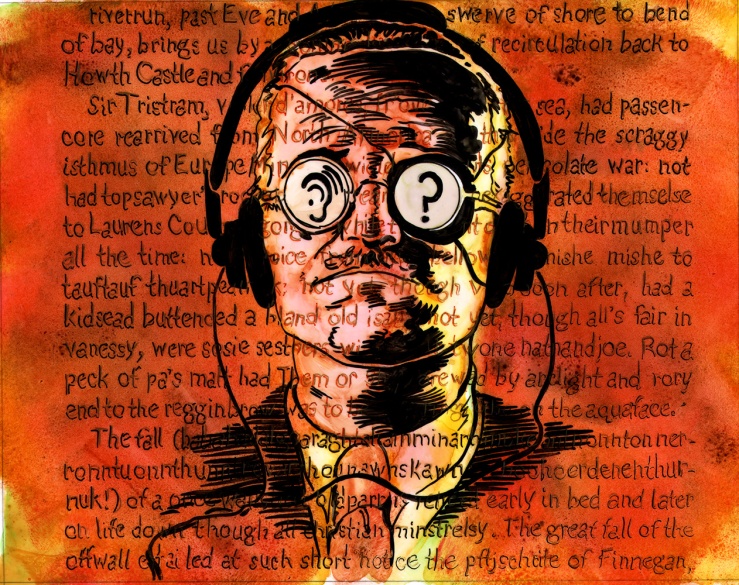
Derek Pyle Discusses Waywords and Meansigns, an Unabridged Musical Adaptation of James Joyce’s Finnegans Wake

I recently talked to Derek Pyle about his project Waywords and Meansigns, which adapts James Joyce’s novel Finnegans Wake into a new musical audiobook. Derek worked for years as half of Jubilation Press. Printing the poems of Lawrence Ferlinghetti, Thich Nhat Hanh, and William Stafford, Derek’s letterpress work can be found in the special collections of the New York Public Library, Brown University, and the Book Club of California. Derek co-founded Waywords and Meansigns in 2014 and became the project’s primary director in 2015. While living part-time in Western Massachusetts, Derek produces Waywords and Meansigns in eastern Canada.

Robert Berry copy
Image by Robert Berry

Biblioklept: What is Waywords and Meansigns?

Derek Pyle: Waywords and Meansigns is a collaborative music project recreating James Joyce’s Finnegans Wake. Seventeen different musicians from all around world have each taken a chapter of Finnegans Wake and set it to music, thereby creating an unabridged audio version of Finnegans Wake.

Finnegans Wake is an incredible book, but it’s notoriously difficult to read. One hope of the project is to create a version of the Wake that is accessible to newcomers — people can just listen to and enjoy the music. To maximize accessibility, we are distributing all the audio freely via our website. But the project does not only appeal to Wake newcomers — as we’ve seen so far, a lot of scholars and devoted readers are also finding Waywords and Meansigns an exciting way of interpreting and engaging with Joyce’s text.

Biblioklept: How did the project come about?

DP: In 2014 I organized a party to celebrate the 75th anniversary of the publication of Finnegans Wake. To celebrate we decided to listen to Patrick Healy’s audiobook recording of Finnegans Wake, which is 20-odd hours long. The party, as you can imagine, lasted all weekend — we actually listened to Johnny Cash’s unabridged reading of the New Testament that weekend too. There was very little sleep, and fair amount of absinthe.

A lot of people really rag on Healy’s recording, because it’s read at breakneck speed. I actually like it though — he creates a very visceral flood of experience, which is one way of reading, or interpreting, Finnegans Wake. But during the party I started wondering about other ways you could perform the text, and that’s when I came up with the idea of approaching musicians to create a new kind of audiobook.

As it turns out, a lot of people seemed to think my idea was a good one. We’ve had no shortage of musicians willing to contribute, including some really cool cats like Tim Carbone of Railroad Earth and bassist Mike Watt, who currently plays in Iggy Pop’s band The Stooges.

Biblioklept: Watt rules! I love the Minutemen and his solo stuff. He seems like a natural fit for this kind of project, as so much of his music is based around story telling. I imagine the musicians involved are composing the music themselves…are they also recording it themselves?

DP: Yeah, it’s very cool to have Watt on board. Turns out he’s a huge fan of Joyce — he recorded a track for Fire Records in 2008, for an album of various musicians turning the poems of Joyce’s Chamber Music into songs. Mary Lorson, of the bands Saint Low and Madder Rose, also played on that Fire Records album, and she’s collaborating with author Brian Hall for our project.

To answer your question, yes, all the musicians are recording their own chapters. Since we have contributors from all around the world — from Berlin to Amsterdam to British Columbia — it would be a logistical nightmare to figure out where and when to record everyone. Not to mention the cost of it. One of the really cool things, I think, about this project — for everyone, it’s a labor of love. No one is making a profit, off any of this. People are just doing it because they love Joyce, or they’re obsessed with Finnegans Wake, or it just seems like a fun challenge to think creatively in this unique way. Either way it’s a pursuit of passion. That’s why we will distribute all the audio freely. There’s this phrase in Finnegans Wake, “Here Comes Everybody!” We’re having fun with Finnegans Wake and everybody is invited to the party. Continue reading “Derek Pyle Discusses Waywords and Meansigns, an Unabridged Musical Adaptation of James Joyce’s Finnegans Wake”

Reflect on these two quite brilliant thoughts (Georges Perec)

image

“The Girls of Herland” — Charlotte Perkins Gilman

“The Girls of Herland,” below, is Chapter 8 of Charlotte Perkins Gilman’s 1915 novel Herland, a feminist utopian novel that was serialized during its author’s lifetime, but not published in one volume until 1979.  This chapter can, I believe, stand alone or serve even as an introduction even to Herland, depsite coming rather late in the text, but readers who wish more context/want the whole thing can legally download Herland via Project Gutenburg.

***

“The Girls of Herland”

by

Charlotte Perkins Gilman

At last Terry’s ambition was realized. We were invited, always courteously and with free choice on our part, to address general audiences and classes of girls.

I remember the first time—and how careful we were about our clothes, and our amateur barbering. Terry, in particular, was fussy to a degree about the cut of his beard, and so critical of our combined efforts, that we handed him the shears and told him to please himself. We began to rather prize those beards of ours; they were almost our sole distinction among those tall and sturdy women, with their cropped hair and sexless costume. Being offered a wide selection of garments, we had chosen according to our personal taste, and were surprised to find, on meeting large audiences, that we were the most highly decorated, especially Terry.

He was a very impressive figure, his strong features softened by the somewhat longer hair—though he made me trim it as closely as I knew how; and he wore his richly embroidered tunic with its broad, loose girdle with quite a Henry V air. Jeff looked more like—well, like a Huguenot Lover; and I don’t know what I looked like, only that I felt very comfortable. When I got back to our own padded armor and its starched borders I realized with acute regret how comfortable were those Herland clothes.

We scanned that audience, looking for the three bright faces we knew; but they were not to be seen. Just a multitude of girls: quiet, eager, watchful, all eyes and ears to listen and learn.

We had been urged to give, as fully as we cared to, a sort of synopsis of world history, in brief, and to answer questions. Continue reading ““The Girls of Herland” — Charlotte Perkins Gilman”

“One Art” — Elizabeth Bishop

“One Art”

by Elizabeth Bishop

The art of losing isn’t hard to master;
so many things seem filled with the intent
to be lost that their loss is no disaster.

Lose something every day. Accept the fluster
of lost door keys, the hour badly spent.
The art of losing isn’t hard to master.

Then practice losing farther, losing faster:
places, and names, and where it was you meant 
to travel. None of these will bring disaster.

I lost my mother’s watch. And look! my last, or
next-to-last, of three loved houses went.
The art of losing isn’t hard to master.

I lost two cities, lovely ones. And, vaster,
some realms I owned, two rivers, a continent.
I miss them, but it wasn’t a disaster.


—Even losing you (the joking voice, a gesture
I love) I shan’t have lied.  It’s evident
the art of losing’s not too hard to master
though it may look like (Write it!) like disaster.

Cupid, caresses, fire and death (Three notes from Nathaniel Hawthorne’s Note-Books)

Caresses, expressions of one sort or another, are necessary to the life of the affections, as leaves are to the life of a tree. If they are wholly restrained, love will die at the roots.

Cupid in these latter times has probably laid aside his bow and arrows, and uses fire-arms,–a pistol,–perhaps a revolver.

I burned great heaps of old letters, and other papers, a little while ago, preparatory to going to England. Among them were hundreds of letters. The world has no more such, and now they are all dust and ashes. What a trustful guardian of secret matters is fire! What should we do without fire and death?

From Nathaniel Hawthorne’s American Note-Books.


Peter Brook’s (Condensed) Hamlet

The Death of Ophelia — Odilon Redon

The Bard and the Bird (Shakespeare Portrait) — Bill Sienkiewicz

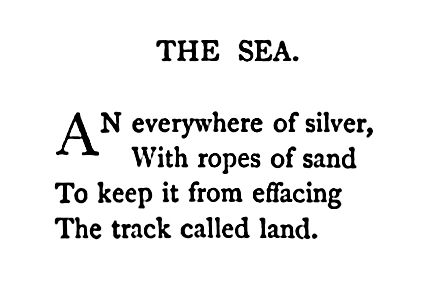
“An everywhere of silver” — Emily Dickinson

Screenshot 2015-04-22 at 1