Time, Space, Distortion: Falling Towards A 9/11 Literature

The_Falling_Man

In his essay In the Ruins of the Future,” published in December of 2001, Don DeLillo wrote this about the 9/11 attacks: “The writer wants to understand what this day has done to us. Is it too soon?” His question was both profound and at the same time, paradoxically utterly banal, purely rhetorical–of course it was too soon to measure the affects of the 9/11 attacks. But could the distance of time somehow sharpen or enrich perspective? DeLillo continues: “We seem pressed for time, all of us. Time is scarcer now. There is a sense of compression, plans made hurriedly, time forced and distorted.”

In retrospect–what with the Bush administration’s ludicrous invasion of Iraq and the power-grab of the Patriot Act–DeLillo’s notation of “plans made hurriedly” seems downright scary. Still, when I think back to those early days after the attacks, I remember that feeling of overwhelming shock, the paralyzing inertia that had to be overcome. DeLillo wanted–needed–to grapple with this spectacular destruction immediately. David Foster Wallace responded with similar immediacy; the caveat that prefaces his moving essay The View from Mrs. Thompson’s states that the piece was “Written very fast and in what probably qualifies as shock.” The same caveat would also apply neatly to Art Spiegelman’s big, brilliant, messy attempt at cataloging his impressions immediately post-9/11, In the Shadow of No Towers.

In contrast, the trio of 9/11 stories at the heart of Chris Adrian’s short story collection, A Better Angel, all employ distance and distortion–both temporal and spatial–as a means to address the disaster (or inability to address the disaster) of the attacks on the World Trade Center. Adrian’s 9/11 tales (and his works in general, really), ask how one can grieve or attest to death on such a massive, spectacular scale. In his vision, the victims of the 9/11 attacks forever haunt his protagonists, literally possessing them, demons that can’t let go, leaving the living to grieve over and over again. In “The Changeling,” for example, the grief of the attacks is literally measured in blood, as a father repeatedly maims himself as the only means to assuage the terror and confusion of his possessed son. Adrian sets one of the collection’s most intriguing tales, “The Vision of Peter Damien,” in nineteenth-century rural Ohio. This temporal distortion veers into metaphysical territory as the titular Damien, along with other children in his village, become sick, haunted by the victims of 9/11. Adrian’s strange milieu creates a bizarre cognitive dissonance for his readers, a response that DeLillo also articulated in his 2007 novel Falling Man.

DeLillo initiates the novel as a sort of creation story: “It was not a street anymore but a world, a time and space of falling ash and near night.” The demarcation of this new world recapitulates DeLillo’s initial concern with time and space, but his novel seems ultimately to suggest an inertia, a meaninglessness, or at least the hollow ambiguity of any artistic response. This stands, of course, in sharp contrast to his sense of urgency in his earlier essay. Like the performance artist in the novel who is repeatedly sighted hanging suspended from a harness, there’s a sad anonymity in the background of Falling Man: the artist hangs as static witness to disaster, but looking for comfort, or even perhaps meaning, in the gesture is impossible.

David Foster Wallace’s short story “The Suffering Channel,” (from his 2004 collection Oblivion) is in many ways a far more satisfying jab at 9/11, although, to be fair, the majority of the story’s events take place in July of 2001. The story (or novella, really; it’s 90 pages) centers around a magazine headquartered in the World Trade Center that plans to run an article–on September 10th, 2001–about a man who literally shits out pieces of art. Wallace’s critique of American culture (shit as art, commerce as style, advertising as language) is devastating against the context of the looming disaster that his characters are so oblivious too. As the novella reaches its close (culminating in the shit artist producing an original work for a live audience), we learn more about “The Suffering Channel,” a cable channel devoted to broadcasting only images of human beings suffering intense and horrible pain. Wallace seems to suggest that The Suffering Channel’s audience watches for mere schadenfreude or morbid fascination, that modern American culture so disconnects people that genuine suffering cannot be witnessed with empathy, but only as a form of spectacular, disengaged entertainment. And yet even as Wallace critiques American culture, the specter of the 9/11 attacks ironically inform his story. With our awful knowledge of what will happen the day after the shit artist article is published, we are able to see the ridiculous and ephemeral nature of the characaters’ various concerns. At the same time, Wallace’s tale reveals that empathy for suffering is possible, but also that it comes at a tremendous price.

To contrast the journalistic immediacy of pieces like “In the Ruins of the Future” and “The View from Mrs. Thompson’s” with their respective writers attempts to measure 9/11 in literary fiction is perhaps a bit unfair. Still, Wallace’s and DeLillo’s essays–at least in my opinion–transmit something of the ineffable, visceral quality of that terrible day, as well as the strange ways we sought comfort through human connection. In contrast, the distance and distortion of their literary efforts lose something. I apologize–I don’t have a word for this “something” that the essays have that the novel and novella lack (purposely, I believe). It’s not clarity, but perhaps it’s a clarity of distortion that the essays convey, the duress, or to return to Wallace’s own notation, the pieces were of course “Written very fast and in what probably qualifies as shock.” It’s that shock, I suppose, that I’m trying to name, to say that it’s still there, accessible in those early responses (I realize now I’ve unfairly neglected Spiegelman’s book, which is a great example of immediacy). And to relive that shock is important, because, as Wallace reveals in both of his pieces, the cathartic power of shared tragedy makes us human, allows us to really live, and to be thankful that we do live.

Looking over this piece, I realize that it’s overly long and really says nothing, or at least nothing much about 9/11, or literature, or whatever. But I don’t want to be negative. I highly encourage you to read (or re-read) The View from Mrs. Thompson’sand In the Ruins of the Future.” And I’ll leave it at that.

William Burroughs Speaks

OBIT BURROUGHS

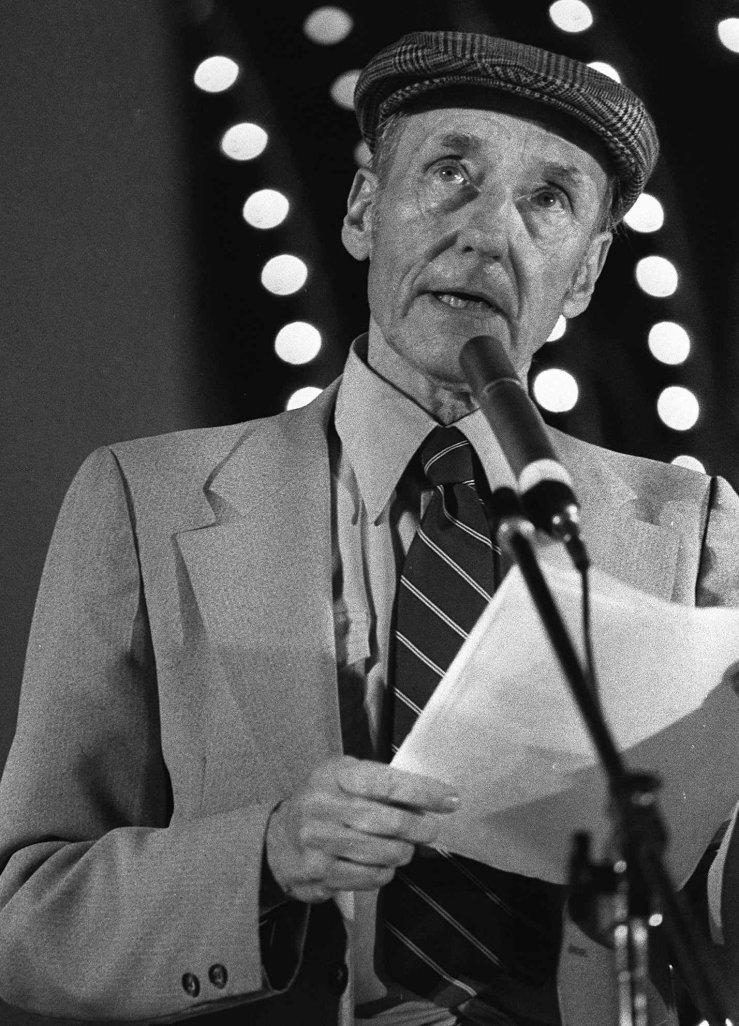
There are some great downloads available at Naropa University’s Internet Archive, including some lucid-but-still-weird lectures from William Burroughs. We highly recommend Burroughs’s 1979 lecture on creative reading, where he dissects Conrad and Gysin among others, waxes on heroic tropes, and talks about assassins. Also good is a 1980 forum on public discourse (Ginsberg introduces and sticks around). Good stuff.

Imperial Vollmann, Populist Beach Reading, and Henry Louis Gates, Jr.

A few odds and ends (and perhaps a bit of ranting):

vollmann_imperial_cover1

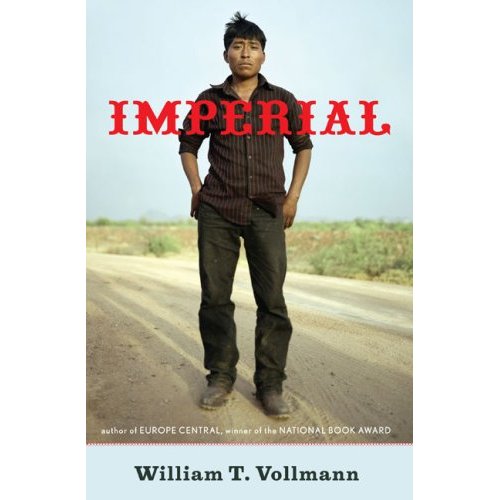
Read this fascinating profile of William Vollmann from this week’s New York Times. It makes me wish I had nothing to do but read everything this maniac writes. Vollmann’s new book Imperial comes out today from Viking. You can read an excerpt here.

Not really surprisingly, Vollmann did not make NPR‘s reader poll for the 100 Best Beach Books Ever. J.K. Rowling’s Harry Potter series topped a list that pretty much consists of a bunch of drivel (Twilight, Divine Secrets of the Ya-Ya Sisterhood), drivel posing as non-drivel (The Kite Runner, The Time Traveler’s Wife), overrated “classics,” (To Kill A Mockingbird), and a few surprises (Cormac McCarthy’s The Road is a fantastic book, but is it really best enjoyed on a sunny beach?)

TheClassicSlaveNarratives7517_f

This one didn’t make the beach reading list either. For a few years now, selections from The Classic Slave Narratives have been required reading in my high school classroom. I usually emphasize sections from Olaudah Equiano and Frederick Douglass, two masterful writers whose complex syntax and diction can be stunning, if not overwhelming, to the average AP student. I think that these narratives speak to why writing matters, and, importantly in today’s idiocracy, why reading matters as well. These first-person accounts of the horrors of slavery need to be read, and editor Henry Louis Gates, Jr. does a great job of setting the stage in his remarkable introduction to the collection. It’s sad, intellectually tragic, really, that Gates’s recent arrest should be given so much credit for sparking a “debate” or “teachable moment” about race, when Gates’s own scholarship makes the rootedness of racial tension in this country so plain. When a demagogue like Glenn Beck calls President Obama a “racist,” or a big fat idiot like Rush Limbaugh suggests that Obama simply has a “chip on his shoulder” because he’s black, we can see precisely why the first-person narratives of Equiano, Douglass, Mary Prince, and Harriet Jacobs are so important. These dangerous lunatics repeatedly suggest on their shows that America needs to keep its “traditions,” that our “history” is a strength, and that somehow the past was a place of better values. Perhaps if they read something outside of the dominant narrative they’d understand why someone might want to reappraise historically traditional values (and also, why someone might have a chip on his shoulder). But I’ve digressed from my main point: The Classic Slave Narratives is a valuable and important collection, and the stories collected here are a real entry point for any genuine discussion on race.

Listening Library’s Fantasy Road Trip Contest

PrintWe’re big advocates of audiobooks here at Biblioklept. A good audiobook helps the most mundane of chores zip by, making you a more educated, conscientious, and cultured person in the process (probably). Audiobooks are also essential to any road trip, and the good folks at Random House’s Listening Library labs have a new contest to help encourage parents and their kids to listen to audiobooks this summer. The contest, open to teens ages 13 to 18, is to create a video that addresses the following prompt: “If you could go on a road trip with a character from your favorite audio series, where would you go? What would you do along the way? How would you travel?” The winner will get an 8GB iPod Touch, as well as signed copies of audiobooks by the contest judges authors Libba Bray, Tamora Pierce, and Rick Riordan, all accomplished writers of young adult fantasy series. Get full details of the contest at Listening Library’s website. Seems pretty cool.
Shanghai Jim

Shanghai Jim is a fascinating BBC documentary about the strange expatriated life of J.G. Ballard. While the doc focuses on Ballard’s autobiographically-inspired works like Empire of the Sun, there is some detail about his experimental works. Lots of cool footage here, but the highlight, of course, is hearing Ballard tell his own story. Plenty of insight into his characters, their motives, and his reasons for writing. Go here if you hate squinting at Youtube vids or here for Ubuweb’s avi.

Continue reading “Shanghai Jim”

J.G. Ballard Remembered

jgballard

Author J.G. Ballard died of prostate cancer yesterday, at the age of 78. Ballard wrote over a dozen novels and hundreds of short stories. Ballard is probably most famous for his 1984 epic Empire of the Sun, which draws heavily on his childhood experiences during WWII Japanese-occupied Shanghai, but here at the Biblioklept we love his dystopian visions the most. Ballard’s early books like The Drowned World and short-story collection The Terminal Beach extend traditional adventure novels into strange dystopias and bizarre thought experiments. From the get-go, Ballard’s “sci-fi” (if you want to call it that) was less concerned with alien intelligences than it was with our internal and collective psychologies, and how we react to an increasingly mediated world. Hence novels like Crash, where human sexuality melds into technological fetishism, or The Atrocity Exhibition, a fragmented novel exploring the intersection of celebrity and Armageddon. Later novels like Cocaine Nights and Super-Cannes respond to an increasingly paranoid and disconnected world, with a sardonic humor that is ultimately more frightening than soothing. Ballard never sought to alleviate or mock or answer to an increasingly complex and increasingly absurd world–he just dissected it and extrapolated it beyond most of our dim imaginations.

Ballard belongs to a select counter-tradition of writers and artists, fitting neatly between William Burroughs and William Gibson. Like his strange brothers Philip K. Dick and Thomas Disch, Ballard will always have a place in the avant-garde sci-fi cannon, and it’s likely that that place will only grow. Ballard was still writing up to his death, and his last novel Kingdom Come, a book that detailed the descent of consumerism into a type of fascism was as relevant as ever. Indeed, Ballard was far ahead of his time; as our world catches up to his visions, we will surely find an increasing relevancy in his body of work. He will be missed.

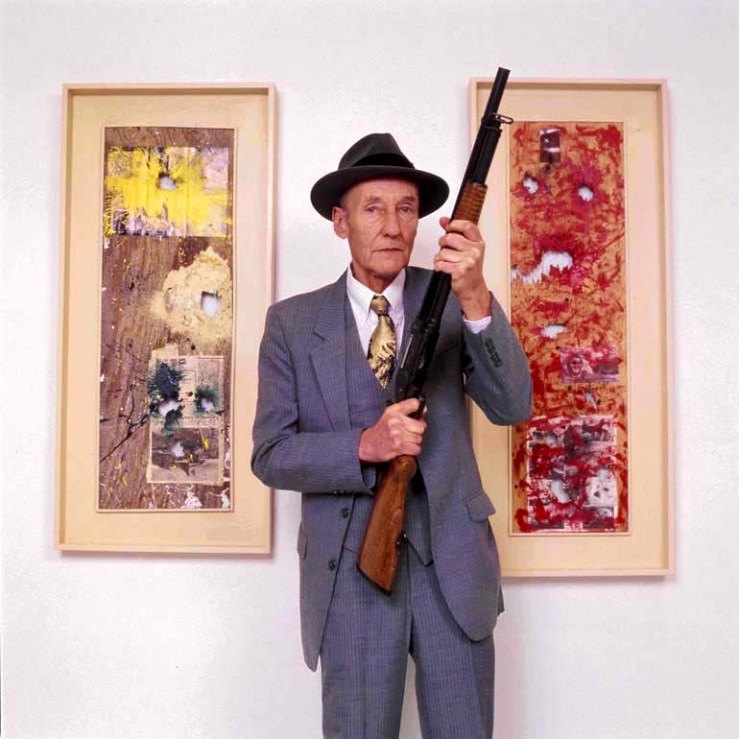
“William S. Burroughs” — Robert Crumb

billrc1

Zora Neale Hurston Sings “You May Go But This Will Bring You Back”

315px-zora_neale_hurston_nywts

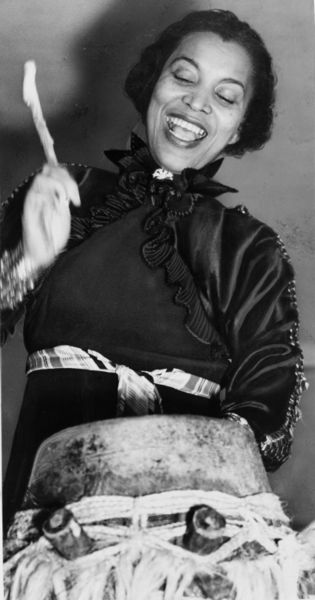
Zora Neale Hurston sings folksong “You May Go But This Will Bring You Back,” and then explains how she learns her songs. More info here.

“Wiggle Room” — David Foster Wallace

david_foster_wallace_20080915

According to this morning’s New York Times, David Foster Wallace’s posthumous–and unfinished–novel The Pale King will be published next year by Little, Brown. The New Yorker has published an excerpt called “Wiggle Room.” Here’s the first three sentences, just in case you need your literary appetite whetted:

Lane Dean, Jr., with his green rubber pinkie finger, sat at his Tingle table in his chalk’s row in the rotes group’s wiggle room and did two more returns, then another one, then flexed his buttocks and held to a count of ten and imagined a warm pretty beach with mellow surf, as instructed in orientation the previous month. Then he did two more returns, checked the clock real quick, then two more, then bore down and did three in a row, then flexed and visualized and bore way down and did four without looking up once, except to put the completed files and memos in the two Out trays side by side up in the top tier of trays, where the cart boys could get them when they came by. After just an hour the beach was a winter beach, cold and gray and the dead kelp like the hair of the drowned, and it stayed that way despite all attempts.

There’s No Such Thing As Life Without Bloodshed

cormac-mccarthy1

Just finished this 1992 New York Times interview with Cormac McCarthy. I know, I know, hardly new, but still, it’s a rare insight into a reclusive writer–his 2007 interview with Oprah could politely be called awful, and I feel like this older piece is some kind of vindication. My favorite quote:

There’s no such thing as life without bloodshed [. . .] I think the notion that the species can be improved in some way, that everyone could live in harmony, is a really dangerous idea. Those who are afflicted with this notion are the first ones to give up their souls, their freedom. Your desire that it be that way will enslave you and make your life vacuous.

Great interview, even if it is almost 17 years old.

Cormac McCarthy — Andrew Tift

cormac-mccarthy-portrait

Last week, the Smithsonian’s National Portrait Gallery acquired Andrew Tift’s kinda stark portrait of Cormac McCarthy. More info here.

Convicts and Sailors, Yagé and Nutmeg, Seeing Things from a Special Angle, and the Uncut Kick that Opens Out Instead of Narrowing Down: Don’t Try This at Home, Kids

Do you remember when you were like thirteen or fourteen and you read that bit in Naked Lunch about the supposed mind-expanding properties of nutmeg? Nutmeg! Like your mom baked with! Like, readily-available, no questions asked! And then you took it, just like Burroughs indicated, and it made your stomach hurt and gave you a headache (just like he said it would). And nothing else happened. No visions, no enlightenment, nada. Do you remember that? Oh, wait…that wasn’t you? That was someone else? Sorry…

From “Afterthoughts on a Deposition,” an index to Naked Lunch:

Convicts and sailors sometimes have recourse to nutmeg. About a tablespoon is swallowed with water. Results are vaguely similar to marijuana with side effects of headache and nausea. Death would probably supervene before addiction before addiction if such addiction is possible. I have only taken nutmeg once.

There you go, kids. Knock yourselves out. Actually, don’t. Just rent Altered States instead.

Burroughs, of course, was far more interested in yagé, or ayahuasca, a psychoactive preparation of a South American vine. At the end of his spare, funny, first novel Junky, Burroughs writes:

I decided to go down to Colombia and score for yage. … My wife and I are separated. I am ready to move on south and look for the uncut kick that opens out instead of narrowing down like junk.

Kick is seeing things from a special angle. Kick is momentary freedom from the claims of aging, cautious nagging, frightened flesh. Maybe I will find in yage what I was looking for in junk and weed and coke. Yage may be the final fix.

I’ve read Junky a few times and it seems that these lines are strangely half-hopeful and also deeply ironic. Burroughs’s stand-in, narrator William Lee doesn’t get what the writer William Burroughs seems to realize: there is no permanent solution, no “final fix.” Still, Burroughs sure did have some wacky adventures looking for it. Check out this clip from a documentary, apparently called Ayahuasca, narrated by Burroughs (if anyone out there knows anything about this movie, please let us know):

Your Knowledge Of What Is Going On Can Only Be Superficial And Relative

williamburroughs

“You were not there for the beginning. You will not be there for the end. Your knowledge of what is going on can only be superficial and relative” — Naked Lunch

The Unspeakable Mr. Hart and Ah Pook Is Here– William Burroughs/Malcolm McNeill

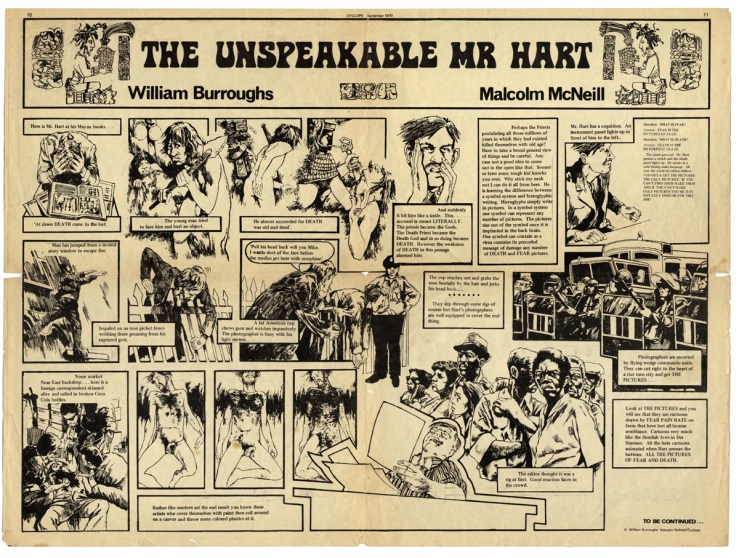
In 1970, William Burroughs was living in London. While there, he collaborated with young English artist Malcolm McNeill on a comic series for a magazine called Cyclops. The series was called The Unspeakable Mr. Hart, and remains uncollected/reprinted to date. Too bad, because it looks like really cool stuff. We got these images via The Virtual Library’s Beats collection, where there’s a really cool interview with McNeill (he discusses Burroughs habit of “going to movies to admire hard-ons and talking about them all afternoon,” which is kinda hilarious):

mcneillmrhart1mcneillmrhart2

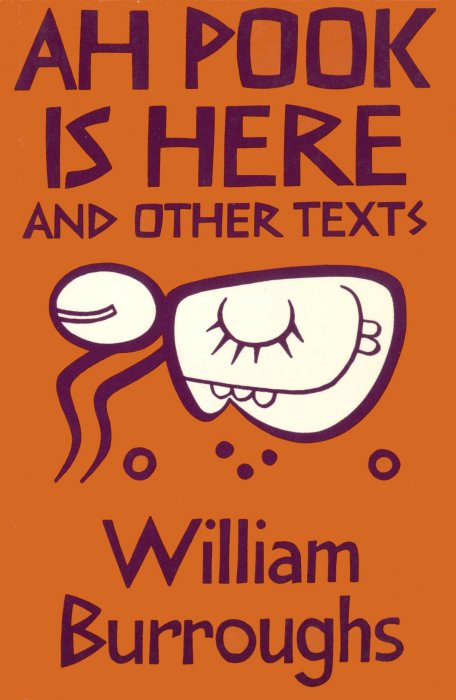
After Cylcops went kaput, Burroughs and McNeill continued the story in a project called Ah Pook Is Here, (a reference to the Mayan death god). Ah Pook Is Here, unfinished, was collected in the early eighties in Ah Pook Is Here and Other Texts which unfortunately is out of print. And very expensive. (Feel free to send it to me, anyone).

ah_pook_is_hereukcalder1979

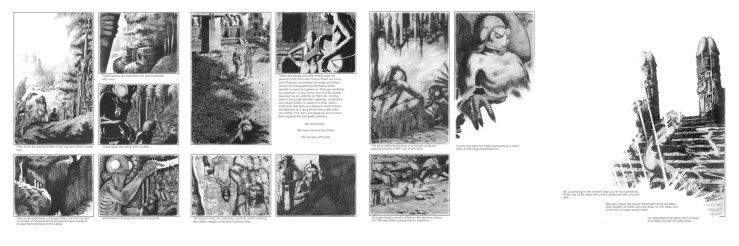
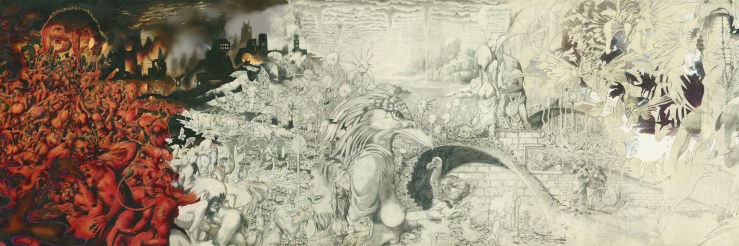
Fortunately, we can at least get a peek at some of McNeil’s hellish art at burroughsmcneillart.com. A few Boschian samples

burroughs_mcneill3

burroughs_mcneill

burroughs_mcneill2

Again, we want this book. Please send us this book. In the meantime, filmmaker Philip Hunt made this 1994 6 minute animated short of Ah Pook Is Here:

The Discipline of DE — Gus Van Sant/William Burroughs

Gus Van Sant’s great little short film from 1978, based on William Burroughs’s essay, explains the art of DE, or “Do Easy.” Our clumsy ass has been trying too hard, apparently. The film is quite funny but also useful, and well worth watching in full. It’s also included in the latest issue of Wholphin, if thou art so moved.

William S. Burroughs/John Giorno

burroughs_giorno

Look at these guys! I kind of have to have this record. If you have a copy, go ahead and send it to me. No? Okay, what about uploading the tracks somewhere as mp3s? No? Okay…

Image and LP info via Brainwashed.

William S. Burroughs/John Giorno (1975), GPS 006-007

William Burroughs

1. “103rd Street Boys” from Junkie 2. excerpt from Naked Lunch 3. “From Here To Eternity” from Exterminator 4. excerpt from Ah Pook Is Here 5. “The Chief Smiles” from Wild Boys 6. “The Green Nun” 7. excerpt from Cities Of The Red Night

John Giorno 8. “Eating Human Meat”

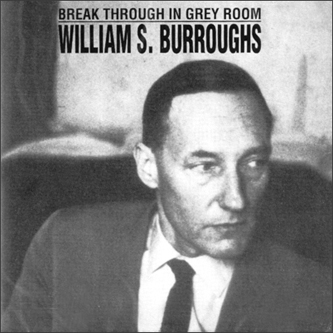
And so as not to just beg for mp3s but to also give, check out Burroughs explaining how tape manipulation helps to expand conciousness in “Origin and Theory of the Tape,” and get horrified by an example of said technique with “Present Time Exercises,” both from Break Through in Grey Room, a collection of Burroughs’s tape experiments and speeches (not to mention a dash of Ornette Coleman freaking freestyle in Morocco).

sr08_cover

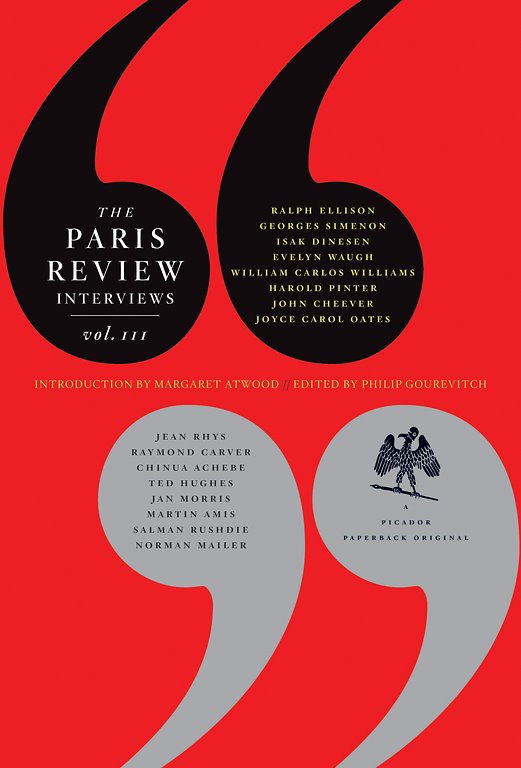
The Paris Review Interviews, Volume III

How much you enjoy the third collection The Paris Review Interviews will depend entirely on how much you enjoy reading intelligent and thoughtful writers discussing intelligent and thoughtful subjects. I happen to love reading author interviews–even interviews with authors I don’t particularly like–and hence, I enjoyed this book quite a bit.

Covering sixteen disparate authors and fifty-two tumultuous years, the interviews here are by turns insightful, hilarious, strange, and at times, infuriating. The first interview (the book is organized chronologically), a 1955 conversation with Ralph Ellison evokes all of these emotions. One can almost feel Ellison’s restraint as he patiently replies to asinine questions like, “Then you consider your novel a purely literary work as opposed to one in the tradition of social protest?” and, “But isn’t it going to be difficult for the Negro writer to escape provincialism when his literature is concerned with a minority?” If anything, these politicized charges prompt Ellison to some of the most salient observations about literature’s universalizing powers that I’ve ever read.

In his 1964 interview, poet William Carlos Williams also sheds quite a bit of light on his art and craft. Interestingly, his wife is also a major part of the interview, discussing at some length her own role in her husband’s writing. Beyond literature, craft, and writing, Williams also sets another early theme that unites the interviews collected here–dissing other writers. He calls T.S. Eliot a “conformist” determined to set poets back twenty years. Evelyn Waugh picks up on this theme in his 1963 interview. Of Faulkner: “I find Faulkner intolerably bad.” And Raymond Chandler: “I’m bored by all those slugs of whiskey. I don’t care for all the violence either.” Zing!

Don’t feel too bad for Chandler, though; he comes off funny and earthy and sad in his 1983 interview, especially when he discusses his alcoholism, and how and why he quit drinking. Apparently, teaching–and drinking–with John Cheever when the two were teaching at the Iowa Writer’s Workshop in 1973 had a major impact on Chandler’s decision to stop drinking.

John Cheever focuses mostly on the writing craft in his 1976 interview–not much talk of drinking here. He does, however, share this insight: “Plot implies narrative and a lot of crap. It is a calculated attempt to hold the reader’s interest at the sacrifice of moral conviction.” I’ve never liked Cheever’s writing, but he’s a great interview. In his 1994 interview, Achebe–an author whose fiction (and essays) I do like comes off as far more insightful and far less pretentious. On why creative writing classes exist: “I think it’s very important for writers who need something else to do, especially in these precarious times. Many writers can’t make a living. So to be able to teach how to write is a valuable to them. But I don’t really know about its value to the student.” Lovely. MFAs beware!

The interviews collected here are funny, smart, and very entertaining–whether its Achebe on general misunderstandings of his famous Conrad essay, Salman Rushdie on New Wave Cinema, or Joyce Carol Oates on Finnegans Wake, The Paris Review Interviews, Volume III is full of smart people talking about smart things–and what’s better than that? Highly recommended.

The Paris Review Interviews, Volume III is available October 28th, 2008 from Picador.