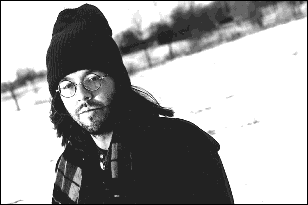
David Gaddis produced only one webcomic, but it’s beautiful. Do another one, Mr. Gaddis! In the meantime, take five minutes to read “Piercing.”


David Gaddis produced only one webcomic, but it’s beautiful. Do another one, Mr. Gaddis! In the meantime, take five minutes to read “Piercing.”
A couple of weeks ago, loyal reader Damon Noisette left a link to a David Foster Wallace piece on Roger Federer. Click on the player below to listen to a cool interview with DFW about this piece. I know, I know–the interview is a couple of months old–but I’m trying to integrate audio into this website, and this is something of a trial run. Enjoy (or not).
[odeo=http://odeo.com/audio/1757889]
Best Book I Read in 2006:
Moby-Dick by Herman Melville.
Best Book Published in 2006 that I Read in 2006:
I read plenty of fantastic books this year, but I don’t think any of them were published this year (although I’m sure that plenty of great books came out this year. I’m always playing catch-up). The closest I think I can come is a paperback of Dave Egger’s collection of short fiction, How We Are Hungry, which came out in October of 2005, actually (to plenty of mixed reviews–but I liked it a lot!). I will also read Egger’s What Is the What as soon as possible. Maybe this Christmas break (feel free to send me a copy). Here’s The New York Times Book Review Top 10 of 2006, and courtesy of the American Library Association, the TTT (the Teen’s Top Ten, popularly known as “the titties”).
Least Enjoyable Book I Read in 2006:
God, Dr. Buzzard, and the Bolito Man: A Saltwater Geechee Talks About Life on Sapelo Island, Georgia by Cornelia Walker Bailey (with Christena Bledsoe). I’m sure lots of people would really enjoy this book, in fact, I recommended it to a few of my students. Not for me though.
Most Likely to Succeed:
Ricotta Park will storm the nation (if Nicky Longlunch ever decides to start posting again).
Most Likely to be President:
Barack Obama?
Best Dressed:
Saddam Hussein always was a sharp dresser–

–but after some {ahem} troubles–

–he had a fabulous makeover! Saddam looking dapper and energetic, yet casual and academic (oh, and seriously pissed)–

Best Movie I Saw in the Movie Theater in 2006:
I’m pretty sure it was Litle Miss Sunshine, although I also enjoyed the movie where Will Ferrell was a race car driver.
Best Movie I Saw in 2006:
The New World (dir. Terrence Malick). This film is beautiful. You must watch it (twice).
Best Album of 2006:
Lots of contenders–M. Ward’s Post-War, Joanna Newsom’s Ys, Destroyer’s Rubies, OOIOO’s Taiga, Girl Talk’s Night Ripper –all were great (and I know that I’m forgetting dozens)–but The Fiery Furnaces’ Bitter Tea didn’t leave my CD player for months…in fact I’m sure it’s still in there.

Best Song of 2006:
“Star Witness” by Neko Case. Crafted from images that at first seem vague, “Star Witness” relates the haunting tale of a tragic accident. And the worst part of the accident is how mundane the whole scene is to everyone besides the speaker: “This is nothing new/No television crew/They don’t even put on the siren.”
Most Overrated Album of 2006:
The Crane Wife by The Decemberists. The Decemberists are so boring.
Best Live Performance of a Musical Group:
The Fiery Furnaces at Common Grounds (Gainesville, FL). One of the best concerts I have ever attended. The kids danced as The Fiery Furnaces deconstructed their songs, rearranging them into new suites, punching in and out of different albums. The true rocknroll.
Most Disappointing Live Performance of a Musical Group:
Wilco at The Florida Theater (Jacksonville, FL). Wilco didn’t seem to know that they were playing in a theater. Jeff Tweedy seemed completely annoyed at the crowd for not boogeying to the jams. Wilco’s performance came off like a simulation of a band that was really “into” the vibe–like they had watched films of themselves to improve, like a football team or something.
Best New Product:
Okay, boxed wine is nothing new, but in 2006 I started gleaming the cube. Boxed wines stay fresher longer than wine from a bottle, and are generally much less expensive. This summer I found my habit–which a prejudiced few might think declasse–validated by the cultural elite. I attended a pre-wedding party in a cave in the south of France this summer; Damien, the winemaker (it was his cave) served us box after box of delicious wine, trumpeting the superiority of the box as a vessel. So see.
Worst People of 2006:
Check out my previous post for some superlative hatin’.
Man of the Year:
I wasn’t on the committee this year. I understand that they might have met in Orlando this year. This guy John Griffis heads the whole thing up. I’m sure he has a MySpace account. I really don’t know who won. I think this guy Andy won.
Woman of the Year:
The woman of the year is my darling wife Christy, of course.

Last week Little Brown published a new edition of David Foster Wallace’s Infinite Jest featuring a new introduction by Dave Eggers. You can read the whole introduction here (thanks to Bob Tomorrowland for sending me the link).
Eggers’ intro weighs in on the current “readability” debate in contemporary fiction. In his 2002 essay “Mr. Difficult,” Jonathan Franzen (author of The Corrections) attacked “difficult fiction,” focusing on writers like William Gaddis and Thomas Pynchon, whom Franzen views as “Status” writers who don’t really care about their audience. Franzen posits that “Contract” writers (like himself) take a more humanist, social approach. In his intro, Eggers avers that DFW’s work denies these classifications; the content of DFW’s work may be complex and weighty and downright philosophical, but DFW’s tone and his humor and his pathos ultimately allow for an accessible, fun read.
This blog has previously come out against Franzen’s argument: biblioklept is a fan of both the difficult and the more accessible–and the work of authors like Eggers and DFW prove that Franzen’s types are empty models. It’s too bad for Franzen that Gravity’s Rainbow and Ulysses require more work on the part of the reader than say, Stephen King or Tom Clancy. The Bible and Shakespeare and Moby-Dick and Gabriel García Márquez also require work from the reader, and no one could make a legitimate argument for removing them from the literary canon. One day, Infinite Jest will take its place in that same canon, alongside the work of Pynchon, John Barth and Don DeLillo–all authors whose work requires some effort on the part of the reader.
Eggers disscusses the effort required to read Infinite Jest, noting that it’s not a book you can simply put down and come back to a few weeks later. From my own IJ reading experience, I know this to be true: I made three attempts before finally getting into it; once I was “into” it, I was addicted, reading well past my bedtime, lugging the large object around on the Tokyo subway, reading snatches during my lunch break. IJ made me laugh loudly, it made me cry a few times; I even found myself so excited that I had to stand up during the climactic fight between Don Gately and the mysterious guys in Hawaiian shirts. When I finished the book, I immediately started re-reading it, sifting through its dense language for added meaning. And one day (month), when I have the time, I plan on reading it in its entirety again.
If you have any interest in this book, read Eggers’ foreward–he does a much better job selling this book than I could. I will say that this book is a favorite of mine, and that if you put the time and effort into it, you won’t be disappointed.
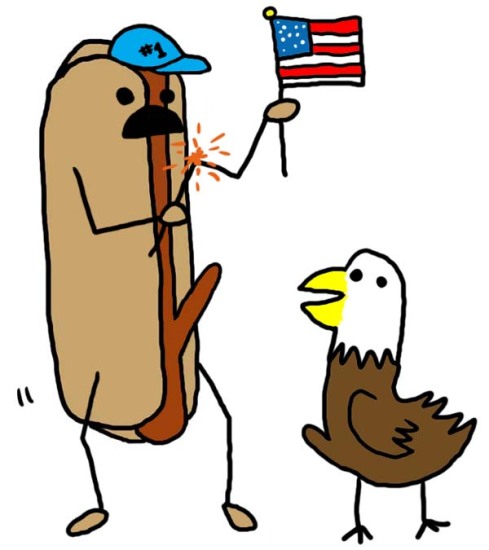
“America Is Awesome” by Natalie Dee
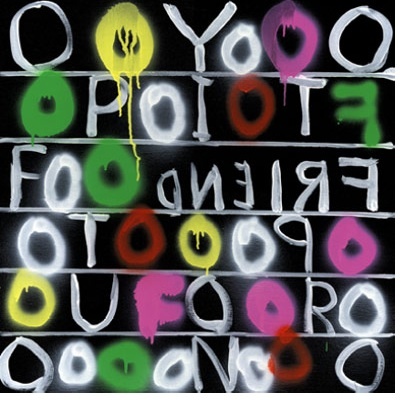
AUDIOKLEPT SPECIAL EDITION: Deerhoof–Friend Opportunity (Kill Rock Stars; releases Jan 23, 2007)
Deerhoof are a kind of paradox–innovators working in a tradition–deconstructing the whole of modern music (as well as not-so-modern-music) with their voices, drums, guitars, and keyboards. With Friend Opportunity, the San Francisco band has distilled the buzz and clatter, the melody, muscle, and grace of their past few albums (2005’s The Runners Four, 2004’s The Milkman, 2003’s Apple O’) into a concise, nearly-perfect 36 minutes. The Runners Four topped a lot of year-end lists last year, but to me it was overlong and undercooked–plenty of good ideas that needed to be edited and refined. With Friend Opportunity, Deerhoof achieves a beautiful balance, reining in chaos and noise in favor of punchy rhythms and hooks that are sure to sink into your mind. Not to say that the vibrant anarchy of past albums has been in anyway discarded or even subdued–Deerhoof have simply gotten better at using chaos as a musical element, a means to an end, rather than an uncontrollable variable. Tracks like album opener “The Perfect Me” and “+81” establish pop ideals, cribbing from classic rock riffs, only to deny, deconstruct and then revive these ideals–all in under three minutes. “The Galaxist” is particularly sweet, opening with Faheyesque guitar picking and breathy melodies, and moving into a joyous beat that would make Fela Kuti proud. If the world had better musical taste, “Matchbook Seeks Maniac” would be on every radio station, the perfect slow dance for the Bizarro World prom. The brevity of these tracks is a plus: most of the tracks on Friend Opportunity lack the repetition common to pop music, moving through several ideas in under three minutes–ideas that stick in the head, causing a listener to hit repeat. The album closer, “Look Away,” is the only track to deviate from this method. Clocking in at over 11 minutes, “Look Away” comprises nearly a third of the album’s content, and will undoubtedly not stand repeated listens by some listeners. The track seems tailor-made for listeners who expect some noise from their Deerhoof, and those listeners won’t be disappointed. Nonetheless, even in an 11 minute anti-epic, Deerhoof controls the chaos and noise, resulting in some challenging and beautiful moments. Despite a 2007 release date, I consider Friend Opportunity one of the best albums of this year. I can’t wait to buy it.
In tonights episode of The Simpsons, Lisa and Moe go to a writer’s seminar called “Wordloaf” in Vermont. Is this a real thing? I googled, but I found nothing.
Moe has been invitedto Wordloaf by Tom Wolfe, who loves Moe’s book of poetry, Howling at a Concrete Moon. What Wolfe and the other writers at Wordloaf don’t realize is that Lisa has engineered Moe’s book, editing it together from Moe’s fragmented notes of despair, and giving it its title. Disappointment, betrayal, and humiliation ensues. Also, I think Homer might’ve eaten a donut or something.
Authors Jonathan Franzen (The Corrections) and Michael Chabon (Wonder Boys, The Amazing Adventures of Kavalier & Clay) also guest star. By the way, biblioklept is coming down here, officially, in complete disagreement with Jonathan Franzen’s opinions on “difficult writing.”
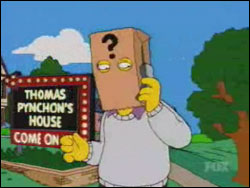
Thomas Pynchon’s non-image makes a brief cameo. By my count this is his third appearance on the show.
Overall, despite jokes about grading papers and grad school and several obscure literary references–all things so dear to my heart–this episode was not so funny.
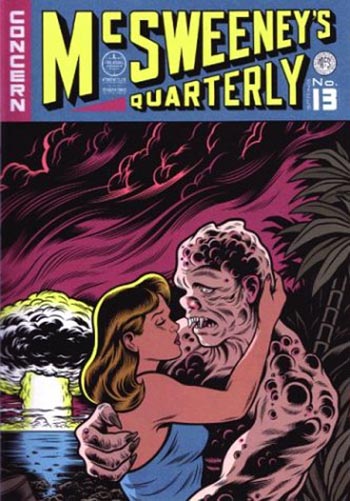
Charles Burns’s gorgeous title page for McSweeney’s Issue 13 captures the bizarre mix of romance, abject horror, and mutually assured destruction present in the horror comics of the 1950’s.
I love all things McSweeney’s–Dave Eggers, The Believer, etc–but Issue 13 of McSweeney’s Quarterly Concern is particularly excellent, and is easily the most beautiful, most aesthetically pleasing book I own. Designer and editor Chris Ware (author of the sad and dense graphic novel Jimmy Corrigan, Smartest Kid on Earth) offers a concise but thorough history of cartooning. Ware places Robert Crumb, the Hernandez brothers, Art Spiegelman, Daniel Clowes, and other great artists into a tradition initiated by Rodolphe Töpffer and Krazy Kat, and perfected by Charles Schulz. This richly-colored book comes wrapped in an old fashioned broadsheet comics page, and includes work from some of the best artists and cartoonists from the past 100 years. Despite the wide range of cartoonists represented, Ware unifies the issue in a theme of despair and depression. Imagine this famous moment in cartooning–Lucy pulls the football away from Charlie Brown’s wishful kick at the last minute, tripping him and humiliating him and betraying him: that pretty much somes up Ware’s theme. But even though it’s sad, it’s funny and somehow beautiful–and real.
If you are a bibliophile, you must buy this book. You won’t be disappointed.
Another covers gallery. I love this one–plenty of weirdness!

Zombie kisses…mmm. The taboo pleasures of necrophilia in four-color glory!

William Burroughs wasn’t the only one addressing the horrors of drug addiction. These touchy themes led to constant censorship battles for EC Comics.

The horrors of love. I like this guy’s beard.

When I was a kid, I loved loved loved MAD Magazine: I loved Alfred E. Neuman’s gap-toothed grin on the cover, I loved Don Martin’s wacky comic strips, I loved the fake ads, I loved the movie and TV show parodies that I didn’t understand (to this day there are certain movies that I only know about via MAD), I loved the Sergio Aragonés doodles that hid in the margins, I loved “Spy vs. Spy,” I loved the endless recycling of strips and parodies that were older than I was by a longshot, I loved Al Jaffee’s “fold-ins” (even though they quickly wore down to unfunny illegibility within minutes), I even loved the perennially unfunny “Lighter Side of Strip.” I think most of all I loved the bizarre guttural language of MAD–the unpronounceable explosions of fricatives and glottals, the joyful and rude “smrzzps!” and “schlups!” and “putzes” that provided the perfect soundtrack for my pre-adolescent pre-angst. Surely, this was the special argot of the adult world, the perfect onomatopoeia of grown-up comedy. Even as a young kid, I knew that MAD was in some way offensive, that it somehow tested the bounds of decency. Of course, I mistook what was essentially puerile for something more urbane.

So I was initially disappointed when I received Maria Reidelbach’s Completely Mad for Christmas one year. I guess I was expecting it to be a special all-color glossy hardback anthology. Eventually, I got around to reading it, and thus I learned the history of EC Comics and the censorship trials that the brand–and comics in general–had to endure. To this day, again and again, comic books come under the fire of those who wish to censor (check out the Comic Book Legal Defense Fund’s short history of censorship in comics to learn more).
Under the editorial direction of William Gaines, EC Comics in the early 1950s specialized in horror, sci-fi, and true crime comics, publishing classic titles such as Tales from the Crypt and Weird Fantasy. These comics featured twisting and twisted plots, boldly illustrated with strong lines and graphic images. In a repressed and fearful age, EC Comics openly addressed problems of racial segregation and arms proliferation. The lurid artwork and progressive themes finally proved too much for Dr. Fredric Wertham, who addressed the supposed threat comics proved to the youth of America in Sedcution of the Innocent. Fitting right in to the McCarthyism of the era, Wertham’s book led to a Congressional hearing on comic books. In an attempt to regulate and control his own product, Gaines banded with other publishers to form the Comics Code Authority. This pre-emptive strike backfired, however–the CCA decided that they needed to censor every comic that came out, and give it this stamp of approval (still seen on mainstream comics today!)–

If you’re interested in reading the full (and necessarily vague) code, check out Once Upon a Dime’s article here.
A disappointed Gaines quickly left the CCA but the damage was done. They ruled that comics couldn’t be published with words like “horror” or “weird” in the title, effectively blacklisting EC’s major titles.

Check out this review of Psychoanalysis #1 at Polite Dissent.
Gaines continued to publish new comics like MD, and Psychoanalysis, but the CCA had poisoned the well. EC Comics went under, plagued by censorship battles and distribution problems. Gaines focused all of his efforts on MAD, turning it into a full-sized magazine in 1955. MAD Magazine has been in continuous publication for over 50 years–although today the magazine prints paid ads. Yeah. That sucks, doesn’t it? So MAD has succumbed to commercialism–no wonder, considering that it’s the commodity name for such a crappy TV show. Even so, I’ll always recall gleefully devouring “Special Editions” of MAD, reprint digests chock full of references I didn’t get, thinking that I was gaining some forbidden knowledge. Maybe I was.
True crimes. Get lurid.

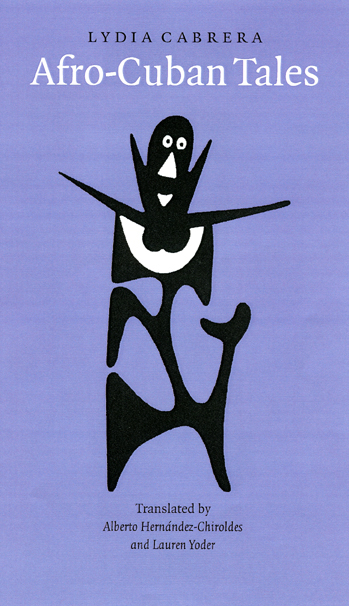
In a sublime synthesis of traditional folklore and imagistic surrealism, Lydia Cabrera’s Afro-Cuban Tales questions the normative spaces occupied by bodies. Deriving from animist tradition, her characters exist in an impossible multiplicity of spaces, being at once animals and plants, humans and gods. Cabrera’s characters endure trials of biological identity and social co-existence, and through these problems they internalize authority, evince taboos, and create a social code. Cabrera’s trickster characters provoke, challenge, or otherwise disrupt the symbolic order of this code. In “Bregantino Bregantín,” a story that recalls Freud’s primal horde theory, as well as the work of more contemporary theorists such as Julia Kristeva and Judith Butler, narcissist Bull kills all the males of his kingdom and takes all the women for himself. The sadistic titular turtle of “Papa Turtle and Papa Tiger” uses the power of his dead friend’s antlers to shame, torment, and torture the other animals of his community. And in the magical realism of “Los Compadres,” Capinche seeks to put the horns on his best friend Evaristo by sleeping with his wife–a transgression that ends in necrophilia. This union of sex and death, creation and destruction is the norm in Cabrera’s green and fecund world; the trickster’s displacements of order invariably result in reanimation, transformation, and regeneration—the drawing, stepping-over, and re-drawing of boundaries. A couple of days, Bob hipped me to this really cool Run Wrake short film called Rabbit. While not directly related to Afro-Cuban Tales, this film nonetheless captures the book’s key themes and motifs of death and resurrection, transformation and language, and the trickster’s power to disrupt social and familial codes. Highly recommended.
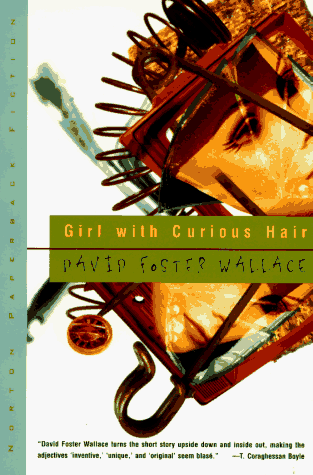
Scott Martin was kind enough to loan me this book. Did he know that it would forever change the way I read? It was the first semester of my freshman year in college, and I was slowly reaching beyond stuff like Henry Miller, Wm Burroughs and Franz Kafka. David Foster Wallace’s short story collection Girl With Curious Hair introduced me to a whole new world of writing. Reading DFW is like having a very witty friend tell you a moving and funny story over a few beers. He’s hilarious, thought-provoking, and not nearly as hard to read as people seem to think (by the way, simply googling “David Foster Wallace” will yield several vitriolic essays by people who think that DFW is somehow duping his readers. He’s not. These people don’t know a good story when they read one.)
Girl features “real people” like Alex Trebek, David Letterman, and Lyndon Johnson as characters, but constantly destabilizes any realism these figures might lend to the story. The novella included in this collection, Westward the Course of Empire Takes Its Way, alludes directly to John Barth’s Lost in the Funhouse (another book I’ve loaned out and never gotten back). Westward takes a critical but humorous look at how culture is commodified: the plot centers around a reunion for everyone who has ever acted in a McDonald’s commercial. At the reunion, plans are revealed for a series of real-life “Funhouses,” based on the work of “Dr. Ambrose” (Barth’s stand-in in Westward).
Girl with Curious Hair is probably the best starting point for anyone interested in DFW but daunted by 1000 pages of Infinite Jest (IJ is yet another one I loaned out and never got back). Girl‘s stories have a little more ‘pop’ to them than DFW’s latest collection, Oblivion, and Girl tends to be easier to find used than DFW’s other collections, Brief Interviews with Hideous Men (actually a better collection, in my opinion) and A Supposedly Fun Thing I’ll Never Do Again (a collection of hilarious essays and nonfiction).
To sum up: if you still haven’t read DFW go consume this book; when you’re done you’ll be left wondering: “What other good stuff have I been missing out on?”
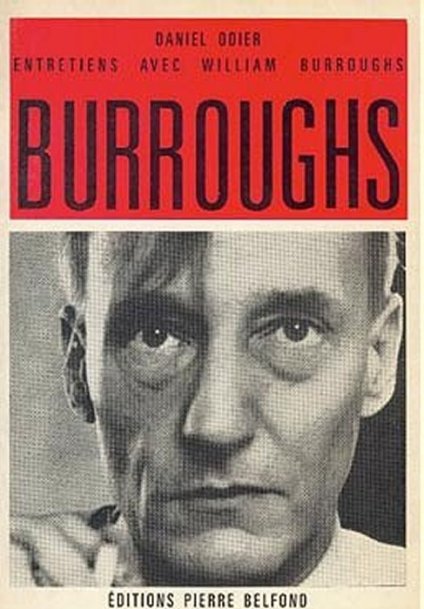
Burroughs appears on a large number of his covers, whether as a photograph, or something more iconic:

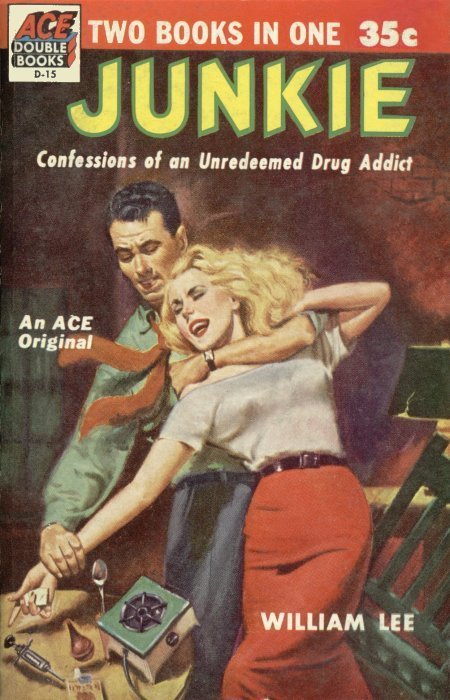
I like this early, lurid pulp edition of Junky. Note the spelling of the title, as well as Burroughs’ pseudonym, William Lee:
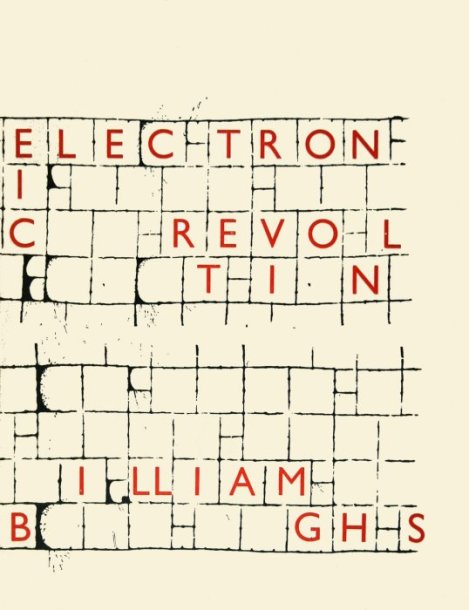
The Wild Boys: One of my faves.

This Spanish edition of Naked Lunch really captures the squeamish quality of all things Burroughs:

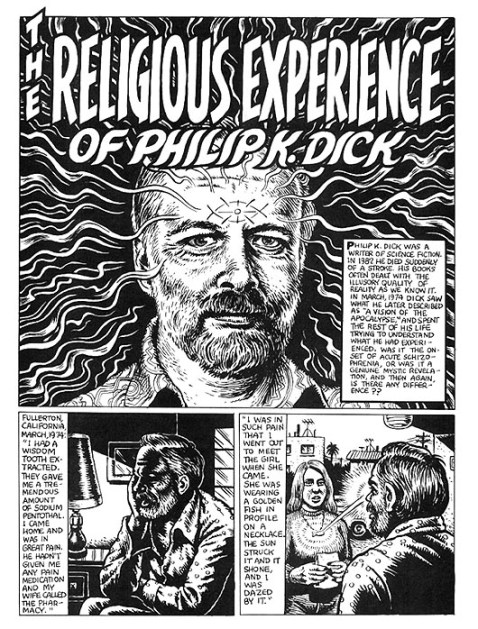
Want to learn about PK Dick’s bizarre apocalypse visions? Sure you do–and who better to tell a bizarre story than underground comix avatar Robert Crumb, whose accoutnt is available here in full. Dick’s revelations led him to believe that he was coexisting in a Roman Empire that never fell, and that the spirit of the prophet Elijah lived within him. Highly recommended.

 Biblioklept