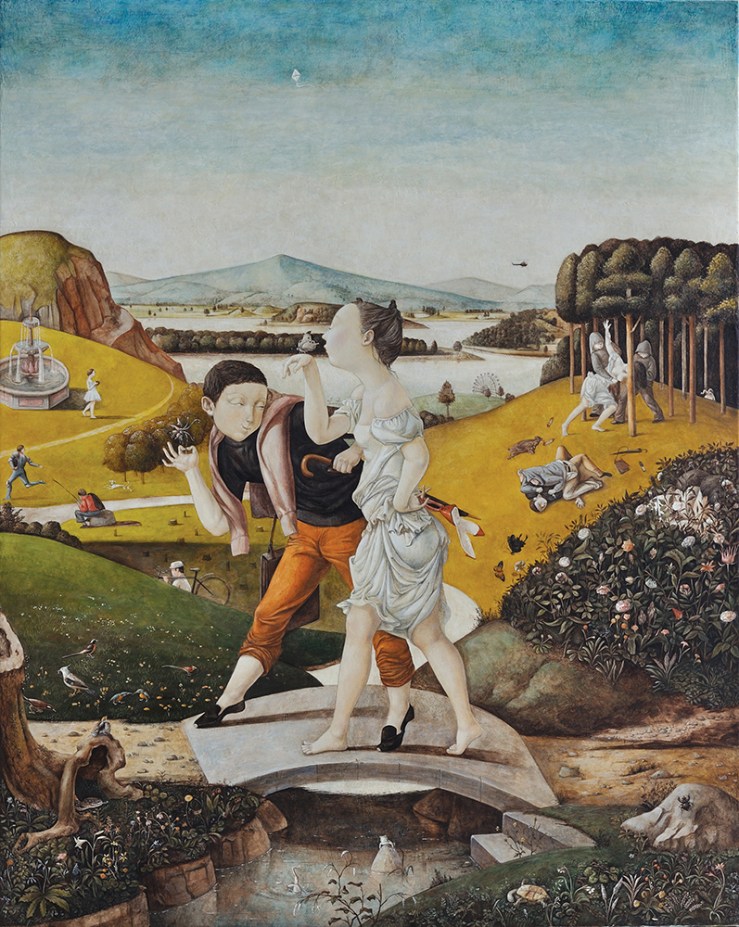
Sleep of Trees — F. Scott Hess

739e0b37fe03116e96253b023d3ed774

Sleep of Trees, 2000 by F. Scott Hess (b. 1955)

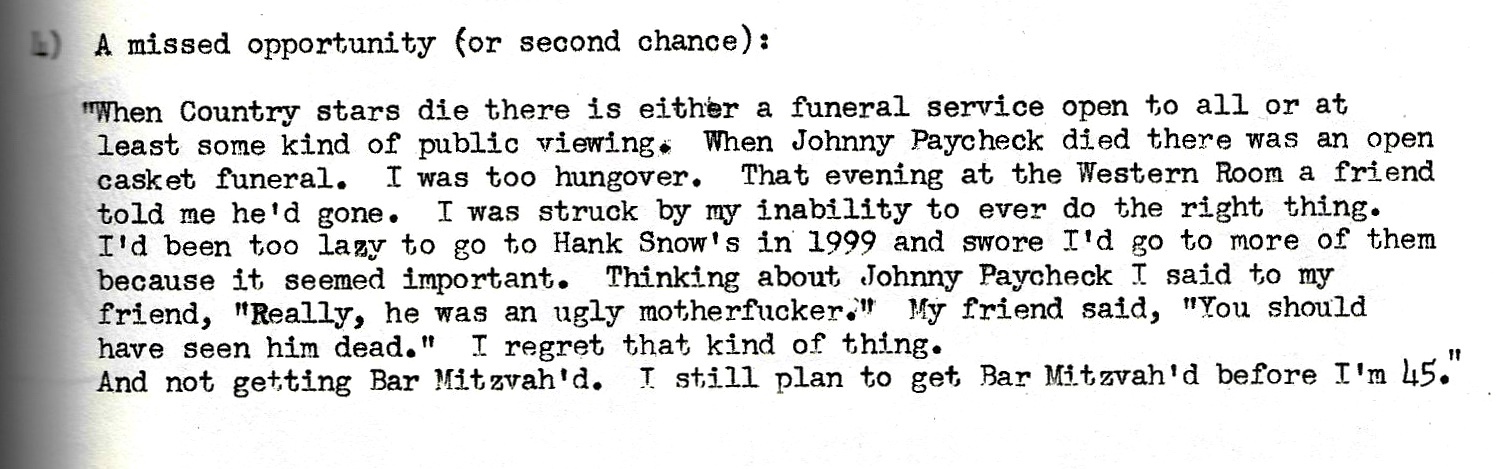
Missed opportunity | David Berman

2020-08-15_151419_1

From The Minus Times #29, as republished in The Minus Times Collected. 

Nervous in the Service — Hilary Harkness

nervousintheservice2009copy

Nervous in the Service, 2009 by Hilary Harkness (b. 1971)

Posted in Art

Blog about William Melvin Kelley’s satire Dem (book acquired 12 Aug. 2020)

2020-08-13_184241

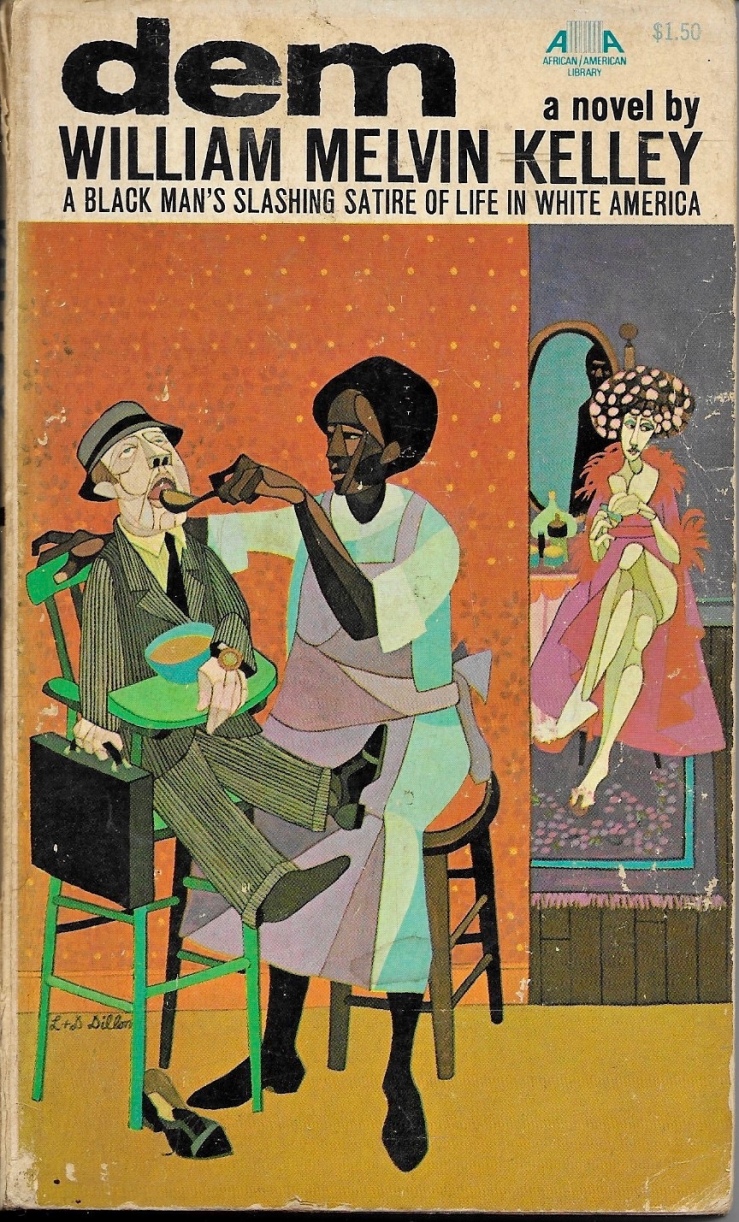
I managed to snag a cheap used copy of William Melvin Kelley’s fourth novel Dem (or, more properly, dem) yesterday. I usually just snap a pic when I do these book acquired posts, but the cover for this 1969 Collier mass-market, by Leo and Diane Dillon, was simply too good not to scan.

I read not-quite-half of dem today, and the Dillons’ cover captures Kelley’s hypercolor satire of white upper-middle-class America: the infantalized businessman, attended by a black domestic, his bored wife not-quite-off-scene; and hey—look in that mirror.

I’ll admit that the book was hard to break into for the first few moments, until a wild moment around page 20 or so, that I’m still waiting on the novel to deliver upon (or, as it seems at this point, to depart from entirely). Kelley’s style in dem is choppier, sharper, more cartoonish than his Faulknerian debut A Different Drummer and if dem skews towards absurd irony where Drummer was heroic-tragic, both novels are rooted in intense anger tempered by strange empathy.

As its subheading attests, dem is, like Drummer, a take on white people viewing black people, and over a half-century after its publication, many of the tropes Kelley employs here still ring painfully true. His “hero,” Mitchell Pierce is a lazy advertising executive, bored with his wife, a misogynist who occasionally longs to return to the “wars in Asia.” He’s also deeply, profoundly racist; structurally racist; the kind of racist who does not think of his racism as racism. At the same time, Kelley seems to extend little parcels of sympathy to Pierce, even as he reveals the dude to be a piece of shit, as if to say, What else could he end up being in this system but a piece of shit?

The novel I’m most interested in reading by Kelley is his last, 1970’s Dunfords Travels Everywheres, long out of print and hard (read: expensive on the internet) to find. It is, apparently, his most postmodern novel, his most polyglossic, and, if the stuff I’ve read on it is accurate, it represents his most profound satirical break/engagement with reality. Fortunately, it’s getting a reprint this fall. Looking forward to it.

The Minimalist — Ilya Milstein

minim-1

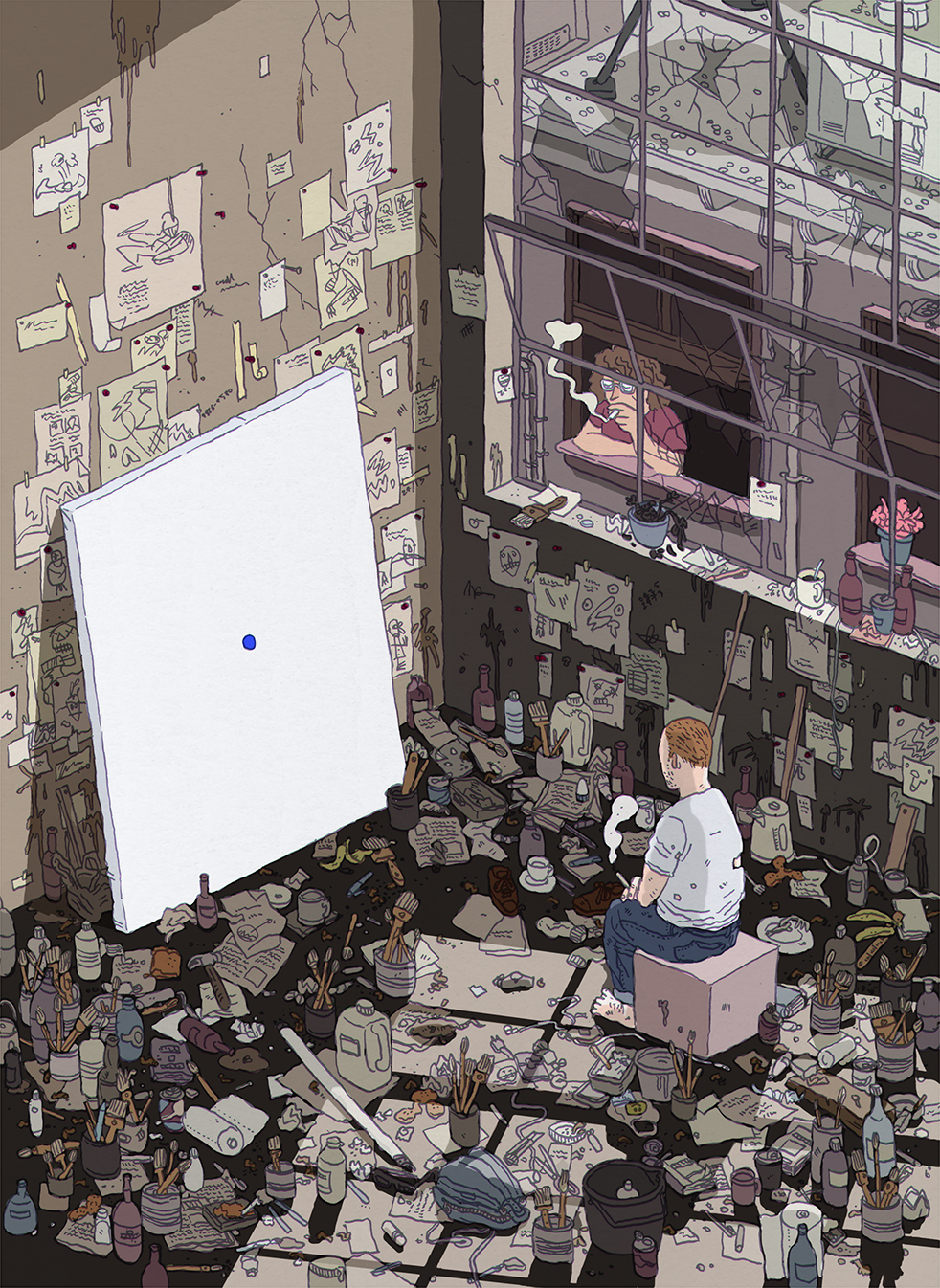
The Minimalist, 2017 by Ilya Milstein

Death and Funeral of Cain — David Alfaro Siqueiros

1kypaohjn-925ixgamqz59q

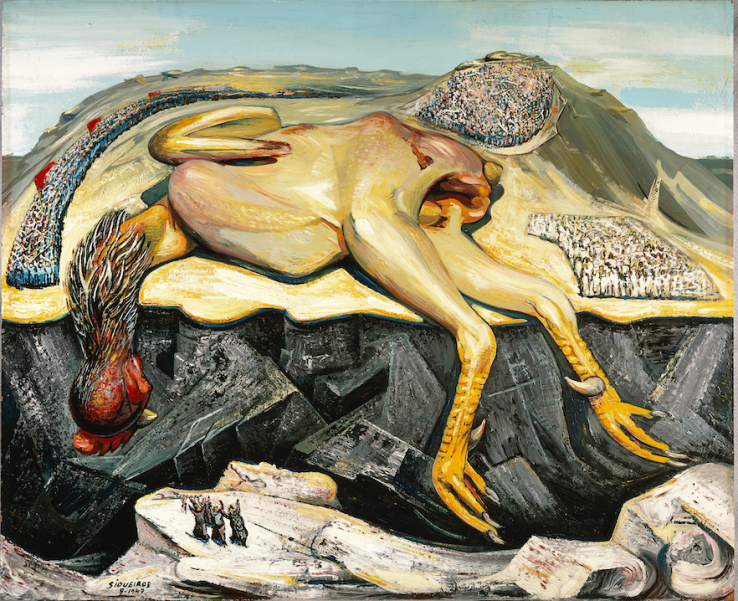
Death and Funeral of Cain, 1947 by David Alfaro Siqueiros (1896-1974)

Sketch of a Seated Man Reading — Eileen Agar

Sketch of a seated man reading by Eileen Agar 1899-1991

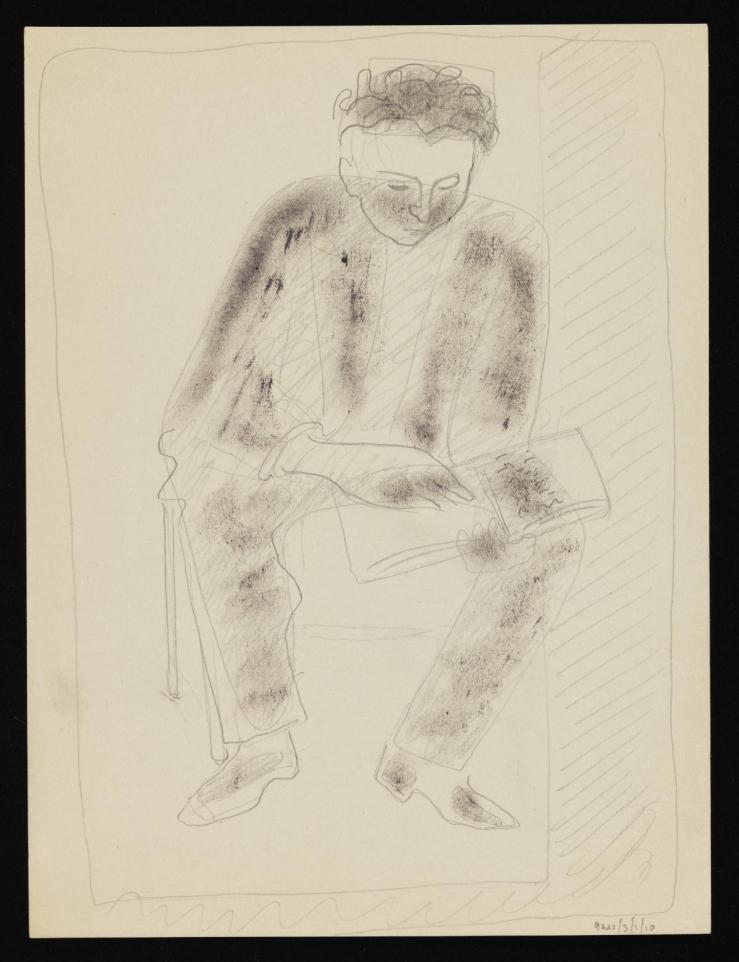
Sketch of a Seated Man Reading by Eileen Agar (1899–1991)

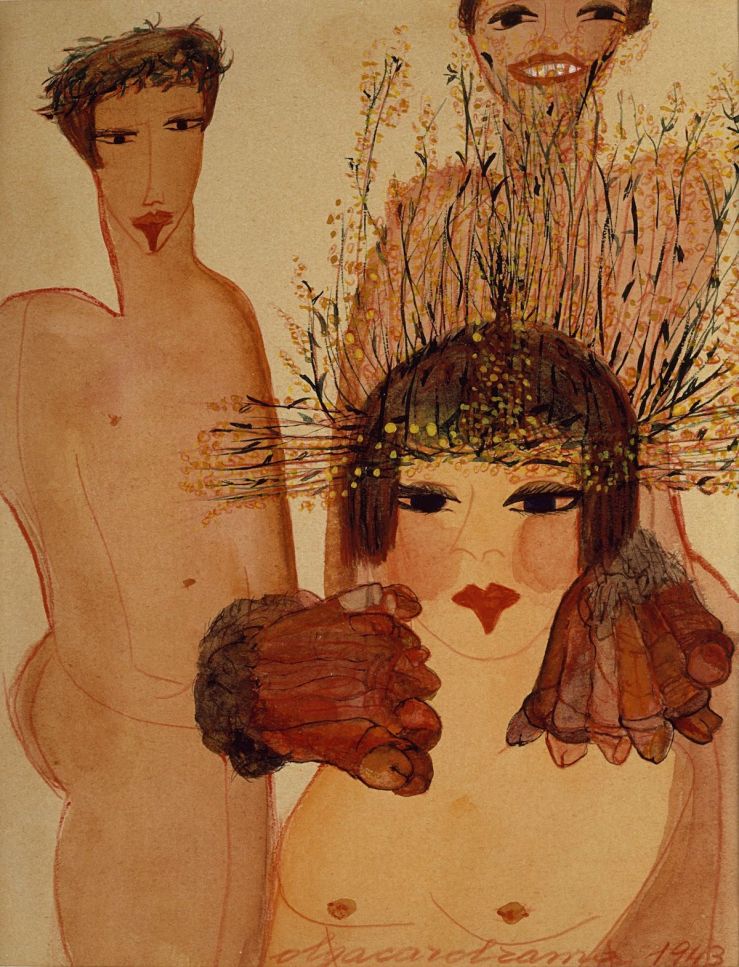
Passionate — Carol Rama

4399ff4877005349b0008e838ec78262

Passionate, 1943 by Carol Rama (1918-2015)

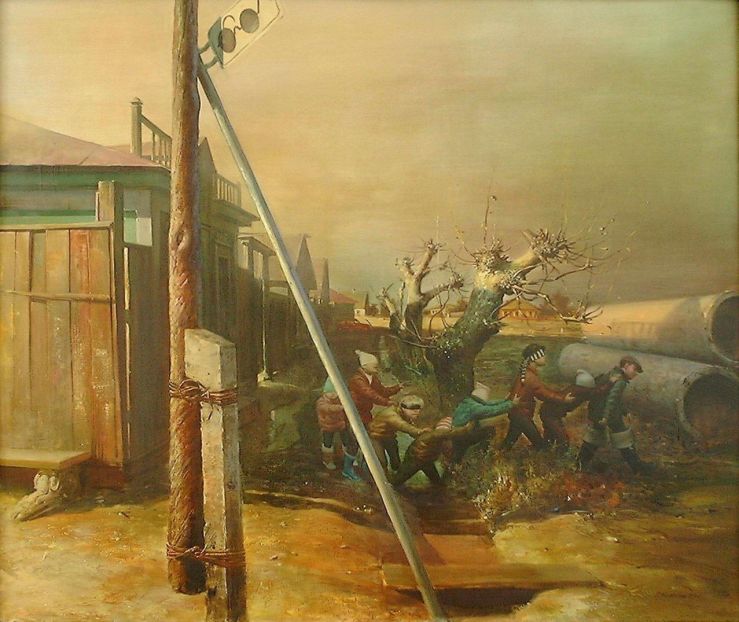
Game — George Petrovich Kichigin

d56353f6525f4f060ba37e4fbc7b9a6e

Game, 1989 by George Petrovich Kichigin (b. 1951)

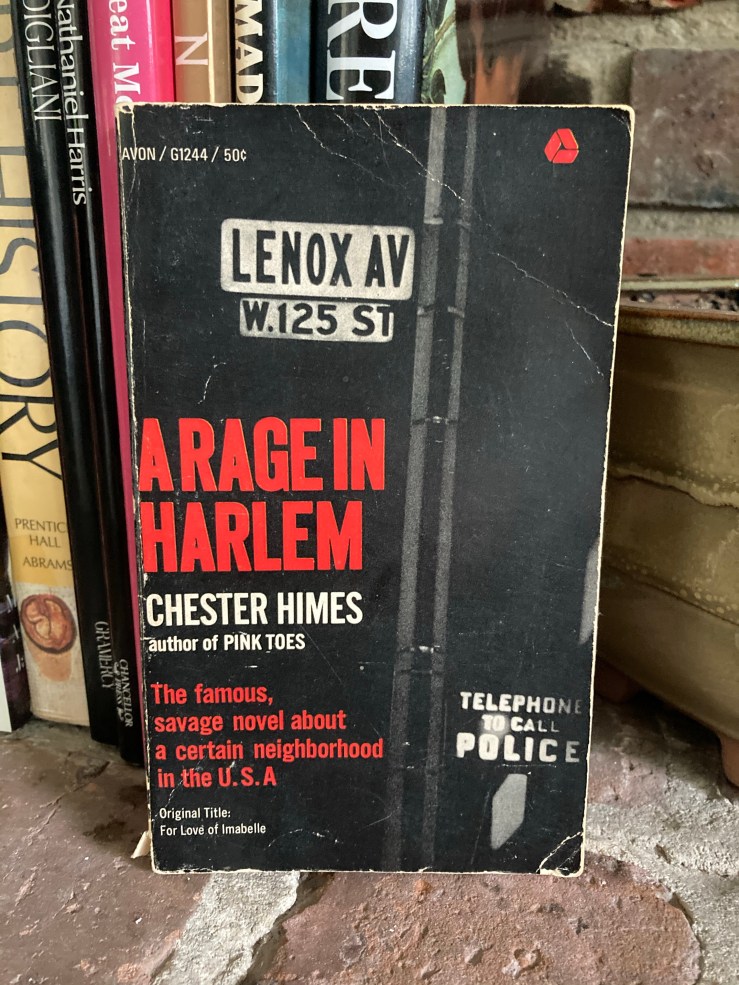
Chester Himes’ A Rage in Harlem (Book acquired, 5 Aug. 2020 and read this past weekend)

img_5907

I’d been meaning to read Chester Himes for a while now (on the recommendation of Ishmael Reed, who cites Himes as a major influence), so I picked up a copy of A Rage in Harlem, the first of his Coffin Ed and Grave Digger detective stories. I was expecting hardboiled crime fiction—and sure, there are elements of it here—but Himes’ 1957 novel was far zanier and more ecstatic than I expected. A Rage in Harlem pops along with wild energy, spinning out into strange directions, donning artful disguises, always on the run. Absolutely loved it. Here’s the blurb:

For love of fine, wily Imabelle, hapless Jackson surrenders his life savings to a con man who knows the secret of turning ten-dollar bills into hundreds—and then he steals from his boss, only to lose the stolen money at a craps table. Luckily for him, he can turn to his savvy twin brother, Goldy, who earns a living—disguised as a Sister of Mercy—by selling tickets to Heaven in Harlem. With Goldy on his side, Jackson is ready for payback.

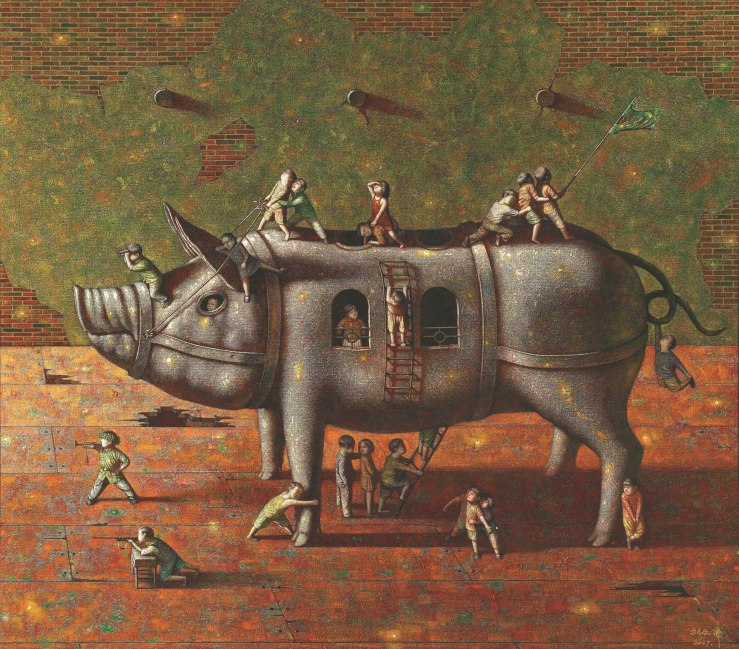
Piggy Toy — Liu Hong Wei

2011_hgk_02856_1383_000liu_hong_wei

Piggy Toy, 2007 by Liu Hong Wei (b. 1965)

Manjusaka — Xiao Guo Hui

xiao-manjusaka-2014

Manjusaka, 2014 by Xiao Guo Hui (b. 1969)

“The Beach in August” — Weldon Kees

“The Beach in August”

by

Weldon Kees


The day the fat woman
In the bright blue bathing suit
Walked into the water and died,
I thought about the human
Condition. Pieces of old fruit
Came in and were left by the tide.

What I thought about the human
Condition was this: old fruit
Comes in and is left, and dries
In the sun. Another fat woman
In a dull green bathing suit
Dives into the water and dies.
The pulmotors glisten. It is noon.

We dry and die in the sun
While the seascape arranges old fruit,
Coming in and the tide, glistening
At noon. A woman, moderately stout,
In a nondescript bathing suit,
Swims to a pier. A tall woman
Steps toward the sea. One thinks about the human
Condition. The tide goes in and goes out.

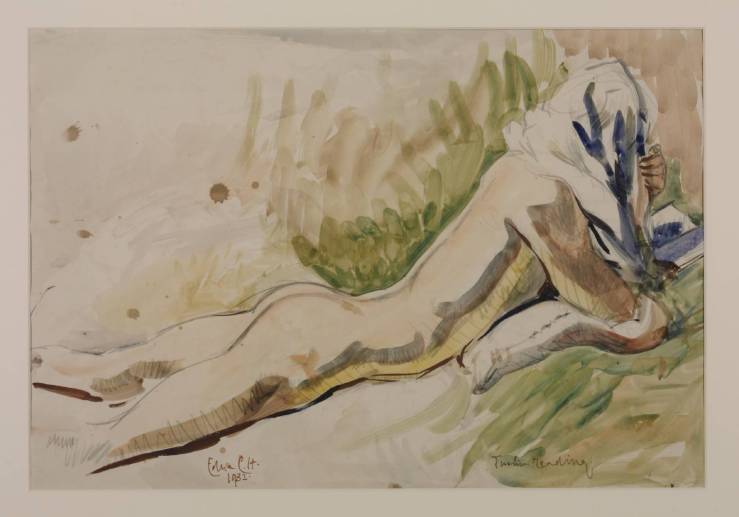
Justin Reading — Edna Clarke Hall

Justin Reading 1932 by Lady Edna Clarke Hall 1879-1979

Justin Reading, 1932 by Edna Clarke Hall (1879–1979)

David Berman’s review of Pavement’s “Demolition Plot J-7”

Screenshot 2020-08-08 at 9.43.09 PM

Via, via, via…

Untitled (Woman Reading) — George Jones

[title not known] by George Jones 1786-1869

Untitled by George Jones (1786–1869)

At the airport-security checkpoint on my way to visit my grandmother | Claudia Rankine

From Don’t Let Me Be Lonely

by

Claudia Rankine


At the airport-security checkpoint on my way to visit my grandmother, I am asked to drink from my water bottle.

This water bottle?

That’s right. Open it and drink from it.

/

At the airport-security checkpoint on my way to visit my grandmother, I am asked to take off my shoes.

Take off my shoes?

Yes. Both Please.

/

At the airport-security checkpoint on my way to visit my grandmother, I am asked if I have a fever.

A fever? Really?

Yes. Really.

/

My grandmother is in a nursing home. It’s not bad. It doesn’t smell like pee. It doesn’t smell like anything. When I go to see her, as I walk through the hall past the common room and the nurses’ station, old person after old person puts out his or her hand to me. Steven, one says. Ann, another calls. It’s like being in a third-world country, but instead of food or money you are what is wanted, your company. In third-world coun­tries I have felt overwhelmingly American, calcium-rich, privileged, and white. Here, I feel young, lucky, and sad. Sad is one of those words that has given up its life for our country, it’s been a martyr for the American dream, it’s been neutralized, co-opted by our culture to suggest a tinge of discomfort that lasts the time it takes for this and then for that to happen, the time it takes to change a channel. But sadness is real because once it meant something real. It meant dignified, grave; it meant trustworthy; it meant exceptionally bad, deplor­able, shameful; it meant massive, weighty, forming a compact body; it meant falling heavily; and it meant of a color: dark. It meant dark in color, to darken. It meant me. I felt sad.