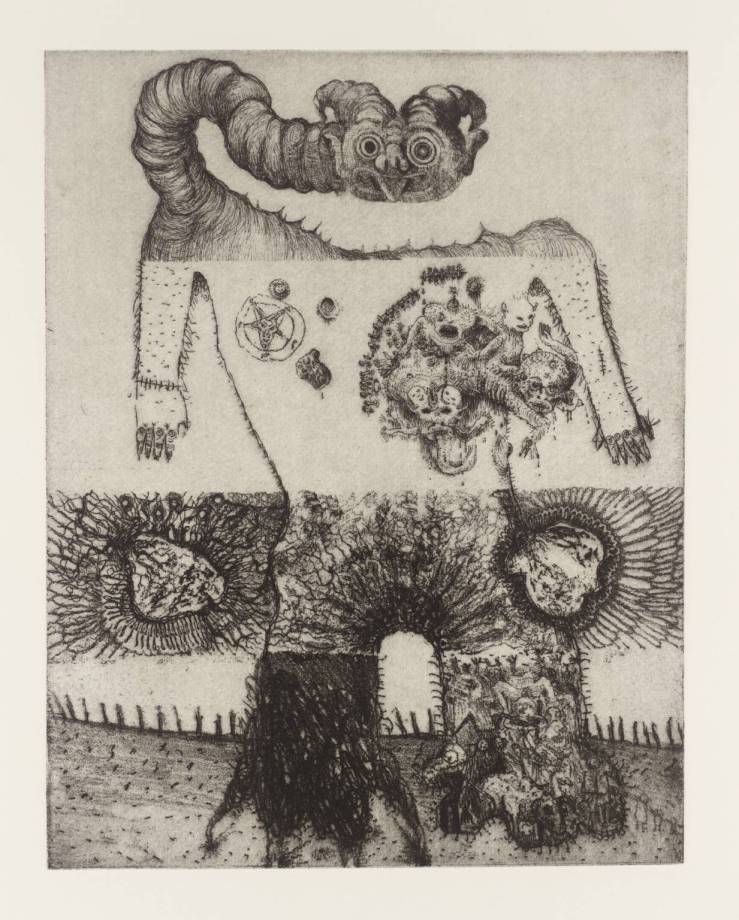
Sallow/Fur — Anna Bjerger

bjerger6

Sallow/Fur, 2018 by Anna Bjerger (b. 1973)

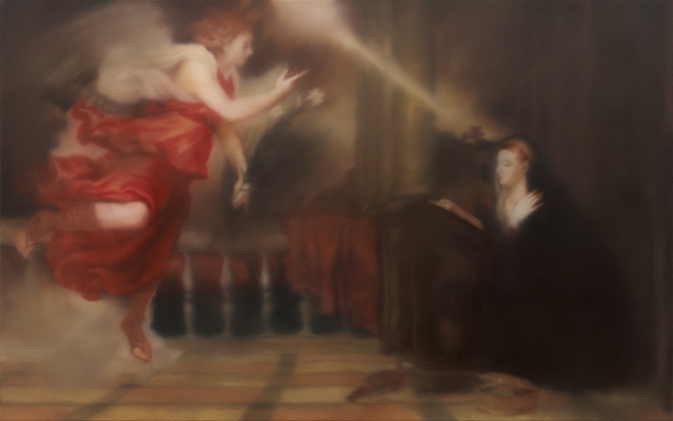
Annunciation after Titian — Gerhard Richter 

21994

Annunciation after Titian, 1973 by Gerhard Richter (b. 1932)

Dante — Audun Grimstad

image-asset

Dante, 2018 by Audun Grimstad


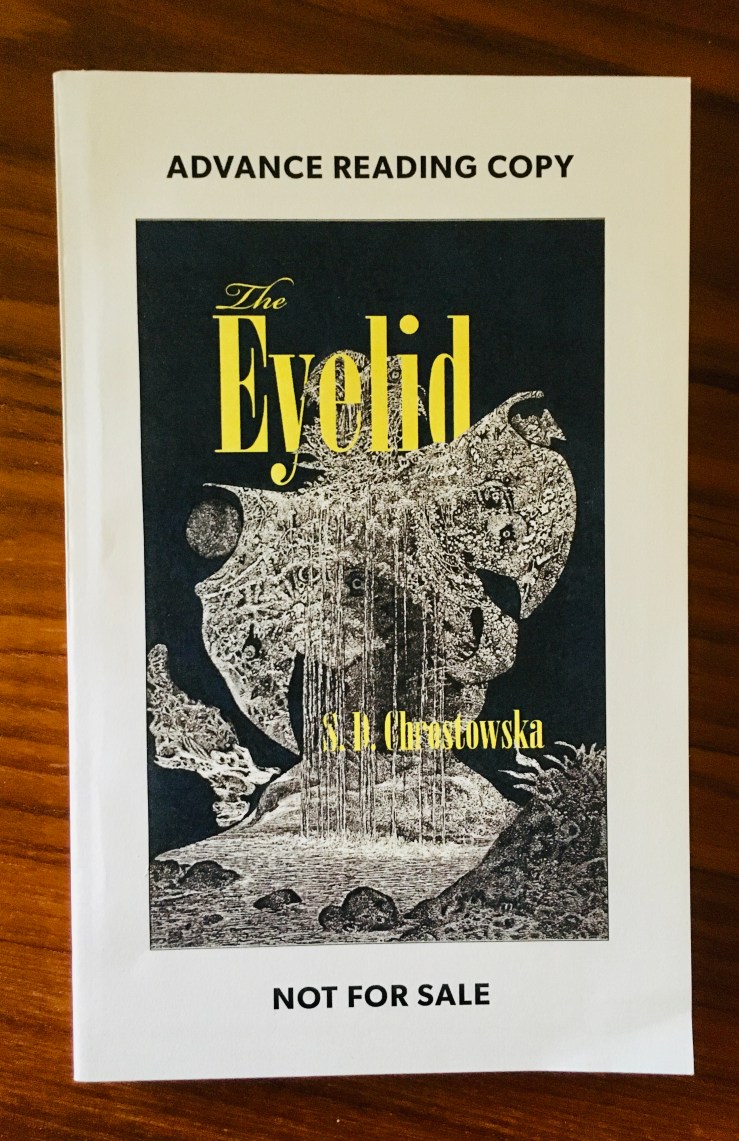
S.D. Chrostowska’s The Eyelid (Book acquired, 23 Dec. 2019)

img_4876

An AR copy of S.D. Chrostowska’s novel The Eyelid showed up at Biblioklept World Headquarters a few days before Xmas. I was inundated with books, both review copies and gifts and gifts to myself, but still excited—I think Chrostowska’s novel Permission is great. (I was lucky enough to interview Chrostowska about the novel, too.)

The book’s blurb points to a kind of sci-fi or dystopian plot that I wouldn’t necessarily have expected from Chrostowska (all the better):

In the near future, sleep has been banned. Our unnamed, dream-prone narrator finds himself following Chevauchet, a diplomat of Onirica, a foreign republic of dreams, to resist the prohibition. On a mission to combat the state-sponsored drugging of citizens with uppers for greater productivity, they traverse an eerie landscape in an everlasting autumn, able to see inside other people’s nightmares and dreams. As Comprehensive Illusion — a social media-like entity that hijacks creativity — overtakes the masses, Chevauchet, the old radical, weakens and disappears, leaving our narrator to take up Chevauchet’s dictum that “daydreaming is directly subversive” and forge ahead on his own.

In slippery, exhilarating and erudite prose, The Eyelid revels in the camaraderie of free thinking that can only happen on the lam, aiming to rescue a species that can no longer dream.

The Eyelid is forthcoming from Coach House Proof in April of this year.

The Visit — Prudence Flint

the-visit

The Visit, 2018 by Prudence Flint (b. 1962)

The Gallien Girl — Frantisek Kupka

137973

The Gallien Girl, 1910 by Frantisek Kupka (1871-1957)

Reverie — Gertrude Abercrombie

1983_102_reverie_abercrombie

Reverie, 1948 by Gertrude Abercrombie (1909–1977)

Exquisite Corpse — The Chapman Brothers

Exquisite Corpse 2000 by Jake Chapman and Dinos Chapman born 1966, born 1962

Exquisite Corpse, 2000 by Jake Chapman (b. 1966) and Dinos Chapman (b. 1962)

(Two illustrated) Books acquired, 24 Jan. 2020

img_4843

Like the seventh-graders before her, my daughter has to read Ray Bradbury’s somewhat over-rated novel Fahrenheit 451 this year. I gave her my copy, a 1980 edition that I stole from my cousin, who is ten years older than I am, like a quarter-century ago. (I would share a pic of this edition, but my daughter took it to school and left it there, because she is irresponsible. It looks like this though.) So she needs the 60th-anniversary edition, apparently, so I head to the local used bookstore I love to browse on a Friday afternoon, where they have about a bajillion copies of F451, bu not this ugly-assed big-assed new trade paperback.

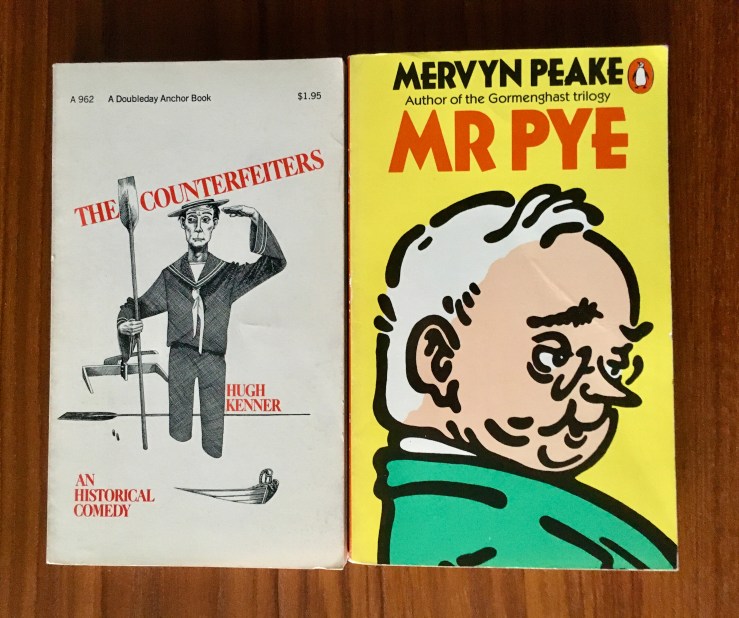
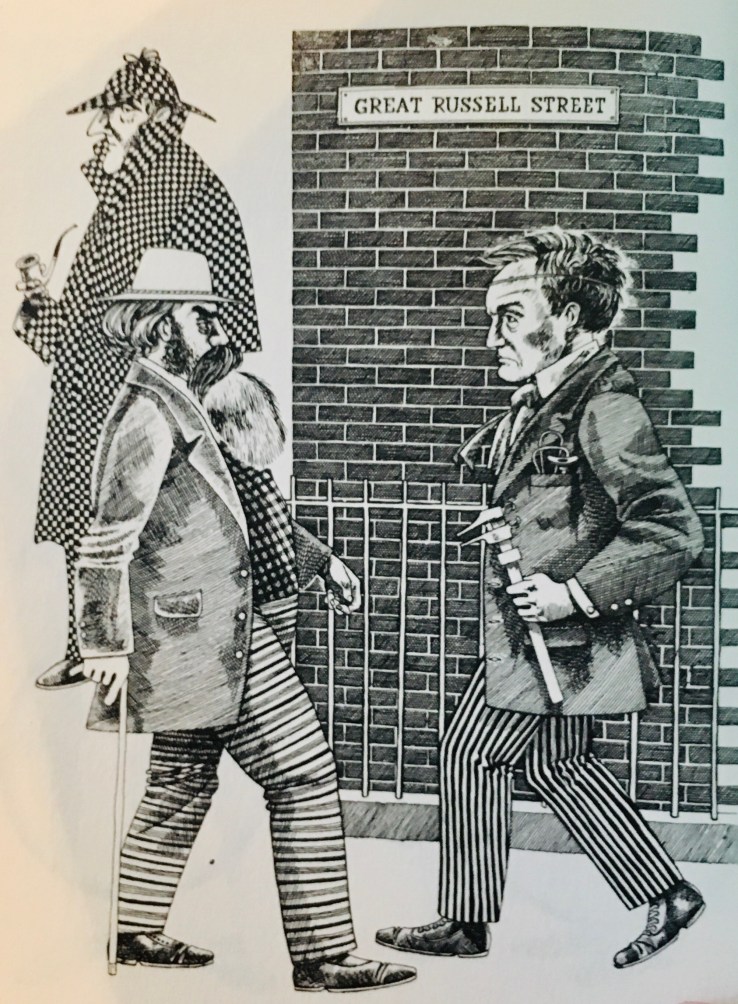
did by way of random wondering come across the very unusual volume The Counterfeiters by Hugh Kenner though. Its spine called to me–the title, the font. The cover, quite strange. And Kenner, of course, the Joyce scholar who mentored the dude who I took a life-changing Joyce class in grad school. The Counterfeiters features art by Guy Davenport, including this piece, entitled Citizen Marx and Mr. Babbage Observed in Their Courses:
img_4845

Other illustrations include Turing, Warhol, and Yeats, all subjects of the essays here.

I picked up a mass-market 1973 paperback copy from Doubleday, but here’s Dalkey Archive’s blurb for their 2005 reprint:

Wide-ranging enough to encompass Buster Keaton, Charles Babbage, horses, and a man riding a bicycle while wearing a gas mask, The Counterfeiters is one of Hugh Kenner’s greatest achievements. In this fascinating work of literary and cultural criticism, Kenner seeks the causes and outcomes of man’s ability to simulate himself (a computer that can calculate quicker than we can) and his world (a mechanical duck that acts the same as a living one).

This intertangling of art and science, of man and machine, of machine and art is at the heart of this book. He argues that the belief in art as a uniquely human expression is complicated and questioned by the prevalence of simulations—or “counterfeits”—in our culture. Kenner, with his characteristically accessible style and wit, brings together history, literature, science, and art to locate the personal in what is an increasingly counterfeit world.

The contemporary 1972 New York Times review of the book, by the like-totally-unbiased illustrator Guy Davenportconcludes thus:

It is therefore perhaps too early to re view The Counterfeiters. It looks like science fiction to the half‐educated and like fiction to the conservative scholar. A generation (when? where?) that doesn’t know that literary criticism is supposed to be dull and flat‐footed will embrace it as a magic book.

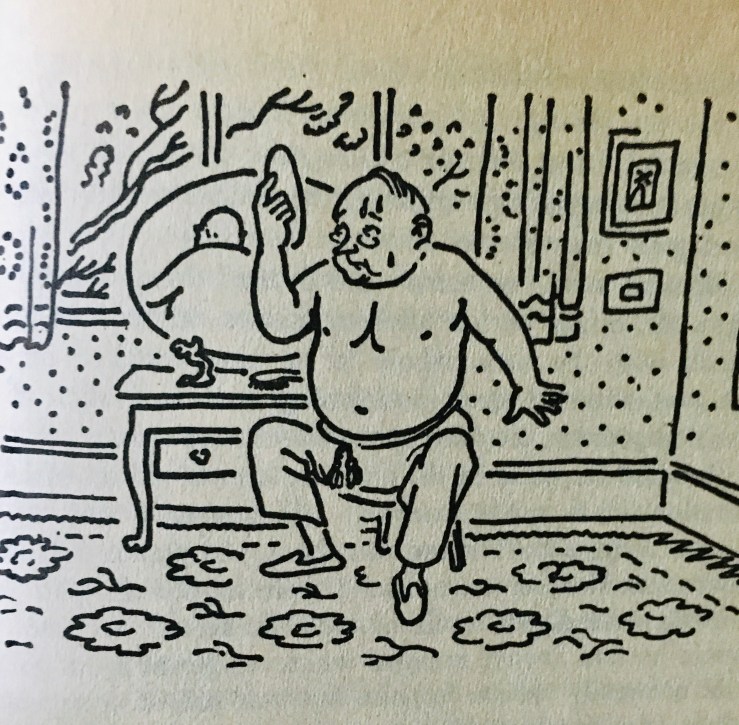
I picked up another illustrated book too, Mr. Pye by Mervyn Peake. After picking up the first two books in Peake’s Gormenghast trilogy earlier this month, and loving the first one, which I’ve almost finished, I scouted for the third—no luck—but I’m a sucker for Penguin Editions, and Mr Pye seemed too hard to pass up for two bucks. Peake illustrates:
img_4844


There’s a little bit of terror to almost all the good stuff (Barry Hannah)

There’s a little bit of terror to almost all the good stuff I recall in literature, a little bit of terror, like Heart o f Darkness. I love the ghost story. I love to go after mysteries. I think all the best stories I have ever read are very close to ghost stories. I have no interest, by the way, in Poltergeist. But I am interested in the mysterious X, the big force behind something perceived. We’re usually not privy to too many of those things ourselves. But our friends have lived them. Of course I grew up in the Vietnam era. My classmates fought the war, came back with their tales— it still works on the heads of people my age, because it was a fantastic zone, that some of the veterans can’t even acknowledge happened nowadays, you know? But there are other places you’ve been that are—Denis Johnson examines these things-zones of irreality that had not only horror, but some sweetness. The writer ought to go into these other zones and come back like a spy, and tell us something exciting. And move us. And sometimes disgust us. There’s not enough of that now.

From a 1998 interview with Barry Hannah.

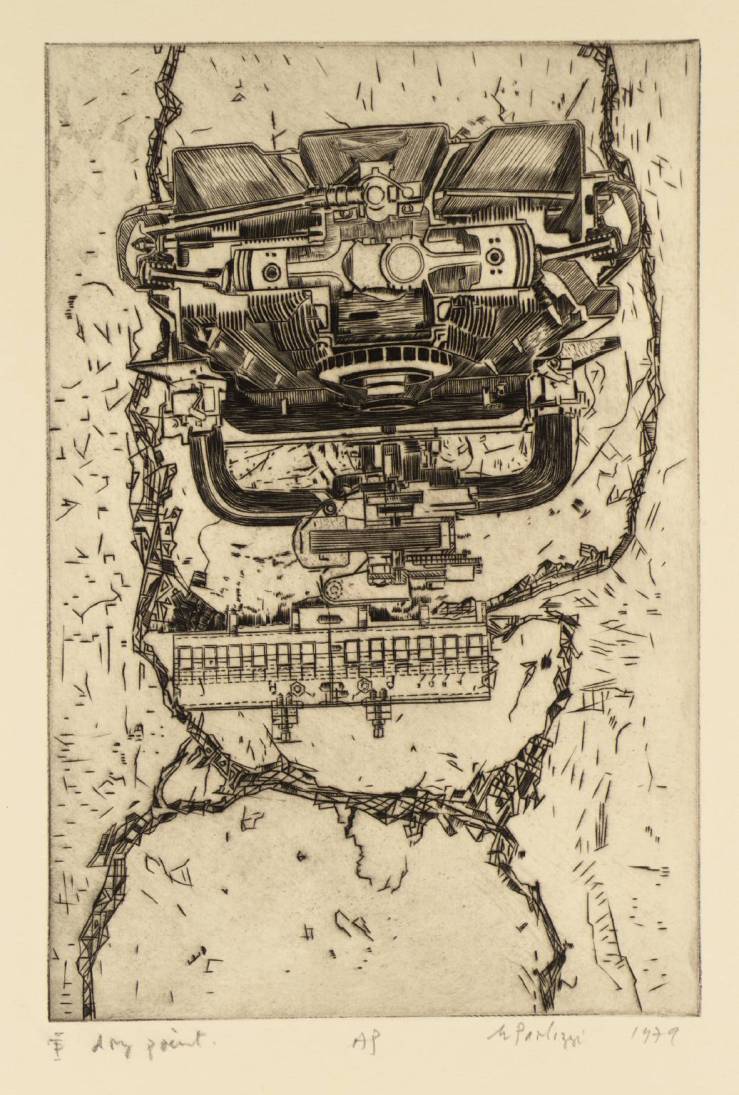
Head — Eduardo Paolozzi

Head 1979 by Sir Eduardo Paolozzi 1924-2005

Head, 1979 by Eduardo Paolozzi (1924–2005)

“Realism” — Tom Clark

“Realism”

by

Tom Clark


The smashed weirdness of the raving cadenzas of God
Takes over all of a sudden
In our time. It speaks through the voices of talk show moderators.

It tells us in a ringing anthem, like heavenly hosts uplifted,
That the rhapsody of the pastoral is out to lunch.
We can take it from there.

We can take it to Easy Street.
But when things get tough on Easy Street
What then? Is it time for realism?

And who are these guys on the bus
Who glide in golden hats past us
On their way to Kansas City?

Behind the Soundtrack: Uncut Gems with Daniel Lopatin

Linking Revelations and Beekeeping — Bram Demunter

BDM-P0002

Linking Revelations and Beekeeping, 2019 by Bram Demunter

Judith and Holofernes — Koloman Moser

judith-and-holofernes-1916

Judith and Holofernes, 1916 by Koloman Moser (1868-1918)

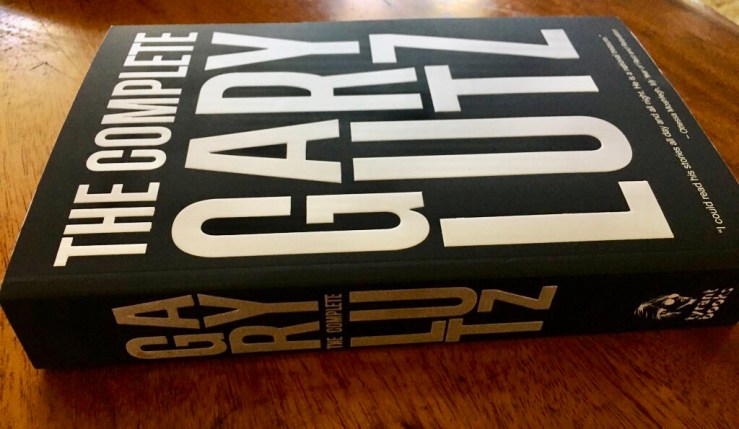
The Complete Gary Lutz (Book acquired, 6 Jan. 2020)

img_4705

My dad slipped me a Barnes & Noble giftcard on Christmas Day; his sister had given it to him. “Never happen,” he said. “You’ll use it.” I’m pretty sure I used it that very night, after some drinks. I got a cookbook my wife had been wanting that was pretty expensive, a Joy Williams novel I still haven’t done a book acquired post on, and The Complete Gary Lutz.

New from indie TyrantThe Complete Gary Lutz collects all five of Lutz’s story collections to date, including Partial List of People to Bleach, the only one I’ve read. How long will the title of the book remain true? Will Lutz bow out? How long until this is The Incomplete Gary Lutz?

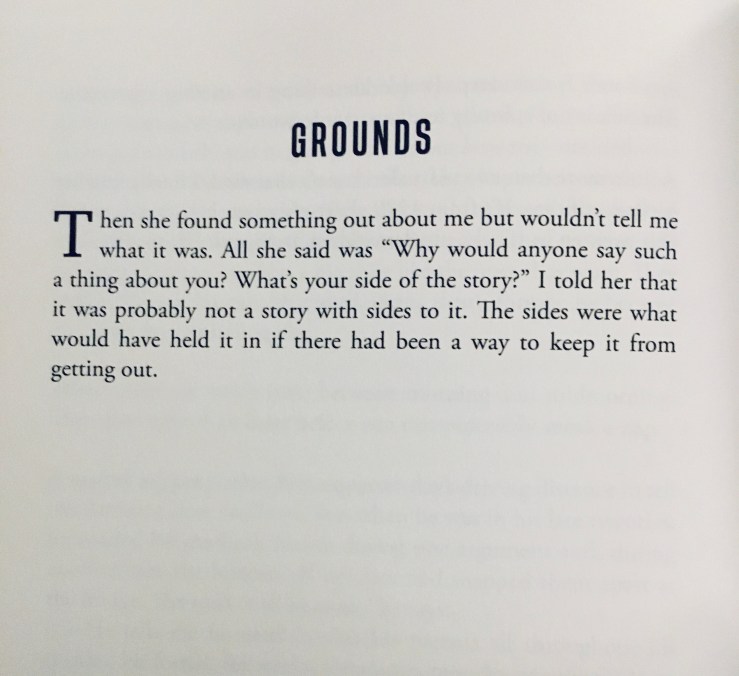
The collection is about 500 pages, and I’ve been dipping into randomly, reading one or two of the shorter stories a day, like “Grounds”:

img_4732

Tyrant’s blurb:

For nearly three decades, Gary Lutz has been writing quietly influential, virtuosic short fictions of antic despair. In barbed sentences of startling originality, Lutz gives voice to outcasts from conventional genders and monogamies—and even from the ruckus of their own bodies. Making their rounds of daily humiliations, Lutz’s self-unnerving narrators find themselves helplessly trespassing on their own lives.

This omnibus volume, with an introduction by Brian Evenson, gathers all five of Lutz’s sometimes hard-to-find collections and features sixty pages of previously uncollected stories—including his two longest.

Another shorty:

img_4833

Stephen Malkmus and Bob Nastanovich playing Silver Jews songs

This video was shot by Craig Giffen on January 4, 2020 (David Berman’s 53rd birthday).

Tracks:

“Secret Knowledge of Back Roads”

“Buckingham Rabbit”

“Advice to the Graduate”

“Random Rules”

“Welcome To The House of the Bats”

“Trains Across the Sea”