
Natural History of Selborne: Bat and Spider, 1932 by Gertrude Hermes (1901–1983)
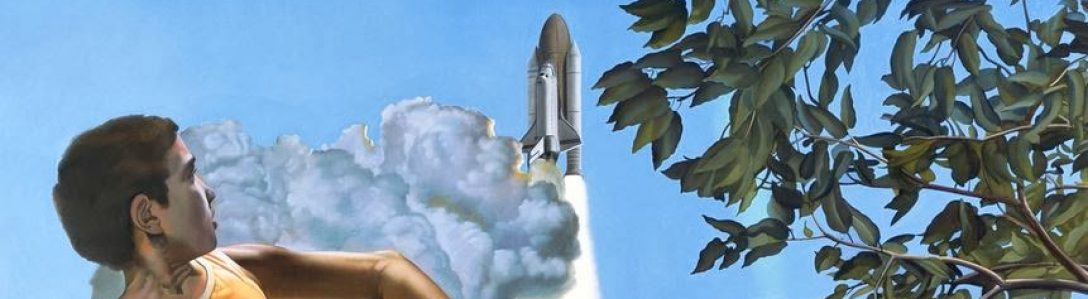
Natural History of Selborne: Bat and Spider, 1932 by Gertrude Hermes (1901–1983)
“The Witch’s Life”
by
Anne Sexton
When I was a child
there was an old woman in our neighborhood whom we called The Witch.
All day she peered from her second story
window
from behind the wrinkled curtains
and sometimes she would open the window
and yell: Get out of my life!
She had hair like kelp
and a voice like a boulder.
I think of her sometimes now
and wonder if I am becoming her.
My shoes turn up like a jester’s.
Clumps of my hair, as I write this,
curl up individually like toes.
I am shoveling the children out,
scoop after scoop.
Only my books anoint me,
and a few friends,
those who reach into my veins.
Maybe I am becoming a hermit,
opening the door for only
a few special animals?
Maybe my skull is too crowded
and it has no opening through which
to feed it soup?
Maybe I have plugged up my sockets
to keep the gods in?
Maybe, although my heart
is a kitten of butter,
I am blowing it up like a zeppelin.
Yes. It is the witch’s life,
climbing the primordial climb,
a dream within a dream,
then sitting here
holding a basket of fire.

New York, New York 10008, 1967 by Nemesio Antúnez (1918–1993)

Vision of Medea, 1828 by Joseph Mallord William Turner (1775–1851)
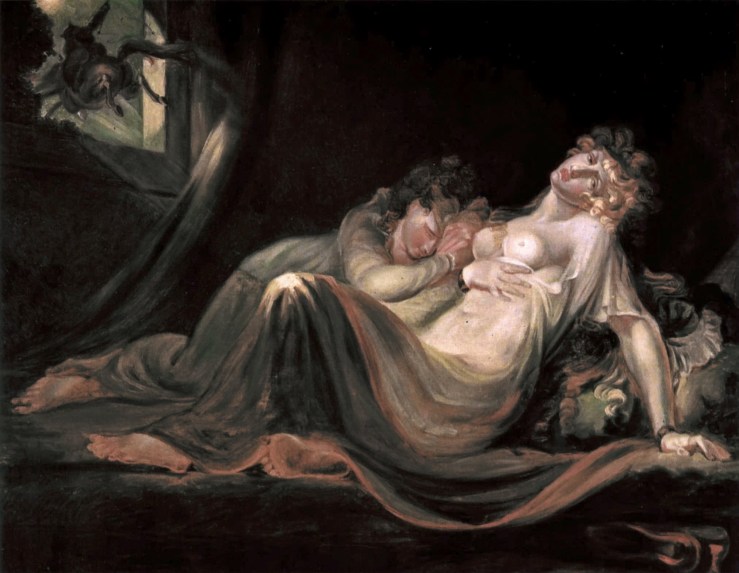
The Incubus Leaving Two Sleeping Women, 1793 by Henry Fuseli (1741–1825)
“The King of Owls”
by
Louise Erdrich
It is said that playing cards were invented in 1392 to cure the French king, Charles VI, of madness. The suits in some of the first card packs consisted of Doves, Peacocks, Ravens, and Owls.
They say I am excitable! How could
I not scream? The Swiss monk’s tonsure
spun till it blurred yet his eyes were still.
I snapped my gaiter, hard, to stuff back
my mirth. Lords, he then began to speak.
Indus catarum, he said, presenting the game of cards
in which the state of the world is excellent described
and figured. He decked his mouth
as they do, a solemn stitch, and left cards
in my hands. I cast them down.
What need have I for amusement?
My brain’s a park. Yet your company
plucked them from the ground and began to play.
Lords, I wither. The monk spoke right,
the mealy wretch. The sorry patterns show
the deceiving constructions of your minds.
I have made the Deuce of Ravens my sword
falling through your pillows and rising,
the wing blades still running
with the jugular blood. Your bodies lurch
through the steps of an unpleasant dance.
No lutes play. I have silenced the lutes!
I keep watch in the clipped, convulsed garden.
I must have silence, to hear the messenger’s footfall
in my brain. For I am the King of Owls.
Where I float no shadow falls.
I have hungers, such terrible hungers, you cannot know.
Lords, I sharpen my talons on your bones.

The Weeping Woman, 1942 by Raúl Anguiano (1915–2006)
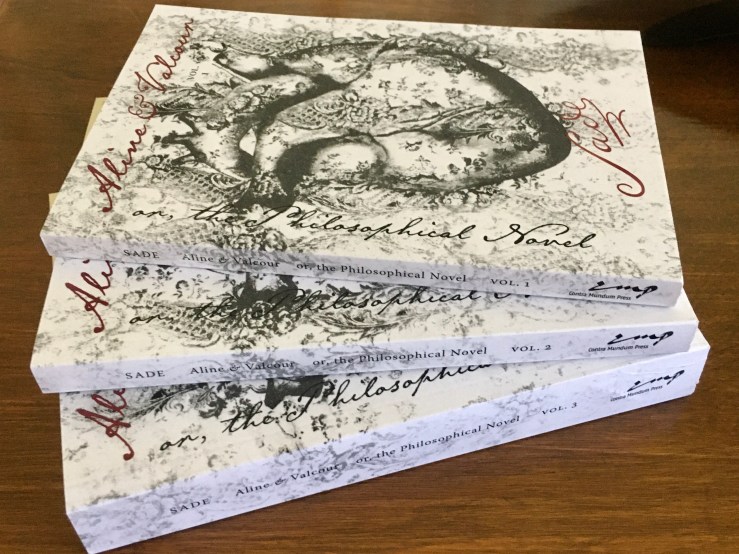
Later this year, indie publisher Contra Mundum Press is releasing a three-volume English translation of the Marquis de Sade’s 1795 epistolary novel Aline and Valcour. The translation is by John Galbraith Simmons and Jocelyne Geneviève Barque.
It looks pretty wild. Here’s Conta Mundum’s blurb:
Set against the impending riptide of the French Revolution and composed while Sade was imprisoned in the Bastille, Aline and Valcour embodies the multiple themes that would become the hallmark of his far more sulfurous works.
This epistolary work combines genres, interweaving the adventure story with the libertine novel and the novel of feelings to create a compelling, unitary tale. Turbulence disrupts virtuous lives when corrupt schemers work incestuous designs upon them that don’t stop with abduction and seduction — as crime imposes tragic obstacles to love and delivers harsh threats to morality and religion.
Embedded within Aline and Valcour are sojourns in unknown lands in Africa and the South Seas: Butua, a cannibalistic dystopia, and Tamoé, a utopian paradise headed by a philosopher-king. In Butua, a lustful chief and callous priesthood rule over a doomed people, with atrocious crimes committed in broad daylight, while in Tamoé happiness and prosperity reign amidst benevolent anarchy.
Although not sexually explicit, Aline and Valcour shared the fate of Sade’s other novels — banned in 1815 and later classified a prohibited work by the French government. Published clandestinely, it did not appear in bookstores until after WWII. Continuously in print in France ever since, today it occupies the first volume of the Pléiade edition of the author’s collected works.
This is the very first rendering of the book into English since its publication in 1795.

Paroxysm, 1963 by Carlos Raquel Rivera (1923–1999)

Complete Tales & Poems by Edgar Allan Poe. Fat trade paperback by Vintage; most recent date indicates 1975 but that can’t be right. No designer credited.
You know Poe.

Tell My Horse by Zora Neale Hurston. 1983 trade paperback edition from Turtle Island. Neither designer nor photographer are credited.
A wonderful and weird trip to Jamaica and Haiti…and zombies!

From Hell by Alan Moore & Eddie Campbell. 2004 irregular-big trade paperback from Top Shelf. No designer/artist credited, but it’s clearly Campbell’s work.
One of my favorite scary novels ever. I reviewed it like a decade ago on this site. I found this postcard in it, a collage by the surealist Jacques Prévert:

The postcard, from James Cooke, included this text, a quote of Cormac McCarthy’s horror novel Blood Meridian:
They entered the city haggard and filthy and reeking with the blood of the citizenry for whose protection they had contracted.
James won a postcard-based contest on this site like a decade ago, god love him.
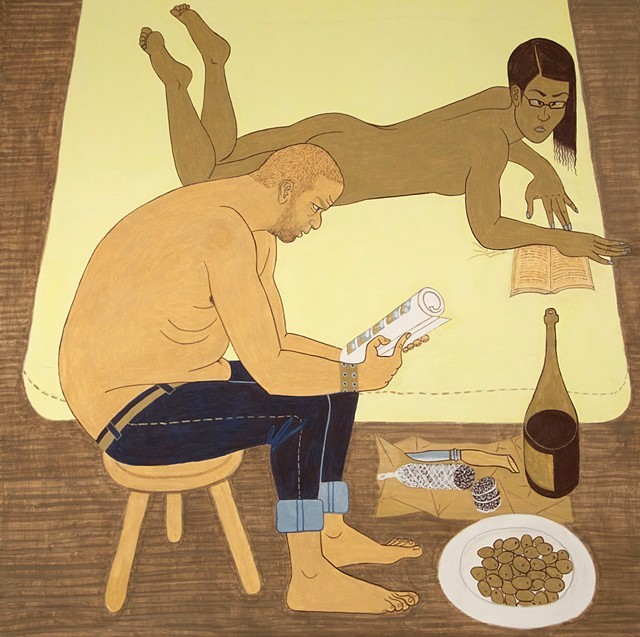
À la bonne franquette (A Simple Meal), 2019 by Yves Tessier (b. 1955)
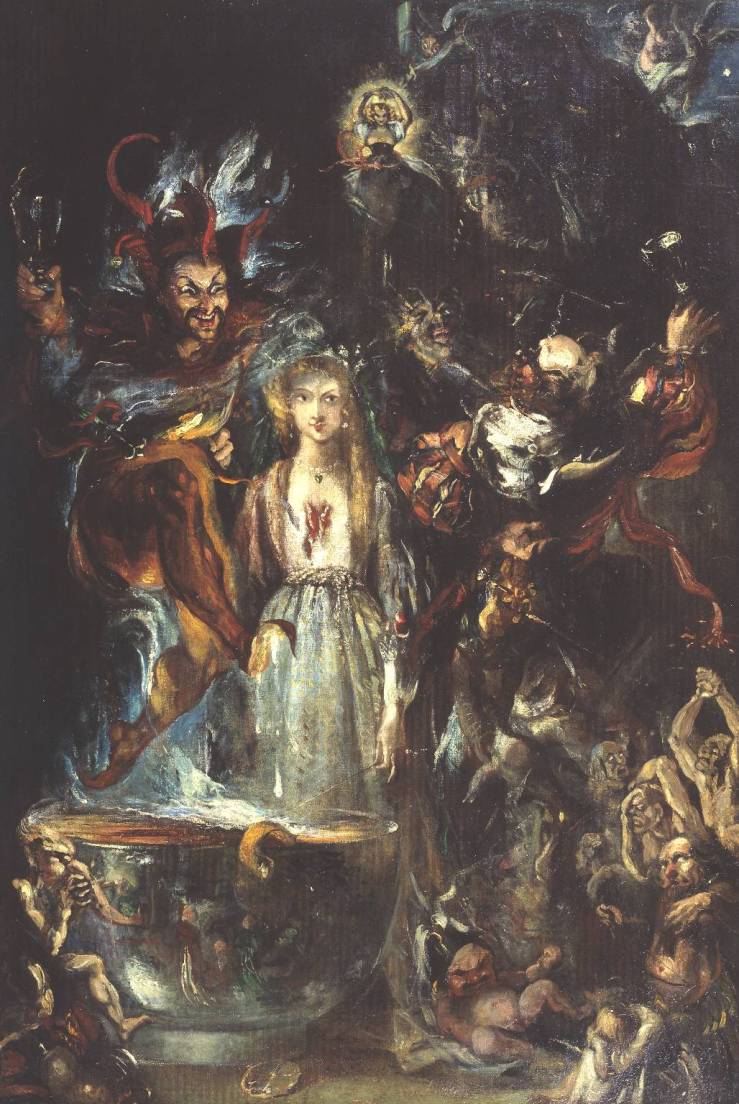
Fantasy Based on Goethe’s Faust, 1834 by Theodor von Holst (1810–1844)
“Question”
by
May Swenson
Body my house
my horse my hound
what will I do
when you are fallen
Where will I sleep
How will I ride
What will I hunt
Where can I go
without my mount
all eager and quick
How will I know
in thicket ahead
is danger or treasure
when Body my good
bright dog is dead
How will it be
to lie in the sky
without roof or door
and wind for an eye
With cloud for shift
how will I hide?

Dead Soldier (Fascism), 1940 by Francisco Dosamantes (1911-1986)

Untitled, 1962 by Marcelo Grassman (1925–2013)
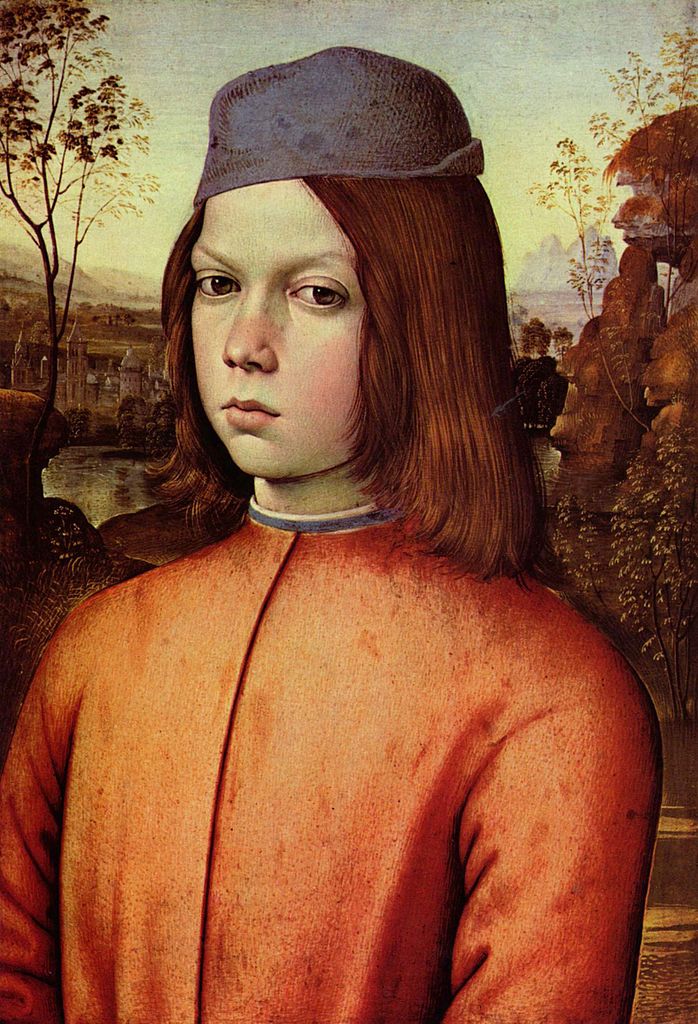
Portrait of a Boy, c. 1500 by Pinturicchio (Bernardino di Betto, 1454–1513)
 Biblioklept