Anniversary (Art Spiegelman)

img_1026

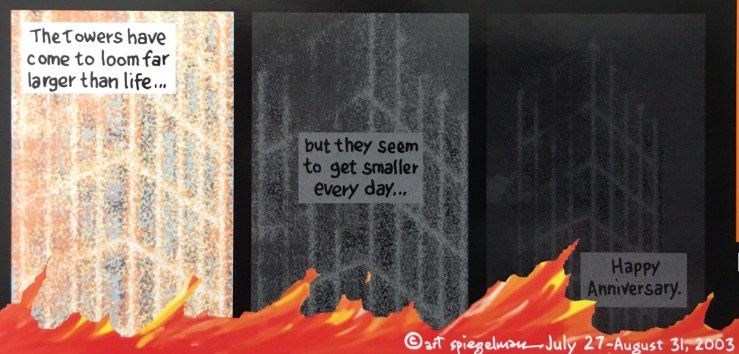
From In the Shadow of No Towers by Art Spiegelman.


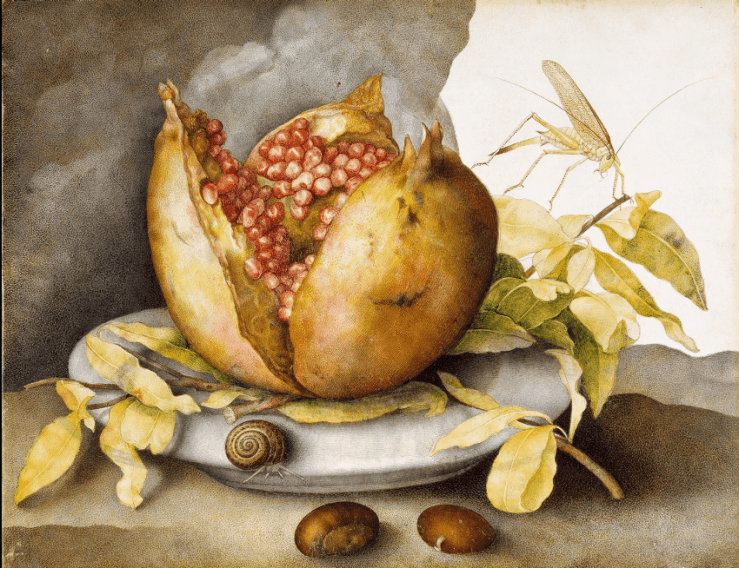
Open Pomegranate in a Dish, with Grasshopper, Snail and Two Chestnuts — Giovanna Garzoni

Screenshot 2018-09-08 at 4.54.13 PM

Open Pomegranate in a Dish, with Grasshopper, Snail and Two Chestnuts, c. 1652 by Giovanna Garzoni (1600–1670)

About the time the Spy and the Fanny sailed | Nathaniel Hawthorne’s journal entry for September 10th, 1852

September 10th.–Here is another beautiful morning, with the sun dimpling in the early sunshine. Four sail-boats are in sight, motionless on the sea, with the whiteness of their sails reflected in it. The heat-haze sleeps along the shore, though not so as quite to hide it, and there is the promise of another very warm day. As yet, however, the air is cool and refreshing. Around the island, there is the little ruffle of a breeze; but where the sail-boats are, a mile or more off, the sea is perfectly calm. The crickets sing, and I hear the chirping of birds besides.

At the base of the light-house yesterday, we saw the wings and feathers of a decayed little bird, and Mr. Thaxter said they often flew against the lantern with such force as to kill themselves, and that large quantities of them might be picked up. How came these little birds out of their nests at night? Why should they meet destruction from the radiance that proves the salvation of other beings?

Mr. Thaxter had once a man living with him who had seen “Old Bab,” the ghost. He met him between the hotel and the sea, and describes him as dressed in a sort of frock, and with a very dreadful countenance.

Two or three years ago, the crew of a wrecked vessel, a brigantine, wrecked near Boon Island, landed on Hog Island of a winter night, and found shelter in the hotel. It was from the eastward. There were six or seven men, with the mate and captain. It was midnight when they got ashore. The common sailors, as soon as they were physically comfortable, seemed to beperfectly at ease. The captain walked the floor, bemoaning himself for a silver watch which he had lost; the mate, being the only married man, talked about his Eunice. They all told their dreams of the preceding night, and saw in them prognostics of the misfortune.

There is now a breeze, the blue ruffle of which seems to reach almost across to the mainland, yet with streaks of calm; and, in one place, the glassy surface of a lake of calmness, amidst the surrounding commotion.

The wind, in the early morning, was from the west, and the aspect of the sky seemed to promise a warm and sunny day. But all at once, soon after breakfast, the wind shifted round to the eastward; and great volumes of fog, almost as dense as cannon-smoke, came sweeping from the eastern ocean, through the valley, and past the house. It soon covered the whole sea, and the whole island, beyond a verge of a few hundred yards. The chilliness was not so great as accompanies a change of wind on the mainland. We had been watching a large ship that was slowly making her way between us and the land towards Portsmouth. This was now hidden. The breeze is still very moderate; but the boat, moored near the shore, rides with a considerable motion, as if the sea were getting up.

Mr. Laighton says that the artist who adorned Trinity Church, in New York, with sculpture wanted some real wings from which to imitate the wings of cherubim. Mr. Thaxter carried him the wings of the white owl that winters here at the Shoals, together with those of some other bird; and the artist gave his cherubim the wings of an owl.

This morning there have been two boat-loads ofvisitors from Rye. They merely made a flying call, and took to their boats again,–a disagreeable and impertinent kind of people.

The Spy arrived before dinner, with several passengers. After dinner, came the Fanny, bringing, among other freight, a large basket of delicious pears to me, together with a note from Mr. B. B. Titcomb. He is certainly a man of excellent taste and admirable behavior. I sent a plateful of pears to the room of each guest now in the hotel, kept a dozen for myself, and gave the balance to Mr. Laighton.

The two Portsmouth young ladies returned in the Spy. I had grown accustomed to their presence, and rather liked them; one of them being gay and rather noisy, and the other quiet and gentle. As to new-comers, I feel rather a distaste to them; and so, I find, does Mr. Laighton,–a rather singular sentiment for a hotel-keeper to entertain towards his guests. However, he treats them very hospitably when once within his doors.

The sky is overcast, and, about the time the Spy and the Fanny sailed, there were a few drops of rain. The wind, at that time, was strong enough to raise white-caps to the eastward of the island, and there was good hope of a storm. Now, however, the wind has subsided, and the weather-seers know not what to forebode.

From Nathaniel Hawthorne’s journal entry for September 10th, 1852. From Passages from the American Note-Books.

Biblioklept turns twelve today, so here are twelve books I’ll try to read some time in the next twelve years

Biblioklept is twelve today.

Here are twelve books that I’ve never read before that I’ll try to read some time in the next twelve years.
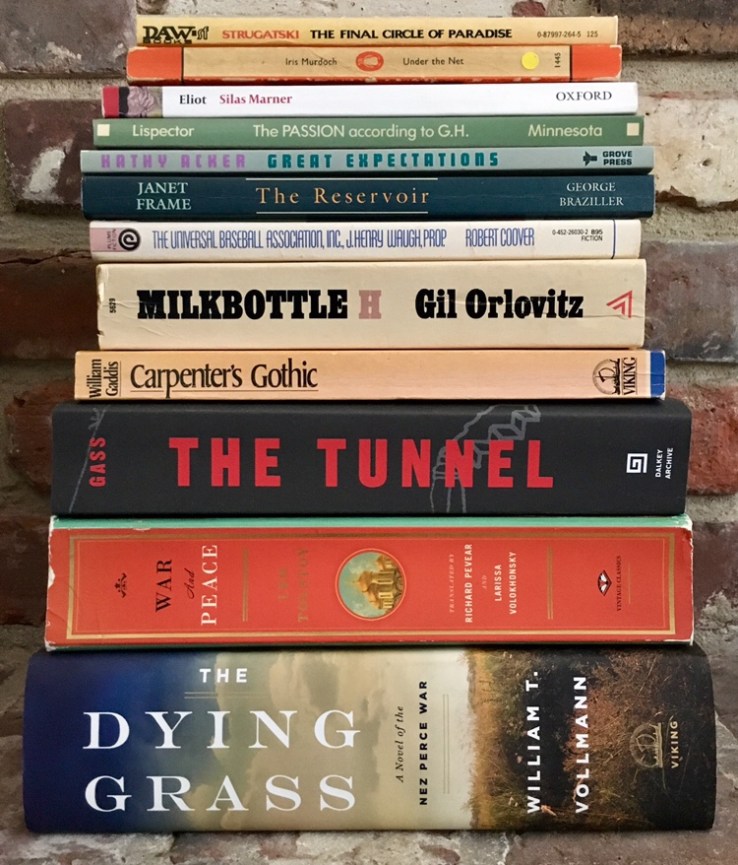
img_1014

From top to bottom, with no real hierarchy other than the physical heft involved in composing the photograph above—

The Final Circle of Paradise by Arkady and Boris Strugatsky (trans. by Leonid Renen)

I snatched up this Daw mass market paperback of this Strugatsky brothers novel a few years ago; they aren’t as easy to find as you might think (although Chicago Review Press is slowly reissuing new translations).

Chance I’ll get to it soon: High. I’ve been on a Strugatsky kick the last two years and this is one that I physically own, so.

The Net by Iris Murdoch

I picked up a slim Penguin edition of The Net when I couldn’t find The Bell (not realizing that the “Iris Murdoch” section extended in my used bookshop and that there were plenty of copies of The Bell). I loved The Bell, and want to read more Murdoch. Folks told me not to do The Net next, but I own it. So maybe let’s call it a placeholder.

Chance I’ll get to it soon: The chance that I get to another Murdoch novel sometime later this year is very high.

Silas Marner by George Eliot

I finally read Middlemarch in 2018. I loved it but good lord it was longSilas Marner is much shorter.

Chance I’ll get to it soon: Very high. It’s on deck after I finish up a few of the shorter novels and short story collections I’m reading now.

The Passion According to G.H. by Clarice Lispector (trans. by Ronald W. Sousa)

Like seemingly every book blogger, I went through a Lispector jag in the early part of this decade, gobbling up The Hour of the Star and Near to the Wild Heart. I had thought that I’d read The Passion According to G.H., but when I pulled it out earlier this year to look for something in it, I realized I hadn’t finished it—I probably hadn’t even gotten a third of the way through, if the idle bookmark (a charming doodle by my daughter) is any indication. Furthermore, the selection I was looking for, a passage on abjection, wasn’t even in Passion—it was in Wild Heart.

Chance I’ll get to it soon: Not extraordinarily high, but it’s unshelved, loose in the wilds now.

Great Expectations by Kathy Acker

I picked this one up a few weeks ago, and started in on it a bit—it’s short and has this kind of dark wild surreal icky sexy beach read vibe to it.

Chance I’ll get to it soon: I should’ve taken it camping with me next week. It’s the kind of book I want to read in a specific place that’s not, like, my couch or whatever. What I’m saying is that I’ll read this on the beach or in a tent or like, maybe you invite me down to stay at your place for a weekend but your house is so full of other guests, but, Guess what? There’s a wonderful little bedroom on your catamaran, which is docked gently right here. So after a night of good wine and good conversation, I’ll sneak off to the catamaran and read Kathy Acker before falling into wavy slumbers.

The Reservoir by Janet Frame 

I read the first few of the stories in The Reservoir a few years ago and loved them but then got absorbed in something else. I was looking for a story by her to use in class, and I pulled this collection out, but it wasn’t in there. I think it’s in The New Yorker though.

Chance I’ll get to it soon: Again–I pulled it out of rotation, so who knows? I’m in the midst of another short story collection (which is frankly turning into a hate read at this point), so maybe a few of these Frames will be an antidote to the Very Clever Author Whose Work I Keep Wincing At.

The Universal Baseball Association, Inc., J. Henry Waugh, Prop. by Robert Coover

When I picked up The Universal Baseball Association, I knew that I wasn’t going to read it anytime soon, but I also knew that I’d regret not having picked up a copy for three bucks when I had the chance. I was finishing up Going for a Beer, Coover’s recent collection of greatest hits, and was frankly exhausted with the man (the stories in A Night at the Movies can, uh, be repetitive).

Chance I’ll get to it soon: Not very high. I downloaded a copy of his novel The Origin of the Brunists one night on a lark and I don’t know if I’ll get to it any time soon either.

Milkbottle H by Gil Orlovitz

A somewhat rare cult novel with no real visible cult, Olrovitz’s Milkbottle H has been described as “the Ulysses of Philadelphia.” I found it a few weeks ago in the miscellaneous O section of my local used bookstore for three bucks. The book is long and seems to employ a mix of modernist techniques that makes it, uh, confusing at first.

Chance I’ll get to it soon: Not high. Right now it’s more like a thing I want to do, but it looks like a project that will require its own special time.

Carpenter’s Gothic by William Gaddis

I hate that I still haven’t gotten past page 30 of Carpenter’s Gothic. I gave it a second shot a few years ago and then wound up rereading J R instead.

Chance I’ll get to it soon: Should I prioritize this one after Silas Marner? I’m sure some new novel/review copy will get in the way, mucking things up…but should I commit to Carpenter’s Gothic? (I recently wrote about wanting to reread The Recognitions, so…).

The Tunnel by William H. Gass

I made a Serious Attempt earlier this year and stalled out.

Chance I’ll get to it soon: I will make a Serious Attempt earlier next year (and likely stall out).

War and Peace by Leo Tolstoy

War and Peace is one of those big books that I can’t believe I haven’t read. Earlier this year I said I’d give it a shot and then I never did (I tried The Tunnel and then settled into Middlemarch).

Chance I’ll get to it soon: Can anyone suggest a good audiobook version?

The Dying Grass by William H. Vollmann

The Dying Grass is almost 1,400 pages. I tried reading the ebook when it came out but the page breaks were weird (Vollmann has a Whitmanesque style on the page). I downloaded the audiobook which is 54 hours long, but I kept losing the thread. I picked up a used copy of the hardback for six bucks and it’s a goddamn monster.

Chance I’ll get to it soon: Try holding your breath.


Twelve Proverbs — Pieter Bruegel the Elder

twelve-proverbs

Twelve Proverbs, c.1560 by Pieter Bruegel the Elder Original

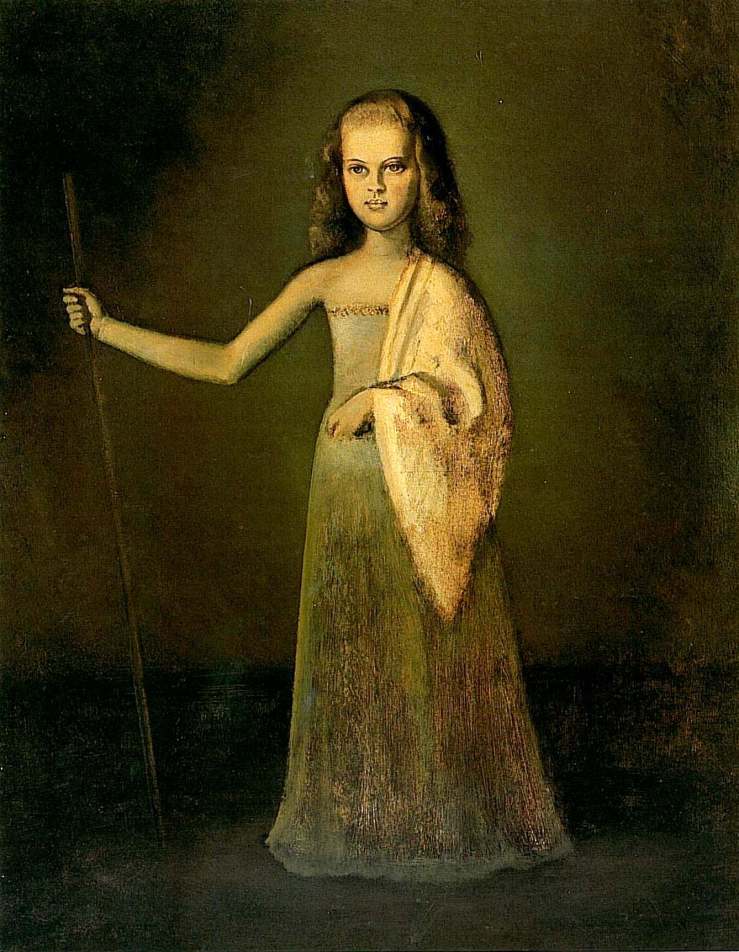
Princess Maria Volkonsky at the Age of Twelve — Balthus

princess-maria-volkonsky-at-the-age-of-twelve-1945

Princess Maria Volkonsky at the Age of Twelve, 1945 by Balthus (1908-2001)

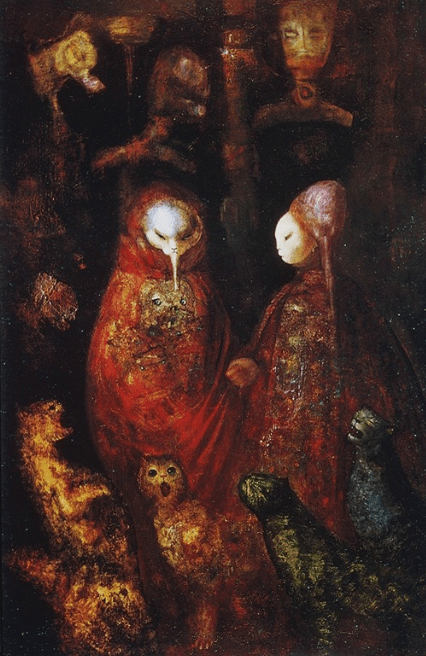
Ceremony — Leonor Fini

Screenshot 2018-09-08 at 4.23.39 PM

Ceremony, 1960 by Leonor Fini (1908-1996)

Blog about the first paragraph of Arkady and Boris Strugatsky’s surreal novel The Snail on the Slope

I have been listening to Arkady and Boris Strugatsky’s 1972 novel The Snail on the Slope on audiobook over the last two weeks.

This new English translation is by Olena Bormashenko, who also translated Roadside Picnic and Hard to Be a God. (I listened to Roadside Picnic last year—this fantastic audiobook is read by Robert Forster—and read Bormashenko’s translation of Hard to Be a God after watching Aleksei German’s 2013 film adaptation. All are excellent). Chris Andrew Ciulla narrates the new audiobook of The Snail on the Slope and he does a very good job. 

Like I said, I’ve been listening to this new translation of The Snail on the Slope for a few weeks. I should be done (the book is only 9.5 hours), but I’ve listened to most of the chapters twice, and restarted the book once, because The Snail on the Slope is fucking bonkers. The novel is a wild trip, full of bizarre transformations, failed plans, jungle swamps,  marching ants, deadlings, mushrooms, foolish bureaucrats, and broken calculators—it’s abject, savage, funny, and just so fucking weird, a bizarre beast tumbling around on its own radical logic. I have about 3 hours left, but I don’t think I’ll muster a review—or a summary, I mean. Or anyway—

I mean, here’s my review: I love itI love its strange mucky weirdness, its refusal to clearly delineate the contact points of its allegorical satire, its sheer absurdity, its utter alterity. But a summary seems too much to ask so—

Here is publisher Chicago Review Press’s blurb—

The Snail on the Slope is a neglected masterpiece by Russian science fiction greats Arkady and Boris Strugatsky, who thought of it as their “most complete and important work.” now, in a stunning translation, this tour de force is ready to be introduced to a new generation of American readers. The novel takes place in two worlds. One is the Administration, an institution run by a surreal, Kafkaesque bureaucracy whose aim is to govern the forest below. The other is the Forest, a place of fear, weird creatures, primitive but garrulous people, and violence. Peretz, who works at the Administration, wants to visit the Forest. Candide crashed in the Forest years ago and wants to return to the Administration. Their journeys are surprising and bizarre, and readers are left to puzzle out the mysteries of these foreign environments. Brilliant, enigmatic, and revelatory, The Snail on the Slope is one of the greatest literary works to come out of Soviet Russia.

Here is the cover + blurb of Bantam’s 1980 edition of The Snail on the Slope (translated by Alan Meyers). Bob Larkin’s cover is more interesting to me than the “respectable” cover that Chicago Review Press put together so—

thsnlnthsl1980

This edition was apparently recalled, distribution was halted, and existing copies were destroyed.

The German cover (credited to Ute Osterwalder and Hans Ulrich Osterwalder) is also pretty cool—

dschnckmhn1978

But I promised in this blog’s headline to riff on the first paragraph, which isn’t that long, but in some ways reveals the sheer oddity of The Snail on the Slope. So here is that paragraph:

From this height, the forest looked like dappled, fluffy foam; like a gigantic, world-encompassing porous sponge; like an animal that had once lain hidden in wait, then had dozed off, becoming overgrown with coarse moss. Like a shapeless mass, hiding a face no one had ever seen.

The viewer at this height is one of the novel’s two heroes, Peretz, who dangles his feet over the forest that calls to him. I could go on about Peretz’s attraction to the unknowable forest, but let’s look instead at the similes the Strugatskys (and their translator Bormashenko) deploy here:

The forest is like

  1. foam
  2. a sponge
  3. a dozing, bemossed animal
  4. an indefinite mass with an unseen face

The utter alterity of the forest is announced at the novel’s outset. This shifting series of similes shows that the central space of The Snail on the Slope cannot have a fixed definition—it cannot even have a stable referent of similitude. Rather, the forest is ever-shifting, from the playful guise of a space of “fluffy foam” to the sinister aspect of a “shapeless mass” that hides an unknown (and unknowable) visage. The Strugatskys shuttle us from simile to simile, foregrounding one of the novel’s central themes—language has a limited purchase of reality. Peretz, a surrogate for the reader, cannot settle on a simile, which only entices him more: What is this place? What would it mean to know this place—in language? Significantly, Peretz is a linguist, but he—and the reader–have no training to properly comprehend what enfolds when The Snail on the Slope takes us into the forest. And this is the fucked up joy of the novel—one weird transformation morphs into another, similes unwinding in a stretch toward an ultimate referent that refuses to arrive on time.

Metamorphosis — Margaret Tomkins

Screenshot 2018-09-07 at 4.33.26 PM

Metamorphosis, 1943 by Margaret Tomkins (1916-2002)

Metamorphosis — Riccardo Tommasi Ferroni

57e0f65a2858e

Metamorphosis, 1965 by Riccardo Tommasi Ferroni (1934-2000)

Culmin’s Ghost Appears to His Mother — Nicolai Abildgaard

nicolai_abildgaard_-_culmin27s_ghost_appears_to_his_mother_-_wga00016

Culmin’s Ghost Appears to His Mother, 1794 by Nicolai Abildgaard (1743–1809)

Near are the steps of Culmin; the youth came, bursting into tears. Wrathful he cut the wind, ere yet he mixed his strokes with Fillan. He had first bent the bow with Rothmar, at the rock of his own blue streams. There they had marked the place of the roe, as the sunbeam flew over the fern. Why, son of Cul-allin! why, Culmin, dost thou rush on that beam of light? It is a fire that consumes. Son of Cul-allin, retire. Your fathers were not equal in the glittering strife of the field. The mother of Culmin remains in the hall. She looks forth on blue-rolling Strutha. A whirlwind rises, on the stream, dark-eddying round the ghost of her son. His dogs are howling in their place. His shield is bloody in the hall. “Art thou fallen, my fair-haired son, in Erin’s
dismal war?”

From The Poems of Ossian by James McPherson. 

The Confidence Man — Guy Pène du Bois

guy_pc3a8ne_du_bois_-_the_confidence_man_-_google_art_project

The Confidence Man, 1919 by Guy Pène du Bois (1884-1958)

cm

Reading — Robert Kushner

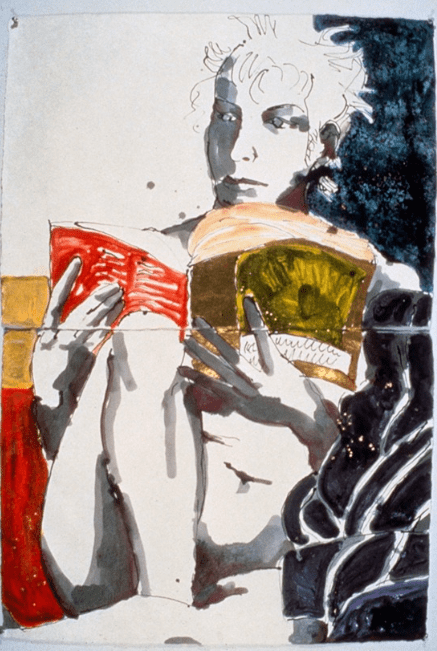
Screenshot 2018-07-31 at 5.37.53 PM

Reading, 1987 by Robert Kushner (b. 1949)

Prometheus in Chains — Frantisek Kupka

prometeo_kupka

Prometheus in Chains, 1905 by Frantisek Kupka (1871-1957)

“Youwarkee” — Jorge Luis Borges

yo

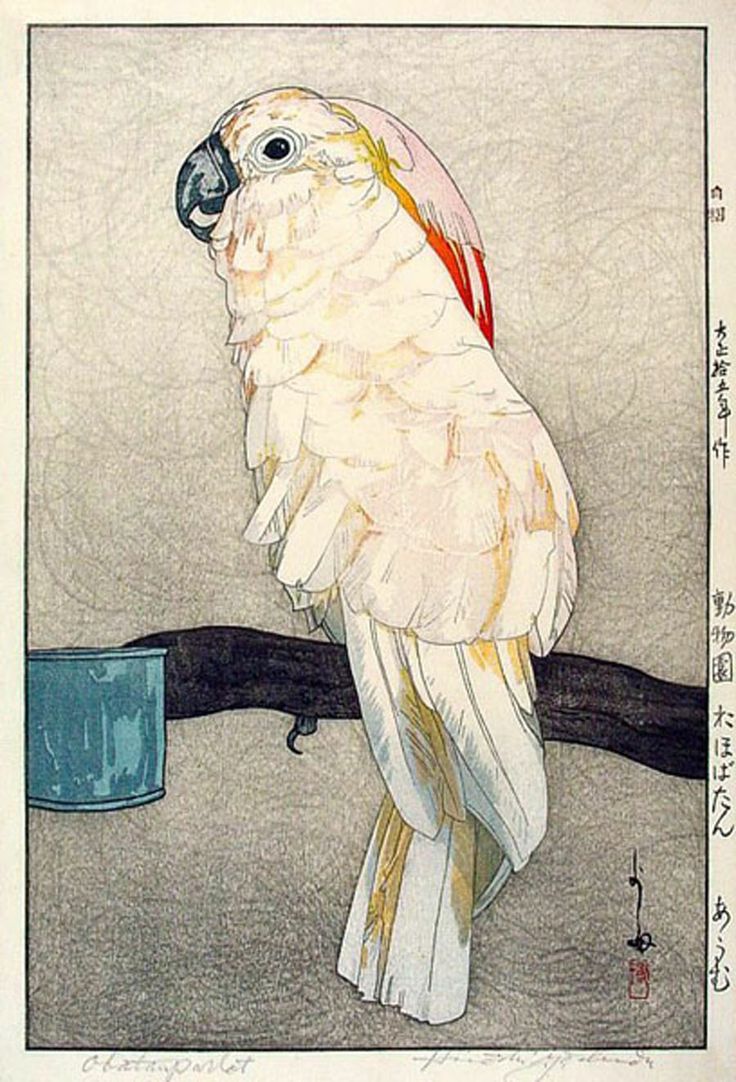
Obatan Parrot — Hiroshi Yoshida

698cf212a6c17282e4bcf8bb3608a8dd-hiroshi-yoshida-exotic-birds

Obatan Parrot, 1926 by Hiroshi Yoshida (1876-1950)

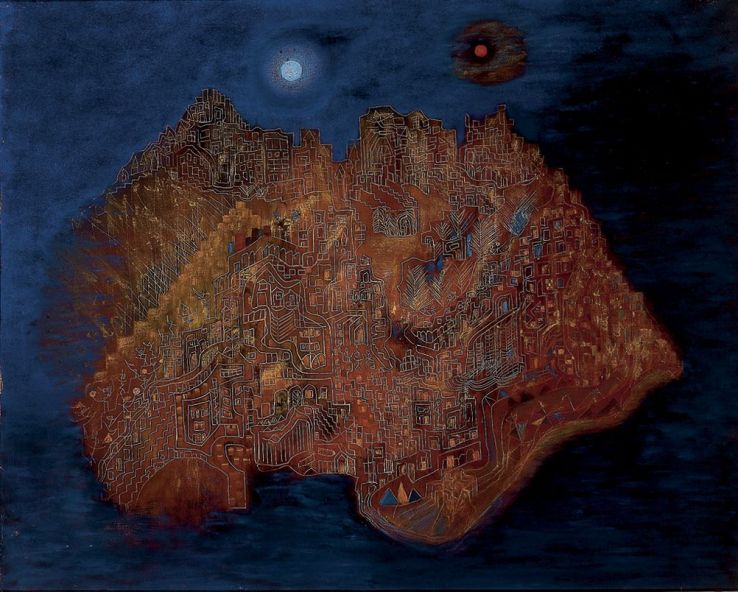
The Inner City — Alice Rahon

9e54175d8140d93f3049de38a6690254

The Inner City by Alice Rahon (1904–1987)