Between Rounds — Thomas Eakins

Between Rounds, 1899 by Thomas Eakins (1844-1916)

“Presents” — Donald Barthelme

“Presents”

by

Donald Barthelme


In the middle of a forest. Parked there is a handsome 1932 Ford, its left rear door open. Two young women are pausing, about to step into the car. Each has one foot on the running board. Both are naked. They have their arms around each other’s waist in sisterly embrace. The woman on the left is dark, the one on the right fair. Their white, graceful backs are in sharp contrast to the shiny black of the Ford. The woman on the right has turned her head to hear something her companion is saying.


At a dinner party. The eight guests are seated, in shining white plastic shells mounted on steel pedestals, in a luxurious kitchen. They sit around a long table of polished rosewood, at one end of which there is a wicker basket filled with fruit, pineapples, bananas, pears, and at the other a wicker basket containing loaves of burnt-orange bread. The kitchen floor is polished black tile; electric ovens with bronze fronts are set into the polished off-white walls. On thick glass shelves above the diners, handsome pots with herbs, jams, jellies, and tall glass jars with half-a-dozen varieties of raw pasta. Six of the guests, men and women, are conventionally clothed. The two young women (one dark, one fair) are naked, smoking cigarillos. One of them unfolds a large white linen napkin and smoothes it over her companion’s lap.


Ten o’clock in the morning. Marble, more marble, together with walnut paneling, a terrazzo floor, on the left a long (sixty feet) black-topped counter behind which the tellers sit, on the right a beige-carpeted area with three rows (three times three) of bank officers, suited and gowned. At the back, the great vault door open, functionary seated at desk reading a Gothic novel. In the center, long lines of depositors channeled to the tellers by a flattened S-curve of blue velvet ropes. Uniformed guards, etc., the American flag drooping on its standard near the vault. Two young women enter. They are naked except for black masks. One is dark, one fair. They place themselves back-to-back in the center of the banking floor. The guards rush toward them, then rush away again.


A woman seated on a plain wooden chair under a canopy. She is wearing white overalls and has a pleased expression on her face. Watching her, two dogs, German shepherds, at rest. Behind the dogs, with their backs to us, a row of naked women kneeling, sitting on their heels, their buttocks perfect as eggs or O’s — OOOOOOOOOOOOO. In profile to the scene, at the far right, Henry James — his calm, accepting gaze.


Two young women wrapped as gifts. But the gift-wrapping is indistinguishable from ordinary clothing. Or there is a distinction, in that what they are wearing is perhaps a shade newer, brighter, more studied than ordinary clothing, proclaims the specialness of what is wrapped, argues for immediate unwrapping, or if not that, unwrapping at leisure, with wine, cheese, sour cream.


Two young women, naked, tied together by a long red thread. One is dark, one is fair.


Large (eight by ten feet) sheets of white paper on the floor, six or eight of them. The total area covered is perhaps 200 feet square; some of the sheets overlap. A string quartet is playing at one edge of this area, and irregular rows of handsomely-dressed spectators border another. A large bucket of blue paint sits on the paper. Two young women, naked. Each has her hair rolled up in a bun; each has been splashed, breasts, belly, and thighs, with blue paint. One, on her belly, is being dragged across the paper by the other, who is standing, gripping the first woman’s wrists. Their backs are not painted. Or not painted with. The artist is Yves Klein.


Two young men, wrapped as gifts. They have wrapped themselves carefully, tight pants, open-throated shirts, shoes with stacked heels, gold jewelry on right and left wrists, codpieces stuffed with credit cards. They stand, under a Christmas tree big as an office building, the women rush toward them. Or they stand, under a Christmas tree big as an office building, and no women rush toward them. A voice singing inappropriate Easter songs, hallelujahs.


Two young men, artists, naked in a loft on Broome Street, are painting a joint portrait of four young women, fully clothed, who are standing in a row with their backs to the artists, who are sipping coffee from paper cups (the paper cup held in the left hand, the brush or palette knife in the right) and carefully regarding the backs of the women, who from time to time let slip from the sides of their mouths comments (encouraging or disparaging) about the artists, who for their part are not intimidated by these comments which have mostly to do with the weather and future projects but in some cases with the comparative beauty and masculinity (because of course the women have opinions about these matters, expressed in whispers just loud enough to be overheard) of the naked artists, who are mostly worried about the stamina and comfort (four or five hours’ work yet ahead) of the women, who are feeling rather hot and peevish in the white-painted, rather stuffy (although the big windows have been opened) loft of the artists, who are perfectly comfortable themselves, being naked, but do recognize the fact that some discomfort may be engendered by the heavy overcoats worn by the women, who are in truth pulling and tugging irritably upon these gross garments, increasing the nervousness of the artists, who are also concerned about the effect the scene might have upon someone who just blundered into it, such as the four lovers of the women, who are thinking now (by coincidence) of those selfsame lovers, Luke, Matt, John, and Mark, and what they might say if, battered by the heat of the hot sun, they staggered into an air-conditioned art gallery and there beheld a sixteen-by-forty foot painting of four backs, backs that they know intimately even through the layers of clothes, and begin to wonder whether the clothes on those backs had just been painted on (but of course they had been painted on, like everything else on the canvas) but had been really there while the women were posing for the naked artists, who are as character types notoriously . . .


Nowhere — the middle of it, its exact center. Standing there, a telephone booth, green with tarnished aluminum, the word PHONE and the system’s symbol (bell in ring) in medium blue. Inside the telephone booth, two young women, one dark, one fair, facing each other. Their breasts and thighs brush lightly (one holding the receiver to the other’s ear) as they place phone calls to their mothers in California and Maine. In profile to the scene, at far right, Henry James, wearing white overalls.


Henry James, wearing white overalls (Iron Boy brand) is attending a film. On the screen two young women, naked, are playing ping-pong. One makes a swipe with her paddle at a ball the other has placed just over the net and misses, bruising her right leg. The other puts down her paddle and walks around the table (gracefully) to examine the bruise; she places her hands on either side of the raw, ugly mark, then bends to kiss it. Henry James picks up his hat and walks thoughtfully from the theatre. Behind the popcorn machine in the lobby stand two young women, naked, one dark and one fair. Henry James approaches the popcorn stand and purchases, for 35¢, a bag of M & Ms. He opens the bag with his teeth. The women smile at each other.


Two young women wearing web belts to which canteens are attached, nothing more, marching down Broadway again. They are followed by a large crowd, bands, etc.


A plaza or open space. Two young women on their hands and knees. They are separated by a distance of eight feet, both facing in the same direction. Rough wooden boards (one by tens) have been laid across their backs to form a sort of table. On top of the table are piled bags and bags of M & Ms, hundreds of bags some of which have been opened spilling the chocolate out onto the table. A small army of insects, not ants but other chocolate-loving insects, informed of this prime target by scouts, is advancing across the plaza toward the rear of the table. The vanguard (the insects are a half-inch long and, closely inspected, resemble tiny black toothbrushes) reaches the left leg of the young woman on the left side of the table. The boldest members leap upon the leg, a line of insects runs up the leg toward the cleft of the buttocks. The table shudders and collapses.


The world of work. Two young women, one dark, one fair, wearing web belts to which canteens are attached, nothing more. They are sitting side-by-side on high stools (OO OO) before a pair of draughting tables, inking-in pencil drawings. Or, in a lumberyard in Southern Illinois, they are unloading a railroad car containing several hundred thousand board feet of Southern yellow pine. Or, in the composing room of a medium-sized Akron daily, they are passing long pieces of paper through a machine which deposits a thin coating of wax on the back side, and then positioning the type on a page. Or, they are driving two Yellow cabs which are racing side-by-side up Park Avenue with frightened passengers, each driver trying to beat the other to a hole in the traffic in front of them. Or, they are seated at adjacent desks in the beige-carpeted area set apart for officers in a bank (possibly the very same bank they had entered, naked, masked, several days ago), refusing loans. Or, they are standing bent over, hands on knees, peering into the site of an archaeological dig in the Cameroons. Or, they are teaching, in adjacent classrooms, Naked Physics — in the classroom on the left, Naked Physics I, and in the classroom on the right, Naked Physics II. These courses are very popular. Or, they are kneeling, sitting on their heels, before a pair of shoeshine sta
nds, polishing the expensive boots, suave loafers, of their admiring customers. OO OO.


Two women, one dark and one fair, wearing parkas, blue wool watch caps on their heads, inspecting a row of naked satyrs, hairy-legged, split-footed, tailed and tufted, who hang on hooks in a meat locker where the temperature is a constant 18 degrees. The women are tickling the satyrs under the tail, where they are most vulnerable, with their long white (nimble) fingers tipped with long curved scarlet nails. The satyrs squirm and dance under this treatment, hanging from hooks, while other women, seated in red plush armchairs, in the meat locker, applaud, or scold, or hug and kiss, in the meat locker.


Two women, one dark and one fair, wearing parkas, blue wool watch caps on their heads, inspecting a row of naked young men, hairy-legged, many-toed, pale and shivering, who hang on hooks in a meat locker where the temperature is a constant 18 degrees. The women are tickling the young men under the tail, where they are most vulnerable, with their long white (nimble) fingers tipped with long curved scarlet nails. The young men squirm and dance under this treatment, hanging from hooks, while giant eggs, seated in red plush chairs, boil.


Two young women, naked, trundle the giant boiled eggs to market in wheelbarrows. They move through double rows of shouting civilians who applaud the size, whiteness, and exquisite shape of the eggs, and the humor and good cheer of the women. The grandest eggs ever seen in this part of the country, and the most gloriously-powered wheelbarrows! There is no end to the intoxicating noise. The women are sweating, moisture visible on their backs, on their legs and breasts, on their white, beautifully-formed shoulders. Yet they smile, and smile, and smile, their hands on the handles of the wheelbarrows, their sturdy sweating backs bent into the work. Like Henry James writing a novel, they trundle onward, placing one foot in front of the other in sweet, determined, dogged bliss — the achievement of a task.


Bliss: A condition of extreme happiness, euphoria. The nakedness of young women, especially in pairs (that is to say, a plenitude) often produces bliss in the eye of the beholder, male or female. If you have an elbow in your mouth, then you are occupied, for the moment, but your mind often wanders away, toward more bliss, wondering if you should be doing something else, with your arms and legs, so as to provide more static along the surface of the situation, wherein the two (naked) young women lie unfolded before you, waiting for you to fold them up again in new, interesting ways. Oh they are good kids, no doubt about it, and brave and forthright too, and mind their manners and their eggs, and have hope and ambitions, and are supportive and giving as well as chilly and austere — most of all, naked. That is a delight, let us confess the fact, and that is why we are considering all these different ways in which naked young women may be conceptualized, in the privacy of our studies, dealt out like cards from a deck of thin, flexible, six-foot-tall mirrors. Doubtless women do the same sort of thing in regard to us, in the privacy of their studies, or even better things, things we have not yet been able to imagine, or possibly nothing at all — maybe they just sit there, the beauty of a naked thumb, for example, or a passionate, interestingly-historied wrist. What if they don’t care? If this is the case, send them to the elephants, let them sit around all day listening to the elephants cry “Long live King Babar! Long live Queen Celeste!” Few naked young women can take much of this.


Back to business: Two naked young women are walking, with an older man in a white suit, on a plain in British Columbia. The older man has told them that he is Henry James, returned to earth in a special dispensation accorded those whose works, in life, have added to the gaiety of nations. They do not quite believe him, yet he is stately, courteous, beautifully-spoken, full of anecdotes having to do with the upper levels of London society. One of the naked young women reaches across the chest of Henry James to pinch, lightly, the rosy, full breast of the second young woman, who —

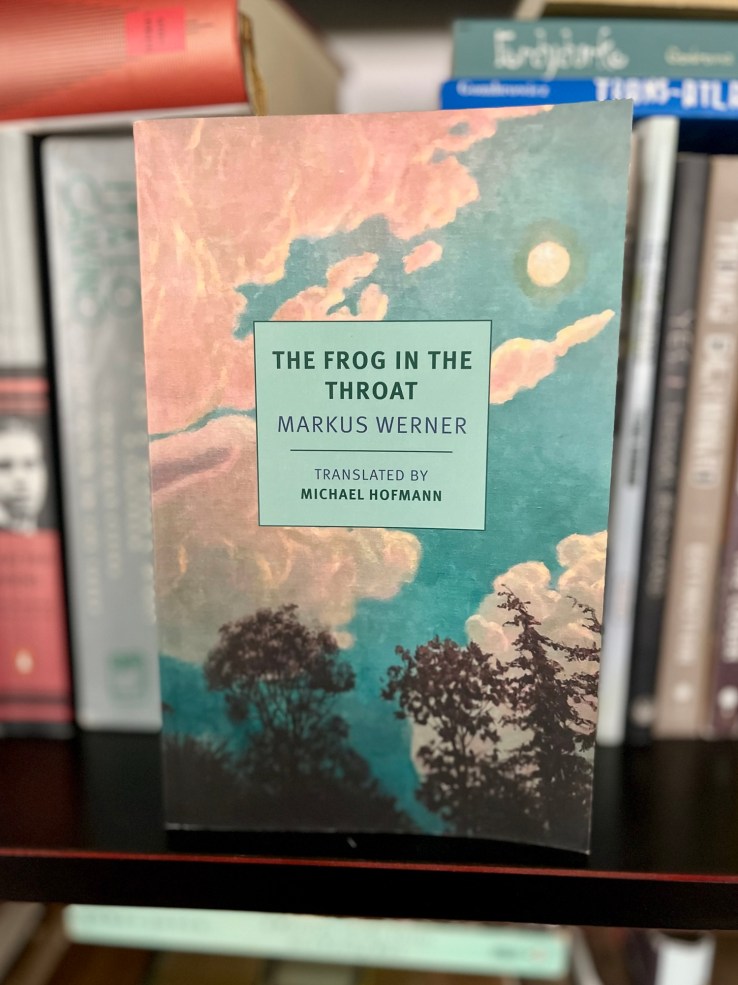
Small dents, big books (tl;dr)

I usually finish reading a novel if I stick with it for, say thirty-to-fifty pages. However, as is the case with many readers, I suspect, very long novels foil me; or, rather, time foils me. Obligations intercede. Here are some long novels that I had to put aside for another time. From the top:

Lies and Sorcery, Elsa Morante (775 pages)

If the bookmark I left in Jenny McPhee’s translation Lies and Sorcery is not lying (or ensorcelled), I got seventy pages into it before getting sidetracked with something else. I remember liking what I was reading but also that the book seemed very heavy over my head at night.

The Strudlhof Steps, Heimito von Doderer (840 pages)

I’ve really enjoyed the first fifty pages of Heimito von Doderer’s The Strudlhof Steps (in translation by Vincent Kling). I’ve enjoyed them so much that I’ve read them at least four times over the past three years. The longest I’ve waded into the Steps was to page 99. Again, a slimmer model comes round and I lose my focus—but of the four novels I’ve listed here, von Doderer’s is the one that’s made the biggest impression on me. My bites may have been shallow but I keep going in for seconds.

A Bended Circuity, Robert S. Stickley (637 pages)

Although it’s the shortest novel on this list, my edition of RSS’s ABC feels cramped and constrained. I think the novel would like a bigger home. The pages are too bright, the font too small, the margins too narrow. It’s a cramped reading experience. I suppose I could break down and buy the Corona\Samizdat edition, which may be easier to ease into. Or an e-book? RSS, please agree to an e-book! Some of us have aging eyes. Oh, I got to page 48.

Miss MacIntosh, My Darling, Marguerite Young (1321 pages)

I cracked into Marguerite Young’s Miss MacIntosh, My Darling twice this year; once in the Spring and once in the Fall. Maybe I’ll try again in the Winter. I stalled out 78 pages in, at the end of chapter 3.

Mass-market Monday | Matt Bucher’s The Belan Deck

The Belan Deck, Matt Bucher. SSMG Press (2023; second printing). Cover design by David Jensen. 119 pages.

My review of The Belan Deck.

“The Christmas Banquet” — Nathaniel Hawthorne

“The Christmas Banquet”

by

Nathaniel Hawthorne

from Mosses from an Old Manse


In a certain old gentleman’s last will and testament there appeared a bequest, which, as his final thought and deed, was singularly in keeping with a long life of melancholy eccentricity. He devised a considerable sum for establishing a fund, the interest of which was to be expended, annually forever, in preparing a Christmas Banquet for ten of the most miserable persons that could be found. It seemed not to be the testator’s purpose to make these half a score of sad hearts merry, but to provide that the stern or fierce expression of human discontent should not be drowned, even for that one holy and joyful day, amid the acclamations of festal gratitude which all Christendom sends up. And he desired, likewise, to perpetuate his own remonstrance against the earthly course of Providence, and his sad and sour dissent from those systems of religion or philosophy which either find sunshine in the world or draw it down from heaven.

The task of inviting the guests, or of selecting among such as might advance their claims to partake of this dismal hospitality, was confided to the two trustees or stewards of the fund. These gentlemen, like their deceased friend, were sombre humorists, who made it their principal occupation to number the sable threads in the web of human life, and drop all the golden ones out of the reckoning. They performed their present office with integrity and judgment. The aspect of the assembled company, on the day of the first festival, might not, it is true, have satisfied every beholder that these were especially the individuals, chosen forth from all the world, whose griefs were worthy to stand as indicators of the mass of human suffering. Yet, after due consideration, it could not be disputed that here was a variety of hopeless discomfort, which, if it sometimes arose from causes apparently inadequate, was thereby only the shrewder imputation against the nature and mechanism of life. Continue reading ““The Christmas Banquet” — Nathaniel Hawthorne”

Comic as Christmas | From William H. Gass’s Willie Masters’ Lonesome Wife

From William H. Gass’s Willie Masters’ Lonesome Wife, as published as a supplement in a 1967 issue of TriQuarterly.

“A Chthonian Christmas” — Edward Gorey


Xmas or Xmess — Tomi Ungerer

A comic by Tomi Ungerer, from the 1 Dec. 1958 issue of Esquire.

Read “Nackles,” Donald E. Westlake’s horror story about the Anti-Claus

“Nackles”

by

Donald E. Westlake


Did God create men, or does Man create gods? I don’t know, and if it hadn’t been for my rotten brother-in-law the question would never have come up. My late brother-in-law? Nackles knows.

It all depends, you see, like the chicken and the egg, on which came first. Did God exist before Man first thought of Him, or didn’t He? If not, if Man creates his gods, then it follows that Man must create the devils, too.

Nearly every god, you know, has his corresponding devil. Good and Evil. The polytheistic ancients, prolific in the creation (?) of gods and goddesses, always worked up nearly enough Evil ones to cancel out the Good, but not quite. The Greeks, those incredible supermen, combined Good and Evil in each of their gods. In Zoroaster, Ahura Mazda, being Good is ranged forever against the Evil one, Ahriman. And we ourselves know God and Satan.

But of course it’s entirely possible I have nothing to worry about. It all depends on whether Santa Claus is or is not a god. He certainly seems like a god. Consider: He is omniscient; he knows every action of every child, for good or evil. At least on Christmas Eve he is omnipresent, everywhere at once. He administers justice tempered with mercy. He is superhuman, or at least non-human, though conceived of as having a human shape. He is aided by a corps of assistants who do not have completely human shapes. He rewards Good and punishes Evil. And, most important, he is believed in utterly by several million people, most of them under the age of ten. Is there any qualification for godhood that Santa Claus does not possess?

And even the non-believers give him lip-service. He has surely taken over Christmas; his effigy is everywhere, but where are the manger and the Christ child? Retired rather forlornly to the nave. (Santa’s power is growing, too. Slowly but surely he is usurping Chanukah as well.)

Santa Claus is a god. He’s no less a god than Ahura Mazda, or Odin, or Zeus. Think of the white beard, the chariot pulled through the air by a breed of animal which doesn’t ordinarily fly, the prayers (requests for gifts) which are annually mailed to him and which so baffle the Post Office, the specially-garbed priests in all the department stores. And don’t gods reflect their creators’ society? The Greeks had a huntress goddess, and gods of agriculture and war and love. What else would we have but a god of giving, of merchandising, and of consumption? Secondary gods of earlier times have been stout, but surely Santa Claus is the first fat primary god.

And wherever there is a god, mustn’t there sooner or later be a devil?

Which brings me back to my brother-in-law, who’s to blame for whatever happens now. My brother-in-law Frank is – or was – a very mean and nasty man. Why I ever let him marry my sister I’ll never know. Why Susie wanted to marry him is an even greater mystery. I could just shrug and say Love is Blind, I suppose, but that wouldn’t explain how she fell in love with him in the first place.

Frank is – Frank was – I just don’t know what tense to use. The present, hopefully. Frank is a very handsome man in his way, big and brawny, full of vitality. A football player; hero in college and defensive line-backer for three years in pro ball, till he did some sort of irreparable damage to his left knee, which gave him a limp and forced him to find some other way to make a living.

Ex-football players tend to become insurance salesmen; I don’t know why. Frank followed the form, and became and insurance salesman. Because Susie was then a secretary for the same company, they soon became acquainted.

Was Susie dazzled by the ex-hero, so big and handsome? She’s never been the type to dazzle easily, but we can never fully know what goes on inside the mind of another human being. For whatever reason, she decided she was in love with him.

So they were married, and five weeks later he gave her her first black eye. And the last, though it mightn’t have been, since Susie tried to keep me from finding out. I was to go over for dinner that night, but at eleven in the morning she called the auto showroom where I work, to tell me she had a headache and we’d have to postpone the dinner. But she sounded so upset that I knew immediately something was wrong, so I took a demonstration car and drove over, and when she opened the front door there was the shiner.

I got the story out of her slowly, in fits and starts. Frank, it seemed, had a terrible temper. She wanted to excuse him because he was forced to be an insurance salesman when he really wanted to be out there on the gridiron again, but I want to be President and I’m an automobile salesman and I don’t go around giving women black eyes. So I decided it was up to me to let Frank know he wasn’t to vent his pique on my sister any more.

Unfortunately, I am five feet seven inches tall and weigh one hundred thirty-four pounds, with the Sunday Times under my arm. Were I just to give Frank a piece of my mind, he’d surely give me a black eye to go with my sister’s. Therefore, that afternoon I bought a regulation baseball bat, and carried it with me when I went to see Frank that night.

He opened the door himself and snarled, “What do you want?”

In answer, I poked him with the end of the bat, just above the belt, to knock the wind out of him. Then, having unethically gained the upper hand, I clouted him five or six times more, and then stood over him to say, “The next time you hit my sister I won’t let you off so easy.” After which I took Susie home to my place for dinner.

And after which I was Frank’s best friend.

People like that are so impossible to understand. Until the baseball bat episode, Frank had nothing for me but undisguised contempt. But once I’d knocked the stuffing out of him, he was my comrade for life. And I’m sure it was sincere; he would have given me the shirt off his back, had I wanted it, which I didn’t.

(Also, by the way, he never hit Susie again. He still had the bad temper, but he took it out on throwing furniture out windows or punching dents in walls or going downtown to start a brawl in some bar. I offered to train him out of maltreating the house and furniture as I had trained him out of maltreating his wife, but Susie said no, that Frank had to let off steam and it would be worse if he was forced to bottle it all up inside him, so the baseball bat remained in retirement.)

Then came the children, three of them in as many years. Frank Junior came first, and then Linda Joyce, and finally Stewart. Susie had held the forlorn hope that fatherhood would settle Frank to some extent, but quite the reverse was true. Shrieking babies, smelly diapers, disrupted sleep, and distracted wives are trials and tribulations to any man, but to Frank they were – like everything else in his life – the last straw.

He became, in a word, worse. Susie restrained him I don’t know how often from doing some severe damage to a squalling infant, and as the children grew toward the age of reason Frank’s expressed attitude toward them was that their best move would be to find a way to become invisible. The children, of course, didn’t like him very much, but then who did? Continue reading “Read “Nackles,” Donald E. Westlake’s horror story about the Anti-Claus”

Untitled (Conquest) — Benjamin Marra

Untitled sketch (Conquest) by Benjamin Marra (b. 1977)

Antonio Di Benedetto’s The Suicides (Book acquired, 13 Dec. 2024)

I’m excited about this one. I loved the previous Antonio Di Benedetto novels I read, Zama (1956) and The Silentiary (1964), both also translated by Esther Allen. (I reviewed Zama here and The Silentiary here.)

The Suicides will publish in February 2025 from NYRB. Their blurb:

A stymied reporter in his early thirties embarks on an investigation of three unconnected suicides. All he has to go on are photos of the faces of the dead. Other suicides begin to proliferate, while a colleague in the archives sends him historical justifications of self-murder by thinkers of all sorts: Diogenes, David Hume, Emile Durkheim, Margaret Mead. His investigation becomes an obsession, and he finds himself ever more attracted to its subject as it proceeds.

The Suicides is the third volume of Antonio Di Benedetto’s Trilogy of Expectation, a touchstone for Roberto Bolaño and deemed “one of the culminating moments of twentieth-century fiction” by Juan José Saer. Following Zama (set during the eighteenth century) and The Silentiary (set during the 1950s), this final work takes place in a provincial city in the late 1960s, as Argentina plummets toward the “Dirty War.”

“Daily Reviewer-Haupt” — David Markson

More New Cult Canon

(Context, entries 1-8)

(9-14)

15. Battle Royale, Kinji Fukasaku (2000)

I actually rewatched Battle Royale just the other week. In retrospect, it’s difficult to assess the film against the influence it’s had, especially on video games. In his 2008 New Cult Canon entry, Scott Tobias described the film as “Lord Of The Flies meets The Most Dangerous Game meets perhaps the cruelest year of teenage life.” I think what many of us remember about Battle Royale is first the concept, so widely imitated, and then the violence—but it’s actually a gentler film, with hints of Rebel without a Cause (Nicholas Ray, 1955). It’s also kinda goofy and disjointed.

6/10

Alternate: I don’t think they’re widely available as legal streams, but you could track down Kinji Fukasaku’s early 1970’s crime films, the Battles without Honor or Humanity series.

Alternate alternate: 10 minutes of Friedkin on Fukasaku:

16. Dead Man, Jim Jarmusch (1995)

A perfect film, one that seems better every time I see it. Gary Farmington is amazing as William Blake’s spiritual guide (“Stupid fucking white man” is a sublime line reading), and Jarmusch has a loaded bench to bounce pretty boy Depp off of (Iggy Pop is particularly scary, but Robert Mitchum seems an embodiment of evil from a truly different time—magnificent).

10/10

Alternate: El Topo, Alejandro Jodorowsky (1970)

17. Wet Hot American Summer, David Wain (2001)

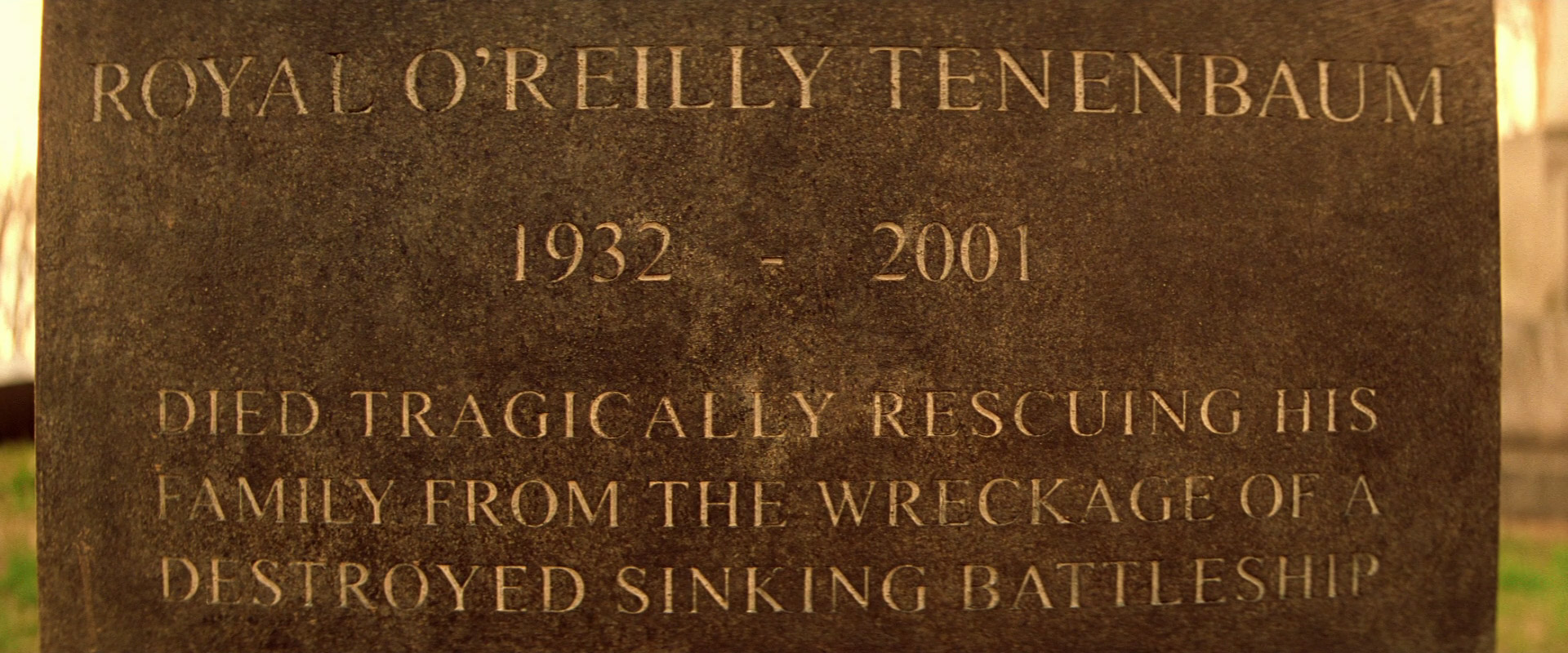
I have no idea if Wet Hot American Summer holds up well—I think I was always part of its intended audience, part of the tail end of the “Reagan-era latchkey kids who grew up watching” the kind of films Wain’s movie is—satirizing?—on television. I watched Wet Hot American Summer approximately 100 times in 2003; it was one of a handful of DVDs on repeat at my best friend’s childhood house, where my unemployed unstructured ass spent a few nights a week crashing. His folks were in the beginning of a (permanent) separation, and the house seemed to have been ceded to a loose configuration of a dozen or so of us. We’d drink tallboys on the beach, stumble in, and fall asleep to The Royal Tenenbaums (Wes Anderson, 2001) or Reign of Fire (Rob Bowman, 2002) or Human Nature (Michel Gondry, 2001) or Wet Hot American Summer. There were probably others, but those are the ones I remember.

10/10

Alternate: Porky’s, Roy Clark (1981)

18. The Boondock Saints, Troy Duffy (1999)

The Boondock Saints is a truly awful film. It is relentlessly stupid and when it is funny, it is funny by accident—except when Willem Dafoe’s charm takes over one of the scenes he’s chewing up. The viewer can almost sense Dafoe rewriting Duffy’s sketchy, shoddy, nonsensical script in real time. For all its retrograde bluster (and poor filmmaking), The Boondock Saints actually has a viewpoint.

3/10

Alternate: Payback, Brian Helgeland (1999)

19. Punch-Drunk Love, Paul Thomas Anderson (2002)

Another perfect film. In his original New Cult Canon, Tobias suggested that,

Punch-Drunk Love marked the moment when Anderson threw away the stylistic
crutches of forbears like Martin Scorsese and Robert Altman, and came into his
own as an original filmmaker. That doesn’t mean he’s discarded these and other
influences altogether, which isn’t something he could or would want to do. But Punch-Drunk
Love
has a unique texture that’s unmistakably Anderson’s, marked by a wired, coked-up
intensity and a yen for discord. It’s a film that sets viewers on edge from the
start, almost daring you not to like it.

Philip Seymour Hoffman might have stolen the film from Sandler, had he been in it more than the few minutes he’s actually on screen (he’s looming larger in our memory, as always).

10/10

Alternate: Popeye, Robert Altman (1980)

20. Wild Things, John McNaughton (1998)

This is another film that I watched because Tobias wrote about it. I had actually seen McNaughton’s film Henry: Portrait of a Serial Killer entirely by mistake at a “party”; this probably happened around the same time that Wild Things released to theaters. But I never would have connected the two. I thought Wild Things was a different kind of trash than the trash it actually is. Tobias’s write-up makes an argument for Wild Things as high camp, a film told entirely within a set of quotation marks. I think he’s a bit too generous in his admiration for McNaughton’s film, but I ultimately enjoyed it.

6/10

Alternate: Bad Lieutenant: Port of Call New Orleans, Werner Herzog (2009)

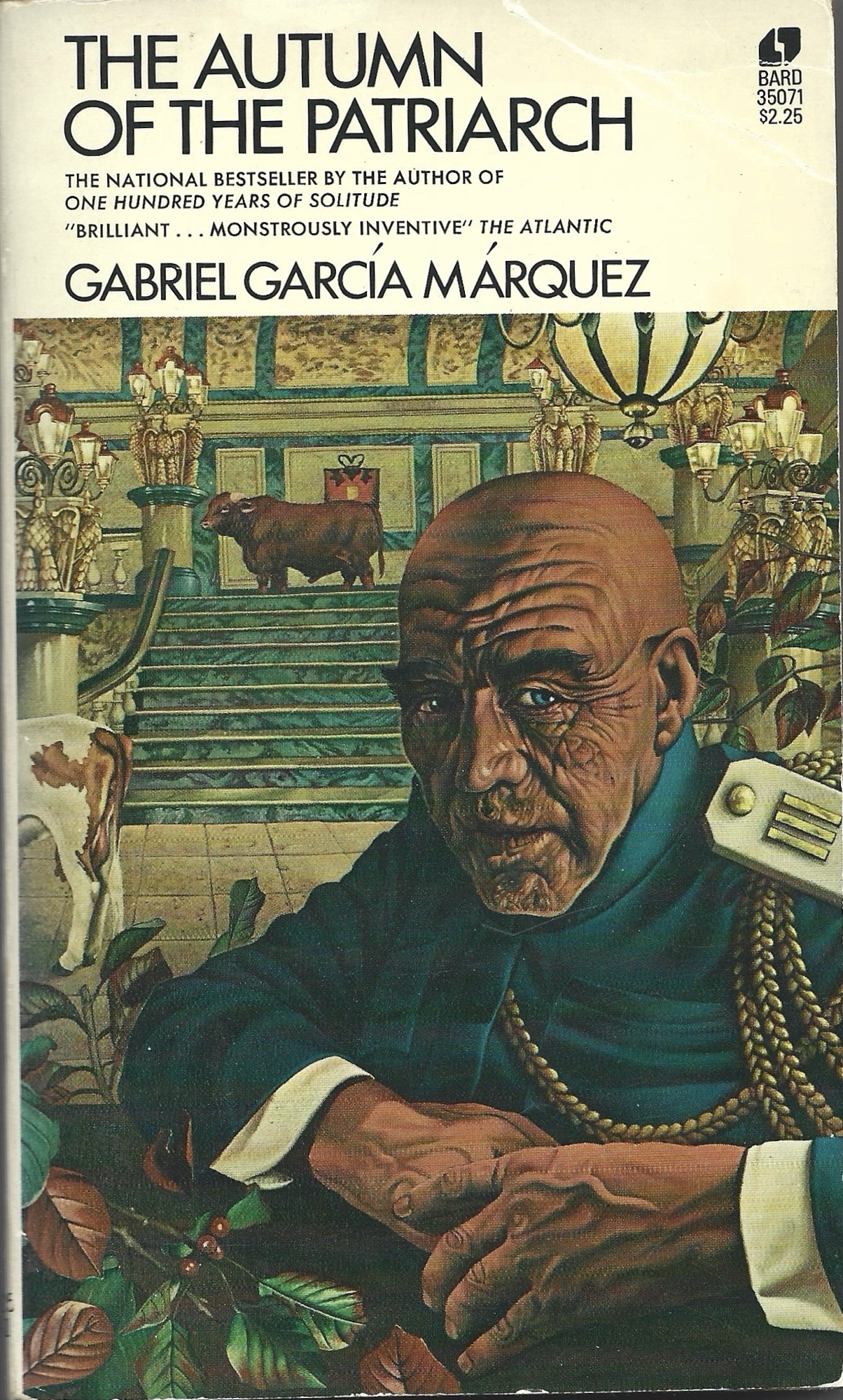
Mass-Market Monday | Donald Barthelme’s Amateurs

Amateurs, Donald Barthelme. Kangaroo Pocket Books (1977). No cover artist or designer credited. 207 pages.

I’ve written a few times about my slow acquisition of someone else’s library. This person lives in Perry, Florida, a small panhandle town south of Tallahassee, and I guess he drives into Jacksonville at least once a year to sell books at the bookstore I frequent. I’ve talked to the bookstore’s owner about him a few times. Sometimes, I’ll spot a spine and think, Yeah, his name and address are going to be stamped on the inside cover. And there it was this Friday when I picked up his mass-market edition of Amateurs. His by-now familiar habit of checking off volumes by the same author is on display here too. He also put neat pencil dashes by some of the stories in Amateurs, including my favorite from the collection, “Some of Us Had Been Threatening Our Friend Colby.” He also checked off “The Educational Experience,” which, in this Kangaroo edition of Amateurs, sadly fails to include Barthelme’s collage illustrations that accompanied the piece when it first ran in Harper’s


Continue reading “Mass-Market Monday | Donald Barthelme’s Amateurs”

Dec. 16th (Peanuts)

“The Hatchet Job” by José Lezama Lima, from The Death of Trotsky as Described by Various Cuban Writers, Several Years After the Event—or Before | From G. Cabrera Infante’s Novel Three Trapped Tigers

A chapter from Three Trapped Tigers

by G. Cabrera Infante

translated by Donald Gardner and Suzanne Jill Levine with collaboration by Infante


THE DEATH OF TROTSKY AS DESCRIBED BY VARIOUS CUBAN WRITERS, SEVERAL YEARS AFTER THE EVENT—OR BEFORE

THE HATCHET JOB

Legend has it that the stranger didn’t ask where he might eat or drink, but only where he could find the house with the adobe wall around it; and that, without so much as shaking the dust of his journey off both his feet, he made for his destination, which was the last retreat of Leon Son-of-David Bronstein: the prophet of that new-time religion who was to become the eponymous founder of its first heresy: messiah, apostle and heretic in one. The traveler, one Jacob Mornard, warped and twisted, and accompanied only by his seafaring hatred, had finally arrived in the notorious sanctuary of the Exile whose family name means stone of bronze and whose frank, fiery features were those of a rebellious rabbi. Furthermore, the old man was distinguished by his haughty and farsighted gaze underneath his horn-rimmed glasses; his oratorical gestures—like those of the men of the Greek agora not of the Hebrew agora; his woolly and knitted brows; and his sonorous voice, which usually reveals to ordinary mortals those whom the Fates have destined, from the cradle, to profound eloquences: all this and his goatee gave the New Wandering Jew a biblical countenance.

As for the future magnicide: his troubled appearance and the awkward gait of the born dissident were sketches of a murderous character which would never, in the dialectic mind of the assassinated Sadducee, find completion to cast, in the historical mold of a Cassius or even a Brutus, the low relief of an infamous persona.

Soon they were master and disciple; and while the noble and hospitable expatriate forgot his worries and afflictions, and allowed affection to blaze a trail of warmth in a heart that had anciently been frozen with reserve, his felonious follower seemed to carry in the stead of a heart something empty and nocturnal, a black void in which the slow, sinister and tenacious fetus of the most ignoble treachery was able to take roots and strike. Or perhaps, perchance it was a mean cunning that looked for revenge; because they say that at the back of his eyes he always carried a secret resentment against that man whom, with faultless subterfuge, he was in the habit of calling Master, using the capital letter that is reserved only for total obedience.

On occasions they could be seen together and although the good Lev Davidovich—we can call him that now, I suspect, even if in his lifetime he concealed with an initial this middle name that spelled yarmulke, and carried false credentials—took extreme precautions—because there were not lacking, as in the previous Roman tragedy, evil omens, the revelatory imagery of premonitions, or the ever-present habit of foreboding—he always granted audience in solitude to the taciturnal visitor, who was at times, as on the day of misfortune, both adviser and supplicant. This crimson Judas carried in his pale hands the manuscript in which his treachery was patently written with invisible ink; and over his thin blueish and trembling body he wore a Macfarlane, which would, to any eye more given to conjecture and suspicion, have given him away on that suffocatingly hot Mexican evening: distrust was not the strong point of the Russian rebel: nor systematic doubt: nor ill will a force of habit: underneath the coat the crafty assailant carried a treacherous hoof-parer: the magnicidal adze: an ice pick: and under the ax was his soul of guided emissary of the new Czar of Russia.

The trusting heresiarch was glancing attentively over the pretended scriptures, when the hatchet man of the Party delivered his treacherous blow and the steely shaft bit deep into that most noble head.

A cry resounded through the cloistered precincts and the sbirri (Haití had refused to send her eloquent Negroes) ran there in great haste and eager to convert the assassin into a prisoner. The magnanimous Marxian still had time to advise: “Thou shalt not kill,” and his inflamed followers did not hesitate to respect his instructions to the hilt.

Forty-eight hours of hopes, tears and vigil the formidable agony of that luminous leader lasted, dying as he had lived: in struggle. Life and a political career were no longer his: in their stead glory and historical eternity belonged to him.

José Lezama Lima

(1912-1965)

More New Cult Canon

(Previously/context/etc.)

9. Pi, Darren Aronofsky (1998)

A few years ago, I wrote about seeing Aronofsky’s first feature Pi at the student union film theater my second semester of college. I loved it and the people I went to see it with hated it. Aronofsky’s most infamous film, Requiem for a Dream (2000) remains the all-time worst film-viewing experience of my life (close second is Dancer in the Dark, von Trier, 2000—which I also saw at that same student union).

7?/10

Alternate: mother!, Darren Aronofsky, 2018

10. The Blair Witch Project, Daniel Myrick and Eduardo Sánchez (1999)

Another artifact from my undergrad days. I am sure that I would be embarrassed to watch this one again, but at the time, it seemed really vital, definitely something new and different. I was taking a class which I think was called something like “electracy,” a course on “electronic literacy,” with Greg Ulmer. He showed us a bunch of Talking Heads videos I’m guessing everyone had already seen and tried to explain them, like a maniac.

We had to make two websites that semester.  My first website was excellent—it was based on The Dakota building in Manhattan–John Lennon, Rosemary’s Baby, evil, the Nazis, Oprah Winfrey—it was a mess but I think it was one of the best things I’ve ever done. I got a B- on it and decided Ulmer was full of shit. I made the second website on The Blair Witch Project, an afterthought. It was stupid and I was embarrassed to submit it and I made an A. I still have the other site on a hard disk somewhere.

7?/10

Alternate: Rosemary’s Baby, Roman Polanski, 1968

11. I Am Cuba, Mikhail Kalatozov, 1964

I can’t muster anything real on this one. I vaguely recall getting it from our library, around the time it was “rediscovered” (Tobias writes about that in his New Cult Canon column). My big takeaway is that PT Anderson stole a great shot from the film (but not as great as the sequence he stole from Robert Downey’s Putney Swope).

7?/10

Alternate: Putney Swope, Robert Downey, 1969 

12. The Rules of Attraction, Roger Avary, 2002

I still haven’t watched this one and Tobias’s write-up doesn’t make me want to. It might be good, even great, but I doubt I’ll ever know.

–?/10

Alternate: American Psycho, Mary Harron, 2000

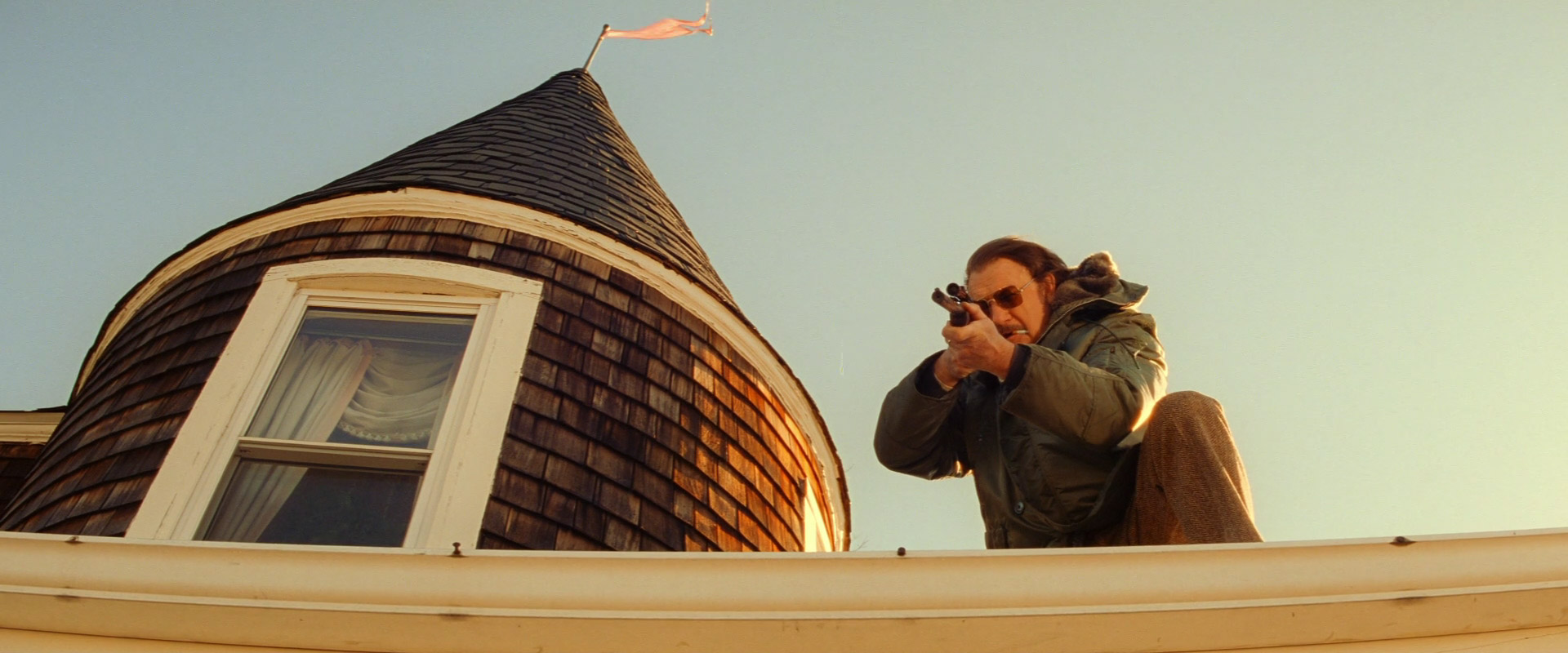
13. Kiss Kiss Bang Bang, Shane Black, 2005

A fanfuckingtastic film (or maybe just a really, really fun film) that I think I wouldn’t have bothered to check out if not for Tobias’s column. Postmodernist techniques in film can come off as too-clever or simply exhausting, but Kiss Kiss Bang Bang is assured of story, assured of its audience, and assured that its faults are ultimately its charms. Great stuff.

9/10

Alternate: The Nice Guys, Shane Black 2016

14.  Fast, Cheap, and Out of Control, Errol Morris, 1997

I don’t think Fast, Cheap, and Out of Control is actually a cult film. I mean, it might be, but I don’t think it is. I think it was a widely-available-on-VHS documentary feature in the late nineties, and I think that’s why I actually saw it then. I remember thinking it was Just Okay and then watching another half dozen Morris docs over the next 20 or so years and thinking that they were Just Okay.

Just Okay/10

Alternate: Literally any Werner Herzog film