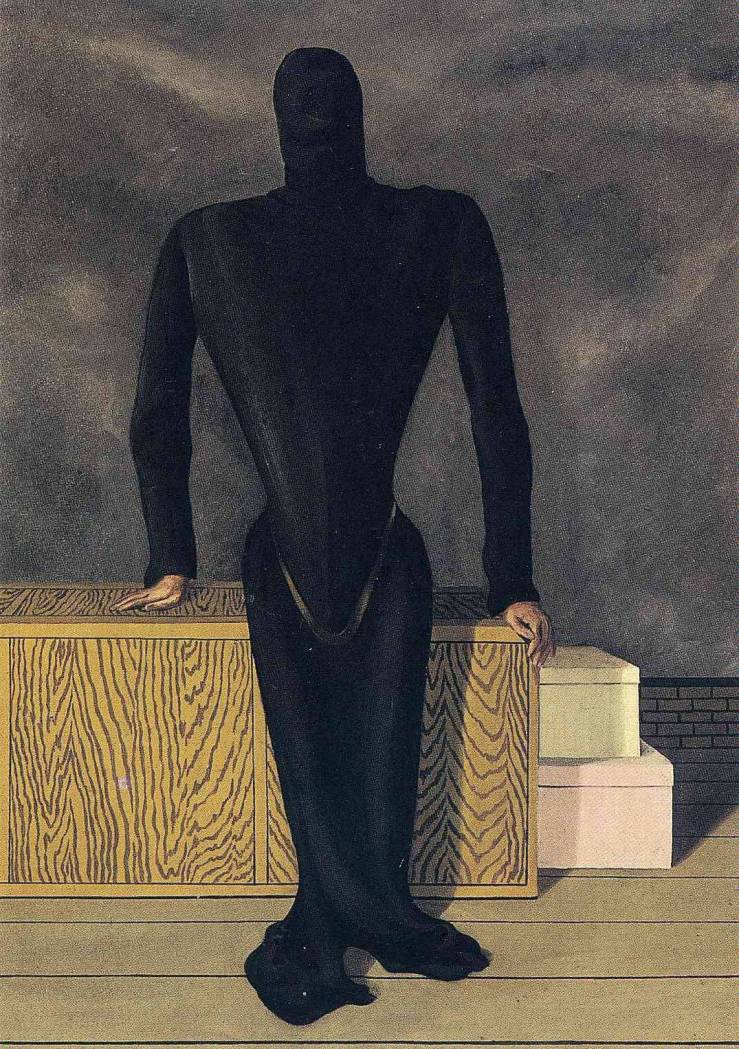
The Thief — Rene Magritte

tumblr_p6j7hke6ql1vccbuho1_1280

La voleuse (The Thief) 1927 by Rene Magritte (1898-1967)

Pom Poko (Summer Film Log)

Screenshot 2018-06-21 at 11.22.54 PM

Set mostly in the outskirts of Tokyo in the early 1990s, Isao Takahata’s film Pom Poko (1994) tells the story of forest-dwelling tanuki who band together to fight a guerrilla war against the humans who are destroying their natural habitat. Some of the tanuki can shapeshift—even into human form—and the jolly, mischievous (and very human) creatures carry out their war with the land “developers” in a playful spirit that belies the existential threat that is the backdrop of this strange and wonderful film.

pompoko-1994-58-g

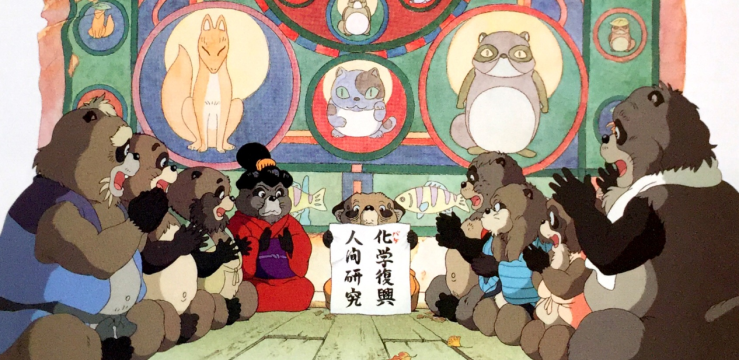
Takahata highlights the Darwinian competition between the tanuki and the humans by layering the aesthetic representation of these trickster raccoon dogs. We see the tankuki in different ways. Most of the time the film represents the tanuki in a stylized anime that’s something like a mix between ceramic tanuki effigies and, like, Disney’s funny animals.

1485147783pom_poko_1

This representation is jolly and blithe, even when the tanuki are committing sabotage or banging each other over the head for scant resources. The tanuki are most human here, hitting a sweet spot far away from the uncanny valley. We relate to them. At other times, Takahata gives us an even more stylized version of these animated raccoon dogs—they become ultracartoon, simple bubble renderings, cartoony-cartoons avatars of their own pain or delight.

pom_poko1

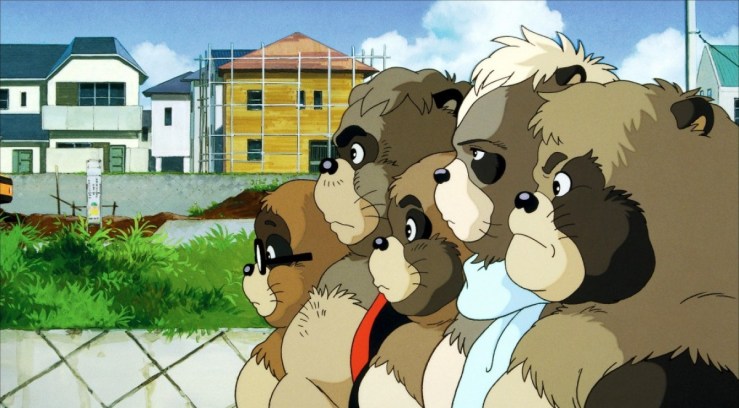
But what’s most affecting, at least for me, are the rare moments in the film that depict the tanuki in naturalistic imagery—the moments when Takahata reminds us that these are animals in a natural world. One is reminded of the film version of Richard Adams’ 1972 novel Watership Down (1978; dir. Martin Rosen) in these scenes.

pompoko-realistic

Takahata shifts his representations of the tanuki in Pom Poko between anthropomorphic, ultra-cartoonish, and realistic, an aesthetic gambit that points towards the film’s greatest trick—a spectacle of shape-shifting tricksterism. Larded with riffs on Japanese folklore and crammed with phantasmagoric images, Pom Poko culminates in a ghost parade that the tanuki perform as a means to scare the humans away. The episode is the climactic highlight of Pom Poko, a wonderful take on the Japanese folklore of a demon parade in which yōkai dance down the street in wild abandon.

pom-poko-5-1

Unfortunately, the demon parade gambit fails. Hunting publicity, an amusement park steals the credit. In a move that may reflect Takahata’s sense of his own aesthetic power, the tanuki master illusionists are almost as upset about this theft of credit for their masterwork as they are at the theft of their lands. Almost as upset though—of course this is film about the radical terror of impending extinction, and Takahata never refrains from underlining that central message.

For some, the thesis of Pom Poko might be a bit too on-the-nose—I mean, the film is not subtle in evoking the idea that humans are taking up too much of the earth’s natural resources. However, the film is far more subtle, and hence effective, in anthropomorphizing its funny animals in such a way that we see their problems as not unlike our own. The tanuki are very much like humans—prone to rash decision making, practical joking, stupid anger, infighting and badmouthing, and junk food. They can also cooperate when they need to…but even mutual cooperation has its limits.

Ultimately, Pom Poko is a surprisingly sad film. Like so many Studio Ghibli films, it feels like an elegy for not just another time, but another way of living. And yet it encodes that way of living into a new medium for a new time—another phantasy, another trick, another transformation.


How I watched it: I took my son to see it last Sunday. I’ve seen the film maybe ten times, and my son, who is eight, has seen it maybe three. He claims it’s his favorite Studio Ghibli film, or maybe second favorite, after Princess Nausicaa and the Valley of Wind (1984; dir. Hayao Miyazaki). Neither of us had seen Pom Poko in a theater before, and watching it on a big screen with big sound and a full crowd confirmed its aesthetic power.

The Dream-Quest of Unknown Kadath — Gervasio Gallardo

img_0014

The Dream-Quest of Unknown Kadath (Lovecraft cover art) by Gervasio Gallardo (b. 1934)

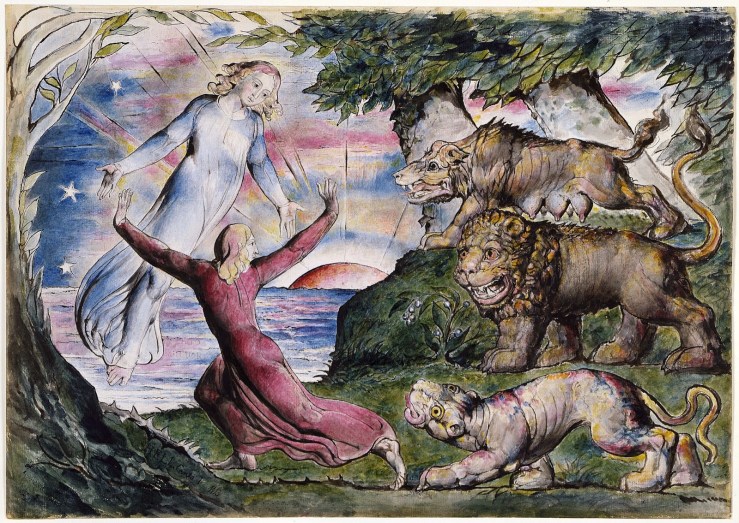
Dante Running from the Three Beasts — William Blake

blake1

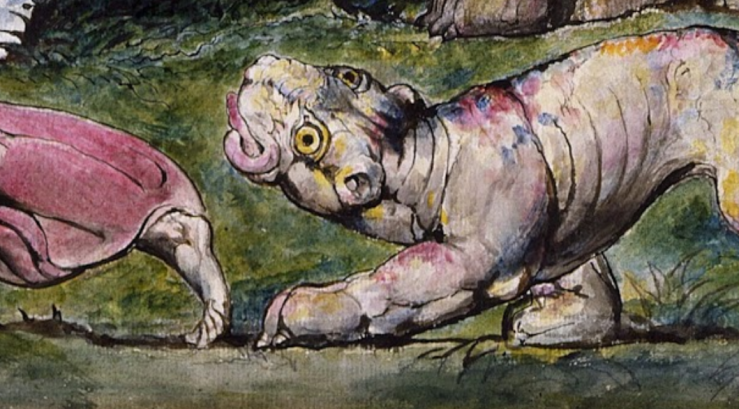
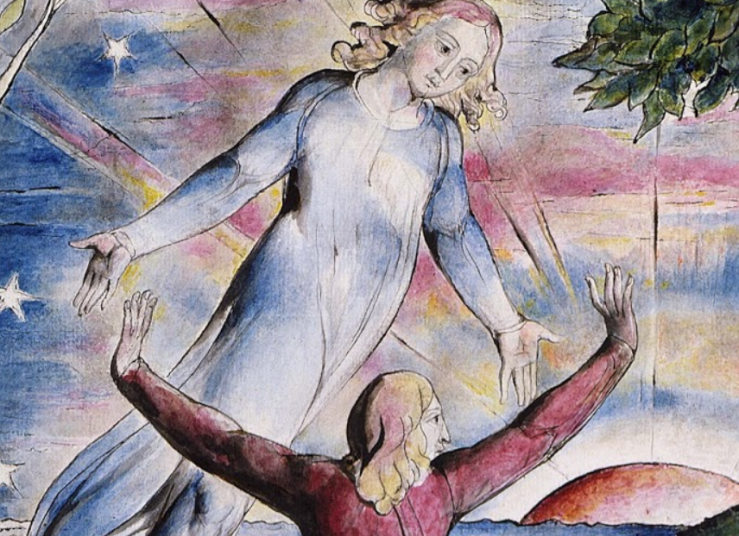
Dante Running from the Three Beasts, 1827 by William Blake (1757-1827)

Screenshot 2018-06-21 at 10.50.03 AMScreenshot 2018-06-21 at 10.49.45 AMScreenshot 2018-06-21 at 10.49.11 AM

Figure at a Typewriter — Henry Koerner

1136

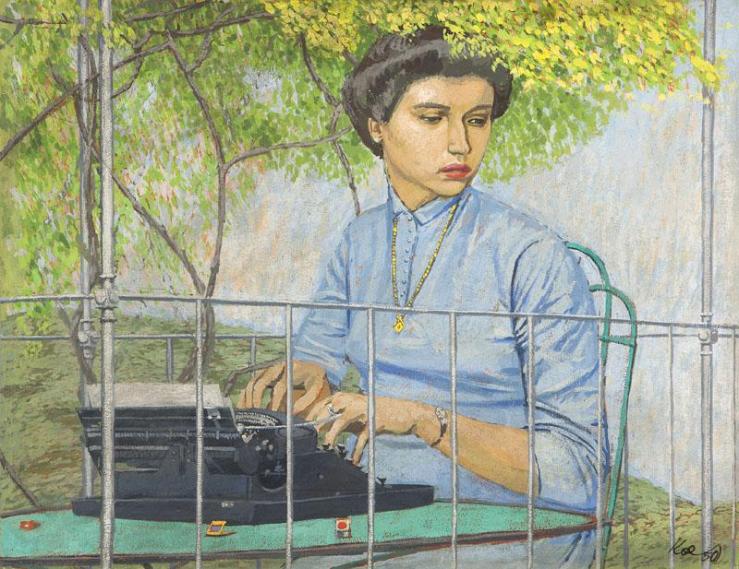
Figure at a Typewriter by Henry Koerner (1915-1991)

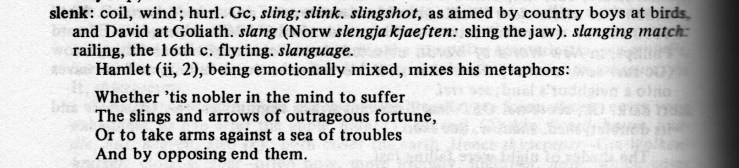
slenk: coil, wind; hurl,

img_9945

From Joseph T. Shipley’s The Origin of English Words: A Discursive Dictionary of Indo-European Roots.

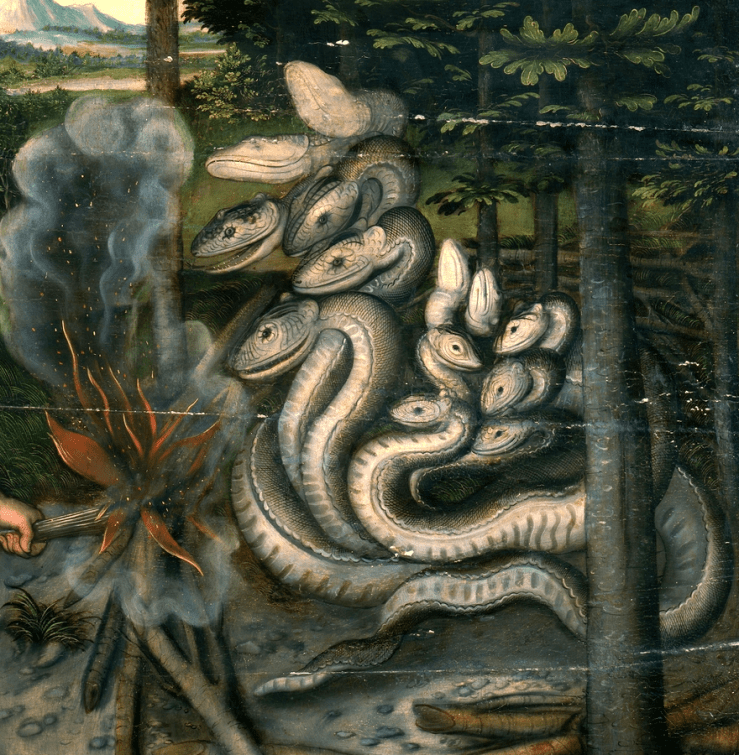
Hercules and the Hydra (Detail) — Workshop of Lucas Cranach the Elder

tumblr_p9i4a57obo1qd0jf3o1_1280

Hercules and the Hydra, c. 1537 by the Workshop of Lucas Cranach the Elder

A democratic way of looking around (William Eggleston)

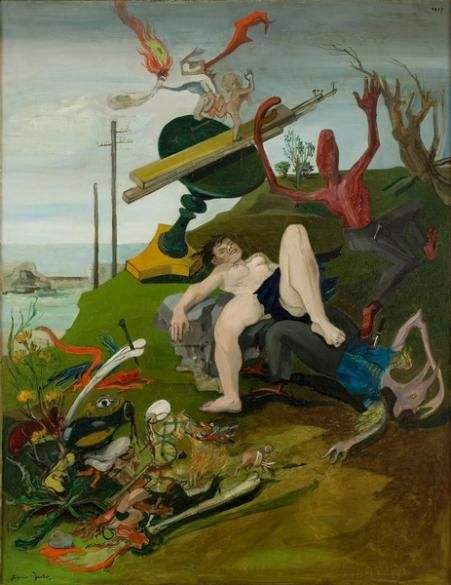
The Misfortunes of Love — Francis Gruber

1f10b83b4d27c93f2878b07930b6aa4e

The Misfortunes of Love, 1937 by Francis Gruber (1912-1948)

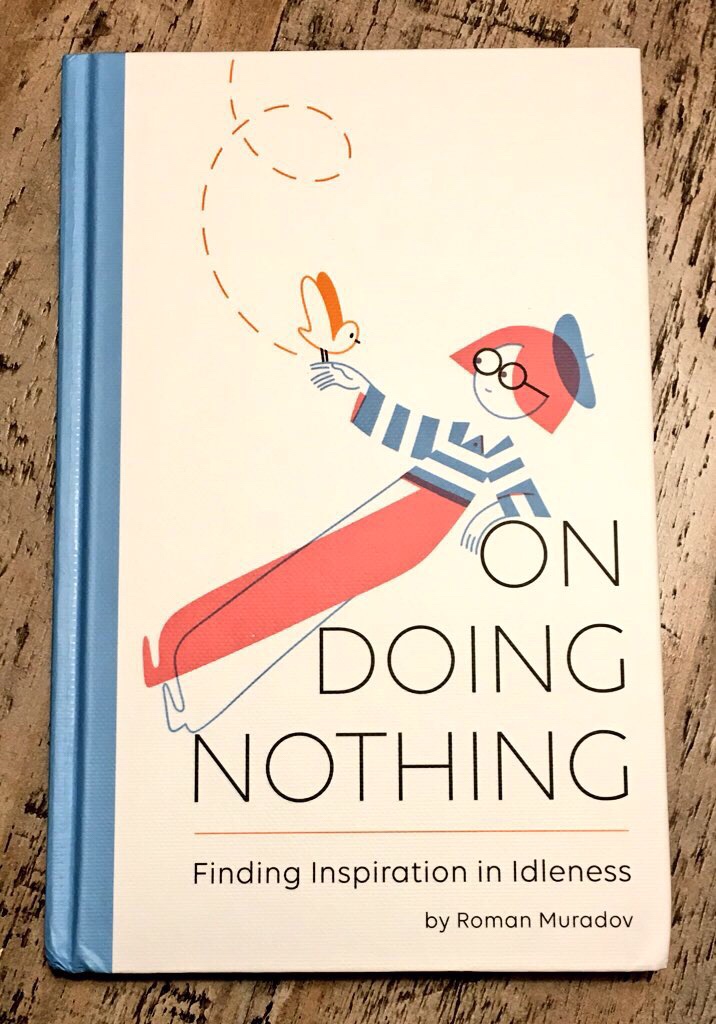
On Doing Nothing (Book acquired, 12 June 2018)

img_0051

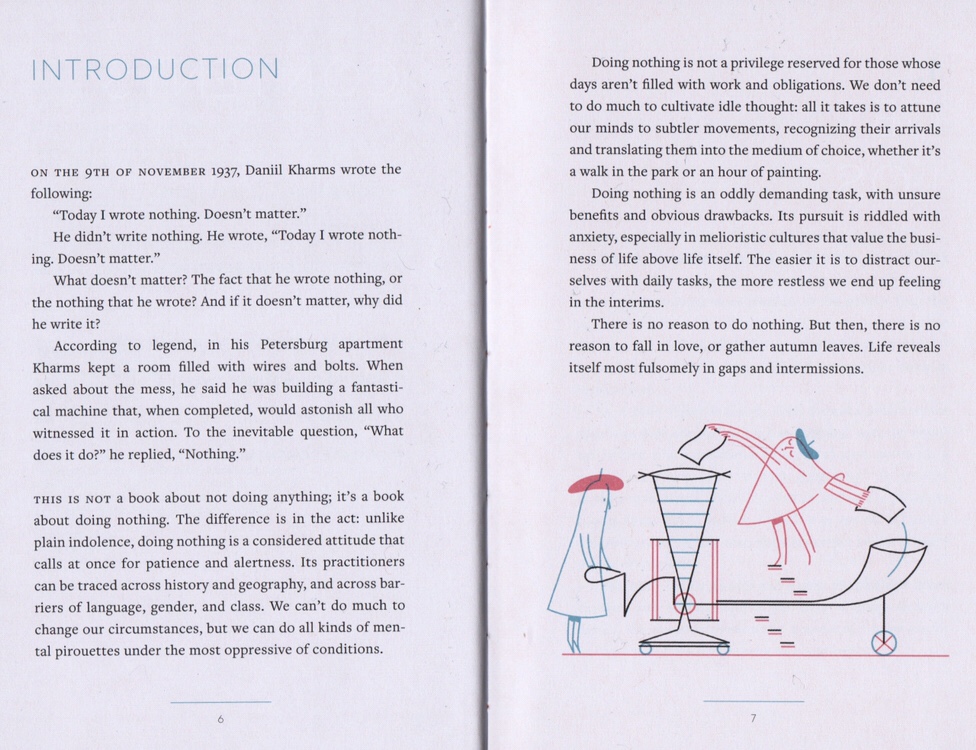
Roman Muradov’s On Doing Nothing is new from Chronicle Books. Instead of the blurb, here’s the intro:

img_0071

Pierre & Tess — Peter Ferguson

40781235335_c31ac93eca_o

Pierre & Tess by Peter Ferguson (b. 1968)

Abraham’s Sacrifice — Karoly Ferenczy

abraham-s-sacrifice-1901

Abraham’s Sacrifice, 1901 by Karoly Ferenczy

Molly’s suitors

If he had smiled why would he have smiled?

To reflect that each one who enters imagines himself to be the first to enter whereas he is always the last term of a preceding series even if the first term of a succeeding one, each imagining himself to be first, last, only and alone whereas he is neither first nor last nor only nor alone in a series originating in and repeated to infinity.

What preceding series?

Assuming Mulvey to be the first term of his series, Penrose, Bartell d’Arcy, professor Goodwin, Julius Mastiansky, John Henry Menton, Father Bernard Corrigan, a farmer at the Royal Dublin Society’s Horse Show, Maggot O’Reilly, Matthew Dillon, Valentine Blake Dillon (Lord Mayor of Dublin), Christopher Callinan, Lenehan, an Italian organgrinder, an unknown gentleman in the Gaiety Theatre, Benjamin Dollard, Simon Dedalus, Andrew (Pisser) Burke, Joseph Cuffe, Wisdom Hely, Alderman John Hooper, Dr Francis Brady, Father Sebastian of Mount Argus, a bootblack at the General Post Office, Hugh E. (Blazes) Boylan and so each and so on to no last term.

A passage from the penultimate episode of James Joyce’s Ulysses.


The sentence is itself an odyssey | William H. Gass analyzes a sentence from Joyce’s Ulysses

Stephen Dedalus and Leopold Bloom have stopped at a cabman’s shelter, a small coffeehouse under the Loop Line Bridge, for a cuppa and a rest on their way home. And the hope that the coffee will sober Stephen up. After an appropriate period of such hospitality, Bloom sees that it is time to leave.

James Joyce. Ulysses, (1921).

To cut a long story short Bloom, grasping the situation, was the first to rise to his feet so as not to outstay their welcome having first and foremost, being as good as his word that he would foot the bill for the occasion, taken the wise precaution to unobtrusively motion to mine host as a parting shot a scarcely perceptible sign when the others were not looking to the effect that the amount due was forthcoming, making a grand total of fourpence (the amount he deposited unobtrusively in four coppers, literally the last of the Mohicans) he having previously spotted on the printed price list for all who ran to read opposite to him in unmistakable figures, coffee ad., confectionary do, and honestly well worth twice the money once in a way, as Wetherup used to remark.

Commonplaces     Narrative Events

1. to cut a long story short     authorial intervention

2. grasp the situation     subjective interpretation

3. rise to his feet     narrative action

4. don’t outstay your welcome     rationale or justification

5. first and foremost     subjective evaluation

6. good as his word     characterization

7. foot the bill promise, therefore     a prediction

8. take the wise precaution     subjective evaluation

9. mine host     authorial archness

10. parting shot     subjective evaluation

11. scarcely perceptible sign     narrative action

12. to the effect that     subjective interpretation

13. amount due is forthcoming     subjective interpretation

14. grand total     characterization

15. literally the last of the Mohicans     authorial intervention, allusion

16. previously spotted     subjective interpretation

17. all who run can read     authorial intervention, allusion

18. honestly (in this context)     subjective interpretation

19. well worth it     subjective interpretation

20. worth twice the money     subjective interpretation

21. once in a waysubjective     allusion

22. as [Wetherup] used to [remark] say     attribution

The sentence without its commonplaces:

To be brief, Bloom, realizing they should not stay longer, was the first to rise, and having prudently and discreetly signaled to their host that he would pay the bill, quietly left his last four pennies, a sum—most reasonable—he knew was due, having earlier seen the price of their coffee and confection clearly printed on the menu.

Bloom was the first to get up so that he might also be the first to motion (to the host) that the amount due was forthcoming.

The theme of the sentence is manners: Bloom rises so he and his companion will not have sat too long over their coffees and cake, and signals discreetly (unobtrusively is used twice) that he will pay the four pence due according to the menu. The sum, and the measure of his generosity, is a pittance.

The sentence is itself an odyssey, for Bloom and Dedalus are going home. They stop (by my count) at twenty-two commonplaces on their way. Other passages might also be considered for the list, such as “when others were not looking.” Commonplaces are the goose down of good manners. They are remarks empty of content, hence never offensive; they conceal hypocrisy in an acceptable way, because, since they have no meaning in themselves anymore they cannot be deceptive. That is, we know what they mean (“how are you?”), but they do not mean what they say (I really don’t want to know how you are). Yet they soothe and are expected. We have long forgotten that “to foot the bill,” for instance, is to pay the sum at the bottom of it, though it could mean to kick a bird in the face. Bloom, we should hope, is already well above his feet when he rises to them. The principal advantage of the commonplace is that it is supremely self-effacing. It so lacks originality that it has no source. The person who utters a commonplace—to cut a long explanation short—has shifted into neutral.

From William H. Gass’s essay “Narrative Sentences.” Collected in Life Sentences.
What in water did Bloom, waterlover, drawer of water, watercarrier, returning to the range, admire?

What in water did Bloom, waterlover, drawer of water, watercarrier, returning to the range, admire?

Its universality: its democratic equality and constancy to its nature in seeking its own level: its vastness in the ocean of Mercator’s projection: its unplumbed profundity in the Sundam trench of the Pacific exceeding 8000 fathoms: the restlessness of its waves and surface particles visiting in turn all points of its seaboard: the independence of its units: the variability of states of sea: its hydrostatic quiescence in calm: its hydrokinetic turgidity in neap and spring tides: its subsidence after devastation: its sterility in the circumpolar icecaps, arctic and antarctic: its climatic and commercial significance: its preponderance of 3 to 1 over the dry land of the globe: its indisputable hegemony extending in square leagues over all the region below the subequatorial tropic of Capricorn: the multisecular stability of its primeval basin: its luteofulvous bed: its capacity to dissolve and hold in solution all soluble substances including millions of tons of the most precious metals: its slow erosions of peninsulas and islands, its persistent formation of homothetic islands, peninsulas and downwardtending promontories: its alluvial deposits: its weight and volume and density: its imperturbability in lagoons and highland tarns: its gradation of colours in the torrid and temperate and frigid zones: its vehicular ramifications in continental lakecontained streams and confluent oceanflowing rivers with their tributaries and transoceanic currents, gulfstream, north and south equatorial courses: its violence in seaquakes, waterspouts, Artesian wells, eruptions, torrents, eddies, freshets, spates, groundswells, watersheds, waterpartings, geysers, cataracts, whirlpools, maelstroms, inundations, deluges, cloudbursts: its vast circumterrestrial ahorizontal curve: its secrecy in springs and latent humidity, revealed by rhabdomantic or hygrometric instruments and exemplified by the well by the hole in the wall at Ashtown gate, saturation of air, distillation of dew: the simplicity of its composition, two constituent parts of hydrogen with one constituent part of oxygen: its healing virtues: its buoyancy in the waters of the Dead Sea: its persevering penetrativeness in runnels, gullies, inadequate dams, leaks on shipboard: its properties for cleansing, quenching thirst and fire, nourishing vegetation: its infallibility as paradigm and paragon: its metamorphoses as vapour, mist, cloud, rain, sleet, snow, hail: its strength in rigid hydrants: its variety of forms in loughs and bays and gulfs and bights and guts and lagoons and atolls and archipelagos and sounds and fjords and minches and tidal estuaries and arms of sea: its solidity in glaciers, icebergs, icefloes: its docility in working hydraulic millwheels, turbines, dynamos, electric power stations, bleachworks, tanneries, scutchmills: its utility in canals, rivers, if navigable, floating and graving docks: its potentiality derivable from harnessed tides or watercourses falling from level to level: its submarine fauna and flora (anacoustic, photophobe), numerically, if not literally, the inhabitants of the globe: its ubiquity as constituting 90 percent of the human body: the noxiousness of its effluvia in lacustrine marshes, pestilential fens, faded flowerwater, stagnant pools in the waning moon.

From the penultimate episode of James Joyce’s Ulysses.

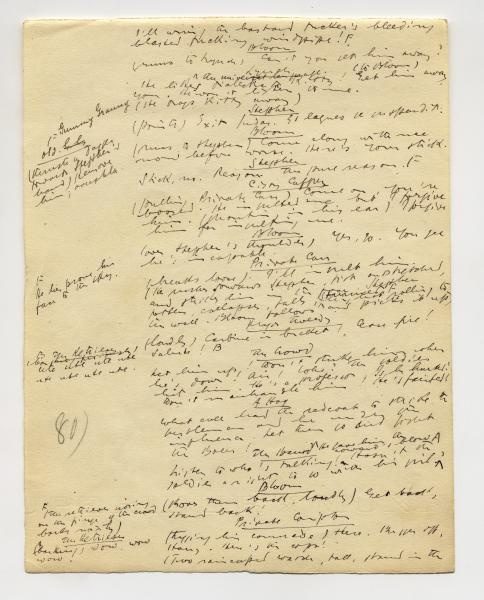
Ulysses fragment

ulysses

A handwritten fragment from the “Circe” episode of James Joyce’s Ulysses. Via/more.

Lady Bird (Summer Film Log)

ladybird_poster

In her essay “Place in Fiction,” Eudora Welty wrote that “Place in fiction is the named, identified, concrete, exact and exacting, and therefore credible, gathering spot of all that has been felt, is about to be experienced, in the novel’s progress.”

Greta Gerwig’s film Lady Bird (2017) is not a novel, nor is it a portrait of a city—but what it does do very successfully, credibly, and experientially, is illustrate the ways in which place—setting, context, community, family, home—shapes character and desire. Place in the film is ultimately the territory that we mentally and aesthetically attend—and in this sense love, to borrow the film’s thesis. Gerwig’s film makes us attend.

The primary place in Lady Bird (2017) is Sacramento, California. Titular character Lady Bird’s feelings about her hometown are neatly summed up in the film’s epigraph, a quote from Joan Didion: “Anybody who talks about California hedonism has never spent a Christmas in Sacramento.” Like Didion, Gerwig is a native of Sacramento, and a sense of that place radiates throughout Lady Bird.

Lady Bird chronicles its heroine’s senior year of high school. Christine McPherson (Saoirse Ronan) has rechristened herself “Lady Bird,” an eccentricity she seems to perceive as at odds with the tenor of the staid Catholic school she attends. Her central aim is to attend an elite East Coast college, preferably in a town buzzing with what she thinks she will recognize as “culture.” In her senior year, Lady Bird has a number of misadventures—tragic, comic, tragicomic, all very real—and grows a bit. Or doesn’t grow. Lady Bird is the memoir of a mature artist looking back on her youth. Gerwig shows that “coming of age” is something we do well after the fact, later in life when we visit the place called the past.

Lady Bird’s nascent adulthood is captured not only in the class-divides of beautiful boring Sacramento, but also in the time period the film traverses. Lady Bird is a period piece. Set in the Fall-Spring of 2002-2003, with America’s new weird wars either underway or just beginning, Lady Bird grounds itself in a cultural realism that makes it all the more relatable, even if your own senior year of high school was, say, in 1996-1997. Lady Bird must “come of age” in a fucked up world, but her experiences aren’t that different from our own, even if the ages and places aren’t the same. The exacting nature of Gerwig’s presentation of place and time—her “gathering spot of all that has been felt,” to misappropriate Welty again, reminds us of the bigger truths about how fucked up growing up is.

Gerwig gets at these truths through fiction’s regular distortions—comedic, dramatic, hyperbolic. Describing Lady Bird’s plot would make it sound like a number of teen angst films you’ve seen before. And yet Lady Bird twists its tropes repeatedly. Our heroine is the solipsistic center of her own life, but she occasionally looks a bit closer at those on its apparent margins—a gay ex-boyfriend, a bestie she deserts, a Cool Guy whose rich dad is dying of cancer. Gerwig populates her place with real people, not grotesque caricatures. It’s all quite moving if you let it be.

Lady Bird is at its most moving when portraying its central conflict between Lady Bird and her mother, (Laurie Metcalf) who implores her  not to leave home to attend a fancy East Coast school. Ronan and Metcalf are amazing in the film, and much of the credit must go to Gerwig’s screenplay and direction (Jon Brion’s score doesn’t hurt either). Gerwig never has the pair say or do anything towards each other that does not seem utterly true. Lady Bird’s father is played by Tracy Letts, whose performance anchors the conflict between mother and daughter with sweet sad realism.

Perhaps Gerwig’s greatest success in her film-memoir is that she neatly ties the narrative’s loose ends while at the same time leaving them frayed. The chaos of young adult life is simultaneously represented and reconciled through a more mature aesthetic revelation. I won’t spoil the film’s conclusion, but it is somehow devastating and happy and very real. Life is fucked up and messy.

We leave Sacramento with Lady Bird and head to a new place—named, yes, identified, possibly, but not yet fully concrete, or exact—at least not yet for our heroine. And yet from everything we’ve seen—and everything we know about our own experiences in so-called “coming of age”—we might feel some surety in that Lady Bird has found a new place, a new “gathering spot” to feel, experience, and progress within.


How I watched it: On a big TV via a streaming service with my wife, who liked it more than I did (I liked it very much!) and cried quite a bit.