Kerry James Marshall on Charles White

36.2013
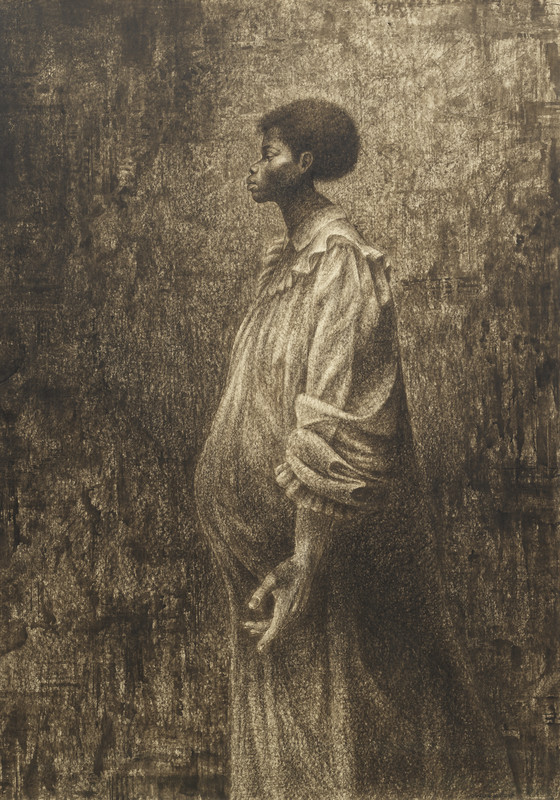
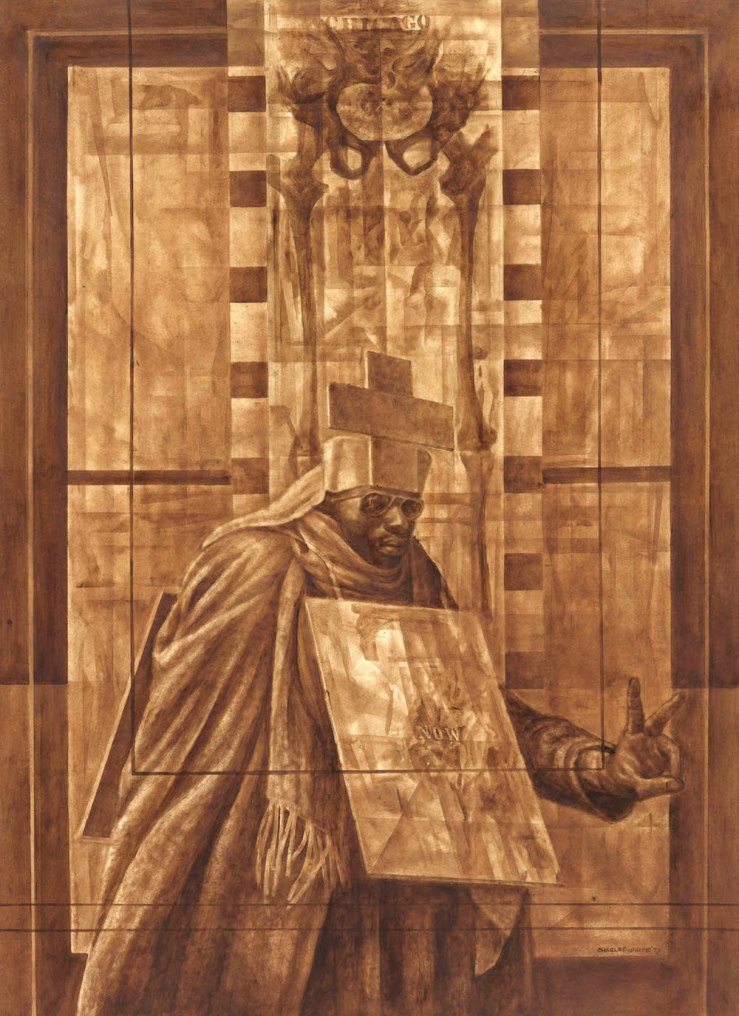
Black Pope (Sandwich Board Man), 1973 by Charles White

Painter Kerry James Marshall has written a wonderful appreciation of the artist Charles White. The piece also serves as a miniature artistic autobiography of Marshall himself, set against the backdrop of African-American history in the latter half of the 20th century. The piece, published in Charles White: A Retrospective (ed. Sarah Kelly Oehler and Esther Adler, 2018) is excerpted today in The Paris Review. Here’s the opening paragraph:

I have been a stalwart advocate for the legacy of Charles White. I have said it so often, it could go without saying. I have always believed that his work should be seen wherever great pictures are collected and made available to art-loving audiences. He is a true master of pictorial art, and nobody else has drawn the black body with more elegance and authority. No other artist has inspired my own devotion to a career in image making more than he did. I saw in his example the way to greatness. Yes. And because he looked like my uncles and my neighbors, his achievements seemed within my reach. The wisdom he dispensed to the many aspiring artists who gathered around him was always straightforward: do your work with skill and integrity, everything else is superfluous. It is a right time for him to be considered again in the fullness of his expertise. And fitting that he should be recognized with a survey in three of the best museums in the world.

Perhaps my favorite section of the piece is where Marshall situates White’s commitment to human representation:

Charlie himself remained steadfast in his commitment to representational art through all the shifts and changes in the contemporary art world of his era. He was not taken up in the rush toward abstraction and what the art historian Thomas McEvilley called the “misconceived belief that abstract art represented a kind of nothingness that made it seem the final term in a semantic series.” …

It was always clear with Charlie that to make good work, one had to know a thing or two about more than how to draw or paint. He had a scholar’s interest in history, which informed the work he made. He often said your work should be about things that mattered but reminded us all to concentrate on making the best drawings we could, adding, “the ideas will take care of themselves.”

Read the full essay at The Paris Review

ma-231767-web
Seed of Love, 1969 by Charles White

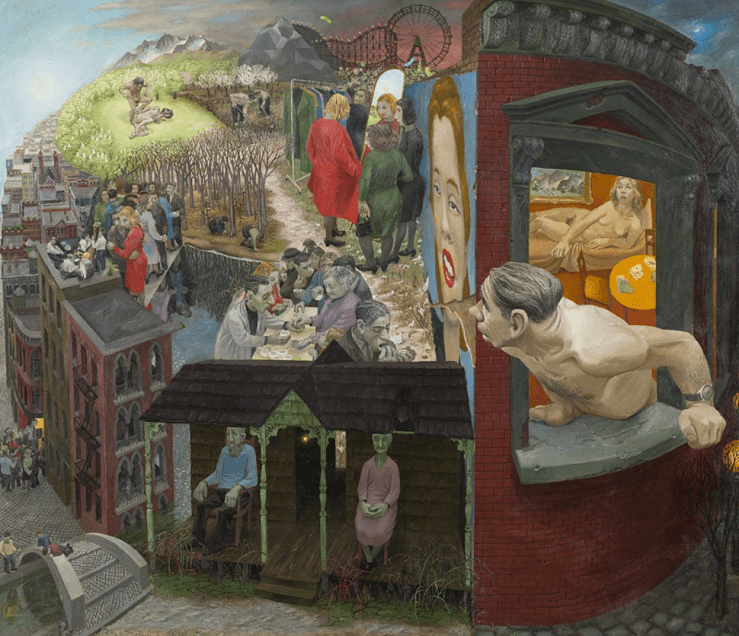
The Wedding Party (Birth of a Book) — Henry Koerner

139_01

The Wedding Party (Birth of a Book) by Henry Koerner (1915-1991)

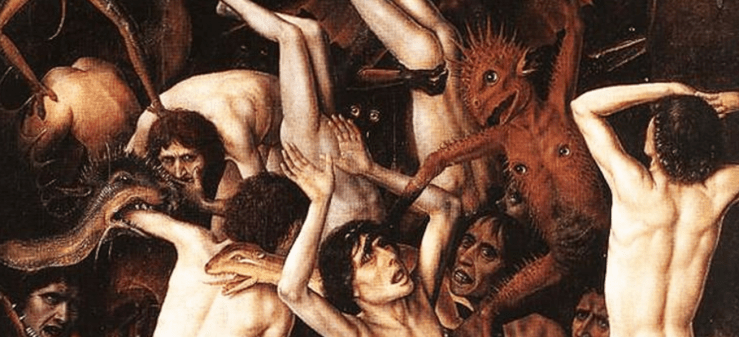
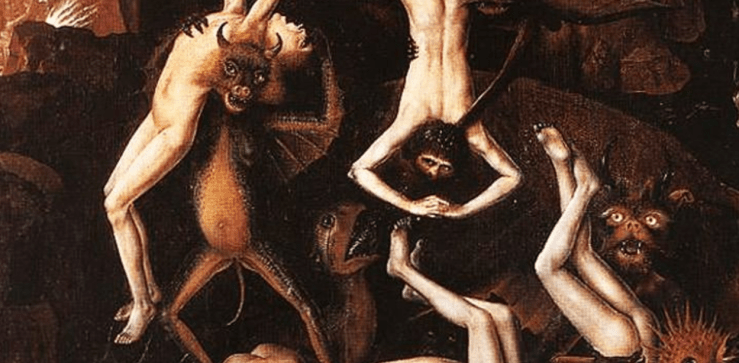
The Fall of the Damned — Dieric Bouts

hell-1450

The Fall of the Damned, 1450 by Dieric Bouts (c. 1415–1475)

Screenshot 2018-05-30 at 12.21.51 PMScreenshot 2018-05-30 at 12.21.37 PMScreenshot 2018-05-30 at 12.21.17 PM

I have been observing a little Mediterranean boy from Malaga | Nathaniel Hawthorne’s journal entry for May 30th, 1840

May 30th.–. . . On board my salt-vessels and colliers there are many things happening, many pictures which, in future years, when I am again busy at the loom of fiction, I could weave in; but my fancy is rendered so torpid by my ungenial way of life that I cannot sketch off the scenes and portraits that interest me, and I am forced to trust them to my memory, with the hope of recalling them at some more favorable period. For these three or four days I have been observing a little Mediterranean boy from Malaga, not more than ten or eleven years old, but who is already a citizen of the world, and seems to be just as gay and contented on the deck of a Yankee coal-vessel as he could be while playing beside his mother’s door. It is really touching to see how free and happy he is,–how the little fellow takes the whole wide world for his home, and all mankind for his family. He talks Spanish,–at least that is his native tongue; but he is also very intelligible in English, and perhaps he likewise has smatterings of the speech of other countries, whither the winds may have wafted this little sea-bird. He is a Catholic; and yesterday being Friday he caught some fish and fried them for his dinner in sweet-oil, and really they looked so delicate that I almost wished he would invite me to partake. Every once in a while he undresses himself and leaps over-board, plunging down beneath the waves as if the sea were as native to him as the earth. Then he runs up the rigging of the vessel as if he meant to fly away through the air. I must remember this little boy, and perhaps I may make something more beautiful of him than these rough and imperfect touches would promise.

Nathaniel Hawthorne’s journal entry for May 30th, 1840. From Passages from the American Note-Books.

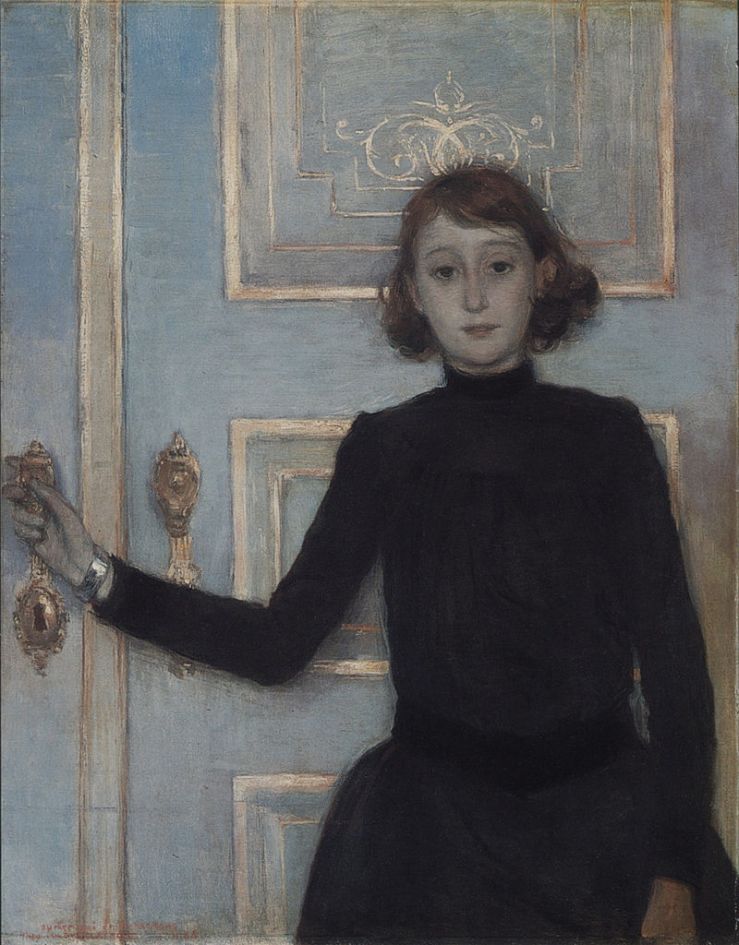
Portrait of Marguerite Van Mons — Théo van Rysselberghe

800px-thc3a9o_van_rysselberghe_-_portret_van_marguerite_van_mons

Portrait of Marguerite Van Mons, 1886 by Théo van Rysselberghe (1862-1926)

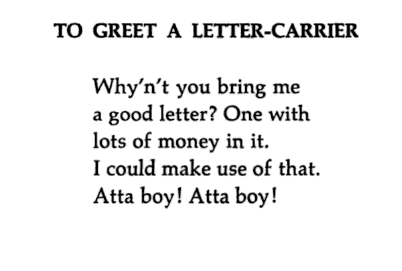
“To Greet a Letter-Carrier” — William Carlos Williams

Screenshot 2018-05-07 at 9.28.12 PM

Lady Macbeth (Summer Film Log)

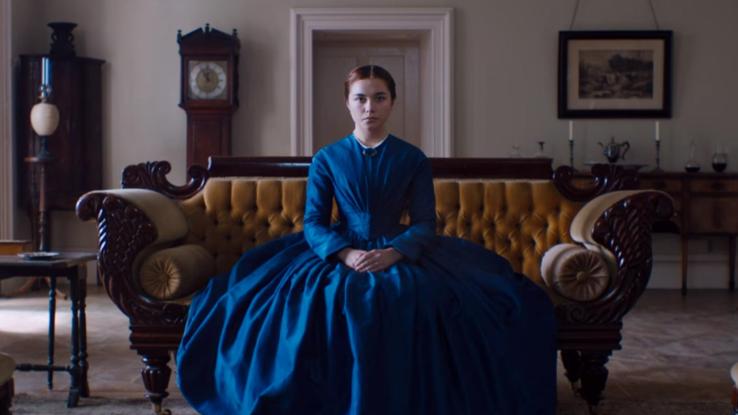
lady-macbeth-film

Spare, dark, cruel, and unflinching, Lady Macbeth (2016) uncoils with an austere beauty that belies its dark core. Set in rural England in 1865, the film is the story of Katherine, a young wife essentially imprisoned by her cruel father-in-law and warped husband who try to confine her inside their drafty country estate.

Katherine would rather take her freedom in the fresh chilly air of the heath, but father-in-law Boris wants her inside, preferably laboring at creating a male heir, a task made nearly impossible by her older husband Alexander’s apparent impotence. Boris and Alexander use a housemaid named Anna to monitor Katherine, and when the father and son have to depart on separate business matters, Anna is left to watch over the bored young bride.

06-lady-mackbeth-w710-h473

Katherine’s situation becomes much less boring when, only a day or two after the departure of Boris and Alexander, she discovers Anna naked in a sack suspended from the ceiling of a kennel, surrounded by jeering men. Katherine frees the maid and asserts her dominance as lady of the house, even as she has to tussle with one of the men, Sebastian. The scene is utterly Sadean, a strange mix of sexuality, violence, and the thin veneer of social mores that glosses over the id writhing under the surface. The veneer cracks. Our Lady takes up a poorly-hidden (and then not-really-hidden-at-all) affair with Sebastian. To reveal more could spoil the story, but, like, you know some of the stuff that happens in Macbeth, right? Murders and stuff?

While Lady Macbeth recalls Shakespeare’s tragedy at times, it’s actually an adaptation of Nikolai Leskov’s 1865 novella Lady Macbeth of the Mtsensk District. (I read and enjoyed an English translation by Richard Pevear and Larissa Volokhonsky a few years back). Director William Oldroyd and writer Alice Birch offer a fairly faithful adaptation of Leskov’s story, although the film’s tone is much darker and devoid of Leskov’s black humor. The film’s conclusion is also darker and more concise than Leskov’s novella’s last chapters (and better, I’d argue). Lady Macbeth’s final moments offer a chilling indictment of Victorian morality (a moral vision that continues to persist in many ways today) without the slightest concession to a mainstream audience’s desire for, say, justice. The film begins dark and strange and ends darker, stranger. Watching Lady Macbeth is a bit like having one’s stomach squeezed from the inside out.

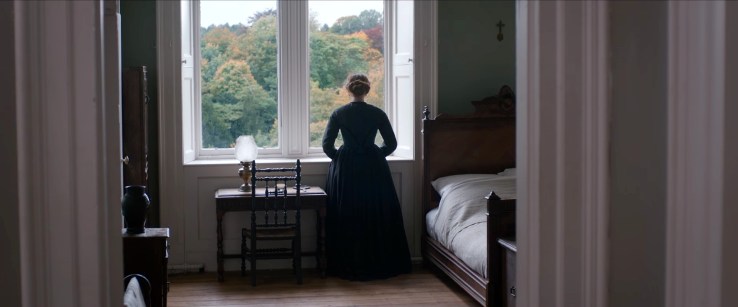
The film’s disturbing tension is not for everyone, but those folks would miss a fantastic performance by Florence Pugh, who plays Katherine with a sensitivity that is both captivating and menacing. One of the great successes of Lady Macbeth is watching Pugh perform a character who moves from emotion to impulse to action–or in some cases radical inaction—in a thoroughly naturalistic way. Oldroyd’s direction is key here; perhaps the most terrifying thing about Lady Macbeth is how natural the film feels. Cinematographer Ari Wegner seems to shoot the film almost-entirely with natural light (and occasionally gaslight), an effect that is simultaneously gorgeous and starkly unsettling. Lady Macbeth would make a perfect double feature with Sofia Coppola’s The Beguiled (2017). The film’s repetitions of interiors—often with Katherine staring out—readily recall Danish painter Vilhelm Hammershøi’s work.

lady-macbeth7

Lady Macbeth creates its own visual grammar to tell its story, deploying dialogue between characters with a spare efficiency that helps build the film’s anxious mood. Extradiagetic sound is virtually nonexistent in the film, too. A slow ominous rumbling swells up exactly three times in Lady Macbeth, matching and then intensifying the viewer’s nervous dread. The final credits play out over the sounds of birds chattily chirping. It’s all very disconcerting.

As I’ve noted (and which I hope is clear from this write-up), Lady Macbeth’s mix of strange Sadean sex and violence isn’t for everyone. It’s the kind of film that will likely disappoint or even upset many viewers—those looking for a Victorian-period romance should look elsewhere, and fans of straightforward horror might not get the tropes they crave. But folks interested in an unnerving but compelling story told on its own aesthetic terms should check this one out.


How I watched it: On a big TV via a streaming service, somewhat late at night, at least for my wife and me. My wife loved it, by the way, and best of all, she loved it despite her usual rubric—she says she doesn’t like films where “nothing good happens.” Maybe something good happens in Lady Macbeth, but the good is so wrapped up in the bad that the two are impossible to parse.

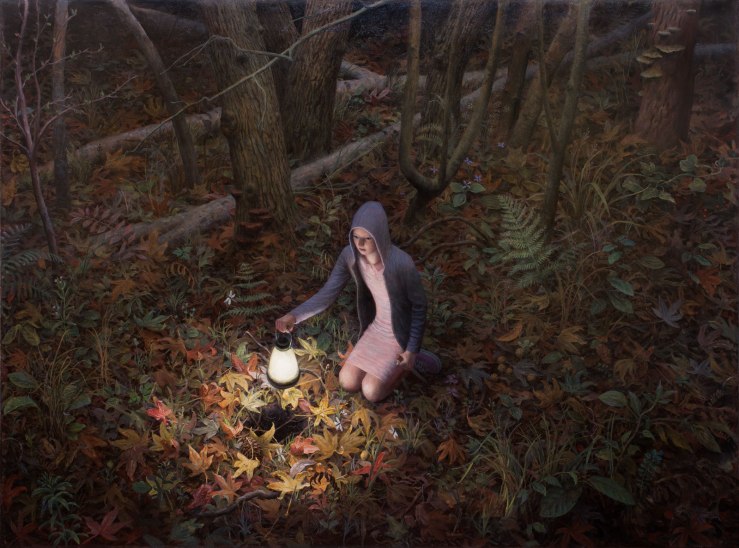
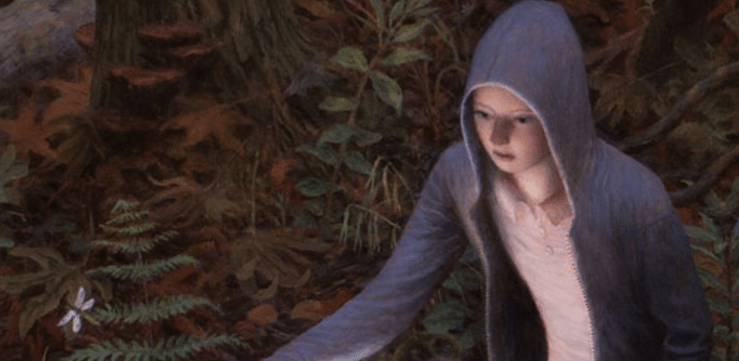
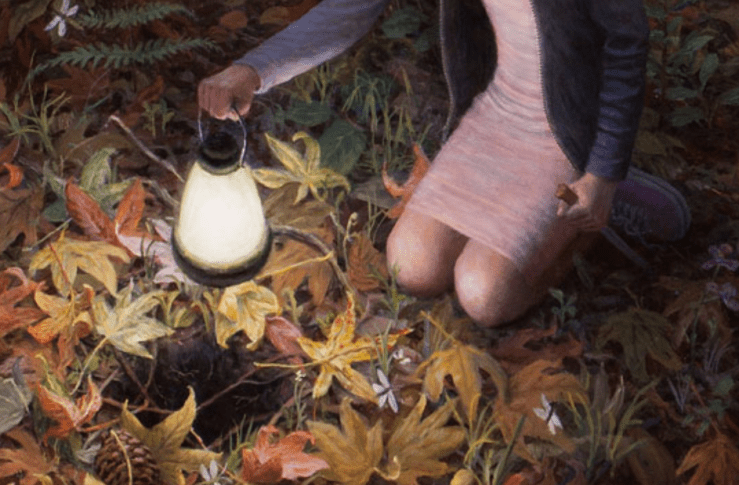
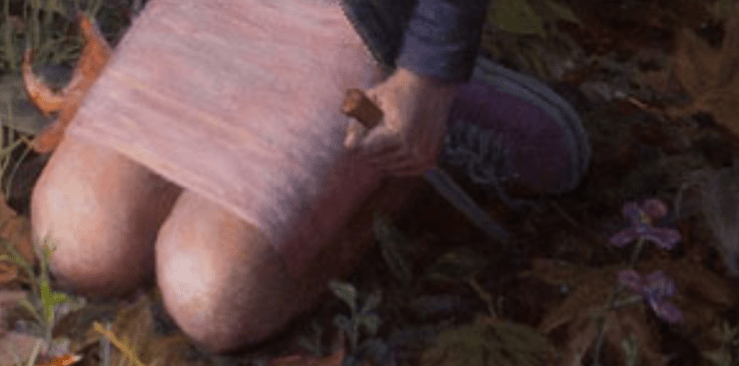
The Well — Aron Wiesenfeld

bant37-aron_5

The Well by Aron Wiesenfeld (b. 1972)

Screenshot 2018-05-27 at 7.01.14 PMScreenshot 2018-05-27 at 7.00.50 PMScreenshot 2018-05-27 at 7.01.31 PM


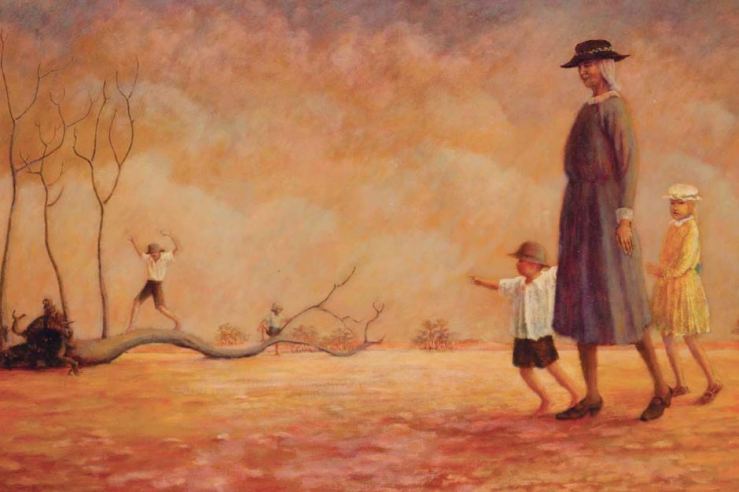
Grandma’s Sunday Walk — Russell Drysdale

8650368-3x2-940x627

Grandma’s Sunday Walk, 1972 by Russell Drysdale (1912-1981)

Antoine Volodine’s Naming the Jungle (Book acquired 26 May 2018)

I keep meaning to write about the second half of Antoine Volodine’s Writers, which is the best contemporary book I’ve read this year. (I wrote about the first half though).

I had to use the internet to buy Naming the Jungle, and the cover is awful, but I’m eager to read more Volodine.

Publisher’s blurb:

Antoine Volodine has been hailed as one of the most innovative and accomplished writers in France today. Compared by critics to Franz Kafka and Lewis Carroll, Volodine weaves an unusual novel of political and psychological intrigue in a lush, exotic setting. The publication of Naming the Jungle marks his American debut and the first translation of his work into English.

Puesto Libertad could be any Latin American city torn by the strife of civil war. In this isolated capital buried in the jungle, the revolutionary secret police have started digging into Fabian Golpiez’s past. In order to avoid brutal torture and interrogation, he decides to feign madness. Led by a local shaman/psychiatrist in a bizarre talking cure, Golpiez must use indigenous names to prove both his innocence and his true Tupi Indian identity. To name is to conquer. He names the monkeys, the plants, and the insects all around him as he names his fear, his paranoia, and his pathologies.

A masterful storyteller, Volodine speaks to us about the slow and fatal agony of revolution in a haunting and intense novel, one of the most dazzling pieces of fiction to come out of France since the early novels of Robbe-Grillet and Duras.

Suspended Power — Charles Sheeler

sheeler

Suspended Power, 1939 by Charles Sheeler (1883 – 1965)

Mirror of Life — Henry Koerner

057bc_1403812657_koerner_mirror_of_life_lr

Mirror of Life, 1946 by Henry Koerner (1915-1991)

Amazon Books — Daniel Rich

b85e62a20f6434e8b003361c28b06df4

Amazon Books, 2013 by Daniel Rich (b. 1977)

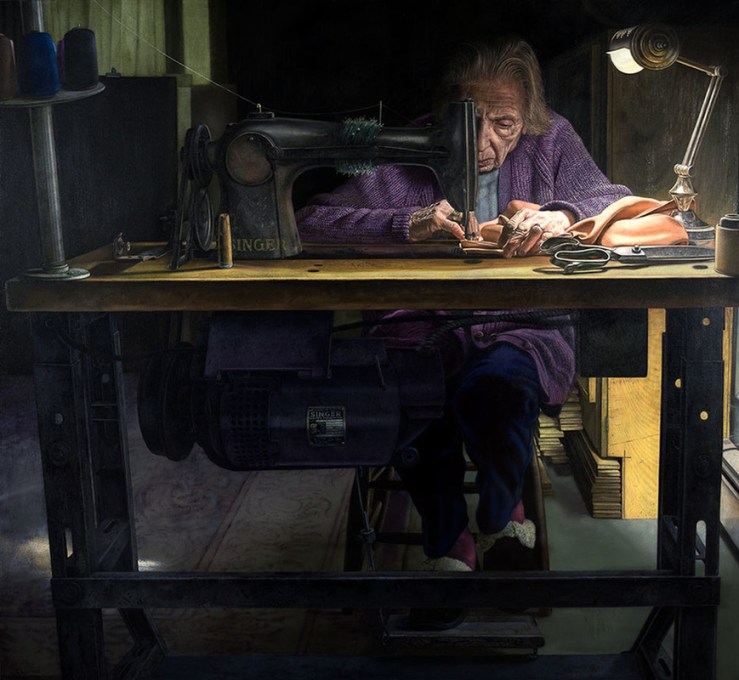
The Dressmaker — Tony Luciani

6215752_orig

The Dressmaker by Tony Luciani (b. 1956)

A review of Zora Neale Hurston’s Barracoon

151835599518773205

Zora Neale Hurston’s 1931 book Barracoon: The Story of the Last “Black Cargo” has finally been published. The book is based on Hurston’s 1927 interviews with Cudjo Lewis, the last known survivor of the transatlantic slave trade. Barracoon went previously unpublished due in part to Hurston’s refusal to revise the prose into a “standard” English. Hurston wrote Barracoon in a phonetic approximation of Cudjo’s voice. While this vernacular style may pose (initial) challenges for many readers, it is the very soul of the book in that it transmits Cudjo’s story in his own voice, tone, and rhythm. Hurston used vernacular diction throughout her work, but Cudjo’s voice is singular; it bears a distinctly different sound than the characters of Their Eyes Were Watching God, Hurston’s most famous novel. It is hard to conceive a more compelling version of Barracoon than this one, the one Hurston refused to compromise, with its intense, vital orality.

What is Barracoon about? I shall liberally borrow my summary from the book’s introduction, penned by Hurston scholar and biographer Deborah G. Plant:

On December 14, 1927, Zora Neale Hurston took the 3:40 p.m. train from Penn Station, New York, to Mobile, to conduct a series of interviews with the last known surviving African of the last American slaver—the Clotilda. His name was Kossola, but he was called Cudjo Lewis. He was held as a slave for five and a half years in Plateau-Magazine Point, Alabama, from 1860 until Union soldiers told him he was free. Kossola lived out the rest of his life in Africatown (Plateau). Hurston’s trip south was a continuation of the field trip expedition she had initiated the previous year.

Oluale Kossola had survived capture at the hands of Dahomian warriors, the barracoons at Whydah (Ouidah), and the Middle Passage. He had been enslaved, he had lived through the Civil War and the largely un-Reconstructed South, and he had endured the rule of Jim Crow. He had experienced the dawn of a new millennium that included World War I and the Great Depression. Within the magnitude of world events swirled the momentous events of Kossola’s own personal world.

Zora Neale Hurston, as a cultural anthropologist, ethnographer, and folklorist, was eager to inquire into his experiences. “I want to know who you are,” she approached Kossola, “and how you came to be a slave; and to what part of Africa do you belong, and how you fared as a slave, and how you have managed as a free man?” Kossola absorbed her every question, then raised a tearful countenance. “Thankee Jesus! Somebody come ast about Cudjo! I want tellee somebody who I is, so maybe dey go in de Afficky soil some day and callee my name and somebody say, ‘Yeah, I know Kossula.’”

Those final sentences should give you a quick taste of Barracoon’s central rhetorical conceit. After her own introductory chapter (which details the historical circumstances of the Clotilda’s illegal journey to West Africa), Hurston lets Cudjo inspirit the text, telling his own story in his own voice. Hurston, who spent three months with Cudjo, initially interposes herself in the story, as we see early in the book’s first chapter:

“My grandpa, he a great man. I tellee you how he go.”

I was afraid that Cudjo might go off on a tangent, so I cut in with, “But Kossula, I want to hear about you and how you lived in Africa.”

He gave me a look full of scornful pity and asked, “Where is de house where de mouse is de leader? In de Affica soil I cain tellee you ’bout de son before I tellee you ’bout de father; and derefore, you unnerstand me, I cain talk about de man who is father (et te) till I tellee you bout de man who he father to him, (et, te, te, grandfather) now, dass right ain’ it?

This brief “cutting in” is one of the last moments in the narrative that Hurston attempts to steer Cudjo in a particular direction. Instead, she befriends the old man, bringing him watermelons, hams, peaches, and other treats. These little gifts serve to frame Cudjo’s narrative as he moves from one episode to the next. Otherwise, Hurston disappears into the background, an ear for Cudjo’s voice, a witness for his story.

Cudjo’s story is astounding. He describes life in his own West African village and the terrible slaughter of his people at the hands of “de people of Dahomey,” a tribe that eventually sells Cudjo and the other young people of his village to white men. Cudjo describes his early enslavement in Alabama, which took place in secret until the Civil War, and his eventual freedom from bondage. He tells Hurston about the founding of Africatown, a community of West Africans. He describes his life after capture and slavery—his marriage, his children, his near-fatal railroad accident. Cudjo’s life and his children’s lives were incredibly difficult. They were always othered:

“All de time de chillun growin’ de American folks dey picks at dem and tell de Afficky people dey kill folks and eatee de meat. Dey callee my chillun ig’nant savage and make out dey kin to monkey.

“Derefo’, you unnerstand me, my boys dey fight. Dey got to fight all de time. Me and dey mama doan lak to hear our chillun call savage. It hurtee dey feelings. Derefo’ dey fight. Dey fight hard. When dey whip de other boys, dey folks come to our house and tellee us, ‘Yo’ boys mighty bad, Cudjo. We ’fraid they goin’ kill somebody.”

Somehow most devastating in a narrative full of devastation are the deaths of Cudjo’s children. After his daughter dies in infancy, his namesake is killed by a sheriff, a scene that resonates with terrible pain in 2018:

Nine year we hurtee inside ’bout our baby. Den we git hurtee again. Somebody call hisself a deputy sheriff kill de baby boy now.

He say he de law, but he doan come ’rest him. If my boy done something wrong, it his place come ’rest him lak a man. If he mad wid my Cudjo ’bout something den he oughter come fight him face to face lak a man. He doan come ’rest him lak no sheriff and he doan come fight him lak no man.

Another of his sons is decapitated in a railroad accident. A third son, angry with the injustice of the world, simply disappears: “My boy gone. He ain’ in de house and he ain’ on de hill wid his mama. We both missee him. I doan know. Maybe dey kill my boy. It a hidden mystery.”

Cudjo, ever the survivor, went on to outlive his wife and all of his children.  In her foreword to Barracoon, Alice Walker captures the pain and pathos of this remarkable position:

And then, the story of Cudjo Lewis’s life after Emancipation. His happiness with “freedom,” helping to create a community, a church, building his own house. His tender love for his wife, Seely, and their children. The horrible deaths that follow. We see a man so lonely for Africa, so lonely for his family, we are struck with the realization that he is naming something we ourselves work hard to avoid: how lonely we are too in this still foreign land: lonely for our true culture, our people, our singular connection to a specific understanding of the Universe. And that what we long for, as in Cudjo Lewis’s case, is gone forever. But we see something else: the nobility of a soul that has suffered to the point almost of erasure, and still it struggles to be whole, present, giving.

I cannot improve on Walker’s phrase here. Hurston brings that “nobility of soul” to life via Cudjo’s own rich language.

While Barracoon is of a piece with Hurston’s anthropological collections Mules and Men and Tell My Horse, it does not read like an autoethnography. It is rather a compelling first-person narrative. Hurston collecteed stories from Cudjo–fables, parables, games—but these are included as an appendix, a wise narrative choice as any attempt to integrate them into the main narrative would hardly be seamless. The appendix adds to the text’s richness without imposing on it, and links it to Hurston’s work as a folklorist.

I’ve noted some of the additional material already—Walker’s foreword, the appendix of folklore, as well as Plant’s introduction. Included also is an afterword by Plant that contextualizes Barracoon within Hurston’s academic career, a list of the original residents of Africatown, a glossary, a bibliography, and a lengthy compendium of endnotes. This editorial material frames the historic and academic importance of Barracoon, and will be of great interest to anyone who wishes to study the subject more. However, Cudjo’s narrative stands on its own as a sad, compelling, essential story. It’s amazing it took this long to reach a wider audience. Recommended.
 

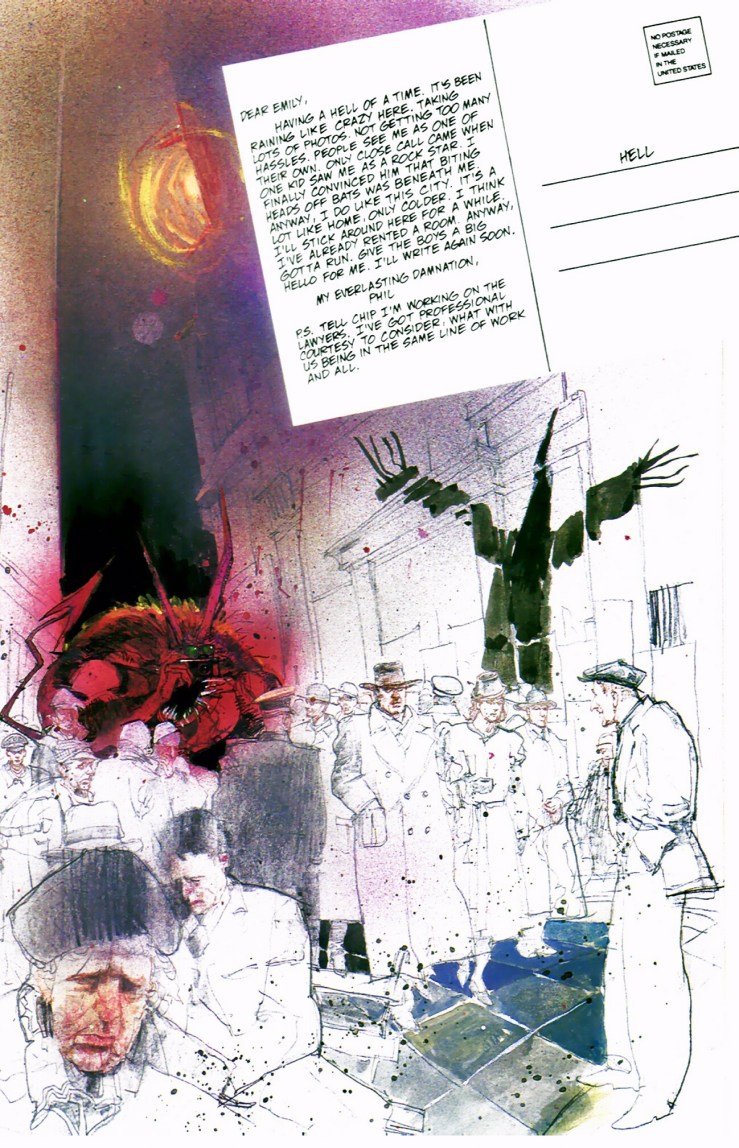
From Hell (Bill Sienkiewicz)

img_0628

A page from Bill Sienkiewicz’s Stray Toasters #1 (Marvel/Epic, 1988)