Winston — William Eggleston

102006_i_06_eggleston_democraticforestselected

Winston, c. 1983-86 by William Eggleston (b. 1938)

“Symbols and Signs,” a story by Vladimir Nabokov

“Symbols and Signs”

by

Vladimir Nabokov


For the fourth time in as many years, they were confronted with the problem of what birthday present to take to a young man who was incurably deranged in his mind. Desires he had none. Man-made objects were to him either hives of evil, vibrant with a malignant activity that he alone could perceive, or gross comforts for which no use could be found in his abstract world. After eliminating a number of articles that might offend him or frighten him (anything in the gadget line, for instance, was taboo), his parents chose a dainty and innocent trifle—a basket with ten different fruit jellies in ten little jars.

At the time of his birth, they had already been married for a long time; a score of years had elapsed, and now they were quite old. Her drab gray hair was pinned up carelessly. She wore cheap black dresses. Unlike other women of her age (such as Mrs. Sol, their next-door neighbor, whose face was all pink and mauve with paint and whose hat was a cluster of brookside flowers), she presented a naked white countenance to the faultfinding light of spring. Her husband, who in the old country had been a fairly successful businessman, was now, in New York, wholly dependent on his brother Isaac, a real American of almost forty years’ standing. They seldom saw Isaac and had nicknamed him the Prince.

That Friday, their son’s birthday, everything went wrong. The subway train lost its life current between two stations and for a quarter of an hour they could hear nothing but the dutiful beating of their hearts and the rustling of newspapers. The bus they had to take next was late and kept them waiting a long time on a street corner, and when it did come, it was crammed with garrulous high-school children. It began to rain as they walked up the brown path leading to the sanitarium. There they waited again, and instead of their boy, shuffling into the room, as he usually did (his poor face sullen, confused, ill-shaven, and blotched with acne), a nurse they knew and did not care for appeared at last and brightly explained that he had again attempted to take his life. He was all right, she said, but a visit from his parents might disturb him. The place was so miserably understaffed, and things got mislaid or mixed up so easily, that they decided not to leave their present in the office but to bring it to him next time they came.

Outside the building, she waited for her husband to open his umbrella and then took his arm. He kept clearing his throat, as he always did when he was upset. They reached the bus-stop shelter on the other side of the street and he closed his umbrella. A few feet away, under a swaying and dripping tree, a tiny unfledged bird was helplessly twitching in a puddle. Continue reading ““Symbols and Signs,” a story by Vladimir Nabokov”

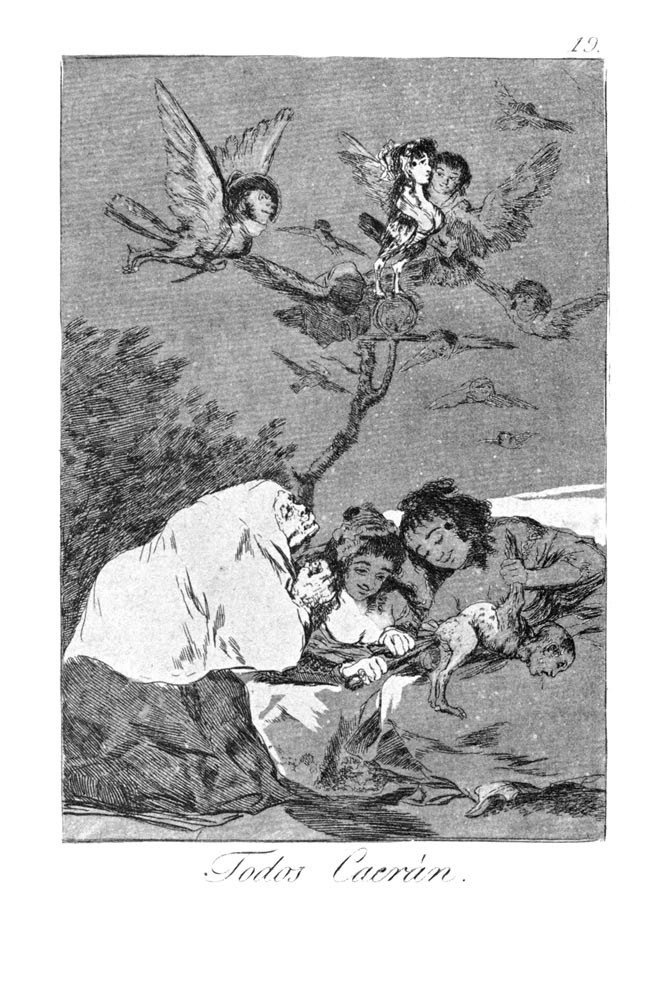
All Will Fall — Goya

all-will-fall-1799

Todos caerán (All Will Fall), 1799 by Francisco Goya (1770-1828)

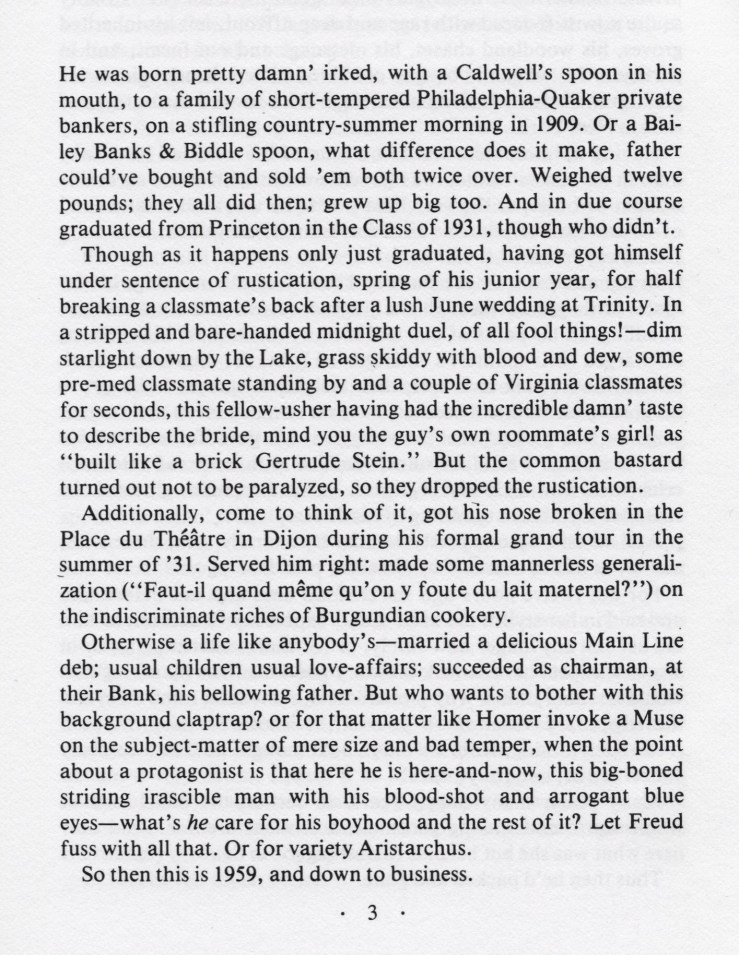
The first page of W.M. Spackman’s novel An Armful of Warm Girl

IMG_3950.JPG

Failed Again — Gely Korzhev

H3145-L95807511

Opyat Dvoika (Failed Again), 1990 by Gely Korzhev (1925-2012)

Martha and Mary Magdalene — Caravaggio

Martha And Mary Magdalene, c. 1598 by Caravaggio (1593-1610)

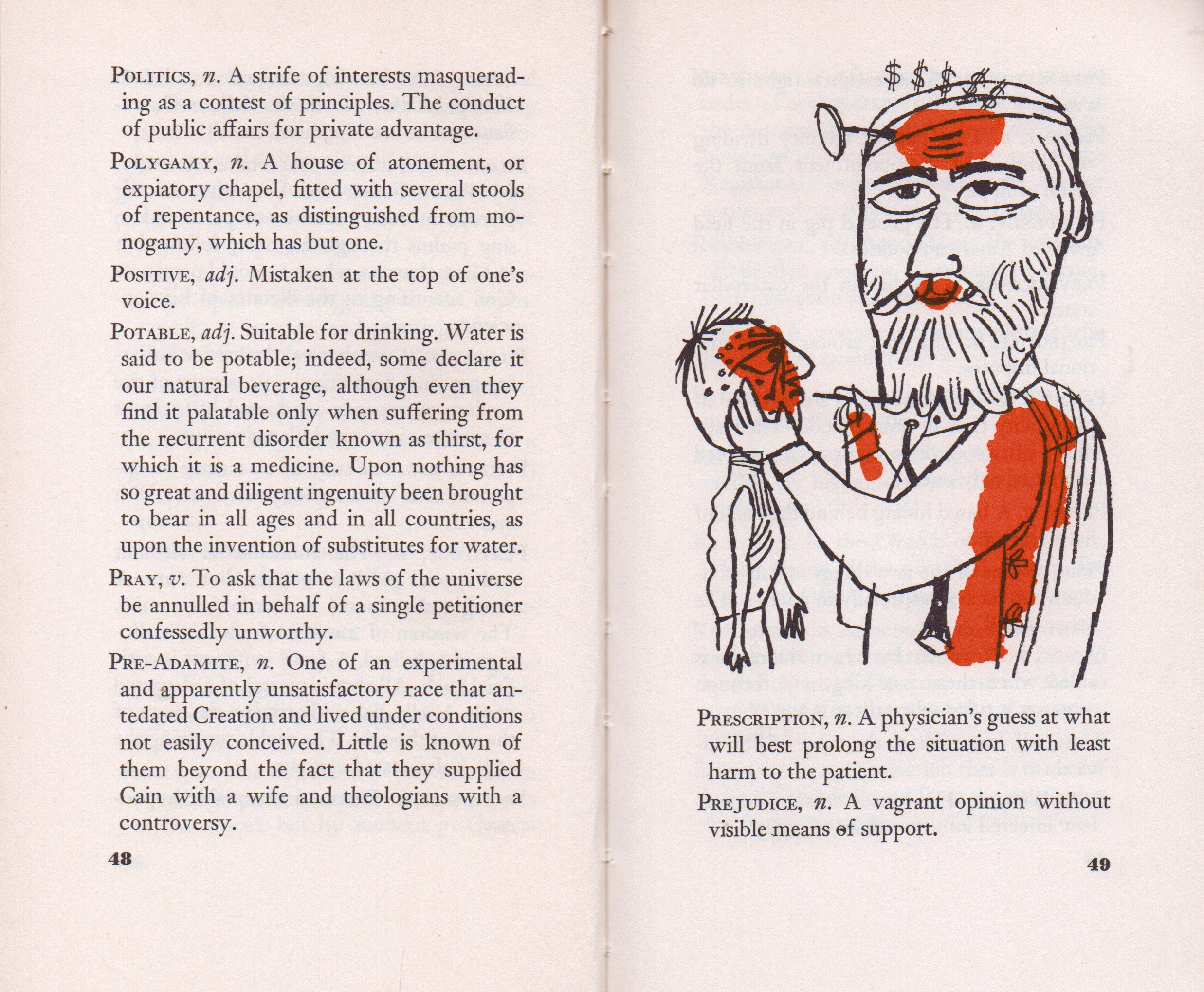
Politics-Prejudice (Ambrose Bierce)

img_6397

From Ambrose Bierce’s The Devil’s Dictionary. 

Originally published in 1906; the image is from The Peter Pauper Press’s 1958 illustrated edition, with art by Joseph Low

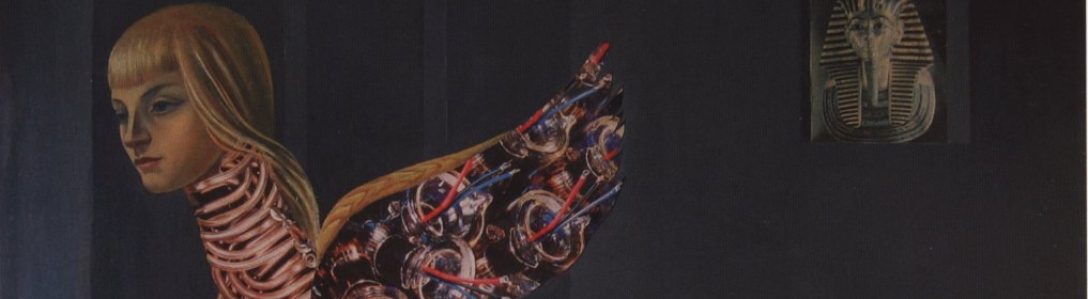
Strange Object of My Desire — Paul Wackers

1.obscureobjectofmydesire

Strange Object of My Desire, 2007 by Paul Wackers (b. 1978)

Prince on birthdays

Birthday — Dorothea Tanning

Dorothea_Tanning,_-Birthday-

Birthday, 1942 by Dorothea Tanning (1910-2012)

Girl with Leaves — Lucian Freud

lucian-freud-girl-with-leaves-1948

Girl with Leaves, 1948 by Lucian Freud (1939–2010)

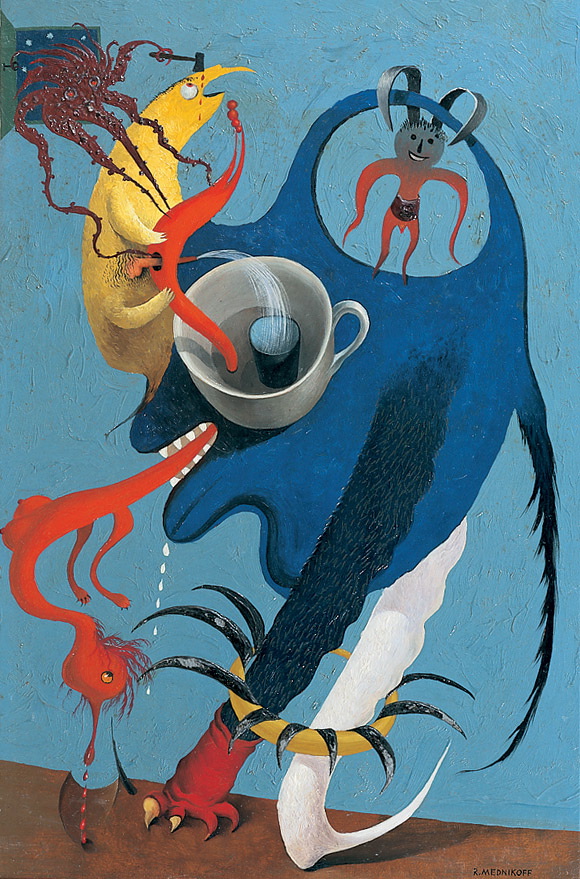
Orgiastic Melody — Reuben Mednikoff

Reuben_Mednikoff_-_September_29,_1937_1_30_pm_(Orgiastic_Melody)_-_1937

September 29, 1937 1:30 PM (Orgiastic Melody), 1937 by Reuben Mednikoff (1906-1972)

“The Invention of the Devil,” a short fable by Franz Kafka

Man Collapsing on a Public Flight of Steps — Robin Ironside

34_lg

Man Collapsing on a Public Flight of Steps1956 by Robin Ironside (1912-1965)

“The Frog Prince,” a very short story by Robert Coover

“The Frog Prince” by Robert Coover 

At first, it was great. Sure. It always is. She cuddled a frog, wishing for more, and—presto! A handsome prince who doted on her. It meant the end of her marriage, of course, but her ex was something of a toad himself, who had a nasty habit of talking with his mouth full and a tongue good for nothing but licking stamps.

The prince was adorable—all the girls at the bridge club, squirming with envy, said so—though you could still see the effects his previous residence had had on him. He had heavy-lidded eyes and a wide mouth like a hand puppet’s, his complexion was a bit off, and his loose-fitting skin was thin and clammy. His semen had a muddy taste, like the pond he came from, and his little apparatus was disappointing, but his tongue was amazing. It could reach the deepest recesses, triggering sensations she’d never known before. His crown was not worn like a hat—it grew out of his head like horns and sometimes got in the way—but his tongue was long enough for detours and tickled other parts on the path in. It gave him not so much a lisp as a consonantal slurp, making gibberish out of his sweet nothings, but talking was never the main thing between them.

Read the rest of Robert Coover’s “The Frog Prince” at The New Yorker

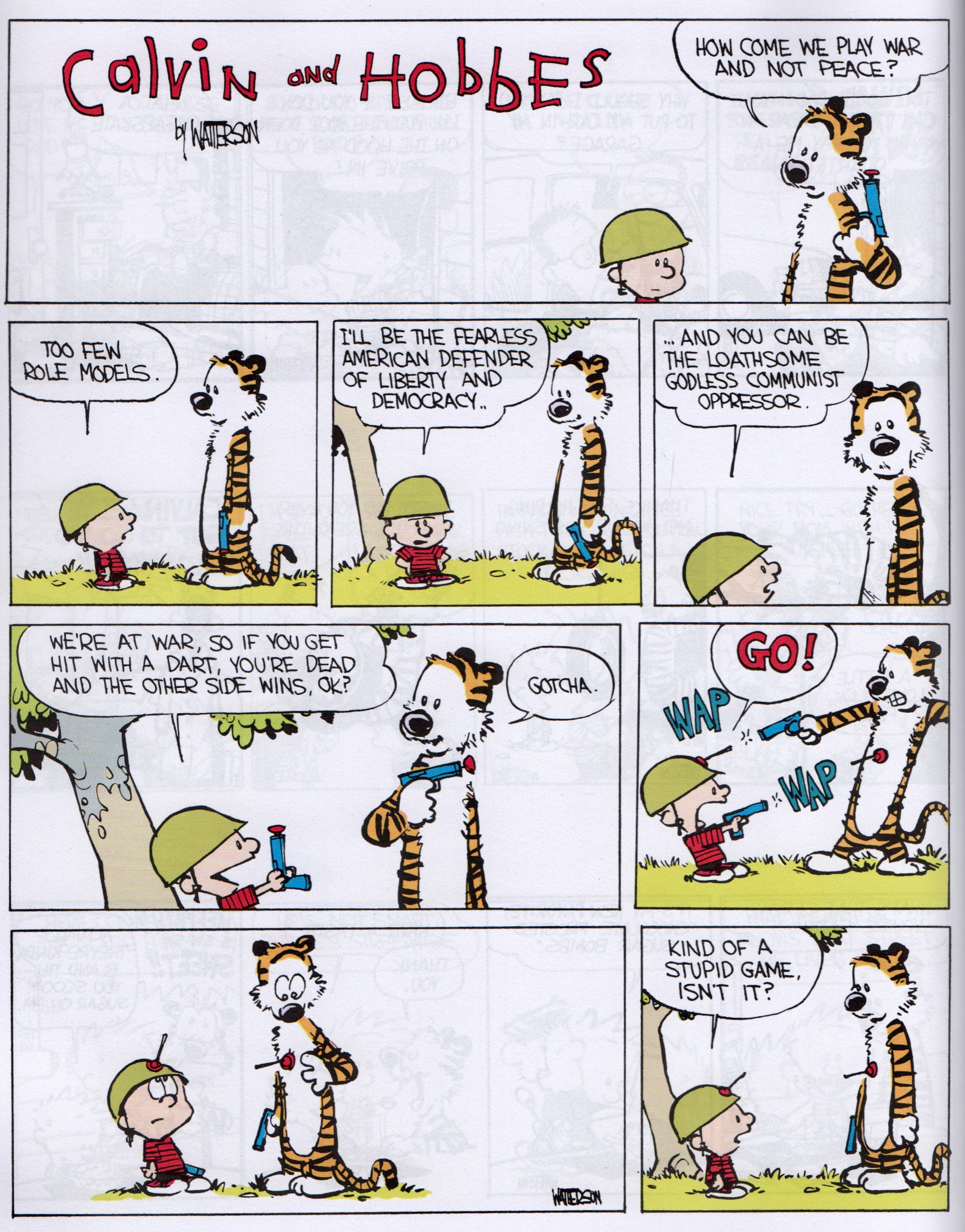
Sunday Comics 

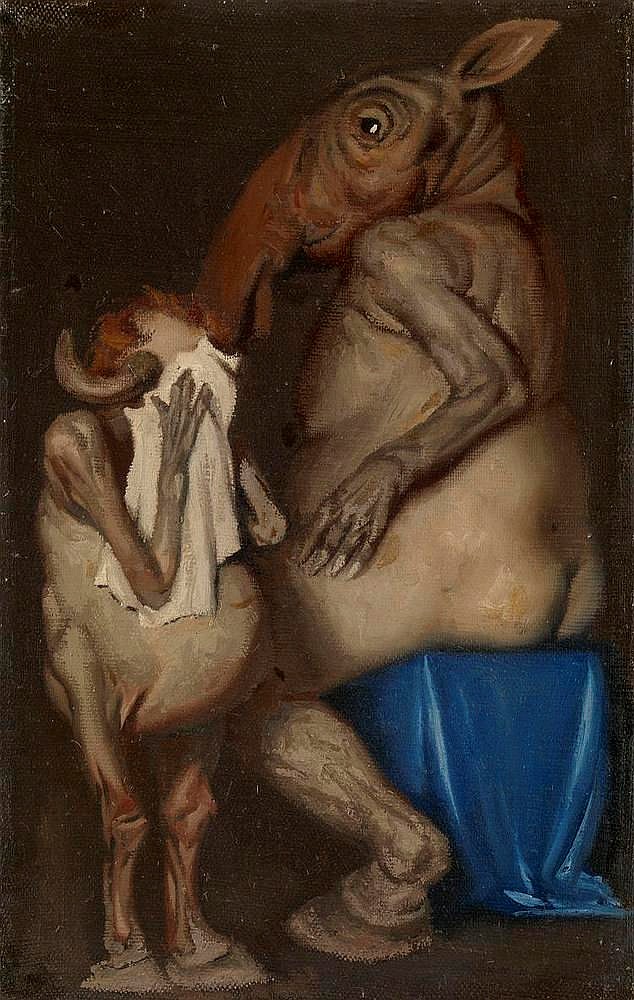
L’Orange Sauvage — F. Scott Hess

OrangeSauvage-vi

L’Orange Sauvage, 1995 by F. Scott Hess (b. 1955)