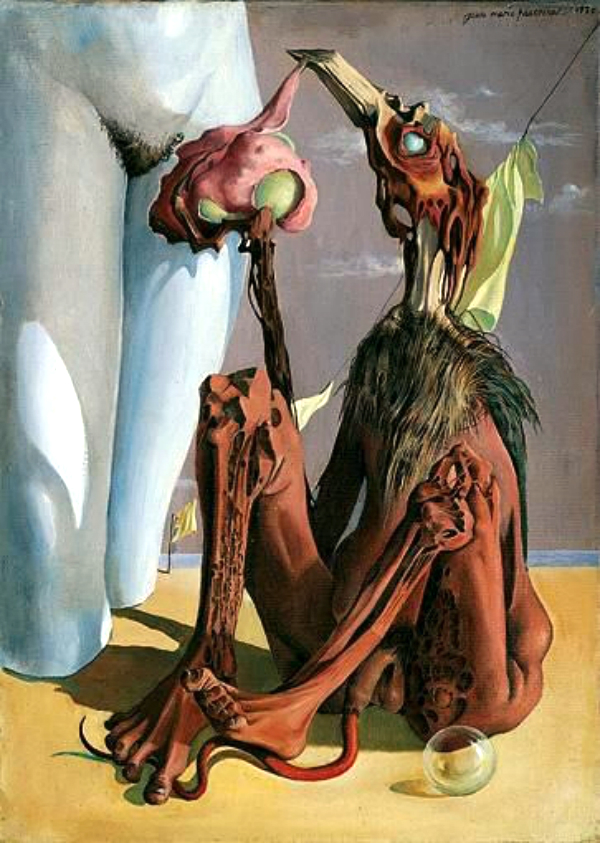
Le Mort De Don Juan (The Death of Don Juan), 1935 by Mario Prassinos (1916-85)
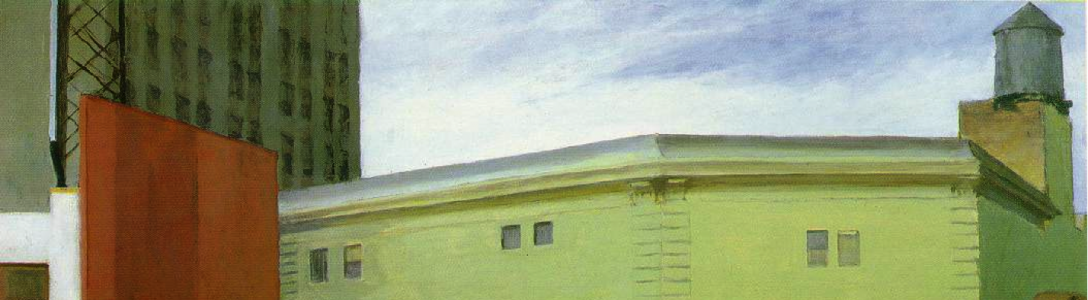
Le Mort De Don Juan (The Death of Don Juan), 1935 by Mario Prassinos (1916-85)
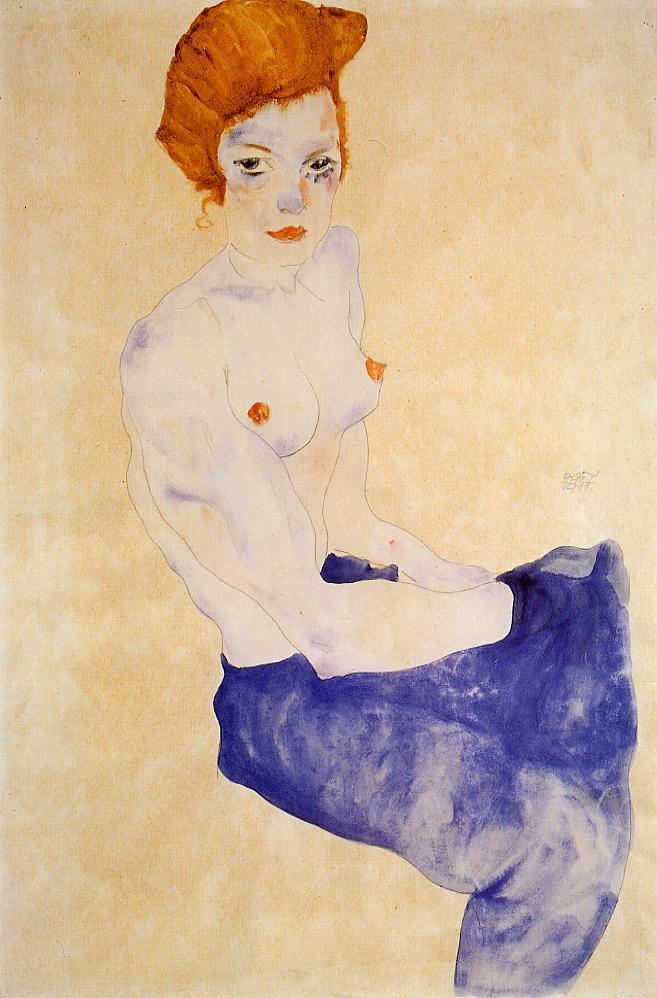
Seated Girl with Bare Torso and Light Blue Skirt, 1911 — Egon Schiele (1890-1918)
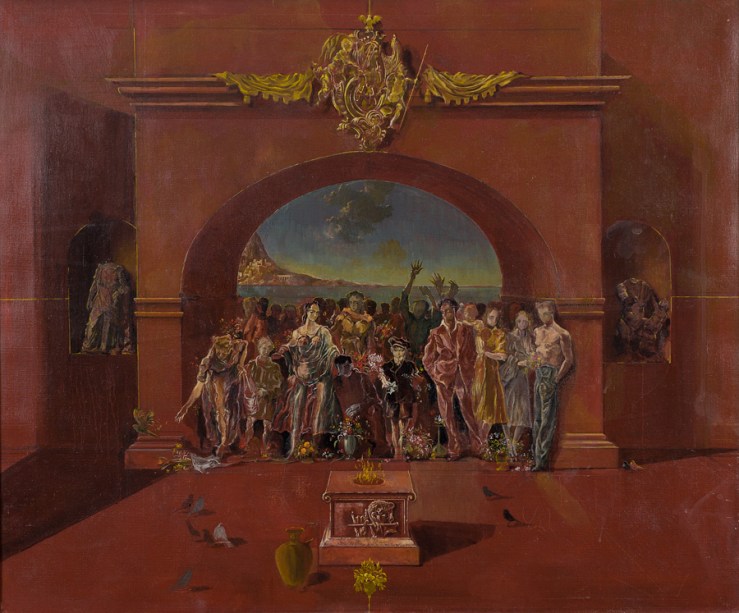
Crowd Waiting for a Portent I, 1952 by Robin Ironside (1912-1965)

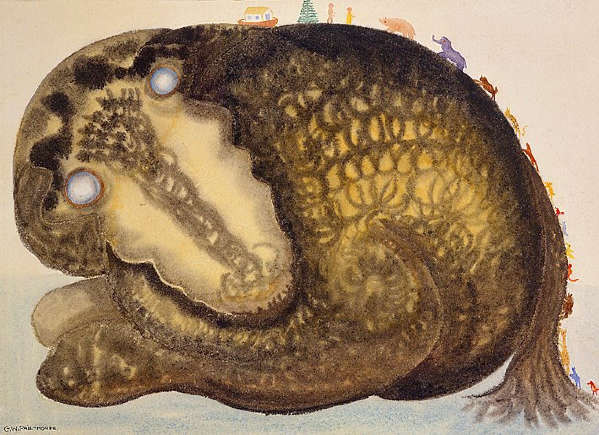
Father’s Waistcoat, 1937 by Grace Pailthorpe (1883-1971)

Orange Disaster #5, 1936 by Andy Warhol 1928-87
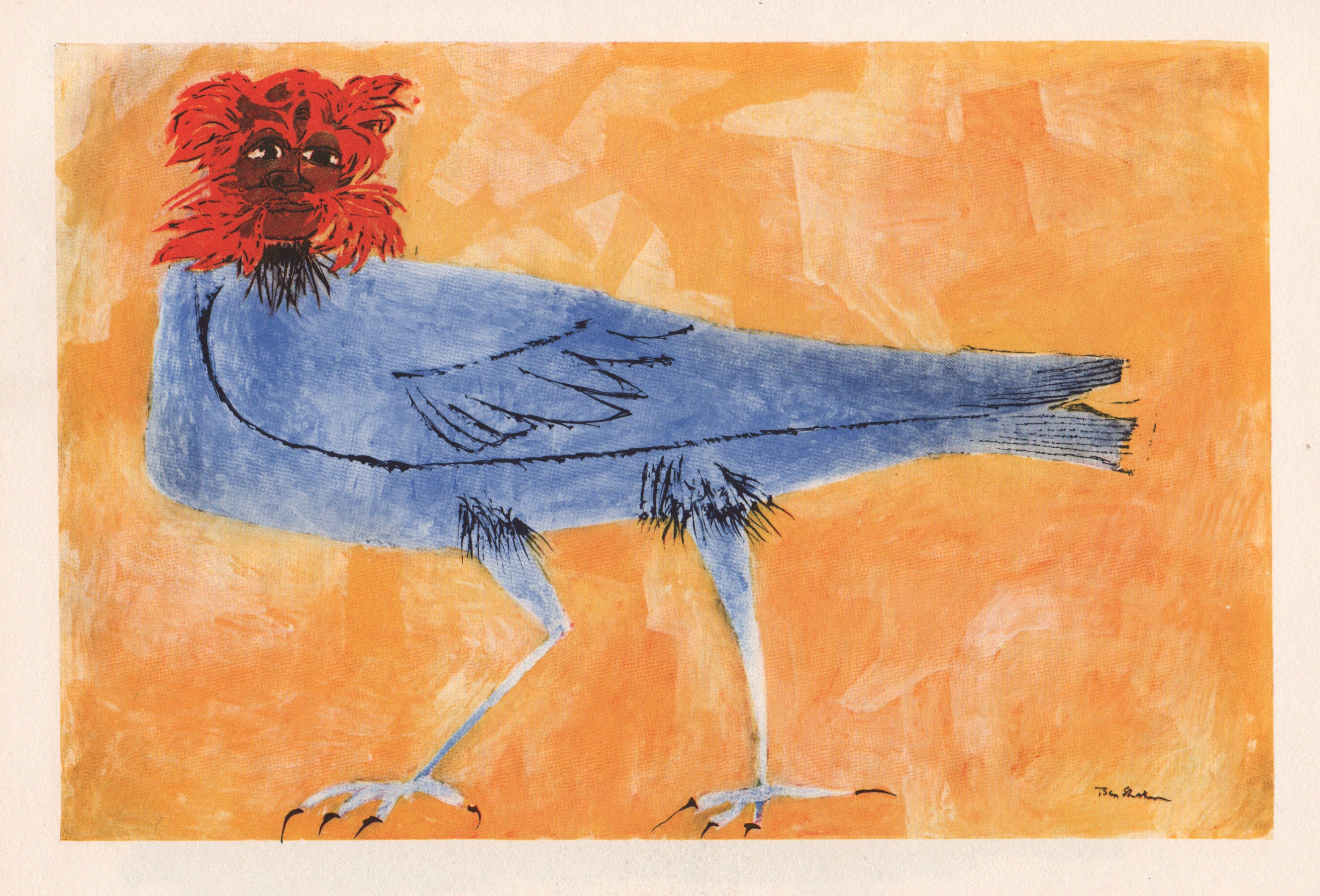
Harpie, 1951 by Ben Shahn (1898–1969). From Ben Shahn: His Graphic Art, George Braziller, Inc., NY 1957.

Yuri Herrera’s new novella Kingdom Cons condenses myth and archetype into concrete, brutal noir. Gritty and visceral, but also elegant and surreal, Herrera’s prose bristles with cinematic energy in a tale of blood magic and the relationship between power and art.
In Kingdom Cons, our central protagonist Lobo is a singer of corridos, ballads he improvises in dive bars for a few coins to survive on. Herrera paints Lobo’s backstory in quick but rich strokes that evoke a hardboiled, hardscrabble life:
The next day his father went to the other side. They waited in vain. Then his mother crossed without so much as a promise of return. They left him the accordion so he could make his way in the cantinas, and it was there he learned that while boleros can get by with a sweet face, corridos require bravado and acting out the story as you sing. He also learned the following truths: Life is a matter of time and hardship. There is a God who says Deal with it, cause this is the way it is. And perhaps the most important: Steer clear of a man about to vomit.
In one of these cantinas Lobo encounters “the King,” a Mexican drug lord. Lobo is instantly smitten by the King’s power; or, more precisely, by the aesthetics of power that attend the King. Lobo sees himself as a reader of blood. Indeed, he’s survived the streets by
…learning blood. He could detect its curdle in the parasites who said, Come, come little boy, and invited him into the corner; the way it congealed in the veins of fraidycats who smiled for no reason; the way it turned to water in the bodies of those who played the same heartache on the jukebox, over and over again; the way it dried out like a stone in lowlifes just aching to throw down.
Lobo believes he detects magic in the King’s blood, and vows to become a retainer in the King’s Court, which in time he does. There, in the Palace, he takes up a new mantle. He becomes “the Artist,” a singer of narcorridos he composes to flatter his patron, the King. In the Court,
The Artist realized that people saw him only when he sang or they wanted to hear how tough they were; and that was good, because it meant he could see how things worked in the court.
The Artist’s personality is quickly subsumed into this archetypal Court, which includes the Manager, the Journalist, the Jeweler, the Doctor, the Girl, and the Heir. There’s also the Witch and the Commoner, agents who bring the plot of Kingdom Cons to its climax. There’s a cinematic, page-burner quality to the plot, a briskness that perhaps disguises the novella’s heavier themes of art and power.
Herrera weaves these themes into their own subtle climax. The Artist is initially spellbound by the King, whose very “smile seemed a protective embrace” to the singer. The narcobaron urges the Artist to tell the truth in his corridos, even if the truth is brutal: “Let them be scared, let the decent take offense. Put them to shame. Why else be an artist?” And yet in time the Artist begins to parse the layers of distinction to “truth,” and to see the complicated relationship between truth, beauty, and power. He grows into a new art, a new blood.
Indeed, Kingdom Cons is a subtle, spare Künstlerroman, in which Herrera’s hero’s quiet, internal observations lead him to a new artistic outlook. Regarding a slain narco’s corpse, the Artist thinks first that the man probably deserved his death, before appending the notion: “if there’s one thing we deserve, it’s a heaven that’s real.” When the Artist recognizes himself in a “an ashen boy coaxing squalid notes from a trumpet,” he laments “It’s as if there is no right to beauty.” The Artist seeks to create a right to beauty, to secure a heaven that’s real, but his tools are limited—and thoroughly mediated in violence, in blood. Herrera pushes his hero “to feel the power of an order different from that of the Court,” a power that emanates from “his own sovereign texture and volume. A separate reality.” Herrera’s skill as a writer evokes that “separate reality,” first by creating a mythical-brutal narcoland noir, and then by evoking the consciousness of an artist trying to navigate that violence and find his own power through art, through words.
In its finest moments—of which there are many—Herrera evokes his hero’s consciousness in action. Consider the following passage. The Artist has sneaked out of the Palace to return “to the cantina where he’d first met the King”; there, he observes again, becomes eyes and ears that will channel grimy reality into artful storytelling:
…he heard the fortunes and tragedies of the average jack:
The wetback who’d been deported by immigration and was unwanted on this side as well. They’d told him to sing the anthem, explain what a molcajete was and recite the ingredients of pipián to see if he was really allowed to stay; his jitters made him forget it all so they kicked him out too. The narco-in-training who sent bindles of smack over the river with a slingshot and then simply crossed over to pick them up, until one day he got a wild hair and hit a gringo in the head with his whiterock crackshot, and tho that was the end of his business, he still got a kick out of calling himself an avenger. The woman who, to free herself of her cheating husband, sold the house to a much-feared loanshark and left hubby with no house, no wife, and no peace. The boy who faked his own kidnapping to wheedle money from his parents, who believed the ransom note was real and replied, You know what? We’re tired of that bum, how about bumping him off for half the price? And the boy, out of utter sorrow, said Okay, collected the cash, spent it on booze and then kept his word.
The force of storytelling leads the Artist to an epiphany about the King—and, more significantly, to himself as an artist capable of creating a “separate reality.”
I can’t help but think of Kingdom Cons as the third part of a loose trilogy that also includes Herrera’s previous novellas Signs Preceding the End of the World and The Transmigration of Bodies. All three are published by And Other Stories and all three are translated by Lisa Dillman, who conjures magic in translating Herrera’s neologisms, slang, and mythical tone. Kingdom Cons extends the mythic-noir mode that Signs initiated and Bodies continued. Herrera is a writer with a voice and a viewpoint, an author whose archetypal approach shows the deep significance to contemporary life’s concrete contours. I wrote “trilogy” above, but to be clear, I’d be very happy if Herrera, Dillman, and And Other Stories kept putting out these fine novellas. Highly recommended.

June, 1979 by Alex Colville (1920-2013)

…I can say with all truthfulness that for me the moment of greatest understanding in which I knew spiritual reality at last came in connection with emergency root-canal irrigation, two hours in the dentist chair. And twelve hours drinking bourbon-bad bourbon at that-and simply reading Dante without listening to the stereo or eating-there was no way I could eat-and suffering, and it was all worth it; I will never forget it. I am no different, then, from Timothy Archer. To me, too, books are real and alive; the voices of human beings issue forth from them and compel my assent, the way God compels our assent to world, as Tim said. When you have been in that much distress, you are not going to forget what you did and saw and thought and read that night; I did nothing, saw nothing, thought nothing; I read and I remember; I did not read Howard the Duck or The Fabulous Furry Freak Brothers or Snatch Comix that night; I read Dante’s Commedia, from Inferno through Purgatorio, until at last I arrived in the three colored rings of light … and the time was nine A.M. and I could get into my fucking car and shoot out into traffic and Dr. Davidson’s office, crying and cursing the whole way, with no breakfast, not even coffee, and stinking of sweat and bourbon, a sorry mess indeed, much gaped at by the dentist’s receptionist.
So for me in a certain unusual way-for certain unusual reasons-books and reality are fused; they join through one incident, one night of my life: my intellectual life and my practical life came together-nothing is more real than a badly infected tooth-and having done so they never completely came apart again. If I believed in God, I would say that he showed me something that night; he showed me the totality: pain, physical pain, drop by drop, and then, this being his dreadful grace, there came understanding … and what did I understand? That it is all real; the abscessed tooth and the root-canal irrigation, and, no less and no more…
From Philip K. Dick’s 1982 novel The Transmigration of Timothy Archer.

I say we had best look our times and lands searchingly in the face, like a physician diagnosing some deep disease. Never was there, perhaps, more hollowness at heart than at present, and here in the United States. Genuine belief seems to have left us. The underlying principles of the States are not honestly believ’d in, (for all this hectic glow, and these melodramatic screamings,) nor is humanity itself believ’d in. What penetrating eye does not everywhere see through the mask? The spectacle is appaling. We live in an atmosphere of hypocrisy throughout. The men believe not in the women, nor the women in the men. A scornful superciliousness rules in literature. The aim of all the littérateurs is to find something to make fun of. A lot of churches, sects, &c., the most dismal phantasms I know, usurp the name of religion. Conversation is a mass of badinage. From deceit in the spirit, the mother of all false deeds, the offspring is already incalculable. An acute and candid person, in the revenue department in Washington, who is led by the course of his employment to regularly visit the cities, north, south and west, to investigate frauds, has talk’d much with me about his discoveries. The depravity of the business classes of our country is not less than has been supposed, but infinitely greater. The official services of America, national, state, and municipal, in all their branches and departments, except the judiciary, are saturated in corruption, bribery, falsehood, mal-administration; and the judiciary is tainted. The great cities reek with respectable as much as non-respectable robbery and scoundrelism. In fashionable life, flippancy, tepid amours, weak infidelism, small aims, or no aims at all, only to kill time. In business, (this all-devouring modern word, business,) the one sole object is, by any means, pecuniary gain. The magician’s serpent in the fable ate up all the other serpents; and money-making is our magician’s serpent, remaining to-day sole master of the field.
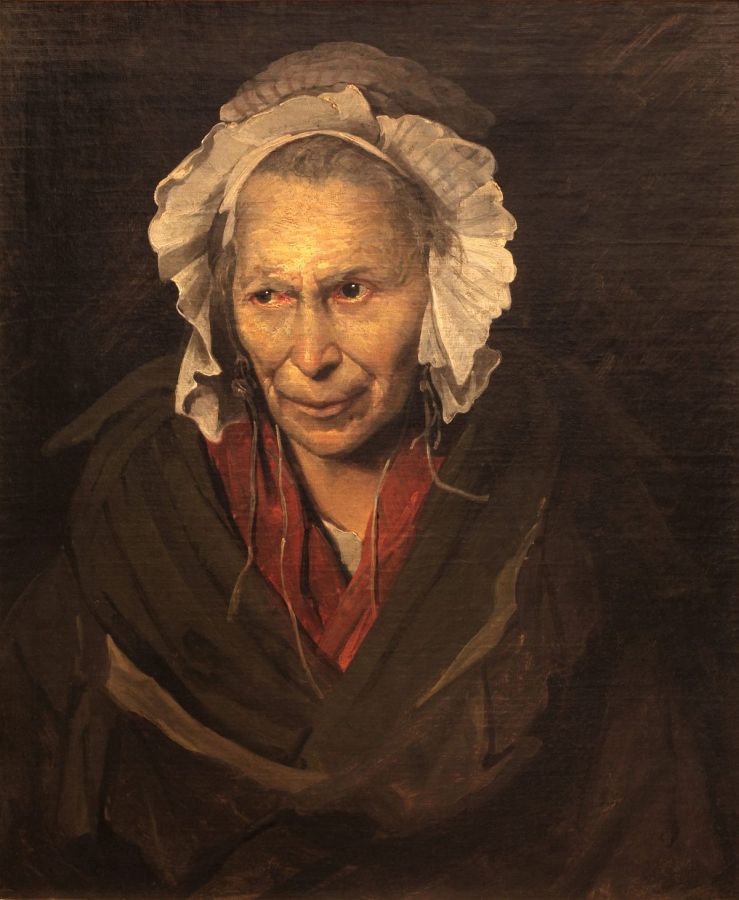
La Monomane de l’envie (Monomania: Portrait of an Excessively Jealous Woman), c. 1819–22 by Theodore Géricault (1791-1824)

Wounded Man in a Bed-Sitting Room, 1951 by Robin Ironside (1912-1965)
Mike Watt and Adam Harvey adapted the “Shem the Penman” episode of James Joyce’s Finnegans Wake for the Waywords and Meansigns project. Raymond Pettibon provided an illustration.

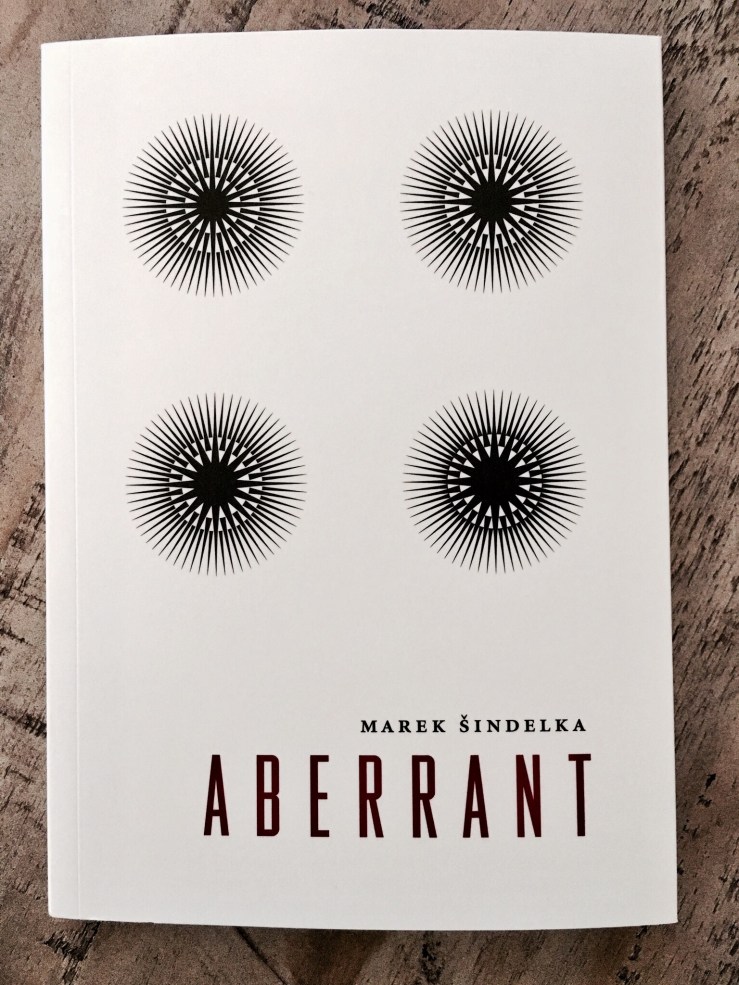
Aberrant is the début novel by Czech author Marek Šindelka. It’s new in English translation by Nathan Fields from Twisted Spoon Press, and features artwork by Petr Nikl. It’s pretty far out stuff. First pages:
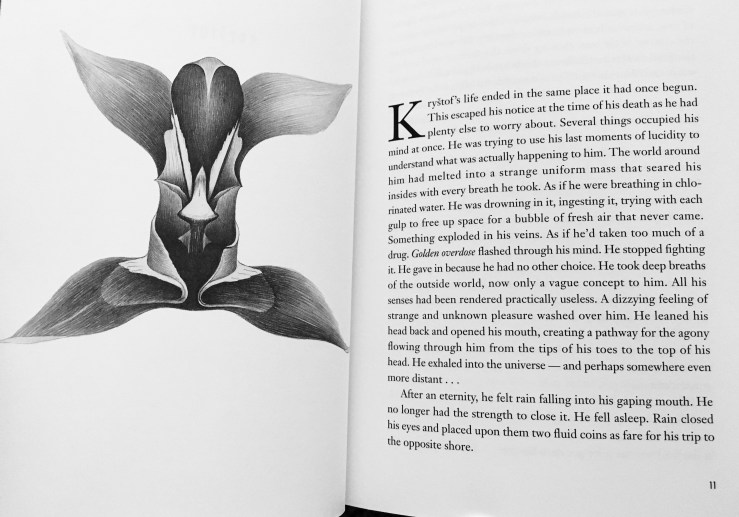
The remarkable debut novel from Marek Šindelka, already the recipient of his country’s major literary awards for poetry (Jiří Orten Prize) and prose (Magnesia Litera), Aberrant is a multifaceted work that mixes and mashes together a variety of genres and styles to create a heady concoction of crime story, horror story (inspired by the Japanese tradition of kaidan), ecological revenge fantasy, and Siberian shamanism. Nothing is what it seems. What appears to be human is actually a shell occupied by an alien spirit, or demon, and what appears to be an unassuming plant is an aggressive parasite that harbors a poisonous substance within, or manifests itself as an assassin, a phantom with no real substance who pursues his victims across Europe and through a post-apocalyptic Prague ravaged by floods. The blind see, and the seeing are blind. Plants behave like animals, and animals are symbionts with plants. Through these devices, Šindelka weaves a tale of three childhood friends, the errant paths their lives take, and the world of rare plant smuggling — and the consequences of taking the wrong plant — to show the rickety foundation of illusions on which our relationship to the environment, and to one another, rests. It is a world of aberrations, anomalies, and mistake
 Biblioklept