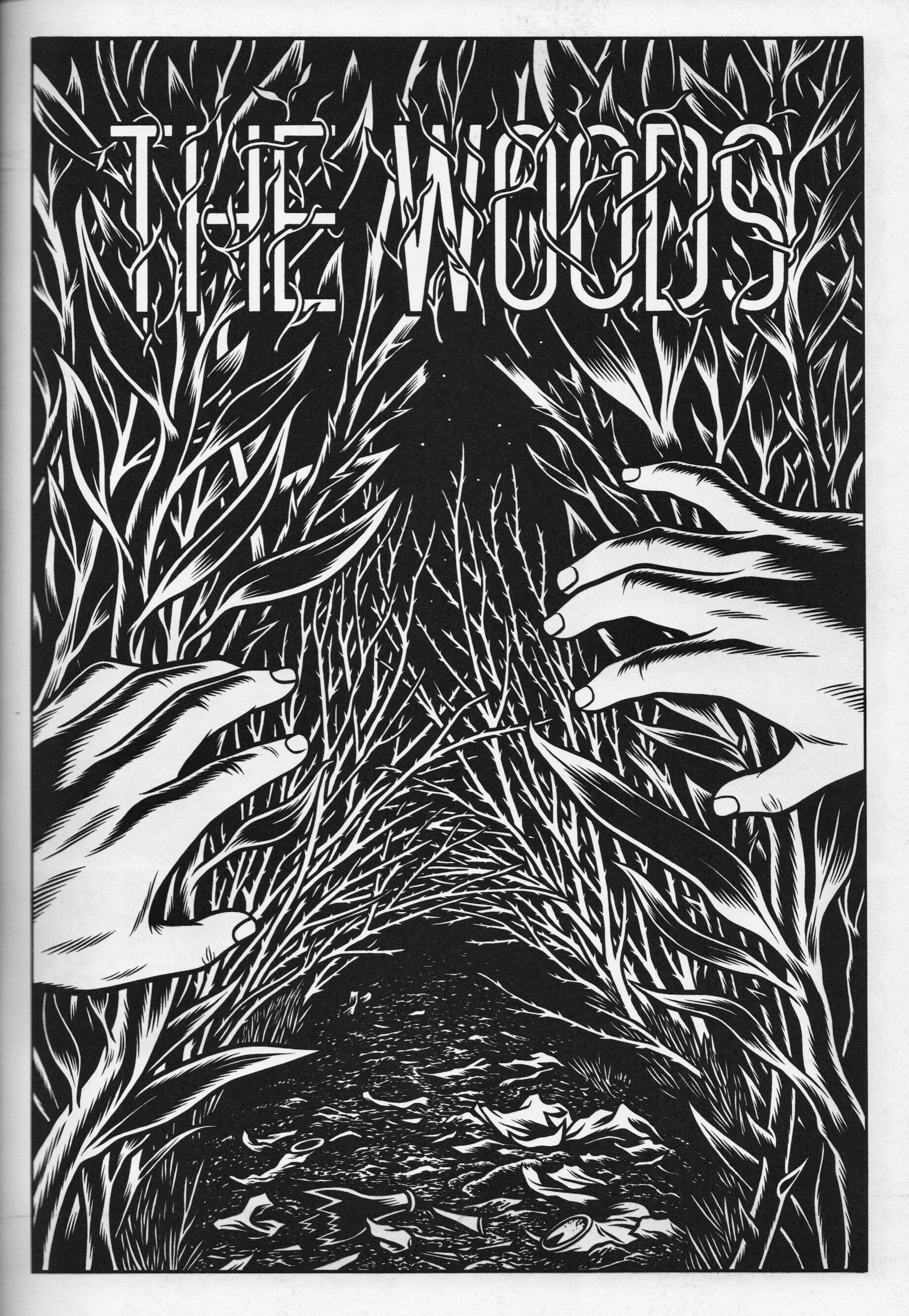
Read “The Dancing Partner,” Jerome K. Jerome’s horror story about an automaton

“The Dancing Partner”

by

Jerome K. Jerome

from Novel Notes (1893)


“This story,” commenced MacShaugnassy, “comes from Furtwangen, a small town in the Black Forest. There lived there a very wonderful old fellow named Nicholaus Geibel. His business was the making of mechanical toys, at which work he had acquired an almost European reputation. He made rabbits that would emerge from the heart of a cabbage, flop their ears, smooth their whiskers, and disappear again; cats that would wash their faces, and mew so naturally that dogs would mistake them for real cats and fly at them; dolls with phonographs concealed within them, that would raise their hats and say, ‘Good morning; how do you do?’ and some that would even sing a song.

“But, he was something more than a mere mechanic; he was an artist. His work was with him a hobby, almost a passion. His shop was filled with all manner of strange things that never would, or could, be sold — things he had made for the pure love of making them. He had contrived a mechanical donkey that would trot for two hours by means of stored electricity, and trot, too, much faster than the live article, and with less need for exertion on the part of the driver, a bird that would shoot up into the air, fly round and round in a circle, and drop to earth at the exact spot from where it started; a skeleton that, supported by an upright iron bar, would dance a hornpipe, a life-size lady doll that could play the fiddle, and a gentleman with a hollow inside who could smoke a pipe and drink more lager beer than any three average German students put together, which is saying much.

“Indeed, it was the belief of the town that old Geibel could make a man capable of doing everything that a respectable man need want to do. One day he made a man who did too much, and it came about in this way:

“Young Doctor Follen had a baby, and the baby had a birthday. Its first birthday put Doctor Follen’s household into somewhat of a flurry, but on the occasion of its second birthday, Mrs. Doctor Follen gave a ball in honour of the event. Old Geibel and his daughter Olga were among the guests.

“During the afternoon of the next day some three or four of Olga’s bosom friends, who had also been present at the ball, dropped in to have a chat about it. They naturally fell to discussing the men, and to criticizing their dancing. Old Geibel was in the room, but he appeared to be absorbed in his newspaper, and the girls took no notice of him.

“‘There seem to be fewer men who can dance at every ball you go to,’ said one of the girls.

“‘Yes, and don’t the ones who can give themselves airs,’ said another; ‘they make quite a favor of asking you.’

“‘And how stupidly they talk,’ added a third. ‘They always say exactly the same things: “How charming you are looking to-night.” “Do you often go to Vienna? Oh, you should, it’s delightful.” “What a charming dress you have on.” “What a warm day it has been.” “Do you like Wagner?” I do wish they’d think of something new.’

“‘Oh, I never mind how they talk,’ said a forth. ‘If a man dances well he may be a fool for all I care.’

“‘He generally is,’ slipped in a thin girl, rather spitefully.

“‘I go to a ball to dance,’ continued the previous speaker, not noticing the interruption. ‘All I ask is that he shall hold me firmly, take me round steadily, and not get tired before I do.’

“‘A clockwork figure would be the thing for you,’ said the girl who had interrupted.

“‘Bravo!’ cried one of the others, clapping her hands, ‘what a capital idea!’

“‘What’s a capital idea?’ they asked.

“‘Why, a clockwork dancer, or, better still, one that would go by electricity and never run down.’ Continue reading “Read “The Dancing Partner,” Jerome K. Jerome’s horror story about an automaton”

Andy Warhol — Alice Neel

80_52_neela

Keen and quivering ratio (Emily Dickinson)

quivering

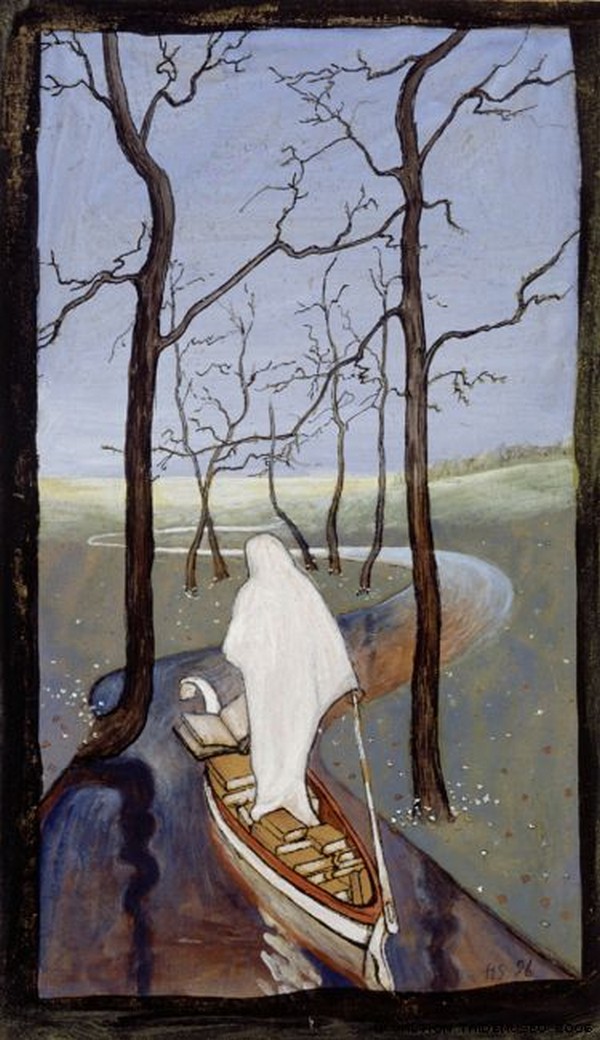
On the Stream of Life — Hugo Simberg

hugo_s12

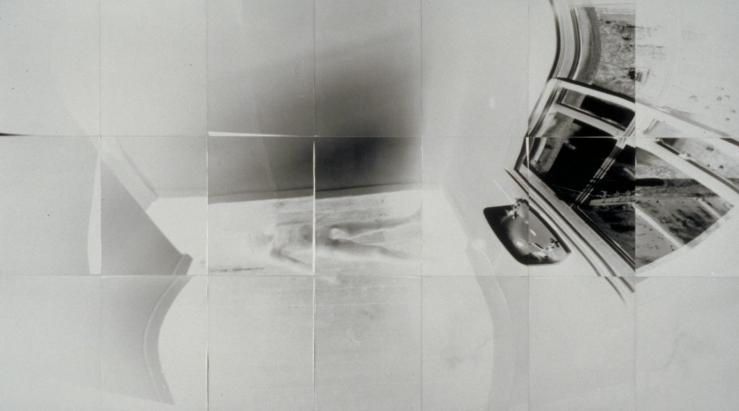
Bath Tub Converted into a Pin-Hole Camera — Steven Pippin

Bath Tub Converted into a Pin-Hole Camera 1984 by Steven Pippin born 1960

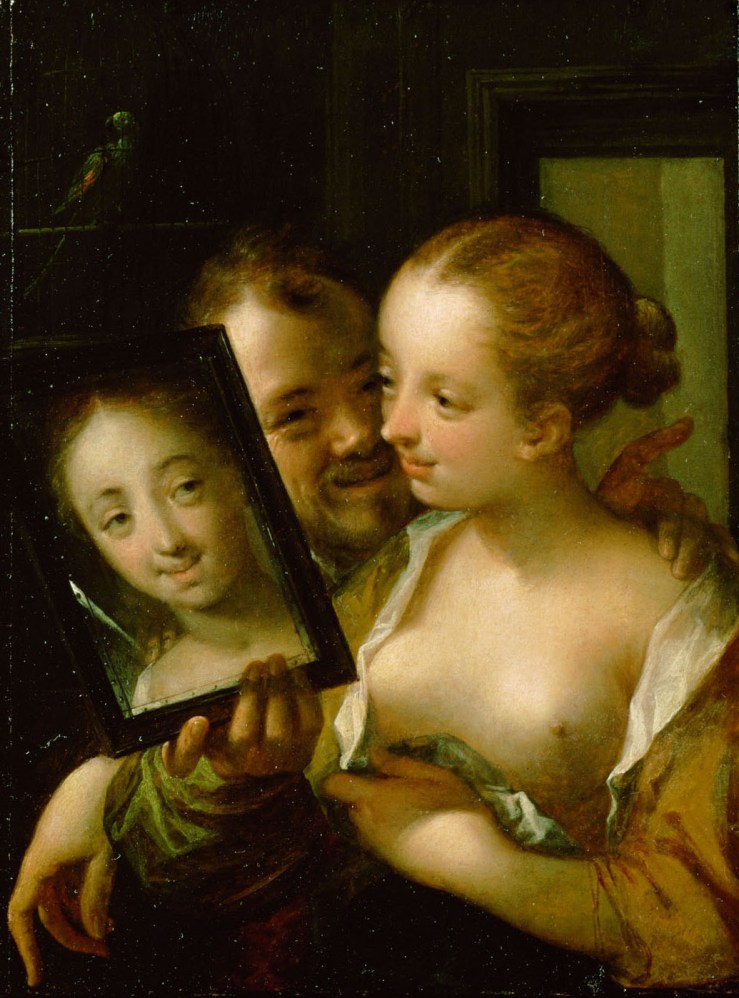
Joking Couple with a Mirror — Hans von Aachen

gg_1155x

In a dream to wander to some place where may be heard the complaints of all the miserable on earth (Nathaniel Hawthorne’s journal entry for October 17th, 1835)

October 17th.–Some of the oaks are now a deep brown red; others are changed to a light green, which, at a little distance, especially in the sunshine, looks like the green of early spring. In some trees, different masses of the foliage show each of these hues. Some of the walnut-trees have a yet more delicate green. Others are of a bright sunny yellow.

Mr.—- was married to Miss —- last Wednesday. Yesterday Mr. Brazer, preaching on the comet, observed that not one, probably, of all who heard him, would witness its reappearance. Mrs.—- shed tears. Poor soul! she would be contented to dwell in earthly love to all eternity!

Some treasure or other thing to be buried, and a tree planted directly over the spot, so as to embrace it with its roots.

A tree, tall and venerable, to be said by tradition to have been the staff of some famous man, who happened to thrust it into the ground, where it took root.

A fellow without money, having a hundred and seventy miles to go, fastened a chain and padlock to his legs, and lay down to sleep in a field. He was apprehended, and carried gratis to a jail in the town whither he desired to go.

An old volume in a large library,–every one to be afraid to unclasp and open it, because it was said to be a book of magic.

A ghost seen by moonlight; when the moon was out, it would shine and melt through the airy substance of the ghost, as through a cloud.

Prideaux, Bishop of Worcester, during the sway of the Parliament, was forced to support himself and his family by selling his household goods. A friend asked him, “How doth your lordship?” “Never better in my life,” said the Bishop, “only I have too great a stomach; for I have eaten that little plate which the sequestrators left me. I have eaten a great library of excellent books. I have eaten a great deal of linen, much of my brass, some of my pewter, and now I am come to eat iron; and what will come next I know not.”

A scold and a blockhead,–brimstone and wood,–a good match.

To make one’s own reflection in a mirror the subject of a story.

In a dream to wander to some place where may be heard the complaints of all the miserable on earth.

Some common quality or circumstance that should bring together people the most unlike in all other respects, and make a brotherhood and sisterhood of them,–the rich and the proud finding themselves in the same category with the mean and the despised.

A person to consider himself as the prime mover of certain remarkable events, but to discover that his actions have not contributed in the least thereto. Another person to be the cause, without suspecting it.

Nathaniel Hawthorne’s journal entry for October 17th, 1835. From Passages from the American Note-Books.

Posted in Art

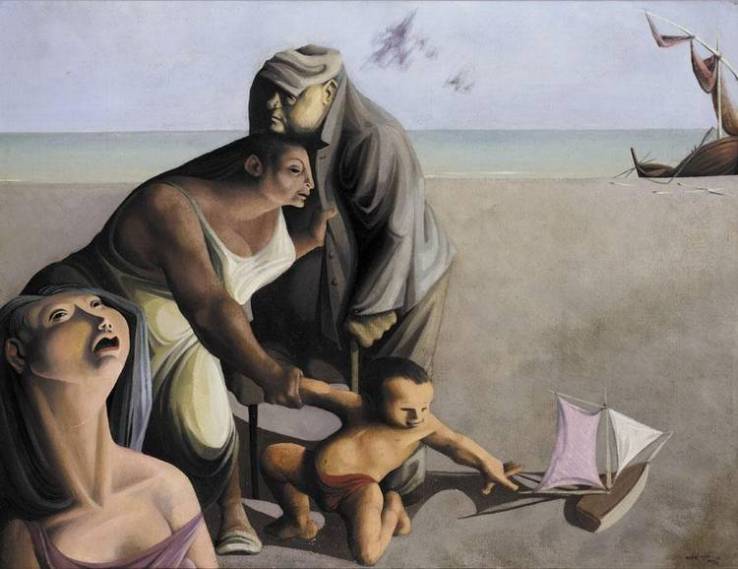
Thunder Approaching — Michael Ayrton

h0046-l00501109

Sunday Comics

With Halloween approaching, here are three creepy full page panels from Charles Burns’s Black Hole (Pantheon, 2005).

List with No Name #57

  1. Amerika
  2. Billy Budd, Sailor
  3. The Castle
  4. Confessions of Felix Krull
  5. The Decembrists
  6. The First Man
  7. Fragment of a Novel
  8. The Garden of Eden
  9. The Last Tycoon
  10. The Mysterious Stranger
  11. The Mystery of Edwin Drood
  12. The Original of Laura
  13. The Pale King
  14. The Pink and the Green
  15. Stephen Hero
  16. The Trial
  17. Under the Hill

Gravity’s Rainbow, annotations and illustrations for page 299 | Some of us love to be taken under mountains, and not always with horny expectations

In the Venusburg, John Collier (1901)

There is that not-so-rare personality disorder known as Tannhäuserism 1 . Some of us love to be taken under mountains, and not always with horny expectations 2 .—Venus, Frau Holda, her sexual delights—no, many come, actually, for the gnomes , the critters smaller than you, for the sepulchral way time stretches along your hooded strolls down here, quietly through courtyards that go for miles, with no anxiety about getting lost… no one stares, no one is waiting to judge you… out of the public eye… even a Minnesinger needs to be alone…4  long cloudy-day indoor walks… the comfort of a closed place, where everyone is in complete agreement about Death 5. Slothrop knows this place. Not so much from maps he had to study at the Casino 6 as knowing it in the way you know someone is there… .

Plant generators are still supplying power. Rarely a bare bulb will hollow out a region of light 7 . As darkness is mined and transported from place to place like marble, so the light bulb is the chisel that delivers it from its inertia, and has become one of the great secret ikons of the Humility, the multitudes who are passed over by God and History 8. When the Dora prisoners 9  went on their rampage, the light bulbs in the rocket works were the first to go: before food, before the delights to be looted out of the medical lockers and the hospital pharmacy in Stollen Number 1, these breakable, socketless (in Germany the word for electric socket is also the word for Mother—so, motherless too 10 ) images were what the “liberated” had to take… .

From Thomas Pynchon’s Gravity’s Rainbow, page 299. All ellipses are Pynchon’s

1 Tannhäuser was a 13th-century German Minnesinger, a troubadour—a knight-poet. A bard, I guess. Is Slothrop a bard, a knight-poet—a knight-errant? Not sure. (He’ll later deny he’s on a grail-quest).

In German legend, Tannhäuser falls from grace when he discovers Venusberg, the underground home of Venus. He stays there a year, neglecting his betrothed and indulging in erotic delights. Teutonic Christian knight that he is, Tannhäuser leaves Vensuberg (Hörselberg) for Rome to beg forgiveness from Pope Urban IV, who denies him, saying absolution would be as impossible as his papal staff flowering in bloom. The staff does bloom—but not until Tannhäuser has disappeared back into the Venusian underworld (and his gal Lisaura has killed herself in grief).

2006au1525_jpg_l
Title page to ‘The Story of Venus and Tannhäuser’ Aubrey Beardsley (1895)

Cf. the sonnet on pages 532-33 of Gravity’s Rainbow:

Where is the Pope whose staff will bloom for me?
Her mountain vamps me back, with silks and scents,
Her oiled, athletic slaves, her languid hints
Of tortures transubstantiate to sky,
To purity of light-of bonds that sing,
And whips that trail their spectra as they fall.
At weather’s mercy now, I find her call
At every turn, at night’s foregathering.

I’ve left no sick Lisaura’s fate behind.
I made my last confession as I knelt,
Agnostic, in the radiance of his jewel…
Here, underneath my last and splintering wind,
No song, no lust, no memory, no guilt:
No pentacles, no cups, no holy Fool…

The Tannhäuser myth connects to Gravity’s Rainbow’s Orphean motif, and readers may take note of the hero’s descent played against the mystical “blooming” of a staff…eh, what with the sexy phallic overtones and all.

And we can use the third line of Gravity’s Rainbow here to describe the bloom on the staff: “It is too late” (3).

2 “Some of us love to be taken under mountains, and not always with horny expectations” — one problem with reading Gravity’s Rainbow only once or twice is that it is too full of great sentences and you’ll likely miss them. Pynchon continues to deflate what he has inflated (only to inflate it again)—sex will give over to death—or, an un-death (an un-sex) here. Slothrop inert, underground, in the tombs.

3 Cf. Pynchon’s 2006 novel Against the Day, wherein (briefly, too briefly), the heroic Chums of Chance take on “the increasingly deranged attentions of the Legion of Gnomes, the unconscionable connivings of a certain international mining cartel, the sensual wickedness pervading the royal court of Chthonica, Princess of Plutonia, and the all-but-irresistible fascination that subterranean monarch would come to exert, Circelike, upon the minds of the crew of Inconvenience [ETC.]”

4 . “…out of the public eye… even a Minnesinger needs to be alone…”

pynchon-simpsons-0-01

5 A perhaps puzzling line, if only because I think I get what everyone’s in “agreement about Death” here—Death as a kind of cozy promise that we all say “Fuck off” too in lieu of “long cloudy-day indoor walks” (and the horny expectations of underground sexbergs). I’m interested on anyone else’s ideas, of course.

6 The Casino Hermann Goering—Slothrop’s last “official” assigned post.

7 We privilege light over darkness; Pynchon inverts the image here: light is a violent “chisel”; darkness is a commodity to be mined.

The bulb becomes one of GR’s most powerful motifs, culminating in the late (and essential) episode “Byron the Bulb” (find Harold Bloom’s essay on Byron the Bulb if ye can).

References to Byron, via the indispensable folks at References to Byron, via the indispensable Pynchon Wiki:

“a bulb over his head burning all night long. He dreamed that the bulb was a representative of Weissmann, a creature whose bright filament was its soul” 426-27; “a theatre marquee whose sentient bulbs may have looked on […] witnesses to grave and historical encounters” 464; “The Story of” 647-55; “Someday he will know everything, and be just as impotent as before” 654; “electrical tidal wave” 665; “young Jack may have had one of them Immortal Lightbulbs then go on overhead” 688; screwed into Gustav’s kazoo hashpipe, 745

8 Pynchon loves to underline his big theme of “preterite vs elect” in Gravity’s Rainbow. There’s something sweet and even sad in the idea of the Humiliated, the preterite, finding an “ikon” in a lightbulb—a self-spark, a fragment of light. (I riffed a bit a while ago on GR’s theme of fragmentation and the dream of wholeness, the redemption of total light).

9 Laborers in the Mittelbau-Dora concentration camp who were forced to work toward producing V-2 rockets for the Nazis. Myth—Venus, gnomes, etc.—tips back into the horrific reality of slave labor. Pynchon seems to cast the Dora laborers as the preterite, grasping at their own spark of redemption by looting lightbulbs…and then reframes their preterite condition in the ironic quotation marks around “freedom.”

10  I don’t think the German word for electric socket, steckdose, corresponds so much to the word for “mother,” but maybe…it does? In any case, the etymology does seem to correspond to the concept of absence, or cavity, which permeates this episode of GR.

I looked for the root of “socket” in Josepth T. Shipley’s The Origins of English Words: A Discursive Dictionary of Indo-European Roots, and while I didn’t find anything about mothers or Venus or lightbulbs, I did find a connection to another of Gravity’s Rainbow’s big motifs: Pigs!—-

img_3852


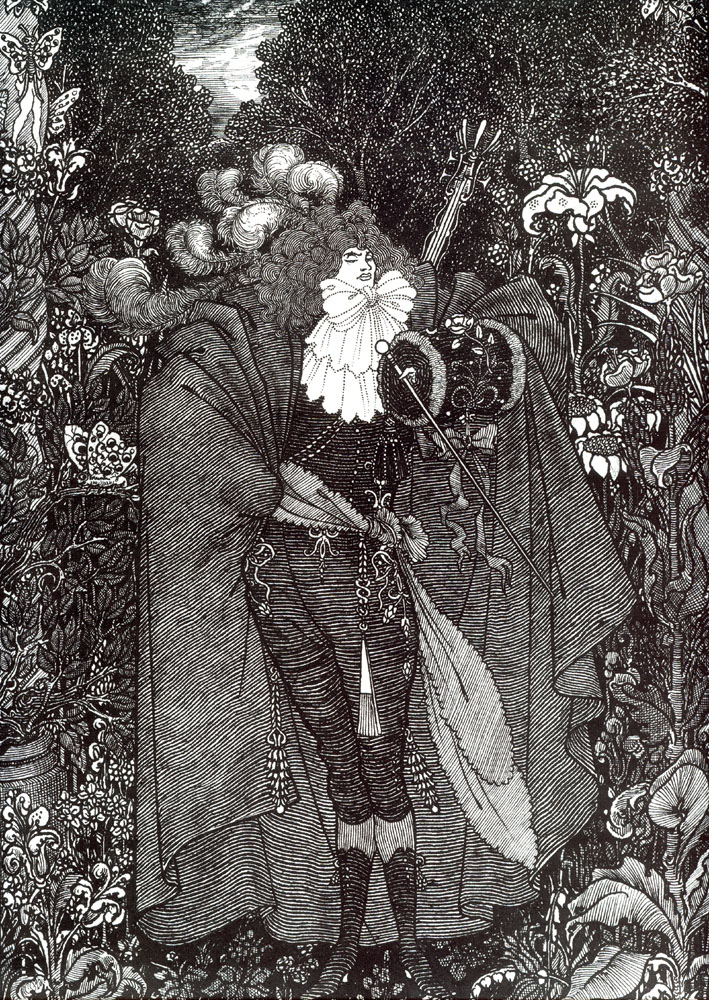
A Nightpiece — Aubrey Beardsley

a-nightpiece-1894

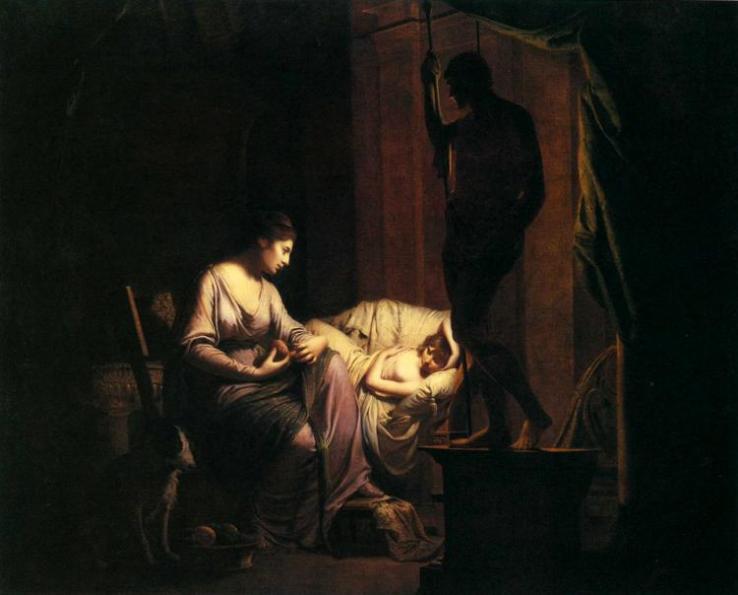
Penelope Unraveling Her Web — Joseph Wright of Derby

penelope-unravelling-her-web

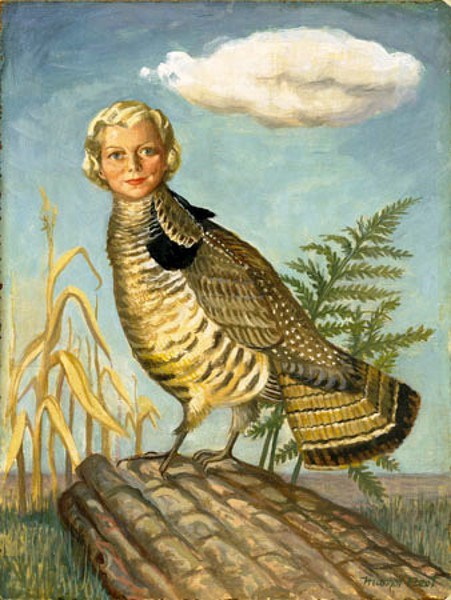
Prairie Chicken (Self-Portrait) — Margot Peet

ee24ebc52fe39f7266a5b27d85fb3627

Seven Self-Portraits — Armand Henrion

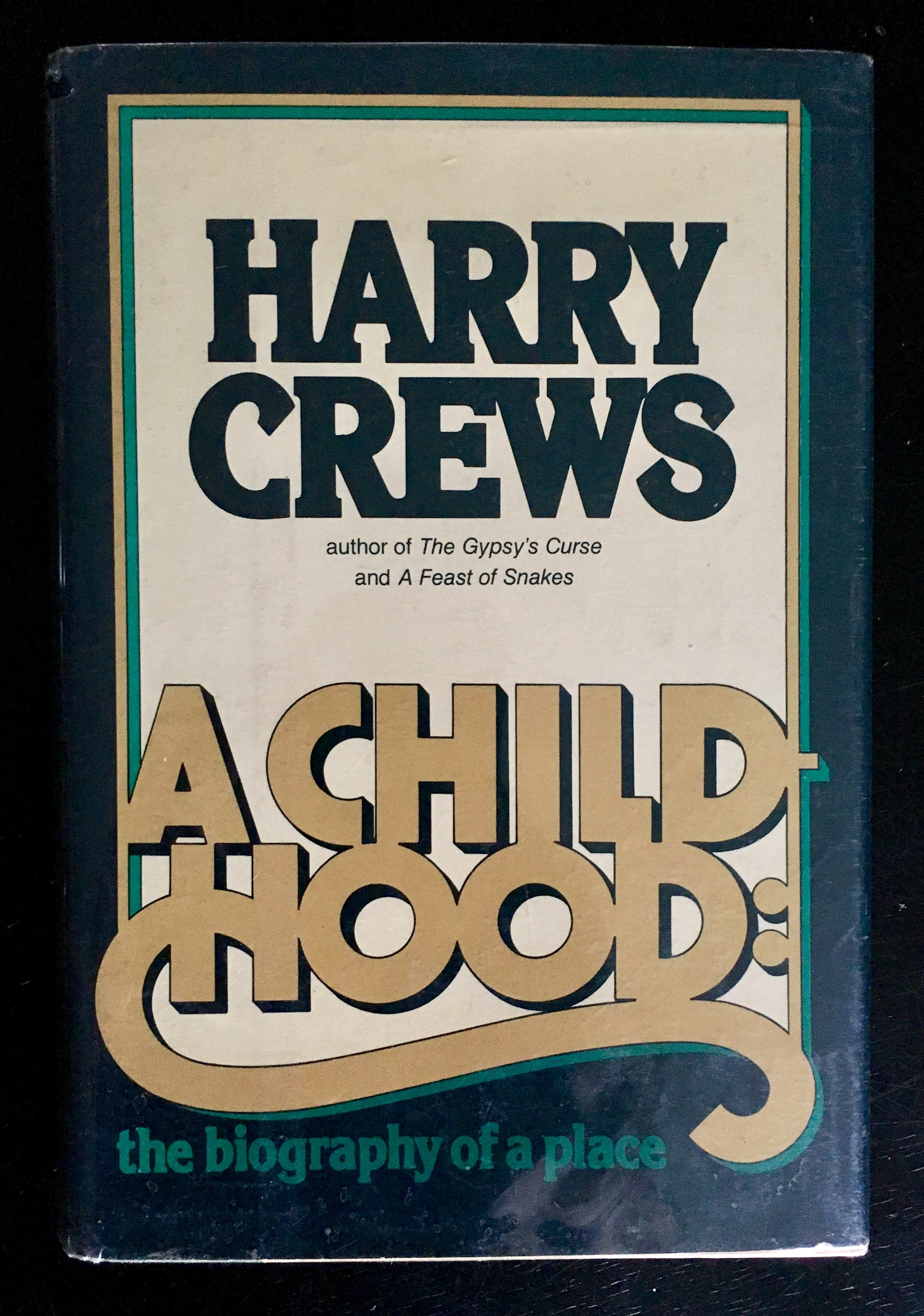
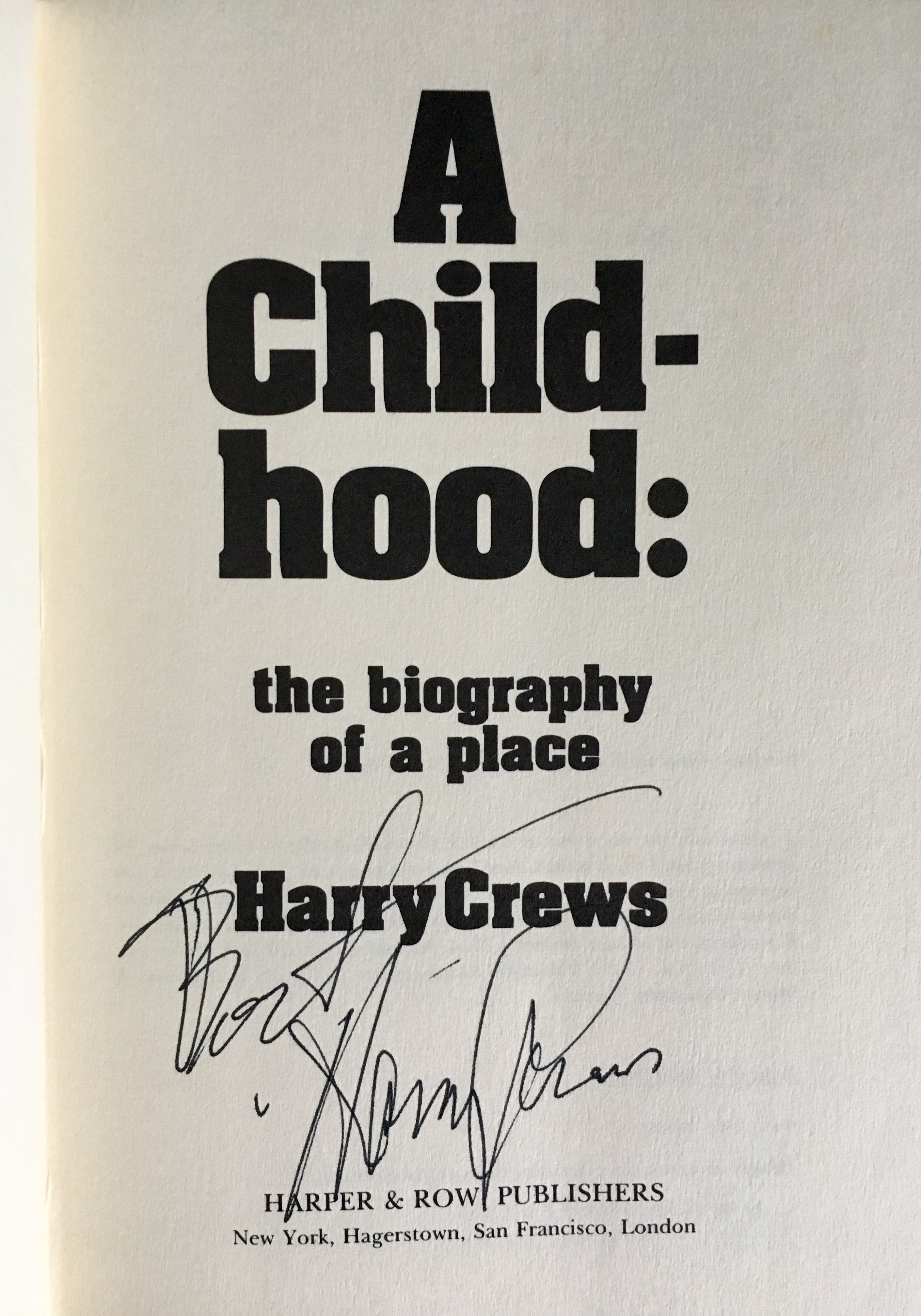
Harry Crews’s A Childhood (Book acquired, 9.20.2016)

A couple of weeks back, I was looking for John Berryman’s biographical study of Stephen Crane. I did not find it, but I did find a signed hardback edition (not sure if it’s a first or second printing) of Harry Crews’s amazing memoir A Childhood.

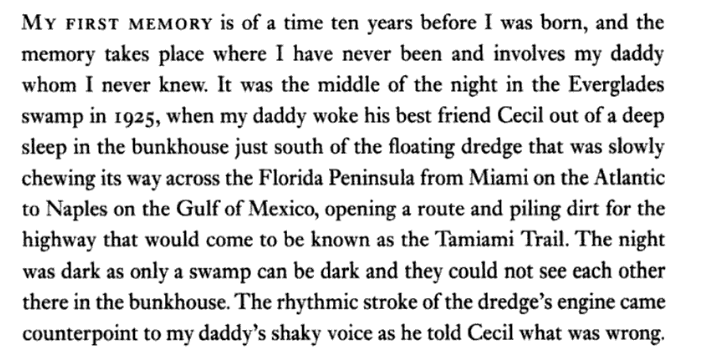
Here’s the opening paragraph:

screenshot-2016-10-14-at-2-44-06-pm

I already have the book (it’s included in Classic Crews—the best starting place for Crews (you should start)), but I couldn’t pass up a signed copy. (It was like 8 bucks I think, and I have store credit out the wazoo).

Still looking for that Crane biography though.

(My thoughts on Crews here).

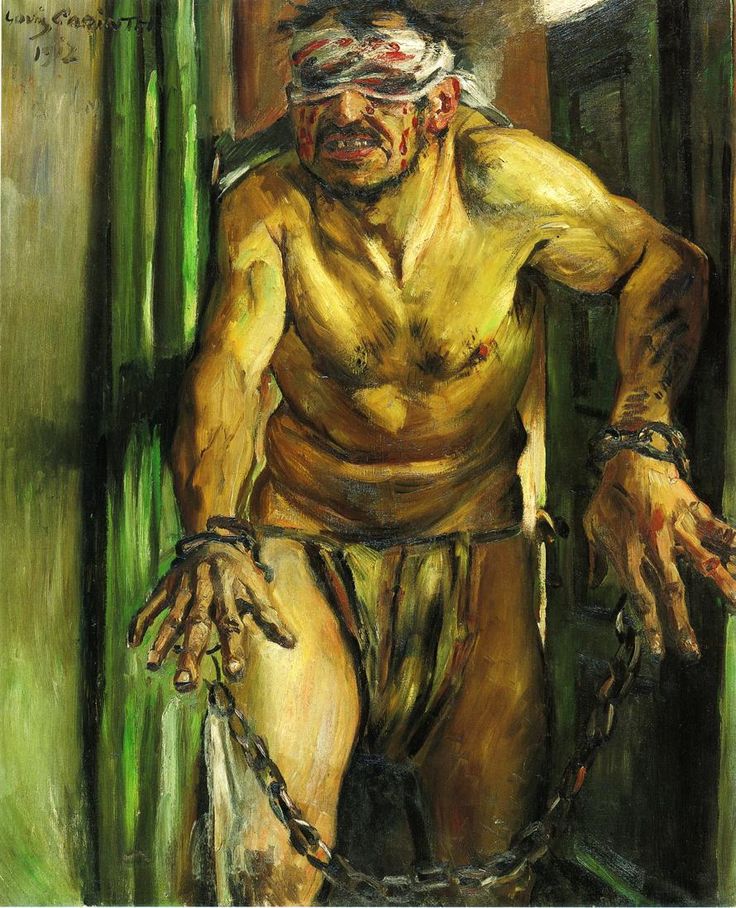
Samson Blinded — Lovis Corinth

a727d4e43a93cf5f385863ce26ddf17d