The Echo Chamber — Leonor Fini

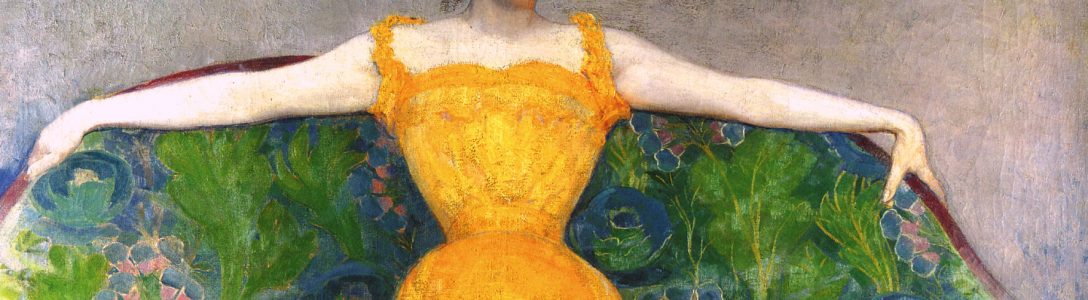
tumblr_mmy4qers8x1qzse0lo1_1280

The novel is the first large-scale example of “mass art”

As practical men, the new middle classes found literature frivolous; as pious ones, they found it idolatrous; as class-conscious citizens, they felt it too committed to court and salon. Yet they could not live without it; a lust for images of their own lives, projections of their own dreams and nightmares moved them obscurely. They demanded a form that would be really their own, a mass-produced commodity to be bought or rented in the marketplace like other goods, a thick and substantial item to be placed on the table with other evidence of their wealth and taste. The novel is the first large-scale example of “mass art.” It is quite different from “folk art,” with its handmade appearance and its air of knowing its place, for folk art is rooted in the country and in agriculture; it changes slowly and almost imperceptibly, its chief appeal being its resemblance to what has come before. “Mass art,” on the other hand, is urban art, changing with the rapid changes of fashion, and seeming as much the product of new advances and technique as in any profound shift in the imagination. Like the wood-block engravings of 18th-century Japan, or the movies later on, or jazz on records, its triumphs depend chiefly on developments in manufacturing, packaging, and distribution. Like other mass-produced products, it tends to drive out of existence craft objects, which cannot survive the class structures which demand them and the class-consciousness which defines their consumers. Just as the spectacular rise of the novel is inconceivable without the perfection of printing, its final victory is inconceivable without the invention of the circulating library; mass-produced, it is also mass-circulated like any commodity in an expanding mercantile economy.

From Leslie Fiedler’s Love and Death in the American Novel (1960).

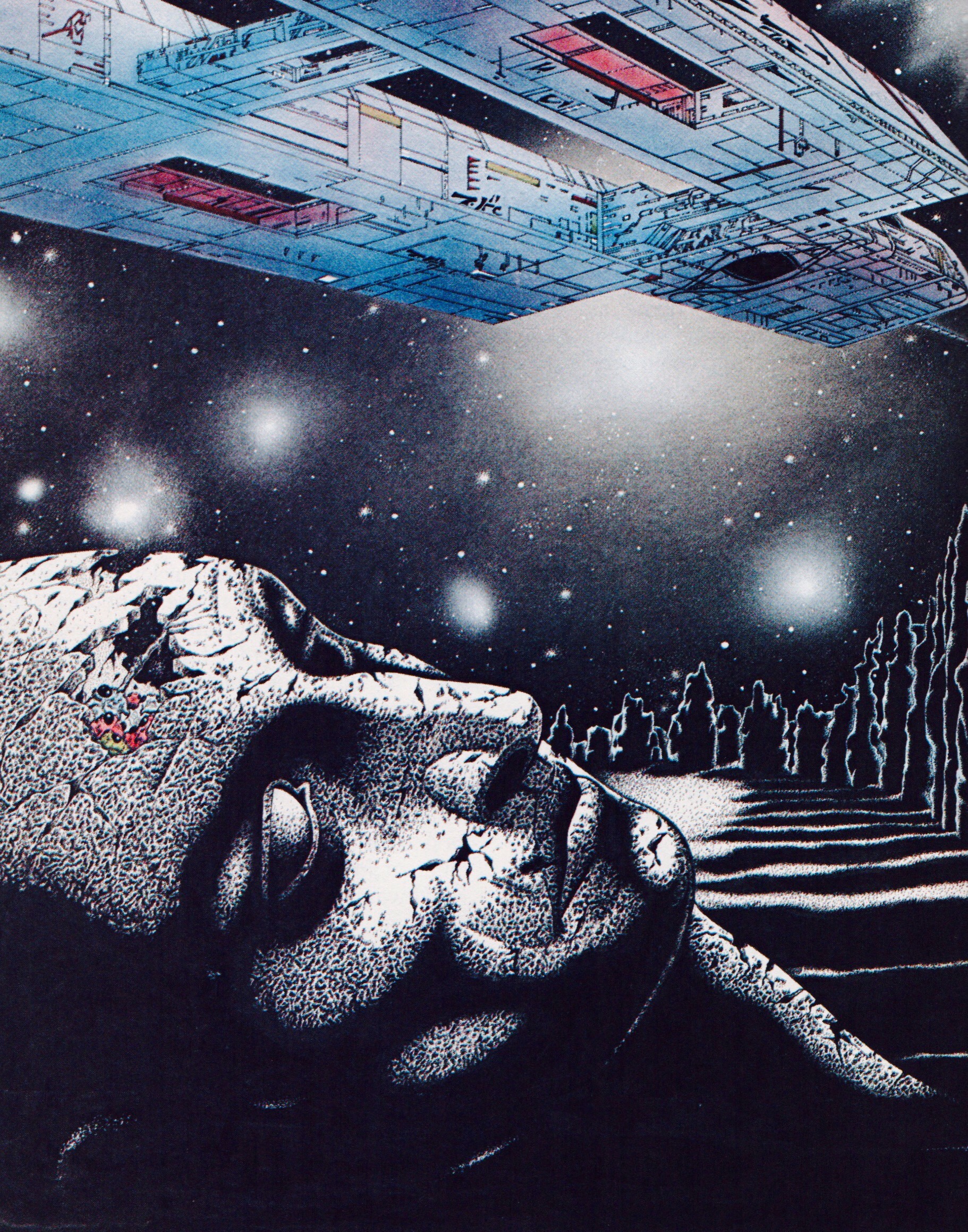
The Eye of Lorca — Martin Springett

IMG_8350

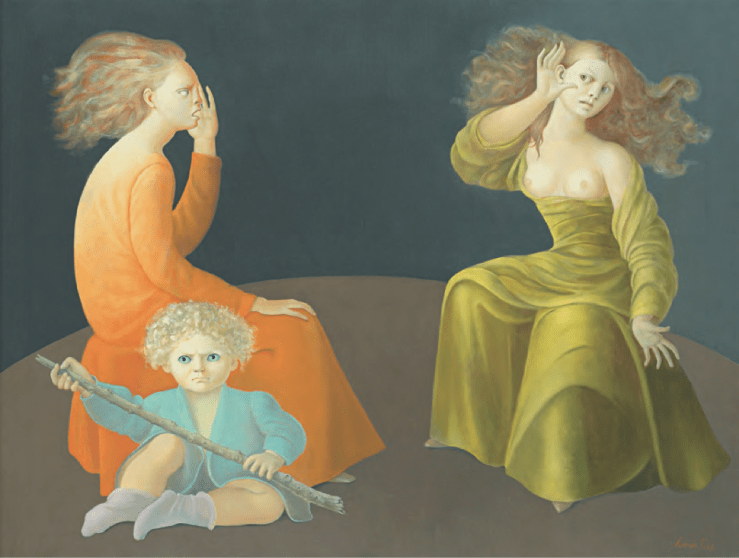
Le Long du Chemin — Leonor Fini

leonor-fini1

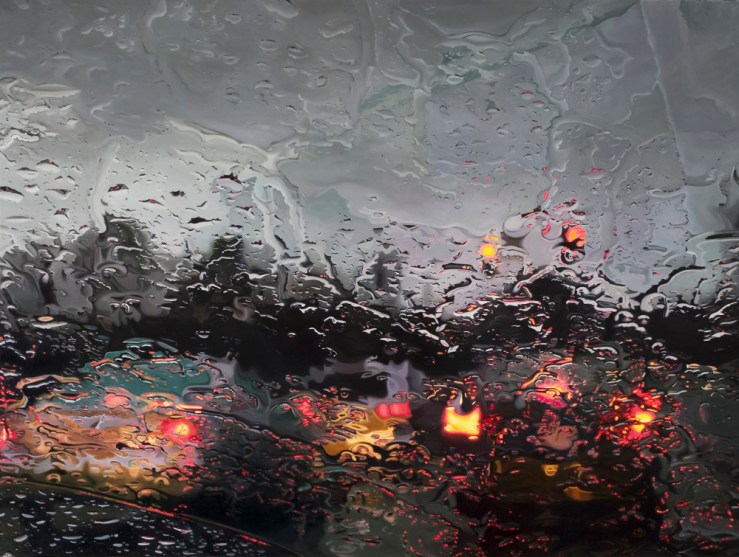
Under the Unminding Sky — Gregory Thielker

Unknown-2_1000

He began to wonder about the noise that colors make (Anne Carson’s Autobiography of Red)

It was not the fear of ridicule,

to which everyday life as a winged red person had accommodated Geryon early in life,

but this blank desertion of his own mind

that threw him into despair. Perhaps he was mad. In the seventh grade he had done

a science project on this worry.

It was the year that he began to wonder about the noise that colors make. Roses came

roaring across the garden at him.

He lay on his bed at night listening to the silver light of stars crashing against

the window screen. Most

of those he interviewed for the science project had to admit they did not hear

the cries of the roses

being burned alive in the noonday sun. Like horses, Geryon would say helpfully,

like horses in war.No, they shook their heads.

Why is grass called blades? he asked them. Isn’t it because of the clicking?

They stared at him. You should be

interviewing roses, not people, said the science teacher. Geryon liked this idea.

The last page of his project

was a photograph of his mother’s rosebush under the kitchen window.

Four of the roses were on fire.

They stood up straight and pure on the stalk, gripping the dark like prophets

and howling colossal intimacies

from the back of their fused throats. Didn’t your mother mind—

From Anne Carson’s novel-poem Autobiography of Red.

The Magic Flower Game — Dorothea Tanning

55b8f7d21400002f002e13f7

“All art constantly aspires towards the condition of music”

176 part two. Jennie Richee waiting for the rain to stop… — Henry Darger

T310 PL 92-93

Nathaniel Hawthorne’s journal entry of September 18th, 1842

September 18th.–How the summer-time flits away, even while it seems to be loitering onward, arm in arm with autumn! Of late I have walked but little over the hills and through the woods, my leisure being chiefly occupied with my boat, which I have now learned to manage with tolerable skill. Yesterday afternoon I made a voyage alone up the North Branch of Concord River. There was a strong west-wind blowing dead against me, which, together with the current, increased by the height of the water, made the first part of the passage pretty toilsome. The black river was all dimpled over with little eddies and whirlpools; and the breeze, moreover, caused the billows to beat against the bow of the boat, with a sound like the flapping of a bird’s wing. The water-weeds,where they were discernible through the tawny water, were straight outstretched by the force of the current, looking as if they were forced to hold on to their roots with all their might. If for a moment I desisted from paddling, the head of the boat was swept round by the combined might of wind and tide. However, I toiled onward stoutly, and, entering the North Branch, soon found myself floating quietly along a tranquil stream, sheltered from the breeze by the woods and a lofty hill. The current, likewise, lingered along so gently that it was merely a pleasure to propel the boat against it. I never could have conceived that there was so beautiful a river-scene in Concord as this of the North Branch. The stream flows through the midmost privacy and deepest heart of a wood, which, as if but half satisfied with its presence, calm, gentle, and unobtrusive as it is, seems to crowd upon it, and barely to allow it passage; for the trees are rooted on the very verge of the water, and dip their pendent branches into it. On one side there is a high bank, forming the side of a hill, the Indian name of which I have forgotten, though Mr. Thoreau told it to me; and here, in some instances, the trees stand leaning over the river, stretching out their arms as if about to plunge in headlong. On the other side, the bank is almost on a level with the water; and there the quiet congregation of trees stood with feet in the flood, and fringed with foliage down to its very surface. Vines here and there twine themselves about bushes or aspens or alder-trees, and hang their clusters (though scanty and infrequent this season) so that I can reach them from my boat. I scarcely remember a scene of more complete and lovely seclusion than the passage of the river through this wood. Even an Indian canoe, in oldentimes, could not have floated onward in deeper solitude than my boat. I have never elsewhere had such an opportunity to observe how much more beautiful reflection is than what we call reality. The sky, and the clustering foliage on either hand, and the effect of sunlight as it found its way through the shade, giving lightsome hues in contrast with the quiet depth of the prevailing tints,–all these seemed unsurpassably beautiful when beheld in upper air. But on gazing downward, there they were, the same even to the minutest particular, yet arrayed in ideal beauty, which satisfied the spirit incomparably more than the actual scene. I am half convinced that the reflection is indeed the reality, the real thing which Nature imperfectly images to our grosser sense. At any rate, the disembodied shadow is nearest to the soul.

There were many tokens of autumn in this beautiful picture. Two or three of the trees were actually dressed in their coats of many colors,–the real scarlet and gold which they wear before they put on mourning. These stood on low, marshy spots, where a frost has probably touched them already. Others were of a light, fresh green, resembling the hues of spring, though this, likewise, is a token of decay. The great mass of the foliage, however, appears unchanged; but ever and anon down came a yellow leaf, half flitting upon the air, half falling through it, and finally settling upon the water. A multitude of these were floating here and there along the river, many of them curling upward, so as to form little boats, fit for fairies to voyage in. They looked strangely pretty, with yet a melancholy prettiness, as they floated along. The general aspect of the river, however, differed but little from that of summer,–at least the differencedefies expression. It is more in the character of the rich yellow sunlight than in aught else. The water of the stream has now a thrill of autumnal coolness; yet whenever a broad gleam fell across it, through an interstice of the foliage, multitudes of insects were darting to and fro upon its surface. The sunshine, thus falling across the dark river, has a most beautiful effect. It burnishes it, as it were, and yet leaves it as dark as ever.

On my return, I suffered the boat to float almost of its own will down the stream, and caught fish enough for this morning’s breakfast. But, partly from a qualm of conscience, I finally put them all into the water again, and saw them swim away as if nothing had happened.

Nathaniel Hawthorne’s journal entry of September 18th, 1842

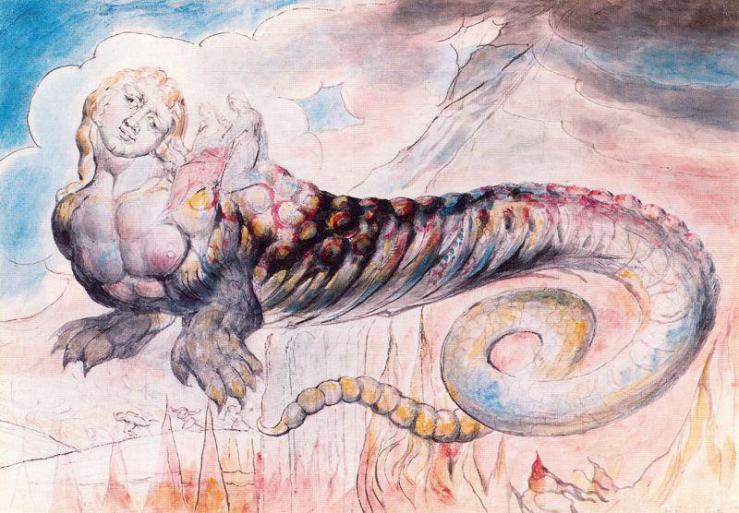
Geryon Transporting Dante and Virgil to Malasbolsas — William Blake

William-Blake-Geryon-transporting-Dante-and-Virgil-to-Malasbolsas

“Halfway to a Threeway” (Live in 2000) — Jim O’Rourke

Landscape with a Marsh — Paul Bril

What did Nabokov do to prepare himself for the ordeals of life?

IMG_8335

From a slim profile based on Nabokov published in The New York Times Book Review in 1972. You can read the whole thing here—however, the NYTBR’s edit is different from the text above, which comes from Strong Opinions. In his brief preface to the Strong Opinions version of the interview, Nabokov notes that the questions’ presentation in the NYTBR’s “version would have been perfect had they not been interspersed with unnecessary embellishment (chitchat about living writers, for instance).

Unicorn — Arnold Böcklin

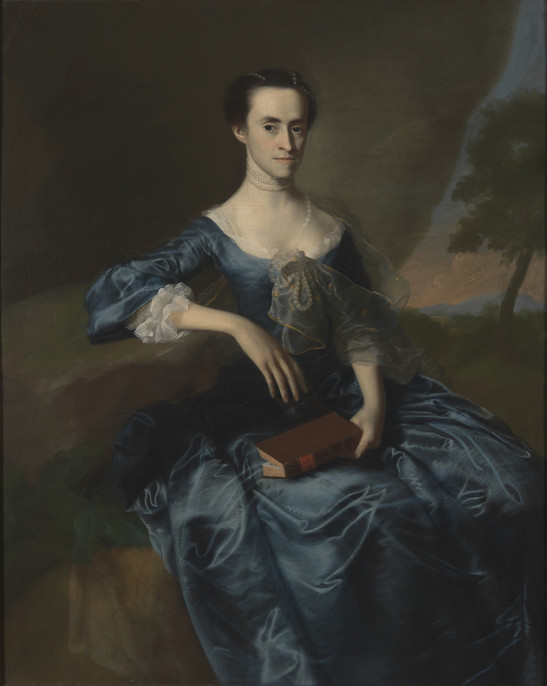
Portrait of Sarah Prince Gill — John Singleton Copley

267571

Read Shirley Jackson’s short story “Charles”

“Charles”

by

Shirley Jackson


The day my son Laurie started kindergarten he renounced corduroy overalls with bibs and began wearing blue jeans with a belt; I watched him go off the first morning with the older girl next door, seeing clearly that an era of my life was ended, my sweet-voiced nursery-school tot replaced by a long-trousered, swaggering character who forgot to stop at the corner and wave good-bye to me.

He came home the same way, the front door slamming open, his cap on the floor, and the voice suddenly become raucous shouting, “Isn’t anybody here?”

At lunch he spoke insolently to his father, spilled his baby sister’s milk, and remarked that his teacher said we were not to take the name of the Lord in vain.

“How was school today?” I asked, elaborately casual.

“All right,” he said.

“Did you learn anything?” his father asked.

Laurie regarded his father coldly. “I didn’t learn nothing,” he said.

“Anything,” I said.

“Didn’t learn anything”

“The teacher spanked a boy, though,” Laurie said, addressing his bread and butter. “For being fresh,” he added, with his mouth full.

“What did he do?” I asked. “Who was it?”

Laurie thought. “It was Charles,” he said. “He was fresh. The teacher spanked him and made him stand in a corner. He was awfully fresh.”

“What did he do?” I asked again, but Laurie slid off his chair, took a cookie, and left, while his father was still saying, “See here, young man.”

The next day Laurie remarked at lunch, as soon as he sat down, “Well, Charles was bad again today.” He grinned enormously and said, “Today Charles hit the teacher.”

“Good heavens,” I said, mindful of the Lord’s name, “I suppose he got spanked again?”

“He sure did,” Laurie said. “Look up,” he said to his father. “What?” his father said, looking up.

“Look down,” Laurie said. “Look at my thumb. Gee, you’re dumb.” He began to laugh insanely.

“Why did Charles hit the teacher?” I asked quickly.

“Because she tried to make him color with red crayons,” Laurie said. “Charles wanted to color with green crayons so he hit the teacher and she spanked him and said nobody play with Charles but everybody did.”

The third day—it was Wednesday of the first week—Charles bounced a see-saw on to the head of a little girl and made her bleed, and the teacher made him stay inside all during recess. Thursday Charles had to stand in a corner during storytime because he kept pounding his feet on the floor. Friday Charles was deprived of blackboard privileges because he threw chalk.

Read the rest of Shirley Jackson’s short story “Charles.”