My Father Fallen — Vincent Desiderio

“Berket and the Stars” — William Carlos Williams

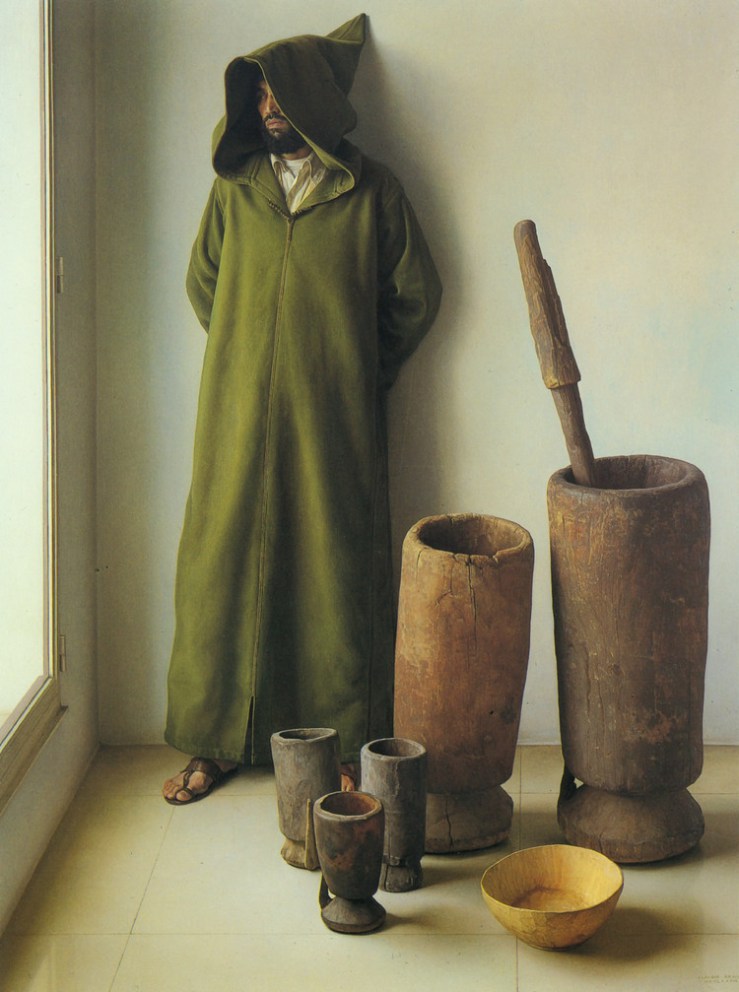
Green Moorish Robe — Claudio Bravo

green moorish robes

Silence Has No Wings — Kazuo Kuroki (Full Film)

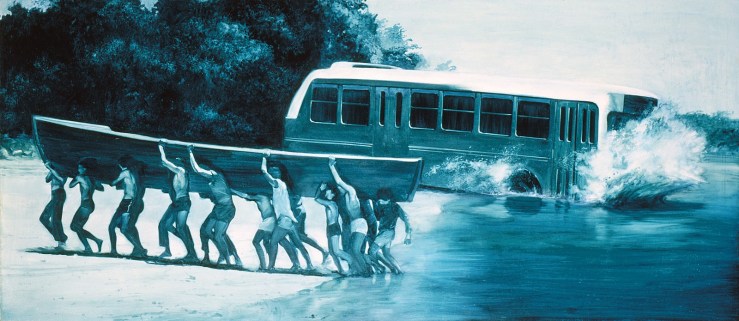
The Bus — Paul Kirchner

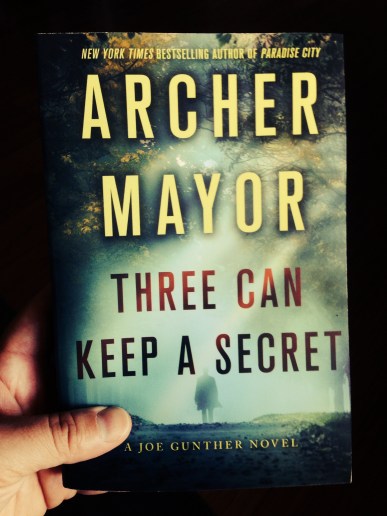
Three Can Keep a Secret (Book Acquired Some Time in August, 2014)

IMG_3119.JPG

Archer Mayor’s Three Can Keep a Secret is, the press materials assure me, the 24th in a series of Joe Gunther mysteries. Holy cow! Publisher Macmillan/Tor’s blurb:

Joe Gunther and his team—the Vermont Bureau of Investigation (VBI)—are usually called in on major cases by local Vermont enforcement whenever they need expertise and back-up.  But after the state is devastated by Hurricane Irene, the police from one end of the state are taxed to their limits, leaving Joe Gunther involved in an odd, seemingly unrelated series of cases. In the wake of the hurricane, a seventeen year old gravesite is exposed, revealing a coffin that had been filled with rocks instead of the expected remains.

At the same time, an old, retired state politician turns up dead at his high-end nursing home, in circumstances that leave investigators unsure that he wasn’t murdered.  And a patient who calls herself The Governor has walked away from a state mental facility during the post-hurricane flood. It turns out that she was indeed once “Governor for a Day,” over forty years ago, but that she might have also been falsely committed and drugged to keep her from revealing something that she saw all those years ago.  Amidst the turmoil and the disaster relief, it’s up to Joe Gunther and his team to learn what really happened with the two corpses—one missing—and what secret “The Governor” might have still locked in her brain that links them all.


Cheever holds my attention more than any other writer (Matthew Weiner)

INTERVIEWER

Who are your favorite writers?

WEINER

I don’t make lists or rank writers. I can only say which ones are relevant to me. Salinger holds my attention, Yates holds my attention. John O’Hara doesn’t, I don’t know why—it’s the same environment, but he doesn’t. Cheever holds my attention more than any other writer. He is in every aspect of Mad Men, starting with the fact that Don lives in Ossining on Bullet Park Road—the children are ignored, people have talents they can’t capitalize on, everyone is selfish to some degree or in some kind of delusion. I have to say, Cheever’s stories work like TV episodes, where you don’t get to repeat information about the characters. He grabs you from the beginning.

Poems have always held my attention, but they’re denser and smaller. It’s funny because poetry is considered harder to read. It wasn’t harder for me. Close reading, that is. Milton, Chaucer, Dante—I could handle those for some reason, but not fiction. From ninth grade on, I wrote poetry compulsively, and pushed myself to do iambic pentameter and rhymes because free verse was cheating—anybody could do that. But I was such a terrible student. I couldn’t sustain anything.

Fascinating interview with Mad Men creator Matthew Weiner in The Paris Review. I would’ve predicted the Yates and the Cheever (and Updike too, whom he doesn’t name), but not the poetry (Weiner goes on to detail his years writing poetry). My wife and I have been, uh, binge watching I think is the phrase the kids are supposed to be saying, although I don’t think the kids say it, I think culture reporters made it up—anyway, my wife and I watched the first season of Mad Men this week (hadn’t watched nary a rerun since it aired). It holds up pretty well, despite some soapy moments, cliches, and broad strokes.

The Physician — Gerrit Dou

Hamlet and the Gravedigger — Camille Corot

“All art constantly aspires towards the condition of music”

Backdrop for a Seasonal Revelation (Palimpsest #19) — Kamrooz Aram

Kamrooz Aram, Backdrop for a Seasonal Revelation (Palimpsest #19), 2013, Oil and oil pastel on canvas, 153 x 137 cm

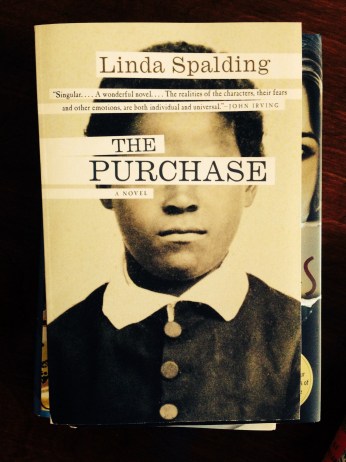
The Purchase (Book Acquired, 9.03.2014)

IMG_3226

Linda Spalding’s novel The Purchase is new in trade paperback from Random House. Their blurb:

Pennsylvania, 1798. Daniel Dickinson, a devout Quaker, has just lost his wife. When he marries a fifteen-year-old Methodist orphan to help with his five small children, his fellow Quakers disown him for his impropriety. Forced out of the only community he’s ever known, Daniel moves his family to the Virginia frontier. He has in hand a few land warrants, with which he plans to establish his new homestead.
Although determined to hold to his Quaker belief in abolitionism, Daniel is now in a slave state, and he soon finds himself the owner of a young boy named Onesimus. This fatal purchase sets in motion a twisted chain of events that will forever change his children’s lives—and his own. An unforgettable story of sacrifice and redemption, The Purchase powerfully explores questions of fate, faith, loyalty, and conscience.

“Good-bye to the Fruits” — John Barth

“Good-bye to the Fruits”

by

John Barth

I agreed to die, stipulating only that I first be permitted to rebehold and bid good-bye to those of Earth’s fruits that I had particularly enjoyed in my not-extraordinary lifetime.
What I had in mind, in the first instance, was such literal items as apples and oranges. Of the former, the variety called Golden Delicious had long been my favorite, especially those with a blush of rose on their fetchingly speckled yellow-green cheeks. Of the latter–but then, there’s no comparing apples to oranges, is there, nor either of those to black plums: truly incomparable, in my opinion, on the rare occasions when one found them neither under- nor overripe. Good-bye to all three, alas; likewise to bananas, whether sliced transversely atop unsweetened breakfast cereal, split longitudinally under scoops of frozen yogurt, barbecued in foil with chutney, or blended with lime juice, rum, and Cointreau into frozen daiquiris on a Chesapeake August late afternoon.
Lime juice, yes: Farewell, dear zesty limes, squeezed into gins-and-tonics before stirring and over bluefish filets before grilling; adieu too to your citric cousins the lemons, particularly those with the thinnest of skins, always the most juiceful, without whose piquance one could scarcely imagine fresh seafood, and whose literal zest was such a challenge for us kitchen-copilots to scrape a half-tablespoonsworth of without getting the bitter white underpeel as well. Adieu to black seedless grapes for eating with ripe cheeses and to all the nobler stocks for vinting, except maybe Chardonnay. I happened not to share the American yuppie thirst for Chardonnay; too over-flavored for my palate. Give me a plain light dry Chablis any time instead of Chardonnay, if you can find so simple a thing on our restaurant wine-lists these days. And whatever happened to soft dry reds that don’t cost an arm and a leg on the one hand, so to speak, or, on the other, taste of iron and acetic acid? But this was no time for such cavils: Good-bye, blessed fruit of the vineyard, a dinner without which was like a day without et cetera. Good-bye to the fruits of those other vines, in particular the strawberry, if berries are properly to be called fruits, the tomato, and the only melon I would really miss, our local cantaloupe. Good-bye to that most sexual of fruits, the guava; to peaches, plantains (fried), pomegranates, and papayas; to the fruits of pineapple field and coconut tree, if nuts are fruits and coconuts nuts, and of whatever it is that kiwis grow on. As for pears, I had always thought them better canned than fresh, as Hemingway’s Nick Adams says of apricots in the story “Big Two-Hearted River”–but I couldn’t see kissing a can good-bye, so I guessed that just about did the fruits (I myself preferred my apricots sun-dried rather than either fresh or canned).

Read the rest of “Goodbye to the Fruits” — and two other John Barth shorts — in the Spring ’94 issue of Conjunctions.

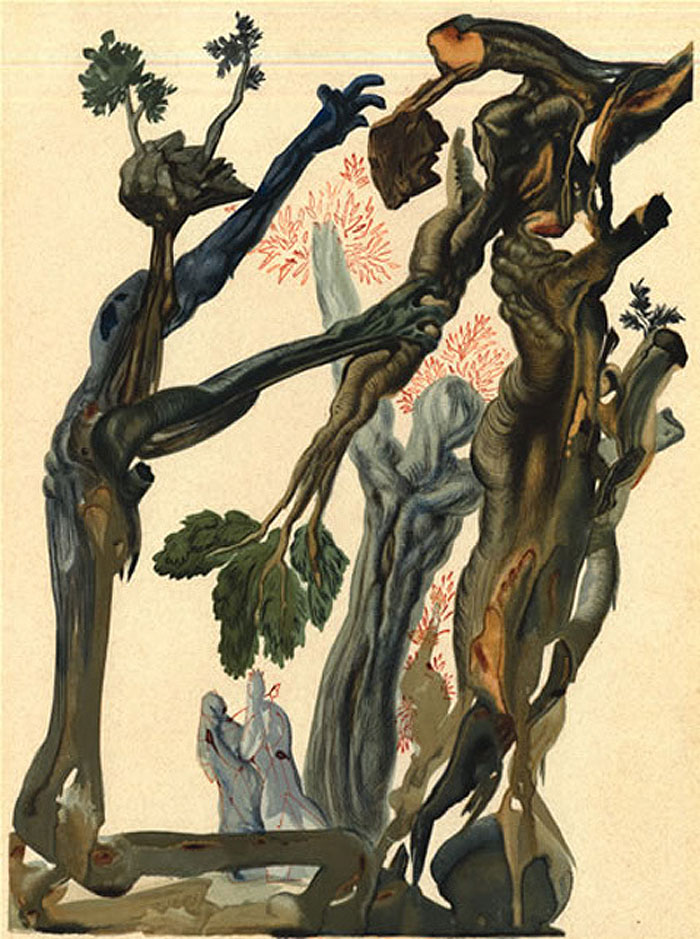
The Forest of Suicides — Salvador Dali

dali-divine-comedy-05

Portrait of Gina Severini — Gino Severini

12273OP1036AU19568

List with No Name #47

  1. Charles Weedon Westover killed himself on February 8th, 1990.
  2. He was 55.
  3. He shot himself in the head with a .22-caliber rifle.
  4. Between the eye and the ear.
  5. The right eye and the right ear.
  6. The temple.
  7. Charles Weedon Westover was better known by his stage name, Del Shannon.
  8. The name printed on his death certificate is “Charles Weedon Westover” though.
  9. CWW found success as Del Shannon, performing and recording the song “Runaway.”
  10. The 7″ 45rpm recording of “Runaway” became a number one Billboard hit in the United States of America in February of 1961.
  11. “Runaway” was the number one hit in America for four weeks.
  12. It was later a number one hit in the United Kingdom.
  13. And Australia.
  14. But it was not a number one hit in 1967, when CWW as Del Shannon rerecorded it as “Runaway ’67.”
  15. In fact, “Runaway ’67” failed to chart.
  16. CWW, under the name Del Shannon, wrote “Runaway” with Max Crook.
  17. Crook played the strange, dark, jaunty, bipolar solo in “Runaway.”
  18. Crook played the solo on a musical instrument of his own invention, a type of early electronic synthesizer he called the Musitron.
  19. Crook’s Musitron was a modified version of an earlier synthesizer, the clavioline (similar, of course, to an ondioline).
  20. Perhaps Crook’s most significant modification was adding reverb to his organ via a custom-built echo chamber that incorporated garden gate springs.
  21. Crook’s solo is the haunting spirit of a haunting song.
  22. Or maybe the haunting spirit is actually CWW/DS’s falsetto, which cracks through the piano and baritone sax approximately 45 seconds into the song, announcing that the narrator wah-wah-wah-wah-wonders why why why why why why she ran away.
  23. The lyric is simple but also dark, portentous, loaded with a primal anxiety that hints at outright menace.
  24. Why a “runaway”?
  25. Why did she run away?
  26. And why does the narrator want her there with him, walking in the rain?
  27. (To end this misery).
  28. CWW continued recording and performing as Del Shannon for the rest of his life.
  29. His final performance was in Fargo, ND, not a week before his suicide.
  30. Of course he sang “Runaway” there.
  31. It was his biggest hit.
  32. None of his other songs came even close.
  33. He did the alcoholic thing, the drug addict thing, and then the AA thing.
  34. He was, by all accounts, a life-long manic depressive.
  35. And many claimed a kind man.
  36. A generous man.
  37. He played “Runaway” on the David Letterman Show in 1986, shouting the song but hitting the falsetto.
  38. (Back in 1961, Harry Balk, who produced “Runaway,” had to speed up the recording–from an A minor to a B flat–to match CWW’s vocal–he was nervous and flat).
  39. Shirley Westover, his wife of 31 years, had left him the year before his Letterman appearance.
  40. CWW remarried in 1987. He married a neighbor’s daughter, Bonnie Tyson (also known as LeAnne Gutierrez), who was half his age at the time of the marriage.
  41. Bonnie found CWW’s body.
  42. Slumped in a rocking chair, wearing his bathrobe but not his hair piece.
  43. He was working on music with Tom Petty and Jeff Lynne around the time of his death.
  44. And clearly a Wilbury in spirit.
  45. CWW has no grave.