Alain Resnais on the Script for Last Year at Marienbad

Should have been (T.S. Eliot)

Capture

Chassy by the Fireplace — Balthus

Library Rules (William H. Gass)

We can’t frisk our customers—I wouldn’t want to put my hands on some—but in the reading room or anywhere—if you see someone taking notes with a pen, you must caution them. Highli—? Indeed. Highlighters—highlighters are evil, they must be immediately confiscated and their users given a talking-to, even if they are marking up their own books or some harmless paper copies. Oh … Marjorie raised her hands to heaven. How I hate highlighters—you don’t use them, do you? Joseph wagged his head. Good, she said, good sign. The dog-ear people do it, stupid students do it, and they will grow dog-ears in due time. You don’t do dogs, do you, Joseph? We never could afford a pet, Joseph said. Good sign. Good sign. Dogs are bad for books. Don’t ever do dogs. They chew. Cats are bad, too. They claw. They love to rub their chins on the corners of covers, leave sneezers of fur. Rub their chins and grin at you. Before they fade from view, Joseph said. Oh, you are a darling, I kiss the nearby air, Marjorie exclaimed.

But it would not be for the last time. The neighboring air got many a smooch. Marjorie’s approval made Joey happy. He was a success.

Do not lean with heavy hands or rest your elbows on a book, even closed, even at apparent peace. You know why, I suppose?

Ah—

It compresses the covers against the spine and may crack the adhesive.

Oh.

Do not use a book as a writing board. Points can make indentations, especially—you’d be surprised—on jackets, many of which are waxy, slick, easily marked, for example, with a fingernail. And never put your notepaper on an open book, even to write a word—a dozen crimes in one action there.

I wouldn’t do that. Open books are so uneven.

Never mark in a book not your own, but even then, unless you think you’re Aristotle, never make a marginal note or a clever remark you will surely regret, and always assume the author is smarter than you are—have you written a book on his subject? … well?—so put down your differences on a piece of paper made for the purpose, or keep the quarrel quietly in your head where it will bother only you and never fluster another, not even your future self who will have forgotten the dispute, you can be sure, and will not wish to be reminded.

Yes, ma’am.

Marjorie. Not Miss, Mizz, or Ma’am. Marjorie. Marjorie.

It was a nice name, he thought, well syllabled.

Don’t put your palms down on illustrations, reproductions, any page at all, really, because even the most fastidious sweat—men sweat the most, women have more discipline over their bodies—did you know that? except for their hands, their hands are public advertisements, they encounter a porcupine, a precipice, a proposal, and their palms get runny; oh yes, and in the old days, when men kissed a milady’s hand, it was the top of it they put their lips to, not the palm, you never know where the palm has been or what it’s been wrapped around. Well. Where was … Ah … Be wary. Inks may smear. Pigments flake. Thumb oils may seep into the paper, leave prints, and sweat attracts insects, did you know? also there may be a fungus in the neighborhood. Sweat is a magnet.

Gee, I didn’t know that.

Joseph. That is your last “gee.” Never even feel—“gee.” You are a grown-up.

Okay …“Okay” is also out? Gee … Okay.

Marjorie laughed like a wind chime. Good man, she said. Good man.

From William H. Gass’s novel Middle C.

Flowers in a Crystal Vase — Edouard Manet

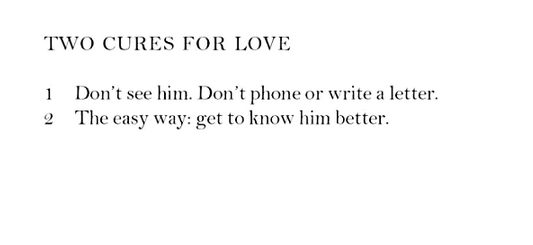
“Two Cures for Love” — Wendy Cope

Capture

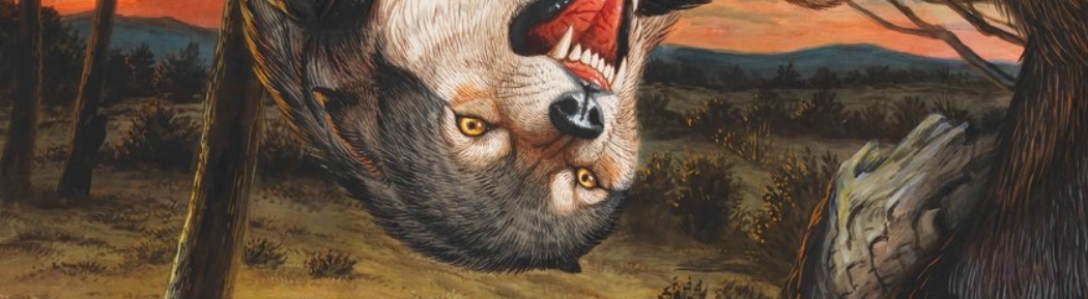
Four-Dimensional Abduction — Ryan Heshka

unnamed

“Hubert and Minnie” — Aldous Huxley

“Hubert and Minnie”

by

Aldous Huxley

For Hubert Lapell this first love-affair was extremely important. “Important” was the word he had used himself when he was writing about it in his diary. It was an event in his life, a real event for a change. It marked, he felt, a genuine turning-point in his spiritual development.

“Voltaire,” he wrote in his diary – and he wrote it a second time in one of his letters to Minnie – “Voltaire said that one died twice: once with the death of the whole body and once before, with the death of one’s capacity to love. And in the same way one is born twice, the second time being on the occasion when one first falls in love. One is born, then, into a new world – a world of intenser feelings, heightened values, more penetrating insights.” And so on.

In point of actual fact Hubert found this new world a little disappointing. The intenser feelings proved to be rather mild not by any means up to literary standards.

“I tell thee I am mad
In Cressid’s love. Thou answer’st; she is fair,
Pour’st in the open ulcer of my heart
Her eyes, her hair, her cheek, her gait, her voice….”

No, it certainly wasn’t quite that. In his diary, in his letters to Minnie, he painted, it is true, a series of brilliant and romantic landscapes of the new world. But they were composite imaginary landscapes in the manner of Salvator Rosa – richer, wilder, more picturesquely clear-obscure than the real thing. Hubert would seize with avidity on the least velleity of an unhappiness, a physical desire, a spiritual yearning, to work it up in his letters and journals into something substantially romantic. There were times, generally very late at night, when he succeeded in persuading himself that he was indeed the wildest, unhappiest, most passionate of lovers. But in the daytime he went about his business nourishing something like a grievance against love. The thing was a bit of a fraud; yes, really, he decided, rather a fraud. All the same, he supposed it was important. Continue reading ““Hubert and Minnie” — Aldous Huxley”

Portrait of Henri Cordier, teacher at the School of Oriental Languages — Gustave Caillebotte

“Scolds, schlemiels, schnorrers, schnooks, schmucks, schlumps…” (William H. Gass)

When young and full of fellow feeling, Professor Joseph Skizzen had been tormented by the thought that the human race (which he naïvely believed was made up of great composers, a few harmlessly lecherous painters, maybe a mathematician or a scientist, a salon of writers, all aiming at higher things however they otherwise carried on) … that such an ennobled species might not prosper, indeed, might not survive in any serious way—symphonies sinking like torpedoed ships, murals spray-canned out of sight, statues toppled, books burned, plays updated by posturing directors; but now, older, wiser—more jaundiced, it’s true—he worried that it might (now that he saw that the human world was packed with politicians who could not even spell “scruple”; now that he saw that it was crammed with commercial types who adored only American money; now that he saw how it had been overrun by religious stupefiers, mountebanks, charlatans, obfuscators, and other dedicated misleaders, as well as corrupt professionals of all kinds—ten o’clock scholars, malpracticing doctors, bribed judges, sleepy deans, callous munitions makers and their pompous generals, pedophilic priests, but probably not pet lovers, not arborists, not gardeners—but Puritans, squeezers, and other assholes, ladies bountiful, ladies easy, shoppers diligent, lobbyists greedy, Eagle Scouts, racist cops, loan sharks, backbiters, gun runners, spies, Judases, philistines, vulgarians, dumbbells, dolts, boobs, louts, jerks, jocks, creeps, yokels, cretins, simps, pipsqueaks—not a mensch among them—nebbechs, scolds, schlemiels, schnorrers, schnooks, schmucks, schlumps, dummkopfs, potato heads, klutzes, not to omit pushers, bigots, born-again Bible bangers, users, conmen, ass kissers, Casanovas, pimps, thieves and their sort, rapists and their kind, murderers and their ilk—the pugnacious, the miserly, the envious, the litigatious, the avaricious, the gluttonous, the lubricious, the jealous, the profligate, the gossipacious, the indifferent, the bored), well, now that he saw it had been so infested, he worried that the race might … might what? … the whole lot might sail on through floods of their own blood like a proud ship and parade out of the new Noah’s ark in the required pairs—for breeding, one of each sex—sportscasters, programmers, promoters, polluters, stockbrokers, bankers, body builders, busty models, show hosts, stamp and coin collectors, crooners, glamour girls, addicts, gamblers, shirkers, solicitors, opportunists, insatiable developers, arrogant agents, fudging accountants, yellow journalists, ambulance chasers and shysters of every sleazy pursuit, CEOs at the head of a whole column of white-collar crooks, psychiatrists, osteopaths, snake oilers, hucksters, fawners, fans of funerals, fortune-tellers and other prognosticators, road warriors, chieftains, Klansmen, Shriners, men and women of any cloth and any holy order—at every step moister of cunt and stiffer of cock than any cock or cunt before them, even back when the world was new, now saved and saved with spunk enough to couple and restock the pop … the pop … the goddamn population.

From William H. Gass’s novel Middle C.
Horde — Daniel Richter

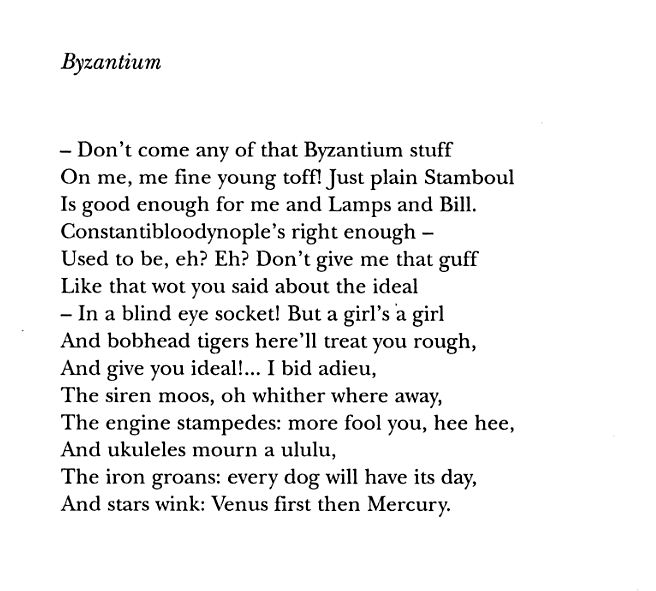
“Byzantium” — Malcolm Lowry

byz

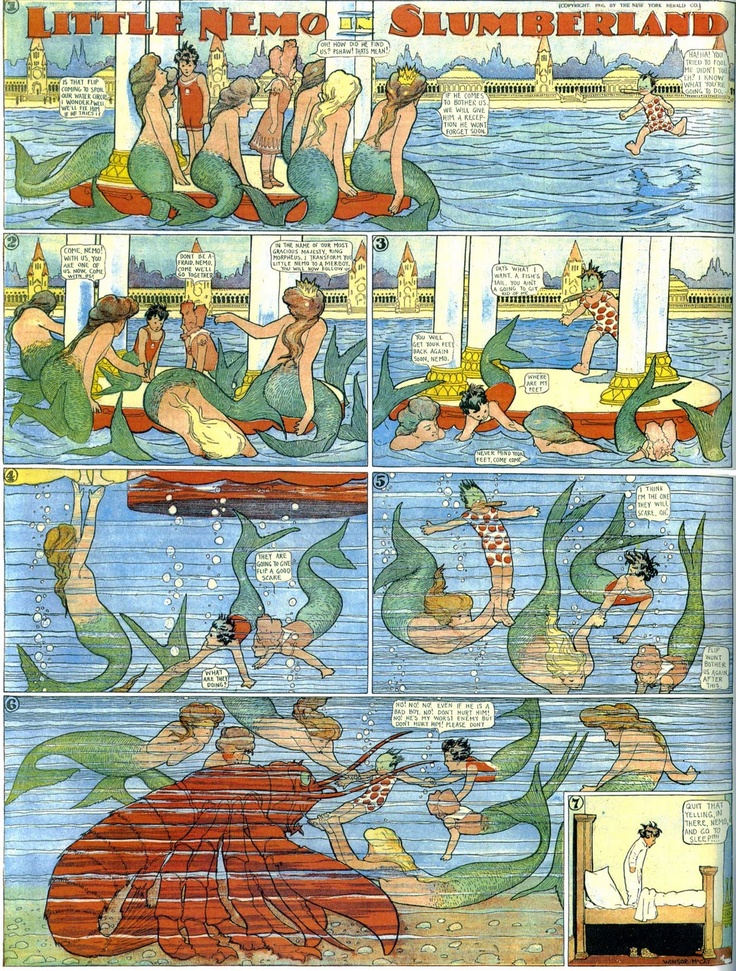
Little Nemo Meets Some Mermaids (Winsor McCay)

4a483d724fd12264e00df73c0fdf878b

(Image via).

“People brutalise everything” (Thomas Bernhard)

People brutalise everything. They get up noisily, go about noisily all day, and go to bed noisily. And they constantly talk far too noisily. They are so taken up with themselves that they don’t notice the distress they constantly cause to others, to those who are sick. Everything they do, everything they say causes distress to people like us. And in this way they force anyone who is sick more and more into the background until he’s no longer noticed. And the sick person withdraws into his background. But every life, every existence, belongs to one person and one person only, and no one else has the right to force this life and this existence to one side, to force it out of the way, to force it out of existence. We’ll go by ourselves, as we have the right to do. That’s part of the natural course.

From Thomas Bernhard’s novel Concrete.

At Church — Carl Larsson

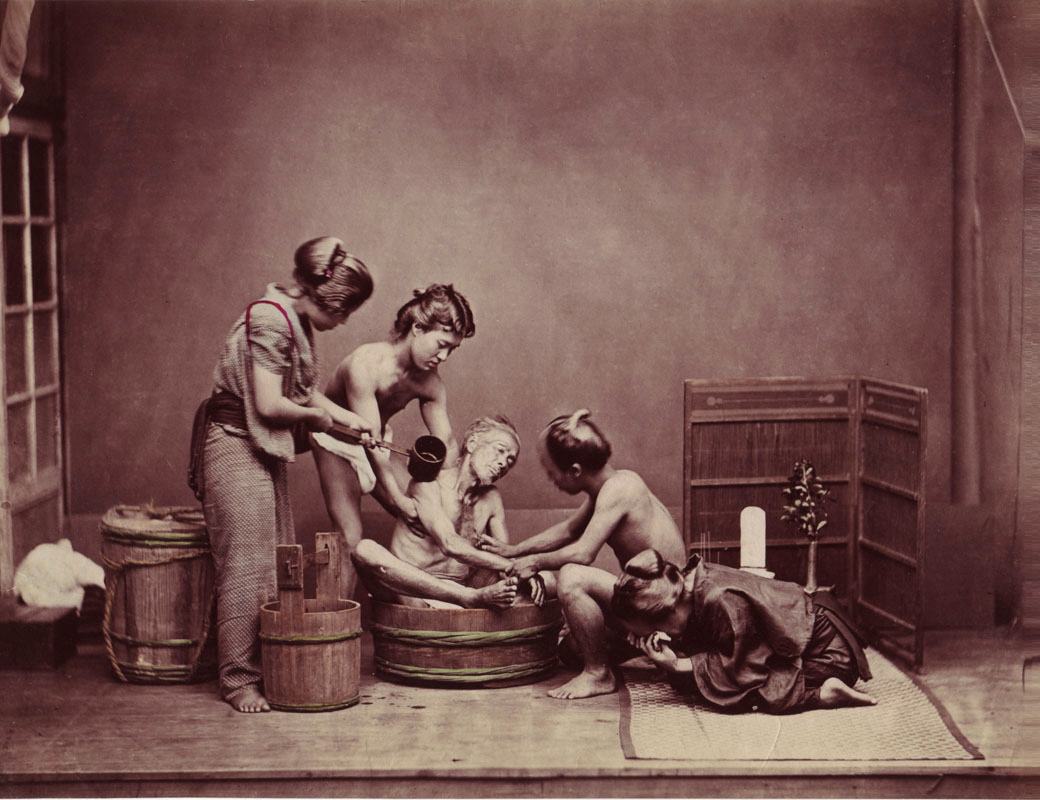
A Japanese Family Prepares a Corpse for Burial

abMeK(Via.)

“The Death of Queen Jane” (Inside Llewyn Davis)