25 Lines on Poetry

1. I do not like poetry.

2. I like folk songs, sea shanties, nursery rhymes, limericks, hymns, field hollers, riddles, epigrams, epigraphs, epitaphs, epithets, obituary notices, fortune cookie fortunes, square dance calls, confiscated notes, found diary entries, proverbs, anagrams, aphorisms, catcalls, insults, howls, air kisses, and handshakes, but I do not like poetry.

3. OK, maybe I like a poem or two. Or a poet or two.

4. I admit: I love the words of Walt Whitman. I unstop my throat to sing his praises. I lean and loafe at my ease with him. I laze it up.

5. Also, I admit: Emily Dickinson makes the good poems. Or made them (she is, I know, long dead). Her poems at first seem neat and tidy and even sparkly, but upon closer inspection bristle like riddles riddled with slant rhymes. Sex and death.

6. And, when I was younger: e.e. cummings (E.E. Cummings?). Later, I discovered that he was Not to be Taken Seriously as Serious Poet, Seriously.

7. But that was OK. Because I knew by then that I don’t like poetry.

8. I do like to read the occasional poem: William Carlos Williams, Langston Hughes, James Weldon Johnson, William Blake: all have written a verse or two worth pondering over for a few idle moments.

9. But I mistrust the reading of volumes of poetry.

10. I also mistrust contemporary poetry and contemporary poets (although I know very few poets, MFAs both of them, and they are very good people, but I don’t know where they get off calling themselves poets).

11. Rap lyrics are not poetry: I’m just saying.

12. I took a poetry class when I was in university. It was required. I didn’t enjoy it, not even a little. The only poem I remember liking even a little was Gerard Manley Hopkins’s “The Windhover.” I liked the alliteration, but I don’t remember what it was about. My teacher seemed to think it was a lesser poem and Hopkins was a lesser poet.

13. “Howl”–garbage? Garbage, am I right?

14. But then again, I didn’t care for On the Road.

15. I like to read a poem at random: perhaps in a periodical or a quarterly, sandwiched between factoids and graphics and fragments of narrative essay.

16. Poetry may or may not still be considered the highest art form: I think it is probably not considered the highest art form anymore: no one reads poetry anymore: not unless they have to: for school, y’know?

17. Ezra Pound and T.S. Eliot: Bob Dylan wrote about these guys: Bob Dylan: not a poet: Dylan Thomas: he wrote a poem or two I like: “Rage, rage against the dying of the light”: that’s a nice sentiment: a nice poem: but–

18. Ezra Pound and T.S. Eliot: hard to decipher: If I’m going to put that much effort into reading something, it’s going to be Derrida or Freud or James Joyce.

19. James Joyce: not much of a poet, strangely (maybe not strangely?) enough: not strangely, I’ve decided.

20. MFA programs now produce poets who write for an audience of other MFA poets. Meanwhile, school children sing the body electric and miss all the psychological subtlety of “The Raven.”

21. Poe: Poe is the Greatest American Writer Who Never Wrote a Great American Novel (maybe if he hadn’t died in the gutter at only 40…).

22. Poe: I like his poems, in small doses (like shots of syrupy night time cold medicine, thick and green).

23. You will now forget the awful simile above: we will all agree it was poorly written: a bad idea.

24. Also, let’s forget all about points 1-21 as well, and we might as well forget about point 23 to boot.

25. In fact, the whole post has been ridiculous and ridiculous: mea culpa.

Alphonso Lingis to Speak at UNF

first-person.jpg

American philosopher and noted writer Alphonso Lingis will deliver a talk on “War and Splendor” at the University of North Florida, in Jacksonville, Florida, at 7:30 pm on Wednesday, October 3rd. Dr. Lingis is Professor Emeritus of Philosophy at Pennsylvania State University; his writing lyrically bridges the gaps between the liberal arts of anthropology and philosophy. Dr. Lingis’s current work, including his latest book, The First Person Singular, has focused on his travels to developing nations in Africa, South America, and Asia. By all accounts, Dr. Lingis is a fascinating speaker whose use of costumes, make-up, and music during his “lectures” creates an air of performance art. You can read more about Alphonso Lingis here. If you have the time, I highly recommend checking out Lingis’s paper “Our Uncertain Compassion.” Go here to reserve free tickets to see Dr. Lingis speak (your receipt will also provide directions. This promises to be both enlightening and entertaining–don’t miss it!

Jacksonville readers can look forward to more engaging speakers at UNF over the month of October, including resident genius Dr. Samuel Kimball and PBS documentary maker Ken Burns. Updates and info forthcoming.


Dubliners — James Joyce

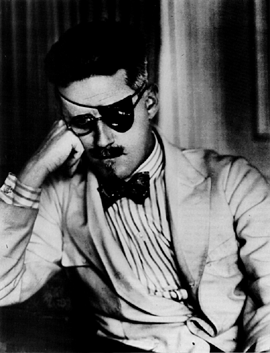
#1 Stunna James Joyce thinkin’ deep thoughts

James Joyce’s Dubliners was one of those books I read in college, shelved under “got it,” and moved on without a second thought. I just re-read (and then re-re-read) the collection again: there’s much, much more to this book than I remembered. Dubliners has always been overshadowed by Joyce’s later works, A Portrait of the Artist as a Young Man, Ulysses, and Finnegans Wake. A closer reading of these fifteen short stories–which effectively unite as a work of complex structure–reveals that many of the themes of the later masterpieces, as well as Joyce’s rhetorical technique, are prefigured in Dubliners. On the surface, the stories seem straightforward–at least in a modernist/realist sense–slice of life urban literature, stripped of romance. Indeed, Dubliners seems to take all of its characters at an ironic distance, treating the protagonists to a series of negative epiphanies. Joyce explores the literally vulgar language of commerce, rife with trite clichés and placeholders, to show how what is not said in customary discourse jars against what custom does permit. The greatest aspect of psychological realism (whatever that means) in Dubliners results from the conflation of voices at play in the stories. The characters imagine their identities in language, a language culled from equal parts Romantic poetry and Bible verses and street signs and post office directories. The intense self-consciousness revealed by the characters calls for a strange mix of empathy and loathing and ironic distancing and even embarrassment on the part of the reader. I think that this style, combined with the anti-epiphanies figured in each story, is something so thoroughly normal, even expected by the contemporary reader, that it becomes easy to overlook just how groundbreaking and prescient these stories were at the beginning of the twentieth century. If you’ve read these, take the time to re-read them. If you haven’t given Joyce a shot, this is the right place to start.

If you don’t have time to read all fifteen in the collection but still want the rhetorical gist, read: “The Sisters,” “Araby,” “An Encounter,” “Eveline,” “Two Gallants,” “A Little Cloud,” “A Painful Case,” and, of course, “The Dead.” Or, if you’re really pressed for time: “The Sisters” and “The Dead.” Have at it.

“We All Are Beefin”: A Treatise on the Current International Difficulties and Foreign Entanglements Faced by the United States of America, with Particular Respect to How Said Difficulties and Entaglements May Be Satisfactorily Resolved

I found this on the floor of my classroom; I’m assuming it’s a student’s response to a prompt given by the social studies teacher who has my classroom while I’m on my planning period. I don’t know the student. What follows is the student’s response, verbatim:

“I think the US should blow up Iraq because Iraq is hating on the US and they would do whatever it takes to blow up us and we all are beefin.”

Clearly, this kid is savvy enough to work for the Bush administration.

Ineluctable Modality of the Funny Papers


finnegan1.gif

The first line of Joyce’s Finnegans Wake in comics form. Part II here (but, um, there’s like more to the book, of course), and check out the rest of Galumph’s comic book poetry (“Tales of Adventure & Girls–Stories to Make You Sad”).

Don’t Tase Me, Bro!

What happened here?

UF is my alma mater and my own experience with the UPD during those years was actually pretty good. Why do they initially try to cuff this guy?

The Alligator reports he’s arrested for starting a riot. Do you see a riot?

Thanks to Damon for the story.

50 Great Guitarists, All Better Than Slash (In No Particular Order)–Part V

21. Duane Allman

Although he only played on the first two Allman Brothers albums (“only” does not seem an appropriate modifier here, given how goddamn great those albums are), Duane Allman left behind an enormous legacy in rock and soul music, appearing on singles by King Curtis, Otis Redding, Aretha Franklin, Clarence Carter, along with many others. He also dueled with Eric Clapton on “Layla” (my theory: everything awesome on that track has to do with Allman) and whatever else is on that Derek and the Dominoes album. Allman’s early death by motorcycle accident may have cemented a romantic legacy, but my gut feeling is that he would have been more Neil Young (consistent and relevant) and less fat Elvis (uhmmm…you get the idea) had he had time to produce more music.

22. Derek Bailey

Bailey’s avant garde approach to acoustic (and, to a lesser extent, electric) guitar stands out as one of the most challenging and wholly original styles on this list. Bailey is certainly a Not For Everyone type of guitarist: on first listen his music may sound like a stuttering and spewing mess, a series of discontinuous notes that aggravates the ear and angers the blood. But Bailey’s style–besides influencing everyone from Sonic Youth to Fred Frith to Keiji Haino–manages to eschew all the wankery inherent in “free jazz,” replacing it with an odd mix of humor and soul.

Some late period grace:

23. Jim O’Rourke

Jim O’Rourke is responsible for three of my all-time-favorite-albums: Bad Timing, Eureka, and, along with cohort David Grubbs under the Gastr del Sol moniker, 1996’s Upgrade & Afterlife (an album that I rank along with Pet Sounds, Loveless, and Fear of Music as a slice of sonic perfection). Mr. O’Rourke has produced and mixed more worthy albums than I have space here to mention (although it’s worth pointing out that he is often credited as “saving” Wilco’s Yankee Hotel Foxtrot (see: documentary film I Am Trying to Break Your Heart)), and he was even asked to join Sonic Youth as a fifth member. He’s also done numerous soundtracks, including work with Biblioklept favorite Werner Herzog. Apparently Mr. O’Rourke has quit making albums and has decided to work on making movies instead. Note to Jim: please please please do another solo album–Loose Fur’s Born Again in the USA was good but not great, and we know you have more songs to share! But it seems that I forgot to mention his guitar playing: this is getting long, so suffice to say, he’s better than Slash–a lot better.

O’Rourke plays “The Workplace” (from the EP Halfway to a Threeway) live:

24. David Pajo

David Pajo was in Slint. He also played guitar for Tortoise on the sublime Millions Now Living Will Never Die album. He’s also one of Will Oldham’s finest partners, adding the guitars for a number of Oldham/Bonnie ‘Prince’ Billy albums, including ‘klept fave Ease Down the Road. I could end there, but Pajo is also the mastermind behind Aerial M and Papa M, two bands responsible for some of the finest “post-rock” this side of the nineties. When Pajo joined Billy Corgan’s ill-fated “comeback” band Zwan (along with Matt Sweeney, of all people), I actually took the time to listen (it wasn’t half bad, really). One of those guys who makes everything he touches a little bit better.

Cool video for “Krusty” from Pajo’s 2001 album, Whatever, Mortal. “Krusty” sounds more like it should come from Pajo’s finest work, ’99’s Live from a Shark Cage–

25. Dick Dale

Dick Dale, surf-rock king, blah blah blah. Dick Dale invented the genre from scratch it seems, providing a template not only for a myriad of copycats from the Ventures to Man or Astroman?, but also some of the basis for flashy heavy metal soloing. And while I’m not a big fan of the genre of “surf rock” anymore (thanks in large part to the mid-nineties overkill of bands like Man or Astroman?), I have to respect Dick Dale’s panache, his verve, and his sheer virtuoso talent on his instrument. Oh, and he’s better than Slash.

“Misirlou” (aka the soundtrack to that ass-rape scene from Pulp Fiction)

Lazy Friday: It’s Always Sunny in Philadelphia

Last night, instead of finishing up James Joyce’s Dubliners like I should have, I watched the season premiere of the third season of It’s Always Sunny in Philadelphia. I started watching this show last year; the FX network (on which the show airs) employed the excellent strategy of running season one reruns after season two episodes, and I quickly got hooked. Sunny follows the nefarious schemes and haphazard adventures of a gang of Philadelphia friends who are not real big on brotherly love. They own a bar that no one seems to go to, the typical site of many a scene. They drink like fish and smoke like chimneys, and are generally a detestable (or lovable, depending on your inclination) group of ne’er-do-wells (the quartet from Seinfeld have nothing on the Sunny gang when it comes to petty meanness, despicable dishonesty, and downright criminal behavior).

Last night’s episodes (it looks like FX will run two new episodes back-to-back, insuring that I’ll be groggy for my 5:30am wake-up call every Friday) were hilarious, particularly the season opener “The Gang Finds a Dumpster Baby.” Interestingly, both of the new episodes contained acid-trip sequences, which is always great in a situation comedy (a pistol-waving, balls-tripping Danny DeVito in the second season three episode, “The Gang Gets Invincible” plays like a classic Hunter S. Thompson moment).

I highly recommend this TV show: it’s frequently tasteless and always funny. Check out this clip from “The Gang Gives Back.”

We Will Never Forget (And Neither Will You, Kids)

kirkspocksept11.jpg

So, I work at a high school, and every year, around September 11th, I get some kind of memo from my boss–the school’s principal–reminding the teachers to “talk to the kids about 9/11.” Each year I get roughly the same version of a 9/11 narrative from the kids. The following phrases are pulled from actual past narratives, and are chosen because they represent the basic thrust of most of the writings. Occasionally a narrative will be of some interest–maybe a kid from New York or D.C., or a particularly thoughtful or sensitive kid–but on the whole, the following is pretty standard:

“They turned on the TV. My teacher was crying. I didn’t know what was going on. I was in middle school [ed. note–in the past couple of years, depending on the grade I teach of course, the kids tend to be in elementary school–this years batch were about ten years old in 2001]. I was scared, but then I was happy because I got to go home. It didn’t really effect me. I didn’t really care. We should get school off every 9/11.”

The memo this year likened 9/11 to life-changing “I remember where I was when _____” events like the bombing of Pearl Harbor, the Apollo moon landing, the JFK assassination, and (no kidding) the 2004 World Championship of the Boston Red Sox.

On one hand, I have no problem with this: I will never forget where I was on the morning of 9/11 (asleep and hungover in my brother’s old bed in my parents’ house) or what I was doing (nothing; I was unemployed; I was supposed to move to Tokyo the following week) or how I felt (shocked and scared and weirded out and secretly selfishly ashamedly worried that my international plans were now in jeopardy). I add my own experiences parenthetically, because the are of no importance; still, the spectacular disaster of 9/11–no matter what your take on the whole thing is (how it happened and who did it and why it was done, etc.)–the spectacular disaster of 9/11 exists as an ideological construct demarcating a social shift: hence the term post-9/11 and all things post-9/11, etc. etc. etc.

And so well this is my problem: what are we doing when we mark the day to these children; specifically, what am I–a teacher–doing when I affirm the ideological significance of 9/11 to my students, despite the fact that they clearly–repeatedly–have no interest beyond self-interest in the whole thing (“We should get the day off school”)? This is not a rhetorical question; this is an earnest and most sincere question, one that I don’t have an answer for. My students display the same distanced ambivalence toward 9/11 that I might hold for, say, the U.S. exit from Saigon or the bombing of Pearl Harbor. It’s something that I’ve been told I should care about for a range of historical reasons beyond my personal control or personal range of power; somehow, it should inform my identity (“American”) and my ideology (“good American”). I accept these ideological markers as “historical facts” and neglect the margins of history in favor of a much easier story to follow.

I’m not railing against the “importance” of 9/11 or whether or not 9/11 is important: I go back to my question in the previous paragraph: what am I doing when I affirm the ideological significance of 9/11 to my students? Exactly what ideology is being affirmed? Why is 9/11 like the Apollo moon landing or the JFK assassination? By transitive property of its I-remember-where-I-wasness? Clearly this has to be a public where-I-wasness, a shared where-I-wasness; nobody is going around comparing 9/11 to the day they lost their virginity or the day their child was born (although undoubtedly people got laid for the first time and children were born on 9/11/01). But this need to make sure our children recognize 9/11 as an ideological marker cannot simply be rooted in a shared where-I-wasness, can it?

My gut feeling is that the post-9/11 ideology may seem vague and amorphous, and may seem to be as-yet-undefined and up for grabs and still under debate, but in reality, there are forces at work shaping this ideology: the grand spectacle of 9/11 insured a public where-I-wasness that has honestly marked me. Now that mark, that trace, is something that I am expected to re-mark on, to pass on, to send down into my students. Only I’m not sure exactly what the mark means, and their vacant eyes affirm what I think I fear: my personal experience of where-I-wasness is just a symptom of acute exposure to spectacle, and nothing these kids really care about. And should they care?

Biblioklept: Big Blog Birthday, Unabashed Book Buying, and Nabokov at a Bargain

So today Biblioklept turns a healthy one year old. When I wrote that very first post about A Raisin in the Sun, I had no inkling of the vast riches on my horizon. Ahhh…simple youth. Them were the days, etc. etc. etc.

I’ll celebrate this momentous occasion by recounting my recent trip to my favorite used book sellers, where I loaded up on more than I can possibly read in 2007. Eidetic readers may recall my last book buying spree: I’m happy to report I read 5.5 out of 7 of the books bought on that trip (I’m only counting half of The Portable Faulkner): that’s almost 79%! Not bad. Because that’s what reading’s all about: percentages and stats. Like baseball.

The goods:

Finnegans Wake, James Joyce

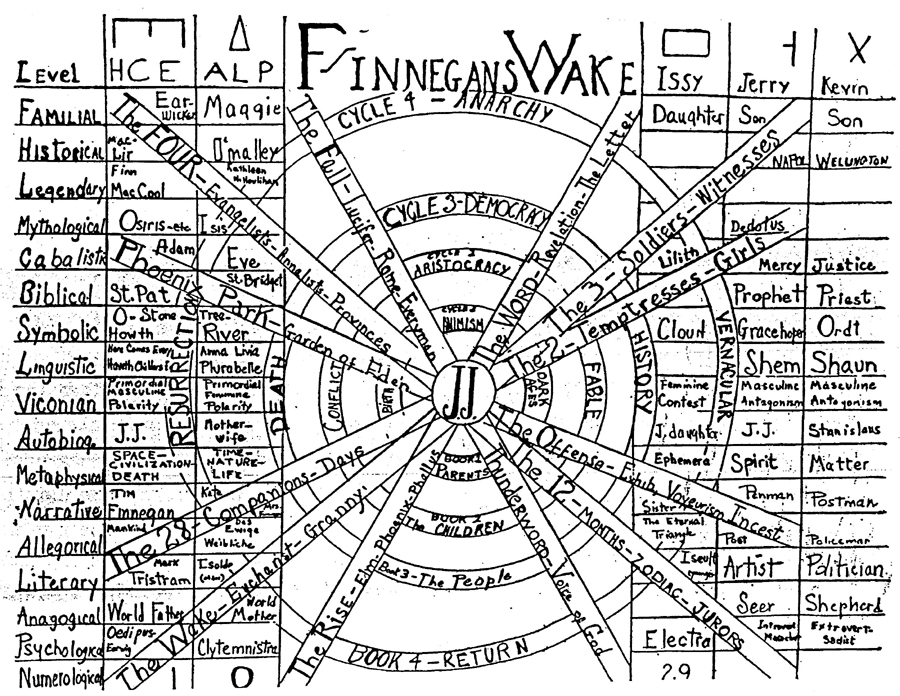
I’ve been dipping into the select chapters of FW included in The Portable Joyce for a few years now. I’m currently enrolled in a Joyce seminar but we won’t be reading more than a sentence or two of the book. My professor described it as a “vortex, a black hole from which no one returns.” He said this with a smile and meant it in good humor but maybe he has a point. The book is possibly probably incomprehensible unless you’re someone like, say, Terrence McKenna or L. Moholy-Nagy (whose graphic organizer for FW appears below) or Joseph Campbell.


moholy.jpg

I recently listened to a series of lectures given by Joseph Campbell on Joyce; Campbell suggests that FW is the dream that happens after Molly and Leopold Bloom fall asleep at the end of Ulysses. Campbell also posits that Joyce has a final book planned that would finish the four book cycle that began with Portrait; he thinks that the book would be very simple and clear and probably short, and would be thematically based on the mother-as-ocean. Campbell’s lectures are brilliant, beautiful, human, and humorous, and best of all, they are enlightening. Besides explicating the book as a whole, he also guides his audience through select sentences of FW in ways that make you go “!!!” Brilliant stuff.

You and I both know that I will probably never read this book in its entirety. That’s okay. It’s a vortex of fun.

The Amazing Adventures of Kavalier and Clay, Michael Chabon

kav-500pi.jpg

I almost bought this book in the central train station in Rome two summers ago; I bought Eugenides’s somewhat disappointing novel Middlesex instead, because my wife had more interest in it. I’ve actually started the book already (despite having a ton of Joyce and Joyce-related academic crap to read); it’s pretty good. I’ll probably finish it if I can keep up this pace.

Gun, With Occasional Music, Jonathan Lethem

gunmusic.jpg

It’s no secret that we’re big fans of Mr. Lethem around the ‘klept. This is supposed to be a mystery novel involving memory-annihilating drugs and thug kangaroos. My plan is to read this over the Thanksgiving break.

Vanished Splendors: A Memoir, Balthus (with Alan Vircondolet)

balthus.jpg

As with most of the books that I end up buying in labyrinthine used books stores, I found this by mistake. For some reason it was mixed in with children’s hardback picture books. Balthus is one of my favorite painters of all time, so of course I had to buy his memoir. The chapters are short, vague, and achronological, making this a book that you can just pick up and read at random (kinda like Finnegan’s Wake).

Nightfall: Country Lake, David Cunningham and Whistling Thorn, Helen Cowcher

If I wasn’t so lazy I’d go heat up the ole scanner and show you some of the beautiful images in these “children’s books.” I find that lots of children’s “picture” books tend to be condescending or just plain stupid, and finding good ones is not easy. I spent over 40 minutes plumbing through dusty boxes before coming across these two. David Cunningham’s gentle and dark-hued watercolor depictions of a lake at night are deep and soothing, as is the simple text that accompanies the illustrations. Cowcher’s Whistling Thorn details the evolution of acacia, giraffes, and rhinos. Lovely stuff.

Slow Century, Pavement (DVD)

I never look at the used DVDs; I have a Netflix account, library card, and a program called DVDShrink, so if I want to own a DVD it’s a pretty simple operation. Still, there are rare cases where I want the packaging, usually music films like Sonic Youth’s Corporate Ghost DVD. Like the Balthus book, I happened across this two-disc Pavement film among the children’s books. I’d seen it before: the hour long documentary is really good, and the videos are excellent. The concerts…well, I dunno. I’m not really into that kind of thing, unless Martin Scorsese and The Band are involved.

From said documentary: Pavement destroys Lollapalooza in West Virginia:

I think that’s it for this recent trip.

Now, I would be remiss if I didn’t include a book theft in our birthday edition, so here goes.

There really isn’t much to this story, and I’m actually deeply ashamed of this one. No irony, no joke. Most of the book thefts I discuss on this site are books that I’ve borrowed and never returned or books that I’ve purloined that no one was going to read anyway. This one is a straight-up theft from an indie book store. Ouch.

When I was a young stupid college freshman (note the defensive tone)–it was my first semester in fact–I had to go to a certain Gainesville book store to buy my course texts. They seemed outrageously overpriced and I was outraged, despite the stipend the state of Florida was giving me as part of my scholarship to buy books (I thought of this as beer money). In order to “get even” with these high prices, I not-so-subtly swiped a copy of Nabokov’s Laughter in the Dark: I simply picked it up after I’d paid for my course texts, walked out of the store with it, got on my bicycle, road home, and never read it. That was about ten years ago. Mea culpa. I’ve never done anything like that since, and, like I said, I feel bad about it now, so bad that every time I pick up the book to give it a shot, a small shudder of shame creeps through me and I put it down.

So there you go: new books and a book theft. Here’s to another year of cranky commentary with elitist overtones.

How to Write a Review for Pitchfork

1. Brainstorm: Good writing always starts by brainstorming. You need to figure out the Official Editorial Position Pitchfork will be taking on the artist being reviewed: are they an old favorite trying something new? Are they an old favorite that are not doing something new? Were they once-loved but now no one’s sure how to feel about them? Figure out how your audience should feel about the album ahead of time, as this will make it easier to review the album when you actually listen to it. Remember, millions of kids are reading the site everyday; they need to know who to think is cool and who to think is washed-up and who to never give a chance to at all (it might be worth pointing out that the Official Editorial Position should be neatly summed up in the album’s 0.0-10 “score,” making it easier for the semi-literate to quickly figure out how they should feel about the album).

2. Research: Okay, you can go ahead and listen to the album now that you know how to feel about it. While you’re killing time, troll the internet for any juicy or salacious info on the artist in question that might come in handy: is there a gimmick or an angle to the artist? Are they fat? Black? Brother-sister team? Crazy? People nowadays want more from their indie music than just good tunes. Figure it out (conversely, maybe the fact that the artist is “trad” indie–four-on-the-floor white guys–could be your angle. Just sayin’).

3. Outline: If you don’t outline your writing, you’ll end up with an amorphous blob of a review. You probably have less than 800 words, and you don’t want to waste them on peripheral and superfluous info, like a description of the music or the lyrics. If you need help developing your outline, refer to the steps below.

4. Introduction: Normally when one writes, it’s a good idea to introduce the subject with a thesis right away, so that the reader knows what’s going on. However, Pitchfork’s Editorial Staff clearly sees itself as continuing the tradition of the Lester Bangs school of music criticism; therefore, it’s a good idea to start off your review with a tedious personal anecdote or seemingly unnecessary condensation of the band’s history up until now. You can even wax pseudo-intellectual on some of that deconstruction shit you learned in college, especially if you’re reviewing superior music that no one can understand because it’s so superior and odd and seemingly unmusical to those who just don’t get it (noise music, f’r’instance). You need to contextualize the Official Editorial Position right away. This is where that research will come in handy. It’s also good to be cryptic and vague about your position on the actual music–that’s what the album’s score is for, after all.

5. Body: Again, normally when one writes, the body of the essay should contain specific evidence that supports the thesis proposed in the introduction. However, if you’ve written your introduction properly, you shouldn’t have a clear thesis and therefore you don’t have to worry about supporting it. This frees you up to riff on whatever you feel like–social trends that are bugging you, a movie you recently saw, girl trouble, politics–whatever. It’s important to come off as cool and hip and authoritative here. If you get around to it, you can talk about a song or two, and even some of the lyrics or music. Just be careful not to go overboard describing the way the music sounds (which shouldn’t be too difficult, because describing music in words is actually not so easy).

6. Conclusion: Is it even possible to write a real conclusion in this post-modern world? Challenge your readers by finally giving them a thesis of some kind. This will insure that they’ll have to go back through the review to figure out what you were trying to say (as if that Official Editorial Position album score wasn’t enough). Or, better yet, leave them hanging–give them a question to chew on, or a quote or something. That’s some deep shit, man.

7. Diction: Remember, you’re writing for a hip internet site and your vocabulary needs to reflect that. Whenever possible use verbs that “pop”–don’t worry about how inappropriate or unfitting they may seem, if they invoke a strange action, especially one that doesn’t seem to go with listening to music, go with it. Also, don’t waste your time describing the musicality of the album when Pitchfork has already created its own lexicon to help you. Using vague adjectives like “sun-kissed” and “art-damaged” will lend authenticity to your review and make your readers nod their heads knowingly.

8. Score: As I mentioned, Pitchfork reviews score the album on a 0.0-10 scale. Although no one really understands this sliding scale, it’s important to note that most people won’t really read your review: they’ll look at the score and skim it (hence the need for all that diction that “pops”). Still, it seems like any score below a 7.0 is not passing; 8.5 or higher is reserved for the cream of the crop. Special cases may call for a 0.0, like the review of the Flaming Lips’ album Zaireeka, an album that must be played on four CD players at once (of course this album warranted a 0.0; who could possibly take the time to find three friends with CD players, share the communal experience of quadrophonic sound the Lips intended–actually listen to the album–and write a review in time for a deadline? Not possible). Save 0.0s for Big Editorial Statements (I’m reminded of the “we don’t love you anymore” message sent to Sonic Youth after NYC Ghosts & Flowers). Similarly, really high scores should be reserved for Grand Artistic Statements by new bands that no one will care about next year.

9. Parting Thoughts: Remember, have fun with it, but not too much fun–after all you’re writing for the hippest music site there is, one that even has it’s own weekend festival dealie now. So just remain calm, cool, and collected–you have the weight of the Official Editorial Position behind you, so you’re allowed to let a nasty, hipper-than-thou attitude seep into your criticism. Finally, as was elaborated repeatedly above, whatever you do, don’t focus too much on the music at hand. Got it? Now you too can earn the fame, fortune, and crazy free sex that every aspiring Pitchfork writer deserves.

John Steinbeck: An Appreciation

I read John Steinbeck’s The Red Pony in the eighth grade and didn’t think much of it. I was more interested in Vonnegut and Kerouac and Kafka and HS Thompson at the time, all of whom seemed more substantial and just plain cooler. The boyhood adventures recounted in The Red Pony seemed hokey to me, and perhaps because of the title, I came to conflate Steinbeck’s novella with Marjorie Kinnan Rawlings’s Where the Red Fern Grows (ed. note: as gentle reader jd points out in the comments below, this is an error on Biblioklept’s part: it was actually Wilson Rawls who wrote Where the Red Fern Grows, Rawlings wrote The Yearling), which we also read that year, and which I also thought was interminably silly. Somehow, I managed to make it through both high school and college never reading anything by Steinbeck, and on the way, I also somehow managed to pick up the idea that he was an inferior or unimportant writer, unequal to Twain or Fitzgerald or Hemingway or Salinger, and certainly more boring than my beloved PK Dick and William Burroughs.

Fortunately, this ignorance was corrected the first year I started teaching high school. A more experienced teacher recommended that I read Of Mice and Men with my ninth graders. I probably wrinkled my nose at the idea (prejudiced as I was), but desperate to find a text that would engage them (as she swore up and down Of Mice and Men would), I gave it a shot.

The story of the child-like Lennie and his brother-keeper George hooked me from the first few paragraphs, and I, along with the students, became entranced, hooked on the book, unable to wait for the next day to read more. The next semester a new group of ninth graders and I worked our way through the book; a little more savvy now, I utilized Gary Sinise’s reading on audio book, possibly the best audio version of a book I’ve ever heard. He also directed and starred in a film version, with John Malkovich’s portrayal of mentally handicapped Lennie translating with realistic warmth and pathos. Sinise’s movie version is nearly perfect. By the fourth time I went through OMAM with the kids, I had introduced all kinds of different approaches to the text: gender readings, readings that focused on the disabled body, readings that troped against the book of Genesis and so on. I found that no matter how many times I read the text, I was never bored, and I always found something new in Steinbeck’s spare language. And it was–and is–Steinbeck’s measured and controlled prose that so impressed (impresses) me. Like Hemingway, Steinbeck eliminates everything extraneous, loading each word and sentence with significance; unlike Hemingway, Steinbeck’s writing shows a keen sensitivity toward persons besides macho white males.

I don’t teach ninth grade anymore, but I always slip a few Steinbeck readings into my AP Language and Composition course. Over the past few years, I’ve read a good deal of The Portable Steinbeck; if you want to boast a decent library of great American literature, this book is essential. Not only does it contain the whole of Of Mice and Men and The Red Pony, it also has carefully-chosen chapters from The Grapes of Wrath that manage to stand on their own (a testament to both editor Pascal Covici, Jr. as well as Steinbeck’s writing). Plus, look at that cover–very cool (I have a class set of these, and one student added a speech bubble to Steinbeck’s image with the text: “I’m a pimp”)

stein.jpg

What prompted this post? Well, I have one tenth-grade section right now–World Literature–and I usually introduce some of the themes I like to cover over the course of the year–colonialism, cultural clash, etc. (we’ll read Achebe’s Things Fall Apart next)–with Steinbeck’s novella The Pearl, a beautiful and sad book that is often overlooked as a lesser work, childhood fare like The Red Pony (admittedly a lesser work). This morning, starting a new reading (sixth? seventh?) with a group of young kids all engaged in a story they didn’t think they wanted to read, I realized that I wanted to say this: Steinbeck is great. Steinbeck is great and that’s something I had to find out from a bunch of kids. Steinbeck is great and I almost didn’t know it because my prejudice prompted me overlook him. Steinbeck is great and I want you to read him. Go for it. You can find a used copy of Of Mice and Men anywhere. It’s about a hundred pages long. If you read a chapter a night, you’ll be done in less than a week. Take the Biblioklept challenge. If you don’t like it, let me know.

50 Great Guitarists, All Better Than Slash (In No Particular Order)–Part IV

16. David Byrne

I should go on record: Talking Heads are probably my all-time favorite band. When they first started putting out records in the late 70s, the dominant sound on the radio was macho cock-rock; electric twelve-bar blues smothered in wailing and moaning. According to Head’s bassist Tina Weymouth in the liner notes to Sand in the Vaseline, Byrne hated that heavy sound; he wanted his guitar to be as thin, jangly, precise, and rhythmic as possible. Weymouth goes on to point out that Byrne was very proud of his guitar sound, and thought that critics too-often overlooked it, concentrating instead on his odd lyrics and odder dance moves. I think that Byrne doesn’t get enough credit for defining the “indie-jangle” sound: aided by Eno’s treatments, Byrne’s rapid guitar strokes and minimal melodies helped create a template that bands like R.E.M., The Chills, The Feelies, and Luna would continue to refine.

You start a conversation, you can’t even finish it…

17. Peter Buck

Peter Buck was the guy who took jangle to new realms, inflecting his playing with impossible nuance that extended R.E.M.’s sound beyond their basic four-on-the-floor line-up. His spare solos (when there were solos) never impinged on the song’s structure or Michael Stipe’s cryptic vocal, and his mastery of a multitude of other instruments (mandolin, anyone?) helped turn simple pop into musical puzzles. So what if they suck now.

“And that guitar player was no saint”–Mr. Malkmus, “Unseen Power of the Picket Fence”

18. Jimmy Page

Responsible for some of the finest cock-rock ever put to tape, Jimmy Page was a real-deal rock star. Don’t believe me? Read Hammer of the Gods. And if you still can’t forgive some of the wankery Led Zep were inadvertently responsible for, remember that this guy was a latter day acolyte of Aleister Crowley. So there’s that.

(…still…perhaps Coverdale/Page was unforgivable…)

19. Jack Rose

Who is Jack Rose? I’m not really sure, but he’s unreal on the fretboard. When I first heard Raag Manifestos I flipped my proverbial wig: what was this guy doing? Was this contemporary? Was this ancient? Who is Jack Rose? Like Glenn Jones, Rose is keeping Fahey’s torch burning, playing the finest, ramblingest, finger-pickingest steel-guit-blues-via-raga out there today. But still, who is Jack Rose?

20. Dickey Betts

Two words: Dickey Betts. Two words: Allman Brothers. Two words: “Ramblin’ Man.” Two words: Jacksonville native. That’s eight words! Eight words!

About twelve years ago, I went to see Bob Dylan play here in Jacksonville. My uncle had seen Dylan the night before in Tampa. He called me to tell me that Dickey Betts had shown up and played for half the set; it was, of course, just too dang awesome. We waited and waited for Dylan to introduce special secret guest Dickey Betts. I mean, he was from here, ferchrissakes. But that never happened. Regret for something never promised.

This video is truly awesome. I’m for serious.

Got Wii, Cannot Blog

In the meantime, enjoy this:

I think Tamra Davis directed it; too lazy to check. These guys are gonna be huge.

Posted in Uncategorized

INLAND EMPIRE–David Lynch

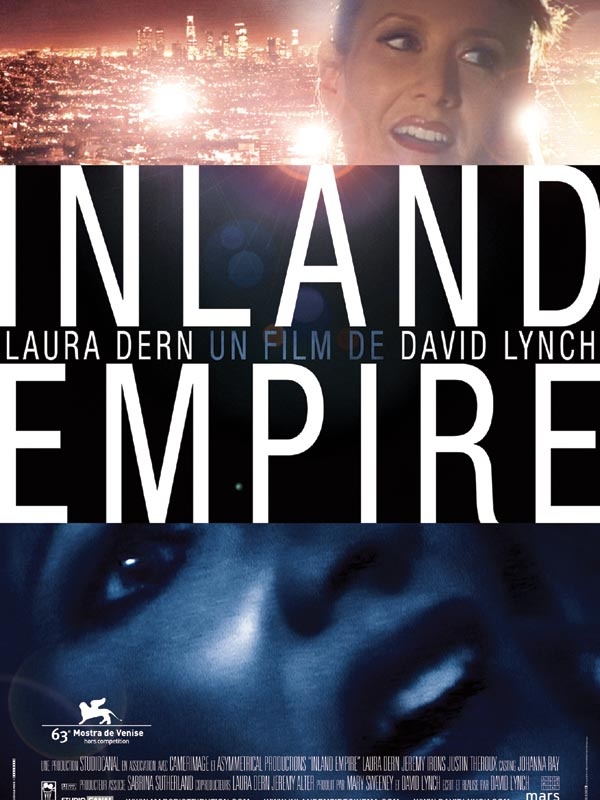
inland-empire.jpg

There’s so much going on in David Lynch’s INLAND EMPIRE that I’ll give you the quick review up front: if you like David Lynch films (I do), you’ll love this film (I did)–it’s arguably his most ambitious to date and belongs in the canon of great Lynch films along with Blue Velvet and Mulholland Dr. Get a hold of it and watch it right away. If you don’t like David Lynch films, you won’t like INLAND EMPIRE–but you already knew that, didn’t you?

Contrary to some of the internet rumors and poorly conceived reviews out there, INLAND EMPIRE actually does have a plot, complete with an honest-to-goodness resolution full of redemption and love. However, the fragmentary and elliptical nature of the film will no doubt confound anyone who tries to actively resist it: like Mulholland Dr. before it, this is one you need to just let happen to you. Attempts to impose your own system of narrative logic will probably result in headaches and frustration. You see, INLAND EMPIRE is really a time-travel movie, and time-travel movies–the good ones–are always resistant to narrative logic (see the Grandfather Paradox, etc.).

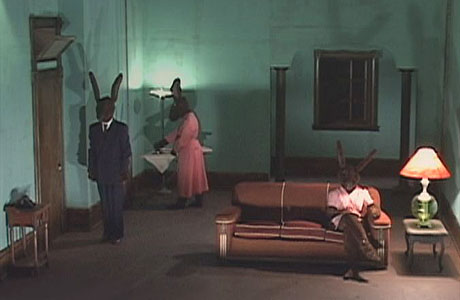
The story begins with a gypsy-witch’s curse: she visits actress Nikki Grace (played by Laura Dern who appears in almost every scene of the movie, and is truly fantastic) and warns her about the coveted film role she’s about to land. It turns out that the film, On High in Blue Tomorrows, is a remake of a Polish film called 49 that was never finished because the two leads were murdered. “If it was tomorrow,” the gypsy croaks, pointing across the room, “you would be sitting over there. Do you see?” And Nikki does see: the rest of the film may or may not be a vision prompted by the gypsy. However, my phrase “The story begins” at the beginning of this paragraph was not entirely accurate: before we even meet Dern’s character, we see a light projection and a phonograph needle, a weeping woman trapped in a room watching a chilling sitcom starring bunny people (INLAND EMPIRE thus gets to go on a special list of movies featuring scary rabbits, including favorites Donny Darko and Sexy Beast), and a strange scene with a Polish prostitute.

inland460.jpg

So there are plenty of frames to this frame-tale, and the narrative only continues inland as the movie progresses, exploring a multiplicity of spaces and times. Dern’s Nikki morphs into new and different characters–housewives and hookers–even as she passively stands on the wall, a frightened voyeur robbed of all agency. And in many ways this is the major theme of the movie: how to find agency and self-determination in a world where time and place–context–are the main components and constituents of identity. INLAND EMPIRE breaks down the lines between actors and prostitutes and really any other job, suggesting that perhaps we all have some identity as a whore, an identity thrust on us by location and time, an identity that we are always struggling against.

But this is really just one of many themes in the movie. The usual Lynch tropes are here: pop nostalgia with a sinister tinge, stilted dialog, lush red curtains, characters that seem of vital importance who never show up again, cryptic symbols that may or may not be symbols at all, etc. etc. etc. Despite its three hour running time, INLAND EMPIRE never lags or sags, in large part because so much weird stuff is going on, but also because in many ways this movie is a distillation of every other Lynch film: we get the murder mystery of Twin Peaks, the abuse-of-women theme inherent in Blue Velvet, the Wizard of Oz riffing from Wild at Heart, the voyeur-terror of Lost Highway, the Haunted Hollywood and doppelganger mindfuck of Mulholland Dr., and the general creepy weirdness that’s underscored every Lynch film since Eraserhead.

gross_lynch.jpg

INLAND EMPIRE is shot entirely on digital video, a format that Lynch swears is the future of cinema. I’m not sure about that–although his movie is a beautiful masterpiece of textured light and composition, not all directors are painters like Lynch; in someone else’s less-gifted hands this movie could’ve been, visually speaking, a muddled mess. Still, it seems for now Lynch is determined to continue shooting on DV.

A couple of days before I saw INLAND EMPIRE, I heard most of an interview with Lynch on NPR’s Talk of the Nation. Neil Conan asked him what the last great movie he saw in the theaters was, and, to my surprise, he said that it was The Bourne Ultimatum, a movie he touted as being “excellent” or “perfect” or something like that. At first this struck me as odd–Lynch going to see a pretty straightforward–albeit smart–action movie? But on further reflection there’s nothing odd about this. I think that Lynch sees his films not as outsider films or art films per se, but as something more akin to the Hollywood tradition–I’m sure he’s not deceived that his films are as accessible as the Bourne films, but I do believe that he is a pop artist (or Pop Artist, if you prefer)–he had a huge hit television show, didn’t he? And INLAND EMPIRE not only fits in with Lynch’s growing pop art legacy, it could be the masterpiece of his oeuvre. Let’s hope that that legacy continues to grow; INLAND EMPIRE suggests an artist in his prime who will continue making great films.

Michael Jordan, Quantifiable Data, The Pursuit of Excellence, and Public Education in America

I came of age (as the hackneyed phrase goes) in the nineties, a magical time when the Chicago Bulls ruled the world and Michael Jordan was the king of the universe. As a young kid, I didn’t really care about sports: I wasn’t very good at them and I didn’t really grow up in America, so my exposure and interest were limited on two fronts. But by 1991, my family had moved back to the States and I was suddenly aware of something very, very cool: there were these guys, the Bulls, who played like the best orchestra in the world. They were all awesome individually–Michael Jordan was basically God in Nikes, and there was this guy Scottie Pippen who was a star in his own right–but they also played as a real team. By the time the Bulls were going for their “threepeat” in the ’92 NBA season I–and just about every other kid in America–loved the Bulls. I didn’t really even care about basketball, to be honest–I liked it all right I guess, but what I really loved was to watch Jordan play. By the time I was headed to college, the Bulls were finishing up their second “threepeat,” and I knew for certain that I didn’t really care about basketball at all–just the Bulls and Jordan. I also knew that this was somehow lame or shameful, and it was also kind of sad. I only cared about seeing something really, really good. But who could blame me–especially after Jordan decided to come back after giving minor league baseball a shot, especially after game five of the ’97 championship, when Jordan, running a fever of over one hundred degrees, scored 38 points including a game-deciding three-pointer in the last minute. That’s pure magic; that’s divine spirit channeled. But why am I going on about this? You were probably there too, and if you weren’t, you know the mythology.

The point is that we love winners in America. We love to see someone excel at something, to do something better than anyone else, and do it harder, faster, longer, more, more, more. We don’t just want excellence, we want spectacular excellence (and conversely, devastating, soul-crushing failure). And we want excellence we can measure: points made, times beaten, wins racked up, championship victories accrued. We want to know for sure who won: we don’t like ties (soccer will never really take off in America). We want objective evidence to point to, so we can say plainly what is good and what is great and what is excellent and what is not: see, the numbers are right there.

This need for winners is, of course, not confined to the world of sports. Americans now seem to want to know who the winners in education are: they want test scores and school grades that objectively determine what a student knows or does not know. But the ability to think critically, rationally, logically, and creatively cannot truly be determined objectively. Education isn’t a basketball game, with points, and winners, and losers. When a basketball team is good, we know that they’re good because there is a system of rules that make the game a game (without the rules, there is no game). However, education is not a game, and treating it as such is unfair to young people in schools.

I am not making an argument that all kinds of testing be done away with, or that objective testing can’t provide a clear idea of the strengths and weaknesses of students and schools. The right kind of tests help assess deficiencies that can then be remedied. However, America is doing little right now to educate their children. Our educational model in this country goes back to the Industrial Revolution; we are behind the rest of the world in science education; we have abandoned the idea of teaching civic responsibility and bought in to the myth that to be American is to be a cannibal capitalist. There is clearly a gap between public expectations of public education and public support of public education. I don’t think that the average American comprehends the genuine literacy crisis that this country is faced with right now, but it’s real, it’s happening, and the results will be objectively measurable in the ever-growing gap between the rich and the poor in this country.

I’m on a rant now; sorry. I’ll try to be clearer: standardized tests like the Florida Comprehensive Assessment Test (FCAT) are a big waste of taxpayer money. They prove nothing and divert resources–money and educators’ time and energy–away from meaningful instruction and real learning. I’m not arguing that the test is too difficult–it’s not, and you certainly should be able to master such material in order to graduate high school–but the amount of stock the state has put into this test is ridiculous. It delimits creative and complex thought, limiting students to bubbling answers without recourse to explanation or rationale. Even the written response sections don’ t allow for real analytical assessment–students must literally think inside a tiny little box, and if their answer goes outside of the box, it will not be considered for grading. We need to abandon these types of tests and replace them with a meaningful, real-world based curriculum. We need to teach kids word processing, website design, standard office programs. Institute new hands-on science programs. Bring back shop, home ec, etc. But that’s not what’s happening: instead of curricula based on real-world needs, Florida continues to ask for objective data in place of real thinking, test scores instead of laboratories and practicums.

We all knew that Michael Jordan was great; we didn’t need the scoreboard to tell us. We didn’t need the MVP awards and National Championships and thousands of points he made to tell us. You could see it in his jump, in his tongue, in his eyes. It came out of the TV and you could feel it. MJ’s excellence was truly excellent because it transcended objective data: even a nerd like me could recognize it and honor it and hope to reach something close to it in some unknown way. We loved MJ because he represented an unquantifiable, nearly ineffable excellence; I believe that this excellence has a potential analog in the mind of any student in this country. But when we get hung up on things like points, scores, and grades, we not only send the wrong message, we also squander and misspend that potential.

Back to School, Wm Gibson, Promises, Promises, and General Malaise

Bleh.

After three months of summer vacation, I had to go back to work on Monday. Yet even as I write this, the immortal classic Back to School airs on Comedy Central, reminding me of my commitment to education. Any moment now, Kurt Vonnegut will show up to help Thornton Melon pass Dr. Turner’s English class (weird convergence: ten years after Back to School, Keith Gordon–Jason Melon, the diver, Rodney’s kid–directed a version of Vonnegut’s Mother Night. My college roommate and I watched it when it came out, but I don’t really remember any of it).

back.jpg

Anyway, I promise to recover and get back to the semi-daily blogging (any semi-day now): I’ve been reading Joyce’s Ulysses; I’ve also read a couple of graphic novels; I’m hoping to get around to watching Inland Empire and letting you know what I think. So there’s that.

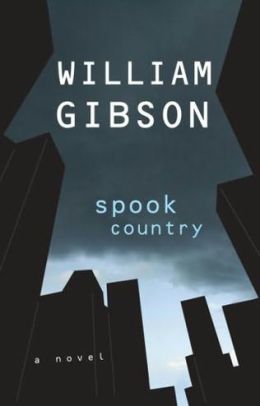
For now, AV Club has a pretty good interview with ‘klept favorite William Gibson up today. We forgive him for All Tomorrow’s Parties. And Idoru. And even the Johnny Mnemonic movie. Who knows–maybe his upcoming novel Spook Country won’t be half bad.

spook.jpg