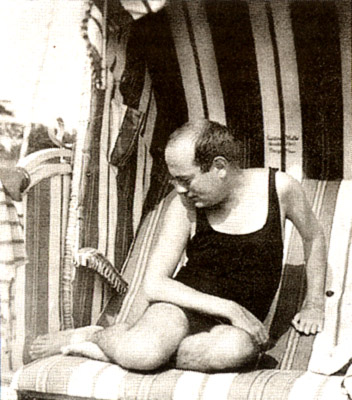
Theodor Adorno Shows Off His Sexy Legs

Hermits — Egon Schiele

https://i0.wp.com/uploads4.wikipaintings.org/images/egon-schiele/hermits-1912.jpg

“Up in the Gallery” — Franz Kafka

If some frail tubercular lady circus rider were to be driven in circles around and around the arena for months and months without interruption in front of a tireless public on a swaying horse by a merciless whip-wielding master of ceremonies, spinning on the horse, throwing kisses and swaying at the waist, and if this performance, amid the incessant roar of the orchestra and the ventilators, were to continue into the ever-expanding, gray future, accompanied by applause, which died down and then swelled up again, from hands which were really steam hammers, perhaps then a young visitor to the gallery might rush down the long stair case through all the levels, burst into the ring, and cry “Stop!” through the fanfares of the constantly adjusting orchestra.

But since things are not like that—since a beautiful woman, in white and red, flies in through curtains which proud men in livery open in front of her, since the director, devotedly seeking her eyes, breathes in her direction, behaving like an animal, and, as a precaution, lifts her up on the dapple-gray horse, as if she were his grand daughter, the one he loved more than anything else, as she starts a dangerous journey, but he cannot decide to give the signal with his whip and finally, controlling himself, gives it a crack, runs right beside the horse with his mouth open, follows the rider’s leaps with a sharp gaze, hardly capable of comprehending her skill, tries to warn her by calling out in English, furiously castigating the grooms holding hoops, telling them to pay the most scrupulous attention, and begs the orchestra, with upraised arms, to be quiet before the great jump, finally lifts the small woman down from the trembling horse, kisses her on both cheeks, considers no public tribute adequate, while she herself, leaning on him, high on the tips of her toes, with dust swirling around her, arms outstretched and head thrown back, wants to share her luck with the entire circus—since this is how things are, the visitor to the gallery puts his face on the railing and, sinking into the final march as if into a difficult dream, weeps, without realizing it.

“Up in the Gallery” by Franz Kafka

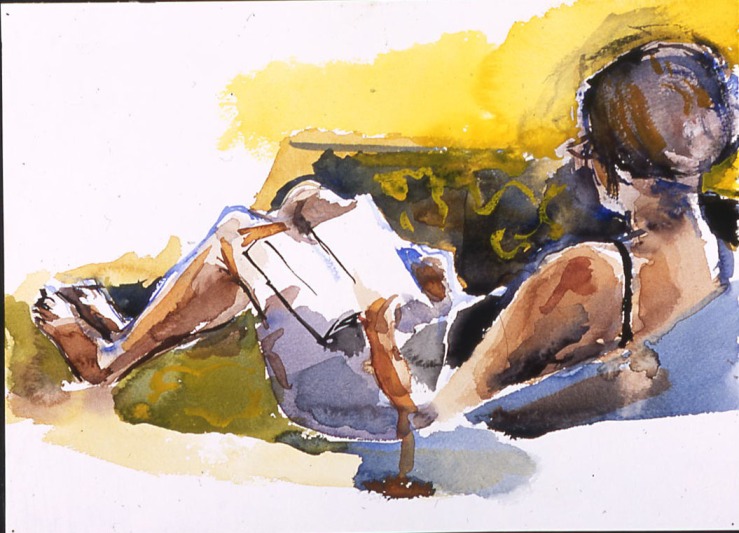
Reading — Dmitry Samarov

reading

Meadowland — Gerhard Richter

https://i0.wp.com/uploads5.wikipaintings.org/images/gerhard-richter/meadowland.jpg

Portrait of Dr. Hugo Koller — Egon Schiele

https://i0.wp.com/uploads5.wikipaintings.org/images/egon-schiele/portrait-of-dr-hugo-koller-1918.jpg

Other World — MC Escher

https://i0.wp.com/uploads1.wikipaintings.org/images/m-c-escher/other-world.jpg

Pier Paolo Pasolini Interviews Ezra Pound

(Thanks to Giovanni for sending this in).

The Spiderweb — Ohara Koson

https://i0.wp.com/uploads4.wikipaintings.org/images/ohara-koson/the-spiderweb.jpg

The Law Student — Norman Rockwell

Low Concert

Tango Drawing — Jorge Luis Borges

https://i0.wp.com/www.library.nd.edu/rarebooks/collections/rarebooks/hispanic/southern_cone/borges/images/ms_tango.gif

(Via).

Leontine Reading — Pierre-Auguste Renoir

https://i0.wp.com/uploads4.wikipaintings.org/images/pierre-auguste-renoir/leontine-reading-1909.jpg

Birds, Fish, Snake, and Scarecrow — Max Ernst

https://i0.wp.com/uploads3.wikipaintings.org/images/max-ernst/birds-also-birds-fish-snake-and-scarecrow.jpg

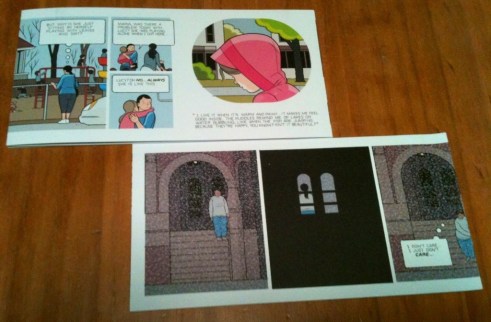
Reading Chris Ware’s Building Stories / Two Short Loops

20121201-162412.jpg

These two shorties in Chris Ware’s Building Stories showcase the novel’s thematic recursion, a recursion doubled in both its metastructure (14 pieces that the reader can read in any order) as well as the structure of many of the individual pieces. In the case of the two parts pictured above, we get Möbius strips that become richer with rereading. The strips seem to twin each other not just in their format, but also in their theme.

Both strips feature Lonely Girl, who perhaps emerges as the dominant protagonist of Building Stories. The one pictured at the top gives a voice to her daughter, a girl who seems to repeat some of her mother’s tendencies toward isolation and depression.

20121201-162435.jpg

Ware’s strength here (and always elsewhere) is the economy of storytelling: He packs entire short stories into just a few panels, coloring his narrative:

20121201-162443.jpg

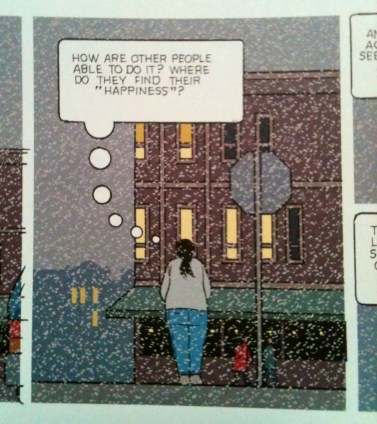
The second loop features a solitary Lonely Girl who trudges through the snowy night in a near-suicidal despair:

20121201-162451.jpg

Read recursively, the strip dooms Lonely Girl to an endless loop of despair—and it’s at moments like these that I’m happy there are other parts to Building Stories—some kind of existential “out” for our poor heroine.


Alychamps — Vincent van Gogh

https://i0.wp.com/uploads4.wikipaintings.org/images/vincent-van-gogh/alychamps-1888%281%29.jpg

Reading Nude — Theodor Pallady

https://i0.wp.com/uploads3.wikipaintings.org/images/theodor-pallady/reading-nude-nu-la-lecture.jpg