Ian Svenonius’s Censorship Now!! (Book acquired, 9.29.2015)

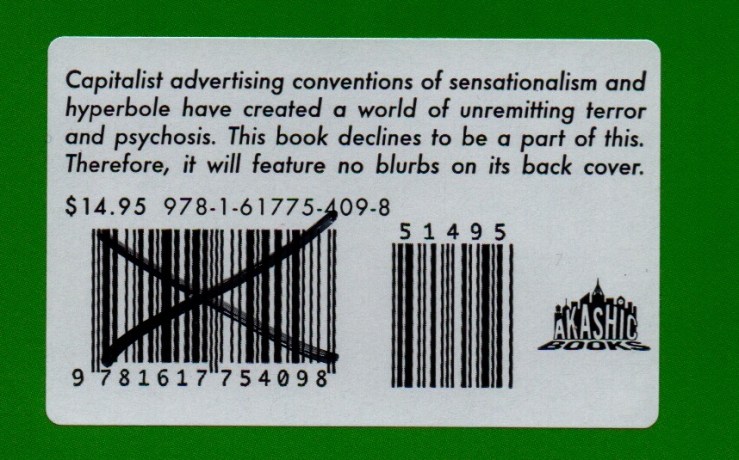
This is the blurb for Ian Svenonius’s book Censorship Now!!:
image

The non-blurb is of course a blurb.

If you think that that move is brilliant, or even funny, you might dig Censorship Now!!

Publisher Akashic Books has the good sense to offer a description of the book:

In this outrageous and hilarious new essay collection, underground music icon Ian F. Svenonius tackles such diverse subjects as IKEA, Apple, the weather, the gentrification of punk by indie rock, Marion Barry, the film Heathers, Christian pornography, vampires, hoarding, the role of sugar in empire-building, how to properly tip at restaurants, the return of the hat in men’s fashion, and other highly topical matters. No one is left unscathed, and more than a few will be left scratching their heads even as they laugh.

In high school, I dug Svenonius’s first band Nation of Ulysses—more as a concept than for the music, really (I much preferred Dischord label mates Fugazi). The goofy-seriousiousness of Nation of Ulysses was entertaining and confusing, but like later musical projects The Make-Up and Weird War, Svenonius’s band never struck me as quite as dangerous as they wanted to be.

My best friend was always a bigger fan of Svenonius than I was—enough to have read the dude’s first book, The Psychic Soviet. I texted him when I first started reading Censorship Now!!, complaining that I couldn’t tell if Svenonius was serious or if the book was all a schtick, an ageing scenester’s put-on. My pal replied that Svenonius was “a professional sloganeer,” and that every sentence of The Psychic Soviet was a “pull quote.”

Every line a pull quote, every sentence a slogan is how Censorship Now!! reads (if those two exclamation marks didn’t tip you off). The book’s essays read like the rants of someone’s older brother trying to hip you to the truth, man. But after you grow up you wonder why the brother’s still living in his parents’ basement. Okay. That sounds a bit too, I don’t know, rude of me (?) — but I can’t find anything particularly profound in Svenonius’s raging against Apple and Wikipedia and the bourgeoisie. (His riff on Ikea (“Ikea wants couples to break up”) reeks of a bad comedy routine).

Censorship Now!! (which always reads like a talk book, and never as prose) is simultaneously reactionary and nostalgic. Svenonius hates all the things you’d expect him to (NPR, Urban Outfitters, Arcade Fire, gentrification) and even some things you might not expect (tipping). Loose opinion and easy reference are employed instead of facts (sample slogan:  “Destroy All Facts” How revolutionary!).

Does it matter? It doesn’t matter. The fourteen year-old me would’ve loved this shit. There’s a fourteen year-old out there that would love it now.

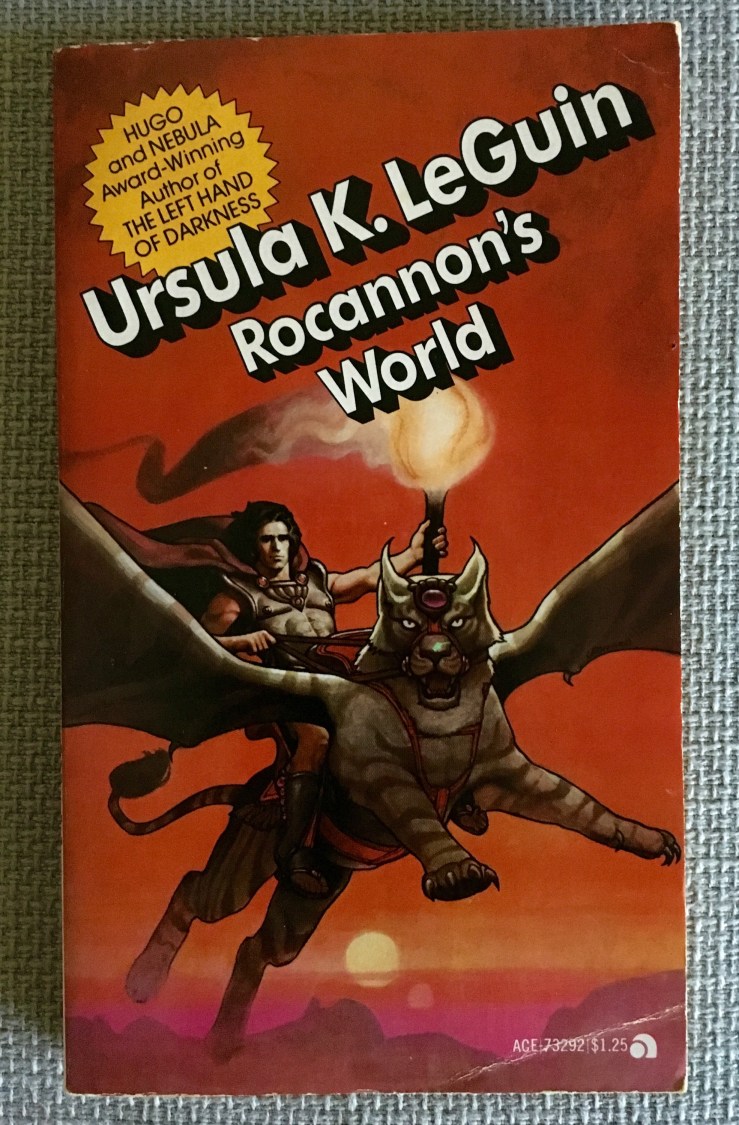
Ursula K. Le Guin’s novel Rocannon’s World (Book acquired, 11.07.2015)

IMG_0544

I just picked up Ursula K. Le Guin’s first novel Rocannon’s World on novelist Adam Novy’s recommendation. (Have you read Novy’s novel The Avian Gospels? It’s great).
IMG_0546

Bret Easton Ellis and the Other Dogs (Book acquired, 11.02.2015)

IMG_0537

Lina Wolff’s novel Bret Easton Ellis and the Other Dogs is coming out early next year from And Other Stories. Their blurb:

At a run-down brothel in Caudal, Spain, the prostitutes are collecting stray dogs. Each is named after a famous male writer: Dante, Chaucer, Bret Easton Ellis. When a john is cruel, the dogs are fed rotten meat. To the east, in Barcelona, an unflappable teenage girl is endeavouring to trace the peculiarities of her life back to one woman: Alba Cambó, writer of violent short stories, who left Caudal as a girl and never went back.

Mordantly funny, dryly sensual, written with a staggering lightness of touch, the debut novel in English by Swedish sensation Lina Wolff is a black and Bolaño-esque take on the limitations of love in a dog-eat-dog world.

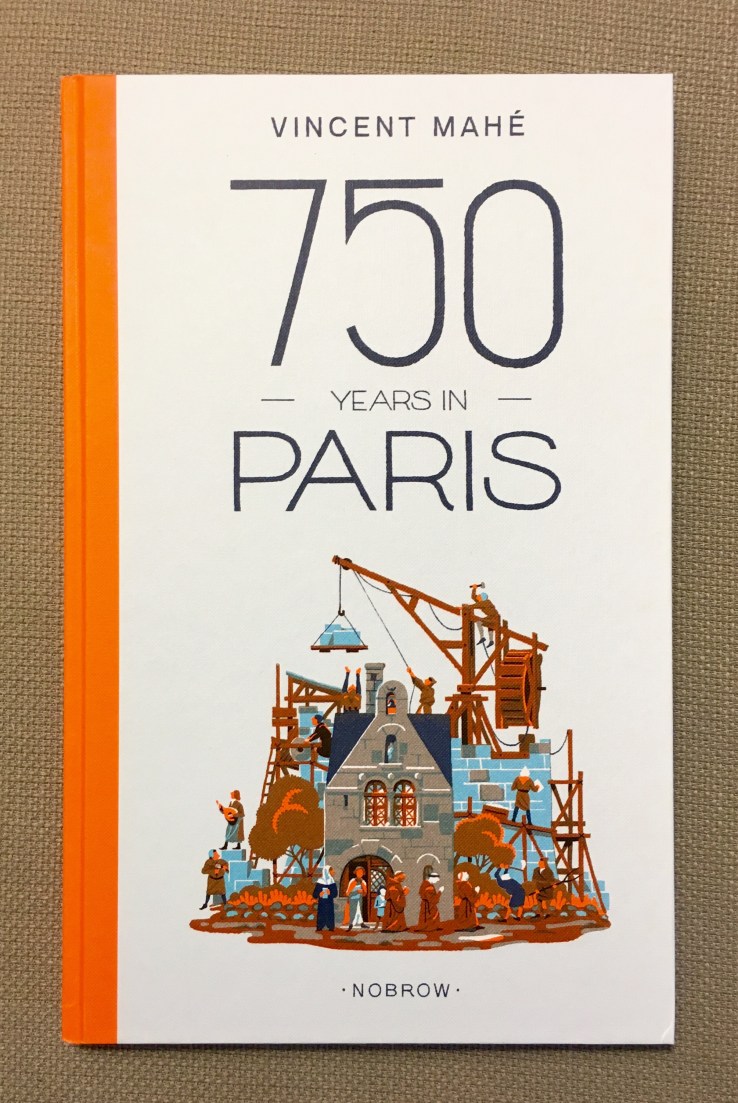
Vincent Mahé’s 750 Years in Paris (Beautiful book acquired, 10.28.2015)

IMG_0534

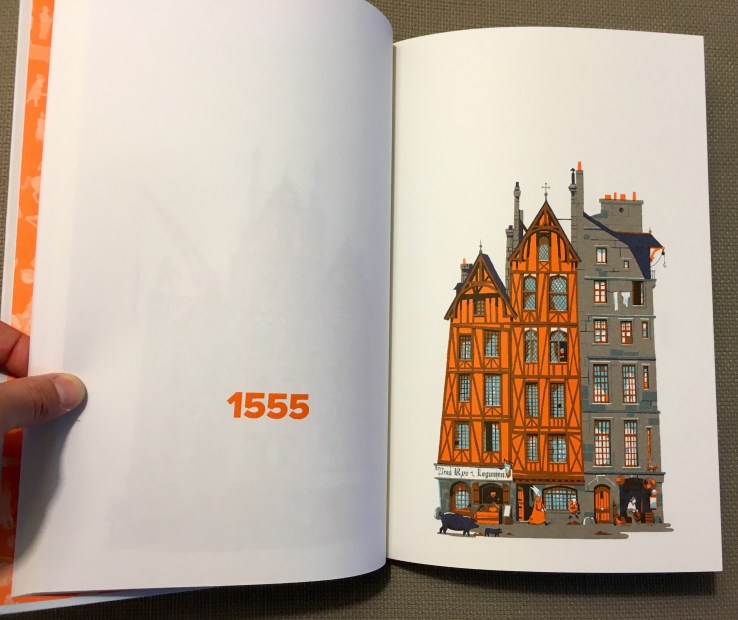
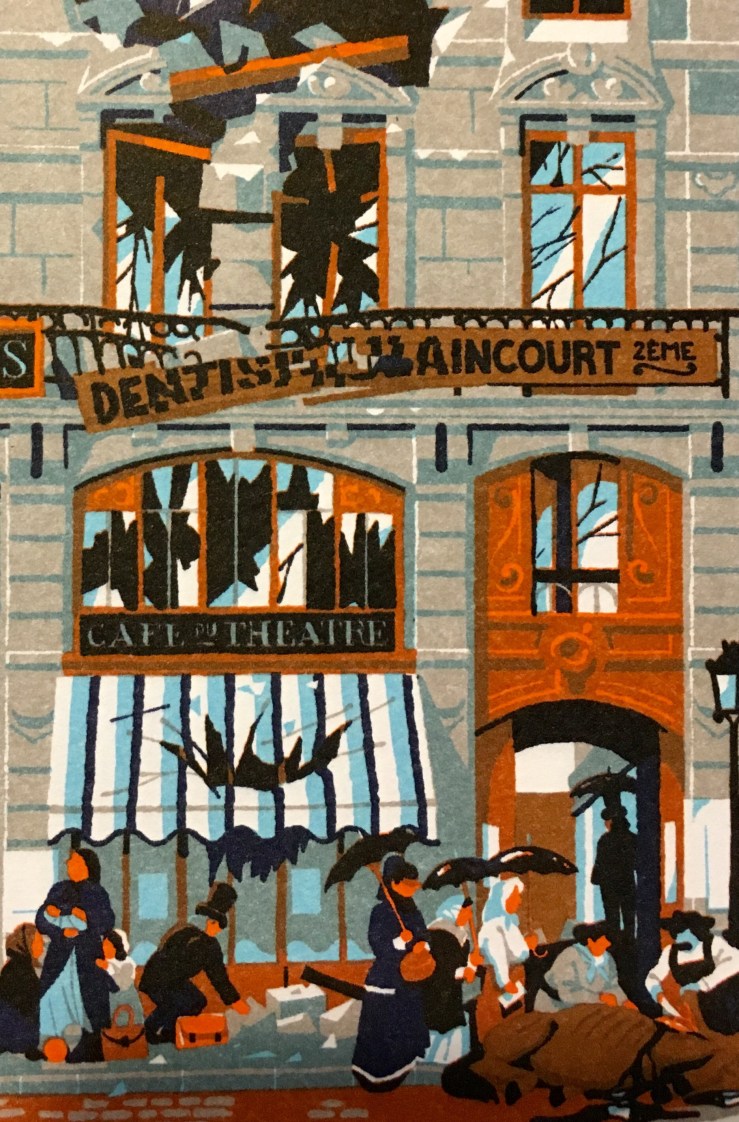
I’ve said it before, but the good people at Nobrow are making some of the best literary objects I’ve seen in years—the graphic novels they publish are smart, beautiful, strange, and witty. The last time I wrote about a Nobrow title, it was Jon McNaught’s Birchwood Close, which I read after a weekend of (very) primitive island camping. In a little coincidence (or not), Nobrow’s new title, Vincent Mahé’s 750 Years in Paris showed up as I was packing my Subaru for a camping trip with my family. I couldn’t help but fly too-quickly through the pages, before relinquishing it to my daughter, who tried to take it camping with us. “I need something to read on the beach,” she claimed, but I told her it was too big to take along (it’s about the height of a wine bottle). In truth, I just didn’t want to risk the book’s getting damaged. We read it again a few times when we got home—first very quickly, then more slowly. Fun.
IMG_0535

I owe the thing a proper review, but for now here’s Nobrow’s blurb:

If you could stand still for 750 years, what could you learn about the world? It’s time to find out.

A literary graphic novel unlike anything else on the racks, 750 Years tells the story of our time, focusing on one single building in France as it sees its way through the upheavals of history. Beginning in the 13th Century and making its way towards today, this historically accurate story is the eagerly anticipated debut from Vincent Mahé.

IMG_0536

Edgar Allan Poe/Harry Clarke/Ludwig Wittgenstein (Books acquired, 10.26.2015)

IMG_0277

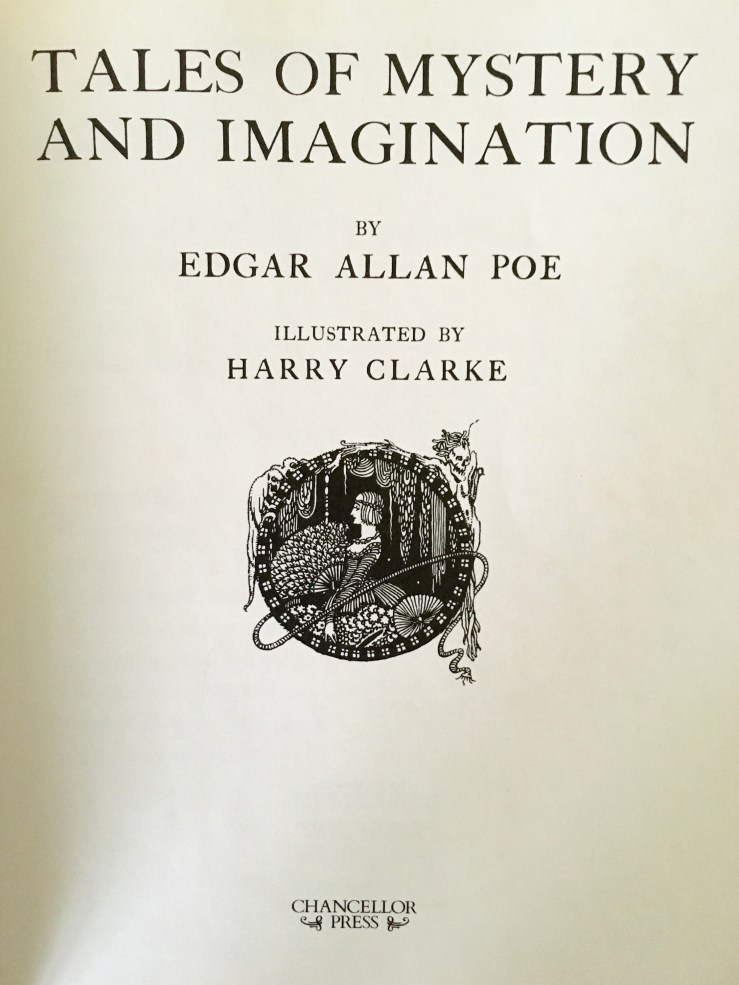
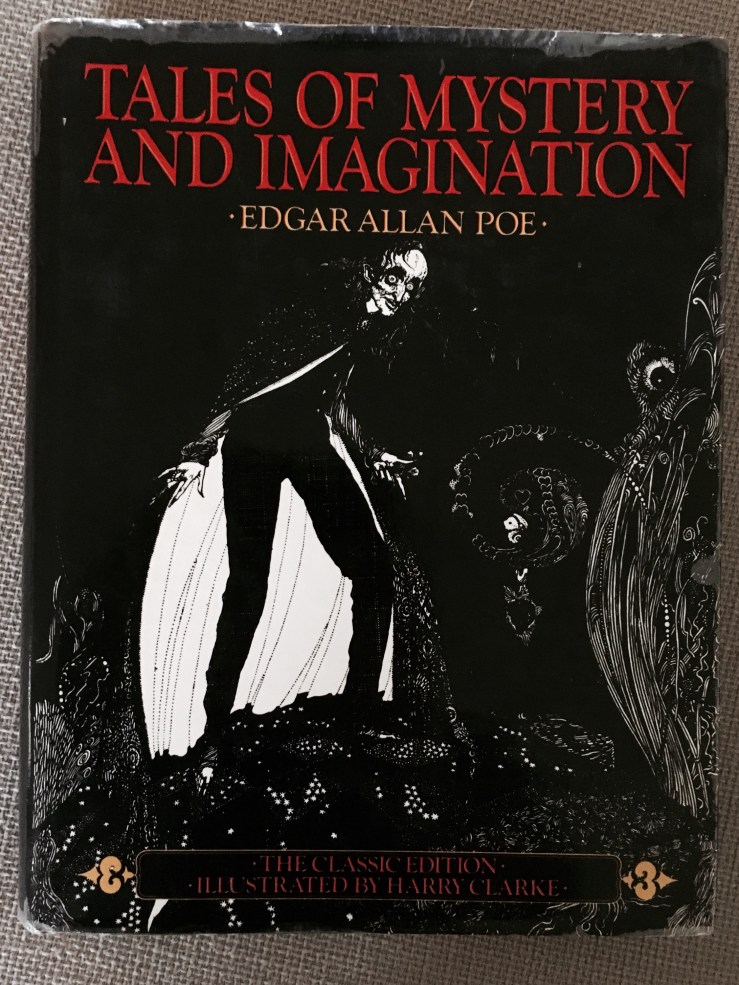
I’ve long admired Harry Clarke’s illustrations to Edgar Allan Poe (widely available for years now thanks to 50 Watts), and after posting Poe’s story “Berenice” with its Clarke illustration yesterday, I decided to see if my favorite local used book shop had a copy. Which they did. My kids had fun looking at the creepy pictures.IMG_0275 Continue reading “Edgar Allan Poe/Harry Clarke/Ludwig Wittgenstein (Books acquired, 10.26.2015)”

Greg Graffin’s Population Wars (Book acquired some time in September, 2015)

IMG_8539

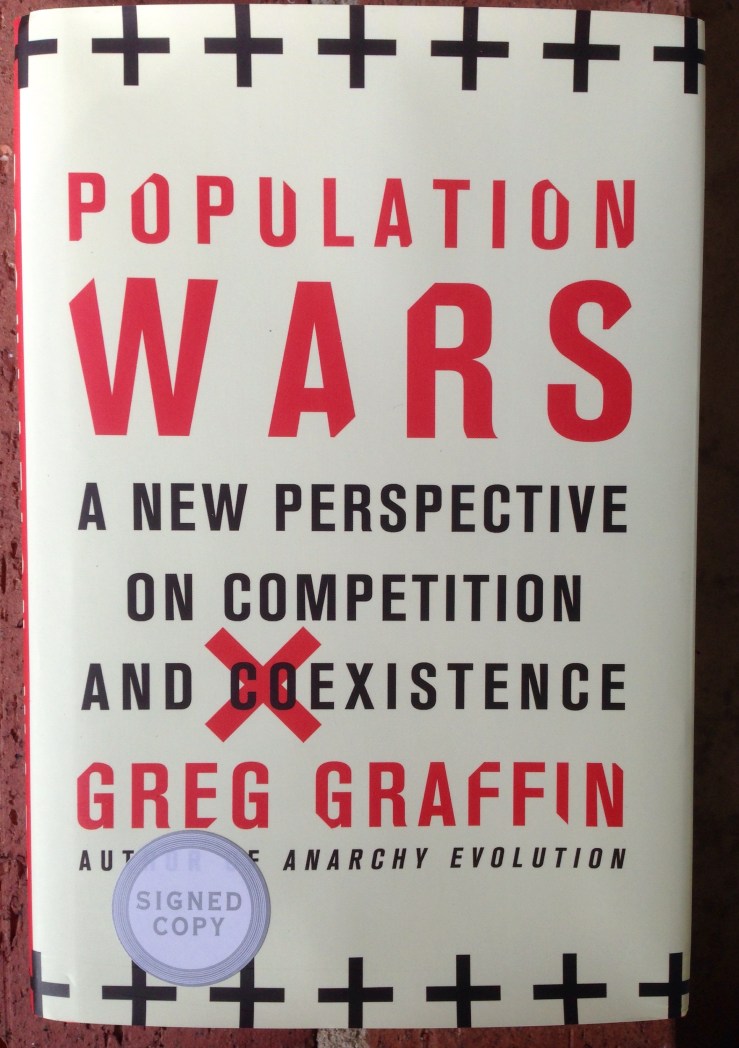
Greg Graffin is probably best known for his work as the leader of Bad Religion, a band he formed when he was 15. Graffin is also an academic and author. His latest book, Population Wars, makes a compelling argument for coexistence. It’s an accessible and persuasive read, rooted in biology and hope. (And of the three books I’ve read by indie rockers of yore this year, it’s easily the best). Publisher Thomas Dunne’s blurb:

From the very beginning, life on Earth has been defined by war. Today those first wars continue to be fought around and inside us, influencing our individual behavior and that of civilization as a whole. War between populations—whether between different species or between rival groups of humans—is seen as an inevitable part of the evolutionary process. The popular concept of survival of the fittest explains and often excuses these actions.

In Population Wars, Greg Graffin points to where the mainstream view of evolutionary theory has led us astray. That misunderstanding has allowed us to justify wars on every level, whether against bacterial colonies or human societies, even when other, less violent solutions may be available. Through tales of mass extinctions, developing immune systems, human warfare, the American industrial heartland, and our degrading modern environment, Graffin demonstrates how an oversimplified idea of war, with its victorious winners and vanquished losers, prevents us from responding to the real problems we face. Along the way, Graffin reveals a paradox: When we challenge conventional definitions of war, we are left with a new problem—how to define ourselves.

Population Wars is a paradigm-shifting book about why humans behave the way they do and the ancient history that explains that behavior. In reading it, you’ll see why we need to rethink the reasons for war, not only the human military kind but also Darwin’s “war of nature,” and find hope for a less violent future for mankind.

IMG_8540

Paul Kirchner’s The Bus…and The Bus 2 (Books acquired, 10.03.2015)

image

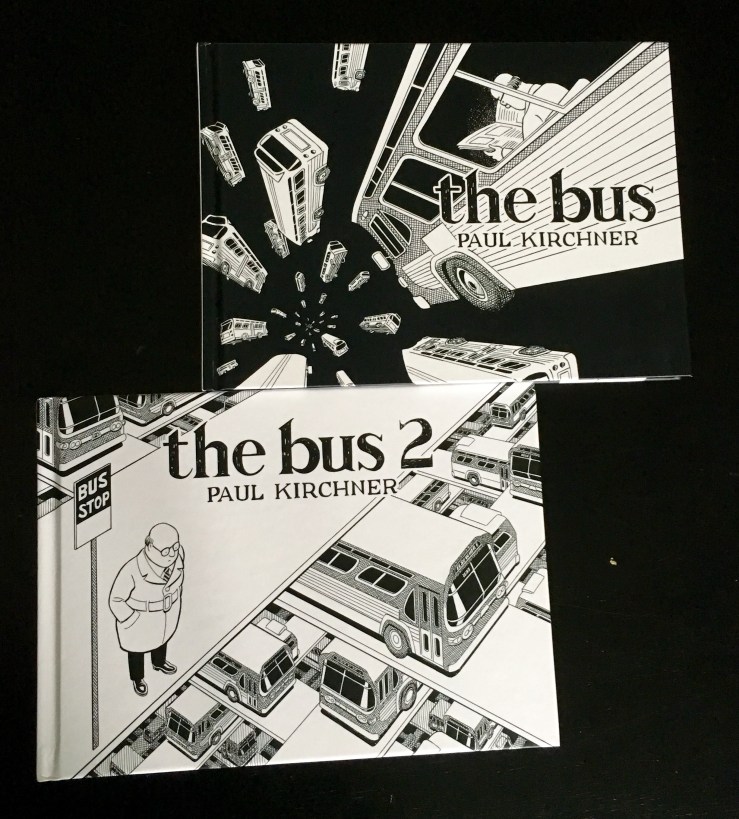
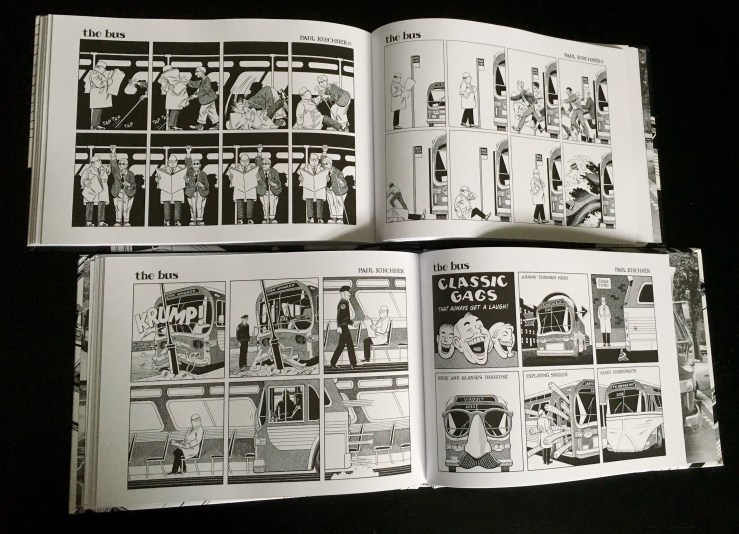
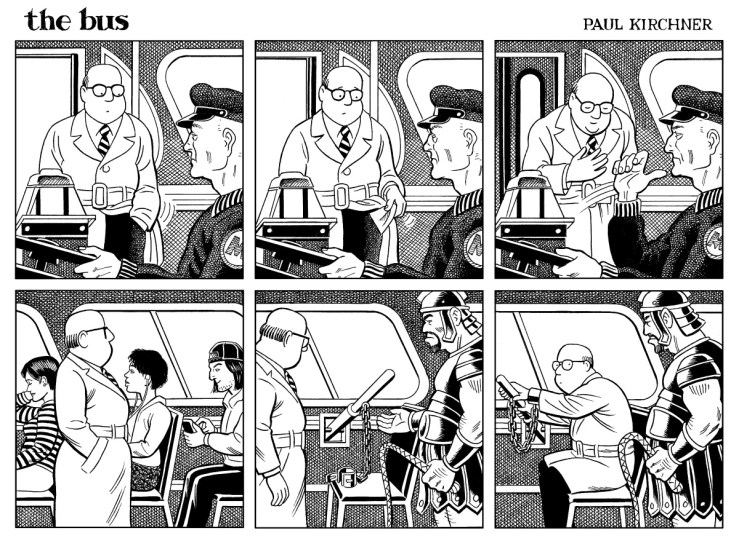
Paul Kirchner’s The Bus is excellent. We know this, yes? Editions Tanibis sent me their copy of the surreal, philosophical strip’s first run. I’ve enjoyed going back through it again (bingeing, to be honest)—Tanibis’s volume is beautiful, crisp, and far more complete than the Imgur album that was such a hit this year.
image

Tanibis also sent along The Bus 2, which publishes late this month, and I’ll have a full review then (some time after Halloween), but for now, a teaser:

02

A bicentennial edition of Jane Austen’s Emma from Penguin Classics

IMG_0032

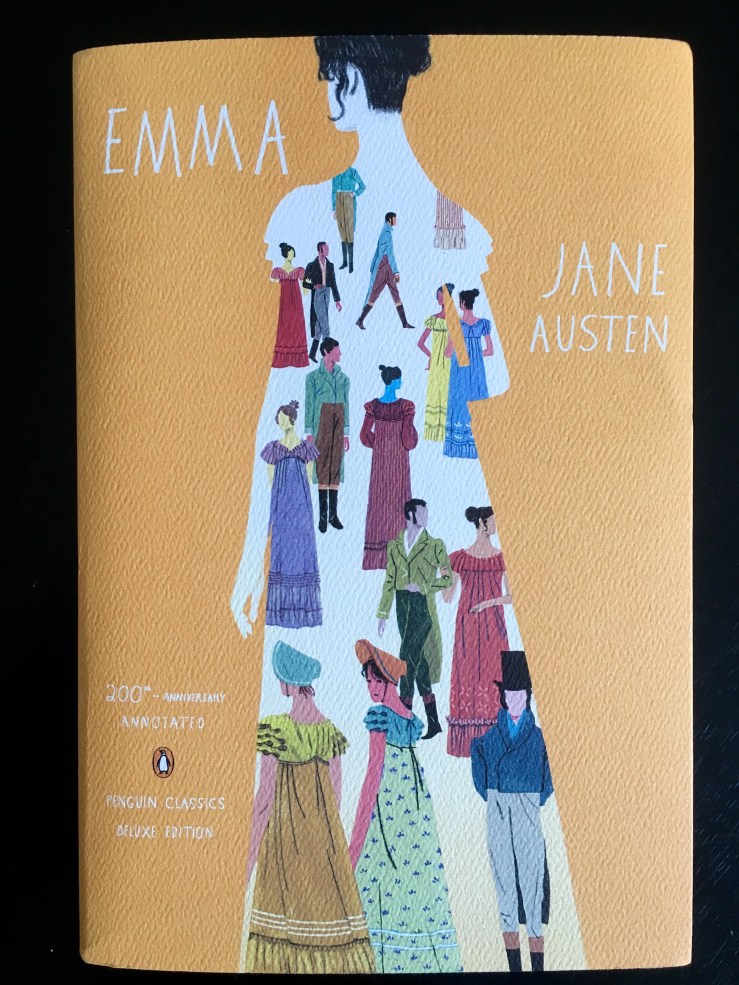
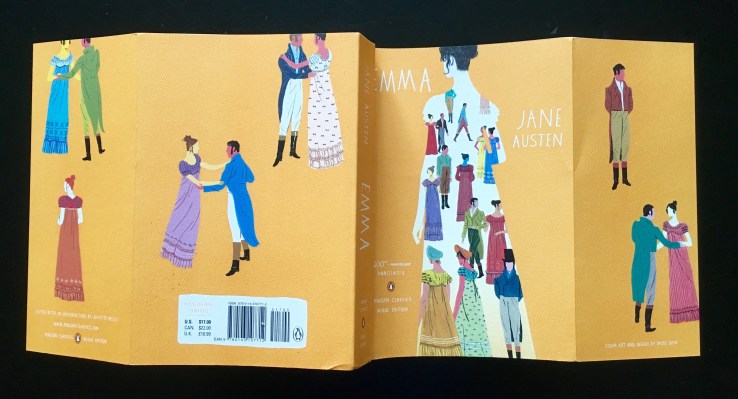
Last month, to mark its bicentennial, Penguin Classics published a deluxe edition of Jane Austen’s novel Emma. It’s a beautiful, hefty book, with deckle edges, French flaps, and a cool cover by Dadu Shin.

IMG_0038

Beyond its obvious aesthetic appeal, Penguin’s new edition offers its readers helpful resources, including a note on spelling in the novel, a glossary, and a range of essays that offer context for better appreciating the plot (topics include “Dancing,” “Food,” and “Health”). Indeed, this edition seems geared towards helping younger readers appreciate and enjoy Emma. In a prefatory note, editor Juliette Wells writes:

This edition is designed to help. It’s a reader’s edition, not a scholarly one. In other words, the information you’ll find here is intended to support your understanding and appreciation of Emma rather than to instruct you in literary terms, theoretical perspectives, or critical debates. In choosing what to include, I’ve borne in mind what I’ve heard from students and others over the years about what has intrigued, and frustrated, them in reading this novel.

Wells’s brief introduction helps offer new readers context about the novel’s composition, publication, and reception. She even offers a short series of tips for reading Emma (sample: “If you’re feeling frustrated or bored because nothing much seems to be happening, remember that Austen’s own contemporaries commented on how little plot Emma contains and how ordinary its characters and events are”). The edition also features helpful maps (by Wells), along with illustrations and title pages from previous editions. The volume concludes with a suggested reading and viewing list “for further exploration.”

Emma is obviously in the public domain and available in plenty of inexpensive versions (like the Dover Thrift copy I read in high school)—but this new Penguin Classics edition makes a strong case for itself as the future go-to version for high school students. Wells’s editorial vision (and the aesthetic design of the book) show a strong love for Austen’s text that will carry over to a new generation of readers.  Continue reading “A bicentennial edition of Jane Austen’s Emma from Penguin Classics”

Sebald’s Vision (Book acquired 10.06.2015)

IMG_0023

  1. I can barely keep up with these “book acquired” posts this fall.
  2. I was actually reading Sebald last night—his essay on Rousseau in A Place in the Country. “How difficult it is in general to bring the machinery of thought to a standstill“—yes, yes, of course. Machinery! If there was just a switch…
  3. I mean that I would love to be like, transcendentalist (transcendent?  transcending? to transcend? trance? tr….) but the feeling of the feeling, the machinery of thought gets in the way. But anyway—
  4. (Sebald in this picture, and a few others, looks so much like my father that it frightens the fuck out of me. It’s horrifying).
  5. [Optometry joke]
  6. I was going somewhere with this (or not): Sebald’s Vision by Carol Jacobs. Publisher Columbia University Press’s blurb:

    W. G. Sebald’s writing has been widely recognized for its intense, nuanced engagement with the Holocaust, the Allied bombing of Germany in WWII, and other episodes of violence throughout history. Through his inventive use of narrative form and juxtaposition of image and text, Sebald’s work has offered readers new ways to think about remembering and representing trauma.

    In Sebald’s Vision, Carol Jacobs examines the author’s prose, novels, and poems, illuminating the ethical and aesthetic questions that shaped his remarkable oeuvre. Through the trope of “vision,” Jacobs explores aspects of Sebald’s writing and the way the author’s indirect depiction of events highlights the ethical imperative of representing history while at the same time calling into question the possibility of such representation.

    Jacobs’s lucid readings of Sebald’s work also consider his famous juxtaposition of images and use of citations to explain his interest in the vagaries of perception. Isolating different ideas of vision in some of his most noted works, including Rings of Saturn, Austerlitz, and After Nature, as well as in Sebald’s interviews, poetry, art criticism, and his lecture Air War and Literature, Jacobs introduces new perspectives for understanding the distinctiveness of Sebald’s work and its profound moral implications.

The Tsar of Love and Techno (Book acquired, 9.29.2015)

IMG_8537

Anthony Marra’s collection The Tsar of Love and Techno is new in hardback from Hogarth next week. Here is the first part of Hogarth’s blurb (it’s the longest damn blurb I’ve ever seen I think):

Brilliantly constructed and beautifully inhabited, Anthony Marra’s new book, THE TSAR OF LOVE AND TECHNO (Hogarth; on sale October 6, 2015), is an exquisite collection of nine interconnected stories set in Russia that move across a century and introduce us to a cast of unforgettable characters whose lives intersect in ways both life-affirming and heartbreaking. Marra is a writer driven by a deep and authentic curiosity, and it was that curiosity that led him to write about Chechnya and to return there in THE TSAR OF LOVE AND TECHNO. With the recent insurgent attacks in Grozny, the Islamic State’s announcement that Chechnya will be their next zone of expansion, and 2015 marking the twentieth anniversary of the first Chechen War, Marra’s book couldn’t be timelier.

Vertigo/The Weight of Things (Books acquired, 9.28.2015)

Two new books from The Dorothy Project: Joanna Walsh’s collection Vertigo and Austrian writer Marianne Fritz’s 1978 novel The Weight of Things (in English translation by Adrian Nathan West)

IMG_8532

You can read Walsh’s story “Online” online at Electric Literature.

IMG_8534

Dorothy’s blurb for Fritz’s novel:

The Weight of Things is the first book, and the first translated book, and possibly the only translatable book by Austrian writer Marianne Fritz (1948–2007). For after winning acclaim with this novel—awarded the Robert Walser Prize in 1978—she embarked on a 10,000-page literary project called “The Fortress,” creating over her lifetime elaborate colorful diagrams and typescripts so complicated that her publisher had to print them straight from her original documents. A project as brilliant as it is ambitious and as bizarre as it is brilliant, it earned her cult status, comparisons to James Joyce no less than Henry Darger, and admirers including Elfriede Jelinek and W. G. Sebald.

Yet in this, her first novel, we discover not an eccentric fluke of literary nature but rather a brilliant and masterful satirist, philosophically minded yet raging with anger and wit, who under the guise of a domestic horror story manages to expose the hypocrisy and deep abiding cruelties running parallel, over time, through the society and the individual minds of a century.

Two by Anne Carson (Books acquired, 9.14.2015)

IMG_8416

Still recovering from Anne Carson’s Autobiography of Red. Haven’t felt so zapped by a book in a long time. Amazing. Try to write something about it on here soon. Million thanks again to BLCKDGRD for sending it my way.

What is an adjective? (Anne Carson)

What is an adjective? Nouns name the world. Verbs activate the names. Adjectives come from somewhere else. The word adjective (epitheton in Greek) is itself an adjective meaning “placed on top,” “added,” “appended,” “imported,” “foreign.” Adjectives seem fairly innocent additions but look again. These small imported mechanisms are in charge of attaching everything in the world to its place in particularity. They are latches of being.

This is the second paragraph of Anne Carson’s poem-novel-romance-history-etc. Autobiography of Red, a book I got in the mail yesterday from BLCKDGRD (which: thank you man!) and feel a totally electric feeling about. The passage above I mentally highlighted, for classroom purposes, I suppose, and otherwise, and the twists in dives and dips in this book-thing are, I don’t know, what hyperbole should I grab? 

The Big Red Book of Modern Chinese Literature (Book acquired, 8.07.2015)

IMG_8270

So I finally cracked into Norton’s forthcoming anthology, The Big Red Book of Modern Chinese Literature today. Knowing almost nothing of Chinese literature, I read Can Xue’s story “Hut on the Mountain” first (A+ stuff) and then went back to the beginning to read Lu Xun’s “A Madman’s Diary,” which ends with this line:IMG_8271

—like who wouldn’t want to read a story that ends that way?

Anyway, the book looks really fascinating. Editor Yunte Huang has put together a compelling mix of genres covering the last century. More to come, but here’s Norton’s blurb for now:

A panoramic literary anthology that tells the inner story of China in the twentieth century.

A search for the soul of modern China, this revelatory volume brings together significant works, in outstanding translations, from nearly fifty Chinese writers. It includes poems, essays, fiction, songs, and speeches written in an astonishing array of moods and styles, from sublime lyricism to witty surrealism to poignant documentary to the ironic, the absurd, the transgressive, and the defiant.

Reflecting on his own experience coming of age in China as a student in the time of Tiananmen, Yunte Huang provides essential context in an opening essay and in headnotes, timelines, and brief introductions to the Republican, Revolutionary, and Post-Mao eras. Both personal and authoritative, his selections make for a joyously informative read. From belles lettres to literary propaganda, from poetic revolution to pulp fiction, The Big Red Book is an eye-opening, mesmerizing, and indispensable portrait of China in the tumultuous twentieth century.

Ishmael Reed (Book acquired, 8.20.2015)

image

I love love love the cover of this Ishmael Reed mass market paperback Bantam edition of The Free-Lance Pallbearers. image

Nabokov’s Strong Opinions (Book acquired, 7.30.2015–and an Iris Murdoch book I should’ve acquired)

image

I picked up a hardback copy of Strong Opinions a few weeks back. I was browsing Nabokov titles as I was coming to the end of Pale Fire. I’ve shared some excerpts from this collection of interviews (&c.) and will likely share more.

I only know the specific date because I tweeted a pic of an Irish Murdoch novel I should’ve picked up while I was there.

Obsession Falls (Book acquired, some time in August, 2015)

IMG_8164

Christina Dodd’s novel Obsession Falls is new in hardback and ebook from Macmillan. Their blurb:

In Obsession Falls, New York Times bestselling author Christina Dodd returns to the town of Virtue Falls, Washington-an idyllic place on the surface, but one that holds close its secrets…

When Taylor Summers witnesses the death threat to a young boy, she does the only thing she can do-she sacrifices herself to distract the killers. Her reward is a life in ruins, on the run in the wilderness, barely surviving a bitter winter and the even more bitter knowledge she has lost everything: her career, her reputation, her identity. She finds refuge in Virtue Falls, and there comes face to face with the knowledge that, to live her life again, she must enlist the help of the man who does not trust her to defeat the man who would destroy her.

She’s being hunted, but it’s time to turn the tables….