Roberto Bolaño’s The Insufferable Gaucho (Book Acquired, 05.05.2014)

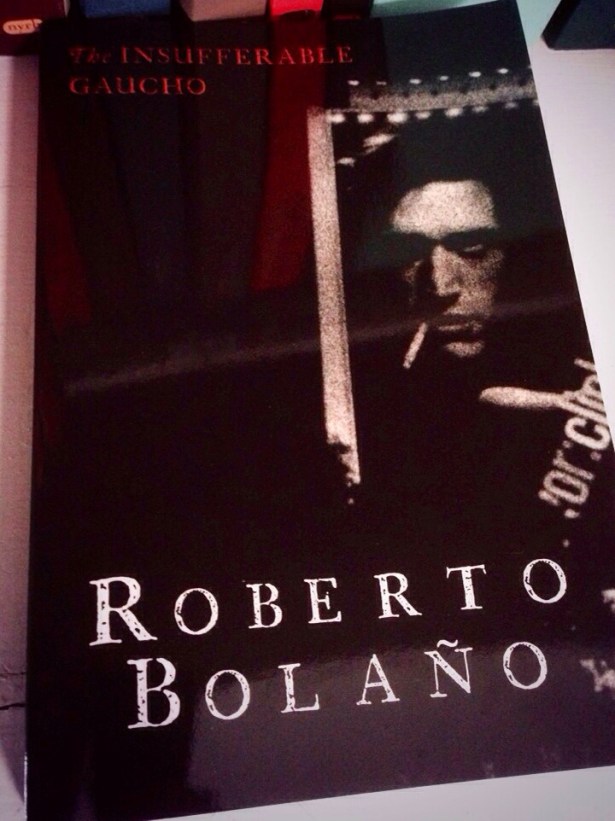
20140509-130407.jpg

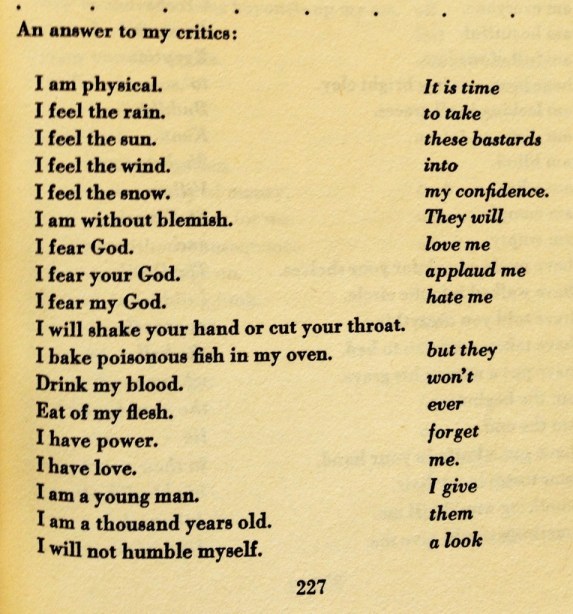
Roberto Bolaño’s The Insufferable Gaucho, which I’ve sort of saved for a few years—put off isn’t the right phrase, but sort of, knowing it as companion to Last Evenings on Earth, y’know, saved it for later—Roberto Bolaño’s The Insufferable Gaucho is very difficult to photograph. Very shiny.

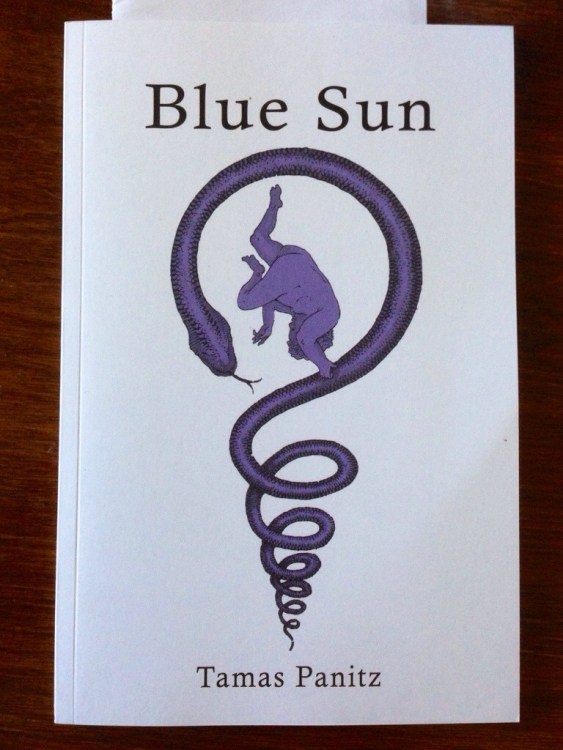
Blue Sun (Book Acquired, Like Maybe Three Weeks Ago)

20140504-091954.jpg

I got Tamas Panitz’s poems Blue Sun a few weeks ago but didn’t get a chance to get into it until last night. Good stuff—I’ll try to write a proper review in the next week, but until then, here’s Charles Stein’s blurb, via publisher Inpatient Press:

The splitting of historiography into a brash imposition of history as ontology, history as willfully configurative, history as but a wistful desideratum — leaves the archetypal self little choice but to hive in the lucubrations of a poetry questing for self and history. Panitz’ book enacts such a questing. Its voice would be master of its walk to the extent that even in addressing another it might be strictly about its own business: a panoply of poetic measures, variable tactics of order, the exploration of ontological imponderables. The smartness of its utterance throughout is instructive and – something not so common these days – provides a species of written speech that will repay proper study.

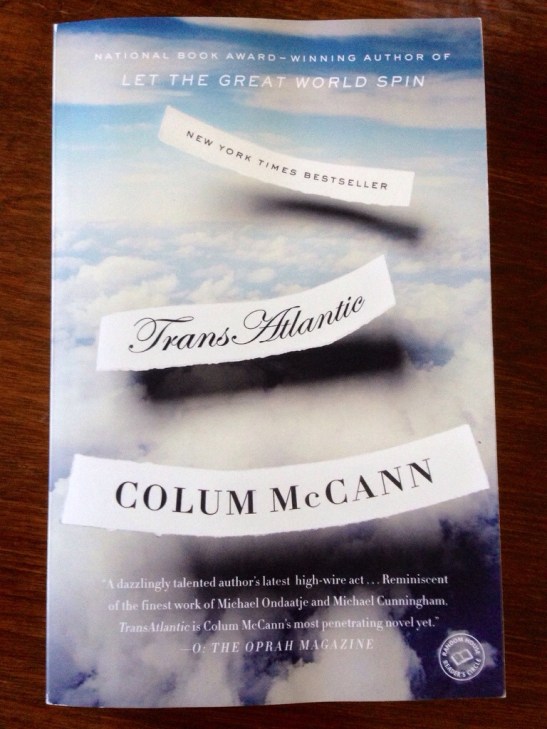
Colum McCann’s TransAtlantic (Book Acquired, 5.01.2014)

20140504-092016.jpg

Colum McCann’s TransAtlantic is new in trade paperback from Picador.

This (longish) blurb is from the author’s website, where you can also download an excerpt of the book and/or listen to audio of McCann reading from TransAtlantic:

In the National Book Award–winning Let the Great World Spin, Colum McCann thrilled readers with a marvelous high-wire act of fiction that The New York Times Book Review called “an emotional tour de force.” Now McCann demonstrates once again why he is one of the most acclaimed and essential authors of his generation with a soaring novel that spans continents, leaps centuries, and unites a cast of deftly rendered characters, both real and imagined.

Newfoundland, 1919. Two aviators—Jack Alcock and Arthur Brown—set course for Ireland as they attempt the first nonstop flight across the Atlantic Ocean, placing their trust in a modified bomber to heal the wounds of the Great War.

Dublin, 1845 and ’46. On an international lecture tour in support of his subversive autobiography, Frederick Douglass finds the Irish people sympathetic to the abolitionist cause—despite the fact that, as famine ravages the countryside, the poor suffer from hardships that are astonishing even to an American slave.

New York, 1998. Leaving behind a young wife and newborn child, Senator George Mitchell departs for Belfast, where it has fallen to him, the son of an Irish-American father and a Lebanese mother, to shepherd Northern Ireland’s notoriously bitter and volatile peace talks to an uncertain conclusion.

These three iconic crossings are connected by a series of remarkable women whose personal stories are caught up in the swells of history. Beginning with Irish housemaid Lily Duggan, who crosses paths with Frederick Douglass, the novel follows her daughter and granddaughter, Emily and Lottie, and culminates in the present-day story of Hannah Carson, in whom all the hopes and failures of previous generations live on. From the loughs of Ireland to the flatlands of Missouri and the windswept coast of Newfoundland, their journeys mirror the progress and shape of history. They each learn that even the most unassuming moments of grace have a way of rippling through time, space, and memory.

The most mature work yet from an incomparable storyteller, TransAtlantic is a profound meditation on identity and history in a wide world that grows somehow smaller and more wondrous with each passing year.

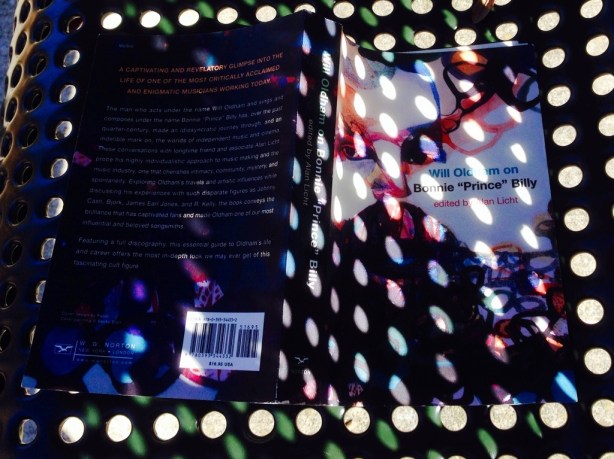
Will Oldham on Bonnie “Prince” Billy (Book Acquired 3.01.2014)

20140311-143148.jpg

Earlier this month, my good friend sent me Will Oldham on Bonnie “Prince” Billy, a book-length interview between Oldham and musician Alan Licht. In the book, Oldham parses his identity from Bonnie “Prince” Billy, the character he’s been performing (in different versions) for over a decade now. The book is fascinating stuff and strangely personal/weird for me—reading his oral history is bizarre, I guess, because I remember it all happening. Like, I remember buying the 7″s he talks about making; I remember puzzling over the early Palace LPs, trying to glean meaning from the covers, the personnel. Palace—Oldham—B”P”B—soundtracked so much of my high school and college days that I inevitably had a falling out with him/them/it—or maybe that’s not the right word…what is the term for the emotional intensity we feel toward certain albums, certain records imprinted in the back of our souls? (I used a line from “For the Mekons et al” for my Senior yearbook quote but the fucking yearbook staff fucked it up. But fuck a yearbook anyway). Ease Down the Road was the last Oldham record that I let get to me; intellectually, I realize that the stuff he did after is somehow superior—tighter, richer even—but it couldn’t sink in, I wouldn’t let it sink in, too many too-good memories already there, I don’t know. I saw him on the Superwolf tour; he deepthroated the mic during an R. Kelly cover, and after the show my wife remarked that he would never be welcome as a guest in our home. I thought that seemed harsh. I tried—years later, reading this book—to explain that it was just a character. No dice.

Thanks Nick.

Teju Cole’s Every Day Is for the Thief (Book Acquired, 3.17.2014)

20140319-174140.jpg

Teju Cole’s Open City is one of my favorite novels of recent years, so I was psyched when Every Day Is for the Thief (which is kinda sorta his latest—it was published nearly a decade ago in Nigeria) showed up in the mail earlier this week. I read the first fifty pages yesterday (about a third of this short book). Thief reads like a memoir-essay, its reportorial style engaged and critical but at times obliquely distant. Our unnamed narrator (surely an iteration of Cole himself) returns “home” to Lagos after fifteen years in New York. Interspersed are Cole’s black and white photographs (echoes of Sebald). Full review to come; for now, publisher Random Houses’ blurb:

 A young Nigerian living in New York City goes home to Lagos for a short visit, finding a city both familiar and strange. In a city dense with story, the unnamed narrator moves through a mosaic of life, hoping to find inspiration for his own. He witnesses the “yahoo yahoo” diligently perpetrating email frauds from an Internet café, longs after a mysterious woman reading on a public bus who disembarks and disappears into a bookless crowd, and recalls the tragic fate of an eleven-year-old boy accused of stealing at a local market.

Along the way, the man reconnects with old friends, a former girlfriend, and extended family, taps into the energies of Lagos life—creative, malevolent, ambiguous—and slowly begins to reconcile the profound changes that have taken place in his country and the truth about himself.

In spare, precise prose that sees humanity everywhere, interwoven with original photos by the author, Every Day Is for the Thief—originally published in Nigeria in 2007—is a wholly original work of fiction. This revised and updated edition is the first version of this unique book to be made available outside Africa. You’ve never read a book like Every Day Is for the Thief because no one writes like Teju Cole.

Read the first chapter here.

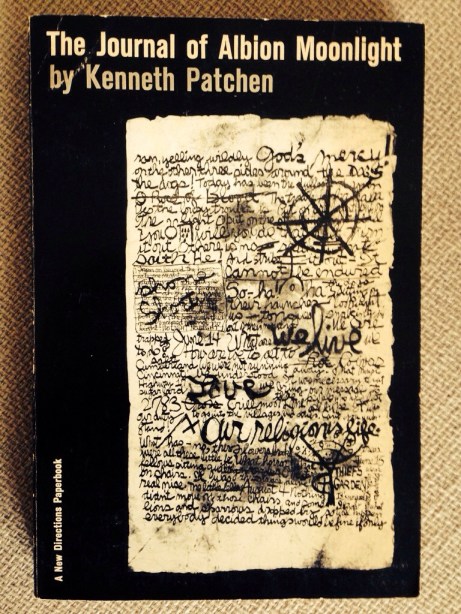
Kenneth Patchen (Book Acquired, 3.07.2014)

20140316-144222.jpg

20140316-144257.jpg

Two by Grace Paley (Books Acquired, 3.07.2014)

20140316-144125.jpg

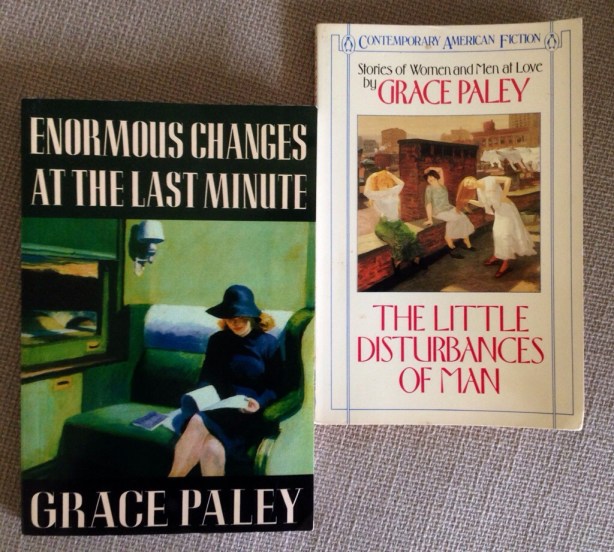
I’d been wanting to pick up a collection of Grace Paley’s stories for awhile now. I wasn’t sure whether or not to pick up Enormous Changes at the Last Minute or The Little Disturbances of Man, so I just got both. The covers helped convince me, I’ll admit—I’m a sucker for Hopper, and John French Sloan is no slouch either. (I’m tempted here to launch into some vague critique of the covers that books by women get but nah).

I’ve already read most of Enormous Change, ingesting most of the tales while sitting in my car, waiting to pick my kids up after school, which seems like a perfect place to read it. Smart, odd, often sharp, scathing, precise, etc.—great stuff. I’ll try to do a full review but I’ve got a huge backlog. In the meantime, check out “Wants.”

The London Jungle Book (Book Acquired, 2.28.2014)

20140303-140624.jpg

Bhajju Shyam’s The London Jungle Book arrived a few days ago: Beautiful stuff. Full review to come, but blurb for now:

Hailed as a book that reverses the anthropological gaze, ‘The London Jungle Book’ is the personal story of Indian tribal artist Bhajju Shyam’s first encounter with a western city. Revised & fully updated to mark the 10th anniversary of that momentous journey, Bhajju’s rich art and poignant reflections are as relevant today as they ever were.

20140303-140645.jpg

The Weight of Blood (Book Acquired, 2.24.2014)

20140303-140605.jpg

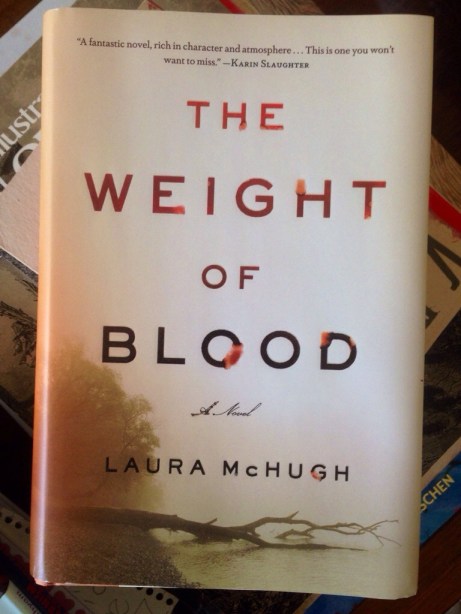
Laura McHugh’s novel The Weight of Blood is new in trade hardback next week from Random House. Their blurb:

The town of Henbane sits deep in the Ozark Mountains. Folks there still whisper about Lucy Dane’s mother, a bewitching stranger who appeared long enough to marry Carl Dane and then vanished when Lucy was just a child. Now on the brink of adulthood, Lucy experiences another loss when her friend Cheri disappears and is then found murdered, her body placed on display for all to see. Lucy’s family has deep roots in the Ozarks, part of a community that is fiercely protective of its own. Yet despite her close ties to the land, and despite her family’s influence, Lucy—darkly beautiful as her mother was—is always thought of by those around her as her mother’s daughter. When Cheri disappears, Lucy is haunted by the two lost girls—the mother she never knew and the friend she couldn’t save—and sets out with the help of a local boy, Daniel, to uncover the mystery behind Cheri’s death.

What Lucy discovers is a secret that pervades the secluded Missouri hills, and beyond that horrific revelation is a more personal one concerning what happened to her mother more than a decade earlier.

The Weight of Blood is an urgent look at the dark side of a bucolic landscape beyond the arm of the law, where a person can easily disappear without a trace. Laura McHugh proves herself a masterly storyteller who has created a harsh and tangled terrain as alive and unforgettable as the characters who inhabit it. Her mesmerizing debut is a compelling exploration of the meaning of family: the sacrifices we make, the secrets we keep, and the lengths to which we will go to protect the ones we love.

With or Without You (Book Acquired, 2.24.2014)

20140303-140548.jpg

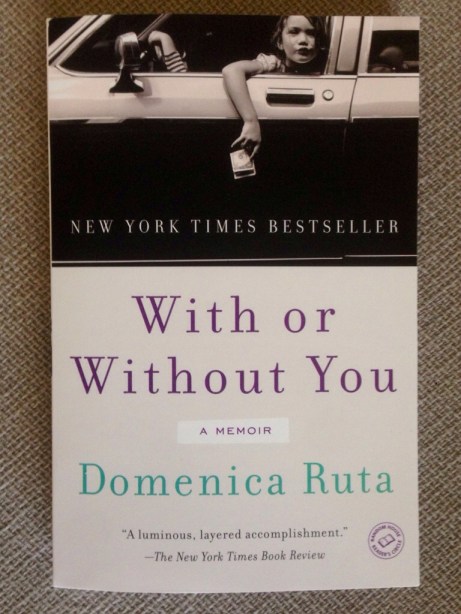
Domenica Ruta’s memoir With or Without You is new in trade paperback next week from Random House. Their blurb:

Domenica Ruta grew up in a working-class, unforgiving town north of Boston, in a trash-filled house on a dead-end road surrounded by a river and a salt marsh. Her mother, Kathi, a notorious local figure, was a drug addict and sometimes dealer whose life swung between welfare and riches, and whose highbrow taste was at odds with her hardscrabble life. And yet she managed, despite the chaos she created, to instill in her daughter a love of stories. Kathi frequently kept Domenica home from school to watch such classics as theGodfather movies and everything by Martin Scorsese and Woody Allen, telling her, “This is more important. I promise. You’ll thank me later.” And despite the fact that there was not a book to be found in her household, Domenica developed a love of reading, which helped her believe that she could transcend this life of undying grudges, self-inflicted misfortune, and the crooked moral code that Kathi and her cohorts lived by.
 
With or Without You is the story of Domenica Ruta’s unconventional coming of age—a darkly hilarious chronicle of a misfit ’90s youth and the necessary and painful act of breaking away, and of overcoming her own addictions and demons in the process. In a brilliant stylistic feat, Ruta has written a powerful, inspiring, compulsively readable, and finally redemptive story about loving and leaving.

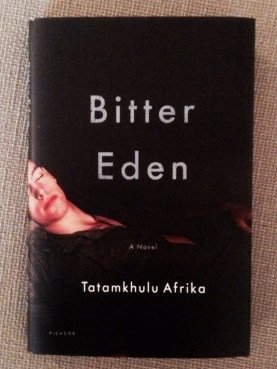
Bitter Eden (Book Acquired, 2.12.2014)

20140223-181957.jpg

This one looks pretty good. Blurb from publisher Picador:

Bitter Eden is based on Tatamkhulu Afrika’s own capture in North Africa and his experiences as a prisoner of war during World War II in Italy and Germany. This frank and beautifully wrought novel deals with three men who must negotiate the emotions that are brought to the surface by the physical closeness of survival in the male-only camps. The complex rituals of camp life and the strange loyalties and deep bonds among the men are heartbreakingly depicted. Bitter Eden is a tender, bitter, deeply felt book of lives inexorably changed, and of a war whose ending does not bring peace.

Read an excerpt here.

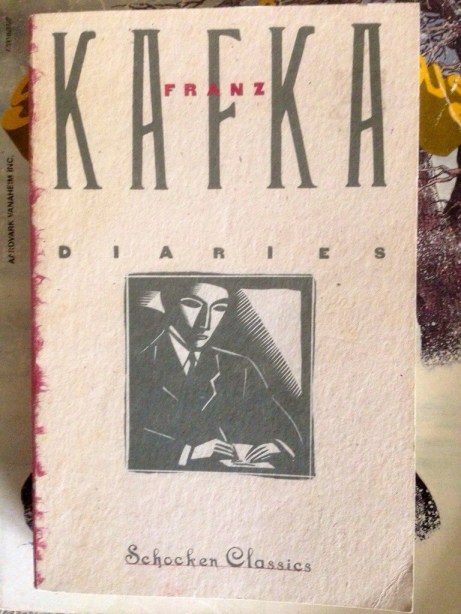
Kafka/Cerebus (Books Acquired, 1.31.2014 + Bonus Circumcision Anecdote)

20140207-154015.jpg

Picked up books last week, not needing them, but hey.

A digest of Kafka’s diaries; good stuff, great random reading.

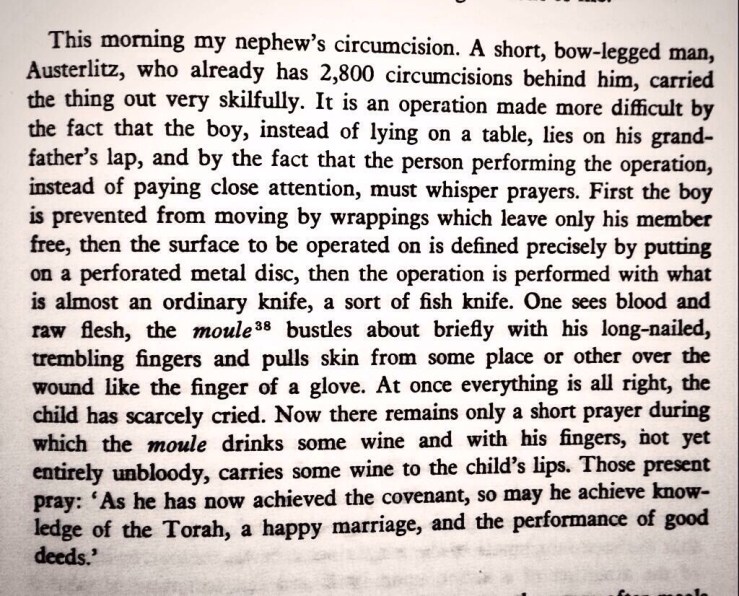
This is a great little anecdote:

20140207-154023.jpg

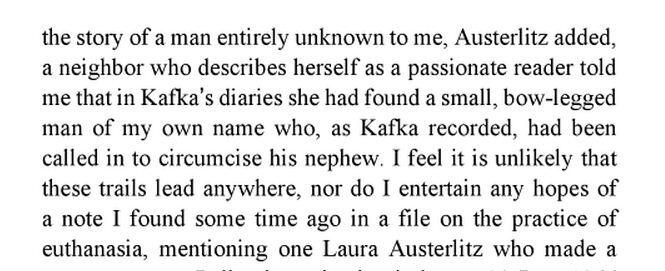
Austerlitz is of course the name of a W.G. Sebald novel. From that novel:

20140207-154029.jpg

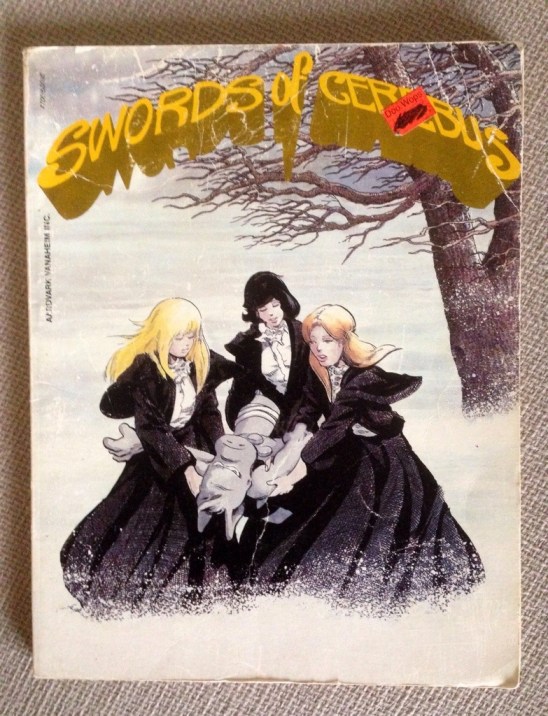
I also picked up the sixth issue of Swords of Cerebus by Dave Sim. It’s a second printing and in terrible shape and I already have the issues in other forms (reprint and graphic novel) but it’s still a pretty rare find. And I am a nerd.

20140207-154036.jpg

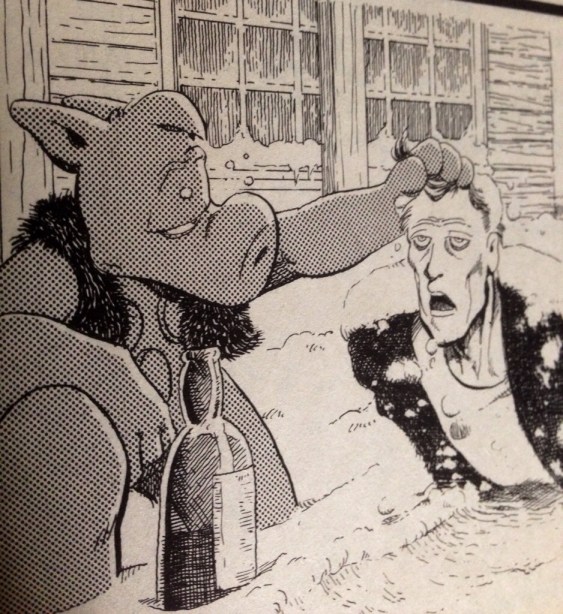
The book also includes a short little excellent wordless comic, “A Night on the Town,” where Cerebus parties with a corpse. I have the reprint somewhere else, but still:

20140207-154043.jpg

Naked Came the Post-Postmodernist (Book Acquired, Some Time in January)

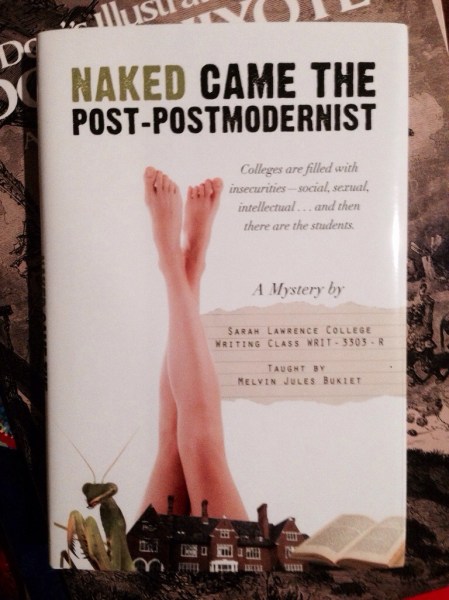
20140204-155456.jpgNaked Came the Post-Postmodernist showed up some time a few weeks ago and I still haven’t made time for it, despite an interesting premise and its collective authorship. Blurb:

Who killed Eric Davenport? A senior mathematics professor at Underhill College has been found dead in his office, the victim of murder. At Underhill, a small liberal arts college with a pricy tuition and a pampered student body, all of the students are close to their professors. But at least one loved Eric Davenport in a deeply inappropriate fashion. Some hated him. And then there is the faculty at war with itself. And the idiotic administration. And the twin boys who live next to campus. And what’s with all those praying mantises?

The collective work of Sarah Lawrence writing class 3303 – R, taught by novelist Melvin Jules Bukiet, here is a send-up of contemporary campus life that is also the latest installment in an inglorious literary tradition of wacky fun. And the mayhem hasn’t stopped. Soon, a student is found dead in the library, and, from the quad to the dorms, crime scenes and crises begin to multiply. A wealthy alumni donor becomes alarmed. Enter a libidinous medical examiner. Depicting rampant insecurities and raging egos, and with a cast of characters from conflicted faculty to student cliques, from hemp kids to Ugg girls and the J Crew crew, Naked Came the Post-Postmodernist takes us on a journey some may find eerily familiar. . . .

Some Really Lovely Books Acquired, 1.21.2014 (Thanks Ryan!)

20140124-140145.jpg

I was pleasantly surprised to get a box of great stuff in the mail from Ryan Mihaly, a frequent contributor to this blog (check out the second part of his interview with translator Ilan Stavans). Inside the handsome Penguin Classics Goethe was this little card:

20140124-140153.jpg

20140124-140201.jpg

I had never even heard of The Thoughtbook, Fitzgerald’s boyhood diary. Sample:

20140124-140208.jpg

20140124-140218.jpg

Tom Clark is The Best.

20140124-140225.jpg

20140124-140235.jpg

And always Hell.

20140124-140241.jpg

Thanks again, Ryan!

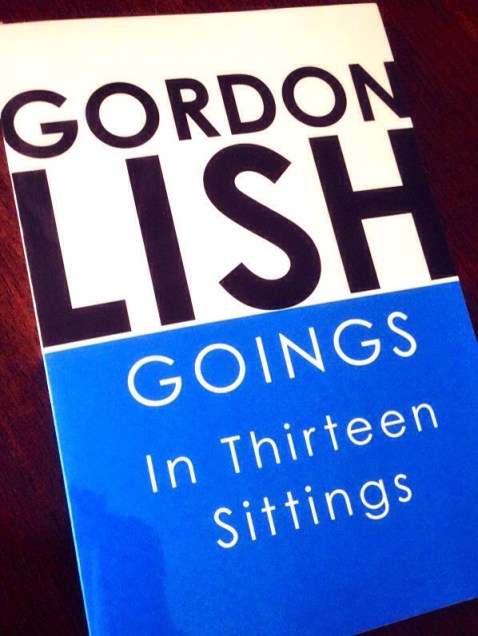
Gordon Lish’s Goings In Thirteen Sittings (Book Acquired, 1.13.2014)

20140115-151646.jpg

So I read five of the thirteen stories in Gordon Lish’s forthcoming collection Goings In Thirteen Sittings (OR Books) the afternoon it arrived. Each story, told by a narrator named “Gordon,” I could not help but here in Lish’s precise but gruff voice. Great stuff. Full review forthcoming.

Bonus:

Today, Electric Literature is running Lish’s story “In the District, Into the Bargain.” First paragraph:

Here’s a bit for you. It’s an impressive one too. My bet is you are going to be really refreshingly impressed with it, or by it, which I have to tell you is what I myself was when the woman involved in the event disclosed her heart to me. First, as to setting—temporal, spatial, all that. So, fine, so the thing starts maybe all of an hour ago just a block from where I am sitting right this minute typing this up for you to read it and get out of it the same kick I did. She types too—the woman. She is always typing, is my understanding—or was, back when I used to see her somewhat, let us just fancy, social-wise. As a matter of fact, when I said to her, “What’s up? I mean what are you doing here in this neighborhood? Do you have a pass, were you issued a pass, a license maybe, any kind of a permit you can show me authorizing you to come up here into this restricted district of mine?” she laughed. I think she thought I was trying to be funny. Let me tell you something—that’s the one thing I never try to be—namely, funny. No, no, I was just doing what I could to maybe get away with having to snoggle for the usual sort of talk, lay on her a smart-aleck greeting of a sort, which apposition I only went to the bother of just now constructing so I could say sort and sorts, repeating and repeating stuff to stuff the insidious silence with insidious sound, however otiose or bootless or inutile dexterity appears (to be?) on the surface. You get what I’m getting at?—the stressing of the effect of there being something sly down beneath down under things as regards below the surface, see? But which surface, eh wot? Or, anyway, surface of exactly what, eh wot? (You see? Can’t help myself. It’s like this thing I’ve got which is like an irresistibly compulsive thing.) Oh, boy, I am all of a sudden so tired. I, Gordon, son of Reggie, am all of a sudden so suddenly utterly all in, just fucking pooped. Like, you know, like weary, wearied, ausgespielt if you’re German, right? Nap. But, hey, before I fall and hit my head, I’m just going to go ahead and take myself a little teensy tiny nap, fair enough? Be back in a shake, I promise.
His Day Is Done (Book Acquired, 1.07.2014)

20140111-180541.jpg

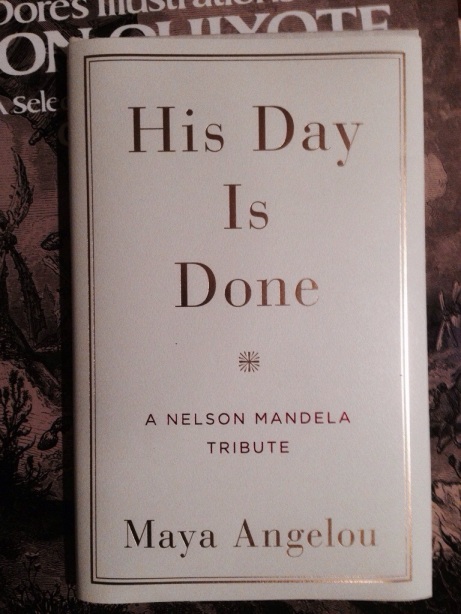
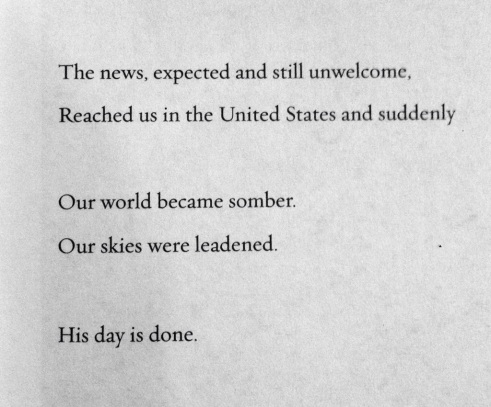
His Day Is Done: A Nelson Mandela Tribute is a slim hardback book of a poem that takes fewer than five minutes to recite.

Here are the opening lines:

20140111-180612.jpg

I’m restraining myself here but oh dear lord this is pretty bad poetry and there’s something that strikes me as utterly crass about the whole business of this little book, although I have no doubt that Angelou’s intentions are the purest (and even publisher Random House’s)—but yeesh.

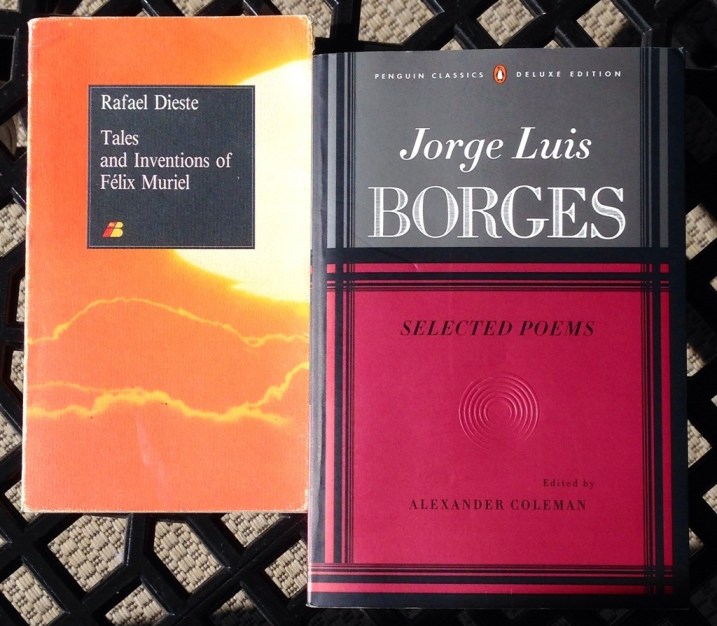
Borges/Dieste (Books Acquired, 1.04.2014)

20140105-123041.jpg

Haven’t read Rafael Dieste (one of his books shows up in Bolaño’s novel 2666—Amalfitano hangs it in his backyard).

The Borges poetry collection matches nicely with these.

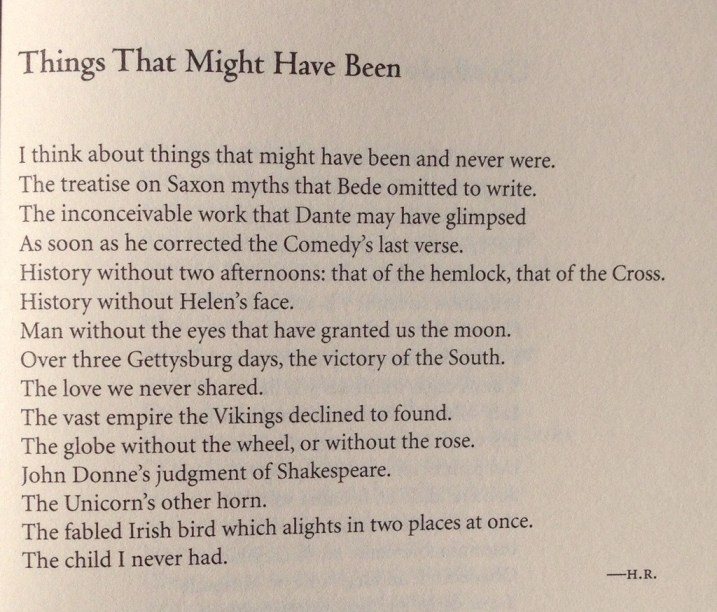
A poem by JLB:

20140105-124614.jpg