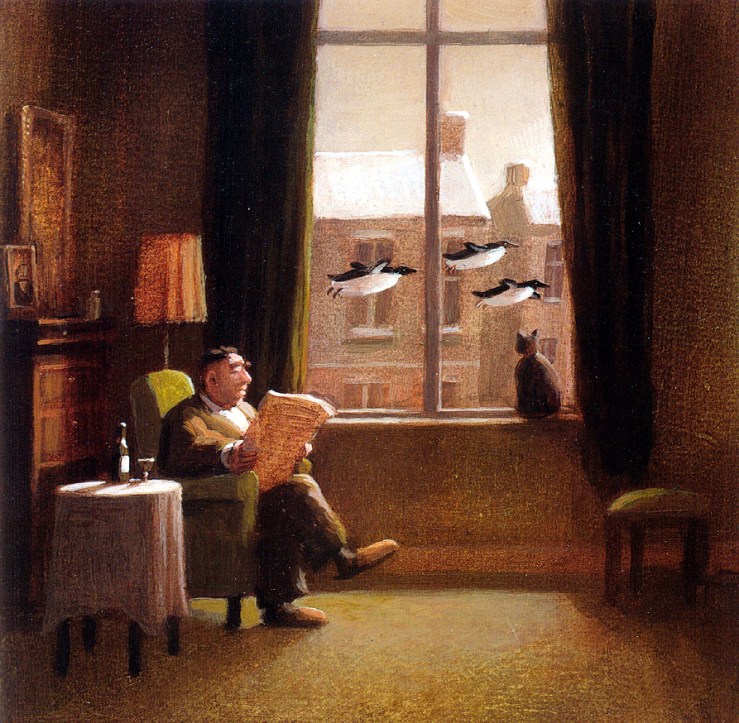
February — Michael Sowa

february

Portrait of Rodo Reading — Camille Pissarro

portrait-of-rodo-reading-1893

Karel Franta’s Marvelous Fairy Tale Illustrations

20130129-204614.jpg

My mother dropped off several boxes of books, comics, and papers I hadn’t delved into in probably 20 years—stuff I’d left at my parents’ house, intending to retrieve at some point. One book I reacquired was a Czechoslovakian folk and fairy tale collection with the nondescript name Animal Fairy Stories (retold by Alena Benesova and translated into English by Ruth Shepherd), a volume collecting over a hundred stories from all over the globe.

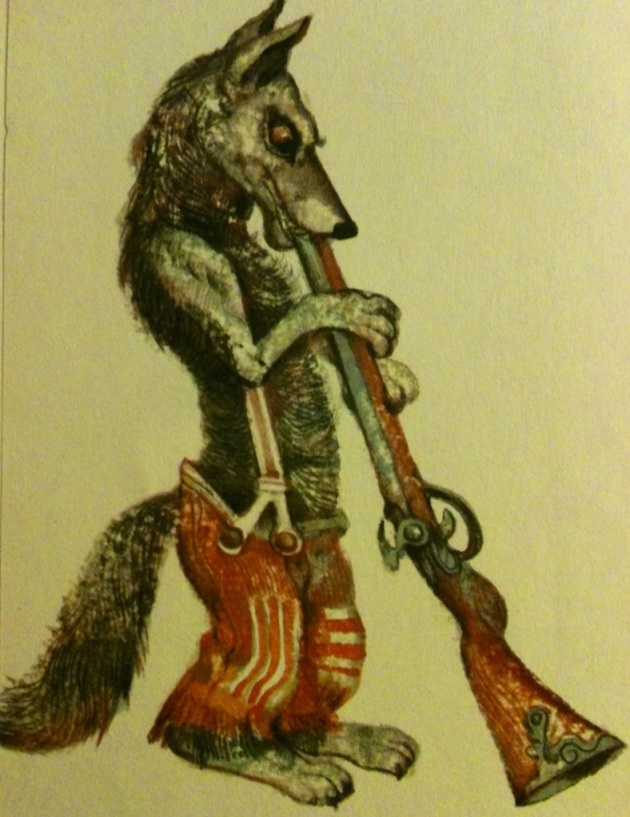
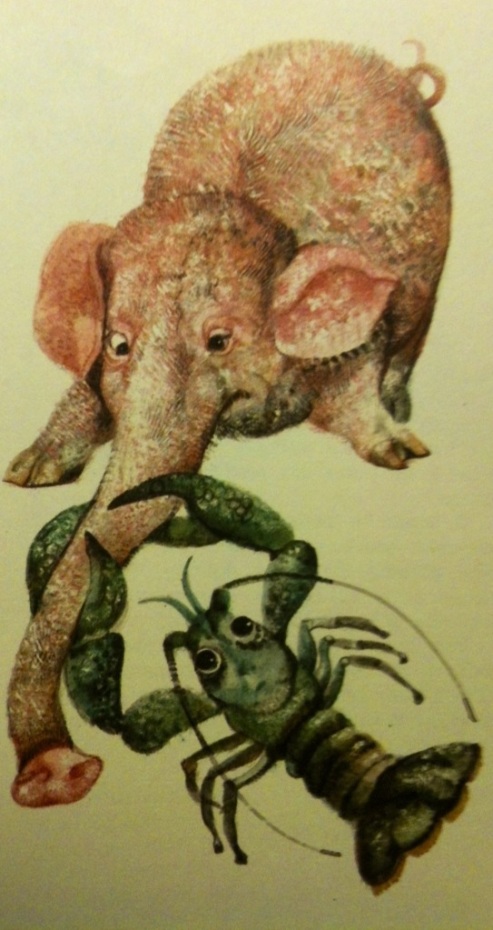
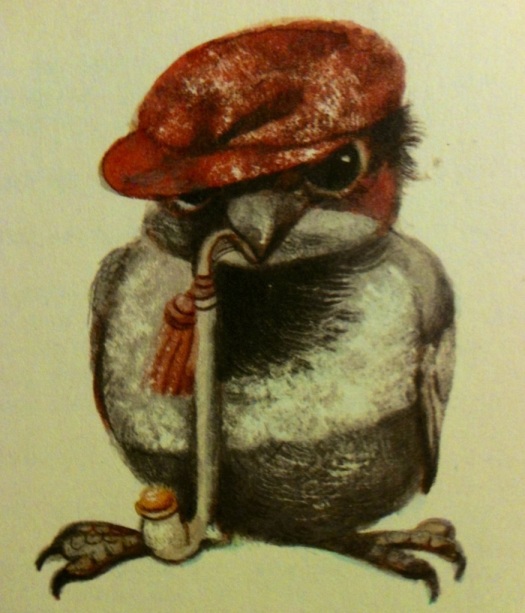
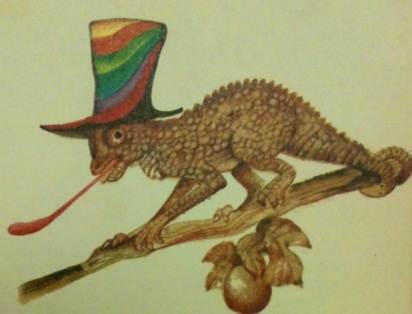
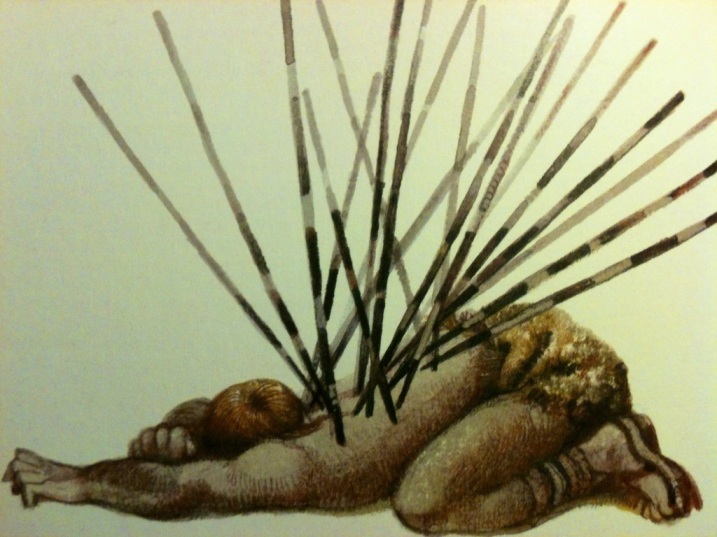
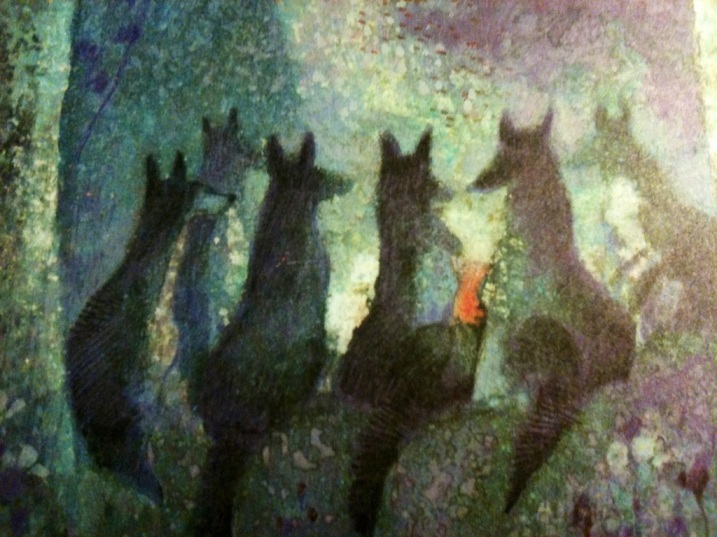
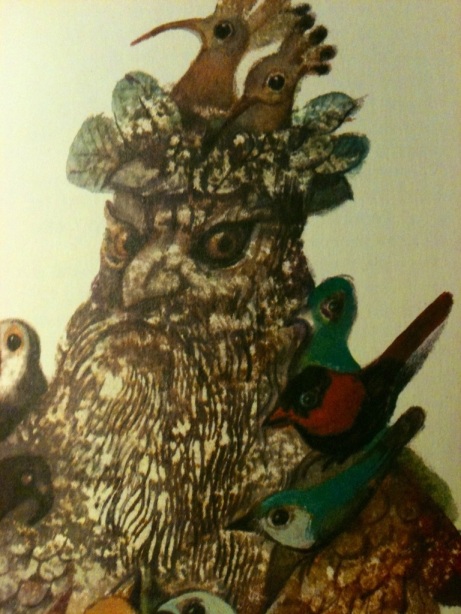
These stories had a tremendous impact on me as a child. Most describe a time “when the world was still young and everything was very different,” an amorphous, shifting world full of tricksters and their dupes, kings always precariously poised to fall and fail, interspecies cohabitation, and lots and lots of death. As important as these stories were in forming my reading habits and taste, the book’s illustrations by Czech artist Karel Franta had an even more profound and unsettling impact on my imagination. His strange, marvelous paintings somehow imprinted on my psyche, mixing in with the horror and joy and fascination that all those early stories entailed. Reading over a dozen animal tales with my own children last night, I was taken aback at how precisely each of Franta’s illustrations was etched into my brain, and how each image burned with its own special humor or terror or confusion or weird delight.

Below are a few of his paintings; I’ve tried to share a sampling that showcases his mix of strange pathos, unsettling humor, and dreamworld evocation.

20130129-204505.jpg

20130129-204450.jpg

20130129-204457.jpg

20130129-204512.jpg

20130129-204520.jpg

20130129-204529.jpg

20130129-204536.jpg

20130129-204544.jpg

20130129-204552.jpg

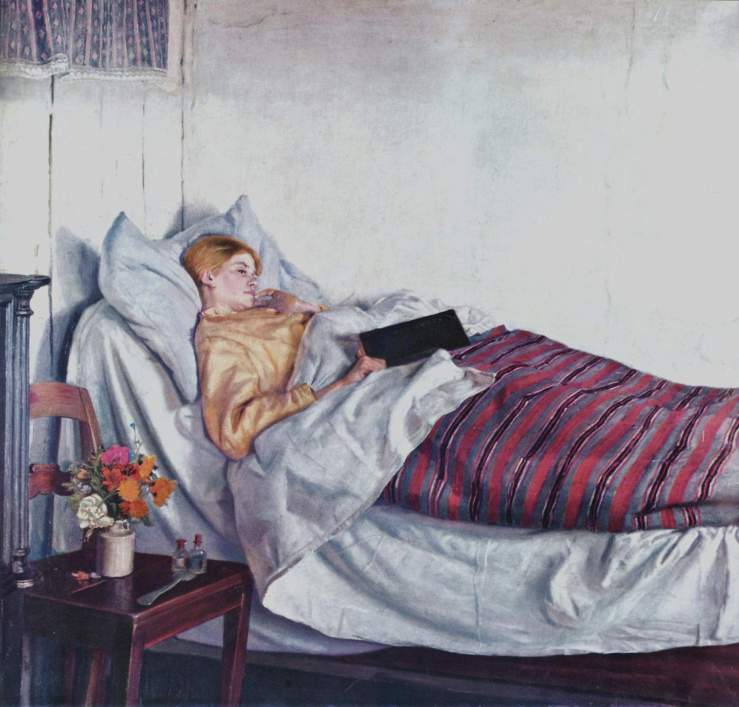
The Sick Girl — Michael Ancher

Michael_Ancher_001

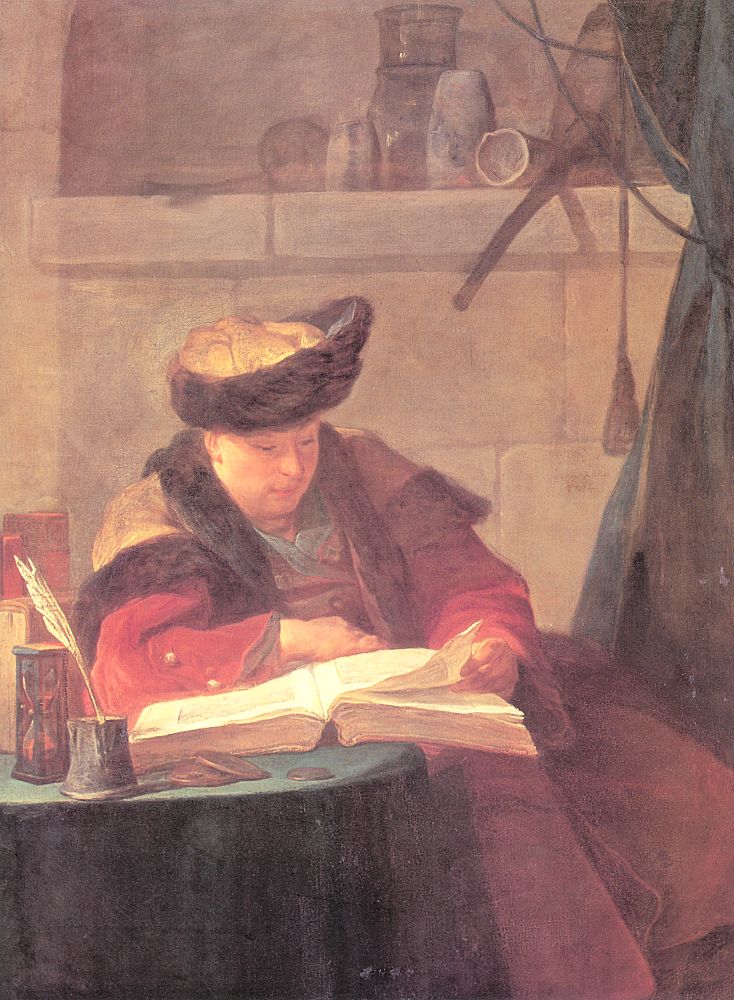
A Philosopher Giving a Lecture — Jean-Baptiste-Simeon Chardin

a-chemist-in-his-laboratory-a-philosopher-giving-a-lecture-1734

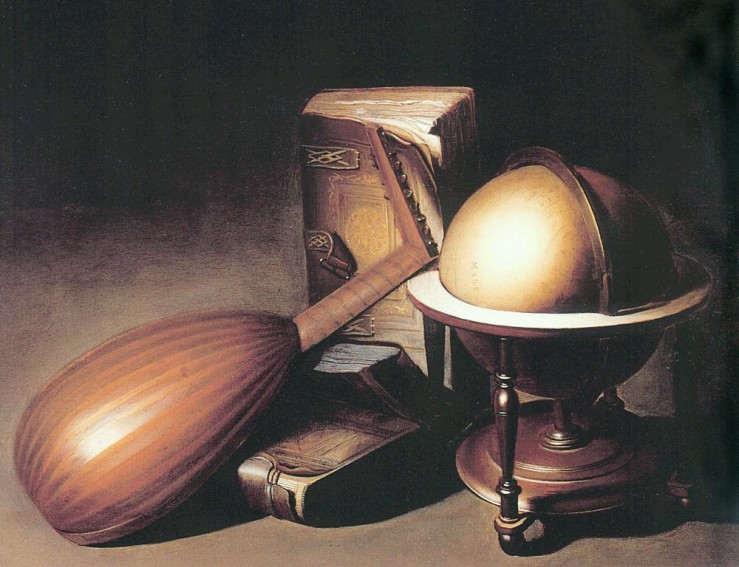
Still Life with Globe, Lute, and Books — Gerrit Dou

still-life-with-globe-lute-and-books

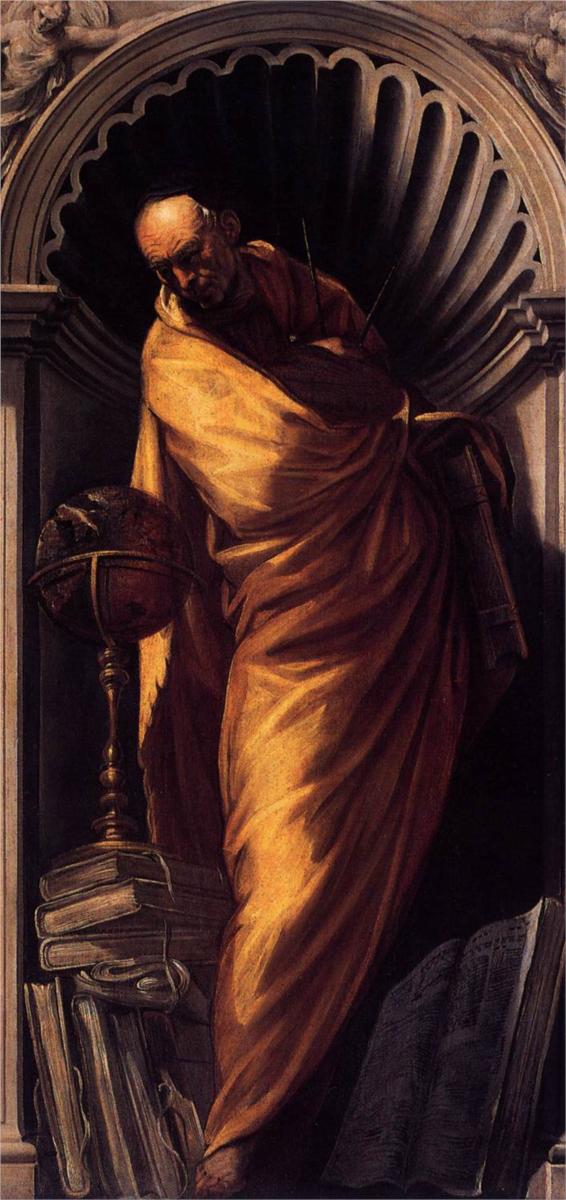
A Philosopher — Tintoretto

a-philosopher-1570.jpg!HD

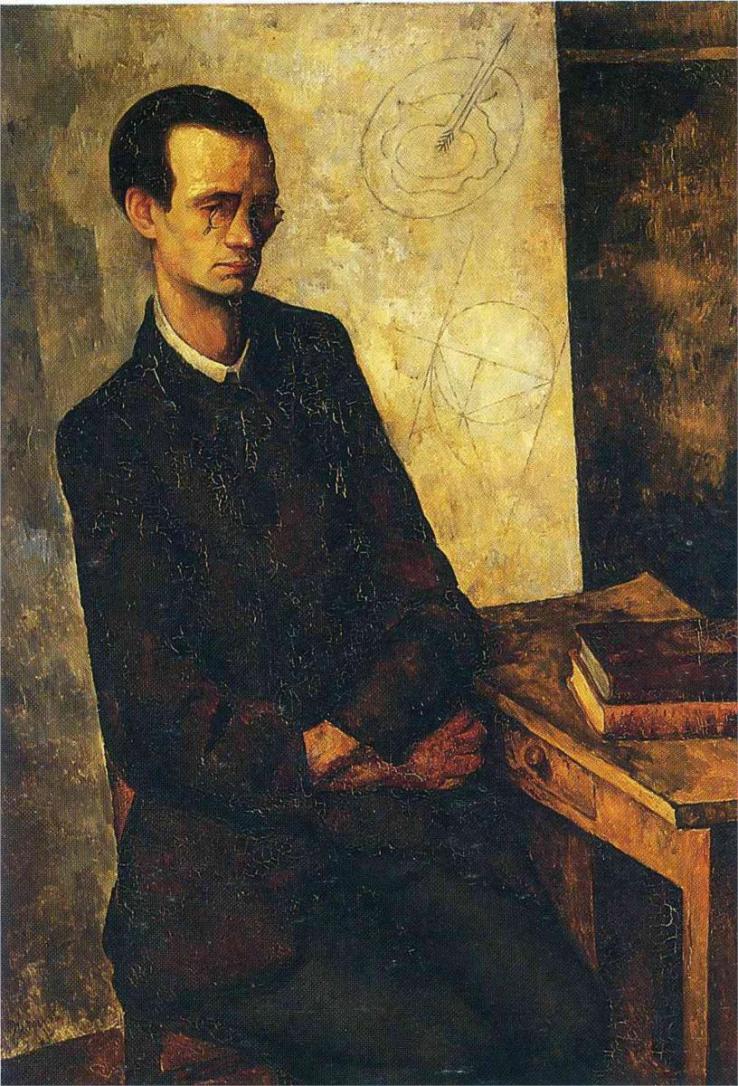
The Mathematician — Diego Rivera

the-mathematician-1918.jpg!HD

“The Stranger” — Katherine Mansfield

“The Stranger” by Katherine Mansfield

It seemed to the little crowd on the wharf that she was never going to move again. There she lay, immense, motionless on the grey crinkled water, a loop of smoke above her, an immense flock of gulls screaming and diving after the galley droppings at the stern. You could just see little couples parading—little flies walking up and down the dish on the grey crinkled tablecloth. Other flies clustered and swarmed at the edge. Now there was a gleam of white on the lower deck—the cook’s apron or the stewardess perhaps. Now a tiny black spider raced up the ladder on to the bridge.

In the front of the crowd a strong-looking, middle-aged man, dressed very well, very snugly in a grey overcoat, grey silk scarf, thick gloves and dark felt hat, marched up and down, twirling his folded umbrella. He seemed to be the leader of the little crowd on the wharf and at the same time to keep them together. He was something between the sheep-dog and the shepherd.

But what a fool—what a fool he had been not to bring any glasses! There wasn’t a pair of glasses between the whole lot of them.

“Curious thing, Mr. Scott, that none of us thought of glasses. We might have been able to stir ’em up a bit. We might have managed a little signalling. ‘Don’t hesitate to land. Natives harmless.’ Or: ‘A welcome awaits you. All is forgiven.’ What? Eh?”

Mr. Hammond’s quick, eager glance, so nervous and yet so friendly and confiding, took in everybody on the wharf, roped in even those old chaps lounging against the gangways. They knew, every man-jack of them, that Mrs. Hammond was on that boat, and that he was so tremendously excited it never entered his head not to believe that this marvellous fact meant something to them too. It warmed his heart towards them. They were, he decided, as decent a crowd of people—Those old chaps over by the gangways, too—fine, solid old chaps. What chests—by Jove! And he squared his own, plunged his thick-gloved hands into his pockets, rocked from heel to toe. Continue reading ““The Stranger” — Katherine Mansfield”

Woman Reading (Sketch) — Federico Zandomeneghi

woman-on-an-armchair

Lars Iyer’s Exodus (Book Acquired, 1.15.2013)

20130120-173952.jpg

Lars Iyer’s latest, Exodus presumably concludes the trilogy that began with Spurious and DogmaExodus picks up the adventures/failures of our tragicomic (anti)heroes Lars and W. Here’s publisher Melville House’s description:

With philosophy professors being moved to badminton departments and gin in short supply — although not short enough—the two hapless intellectuals embark on a relentless mission. Well, several relentless missions. For one, they must help gear a guerrilla philosophy movement — conducted outside the academy, perhaps under bridges — that will save the study of philosophy after the long intellectual desert known as the early 21st-century.

For another, they must save themselves, perhaps by learning to play badminton after all. Gin isn’t free, you know.

Exodus is on deck in my reading stack.  I talked to Lars a few years ago about Spurious (and other stuff), and he brought up the idea of “exodus” (as in the concept, not the book) early on:

As someone who had made some progress as an academic – a journey which implies valuable training as well as compromise and despair – I thought a kind of exodus was necessary, from existing forms of published writing. Leave it all behind!, I told myself. Leave the Egypt of introductory books and academic journals and edited collections behind. Leave the slave-drivers behind, and the sense you have of being a slave. Leave capitalism and capitalist relations behind. Leave behind any sense of the importance of career and advancement. Leave behind those relationships that are modeled on investment and return.

I love the cover on this one.


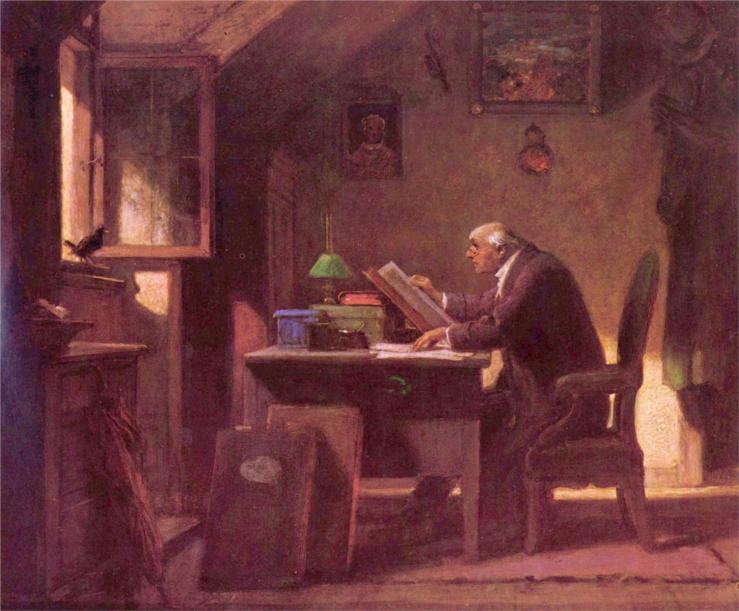
A Visit — Carl Spitzweg

a-visit.jpg!HD

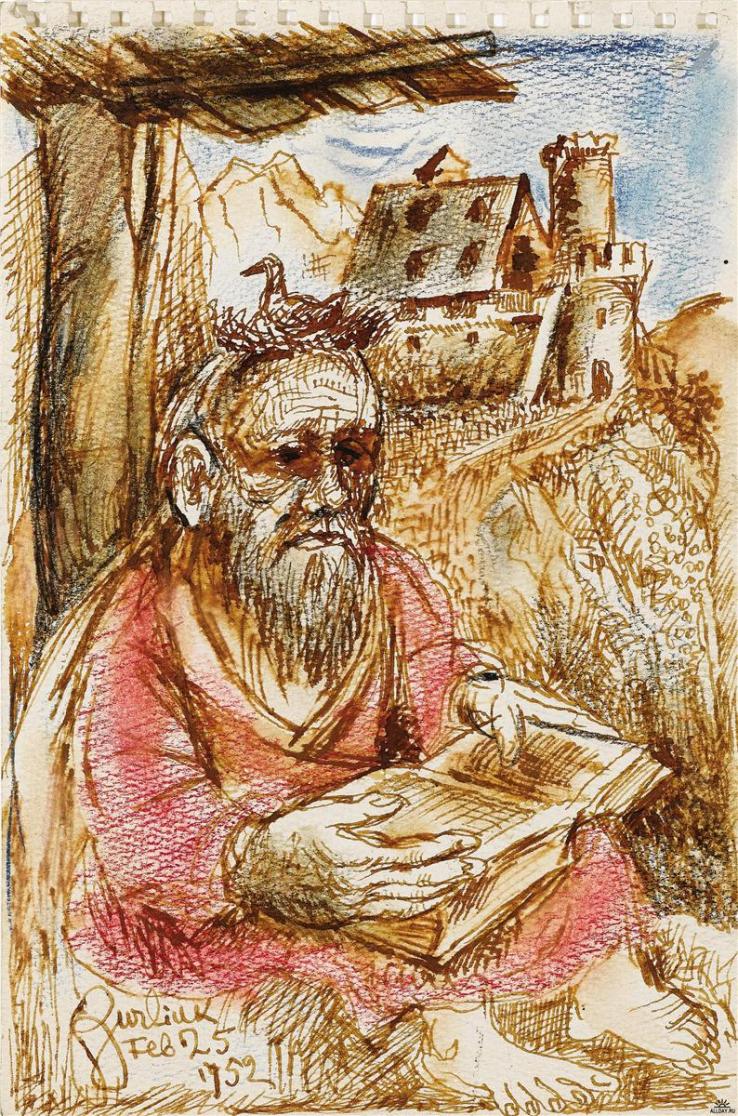
Scientist — David Burliuk

scientist-1952.jpg!HD

The Alchemist — Pieter Bruegel the Elder

the-alchemist

The Special Pleasures of Guest Room Reading

20130120-102259.jpg

A few years ago, The New York Times ran a little wisp of an article describing the pleasures many readers take in reading “the moldy, dog-eared paperbacks found on the shelves and bedside tables of summer guest rooms.” The article features writers explaining how, staying somewhere, they reach for books they’d normally never pick up, like Wells Tower describing how he ended up reading The Bridges of Madison County. Like most ardent readers, I take a book (or two or three, or, more recently, a Kindle loaded with hundreds) with me anywhere I’m going to stay a night—but I’ll invariably read something I find in the room I’m staying if possible.

Sometimes I’ll end up reading something terrible—once, staying at a beachfront condo, I read an entire serialized Annie Oakley novel even though it was awful. Other times a stay prompts me to pick up a book I’d never reach for in my civilian life. For example, in a cabin in the Blue Ridge Mountains a few years ago I read a naturalist field guide for the area, written and published in the 1950s. More often than not, guest room reading leads me to read much faster and stay up reading much longer than I normally would, simply because I’m trying to finish the book before I leave. This is how I read Gabriel Garcia Marquez’s Memories of My Melancholy Whores in one long sitting (the book was my uncle), and how I ate up John Barth’s novel The End of the Road in friend’s mother’s childhood room—the book was hers, she had lots of cool books, and I wished I could’ve read more.

The other night, staying with some longtime friends, I reached for a brittle yellowed Peanuts collection on the nightstand by my bed. There were a few volumes of prose and poetry there, but Charles M. Schulz’s comics seemed more likely to make it through the haze of half a dozen beers. Plus, I’ve always loved Peanuts. I read the book entire, an arc beginning with the gang heading off to summer camp and ending, more or less, with Snoopy’s failed attempts at writing.

20130120-102308.jpg

Like many kids, I grew up with Peanuts, reading Schulz’s work in the paper and also in collected volumes that my grandparents would give me (my grandfather was an especially big fan). The comics were often funny—not funny like my favorite at the time, Gary Larson’s The Far Side to be sure—but they were just as often full of melancholy or even despair, a despair that was mediated, but not necessarily assuaged by, the consolations of friendship.

20130120-102345.jpg

I read as gently as possible, trying (and not always succeeding) to prevent any more pages from falling out of the collection. I mentally bookmarked several panels and a few entire strips to photograph the next day to maybe share on the blog. The next morning it occurred to me that I own almost a half dozen Peanuts collections—but I probably hadn’t picked them up in years. And I suppose this is one of the strange pleasures of guest room reading—that it might reintroduce us to an old favorite—but that seems like too pat a conclusion to me. I’ve found over the years that I’m just as likely to remember an awful book I read at random as a guest—and that for some reason the experience of reading someone else’s books—in a guest room, at a river house, in a cabin, at a hostel—is somehow always heightened. I don’t have a distinct explanation, other than the very obvious and simple one that I usually read in the same few places—a chair in my living room, a couch, my office, the bed, the bath, my back porch—and that reading other people’s texts in unfamiliar places estranges what I think of as reading—and that estrangement is invigorating. And pleasurable. 

Reading — Konstantin Makovsky

reading (1)

The Young Cicero Reading — Vincenzo Foppa

FOPPA, Vincenzo_the young cicero reading_ca 1464_wallace collection london