“I Don’t Know If You’d Call It Stealing” — Sam Lipsyte, Book Thief

Sam Lipsyte read live from his novel The Ask last year on HTML GIANT’s Ustream channel. The reading was cool but the best part was the q&a session afterward. We asked Lipsyte the one question all true biblioklepts are dying to know (and the one question we ask every person we interview): “Have you ever stolen a book?”

Vodpod videos no longer available.

Here’s Lipsyte’s response, which you can hear/see at 31:25 in the video:

‘Have you ever stolen a book?’ There was one time when I stole a few books when I worked in a library; it was a university library and my job was to stick the metal strips into the spines of the books that would set off the alarm. And so if a particularly good book came through (and this only happened three or four times) I just wouldn’t–I don’t know if I’d call it stealing–but I wouldn’t put the strip in. And then once it was shelved I would take it.

That’s a pretty sophisticated operation. Kudos to Lipsyte for his candor.


Home Land — Sam Lipsyte

[Editorial note: Biblioklept ran a version of this review last year; we run it again in the spirit of Sam Lipsyte Week].

In Sam Lipsyte’s 2004 novel Home Land, minor loser Lewis Miner sends missives to his high school alumni newsletter, Catamount Notes, about his awful, sad misadventures in small-time drug use, petty copy-writing, itinerant busboyism, and chronic masturbation (he has a strong erotic disposition toward leg warmer porn. If this idea repels you (with no reciprocal attraction) this book is not for you). Miner wants to be sweet but he can be mean. He’s obsessed with the past–and who can blame him? His nickname in high school was Teabag, an appellation literally thrust upon him by the dumbest of jock-bullies. He carries this kernel of spite for years like a pebble in the sock, one that rubs up a giant blister–Miner is all blister. Writing ostensibly to his former classmates, but really just for himself, another form of masturbation:

It’s always been this way, as many of you might recall. Somebody chucks a snowball, I’m scouring the school yard for rocks. The bully just wants to shove sadness around, shake me down for spare change, I’m looking to scrape out his eye. I lack a sense of proportion. I have no sensitivity to sport. I’m the aggrieved rider on the grievous plain. I’m still pissed about the parade.

For all his anger though, Miner is an engaging, preternaturally sensitive voice. Along with his best friend/foil Gary, he muddles through a wretched life, finding solace (and an outlet for an outsized comic voice) in his letters to Catamount Notes–even if disgraced Principal Fontana won’t publish them. Despite his censorious discretion, Fontana reignites a downright silly mentorship with Miner. Fontana, a man after Holden Caulfield’s heart who calls everyone a “phony,” plays a weird father-figure to our favorite loser (even though Lewis’s own “Daddy Miner” is an ever-present terror in this tragicomedy).

Fontana, Daddy Miner, and the other characters in Home Land often feel like props rather than fully-drawn beings. Take the aforementioned Gary, for example, flush with cash after suing the hypnotherapist who convinced him that his parents sexually abused him repeatedly as part of elaborate Satanic rituals. His ridiculous past is par for course in the book. Such characters are the stock-in-trade of Home Land; they are, paradoxically, both its strength and weakness, beings who seem to speak entirely in misplaced metaphors and fucked-up aphorisms. There are too many of them for the book’s 200 pages. The fast writing never sags under the huge cast, but, nonetheless, its spine, its plot, its quick rhythm can’t bear their weight. There’s a much bigger novel here, but I don’t think I’d want to read it. Even Lipsyte’s normals are grotesques–or maybe it’s just Miner’s bilious perspective. In any case, sympathy is in short supply in Catamount country.

None of this is meant to disparage the reading experience of Home Land, which is marvelous, quick, funny, and a little bit gross (in a good way). Lipsyte crafts his sentences with a concrete, witty excellence that is near unrivaled in contemporary lit. It’s true that he sacrifices the depth of his characters here from time to time, and then includes passages that add nothing to the plot as a whole, like this one:

An older shapely woman swerved past on rollerblades. Bronzed, undulant in black Lycra, she clutched a pack of menthol cigarettes, danced on her wheels to something pumped through headphones. It was an admirable kind of ecstasy, hard-won. I wanted her for a lewd aunt.

That last line, of course, tells us so much about Lewis Miner and is also indicative of his overall method of storytelling. Not that he sees his letters to his alumni newsletter as part of a larger narrative–indeed, he’s to be forgiven all his esoterica, his mean, incisive commentary on contemporary life that doesn’t add up. Halfway through the book he tells us:

It occurs to me, Catamounts, sitting here composing this latest update, that someday, if and when the collected works of Lewis Miner ever see the light of day, some futuristic editor-type might attempt to assemble these dispatches in a certain manner, to, for example, tell a story, or else effect some kind of thematic arrangement of interwoven leitmotifs: Work, Love, Masturbation, Gary.

This would be a mistake. There are no leitmotifs. There is no story.

Miner then goes on to makes a pretty convincing case against stories (or at least against narrative arcs) and, tellingly, Home Land is better as a series of ugly, gross, hilarious anecdotes than it is as a novel with a traditional character arc. Which it is–a novel with a traditional character arc, climax, all that good stuff. Strangely, this is the book’s biggest failure. But that failure doesn’t get in the way of what is a pretty great and often very funny reading experience. Miner’s voice is a pleasure to inhabit for a while, a postmodern Falstaff heavy on the self-loathing. Home Land is a quick, easy read, a novel destined for cult-status, and Lewis Miner’s pathetic ironic braggadocio will hit home for many folks. Recommended.

Home Land is available in trade paperback from Picador.


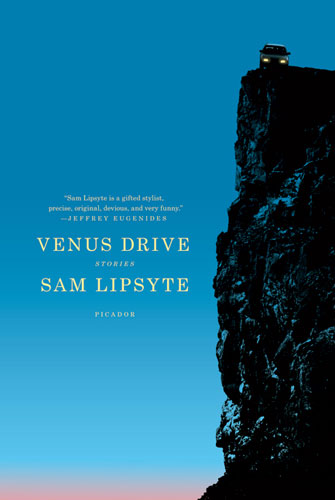
Venus Drive — Sam Lipsyte

[Editorial note: Biblioklept ran a version of this review last year; we run it again in the spirit of Sam Lipsyte Week].

The thirteen stories in Venus Drive compose a sort of novel-in-stories. The title of the collection takes its name from a banal suburban street mentioned in a few of the stories, and many of the characters seem like iterations of the same type or voice. There are washed up would-be indie rock stars, small-time coke peddlers, and underemployed and overeducated addicts. There are deviants and perverts and outsiders. There are bullies. There are dead or dying mothers, dead or dying sisters. In short, Venus Drive is its own tightly-drawn, tightly-coiled, and highly-compressed world.

As the plot points double and re-double in these stories, so do the themes. “Our culture is afraid of death, and considers it something we must wage battle against,” says Tessa, a pain specialist, a peripheral character in “Cremains.” She continues: “I say, surrender, submit. Go gentle. Terminal means terminal.” Death informs almost all of these stories in some way, and Tessa’s commentary presents the problem with death, or at least the problem these characters have with dealing with death: it’s not easy to go gentle. It goes against our culture and our nature to surrender. If she’s presented as a voice of wisdom, she’s also an ironic character, one of the many would-be authorities Lipsyte’s weirdos and outsiders can’t help but mock. “The Drury Girl,” part-suburban satire and pure pathos, posits a pre-pubescent narrator obsessed with his teenage babysitter; his dad’s cancer plays second fiddle to his lust. Thus the story neatly ties together the overarching themes of Venus Drive, sex and death. Admittedly, these are probably the only real themes of proper literature, but Lipsyte does it so damn well and lays it all out so bare and does so in such humor and grace that it really sticks. It’s good stuff.

That humor is desert-dry, of course, and succeeds so well because his characters are so endearing in their pathetic pathologies. The antiheroes of “Beautiful Game” and “My Life, for Promotional Use Only,” are also-rans in the sordid history of underground rock, addicts approaching washed-up (Are they the same person? Maybe. They have different names, of course. Doesn’t matter). A scene from “Beautiful Game” shows the ambivalence at the core of many of these characters: “At the bank machine, Gary doesn’t check the balance. Better to leave it to the gods. Someday the bank machine will shun him. Why know when?” Gene, the ex-rocker in “My Life, for Promotional Use Only” now suffers the indignities of working for his ex-girlfriend. Everyone in the story is an ex-something, everyone is growing up and leaving art (or is it “Art”?) behind. In a poignant and funny and cruel scene, familiar to many of us, Gene sees some of himself in a waitress:

Rosalie calls over the waitress and they talk for a while about somebody’s new art gallery. The waitress is famous for a piece where she served the Bloody Marys mixed with her menstrual blood. Word had it she overdid the tabasco.

I wait for the moment when our waitress stops being a notorious transgressor of social mores and becomes a waitress again, look for it in her eyes, that sad blink, and order a beer.

Gene, a former “notorious transgressor of social mores” himself feels both sorrow and hate for the waitress. He sees her job as menial and pathetic — just like his own. He doesn’t seem to think much of her art, either. Lipsyte telegraphs so much there with so few words, his sentences clean, spare, precise, and rarely of the compound variety. There’s a truncated, clipped rhythm that Lipsyte builds over the thirteen-story run that helps propel the immediacy of his tales. The stories are short, too; the longest is sixteen pages and most run to eight or ten. Lipsyte’s rhetorical gift is to shine the grubby and, at times, his sentences can feel almost too perfect, too-fussed over–but this (minor) complaint, it must be noted, comes from someone who admires occasional ambiguity or incoherence. Lipsyte removes his own authorial voice and thus achieves lucidity in his characters’ voices; somehow, though — and paradoxically — these voices bear the ghostly trace of his absence. But that seems like a silly conversation, and certainly not one for this post.

Venus Drive reminds me very much of one of my favorite books, Denis Johnson’s Jesus’ Son, which I would also call a novel-in-stories, also a spare and precise collection, also a study of weirdos and addicts and outsiders. Jesus’ Son is something of a standard in creative writing workshops (or at least it used to be) and a sensible teacher would add Venus Drive to her syllabus as well. Finally, like Jesus’ Son, Lipsyte’s book is seething, funny, and poignant, with characters tipped toward some redemption, awful or otherwise, for all their myriad sins. The book might take its name from a geographic location, but the “Venus drive” is also a spiritual inclination toward love and hope. Highly recommended.

Venus Drive is available in trade paperback from Picador.

It’s Sam Lipsyte Week at Biblioklept

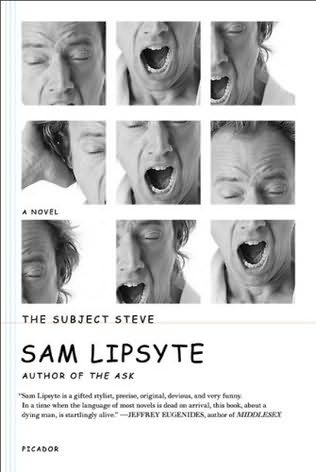
It’s Sam Lipsyte week at Biblioklept. Why? Why not? Okay, here’s a more concrete reason: this month, Picador publishes the trade paperback début of his most recent novel, The Ask, as well as a new edition of his first novel The Subject Steve. We’ll be running new reviews for The Ask and Steve, as well as re-running older reviews, an excerpt or two of Lipsyte’s weird comic goodness, and other odds n’ ends. Like this video of Lipsyte reading from The Ask. Thou hast beenst warnedst.

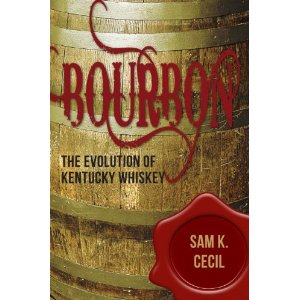
Bourbon — Sam K. Cecil

Hey. Do you like bourbon? I like bourbon a lot. It’s always been of a mild shame to me that the men in my family prefer the smoother stylings of Canadian whiskeys to the more robust corn-fueled liquors we produce here in the south. Now, as to whether Kentucky or Tennessee makes the finer product, I abstain from any definitive opinions (although a particular favorite brand of mine comes from Kentucky) because, as Sam K. Cecil’s book Bourbon: The Evolution of Kentucky Whiskey shows, there are many, many, many distilleries of bourbon (and that’s just in Kentucky alone).

Cecil’s book aims to be a comprehensive cataloging of every bourbon distillery in Kentucky, and he devotes over 200 pages to brief histories of these distilleries — a full two-thirds of the book. And while his stories are hardly dry, I found myself thirsty for more of what leads the book, an overview of the history of corn alcohol in the South that winds through days of yore to prohibition problems, from running moonshine under the Volstead act to the brass tacks of bourbon business after the repeal. Cecil incorporates many images in this section, including pictures of the distilling process, excited drinkers, and more than one vaguely racist advertisement. It’s a fun, snappy summary, delivered with love. As the bulk of the book — the detailing of Kentucky distilleries, county-by-county — attests, Cecil knows his stuff. Bourbon is hardly the kind of gimmick book that one often encounters when alcohol is the subject, nor is it for casual fans of the brown stuff. Serious drinkers only. Bourbon is new in trade paperback from Turner Publishing.

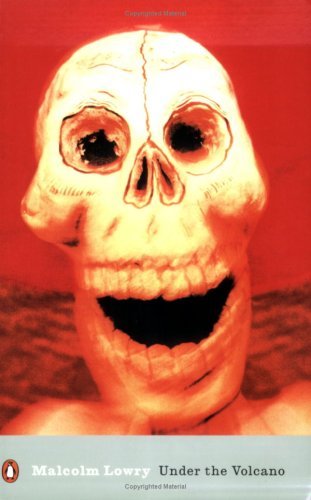
Under the Volcano — Malcolm Lowry

Most of Malcolm Lowry’s dense, depressing novel Under the Volcano takes place over the course of November 2nd, 1938, the Mexican Day of the Dead. Like a reticent, dour Virgil, Lowry guides the reader through the day’s tragic arc, floating between the minds of his novel’s three protagonists: Geoffrey Firmin, his half-brother Hugh, and Geoffrey’s estranged wife Yvonne. Geoffrey is British Consul to Mexico — ex-Consul, really, as British-Mexican relations sour against the backdrop of Spanish fascism and the rise of nationalism in Mexico — but he is almost always referred to as “the Consul,” a blackly ironic title. See, the Consul bears little authority aside from an extreme expertise on how to stay drunk (or “drunkly sober un-drunk”) 24/7. He’s ambassador to bar stools, a manager of mescal and little else (certainly not his own life; certainly not diplomatic affairs). The Consul is a wreck, an alcoholic to put Hemingway and Fitzgerald’s (and even Bukowski’s) alter-egos to shame.

After a first chapter that seems to derail all but the most patient readers, the narrative conflict arrives when Yvonne returns to Quauhnahuac, Mexico, a year after leaving (and divorcing) the Consul. She arrives to find the Consul (“Geoffrey,” as he’s called when the free indirect style inhabits her mind) drinking whiskey in a hotel bar in order to sober up (yep). It’s not immediately clear why Yvonne has returned to the Consul, but it seems that she hopes to save him from drowning in a drunken downward spiral. As the pair walks to the Consul’s house, they pass numerous advertisements for a boxing match; a child’s funeral proceeds down the avenue. These motifs of fighting, death, and futility permeate the novel.

During the walk we learn that Yvonne is not the only one concerned about the Consul’s health; his (much) younger brother Hugh has come to stay with him in the hopes of sobering him up. (Hugh employs a revolting and unsuccessful “strychnine cure”). That Hugh has also returned doubly complicates the plot. Much of Under the Volcano remains implicit, unnamed, hinted at, and this seems especially true of the implication that Yvonne cheated on the Consul with Hugh in the recent past (this implication may have been stated conclusively at some point in the novel, but I’ve only read the book once, which is perhaps like not having read it at all). What’s certainly clear is that Yvonne cheated on the Consul with a French filmmaker, Jacques Laruelle, a man whom the Consul, through sheer bizarre coincidence (but of course it isn’t sheer bizarre coincidence), spent a childhood summer with, and experience which bonded them as brothers in an Edenic holiday that eventually (inevitably) soured.

Despite her infidelities, Yvonne is generally present (I choose the verb “present” over “presented as” to highlight Lowry’s impeccable Modernist style) as a sympathetic character. Still, it is hard not to identify with the Consul (with “Geoffrey,” I suppose, if we are going to be familiar), the dark soul of this novel, and his complicated, painful feelings for Yvonne form the core of Volcano’s tragedy. He longs for her, pines for a complete life with her, yet resents her, cannot forgive her, hates her. For what? For leaving him. For betraying him. But perhaps foremost, he despises her inability to understand his alcoholism (he is particularly upset when she refuses to share a morning libation with him when they meet for the first time in a year). I’ll quote a passage at length now, one that showcases Lowry’s free indirect style, and one that reveals the strange indignities of the Consul’s sense of his own alcoholism. For context, dear reader, you must only know that Yvonne has suggested that she and the Consul might make long-term plans when he is sober “in a day or two”—

The Consul sat perfectly still staring at the floor while the enormity of the insult passed into his soul. As if, as if, he were not sober now! Yet there was some elusive subtlety in the impeachment that still escaped him. For he was not sober. No, he was not, not at this very moment he wasn’t! But what had that to do with a minute before, or half an hour ago? And what right had Yvonne to assume it, assume either that he was not sober now, or that, far worse, in a day or two he would be sober? And even if he were not sober now, by what fabulous stages, comparable indeed only to the paths and spheres of the Holy Cabbala itself, had he reached this stage again, touched briefly once before this morning, this stage at which alone he could, as she put it, “cope,” this precarious precious stage, so arduous to maintain, of being drunk in which alone he was sober! What right had she, when he had sat suffering the tortures of the damned and the madhouse on her behalf for fully twenty-five minutes on end without having a decent drink, even to hint that he was anything but, to her eyes, sober? Ah, a woman could not know the perils, the complications, yes, the importance of a drunkard’s life! From what conceivable standpoint of rectitude did she imagine she could judge what was anterior to her arrival? And she knew nothing whatever of what all too recently he had gone through, his fall in the Calle Nicaragua, his aplomb, coolness, even bravery there—the Burke’s Irish whiskey! What a world! And the trouble was she had now spoiled the moment.

The “fall in the Calle Nicaragua” the Consul references is quite literally a drunkard’s blackout (followed by the aforementioned fortifying whiskey, courtesy of a tourist), but it — falling — is perhaps the dominant motif in a novel crammed with motifs. In allegorical terms, if we want to ruin a good book (I don’t recommend this, of course), Volcano is pure Faust-stuff: end of innocence, fall of man, intractability of the human condition, ethical peril, moral inertia. While the Consul’s fall dominates the novel, Lowry brings this decline into dramatic relief in a late, climactic episode when his (anti-)heroic trio encounter a dying (dead?) man on the side of the road. Hugh tries to help, but the Darwinian venality of Mexican commonplace law makes his attempt impotent. Yvonne and the Consul are basically paralyzed.

Hugh’s attempt to save the man is a desperate call to action, an endeavor to perform some good in a world dominated by war and fascism. Hugh’s character fascinates. We learn of his past in one of the novel’s most intriguing episodes, a mini-bildungsroman that finds young Hugh working in the merchant marine as a calculated ploy to lend romance to his persona — he longs to prevail as a songwriter. He returns to find that no one cares about — has even heard — his guitar compositions; his publicity stunt fails. Although Hugh is only twenty-nine, he already seems himself as a failure, a fallen hero; he obsesses over the Battle of Ebro, daydreaming of helming a ship laden with hidden arms that he will deliver to the Loyalists who oppose the Fascists. Hugh’s greatest pain — and perhaps (only perhaps) Lowry’s greatest cruelty — is the awareness that the idealism of romantic heroism is intrinsically bound to a kind of selfish egoism. Hugh, perhaps with the visceral signal of his half-brother as a kind of radical prescience, can already see his own fall; his parts in Volcano are in a sense a constant meditation on falling. Hugh tries to save the dying man on the road, the cold double of his brother, whom he also tries to save — and yet it is all to little avail.

In Lowry’s world, in the volcano-world, there is only expulsion from the Eden. Lowry spells out this theme near the middle of his novel in a strange episode. The Consul wanders into his neighbor’s garden and reads a sign —

¿LE GUSTA ESTE JARDÍN?
¿QUE ES SUYO?
¡EVITE QUE SUS HIJOS LO DESTRUYAN!

The Consul stared back at the black words on the sign without moving. You like this garden? Why is it yours? We evict those who destroy! Simple words, simple and terrible words, words which one took to the very bottom of one’s being, words which, perhaps a final judgement on one, were nevertheless unproductive of any emotion whatsoever, unless a kind of colourless cold, a white agony, an agony chill as that iced mescal drunk in the Hotel Canada on the morning of Yvonne’s departure.

Significantly, either the sign is posted with improper punctuation, or (and?) the Consul’s translation is wrong — in either case a meaningful misreading occurs. We later receive the “proper” version of the sign: “¿Le gusta este jardín, que es suyo? ¡Evite que sus hijos lo destruyan! – “Do you like this garden that is yours? See to it that your children do not destroy it!”  The Consul’s first reading is a corruption, a cruel misreading that questions humanity’s right to happiness, and, tellingly, he connects the sign to the end of his relationship with Yvonne. The second version of the sign, while still foreboding, perhaps signals a kernel of hope in Lowry’s bleak work — the idea that a garden might be preserved, might be tended to; that children might be raised who do not kill, cheat, steal, rape, enslave, or otherwise prey on each other. Still, Lowry refuses to imagine what such a world might look like for us. Did I mention that Volcano is really, really sad?

For all its bleak, bitter bile, Volcano contains moments of sheer, raw beauty, especially in its metaphysical evocations of nature, which always twist back to Lowry’s great themes of Eden, expulsion, and death. Lowry seems to pit human consciousness against the naked power of the natural world; it is no wonder then, against such a grand, stochastic backdrop, that his gardeners should fall. The narrative teems with symbolic animals — horses and dogs and snakes and eagles — yet Lowry always keeps in play the sense that his characters bring these symbolic identifications with them. The world is just the world until people walk in it, think in it, make other meanings for it.

In many ways, Under the Volcano is an antipodal response to Joyce’s Ulysses. Both novels stream through a number of consciousnesses over the course of one day; both novels invert and subvert mythical frameworks against diurnal concerns; both novels point to the ways that the smallest meannesses — and kindnesses — can color and affect our lives. And while there are many divergences (chiefest, I believe, the spirit of redemption in Ulysses that seems entirely absent from Volcano), the greatest similarity may be their difficulty. Simply put, Lowry, like Joyce, throws his readers into the deep end. The first chapter of the novel inhabits the mind of Jacques Laruelle and takes place exactly one year after the events of the rest of the novel. It is both overture and context for all that follows, and yet it is radically alienating; indeed, it only fully makes sense after one finishes the novel and goes back and reads it again, realizing it is the rightful coda, the sad epilogue of a sad story. Lowry leads with his conclusion, show us the fall-out up front, the splinters and shards of the narrative to come. Picking up these pieces is hardly easy and never joyful, but it is a rewarding experience. Very highly recommended.

Nabokov Discusses Lolita Covers

See more Lolita covers.

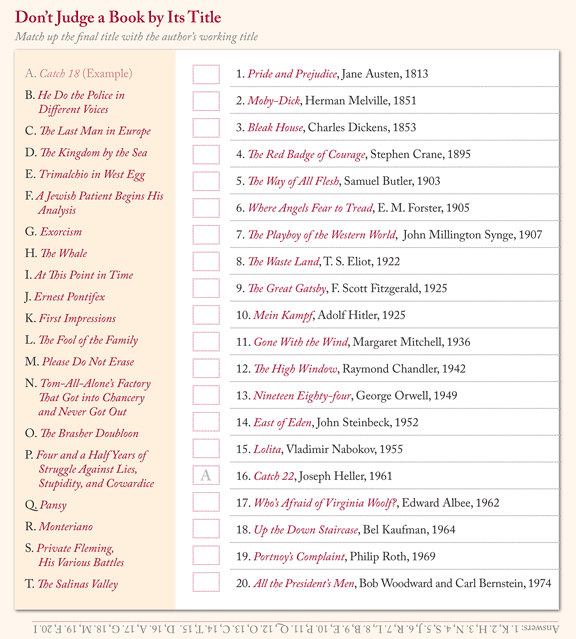
Don’t Judge a Book by Its Title

From Lapham’s Quarterly, via.

Bob Dylan Plans Six New Books

According to AV Club, Bob Dylan has inked a deal with Simon & Schuster to write six books, including the long-awaited follow ups to Chronicles, Volume One (easily one of our favorite memoirs or music books or Dylan books or whatever you want to call it). Also connected: MobyLives reports that literary agent/villain-in-an-alternate-universe-where-everyone-actually-cares-about-publishing Andrew “The Jackal” Wylie may be the guy responsible for the delay of Chronicles Volume 2.

Here’s Dylan haranguing a journalist in one of my favorite scenes from Don’t Look Back

Lydia Davis Reads Five of Her Short Stories

Eugene Mirman Talks with Wesley Stace About Charles Jessold, Considered as a Murderer

Electric Literature Shoots Guns at Jonathan Franzen, David Mitchell, the Kindle, and Others

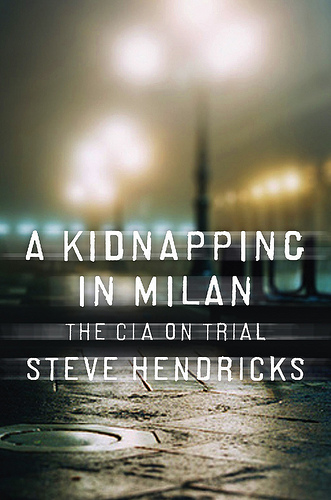
A Kidnapping in Milan: The CIA on Trial — Steve Hendricks

Steven Hendricks’s A Kidnapping in Milan: The CIA on Trial details the story of radical imam Abu Omar. Omar, an Egyptian radical who sought political asylum in Italy, was the focus of an investigation by the Milan police force, who, via wiretaps and other forms of surveillance, were building a case against Omar for recruiting a network of Islamist terrorists. In early 2003, the Milanese case fell apart when Omar was disappeared in what turned out to be one of the most conclusively documented cases of the CIA’s “extraordinary renditions.” Omar was kidnapped, relocated to Germany, and then returned to Egypt, where he was tortured and held by Egypt’s SSI–under the watchful eyes of the CIA. Italian prosecutor Armando Spataro, erstwhile protagonist of Kidnapping, reconstructed the evidence of the CIA’s extraordinary (and extra-legal) rendition, leading to the prosecution of twenty-six CIA operatives for kidnapping; twenty-three were convicted.

Hendricks combines journalistic clarity with the structure of a detective novel in Kidnapping, giving his book the urgency of a modern thriller, all the more striking for its cold reality. The book is well-researched; Hendricks interviewed, among others, Spataro, Omar, and even some of the indicted CIA agents–but Kidnapping never reads as a dry recitation of facts or a ponderous series of analyses. Additionally, Hendricks fleshes out his story with a consideration of the CIA’s history in Italian politics, with an emphasis on why Milan is such a hotbed for clandestine activities. Guiding the narrative is a refined sense of moral outrage against the idea that dark deeds done in the dark make our world somehow safer. While there are some that will remain unmoved by his descriptions of Omar’s torture — the cleric is a “bad guy,” in the Bush admin’s parlance, after all — Hendricks builds a clear case that the “outsourcing of torture” is a vile practice, and one antithetical to the spirit of our Constitution. And, even if the Obama administration is unwilling to shed further light on such crimes, it is good to know that there are writers who will.

A Kidnapping in Milan is new in hardback from W.W. Norton.

(An Incomplete List of) Writers Who Died in 2010

J. D. Salinger, 91, American author

Howard Zinn, 87, American historian

Barry Hannah, 67, American novelist and short story writer

David Markson, 82, American writer

Harvey Pekar, 70, American comic book writer (American Splendor)

Tuli Kupferberg, 86, American poet, cartoonist and musician (The Fugs)

David Mills, 48, American author, journalist and television writer (NYPD BlueThe CornerKingpin)

Dick Giordano, 77, American comic book artist and editor (BatmanGreen Lantern)

José Saramago, 87, Portuguese novelist, playwright and journalist, Nobel Prize winner for literature

Lucille Clifton, 73, American poet (Blessing the Boats), Poet Laureate of Maryland

Robert Dana, 80, American poet, Iowa poet laureate

Rajendra Keshavlal Shah, 96, Indian poet

Tibet, 78, French comics artist

Mary Daly, 81, American radical feminist philosopher

Knox Burger, 87, American editor, writer, and literary agent

George Leonard, 86, American writer, editor and educator, pioneer of the Human Potential Movement

Robert B. Parker, 77, American detective writer

Laura Chapman Hruska, 74, American writer, co-founder and editor in chief of Soho Press

Stephen Morse, 65, American poet

P. K. Page, 93, Canadian poet

Bingo Gazingo, 85, American performance poet

Kage Baker, 57, American science fiction and fantasy author

Ralph McInerny, 80, American philosopher (University of Notre Dame) and mystery author

Erich Segal, 72, American professor, author (Love Story), and screenwriter (Yellow Submarine)

Carlos Montemayor, 62, Mexican writer

Violet Barclay, 87, American comic book artist

David Severn, 91, British author

Colin Ward, 85, British anarchist writer

William Tenn, 89, American science fiction writer

Liz Carpenter, 89, American feminist author, press secretary to Lady Bird Johnson (1963–1969)

John Eric Holmes, 80, American science fiction and fantasy author

Ai Ogawa, 62, American poet, breast cancer

Patricia Wrightson, 88, Australian children’s writer

Matilde Elena López, 91, Salvadoran poet, essayist and playwright

Elena Schwarz, 61, Russian poet

Ella Mae Johnson, 106, American social worker and author

Miguel Delibes, 89, Spanish author, journalist and scholar

Sid Fleischman, 90, American children’s writer

Bill DuBay, 62, American comic book editor, writer, and artist

Henry Scarpelli, 79, American comic book artist (Archie)

Alan Sillitoe, 82, British writer (Saturday Night and Sunday Morning)

Jan Balabán, 49, Czech writer, recipient of the Magnesia Litera award

William Neill, 88, British poet

Carolyn Rodgers, 69, American poet

Peter Orlovsky, 76, American poet

Leslie Scalapino, 65, American poet, publisher and playwright

Peter Seaton, 67, American poet

Judson Crews, 92, American poet

Hoàng Cầm, 88, Vietnamese poet and playwright

Donald Windham, 89, American novelist

Bree O’Mara, 42, South African novelist

Robert Tralins, 84, American author

Ruth Chew, 90, American children’s author

Randolph Stow, 74, Australian writer

Arthur Herzog, 83, American writer

Peter O’Donnell, 90, British writer

T. M. Aluko, 91, Nigerian writer

Kovilan, 86, Indian novelist

F. Gwynplaine MacIntyre, 62, Welsh science fiction author

Allen Hoey, 57, American poet

José Albi, 88, Spanish poet

Andrei Voznesensky, 77, Russian poet and writer

Vladimír Bystrov, 74, Czech writer and translator

Suso Cecchi d’Amico, 96, Italian screenwriter (Bicycle Thieves)

Tom Mankiewicz, 68, American screenwriter (James BondSuperman)

Iris Gower, 75, Welsh novelist

Jon Cleary, 92, Australian novelist (The SundownersHigh Road to China)

James P. Hogan, 69, British science fiction author

Michèle Causse, 74, French lesbian theorist, author and translator

Vance Bourjaily, 87, American novelist

Patrick Cauvin, 77, French novelist

Sir Frank Kermode, 90, British literary critic and writer

Ludvík Kundera, 90, Czech writer and translator

George Hitchcock, 96, American poet and publisher

Jennifer Rardin, 45, American author

Edwin Charles Tubb, 90, British science fiction author

Micky Burn, 97, British writer and poet

Belva Plain, 95, American novelist (Evergreen)

Bärbel Mohr, 46, German author

George Cain, 66, American author

Claire Rayner, 79, British author

Alí Chumacero, 92, Mexican writer and poet

Monica Johnson, 54, American novelist and screenwriter (Lost in America, Modern Romance)

Philip Carlo, 61, American crime author

Adrian Păunescu, 67, Romanian author, poet and politician

Dmitry Gorchev, 47, Russian writer

Richard Stanley “Dick” Francis, 79, a British jockey who later wrote crime novels about horse racing

The Minimum Number of Books in Harvard’s Libraries That Are Bound in Human Flesh (and Other Fun Facts from Harper’s Index)

The following citations are culled from a search of Harper’s Index that used the term “literature.” (If it’s not obvious, the numbers before each datum are the month and year that Harper’s originally published the datum in its Index)–

5/84    Percentage of Americans who say they never read books: 45

Percentage of these who can’t read: 13

12/87  Number of direct-mail solicitations sent to Henry David Thoreau at Walden Pond this year: 90

4/87   Copies of Gabriel García Márquez’s new book burned by the Chilean government last November: 15,000

2/88   Exclamation points in Tom Wolfe’s The Bonfire of the Vanities: 2,343

10/90   Number of years George Bush has been citing Bonfire of the Vanities as an example of his pleasure reading: 2

11/90   Number of Georgia third-graders Representative Newt Gingrich paid $2 for every book they read last summer: 282

3/91   Percentage of American households in which no books were bought last year: 60

12/92   Chances that an attempt to ban or restrict access to school materials or books last’ year was successful: 2 in 5

6/94   Amount Random House lost on the 29 of its books included on the 1993 New York Times Notable Books list: $698,000

11/95   Estimated number of books banned since 1965 in Indonesia: 2,000

3/95   Amount for which a Mississippi man attempted to sue “the Bible” last year, citing it as “oppressive hearsay”: $45,000,000

5/95   Tons of remaindered books destroyed in the United States each year: 250,000

5/95   Number of Shakespeare’s thirty-seven plays quoted on the Senate floor last year by Robert Byrd: 37

9/95   Percentage of Americans who own at least five Bibles: 27

9/95   Number of California library books of modern American poetry from which pages have been reported stolen this year: 250

1/00   Estimated temperature of Hell, according to two Spanish physicists ‘ interpretation of the Bible: 832° F

Estimated temperature of Heaven: 448°F

3/00  Number of Playboy centerfold models since 1959 whose bios claimed their favorite book was by Ayn Rand: 12

9/00   Ratio of the number of copies of The Great Gatsby sold each month in the U.S. to the number sold in the author’s lifetime: 5:3

9/03   Estimated acres of forest Henry David Thoreau burned down in 1844 trying to cook fish he had caught for dinner: 300

6/04   Minimum number of the brand names mentioned in James Joyce’s Ulysses that are still extant: 28

Number of the brand holders that are sponsoring Dublin’s centennial Bloomsday celebration this month: 2

9/06   Minimum number of books in Harvard’s libraries that are bound in human flesh: 2

The Best Books of 2010

Here are our favorite books published in 2010 (the ones that we read–we can’t read every book, you know).

Sandokan — Nanni Balestrini

A dark, elliptical treatise on the mundane and inescapable violence wrought by the Camorra crime syndicate in southern Italy.

Everything Ravaged, Everything Burned — Wells Tower (trade paperback)

Tower’s world is a neatly drawn parallel reality populated by down-on-their-luck protagonists who we always root for, despite our better judgment, even as they inadvertently destroy whatever vestiges of grace are bestowed upon them.

The Union Jack — Imre Kertész

Kertész’s slim novella explores a storyteller’s inability to accurately and properly communicate spirit and truth against the backdrop of an oppressive Stalinist regime.

BodyWorld — Dash Shaw

Shaw’s graphic novel is sardonically humorous in its psychoanalytic/post-apocalyptic visions. It’s a sweet and sour subversion of 1950’s comics and contemporary conformist groupthink politics. Witty and poignant, it advances its medium.

The Thousand Autumns of Jacob de Zoet — David Mitchell

An unexpected historical romance from postmodern poster boy David Mitchell. Thousand Autumns is a big fat riff on storytelling and history and adventure–but mostly, Mitchell’s Shogunate-era Japan is a place worth getting lost in.

C — Tom McCarthy

“I see what I’m doing as simply plugging literature into other literature,” McCarthy said in an interview this year. “For me, that’s what literature’s always done.” C, our favorite novel of 2010, seems plugged into the past and the present, pointing to the future.

Wolf Hall — Hilary Mantel (trade paperback)

Who knew that we needed to hear the Tudor saga again? Who knew that Thomas Cromwell could be a good guy?

The Ask — Sam Lipsyte

A mean, sad, hilarious novel that simultaneously eulogizes, valorizes, and mocks the American Dream.

X’ed Out — Charles Burns

Charles Burns does Tintin in William Burroughs’s Interzone. ‘Nuff said.

The Collected Stories of Lydia Davis — Lydia Davis

An epic compendium of, jeez, I don’t know, how do you define or explain what Davis does? Inspection, perception, mood, observation. Tales, fables, riffs, annotations, skits, jokes, japes, anecdotes, journals, thought experiments, epigrams, half-poems, and would-be aphorisms. Great stuff.

Check Out This Amazing Fore-edge Painting