
The audiobook of Brief Interviews with Hideous Men came out almost a year after its author, David Foster Wallace killed himself, which kinda sorta makes it strange to hear his voice read some of these tales. Here’s Wallace reading “A Radically Condensed History of Postindustrial Life,” a short short short story. As far as audiobooks goes, this collection is fantastic. There’s a great cast here, and the actors, including Bobby Canavale, Will Forte, Christopher Meloni, John Krasinski (who adapted the book into a film which I’ve, despite having had a pirate copy for several months, been too afraid to watch) intuit Wallace’s work and communicate its humor, pathos, and subtlety. The biggest treat though is hearing Wallace’s voice again.
Tag: Books
Dr. Benway Operates
I’d never seen this before. William Burroughs reads–and acts out–one of his infamous Dr. Benway riffs from Naked Lunch. Gross, engrossing, and hilarious.
The Union Jack — Imre Kertész
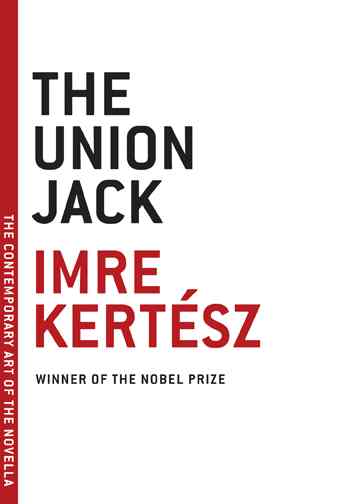
Cerebral and often ethereal, Imre Kertész’s The Union Jack attempts to recount an attempt to recount a simple anecdote, the unnamed author’s epiphanic sighting of a jeep bearing the British flag during the 1956 Hungarian Revolution. No, there’s not a typo in the previous sentence: Kertész’s slim novella is more about a storyteller’s inability to accurately and properly communicate spirit and truth than it is about a student uprising against an oppressive Stalinist regime. The unnamed narrator (presumably a version of Kertész) is prompted by his former students to tell the story of the Union Jack; he spends most of the novella attempting to tell his readers of that attempt to tell his anecdote. The problem is that to really tell the story of the Union Jack, our narrator tells us:
I would have to tell about the books I was reading at the time, about my passion for reading, what nourished it, the vagaries of chance on which it hinged, as indeed does everything else in which, with the passage of time, we discern what, whether it be the consequentiality of destiny or the absurdity of destiny, is in any event our destiny; I would have to tell you about when that passion started, and whither it propelled me in the end; in short, I would have to tell almost my entire life story.
The narrator then concedes that to tell one’s whole life story is “impossible,” and sets out then instead to build to his story about the Union Jack by first explaining his initial encounter with the opera of Richard Wagner, one of several epiphanies that form the essential plot of the novella. The narrator is an old man looking back on a young man who is somehow the same man but also somehow not. As a way of understanding this disjunction, the old man narrates his tale as a series of the young man’s “formulations” of possibility and identity. These formulations include an early encounter with the Hungarian writer Ernő Szép, a transcendent viewing of Wagner’s Die Walküre, and an obsession with Thomas Mann’s The Blood of the Walsungs. For the young narrator (who surely must be Kertész), these moments offer “a kind of metaphysical solace” amid the horrors of the Stalinist regime, which the narrator calls “the disaster.” He continues: ” . . . put simply, even in the depths of disaster, and in the lowest depths of consciousness of that disaster, I was never again able to carry on living as if I had not seen and heard Richard Wagner’s opera Die Walküre.” These experiences offer the narrator hope in the form of Platonic aesthetic ideals, vibrantly extant in striking relief against the grim disaster-world of communist Hungary. And yet, despite the literary bent of the narrator’s experiences, he ultimately eschews them in favor of pure, unmediated living, fearing that “literature has fallen under suspicion”:
One should strive for formulations that totally encapsulate the experience of life (that is to say, the disaster); formulations that assist one to die and yet still bequeath something to posterity. I don’t mind if literature, too, is capable of such formulations, but what I see increasingly is that only bearing witness is able to do this, possibly a life passed in muteness without being formulated as a formation.
For the narrator (come on, he’s got to be Kertész!) to bear witness is beyond problematic; it approaches impossible, hence the elliptical layering of his narrative. He spends almost seventy pages spiraling toward telling an anecdote that clocks in at just one page. He admits again and again that the construct of his narrative, “the spirit of formulability,” is “by no means the same thing, of course, as the real spirit of those details” of life during the “disaster.” Kertész writes of the
. . .iron curtain that rises between formulation and being, the iron curtain that rises between the storyteller and his audience, the iron curtain that rises between one person and another, and, in the end, the impenetrable iron curtain that rises between a person and himself, between a person and his own life.
If the problem of witnessing through formulation always rises like an iron curtain, then Kertész does offer some of his own metaphysical solace at the end of The Union Jack, to both his interior audience of former students and his exterior audience of readers. He tells them–and us–that:
. . . anecdotes apart, every story and everybody’s story is one and the same story when it comes down to the essentials, and that these selfsame stories are really essentially all horror stories; that essentially every event is really a horror even, and even history too had long, long ago become, essentially, at best just horror history.
Okay, sure, that seems mighty grim for something I’ve claimed as “metaphysical solace”–but it does speak to an essential connection, an essential ability for formulations to match in a shared “horror history” that might transcend time and place. For Kersétz (or the young narrator, to be fair), there must have been something at the core of Wagner’s opera, something in the spirit of its storm, that connected to–and in some way sublimated–the horror of “the disaster.”
I’ve tried in this review to convey a sense of Kertész’s challenging style. His long, elliptical sentences branch out over pages at a time, often–very often–floating into awfully abstract territory. At times, The Union Jack reads more like a work of continental philosophy than a novella, and it’s not the first place to go to for an account of the Hungarian Revolution of 1956. I read the book in two sittings, but one would’ve better matched its breathless rhythm. The book reminds me very much of the work of W.G. Sebald in a number of ways: its philosophical density, its challenging allusiveness, and its melancholy tone. Like Sebald’s stuff, The Union Jack is a personal coming-to-terms, with not just history, but with how one might witness to history. It’s a very rewarding book, and Tim Wilkinson should be commended for his translation, as should Melville House for their continued commitment to bringing under-translated authors to an English-reading audience. Highly recommended.
The Union Jack is new in trade paperback from Melville House. The book is part of Melville House’s continuing series, The Contemporary Art of the Novella.
Book vs Film
The AV Club’s fun little inventory of literary works that should never be adapted to film again got us to thinking about that age old question — book vs. film. Common wisdom holds that “the book is always better than the film,” with any number of examples as evidence. Some of the works cited on the AV Club’s list are novels that can’t really be translated to film, at least not in philosophical essence (Moby-Dick, for example, and Nabokov’s Lolita, a film that for reasons social and legal, can never be made properly).
Our own observation, or rule of thumb, is that, while canonical “high” literature rarely makes for masterpiece filmmaking, genre fare–done right–can make classic films. In Francis Ford Coppola’s hands, Mario Puzo’s airport bookstore pickup The Godfather became two of the greatest films of all time. Look at what Stephen Spielberg did for Peter Benchley’s beach read Jaws, or what Kubrick did for Stephen King’s pulp horror The Shining. In more recent times, Alfonso Cuarón turned P.D. James’s capable thriller Children of Men into cinematic gold, but, tellingly, stumbled in adapting the Charles Dickens classic Great Expectations. Terrence Malick turned James Jones’s war novel The Thin Red Line into cinematic art and Martin Scorsese spun Goodfellas from Nicholas Pileggi’s Wiseguy–hardly Shakespeare. Danny Boyle has made a career of turning lesser works by writers like Alex Garland and Irvine Welsh into fantastic films.
Very few films present a tough choice, really–we’re still not sure if the Coens’ adaptation of Cormac McCarthy’s No Country for Old Men is better than the book, but it might be. Gary Sinise’s measured take on John Steinbeck’s Of Mice and Men gets just about everything right. Heck, Harold Bloom has even argued quite publicly that John Huston’s version of The Grapes of Wrath is superior to Steinbeck’s. We’re not sure about that one either. Suffice to say that they’re different; that watching a film is not the same as reading a book, nor should it be. We close by saying that we’d love to see Chris Adrian’s The Children’s Hospital adapted to film, preferably by someone awesome like David Lynch or Cuarón, and that, as Sam Peckinpah is long dead, no one should try to adapt Cormac McCarthy’s Blood Meridian.
Ruby’s Spoon — Anna Lawrence Pietroni

In her debut novel Ruby’s Spoon, Anna Lawrence Pietroni tells the story of thirteen-year-old Ruby Tailor, an orphan living in the industrial town of Cradle Cross, England in the blighted and confused years after the Great War. Ruby works at a fish and chip shop run by her ersatz father-figure, Captin, and although she’s happy, she dreams of escaping across water. Enter the alien and alluring Isa Fly, an old (or maybe not-so-old) woman who arrives unbidden to Cradle Cross late one night and immediately charms both Captin and Ruby. Ruby and Isa are soon drawn to Truda Blick, an over-educated, under-loved heiress whose button factory is crumbling into decline. Ruby, Captin, and Truda are the minority in their welcoming of Isa, however, and as her visit to Cross Cradle continues, her odd demeanor–and other factors–cause her to be labeled a witch. Climax ensues.
Lawrence Pietroni’s tale evokes Dickensian grime and magical-realist sparkle at the same time, interweaving the highly-specific myth and folklore of the Black Country with the coal and soot economy of a factory town. To capture the spirit of her setting, Pietroni employs the Black Country dialect in her characters’ speech; the vernacular rhythms are a lovely feature of the novel that might challenge some readers. Like Zora Neale Hurston, who preserved Eatonville’s strange colloquialisms (and thus much of its culture) forever in her writing, Lawrence Pietroni uses her characters’ odd speech patterns as more than just a gimmick. However, unlike Hurston, who refuses to provide context to help readers glean meaning from her Southerners’ voices, Lawrence Pietroni at times stages interjections that clarify peculiarities of the Black Country dialect. This is the foremost of several concessions to clarity in a novel that, on the whole, would be more endearing if it allowed its central mysteries freer rein over narrative. The third-person narrator is strongly attuned to Ruby, an insightful girl to be sure, but often Ruby’s realizations, both in their acuity and profundity, read like exposition rather than characterization. Still, these are minor gripes, ultimately more about editing than writing, and they shouldn’t steer one away from the vividly-imagined Black Country world that Lawrence Pietroni presents here. Fans of Susanna Clarke and Sarah Waters will wish to take notice.
Ruby’s Spoon is new today in hardback from Spiegel & Grau.
The Best-Read Presidents
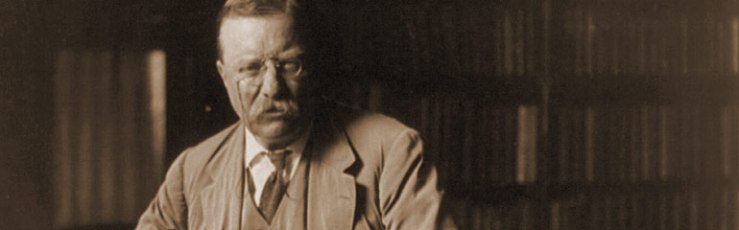
Happy President’s Day! Check out this cool slide show at The Daily Beast of the readingest American Presidents ever. (Is it merely coincidence that our fave, Teddy Roosevelt comes in at #1? We think not! (Also, while we’re indulging in parenthetical asides, amazingly, Dubya did not make the list. Why come?)).
Zora Neale Hurston’s Love Spells
Valentine’s Day will be upon us in just a few hours, but it’s not too to late conjure up some last minute romance. In the appendix to her collection of Florida folktales, Mules and Men, author Zora Neale Hurston offers up a host of Hoodoo, including the following love spells:
TO MAKE A MAN COME HOME
Take nine deep red or pink candles. Write his name three times on each candle. Wash the candles with Van-Van. Put the name three times on paper and place under the candles, and call thee name of the party three times as the candle is placed at the hours of seven, nine or eleven.
TO MAKE PEOPLE LOVE YOUTake nine lumps of starch, nine of sugar, nine teaspoons of steel dust. Wet it all with Jockey Club cologne. Take nine pieces of ribbon, blue, red or yellow. Take a dessertspoonful and put it on a piece of ribbon and tie it in a bag. As each fold is gathered together call his name. As you wrap it with yellow thread call his name till you finish. Make nine bags and place them under a rug, behind an armoire, under a step or over a door. They will love you and give you everything they can get. Distance makes no difference. Your mind is talking to his mind and nothing beats that.
TO BREAK UP A LOVE AFFAIR
Take nine needles, break each needle in three pieces. Write each person’s name three times on paper. Write one name backwards and one forwards and lay the broken needles on the paper. Take five black candles, four red and three green.
Tie a string across the door from it, suspend a large candle upside down, It will hang low on the door; bum one each day for one hour. If you burn your first in the daytime, keep on in the day; if at night, continue at night. A tin plate with paper and needles in it must be Placed to catch wax in.
When the ninth day is finished, go out into the street and get some white or black dog dung. A dog only drops his dung in the street when he is running and barking, and whoever you curse will ran and bark likewise. Put it in a bag with the paper and carrv it to running water, and one of the parties will leave town.
Hiding Man — Tracy Daugherty

Hiding Man, Tracy Daugherty’s excellent and insightful biography of Donald Barthelme begins with a fascinating anecdote. Daugherty, a student of Bartheleme’s, is told to “Find a copy of John Ashbery’s Three Poems, read it, buy a bottle of wine, go home, sit in front of the typewriter, drink the wine, don’t sleep, and produce, by dawn, twelve pages of Ashbery imitation.” We’re not sure if that sounds like fun homework or not, but it does signal both Barthelme’s imaginative trajectory as well as Daugherty’s intimacy with his subject. Elsewhere in his introduction, he notes that “it’s wrong to think of Don as a victim of neglect. He was, rather, a connoisseur of it.” In short, Daugherty argues that Barthelme was a “Hiding Man,” an artist of structured subtlety who remains under-appreciated and misunderstood.
Daugherty’s book is at once a well-researched biography, a work of cultural and literary criticism, and a writerly affair–that is, its written with a novelist’s fine ear. He weaves Barthelme’s personal life with the man’s stories against the backdrop of a rapidly changing society, weighing Barthelme’s themes and methods along with a shift in literature, art, film, and culture. The book is most interesting when Daugherty situates Barthelme’s writing along/against other writers, particularly the other authors at the forefront of the so-called post-modernist movement. In one late episode, Barthelme organized what has come to be known as “The Postmodern Dinner,” inviting literary giants like William Gaddis, William Gass, John Barth, Kurt Vonnegut, Robert Coover, and Susan Sontag to a fancy SoHo restaurant (Thomas Pynchon politely declined the invite). By 1983, postmodernism had fallen out of favor in lieu of minimalism; Barthelme wasn’t the only writer at the dinner who we might–even now–see as a “victim of neglect.” Many of these writers were attacked (and continue to be attacked) as verbal tricksters, hacks playing at a literary shell game. But, as Daugherty makes very clear in Hiding Man, Barthelme was deeply concerned with matters of meaning and art and philosophy and life and love. He was, like most postmodernists (and Modernists, and post-postmodernists), simply willing to remove some of the strictures that bound distinctions of high and low culture, all as a means of getting closer to a core of truth and perception–not as a means of displacing or denying it. He was an artist.
Hiding Man both begins and ends with an assignment. Daugherty invites Barthelme to read at Oregon State University in early 1989, six months before his death. After the reading, in a moment of utter poignancy, Barthelme asks his former pupil, “Did I do okay for you?” As Barthelme gets in a taxi to leave he gives Daugherty one final assignment: “Write a story about a genius.” Daugherty gets more than a passing grade on this one. Recommended.
Hiding Man is new this month in trade paperback from Picador.
Faulkner Source Material Discovered
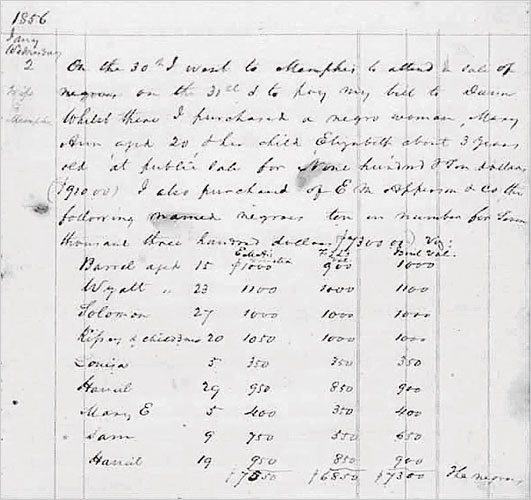
The New York Times reports that “what appears to be the document on which Faulkner modeled that ledger [detailing the genealogy that haunts Go Down, Moses] as well as the source for myriad names, incidents and details that populate his fictionalized Yoknapatawpha County has been discovered.” The article continues:
The original manuscript, a diary from the mid-1800s, was written by Francis Terry Leak, a wealthy plantation owner in Mississippi whose great-grandson Edgar Wiggin Francisco Jr. was a friend of Faulkner’s since childhood. Mr. Francisco’s son, Edgar Wiggin Francisco III, now 79, recalls the writer’s frequent visits to the family homestead in Holly Springs, Miss., throughout the 1930s, saying Faulkner was fascinated with the diary’s several volumes. Mr. Francisco said he saw them in Faulker’s hands and remembers that he “was always taking copious notes.”
History, particularly the strange, paradoxical, and taboo history of the plantation underwrites almost all of Faulkner’s significant fiction, so any historical document that served to inform his writing will be of particular note to enthusiasts and scholars alike.
Aldous Huxley, Deckle Edges, Weird Books, and a Dead McSweeney
Odds n’ ends:
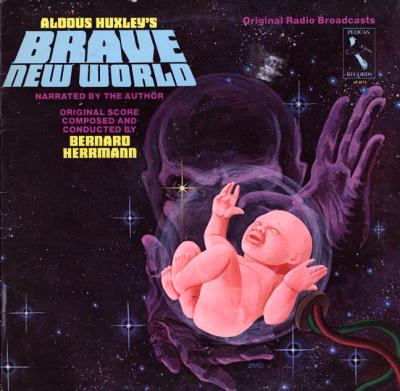
Via Swen’s Weblog — download mp3s of Aldous Huxley narrating Brave New World. Music by Bernard Herrman, who you, of course, will remember from his work with Alfred Hitchcock. That cover alone is more fun than a game of Centrifugal Bumble-puppy.
At The Millions — C. Max Magee waxes aesthetic (and perhaps nostalgic) on deckle-edge pages.
From Abe Books — Spend some time in their Weird Book Room.
The Guardian reports — Timothy McSweeney has died. Apparently, Dave Eggers decided to name his quarterly literary journal after some dude who wrote weird letters to his mom whose maiden name was the same. According to McSweeney’s family, holmes was a painter of some talent: “The canvasses he leaves behind are filled with haunting and beautiful imagery. They are also filled with a palpable desire – to be heard, to connect, to be understood better by others and himself.”
Three Days Before the Shooting . . . — Beginning Ralph Ellison’s Posthumous Second Novel
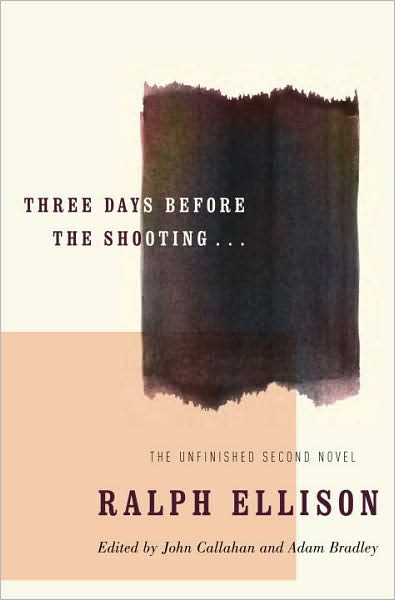
In 1952, Ralph Ellison secured his place in the American literary canon with the publication of his picaresque verbal tour de force, Invisible Man. He never published another novel in his lifetime. Five years after his death in 1994 saw the publication of Juneteenth, a book cobbled together from the sundry drafts that Ellison had spent over forty years crafting and revising. Those papers ran to over 2000 pages. Now, editors John F. Callahan and Adam Bradley have made good on the promise to release an expanded version of Ellison’s proposed second novel. That effort, new in hardback this month from Random House’s Modern Library series, is Three Days Before the Shooting . . ., a massive, complex, and perplexing volume running to 1101 pages — not including editors’ notes, chronology, prefaces, and introductions.
I usually eschew introductions (or at least read them after I’ve read the text proper) in the hopes of not having my reading colored by some critic’s own thoughts, but in the case of Three Days, with its bulk, with its mystery, it seemed necessary to see what Callahan and Bradley had to say. What, exactly, would I be reading? How was it put together? Is there a real novel here? Our esteemed editors point out that:
. . . one might reasonably have expected to find among [Ellison’s] papers a single manuscript very near to completion, bearing evidence of the difficult choices he had made during the protracted period of the novel’s composition. One might have expected, perhaps, F. Scott Fitzgerald’s The Last Tycoon, a fragmented with a clearly drafted, clearly delineated beginning and middle, whose author’s notes and drafts pointed toward two or three endings, each of which followed and resolved the projected novel as a whole. Or, to cite a more contemporary example, it might have resembled Roberto Bolaño’s 2666; upon its posthumous publication in 2008, Bolaño’s editor remarked that, had the author lived to see it through to publication, “its dimensions, its general content would by no means have been very different from what they are now.” In the extreme, one might have expected something like James Joyce’s Finnegans Wake, a glorious mess of a novel that defies the very generic restraints of the form.
Callahan and Bradley pose these novels only as examples to contrast Ellison’s work as “something else entirely: a series of related narrative fragments, several of which extend to over three hundred manuscript pages in length, that appear to cohere without truly completing one another.” There’s a fun laundry list of where and on what Ellison composed the work, including the various types of paper he used and the different machines on which he wrote. The logistics are important from an editors perspective, of course, and as an interested reader it’s fascinating to see how Callahan and Bradley put all of Ellison’s disparate sources together. But what becomes most apparent in their general introduction to the work is that, even as he was always writing, Ellison was stalling, hoping to revise his novel in light of social changes–only, those social changes were happening relatively rapidly. It took Ellison over eight years to produce and edit Invisible Man, a novel that brilliantly captures American identity in the postwar era. For his second novel, Ellison clearly wanted to engage in such a critique again, but the rapidity of social and cultural change seems to have outpaced his ability to write and edit. He satisfied his public and the literary establishment by publishing excerpts of the novel (eight in total, all reproduced in Three Days), but most of his writing career, at least in terms of publishing, was spent writing (and revising) essays and critiques.
Still. Forty years and only eight published snippets? Really? Our fearless editors seem exasperated themselves, writing, “The longer one puzzles over what Ellison left behind, the more maddening it seems that he did not simply will himself to bring the book to a close, that he didn’t find his way to that ‘meaningful form’ he sought.” And there is so much narrative here; Ellison’s major concern — beyond revising in light of cultural and social upheaval — was simply fitting his pieces into a coherent whole. Not that there isn’t a plot. To borrow again from our generous editors:
The basic plot of Ellison’s novel as it emerges in these manuscripts centers upon the connection, estrangement, and reconciliation of two characters. The one is a black jazzman-turned-preacher named Alonzo Hickman, the other a racist ‘white’ New England Senator named Adam Sunraider, formerly known as Bliss–a child of indeterminate race whom Hickman had raised from infancy to adolescence. The action of the novel concerns Hickman’s efforts to stave off Sunraider’s assassination at the hands of the Senator’s own estranged son, a young man named Severen.
Callahan and Bradley go on to point out that, of course, this is simply the bare bones of the plot; that Three Days teems with characters and voices and motifs and strange little riffs. So far, my reading of the book upholds this assertion–and also suggests that the best way to enjoy this book is simply to dive right in. Yeah, that’s right. Ignore all the context. Skip Callahan and Bradley’s prefatory material completely–it’s well-written, highly informative, and will get right in your way. Just start at page one and enjoy Ellison’s rhythm, his inimitable language, his bizarre sense of humor and his deep pathos.
The book opens with a prologue that details a visit Hickman and his congregation make to Washington, D.C. three days before the shooting of Senator Sunraider. They attempt to warn him but are blocked at all turns. Book One then opens immediately with that assassination attempt, seen from the perspective of a journalist named McIntyre who narrates Book One in first-person. The first few chapters are set in the panicked claustrophobia of the post-shooting Senate where police detain everyone present. These chapters detail the strange rumors that circulate about Sunraider, including
. . . the rumor that for a time during his youth the Senator had been the leader of an organization which wore black hoods and practiced obscene ceremonials with the ugliest and most worn-out prostitutes they could find. Like certain motorcycle gangs of today they also engaged in acts of violence and hooliganism and were accused of torturing people — derelicts and such. They were also said to have distributed Christmas baskets and comic books to the poor.
What a great punchline. These early episodes made me laugh out loud at least three times. They’re also rather unsettling, and, more than anything, intriguing. In short, so far the book compels reading, and it’s hard to believe that such inspired riffs won’t add up to greater things. Our editors warn that the book doesn’t so much “end” as simply “stop,” but, right now, I’m fine with that. Ellison fans who don’t own this will want to pick it up forthwith; anyone daunted by its size, scope, or the context of its creation might miss some really great writing. More to come.
Historic Photos of Florida Ghost Towns

Historic Photos of Florida Ghost Towns, new from Turner Publishing, pairs beautiful black and white archival photos with detailed commentary by Steve Rajtar to offer a counter-narrative to the traditional history of Florida. Florida’s history is often told in terms of exponential growth, focusing on the Sunshine State’s ecological bounty as a reason for immigration and tourism. Ghost Towns takes a look at the many historical sites in Florida that were destroyed, absorbed, or abandoned as the state bounded to modernity. Rajtar and his editors have organized the book around all the different ways that a town might become a ghost town, including economic (company closings, plantation declines, railroad expansion), sociopolitical (absorption, abandonment, government mandates), and natural (fires, floods, hurricanes).

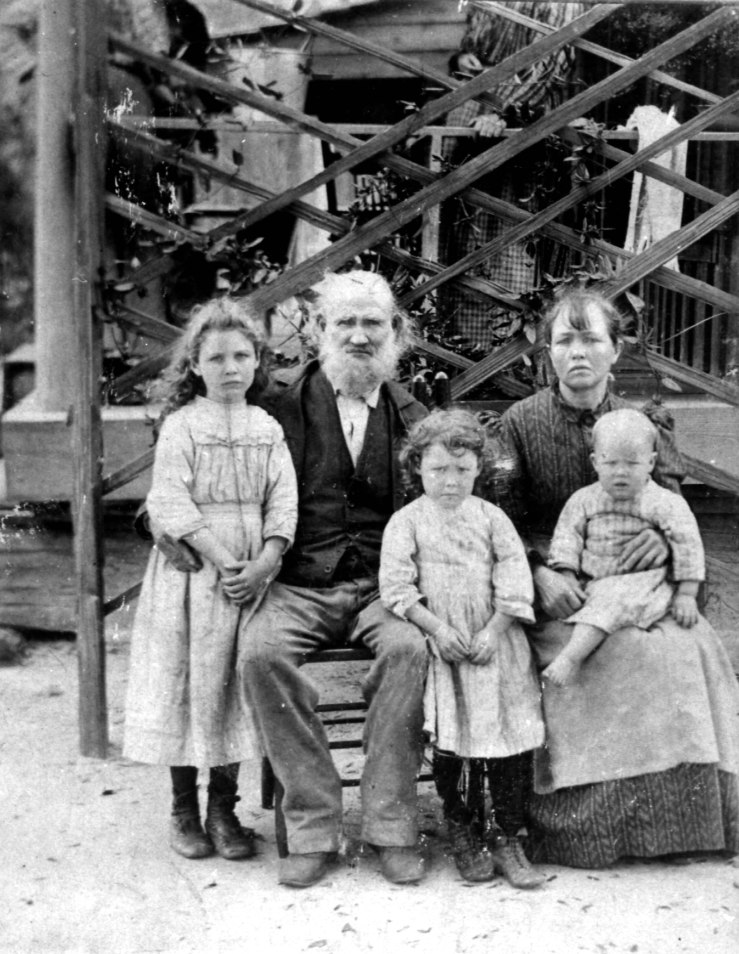
Appropriate for its title, there’s something haunting about many of the images in the book. Like all images from the past, they speak for what no longer exists, but there’s something melancholy here too. Take for example this 1897 image of the Lamb family from the ironically-named plantation township of Hopewell. Their dour expressions communicate a sense of the difficulties of an agrarian life in Florida over a century ago — more Marjorie Kinnan Rawlings than Miami Vice. What happened to these people after their farms collapsed? Where are their descendants today?
Historic Photos of Florida Ghost Towns will be a welcome addition to any Florida history buff’s library, as well as a handsome book for any Floridian’s coffee table. It’s also a worthy document to testify to an an alternate and often overlooked element of Florida history. Florida has a rich, storied past, and Ghost Towns helps to honor that. As the state heads into an uncertain future, the book also might make some of us reappraise our own cities’ chances of withstanding the test of time. Recommended.
David Peace’s Red Riding Film Adaptations Debut in the US
The film adaptations of David Peace‘s Red Riding quartet make their American debut this weekend. The films look pretty cool — kinda like Zodiac. The screen adaptations drop the 1977 segment of Peace’s original quartet, opting instead for the trilogy treatment. You can read Manohla Dargis’s detailed review for The New York Times here and Keith Phipps favorable review at the AV Club here. Trailer:
Occupied City — David Peace
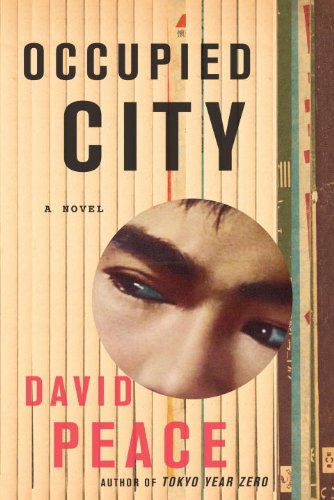
“You want to know what happened, yes?” an old detective asks near the beginning of Occupied City. “No? You want to know the truth? Make up your mind! Which do you want to know; what happened, or the truth?” This preoccupation of “what happened” vs. “the truth” fuels the central tension in David Peace’s new novel, a postmodern noir exercise set in the desolation of 1948 Tokyo. Based on the true story of the Teikoku Bank Massacre, Occupied City investigates the postwar slaying of twelve bank employees who were poisoned by a man dressed (perhaps) as a government official. There’s a parenthetical “perhaps” around just about everything in Peace’s book; he cites Akutagawa Ryunosuke’s short stories “In a Grove” and “Rashomon” (as well as Kurosawa’s film adaptation of that story) as inspirations for the structure of Occupied City.
And rightly so. The few witnesses who survived the massacre get to tell “what happened”; their testimony is combined in a pastiche of sources including official government documents, a detective’s notes, newspaper reports, and personal and professional letters from an obsessed American Lieutenant Colonel. There’s a classically-neutral narrator whose reportorial rationality is undercut at every turn by the interceding lamentations of a Beckettian speaker dipping into madness. And there are the dead, the victims who cry out to be seen as more than just victims. Peace’s techniques are somehow both stochastic and tightly controlled at the same time, as he weaves the disparate voices through his tale to square the different perspectives of “what happened” in an attempt to reach “the truth.” Peace’s language frequently vacillates between elliptical and elusive abstraction and the visceral immediacy one would expect from a detective novel. The verbal tics add up to a visual poetry, as Peace’s repetitions, redaction, strike-throughs, and columns reinvigorate a genre that too-often relies on stodgy convention. For many readers, this eclectic style will be at times challenging or even come off as pretentious, but those who submit to Peace’s tumult of language are in for quite a ride.
Occupied City is a smart, well-researched historical thriller that recalls the verbal grit and energy of James Ellroy, who Peace interviewed earlier thie year. Like Ellory, Peace’s detectives investigate the seamy gaps in history from myriad perspectives, prodding readers into violent alien territory. And like Ellroy’s work, there’s no easy “truth” at the bottom of this book, but there are plenty of unsettling questions. Occupied City is a stark, bewildering challenge from a writer who deserves a wider audience. Recommended.
Occupied City is new in hardback from Knopf this week.
Everything Ravaged, Everything Burned — Wells Tower
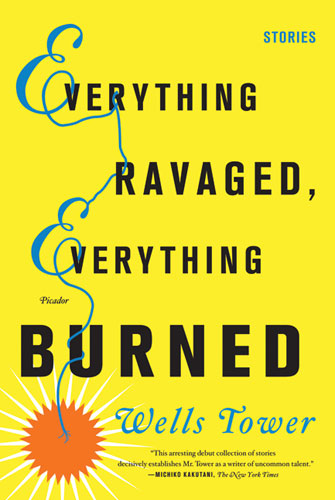
Wells Tower’s Everything Ravaged, Everything Burned takes its title from the name of the final story in the collection, but the phrase is also an apt descriptor for the underlying themes that most of these stories explore. Tower’s world is a neatly drawn parallel reality populated by down-on-their-luck protagonists who we always root for, despite our better judgment, even as they inadvertently destroy whatever vestiges of grace are bestowed upon them.
There’s Bob Monroe in “The Brown Coast,” who has “perpetrated three major fuckups that would be a long time in smoothing over.” He’s lost his wife and his job, but he finds a measure of solace in adding fish to an aquarium–until that project is ravaged. There’s the father of “Down through the Valley” — estranged against his will — who attempts to make nice by driving his ex’s injured new husband home from a New Age retreat. The poor guy, like so many of the characters here, stumbles into one bad situation after another. He’s not the only dad here — there are plenty of fathers in Everything Ravaged, and there’s also a strong undercurrent of Oedipal rage. In “Leopard,” (written in that rare beast, the second-person), Tower explores the psyche of an angry pre-adolescent boy who hates his dickish stepfather. When the lad discovers a flier warning that a pet leopard is on the loose, he fantasizes that the creature will solve his problem. The teenage lead of “Wild America” — the only female protagonist in the book — lives with the shame of having “tried to stab her shy father with a nail file.” In “The Brown Coast,” Bob calls his home to find that his Uncle has taken up with his wife. “Executors of Important Energies” brims with Oedipal tension, as a failed inventor has to come to terms with his father’s dementia. He’s had to live most of his life in ambivalence over his stepmother, who splits the age difference between him and his father:
The particulars weren’t absolutely clear, but I had a hunch that somewhere around my sixteenth birthday, he was going to take me out to a desert overlook where the sun was going down and announce that he was giving Lucy to me, along with his Mustang fastback, along with some Schlitz, and maybe a cassette tape that was nothing but “Night Moves” by Bob Seger and the Silver Bullet Band.”
If “Night Moves” is the dream, Seger’s “Beautiful Loser” is the reality for most of the characters in Everything Ravaged, Everything Burned. And Tower’s world is strangely beautiful, an evocatively drawn portrait of the little rural pockets that permeate the American Southeast. Sure, there’s a story set in New York City, and “Everything Ravaged, Everything Burned” is about Vikings in the Dark Ages, but for the most part Tower sticks to the weird, unstable borders between civilization and wilderness. It’s a world where seemingly peripheral characters all of a sudden fall into the narrative as essential players; it’s a violent world–and an engrossing one.
“Retreat” might be the finest of the stories here. It tells the story of two long-warring brothers who try, at least on the surface, to make amends. The protagonists (or, more rightly mutual antagonists) are typical of Tower: rough and physical, but also prone to moodiness and obsessive self-reflection. There are two versions of the story, initially published in issues 23 and 30 of McSweeney’s. The one published here is the later version, told from the perspective of the more financially-prosperous brother (the first is told from the viewpoint of the less well-off brother. Both brothers are total assholes). We kinda sorta wish that both versions were included in the collection, because they’ve come to form a composite story in our mind, but hey, you can’t always get what you want. “Retreat” unfurls in muscular, organic prose, bristling with fresh metaphors and similes. Great stuff.
Tower is a writing talent that we’ve been following for awhile now, and Everything Ravaged, Everything Burned is the sort of book that makes you want to track down the stray stories not collected here (a good starting place for those interested: “Raw Water” in McSweeney’s 32). And while we’ll never knock the short story as a lesser form, surely this man has a novel waiting in the wings. We’d love to read it. We very highly recommend Everything Ravaged, Everything Burned.
Everything Ravaged, Everything Burned is available today in trade paperback from Picador.
David Peace on Occupied City
We’re currently reading–and really enjoying–David Peace’s Occupied City, a dark and bewildering account of the 1948 Teikoku Bank Massacre in Tokyo. Peace’s book gets its American debut later this week from Knopf. We’ll run a proper review then. For now, here’s Peace discussing the project, his difficulty in writing it, the crime’s contemporary resonance in modern Japan, and how he stole from Rashomon:
Point Omega — Don DeLillo

Don DeLillo’s latest work Point Omega takes an oblique, subtle, and unnerving tackle at themes of time, perception, family, and, ultimately, personal apocalypse. It’s not a particularly fun book nor does it yield any direct answers, but it’s also a rewarding, engaging, and often challenging read.
Point Omega pretends to be a novel about two subjects: the Iraq War and film. Its narrator Jim Finley is an experimental filmmaker who travels to the Arizona desert in an attempt to convince aging intellectual Richard Elster to participate in a film comprised solely of one long, unedited take of Elster talking about whatever he likes. Although Finley repeatedly claims that Elster can talk about whatever he chooses to in the film, it’s clear that that the younger man wishes for the subject to be Elster’s involvement in the planning of the Iraq War, a sort of mea culpa from the intellectual elite who rolled over to the Bush administration. Elster’s involvement was essentially to provide academic credibility to the invasion:
He was the outsider, a scholar with an approval rating but no experience in government. He sat at a table in a secure conference room with the strategic planners and military analysts. He was there to conceptualize, his words, in quotes, to apply overarching ideas and principles to such matters as troop deployment and counter-insurgency. He was cleared to read classified manuscripts, he said, and he listened to the chatter of the resident experts, the metaphysicians in the intelligence agencies, the fantasists in the Pentagon.
Elster becomes disillusioned with the whole process soon; he comes to realize the hollowness of his role and soon moves to the desert. “He’d exchanged all that for space and time,” writes DeLillo, announcing his theme. Later in the novella, Elster claims that the geologic time of the desert allows him to feel, “Time falling away . . . Time becoming slowly older. Enormously old. Not day by day. This is deep time, epochal time.” He contrasts this “deep time” with the time of cities:
It’s all embedded, the hours and minutes, words and numbers everywhere, he said, train stations, bus routes, taxi meters, surveillance cameras. It’s all about time, dimwit time, inferior time, people checking watches and other devices, other reminders. This is time draining out of our lives. Cities were built to measure time, to remove time from nature. There’s an endless counting down, he said. When you strip away all the surfaces, when you see into it, what’s left is terror. This is the thing that literature is meant to cure. The epic poem, the bedtime story.
Elster appears concerned that humanity is approaching Teilhard’s omega point, the maximum level of complexity of consciousness toward which the universe is evolving. He concedes that this idea might be “a case of language that’s struggling toward some idea our experience.” For Elster, the omega point is inevitable and leads to either “a sublime transformation of mind and soul or some worldly convulsion.” Ultimately, his viewpoint seems nihilistic: he’d rather human beings somehow be transformed into stones, be somehow absorbed into a new time, a geologic time.
The obsession with time and film literally wraps the book in two short chapters called “Anonymity” (a prologue) and “Anonymity 2” (an epilogue (or a prescient epitaph, perhaps?)). Both sections describe a man who spends all of his time at MOMA’s presentation of Douglas Gordon’s videowork 24 Hour Psycho, a silent showing of Hitchcock’s Psycho over 24 hours. Neither section is narrated by Finley, although it later becomes clear that he–along with other principals in the story–is present at the showing. The unnamed man whose consciousness permeates these chapters finds his own omega point in the crawling pace of the film. 24 Hour Psycho divorces itself from the healing powers that stories give us, the power to narrativize all the gaps and crevices of life. It’s no longer the medicine that Elster suggests literature (or film) might be. It now exists outside of narrative cohesion and somehow resonates with the purity or transcendence of geologic time.
Fortunately, DeLillo is gracious enough to his readers to not attempt replicating the pace of geologic time in his book. Point Omega is particularly slim–under 120 pages in hardback–and reads with a the conciseness and clarity which has been a hallmark of DeLillo’s style. As perhaps the signal writer of post-postmodernism (whatever that means), DeLillo continues to engage and anticipate new and emerging forms of alienation, and he does so without gimmicks or trickery, just the purity of considered ideas. Point Omega works best when he allows those ideas some room to breathe; the late-night scotch-soaked dialogues between Elster and Finley are some of the finest passages of the book and it’s a pity there aren’t more of them.
But it seems like we’ve digressed from some of our starting points, doesn’t it? Many critics will call Point Omega DeLillo’s “Iraq War novel,” which is a mistake akin to calling Underworld a book about baseball or White Noise a book about Hitler. The war is merely an entry point to the greater, more personal tragedy that underlies the book, a tragedy that will perhaps make Elster reassess his own value system. We won’t name the trauma at the core of the book–to do so might spoil a twist in a book largely devoid of conventional concrete plotting–but it is worth noting that DeLillo optimizes suspense and tension as the novel builds to its own omega point. While many will feel left cold by the book’s ultimately ambiguous invocation of personal calamity, we found in it a meaningful counterpoint to Elster’s explicit commentary on time and identity. DeLillo’s novel, in the end, requires an intellectual–or perhaps, dare we say spiritual–leap. Point Omega is hardly a satisfying read, but that’s kind of the point, isn’t it? Highly recommended.
Point Omega is available February 2nd, 2010 from Scribner.

