A first riff on rereading Gravity’s Rainbow (and some thoughts on Weisenburger’s Companion)

I enjoy rereading more than reading. Returning to Moby-Dick2666, Ulysses, or Blood Meridian reveals so much more: More depth, more art, more structure, more precision, more humor, more pain, more more.

Thomas Pynchon’s novel Gravity’s Rainbow is all more. Rereading Gravity’s Rainbow is like reading it for the first time, or, rather, more precisely, that is how I am experiencing it now—with clarity—compelled as I was to immediately circle back through its loop again.

Gravity’s Rainbow’s cohesion hides (hides is not the right verb) under detritus, in the flux of objects and concepts that tangle and unravel throughout the text. Indeed, the novel’s themes seem to repeat (with difference, with opposition) in the lists and rants that lard it.

A simple, early example comes on page 18, where Teddy Bloat turns spying eyes over our hero Tyrone Slothrop’s desk, where “Things have fallen roughly into layers, over a base of bureaucratic smegma that sifts steadily to the bottom…” In A Gravity’s Rainbow Companion: Sources and Contexts for Pynchon’s Novel, Steven Weisenburger points out that “Among the list of objects on Slothrop’s desk are items, allusions, and brand names left in his wake throughout the novel.” Weisenburger proceeds to sift through these layers, pointing out connections, and offering (as always) helpful page numbers which attest how damn precise Pynchon’s novel is.

I picked up Weisenburger’s Companion on solicited recommendations from Twitter folk and readers of this blog, and I’ve found it unobtrusive and helpful so far. Weisenburger’s introductory essay is especially good, and foregrounds his intertextual approach to his Companion (he all but namechecks Mikhail Bakhtin: “Gravity’s Rainbow sets in motion ‘the Night’s Mad Carnvival’ (V133.38) of intertextual entertainments”; a few lines later, he describes the novel as a work of “encyclopedic heteroglossia”). Weisenburger also quickly helped to (re)confirm my sense that GR loops back into itself, its end cycling back to its beginning: “Gravity’s Rainbow is ‘heterocyclic’ (V249.26): rings are looped together in still larger, polymerized rings, looped together in the still larger cycling of its four parts.”

I’m about halfway through the second of those four parts, “Un Perm’ au Casino Hermann Goering,” but still playing catch-up with the Weisenburger. I sometimes skim—sometimes with undue pride (Hey I got that reference on my own, thanks anyway Dr. W), and sometimes, admittedly with a vague but cheerful boredom (Weisenburger has an occasional tendency to lay out Pynchon’s source texts in detailed detail).

The Companion is at its finest, in my estimation, when Weisenburger extrapolates from his sources and contexts into GR’s deepest themes, like here, where our introduction to Gottfried (a seemingly minor character) branches into etymology, mythology, and comparative religion:

image

(My favorite moment here is probably where Dr. W poses that question about Pynchon knowing Branston and Grimm, and then immediately answers it (in what I like to pretend is Robert Evans’s voice)).

While Weisenburger’s Companion often enlightens and clarifies, so does simply (or not so simply) rereading Gravity’s Rainbow enlighten and clarify the first reading. I’m thankful that I didn’t use Weisenburger’s book on my first full trip though GR. Sure, Companion hazards a number of plot spoilers, which I imagine would annoy many readers. But more significant to me is that using Weisenburger’s annotations as a first-timer’s guide through Pynchon’s detritus would have likely spoiled the aesthetic effect of that detritus. It would likely have spoiled some of the richness in the rereading that I’m enjoying so very much now.

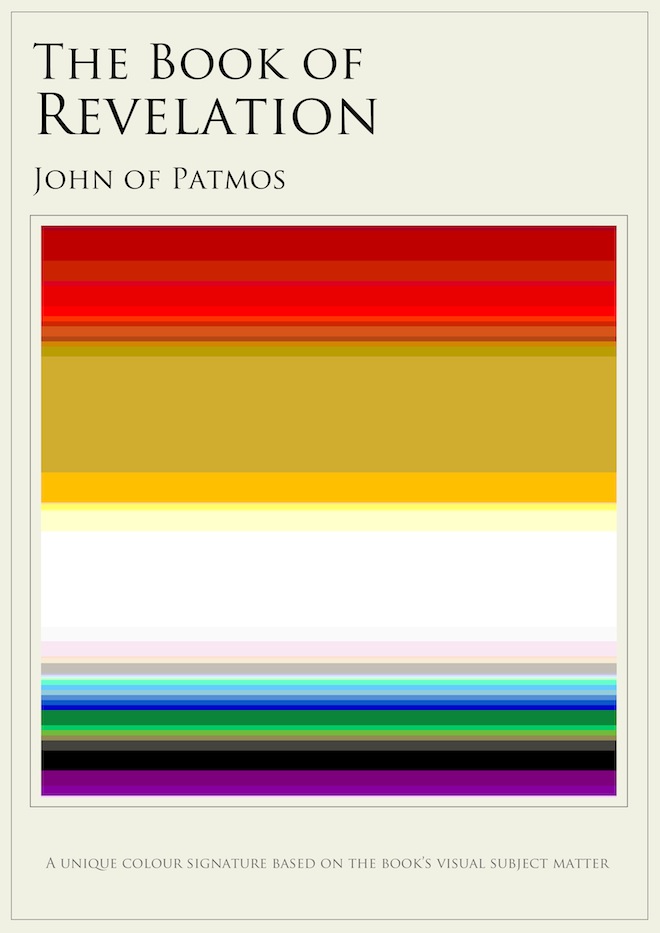
Cool color signature covers

book-The-Road

Cool article from Wired (yeah it’s a few years old now but hey) about artist Jaz Parkinson, who indexed the references to colors in various novels and created visual signatures of them. From the article

 Jaz Parkinson, an art student from England, was curious about how the written imagery in the work would translate into color, so she decided to chart the color signatures of some of her favorite books.

Using the color-related data pulled from novels, Parkinson visualized how famous books would look if you could only read them through a visual signature. “I think the charts are beautiful and informative, which is a very special mix of the subjective and the objective,” she says. “They reveal a new dataset which hasn’t been associated with the book before.”
book-The-Little-Prince book-Revelation

No Way Jose — Alan Macdonald

p_nowayjose

Riff on the end/beginning of Gravity’s Rainbow

Well: “A screaming comes across the sky. It has happened before [—]”

□ □ □ □ □ □ □

So. Okay. So I finished Gravity’s Rainbow on Friday night, and reread the opening section (and more than the opening section) on Saturday morning, resisting a compulsion to immediately return to the beginning.

□ □ □ □ □ □ □

So: Okay: Right?

The ending of Gravity’s Rainbow cycles back to the beginning (like Finnegans Wake): Blicero’s rocket, screaming across the sky—yes? no?—to invade the dreams (?) of psychic Pirate Prentice? The book: a loop, a Möbius strip, a film, its reels discombobulated, jostled, scattered

□ □ □ □ □ □ □

“…it’s all theatre,” we learn on the book’s first page (page 3); the book ends in a theater—the Orpheus Theater!—where maybe scattered Slothrop is the leading man, scattered, we find ourselves in him, parts of him—where the audience demands, on the book’s last page: “Start-the-show!”

□ □ □ □ □ □ □

“You’re putting response before stimulus,” Spectro shakes his head at Pointsman, early in “Beyond the Zero,” the first section of Gravity’s Rainbow—does this describe the beginning/end of the novel? (“It has happened before”).

□ □ □ □ □ □ □

Or, a bit earlier even, at the seance, (page 32), Gloaming describes one kind of plot: “…we should get something like a straight line” — but then gives us another kind of plot — “…however we’ve data that suggest the curves for certain —conditions, well they’re actually quite different—schizophrenics for example tend to run a bit flatter in the upper part then progressively steeper—a sort of bow shape … classical paranoiac—” Is this the shape of Gravity’s Rainbow?

□ □ □ □ □ □ □

—but right this moment it’s that final dash that intrigues me—this in a novel full of dashes, this in a novel that name-checks Emily Dickinson, Eternal Empress of Dashes—the fragmented conclusion is full of dashes, lines obliterated by more perfect, straight lines, simultaneously connecting and disconnecting—like the novel’s final line:

“Now everybody—“

□ □ □ □ □ □ □ Continue reading “Riff on the end/beginning of Gravity’s Rainbow”

The Blessed Guillaume de Toulouse Tormented by Demons — Ambroise Frédeau

tumblr_ltprof64JM1r1dpd5o1_1280

Lydia Davis on Thomas Pynchon

A rather appealing specimen of early Pynchon is the last story in his collection Slow Learner. The story, “The Secret Integration”—first published in the Saturday Evening Post more than forty years ago (three years after V. appeared)—involves a gang of young practical jokers and a rich childhood setting of an old town with a new development, a sprawling estate with a derelict mansion, and a downtown, complete with seedy hotel. In one deftly described scene, the boys coast on their bikes down a long hill in the early evening toward the hotel, “leaving behind two pages of arithmetic homework and a chapter of science” and, on the TV, “a lousy movie, some romantic comedy.” Because all the televisions in town receive only one channel, the boys, as they fly by, are able to follow the movie’s progress from house to house, through doors and windows “still open for the dark’s first coolness.”

In his introduction to Slow Learner, Pynchon, who somewhat preempts our reactions to the story, remarks that he likes it more than he dislikes it. In fact it is so likable that one envies the boys their comfortable society and the fields, streams, and town of their games. Their collaboration and apportioning of assignments is charming (to develop an arsenal for sabotaging the railroad; to enlist malcontent first-graders to destroy the boys’ latrine; to infiltrate PTA meetings); the elaborateness of their schemes, and the number that succeed, is impressive; and the animation of the central character, Grover the boy genius—with his enormous vocabulary, fund of information, and flights of hilarity—is particularly savory. The pranks the boys plan are potentially devastating to the community, yet, as Pynchon says in a lovely bit of writing, the boys would never actually take “any clear or irreversible step,” because “everybody on the school board, and the railroad, and the PTA and paper mill had to be somebody’s mother or father, whether really or as a member of a category; and there was a point at which the reflex to their covering warmth, protection, effectiveness against bad dreams, bruised heads and simple loneliness took over and made worthwhile anger with them impossible.”

There is a lyrical humanity in this story, an almost unapologetic gentleness, inviting and inclusive, that contrasts with the weightier, complex pessimism and bravura of Pynchon’s later works, in which perhaps it is more difficult for the characters to go home and be comforted at the end of the day.

From the Summer 2005 issue of Bookforum.

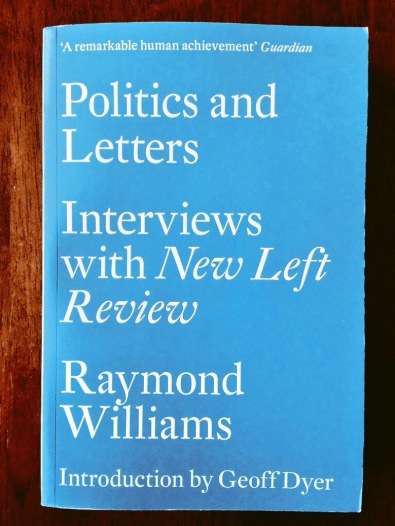
Raymond Williams’s Politics and Letters: Interviews with New Left Review (Book acquired, 4.03.2015)

IMG_5721

Politics and Letters: Interviews with New Left Review collects Raymond Williams’s interviews with the New Left Review. It’s new from Verso. Their blurb:

Raymond Williams made a central contribution to the intellectual culture of the Left in the English-speaking world. He was also one of the key figures in the foundation of cultural studies in Britain, which turned critical skills honed on textual analysis to the examination of structures and forms of resistance apparent in everyday life. Politics and Letters is a volume of interviews with Williams, conducted by New Left Review, designed to bring into clear focus the major theoretical and political issues posed by his work. Introduced by writer Geoff Dyer, Politics and Letters ranges across Williams’s biographical development, the evolution of his cultural theory and literary criticism, his work on dramatic forms and his fiction, and an exploration of British and international politics.

Under the Arbor — Serafino Macchiati

59-Macchiati

Mandrake parable (Gravity’s Rainbow)

The sand-colored churchtops rear up on Slothrop’s horizons, apses out to four sides like rocket fins guiding the streamlined spires… chiseled in the sandstone he finds waiting the mark of consecration, a cross in a circle. At last, lying one afternoon spread-eagled at his ease in the sun, at the edge of one of the ancient Plague towns he becomes a cross himself, a crossroads, a living intersection where the judges have come to set up a gibbet for a common criminal who is to be hanged at noon. Black hounds and fanged little hunters slick as weasels, dogs whose breeds have been lost for 700 years, chase a female in heat as the spectators gather, it’s the fourth hanging this spring and not much spectacle here except that this one, dreaming at the last instant of who can say what lifted smock, what fat-haunched gnädige Frau Death may have come sashaying in as, gets an erection, a tremendous darkpurple swelling, and just as his neck breaks, he actually comes in his ragged loin-wrapping creamy as the skin of a saint under the purple cloak of Lent, and one drop of sperm succeeds in rolling dripping hair to hair down the dead leg, all the way down, off the edge of the crusted bare foot, drips to earth at the exact center of the crossroad where, in the workings of the night, it changes into a mandrake root. Next Friday, at dawn, the Magician, his own moving Heiligenschein rippling infrared to ultraviolet in spectral rings around his shadow over the dewy grass, comes with his dog, a coal-black dog who hasn’t been fed for a few days. The Magician digs carefully all around the precious root till it’s held only by the finest root-hairs—ties it to the tail of his black dog, stops his own ears with wax then comes out with a piece of bread to lure the unfed dog rrrowf! dog lunges for bread, root is torn up and lets loose its piercing and fatal scream. The dog drops dead before he’s halfway to breakfast, his holy-light freezes and fades in the million dewdrops. Magician takes the root tenderly home, dresses it in a little white outfit and leaves money with it overnight: in the morning the cash has multiplied tenfold. A delegate from the Committee on Idiopathic Archetypes comes to visit. “Inflation?” the Magician tries to cover up with some flowing hand-moves.” ‘Capital?” “Never heard of that.” “No, no,” replies the visitor, “not at the moment. We’re trying to think ahead. We’d like very much to hear about the basic structure of this. How bad was the scream, for instance?” “Had m’ears plugged up, couldn’t hear it.” The delegate flashes a fraternal business smile. “Can’t say as I blame you… .”

From Thomas Pynchon’s novel Gravity’s Rainbow.

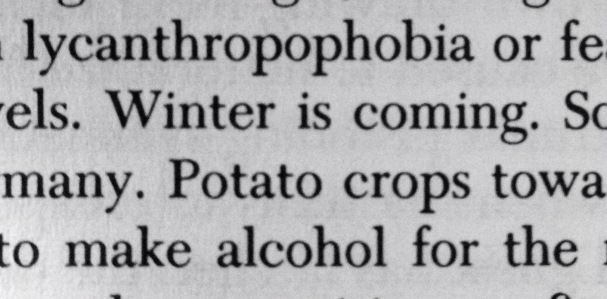
Winter is coming (Thomas Pynchon)

IMG_5728

Sorry sorry sorry couldn’t help myself. From page 640 of Thomas Pynchon’s Gravity’s Rainbow.

“Thus do authors beget authors” — Washington Irving on Plagiarism and Creation

0126m

Now and then one of these personages would write something on a small slip of paper, and ring a bell, whereupon a familiar would appear, take the paper in profound silence, glide out of the room, and return shortly loaded with ponderous tomes, upon which the other would fall, tooth and nail, with famished voracity. I had no longer a doubt that I had happened upon a body of magi, deeply engaged in the study of occult sciences. The scene reminded me of an old Arabian tale, of a philosopher shut up in an enchanted library, in the bosom of a mountain, which opened only once a year; where he made the spirits of the place bring him books of all kinds of dark knowledge, so that at the end of the year, when the magic portal once more swung open on its hinges, he issued forth so versed in forbidden lore, as to be able to soar above the heads of the multitude, and to control the powers of Nature.

My curiosity being now fully aroused, I whispered to one of the familiars, as he was about to leave the room, and begged an interpretation of the strange scene before me. A few words were sufficient for the purpose. I found that these mysterious personages, whom I had mistaken for magi, were principally authors, and were in the very act of manufacturing books. I was, in fact, in the reading-room of the great British Library, an immense collection of volumes of all ages and languages, many of which are now forgotten, and most of which are seldom read: one of these sequestered pools of obsolete literature to which modern authors repair, and draw buckets full of classic lore, or “pure English, undefiled,” wherewith to swell their own scanty rills of thought.

Being now in possession of the secret, I sat down in a corner, and watched the process of this book manufactory. I noticed one lean, bilious-looking wight, who sought none but the most worm-eaten volumes, printed in black letter. He was evidently constructing some work of profound erudition, that would be purchased by every man who wished to be thought learned, placed upon a conspicuous shelf of his library, or laid open upon his table—but never read. I observed him, now and then, draw a large fragment of biscuit out of his pocket, and gnaw; whether it was his dinner, or whether he was endeavoring to keep off that exhaustion of the stomach, produced by much pondering over dry works, I leave to harder students than myself to determine.

There was one dapper little gentleman in bright-colored clothes, with a chirping gossiping expression of countenance, who had all the appearance of an author on good terms with his bookseller. After considering him attentively, I recognized in him a diligent getter-up of miscellaneous works, which bustled off well with the trade. I was curious to see how he manufactured his wares. He made more stir and show of business than any of the others; dipping into various books, fluttering over the leaves of manuscripts, taking a morsel out of one, a morsel out of another, “line upon line, precept upon precept, here a little and there a little.” The contents of his book seemed to be as heterogeneous as those of the witches’ cauldron in Macbeth. It was here a finger and there a thumb, toe of frog and blind worm’s sting, with his own gossip poured in like “baboon’s blood,” to make the medley “slab and good.”

After all, thought I, may not this pilfering disposition be implanted in authors for wise purposes? may it not be the way in which Providence has taken care that the seeds of knowledge and wisdom shall be preserved from age to age, in spite of the inevitable decay of the works in which they were first produced? We see that Nature has wisely, though whimsically provided for the conveyance of seeds from clime to clime, in the maws of certain birds; so that animals, which, in themselves, are little better than carrion, and apparently the lawless plunderers of the orchard and the corn-field, are, in fact, Nature’s carriers to disperse and perpetuate her blessings. In like manner, the beauties and fine thoughts of ancient and obsolete authors are caught up by these flights of predatory writers, and cast forth, again to flourish and bear fruit in a remote and distant tract of time. Many of their works, also, undergo a kind of metempsychosis, and spring up under new forms. What was formerly a ponderous history, revives in the shape of a romance—an old legend changes into a modern play—and a sober philosophical treatise furnishes the body for a whole series of bouncing and sparkling essays. Thus it is in the clearing of our American woodlands; where we burn down a forest of stately pines, a progeny of dwarf oaks start up in their place; and we never see the prostrate trunk of a tree mouldering into soil, but it gives birth to a whole tribe of fungi.

Let us not then, lament over the decay and oblivion into which ancient writers descend; they do but submit to the great law of Nature, which declares that all sublunary shapes of matter shall be limited in their duration, but which decrees, also, that their element shall never perish. Generation after generation, both in animal and vegetable life, passes away, but the vital principle is transmitted to posterity, and the species continue to flourish. Thus, also, do authors beget authors, and having produced a numerous progeny, in a good old age they sleep with their fathers, that is to say, with the authors who preceded them—and from whom they had stolen.
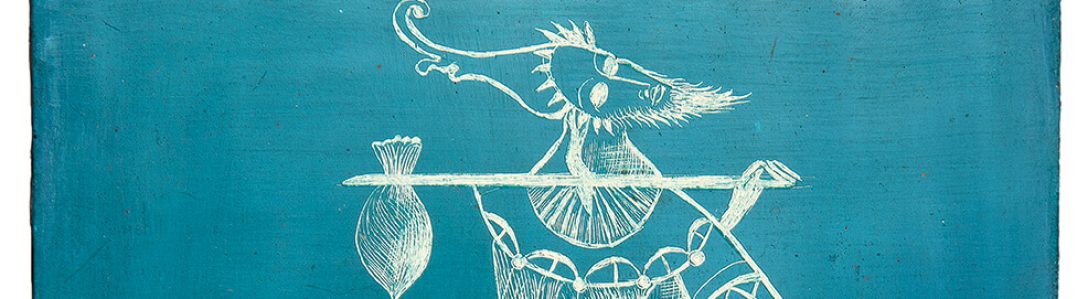
 

From Washington Irving’s story-essay “The Art of Book-Making.”

There is a theory going around that the U.S.A. was and still is a gigantic Masonic plot under the ultimate control of the group known as the Illuminati (Gravity’s Rainbow)

There is a theory going around that the U.S.A. was and still is a gigantic Masonic plot under the ultimate control of the group known as the Illuminati. It is difficult to look for long at the strange single eye crowning the pyramid which is found on every dollar bill and not begin to believe the story, a little. Too many anarchists in 19th-century Europe—Bakunin, Proudhon, Salverio Friscia—were Masons for it to be pure chance. Lovers of global conspiracy, not all of them Catholic, can count on the Masons for a few good shivers and voids when all else fails. One of the best of the classic Weird Mason Stories has Doctor Livingstone (living stone? oh, yes) come wandering into a native village in, not even the heart, but the subconscious of Darkest Africa, a place, a tribe he’s never seen before: fires in the silence, unfathomable stares, Livingstone ambles up to the village chief and flashes him a Masonic high sign—the chief recognizes it, returns it, all smiles, and orders every fraternal hospitality laid on for the white stranger. But recall that Dr. Livingstone, like Wernher von Braun, was born close to the Spring Equinox, and so had to confront the world from that most singular of the Zodiac’s singular points… . Well, and keep in mind where those Masonic Mysteries came from in the first place. (Check out Ishmael Reed. He knows more about it than you’ll ever find here.)

We must also never forget famous Missouri Mason Harry Truman: sitting by virtue of death in office, this very August 1945, with his control-finger poised right on Miss Enola Gay’s atomic clit, making ready to tickle 100,000 little yellow folks into what will come down as a fine vapor-deposit of fat-cracklings wrinkled into the fused rubble of their city on the Inland Sea… .


From Thomas Pynchon’s Gravity’s Rainbow.

One Possible Sequence for Reading Thomas Pynchon’s Novels, Presented Without Remarks

Mason & Dixon

Against the Day

Gravity’s Rainbow

V.

The Crying of Lot 49

Inherent Vice

Vineland

Bleeding Edge

A Perfect Vacuum — Jeremy Geddes

Jeremy-Geddes-Levine-Exhale-AM-1-1

A Conversation about Evan Dara’s Novel Flee (Part 2)

IMG_5657

[Context/editorial note: I’d been meaning to read Evan Dara’s latest novel Flee for a while, and when Biblioklept contributor Ryan Chang told me he’d be reading it as part of a contemporary literature class I decided to join him. This is the second part of a two-part discussion which took place over a few weeks of emails. We discuss the book’s conclusion, including what some people might think of as “spoilers.”

Read part one of our discussion of  Flee.

The tl;dr version of all of this: Both Ryan and I loved Flee, a 2013 novel about the citizens of a New England town who, uh, flee, for reasons never made entirely clear I claim that “Flee is maybe the best novel (so far, anyway) to aesthetically and philosophically address the economic collapse of ’08.” Ryan called it a book “for people who like books to fuck with them and then be their friend.” And I agree with him. — ET]

Ryan Chang: Right–Flee doesn’t prescribe a future, or at least an alternative future. “841” testifies to this. The A-burgian upstakers are no different from the new settlers, rejoicing in the bargains to be had in the town. Carol and Marcus quietly disappear (Spoiler alert). Flee is overall hesitant to prescribe, I think. In my previous e-mail, I was thinking out loud a bit, trying to see if something in the book was pointing to these spaces of the “nonidentical” as Adorno calls it; that Flee as an aesthetic object figures, in exactly what isn’t said, the suffocating presence that squeezes the life out of A-burg, could figure a moment of possibility in absence. Some kind of fracture that, even if it is a failure (as A-burg is, I think), is a temporary moment of reprieve from the administered life.

I’m not sure what the forms of Kimball’s “radical forgiveness” and “hospitality” would be, if he points to them — especially of the former. And is it only that the literary artists get to have all the fun of democracy? Exactly where does democratic critique happen off the page? I’m wondering because it seems that the form of popular critique — save from public protest and other distortions of space — are infected with exploitative capital, with ideology, unwittingly going along with the system that saves the banks before humanity. Additionally: to whom–or what–is forgiveness granted? Hospitality seems more tangible to me, but the phrases Yes? Who’s There? imply exclusion rather than inclusion to me. As if at the door of democracy, the speaker hesitates. Should not a radical affirmation continually say yes rather than no at the door? The questioning yes is skeptical. I wonder if a self-consciousness and -becoming out of administration is required. The molectular make-up of the present absence that suffocates A-Burg and, implicitly, whatever other small town, would have to be transposed, if you like, into another key. To mention Lerner again (briefly) — do you remember that scene in the book, with the first hurricane, the (eventually fictional) threat of Irene destroying the infrastructure as a moment when disparate communities — who would otherwise keep to themselves, much like the voices in Flee — begin convening? That was just a way of getting to the epigraph of the book: “Everything will be as it is now, just a little different.” Continue reading “A Conversation about Evan Dara’s Novel Flee (Part 2)”

Jonathan Littell’s Syrian Notebooks (Book acquired, 3.23.2015)

Jonathan Littell’s Syrian Notebooks is new in English translation (by Charlotte Mandell) from indie Verso. This one seems like a big departure from The Kindly Ones (which, uh, it should be), which I loved hating that I loved. Verso’s blurb:

A blistering firsthand account of the conflict in Homs by the internationally acclaimed author of The Kindly Ones
“We fight for our religion, for our women, for our land, and lastly to save our skin. As for them, they’re only fighting to save their skin.”

In 2012, Jonathan Littell traveled to the heart of the Syrian uprising, smuggled in by the Free Syrian Army to the historic city of Homs. For three weeks, he watched as neighborhoods were bombed and innocent civilians murdered. His notes on what he saw on the ground speak directly of horrors that continue today in the ongoing civil war.

Amid the chaos, Littell bears witness to the lives and the hopes of freedom fighters, of families caught within the conflict, as well as of the doctors who attempt to save both innocents and combatants who come under fire. As government forces encircle the city, Littell charts the first stirrings of the fundamentalist movement that would soon hijack the revolution.

Littell’s notebooks were originally the raw material for the articles he wrote upon his return for the French daily Le Monde. Published nearly immediately afterward in France, Syrian Notebooks has come to form an incomparable close-up account of a war that still grips the Middle East—a classic of war reportage.


Africa 39, a compilation of new African writing, and Franzen’s Kraus Project (Books acquired, 3.04.2015)

IMG_5182

Got these as desk copies (as opposed to review copies) a few weeks ago. I’ve been picking through Africa 39 more or less at random, in between stretches of Gravity’s Rainbow. Hit or miss so far, as these affairs so often are. Here’s Margaret Busby, one of the panelists who helped compile the book (from The Guardian):

Africa39 is not an exercise constrained by labels, fashion and preconceived rules about genres, nor by what constitutes African writing. Twenty countries are represented by work created in a variety of African and European languages – Kiswahili, Igbo and Lingala as well as English, French, Spanish and Portuguese. Understandably, with the continuing debate about the validity of the “African writer” category, there are those who feel uncomfortable about participating in this venture (indeed, some have chosen to opt out).

Speaking of Gravity’s Rainbow (sort of), it shows up in Jonathan Franzen’s “translation” of Karl Kraus’s essays. I shouldn’t put translation in those suspicious quotation marks; he does translate—but the book he really wants to write is a memoir in footnotes. Maybe you read the excerpt Harper’s published a few years ago?

Michael Hoffman’s long review at NYRB is good. From that piece:

In the same hands done differently, The Kraus Project could have made an entertainment, an intellectual comedy, a bildungsroman about a clever and ambitious young man on a Fulbright in Germany for a couple of years in the early 1980s. The loneliness of abroad would have come into it, separation from a difficult unbookish family in the Midwest and a bookish difficult fiancée at Columbia; the poststructuralist intellectual fashions of the time; a little local color to evoke the bizarrely wonderful extraterritorial and microideological West Berlin of the cold war; what it felt like to be an American in Germany at the time of the Cruises and Pershings and the SS-20s (what price Germany then, not Austria, as what Kraus called a laboratory for destroying the world?); the overbearing influence of the one novel our hero packed in his suitcase full of French theory—it was Gravity’s Rainbow—and the dual terror exerted on him by Pynchon on the one hand and Harold Bloom on the other.

Such a book would somehow have delivered us to the improbable but finally inescapable conclusion that our young American could find no more apt or fruitful literary father for himself than “the angry, apocalyptic, and arguably megalomaniacal Karl Kraus.” The old curmudgeon took care to express his nolo in advance thus: “Many share my views with me. But I don’t share them with them.” As it happened, he also disdained fiction: not an ideal adopted father.

This rich web of circumstance is all present here (Franzen seems to remember everything, or at least to have kept records of everything), but it is packed away in the garrulous and seedy autobiographical footnotes, often going over many pages. Probably the main life of the book is in these. But there is something earnest and faithful and inflexible in Franzen that won’t let him turn away and ironize his former self—“my feeling [is] that I’m still the same person I was at twenty-two.”

… The entire unstable ensemble has something of the rackety allure of the Bremen Town Musicians, or, if you prefer, a new supergroup: the assiduous, dependable Paul Reitter holding things together on bass, the restrained Daniel Kehlmann good for the occasional off-beat tambourine flick (“But Heine is still wonderful, too”), and Franzen riffing and wailing away on free-form lead and clamorous vocals. The Kraus Project really is one of a kind—a strange, space-bending, Cubist, not un-simpatico book.