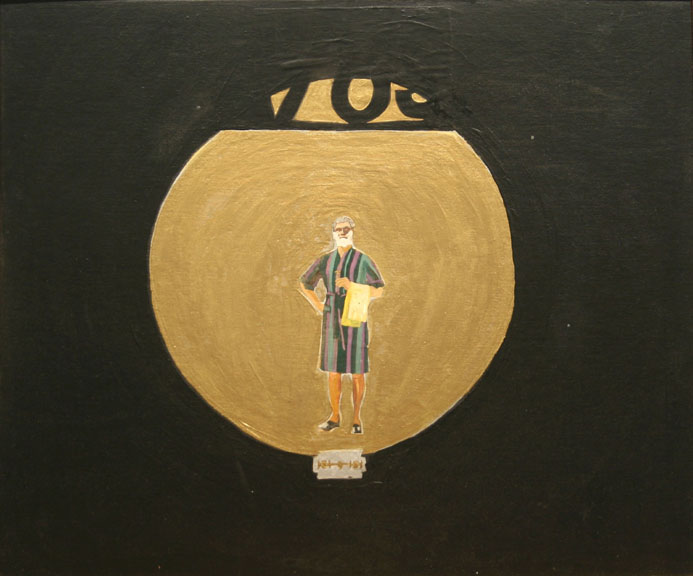
Francis, God’s Jester — Roberto Rossellini (Full Film)

Selections from One-Star Amazon Reviews of Melville’s Moby-Dick

[Ed. note: The following citations come from one-star Amazon reviews of Herman Melville’s novel Moby-Dick. To be very clear, I think Moby-Dick is fantasticbut I also enjoy seeing what people compelled to write negative reviews of the book on Amazon had to say. What follows are selections of one-star Amazon reviews; I’ve preserved the reviewers’ unique styles of punctuation and spelling. See also: on Joyce’s Ulysses and Markson’s Wittgenstein’s Mistress].


Yechh.

It made for a smashing movie.

If you want to read lots of meaningless whale trivia read the book.

Boy gets whale. Boy loses whale. Boy gets whale. Spawns yawns

I think if you made it into a short comic strip, you would have liked it.

I bought this book for a friend in jail. Alas, he was unable to read it because the font was too small.

Ray Bradbury, who wrote the screenplay for this novel, (a la Gregory Peck) couldn’t even finish the damn thing!

If you like a story with nonessential information and an author that is entirely to verbose, then this book is for you.

I am quite the fan of stories which involve man eating sea creatures, such as Jaws. Moby Dick is nothing compared to such classics, I fear.

Throughout the book, you may read one chapter with some action only to be followed by 5 or 6 chapters of tangents that are not necessary to understand the story.

Moby Dick, was a horrible waiste of time. Along with its wordy paragraphs, it also talked about uninteresting issues. It is also to long, and you don’t hear of them encountering the whale until the end of the book.

The only people who like this book are english teachers who derive a feeling of moral superiority from forcing others to read this incredibly bad novel.

First of all, classiflying it as fiction is a mistake. Probably a good 60% of the book is non-fiction – chapter after chapter dedicated to every imaginable detail of the biology of the whale and every imaginable nuance of whaling.

I love literatur just as much as the next guy but we must face it 100 years or so ago American literature was reall weak and lagging from the rest of the world, perhaps now they’re starting to catch up with writers like Ann Rice and them.

I have seen better writing in a Hallmark card! Boring! Give me a good ole copy of Elvis and Me! A true story that really tugs at your heart strings! I sleep with that one under my pillow! Keep Moby Dick away from my bed!

Those chapters about Ishmael sleeping with whatever his name was and Ishamel had such a good time with the other guy’s arm over him and leg over him that he didn’t know if he was straight or gay any more.

i personally didn’t enjoy the philosophical or deep side of the book, i have read much much better books in that regard.

There is no suspense, and I find the idea of people hunting whales offensive. Offensive with a capital O.

Honestly, Over 400 pages devoted to killing a whale because it ate your hand? Come on.

It is hard to read. like work. Doubt he could get published today.

What is the whales motivation? You dont know.

It is 540somepages of boring whaling details.

No wonder Melville flopped as a writter.

OMG, this is tedious and torture to read.

I HATE this book. Why? It’s BORING!

Moby Ick’s more like it.

“The drama’s done” (Moby-Dick)

The drama’s done. Why then here does any one step forth?—Because one did survive the wreck.

It so chanced, that after the Parsee’s disappearance, I was he whom the Fates ordained to take the place of Ahab’s bowsman, when that bowsman assumed the vacant post; the same, who, when on the last day the three men were tossed from out of the rocking boat, was dropped astern. So, floating on the margin of the ensuing scene, and in full sight of it, when the halfspent suction of the sunk ship reached me, I was then, but slowly, drawn towards the closing vortex. When I reached it, it had subsided to a creamy pool. Round and round, then, and ever contracting towards the button-like black bubble at the axis of that slowly wheeling circle, like another Ixion I did revolve. Till, gaining that vital centre, the black bubble upward burst; and now, liberated by reason of its cunning spring, and, owing to its great buoyancy, rising with great force, the coffin life-buoy shot lengthwise from the sea, fell over, and floated by my side. Buoyed up by that coffin, for almost one whole day and night, I floated on a soft and dirgelike main. The unharming sharks, they glided by as if with padlocks on their mouths; the savage sea-hawks sailed with sheathed beaks. On the second day, a sail drew near, nearer, and picked me up at last. It was the devious-cruising Rachel, that in her retracing search after her missing children, only found another orphan.

The untitled epilogue to Melville’s Moby-Dick, which I’ve always thought of by its epigraph from Job, “And I Only Am Escaped Alone to Tell Thee.”

I’ve enjoyed citing these extracts through this reading of Moby-Dick.


“I turn my body from the sun” (Moby-Dick)

“I turn my body from the sun. What ho, Tashtego! let me hear thy hammer. Oh! ye three unsurrendered spires of mine; thou uncracked keel; and only god-bullied hull; thou firm deck, and haughty helm, and Pole-pointed prow,—death-glorious ship! must ye then perish, and without me? Am I cut off from the last fond pride of meanest shipwrecked captains? Oh, lonely death on lonely life! Oh, now I feel my topmost greatness lies in my topmost grief. Ho, ho! from all your furthest bounds, pour ye now in, ye bold billows of my whole foregone life, and top this one piled comber of my death! Towards thee I roll, thou all-destroying but unconquering whale; to the last I grapple with thee; from hell’s heart I stab at thee; for hate’s sake I spit my last breath at thee. Sink all coffins and all hearses to one common pool! and since neither can be mine, let me then tow to pieces, while still chasing thee, though tied to thee, thou damned whale! THUS, I give up the spear!”

From “The Chase—The Third Day,” Chapter 135 of Melville’s Moby-Dick. Ahab’s final monologue.


“Is Ahab, Ahab? Is it I, God, or who, that lifts this arm?” (Moby-Dick)

“What is it, what nameless, inscrutable, unearthly thing is it; what cozening, hidden lord and master, and cruel, remorseless emperor commands me; that against all natural lovings and longings, I so keep pushing, and crowding, and jamming myself on all the time; recklessly making me ready to do what in my own proper, natural heart, I durst not so much as dare? Is Ahab, Ahab? Is it I, God, or who, that lifts this arm? But if the great sun move not of himself; but is as an errand-boy in heaven; nor one single star can revolve, but by some invisible power; how then can this one small heart beat; this one small brain think thoughts; unless God does that beating, does that thinking, does that living, and not I. By heaven, man, we are turned round and round in this world, like yonder windlass, and Fate is the handspike. And all the time, lo! that smiling sky, and this unsounded sea! Look! see yon Albicore! who put it into him to chase and fang that flying-fish? Where do murderers go, man! Who’s to doom, when the judge himself is dragged to the bar? But it is a mild, mild wind, and a mild looking sky; and the air smells now, as if it blew from a far-away meadow; they have been making hay somewhere under the slopes of the Andes, Starbuck, and the mowers are sleeping among the new-mown hay. Sleeping? Aye, toil we how we may, we all sleep at last on the field. Sleep? Aye, and rust amid greenness; as last year’s scythes flung down, and left in the half-cut swaths—Starbuck!”

But blanched to a corpse’s hue with despair, the Mate had stolen away.

From “The Symphony,” Chapter 132 of Melville’s Moby-Dick. The speaker is, of course, Ahab.


“…the step-mother world, so long cruel—forbidding—now threw affectionate arms round his stubborn neck…” (Moby-Dick)

It was a clear steel-blue day. The firmaments of air and sea were hardly separable in that all-pervading azure; only, the pensive air was transparently pure and soft, with a woman’s look, and the robust and man-like sea heaved with long, strong, lingering swells, as Samson’s chest in his sleep.

Hither, and thither, on high, glided the snow-white wings of small, unspeckled birds; these were the gentle thoughts of the feminine air; but to and fro in the deeps, far down in the bottomless blue, rushed mighty leviathans, sword-fish, and sharks; and these were the strong, troubled, murderous thinkings of the masculine sea.

But though thus contrasting within, the contrast was only in shades and shadows without; those two seemed one; it was only the sex, as it were, that distinguished them.

Aloft, like a royal czar and king, the sun seemed giving this gentle air to this bold and rolling sea; even as bride to groom. And at the girdling line of the horizon, a soft and tremulous motion—most seen here at the Equator—denoted the fond, throbbing trust, the loving alarms, with which the poor bride gave her bosom away.

Tied up and twisted; gnarled and knotted with wrinkles; haggardly firm and unyielding; his eyes glowing like coals, that still glow in the ashes of ruin; untottering Ahab stood forth in the clearness of the morn; lifting his splintered helmet of a brow to the fair girl’s forehead of heaven.

Oh, immortal infancy, and innocency of the azure! Invisible winged creatures that frolic all round us! Sweet childhood of air and sky! how oblivious were ye of old Ahab’s close-coiled woe! But so have I seen little Miriam and Martha, laughing-eyed elves, heedlessly gambol around their old sire; sporting with the circle of singed locks which grew on the marge of that burnt-out crater of his brain.

Slowly crossing the deck from the scuttle, Ahab leaned over the side and watched how his shadow in the water sank and sank to his gaze, the more and the more that he strove to pierce the profundity. But the lovely aromas in that enchanted air did at last seem to dispel, for a moment, the cankerous thing in his soul. That glad, happy air, that winsome sky, did at last stroke and caress him; the step-mother world, so long cruel—forbidding—now threw affectionate arms round his stubborn neck, and did seem to joyously sob over him, as if over one, that however wilful and erring, she could yet find it in her heart to save and to bless. From beneath his slouched hat Ahab dropped a tear into the sea; nor did all the Pacific contain such wealth as that one wee drop.

From “The Symphony,” Chapter 132 of Melville’s Moby-Dick.

“I want it of the true death-temper” (Moby-Dick)

“Look ye, blacksmith, these are the gathered nail-stubbs of the steel shoes of racing horses.”

“Horse-shoe stubbs, sir? Why, Captain Ahab, thou hast here, then, the best and stubbornest stuff we blacksmiths ever work.”

“I know it, old man; these stubbs will weld together like glue from the melted bones of murderers. Quick! forge me the harpoon. And forge me first, twelve rods for its shank; then wind, and twist, and hammer these twelve together like the yarns and strands of a tow-line. Quick! I’ll blow the fire.”

When at last the twelve rods were made, Ahab tried them, one by one, by spiralling them, with his own hand, round a long, heavy iron bolt. “A flaw!” rejecting the last one. “Work that over again, Perth.”

This done, Perth was about to begin welding the twelve into one, when Ahab stayed his hand, and said he would weld his own iron. As, then, with regular, gasping hems, he hammered on the anvil, Perth passing to him the glowing rods, one after the other, and the hard pressed forge shooting up its intense straight flame, the Parsee passed silently, and bowing over his head towards the fire, seemed invoking some curse or some blessing on the toil. But, as Ahab looked up, he slid aside.

“What’s that bunch of lucifers dodging about there for?” muttered Stubb, looking on from the forecastle. “That Parsee smells fire like a fusee; and smells of it himself, like a hot musket’s powder-pan.”

At last the shank, in one complete rod, received its final heat; and as Perth, to temper it, plunged it all hissing into the cask of water near by, the scalding steam shot up into Ahab’s bent face.

“Would’st thou brand me, Perth?” wincing for a moment with the pain; “have I been but forging my own branding-iron, then?”

“Pray God, not that; yet I fear something, Captain Ahab. Is not this harpoon for the White Whale?”

“For the white fiend! But now for the barbs; thou must make them thyself, man. Here are my razors—the best of steel; here, and make the barbs sharp as the needle-sleet of the Icy Sea.”

For a moment, the old blacksmith eyed the razors as though he would fain not use them.

“Take them, man, I have no need for them; for I now neither shave, sup, nor pray till—but here—to work!”

Fashioned at last into an arrowy shape, and welded by Perth to the shank, the steel soon pointed the end of the iron; and as the blacksmith was about giving the barbs their final heat, prior to tempering them, he cried to Ahab to place the water-cask near.

“No, no—no water for that; I want it of the true death-temper. Ahoy, there! Tashtego, Queequeg, Daggoo! What say ye, pagans! Will ye give me as much blood as will cover this barb?” holding it high up. A cluster of dark nods replied, Yes. Three punctures were made in the heathen flesh, and the White Whale’s barbs were then tempered.

“Ego non baptizo te in nomine patris, sed in nomine diaboli!” deliriously howled Ahab, as the malignant iron scorchingly devoured the baptismal blood.

Now, mustering the spare poles from below, and selecting one of hickory, with the bark still investing it, Ahab fitted the end to the socket of the iron. A coil of new tow-line was then unwound, and some fathoms of it taken to the windlass, and stretched to a great tension. Pressing his foot upon it, till the rope hummed like a harp-string, then eagerly bending over it, and seeing no strandings, Ahab exclaimed, “Good! and now for the seizings.”

At one extremity the rope was unstranded, and the separate spread yarns were all braided and woven round the socket of the harpoon; the pole was then driven hard up into the socket; from the lower end the rope was traced half-way along the pole’s length, and firmly secured so, with intertwistings of twine. This done, pole, iron, and rope—like the Three Fates—remained inseparable, and Ahab moodily stalked away with the weapon; the sound of his ivory leg, and the sound of the hickory pole, both hollowly ringing along every plank. But ere he entered his cabin, light, unnatural, half-bantering, yet most piteous sound was heard. Oh, Pip! thy wretched laugh, thy idle but unresting eye; all thy strange mummeries not unmeaningly blended with the black tragedy of the melancholy ship, and mocked it!

From “The Forge,” Chapter 113 of Melville’s Moby-Dick.


“And there is a Catskill eagle in some souls that can alike dive down into the blackest gorges…” (Moby-Dick)

Look not too long in the face of the fire, O man! Never dream with thy hand on the helm! Turn not thy back to the compass; accept the first hint of the hitching tiller; believe not the artificial fire, when its redness makes all things look ghastly. To-morrow, in the natural sun, the skies will be bright; those who glared like devils in the forking flames, the morn will show in far other, at least gentler, relief; the glorious, golden, glad sun, the only true lamp—all others but liars!

Nevertheless the sun hides not Virginia’s Dismal Swamp, nor Rome’s accursed Campagna, nor wide Sahara, nor all the millions of miles of deserts and of griefs beneath the moon. The sun hides not the ocean, which is the dark side of this earth, and which is two thirds of this earth. So, therefore, that mortal man who hath more of joy than sorrow in him, that mortal man cannot be true—not true, or undeveloped. With books the same. The truest of all men was the Man of Sorrows, and the truest of all books is Solomon’s, and Ecclesiastes is the fine hammered steel of woe. “All is vanity.” ALL. This wilful world hath not got hold of unchristian Solomon’s wisdom yet. But he who dodges hospitals and jails, and walks fast crossing graveyards, and would rather talk of operas than hell; calls Cowper, Young, Pascal, Rousseau, poor devils all of sick men; and throughout a care-free lifetime swears by Rabelais as passing wise, and therefore jolly;—not that man is fitted to sit down on tomb-stones, and break the green damp mould with unfathomably wondrous Solomon.

But even Solomon, he says, “the man that wandereth out of the way of understanding shall remain” (I.E., even while living) “in the congregation of the dead.” Give not thyself up, then, to fire, lest it invert thee, deaden thee; as for the time it did me. There is a wisdom that is woe; but there is a woe that is madness. And there is a Catskill eagle in some souls that can alike dive down into the blackest gorges, and soar out of them again and become invisible in the sunny spaces. And even if he for ever flies within the gorge, that gorge is in the mountains; so that even in his lowest swoop the mountain eagle is still higher than other birds upon the plain, even though they soar.

From “The Try-Works,” Chapter 96 of Melville’s Moby-Dick.


“The Town-Ho’s Story” — Herman Melville

“The Town-Ho’s Story” by Herman Melville

(This tale is Chapter 54 of Moby-Dick but it stands on its own as a story)

(AS TOLD AT THE GOLDEN INN)

The Cape of Good Hope, and all the watery region round about there, is much like some noted four corners of a great highway, where you meet more travellers than in any other part.

It was not very long after speaking the Goney that another homeward-bound whaleman, the Town-Ho,* was encountered. She was manned almost wholly by Polynesians. In the short gam that ensued she gave us strong news of Moby Dick. To some the general interest in the White Whale was now wildly heightened by a circumstance of the Town-Ho’s story, which seemed obscurely to involve with the whale a certain wondrous, inverted visitation of one of those so called judgments of God which at times are said to overtake some men. This latter circumstance, with its own particular accompaniments, forming what may be called the secret part of the tragedy about to be narrated, never reached the ears of Captain Ahab or his mates. For that secret part of the story was unknown to the captain of the Town-Ho himself. It was the private property of three confederate white seamen of that ship, one of whom, it seems, communicated it to Tashtego with Romish injunctions of secrecy, but the following night Tashtego rambled in his sleep, and revealed so much of it in that way, that when he was wakened he could not well withhold the rest. Nevertheless, so potent an influence did this thing have on those seamen in the Pequod who came to the full knowledge of it, and by such a strange delicacy, to call it so, were they governed in this matter, that they kept the secret among themselves so that it never transpired abaft the Pequod’s main-mast. Interweaving in its proper place this darker thread with the story as publicly narrated on the ship, the whole of this strange affair I now proceed to put on lasting record.

*The ancient whale-cry upon first sighting a whale from the mast-head, still used by whalemen in hunting the famous Gallipagos terrapin.

For my humor’s sake, I shall preserve the style in which I once narrated it at Lima, to a lounging circle of my Spanish friends, one saint’s eve, smoking upon the thick-gilt tiled piazza of the Golden Inn. Of those fine cavaliers, the young Dons, Pedro and Sebastian, were on the closer terms with me; and hence the interluding questions they occasionally put, and which are duly answered at the time.

“Some two years prior to my first learning the events which I am about rehearsing to you, gentlemen, the Town-Ho, Sperm Whaler of Nantucket, was cruising in your Pacific here, not very many days’ sail eastward from the eaves of this good Golden Inn. She was somewhere to the northward of the Line. One morning upon handling the pumps, according to daily usage, it was observed that she made more water in her hold than common. They supposed a sword-fish had stabbed her, gentlemen. But the captain, having some unusual reason for believing that rare good luck awaited him in those latitudes; and therefore being very averse to quit them, and the leak not being then considered at all dangerous, though, indeed, they could not find it after searching the hold as low down as was possible in rather heavy weather, the ship still continued her cruisings, the mariners working at the pumps at wide and easy intervals; but no good luck came; more days went by, and not only was the leak yet undiscovered, but it sensibly increased. So much so, that now taking some alarm, the captain, making all sail, stood away for the nearest harbor among the islands, there to have his hull hove out and repaired. Continue reading ““The Town-Ho’s Story” — Herman Melville”

“Hollow” — Breece D’J Pancake

“Hollow” by Breece D’J Pancake

Hunched on his knees in front of the three-foot coal seam, Buddy was lost in the back-and-forth rhythm of the truck mine’s relay: the glitter of coal and sandstone in his cap light, the setting and lifting and pouring into the cart that carried the stuff to the mouth of the mine. This was nothing like shaft mining, no deep tunnels or up-and-down man-trips, only the setting, lifting, pouring, only the rumbling of the relay cart and the light-flash from caps in the relay. In the pace of work, he daydreamed his father lowering him into the cistern: many summers ago he touched the cool tile walls, felt the moist air from the water below, heard the pulley squeak in the circle of blue above. The tin of the well-pail buckled under his tiny feet, and he began to cry. His father hauled him up. “That’s the way we do it,” he said, laughing, and carried Buddy to the house.

But that came before everything; before they moved from the ridge, before the big mine closed, before welfare. Now, at the far end of the relay, the men were quiet, and Buddy wondered if they thought of stupid things. From where he squatted he could see the gray grin of light at the mouth of the truck mine, the March wind spraying dust into little clouds. The half-ton relay cart was full now, and the last man in the relay shoved it toward the chute at the mine-mouth on two-by-four tracks.

“Take a break” came from the opening, and as he set his shovel aside to rise from where he knelt at the coal face, Buddy saw his cousin Curtis start through the mine-mouth. Curtis was dragging a poplar post behind him as he crawled past the relay cart toward the face. Buddy watched while Curtis worked the post upright from the floor to catch the weight of the ceiling. It was too short, and Curtis hammered wedges in to tighten the fit.

“Got it?” Buddy asked.

“Hell no, but she looks real pretty.”
Continue reading ““Hollow” — Breece D’J Pancake”

God Shaves — Rosalyn Drexler

god-shaves-1961

“The Story of Gulnare of the Sea” (Arabian Nights)

“The Story of Gulnare of the Sea”

from The Arabian Nights: Their Best Known Tales (1909)

There was, in olden time, and in an ancient age and period, in the land of the Persians, a king named Shahzeman, and the place of his residence was Khorassan. He had not been blest, during his whole life, with a male child nor a female; and he reflected upon this, one day, and lamented that the greater portion of his life had passed, and he had no heir to take the kingdom after him as he had inherited it from his fathers and forefathers. So the utmost grief befell him on this account.

Now while he was sitting one day, one of his mamelukes came in to him, and said to him: “O my lord, at the door is a slave-girl with a merchant: none more beautiful than she hath been seen.” And he replied: “Bring to me the merchant and the slave-girl.” The merchant and the slave-girl therefore came to him; and when he saw her, he found her to resemble the lance in straightness and slenderness. She was wrapped in a garment of silk embroidered with gold, and the merchant uncovered her face, whereupon the place was illuminated by her beauty, and there hung down from her forehead seven locks of hair reaching to her anklets. The King, therefore, wondered at the sight of her, and at her beauty, and her stature and justness of form; and he said to the merchant: “O sheikh, for how much is this damsel to be sold?” The merchant answered: “O my lord, I purchased her for two thousand pieces of gold of the merchant who owned her before me, and I have been for three years travelling with her, and she hath cost, to the period of her arrival at this place, three thousand pieces of gold; and she is a present from me unto thee.” Upon this, the king conferred upon him a magnificent robe of honour, and gave orders to present him with ten thousand pieces of gold. So he took them, and kissed the hands of the king, thanking him for his beneficence, and departed. Then the king committed the damsel to the tirewomen, saying to them: “Amend the state of this damsel, and deck her, and furnish for her a private chamber, and take her into it.” He also gave orders to his chamberlains that everything which she required should be conveyed to her. The seat of government where he resided was on the shore of the sea, and his city was called the White City. And they conducted the damsel into a private chamber, which chamber had windows overlooking the sea; and the king commanded his chamberlains to close all the doors upon her after taking to her all that she required. Continue reading ““The Story of Gulnare of the Sea” (Arabian Nights)”

“A Reflection” — Kate Chopin

“A Reflection” by Kate Chopin—

Some people are born with a vital and responsive energy. It not only enables them to keep abreast of the times; it qualifies them to furnish in their own personality a good bit of the motive power to the mad pace. They are fortunate beings. They do not need to apprehend the significance of things. They do not grow weary nor miss step, nor do they fall out of rank and sink by the wayside to be left contemplating the moving procession.

Ah! that moving procession that has left me by the road-side! Its fantastic colors are more brilliant and beautiful than the sun on the undulating waters. What matter if souls and bodies are failing beneath the feet of the ever-pressing multitude! It moves with the majestic rhythm of the spheres. Its discordant clashes sweep upward in one harmonious tone that blends with the music of other worlds—to complete God’s orchestra.

It is greater than the stars—that moving procession of human energy; greater than the palpitating earth and the things growing thereon. Oh! I could weep at being left by the wayside; left with the grass and the clouds and a few dumb animals. True, I feel at home in the society of these symbols of life’s immutability. In the procession I should feel the crushing feet, the clashing discords, the ruthless hands and stifling breath. I could not hear the rhythm of the march.

Salve! ye dumb hearts. Let us be still and wait by the roadside.


“…over any ignominious blemish in him all his fellows should run to throw their costliest robes” (Moby-Dick)

Men may seem detestable as joint stock-companies and nations; knaves, fools, and murderers there may be; men may have mean and meagre faces; but man, in the ideal, is so noble and so sparkling, such a grand and glowing creature, that over any ignominious blemish in him all his fellows should run to throw their costliest robes. That immaculate manliness we feel within ourselves, so far within us, that it remains intact though all the outer character seem gone; bleeds with keenest anguish at the undraped spectacle of a valor-ruined man. Nor can piety itself, at such a shameful sight, completely stifle her upbraidings against the permitting stars. But this august dignity I treat of, is not the dignity of kings and robes, but that abounding dignity which has no robed investiture. Thou shalt see it shining in the arm that wields a pick or drives a spike; that democratic dignity which, on all hands, radiates without end from God; Himself! The great God absolute! The centre and circumference of all democracy! His omnipresence, our divine equality!

From Chapter 26 of Herman Melville’s Moby-Dick.


“It was Christmas night and the proper things had been done” (The Once and Future King)

It was Christmas night and the proper things had been done. The whole village had come to dinner in hall. There had been boar’s head and venison and pork and beef and mutton and capons—but no turkey, because this bird had not yet been invented. There had been plum pudding and snap-dragon, with blue fire on the tips of one’s fingers, and as much mead as anybody could drink. Sir Ector’s health had been drunk with “Best respects, Measter,” or “Best compliments of the Season, my lords and ladies, and many of them.” There had been mummers to play an exciting dramatic presentation of a story in which St. George and a Saracen and a funny Doctor did surprising things, also carol-singers who rendered “Adeste Fideles” and “I Sing of a Maiden,” in high, clear, tenor voices. After that, those children who had not been sick from their dinner played Hoodman Blind and other appropriate games, while the young men and maidens danced morris dances in the middle, the tables having been cleared away. The old folks sat round the walls holding glasses of mead in their hands and feeling thankful that they were past such capers, hoppings and skippings, while those children who had not been sick sat with them, and soon went to sleep, the small heads leaning against their shoulders. At the high table Sir Ector sat with his knightly guests, who had come for the morrow’s hunting, smiling and nodding and drinking burgundy or sherries sack or malmsey wine.

After a bit, silence was prayed for Sir Grummore. He stood up and sang his old school song, amid great applause—but forgot most of it and had to make a humming noise in his moustache. Then King Pellinore was nudged to his feet and sang bashfully:

“Oh, I was born a Pellinore in famous Lincolnshire. Full well I chased the Questing Beast for more than seventeen year. Till I took up with Sir Grummore here In the season of the year. (Since when) ’tis my delight On a feather-bed night To sleep at home, my dear.

“You see,” explained King Pellinore blushing, as he sat down with everybody whacking him on the back, “old Grummore invited me home, what, after we had been having a pleasant joust together, and since then I’ve been letting my beastly Beast go and hang itself on the wall, what?”

“Well done,” they told him. “You live your own life while you’ve got it.”

William Twyti was called for, who had arrived on the previous evening, and the famous huntsman stood up with a perfectly straight face, and his crooked eye fixed upon Sir Ector, to sing:

“D’ye ken William Twyti

With his Jerkin so dagged? D’ye ken William Twyti

Who never yet lagged? Yes, I ken William Twyti,

And he ought to be gagged With his hounds and his horn in the morning.”

“Bravo!” cried Sir Ector. “Did you hear that, eh? Said he ought to be gagged, my dear feller. Blest if I didn’t think he was going to boast when he began. Splendid chaps, these huntsmen, eh? Pass Master Twyti the malmsey, with my compliments.”

The boys lay curled up under the benches near the fire, Wart with Cavall in his arms. Cavall did not like the heat and the shouting and the smell of mead, and wanted to go away, but Wart held him tightly because he needed something to hug, and Cavall had to stay with him perforce, panting over a long pink tongue.

“Now Ralph Passelewe.”

“Good wold Ralph.”

“Who killed the cow, Ralph?”

“Pray silence for Master Passelewe that couldn’t help it.”

At this the most lovely old man got up at the furthest and humblest end of the hail, as he had got up on all similar occasions for the past half-century. He was no less than eighty-five years of age, almost blind, almost deaf, but still able and willing and happy to quaver out the same song which he had sung for the pleasure of the Forest Sauvage since before Sir Ector was bound up in a kind of tight linen puttee in his cradle. They could not hear him at the high table—he was too far away in Time to be able to reach across the room—but everybody knew what the cracked voice was singing and everybody loved it. This is what he sang:

“Whe-an/Wold King-Cole/was a /wakkin doon-t’street, H-e /saw a-lovely laid-y a /steppin-in-a-puddle. / She-a /lifted hup-er-skeat/ For to / Hop acrorst ter middle, / An ee /saw her /an-kel. Wasn’t that a fuddle? / Ee could’ernt elp it, /ee Ad to.”

There were about twenty verses of this song, in which Wold King Cole helplessly saw more and more things that he ought not to have seen, and everybody cheered at the end of each verse until, at the conclusion, old Ralph was overwhelmed with congratulations and sat down smiling dimly to a replenished mug of mead.

It was now Sir Ector’s turn to wind up the proceedings. He stood up importantly and delivered the following speech:

“Friends, tenants and otherwise. Unaccustomed as I am to public speakin’—”

There was a faint cheer at this, for everybody recognized the speech which Sir Ector had made for the last twenty years, and welcomed it like a brother.

“Unaccustomed as I am to public speakin'” it is my pleasant duty—I might say my very pleasant duty—to welcome all and sundry to this our homely feast. It has been a good year, and I say it without fear of contradiction, in pasture and plow. We all know how Crumbocke of Forest Sauvage won the first prize at Cardoyle Cattle Show for the second time, and one more year will win the cup outright. More power to the Forest Sauvage. As we sit down tonight, I notice some faces now gone from among us and some which have added to the family circle. Such matters are in the hands of an almighty Providence, to which we all feel thankful. We ourselves have been first created and then spared to enjoy the rejoicin’s of this pleasant evening. I think we are all grateful for the blessin’s which have been showered upon us. Tonight we welcome in our midst the famous King Pellinore, whose labours in riddin’ our forest of the redoubtable Questin’ Beast are known to all. God bless King Pellinore. (Hear, hear!) Also Sir Grummore Grummursum, a sportsman, though I say it to his face, who will stick to his mount as long as his Quest will stand up in front of him. (Hooray!) Finally, last but not least, we are honoured by a visit from His Majesty’s most famous huntsman, Master William Twyti, who will, I feel sure, show us such sport tomorrow that we will rub our eyes and wish that a royal pack of hounds could always be huntin’ in the Forest which we all love so well. (Viewhalloo and several recheats blown in imitation.) Thank you, my dear friends, for your spontaneous welcome to these gentlemen. They will, I know, accept it in the true and warmhearted spirit in which it is offered. And now it is time that I should bring my brief remarks to a close. Another year has almost sped and it is time that we should be lookin’ forward to the challengin’ future. What about the Cattle Show next year? Friends, I can only wish you a very Merry Christmas, and, after Father Sidebottom has said our Grace for us, we shall conclude with a singin’ of the National Anthem.”

The cheers which broke out at the end of Sir Ector’s speech were only just prevented, by several hush-es, from drowning the last part of the vicar’s Grace in Latin, and then everybody stood up loyally in the firelight and sang:

“God save King Pendragon,

May his reign long drag on,

God save the King.

Send him most gorious,

Great and uproarious,

Horrible and Hoarious,

God save our King.”

The last notes died away, the hall emptied of its rejoicing humanity. Lanterns flickered outside, in the village street, as everybody went home in bands for fear of the moonlit wolves, and The Castle of the Forest Sauvage slept peacefully and lightless, in the strange silence of the holy snow.

—From T.H. White’s The Once and Future King.
 

Christmas in Shakespeare (From Thomas Firminger Thiselton-Dyer’s Folk-lore of Shakespeare)

From Thomas Firminger Thiselton-Dyer’s Folk-lore of Shakespeare:

Christmas. Among the observances associated with this season, to which Shakespeare alludes, we may mention the Christmas Carol, a reference to which is probably made in “A Midsummer-Night’s Dream” (ii. 1), by Titania: “No night is now with hymn or carol blest.”

Hamlet (ii. 2) quotes two lines from a popular ballad, entitled the “Song of Jephthah’s Daughter,” and adds: “The first row of the pious chanson will show you more.”

In days gone by, the custom of carol-singing was most popular, and Warton, in his “History of English Poetry,” notices a license granted in 1562 to John Tysdale for printing “Certayne goodly carowles to be songe to the glory of God;” and again “Crestenmas Carowles auctorisshed by my lord of London.”

In the “Taming of the Shrew” (Ind., sc. 2) Sly asks whether “a comonty is not a Christmas gambold.” Formerly the sports and merry-makings at this season were on a most extensive scale, being presided over by the Lord of Misrule. Again, in “Love’s Labour’s Lost” (v. 2), Biron speaks of “a Christmas comedy.”

As we have noticed, too, in our chapter on Plants, a gilt nutmeg was formerly a common gift at Christmas, and on other festive occasions, to which an allusion is probably made in the same scene. Formerly, at this season, the head of the house assembled his family around a bowl of spiced ale, from which he drank their healths, then passed it to the rest, that they might drink too. The word that passed among them was the ancient Saxon phrase wass hael , i. e., to your health. Hence this came to be recognized as the wassail or wassel bowl; and was the accompaniment to festivity of every kind throughout the year. Thus Hamlet (i. 4) says: “The king doth wake to-night, and takes his rouse, Keeps wassail.” And in “Love’s Labour’s Lost” (v. 2), Biron speaks of: “wakes and wassails, meetings, markets, fairs.” In “Macbeth” (i. 7), it is used by Lady Macbeth in the sense of intemperance, who, speaking of Duncan’s two chamberlains, says: “Will I with wine and wassail so convince, That memory, the warder of the brain, Shall be a fume, and the receipt of reason A limbeck only.” In “Antony and Cleopatra” (i. 4), Cæsar advises Antony to live more temperately, and to leave his “lascivious wassails.” In the same way, a “wassail candle” denoted a large candle lighted up at a festival, a reference to which occurs in “2 Henry IV.” (i. 2): “Chief-Justice. You are as a candle, the better part burnt out. Falstaff. A wassail candle, my lord; all tallow.”

A custom which formerly prevailed at Christmas, and has not yet died out, was for mummers to go from house to house, attired in grotesque attire, performing all kinds of odd antics. Their performances, however, were not confined to this season. Thus, in “Coriolanus” (ii. 1) Menenius speaks of making “faces like mummers.”


Watering Heaven (Book Acquired, Some Time Back in October)

20121217-104453.jpgThe stories Peter Tieryas Liu’s Watering Heaven move at a sharp clip, propelled by realistic dialogue set against a surreal backdrop. “Every time I have sex, I lay an egg,” one character tells another in the opening scene of “Chronology of an Egg.” The strange romance culminates in a fantastic punchline to this magical set-up. The protagonist of “The Wolf’s Choice,” facing an existential crisis, transforms his outward appearance by extensive plastic surgery. And in “Rodenticide”—well, let me just share a paragraph of Liu’s prose:

He dreamed of rats. One named Zhucheng lost her tail—a pink, gnarled tube with a texture like a gizzard. She was crying a shrill homily and there were flags with emblems of rat ears. He realized all rats were psychics with more understanding of humans than humans themselves—a homeopathic conglomeration of half-defunct diseases. Telepathy is my disease, Zhucheng screamed, I know you’re planning our mass extermination!

 “Rodenticide” is just one example of Liu’s strange mix of absurdity, realism, and magic. The stories of Watering Heaven suggest a world where comedy and romance might tip over dramatically into horror or despair at any moment. Good stuff.