
Hamilton Leithauser, vocalist/lyricist for one of our favorite bands, The Walkmen, shared what he enjoyed reading this past year at The Millions, part of their year-end “A Year in Reading 2009” series (we dig plenty of the literati who contribute to the list, particularly Stephen Elliott, whose essays we’ve long admired, and who says Bolaño’s 2666 is his favorite book this year–but we’ll take the nonliterary route this time, and go with a (semi-)rock star). Leithauser speaks highly of Dave Eggers and Kingley Amis, and cites W.H. Auden as a favorite poet. We think that The Walkmen’s last record You & Me is about as literary as you can get in a rock record–it plays like a collection of interconnected short stories, full of the disillusionment and joy of getting older. We gave You & Me pride of place on last year’s list best-of music list. Here’s “In The New Year,” a song that builds fantasy only to puncture it thoroughly. Great stuff.
Tag: Lists
Pessimus Populus: The Worst People of 2009
Ah, January of 2009 . . . those were simpler times. We were so gripped in hope and change and whatnot that the future seemed a bastion of illimitable glowing possibilities illuminated by an infinity of suns. Doing another “Worst People” list seemed antithetical to what we hoped would be a new zeitgeist. That lasted about five metaphorical minutes. So here we go:
What a dick.
9. Mark Sanford
We don’t really care that South Carolina Governor Mark Sanford is the kind of dick who cheats on his wife. That’s dickish, sure, but not of heroically-dickish enough proportions to land him on this list. And his priggish refusal to accept federal monies to ensure that SC schools didn’t tank was pretty awful too. We don’t even care that he left his post and went AWOL to hook up with his mistress (lying to his staff, his family, and his constituency in the process). We just hate his hypocrisy. Here’s Sanford in ’98 blasting Clinton. Sanford, a bastion of family values, also was a strong proponent of SC’s hateful anti-gay “Defense of Marriage” Act. What a prick–yet another in a long line of right wing politicians who love to tell others how to live their lives yet fail to live up to their own standards.
8. Glenn Beck
 Glenn Beck is a fatty-jowled pussy of the worst order, a crying little bitch who offers up conjecture and speculation–and no real information–to a dimwitted audience. His pandering to racist, xenophobic attitudes has made him millions of course. Oh, remember when he called Obama a racist?
7. Orly Taitz and the “Birthers”
Speaking of racist, xenophobic attitudes . . . Watch Orly Taitz. Her lunacy set an example for way too many Americans overeager to reclaim “their” country from a Harvard-educated, arugula-eatin’, biracial liberal (who occasionally smokes). Jeez.
6. Teabaggers, et al.
Have you seen this video?
Kind of sums up the insanity of the summer of ’09 (fueled in part by some of the assholes on this list). It’s marvelous to watch how quickly these people melt under the simplest questions or prompts to respond with specific information. God bless America!
5. Kanye West
4. Pitchfork
We’ve been reading the music review site Pitchfork since the late ’90s, when it was a simple html affair with pretty bad writing. It still had a letters page, and even if the reviews were amateurish, there was also a sense of fun. In the past decade, the site has become bloated and self-serious; it’s also arguable that Pitchfork’s expansion into festival promotion is at ethical odds with its ability to criticize fairly. We’ve quibbled with Pitchfork before, but they were especially egregious in 2009. Like a giddy teenager, Pitchfork shot its load prematurely, running its “Best of the 00s” series of reviews in the summer. They also devoted two entire weeks to revisionist criticism, reviewing Radiohead albums that have been out for years and Beatles albums that have been out for decades. Telling us Abbey Road is a 10.0 is like shooting retarded fish in a barrel. It’s also bad form for a site that pretends to be forward-thinking and trendsetting. Perhaps as a reaction to the hype-backlash cycle that infested indie rock and blogdom in the late ’00s, Pitchfork devoted much of its review space to reissues and greatest hits collections and consistently began lowballing albums by new artists. Oh, and for a site that aspires to professional criticisms, theirs is full of typos and bad writing.
3. Fox News
The worst part about Fox News is that many of their viewers honestly believe that the network is “fair and balanced.” It looks like we’re gonna forget to squeeze Dick “Dick” Cheney into this list, so we’ll do so now, noting that Fox has repeatedly given that grizzled draft-dodger airtime whenever he’s elected to emerge from his cave, wipe the blood from his lips, and try to scare Americans into thinking that they are unsafe and should relinquish more freedoms.
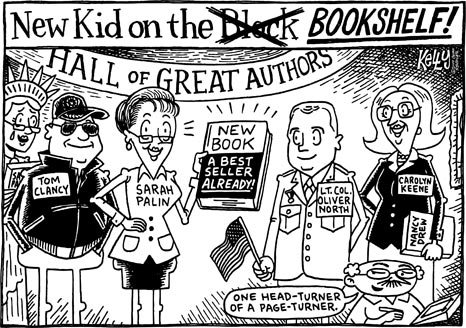
2. Sarah Palin
Sarah!’s book tour showed us that the only major city in “real America” is Dallas, Texas (Texas is, of course, so “real” that they might secede).
1. George Bush
Sure. Bush didn’t do much in 2009, ‘ceptin maybe clearin’ some brush (and lots and lots of biking). So why does he rank #1? Well, maybe it’s just for old time’s sake, or maybe it’s just a way to recognize all the evil he perpetrated in the aughties. Call it a victory lap. Thanks for the giant shit sandwich!
Best Books of 2009
Here are our favorite books published in 2009 (the ones that we read–we can’t read every book, you know). The list includes books new in print after a long time as well as first editions of trade paperbacks. All links are to Biblioklept reviews. The list is more or less chronological, beginning in January of 2009.
The Book of Dead Philosophers — Simon Critchley
Chicken with Plums (trade paperback) — Marjane Satrapi
The 2009 PEN/O. Henry Prize Short Stories
Che’s Afterlife: The Legacy of an Image — Michael Casey
Inherent Vice — Thomas Pynchon
A Better Angel (trade paperback) — Chris Adrian
The City & The City — China Miéville
Asterios Polyp — David Mazzucchelli
The Paris Review Interviews, Vol. IV
Every Man Dies Alone — Hans Fallada
Best of the Aughties
So, this is Biblioklept’s 500th post [pauses for applause].
Thank you, thank you. To mark the special occasion, we’ve artfully and scientifically compiled a list of the best stuff of the aughties (or 2000s, or whatever you want to call this decade that’s ending so soon). We know the year’s not over yet, and we readily admit that our list is incomplete: we didn’t read every book published in the decade, listen to every record, watch every film, etc. So, feel free to drop a line and let us know who we forgot (or, perhaps, snubbed).
Here, in no particular order, is the best of the past decade:
Roberto Bolaño’s 2666, Children of Men, The Fiery Furnaces, The Wire, Kill Bill, Sen to Chihiro no Kamikushi (Spirited Away), The Believer, Peter Jackson’s The Lord of the Rings trilogy, Beyoncé’s “Single Ladies” (and its marvelous video), David Foster Wallaces’s essays in Consider the Lobster, Denis Johnson’s Tree of Smoke, Animal Collective, Barack Obama, Terrence Malick’s The New World, Mad Men, Deadwood, Dave Chappelle, Curb Your Enthusiasm, Mitch Hedberg, R. Kelly, YouTube, Drag City Records, Cormac McCarthy’s The Road, Nathan Rabin’s “My Year of Flops,”

Chris Adrian’s The Children’s Hospital, Extras, Harry Potter on Extras, Dave Eggers’s A Heartbreaking Work of Staggering Genius, Missy Elliott’s “Get Ur Freak On,” Wong Kar-wai’s In the Mood for Love, Pixar movies–especially the latest three: WALL-E, Up, and Ratatouille, McSweeney’s #13 (the Chris Ware Issue), Jimmy Corrigan, the Smartest Kid on Earth, that time the Shins were on Gilmore Girls, the first six episodes of The OC, Arrested Development, Nintendo Wii, Andre 3000’s “Hey Ya!,” The Office, Will Ferrell, Bob Dylan’s Theme Time Radio Hour, Picador Books, Donnie Darko,

Veronica Mars, The Venture Brothers, Home Movies, the third Harry Potter movie, Wikipedia, Bob Dylan’s Chronicles, Jonathan Lethem’s The Fortress of Solitude, DFW’s Oblivion, especially “The Suffering Channel,” Wallace’s 2005 Kenyon commencement address, Wonder Showzen, Toni Morrison’s A Mercy, the totally goofy but totally fun troubadour sequence from Gilmore Girls with Yo La Tengo, Thurston, Kim, and daughter Coco Haley, and Sparks jamming, OutKast’s Stankonia, Pan’s Labyrinth, The Devil’s Backbone, The Orphanage, Cat Power’s “Willie Deadwilder,”Flight of the Conchords, Girl Talk’s Night Ripper, The Daily Show with John Stewart, The Colbert Report,

Andy Samberg’s Digital Shorts, Autotune the News, Tim Tebow, Panda Bear’s Person Pitch, Nels Cline’s guitar solo in “Impossible Germany,” Judd Apatow, Be Kind Rewind, Eternal Sunshine of the Spotless Mind, Thrill Jockey Records, I Heart Huckabees, Chris Bachelder’s U.S.!, David Lynch’s INLAND EMPIRE, Fennesz’s Endless Summer, Gmail, the Coens’ No Country for Old Men, MF Doom (all iterations), Broken Social Scene’s You Forgot It in People, Satrapi’s Persepolis, UGK’s “International Player’s Anthem,” Bob Dylan’s “Things Have Changed,” Bonnie “Prince” Billy,
The Silver Jews’ Tanglewood Numbers, lolcatz, Once, Lynch’s Mulholland Drive, the Coens’ O Brother, Where Art Thou?, web two point oh, 30 Rock, Belle & Sebastian’s “Stay Loose,” It’s Always Sunny in Philadelphia, Philip Pullman’s The Amber Spyglass, Werner Herzog’s Grizzly Man, WordPress, Jim O’Rourke’s Insignificance, the first season of Battlestar Galactica, Superbad, half a dozen or so short stories by Wells Tower, David Cross’s Shut Up, You Fucking Baby!, Drunk History, the action sequence at the end of Tarantino’s Death Proof (and especially the joyous, headcrushing final shot), Slavoj Žižek’s Violence, The Royal Tennenbaums, the first 20 minutes of Gangs of New York,

Firefox, the increasing and continuing availability of English translations of authors like Roberto Bolaño and W.G. Sebald, Bill Murray, Margot at the Wedding, Rachel Getting Married, Top Chef, The Dirty Projector’s Bitte Orca, Battles’ “Atlas,” Revenge of the Sith, Sarah Vowell, Art Spiegelman’s In the Shadow of No Towers, Christoph Waltz’s bravura performance in Inglourious Basterds, the surreal animations of Carson Mell, Margaret Atwood’s Oryx and Crake, Tina Fey’s impression of Sarah Palin, David Mazzucchelli’s Asterios Polyp, Neko Case’s “Star Witness,” Jason Statham, The Pirate Bay, HDTV, Charles Burns’s Black Hole, &c . . .
Seven Horror Novels Masquerading In Other Genres
We often identify genre simply by its conventions and tropes, and, when October rolls round and we want scary stories, we look for vampires and haunted houses and psycho killers and such. And while there’s plenty of great stuff that adheres to the standard conventions of horror (Lovecraft and Poe come immediately to mind) let’s not overlook novels that offer horror just as keen as any genre exercise. We offer seven horror novels masquerading in other genres:
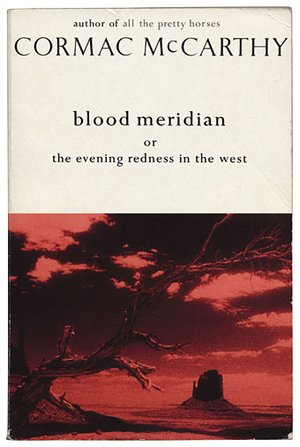
Blood Meridian — Cormac McCarthy
In our review (link above) we called Blood Meridian “a blood-soaked, bloodthirsty bastard of a book.” The story of the Glanton gang’s insane rampage across Mexico and the American Southwest in the 1850s is pure horror. Rape, scalping, dead mules, etc. And Judge Holden. . . [shivers].
Rushing to Paradise — J.G. Ballard
On the surface, Ballard’s 1994 novel Rushing to Paradise seems to be a parable about the hubris of ecological extremism that would eliminate humanity from any natural equation. Dr. Barbara and her band of misfit environmentalists try to “save” the island of St. Esprit from France’s nuclear tests. The group eventually begin living in a cult-like society with Dr. Barbara as its psycho-shaman center. As Dr. Barbara’s anti-humanism comes to outweigh any other value, the island devolves into Lord of the Flies insanity. Wait, should Lord of the Flies be on this list?
Okay. We know. This book ends up on every list we write. What can we do?
While there’s humor and pathos and love and redemption in Bolaño’s masterwork, the longest section of the book, “The Part about the Crimes,” is an unrelenting catalog of vile rapes, murders, and mutilations that remain unresolved. The sinister foreboding of 2666‘s narrative heart overlaps into all of its sections (as well as other Bolaño books); part of the tension in the book–and what makes Bolaño such a gifted writer–is the visceral tension we experience when reading even the simplest incidents. In the world of 2666, a banal episode like checking into a motel or checking the answering machine becomes loaded with Lynchian dread. Great horrific stuff.
King Lear — William Shakespeare
Macbeth gets all the propers as Shakespeare’s great work of terror (and surely it deserves them). But Lear doesn’t need to dip into the stock and store of the supernatural to achieve its horror. Instead, Shakespeare crafts his terror at the familial level. What would you do if your ungrateful kids humiliated you and left you homeless on the heath? Go a little crazy, perhaps? And while Lear’s daughters Goneril and Regan are pure mean evil, few characters in Shakespeare’s oeuvre are as crafty and conniving as Edmund, the bastard son of Glouscester. And, lest we forget to mention, Lear features shit-eating, self-mutilation, a grisly tableaux of corpses, and an eye-gouging accompanied by one of the Bard’s most enduring lines: “Out vile jelly!” Peter Brook chooses to elide the gore in his staging of that infamous scene:
The Trial — Franz Kafka
Kafka captured the essential alienation of the modern world so well that we not only awarded him his own adjective, we also tend to forget how scary his stories are in light, perhaps, of their absurd familiarity. For our money, none surpasses his unfinished novel The Trial, the story of hapless Josef K., a bank clerk arrested by unknown agents for an unspecified crime. While much of K.’s attempt to figure out just who is charging him for what is hilarious in its absurdity, its also deeply dark and really creepy. K. attempts to find some measure of agency in his life, but is ultimately thwarted by forces he can’t comprehend–or even see for that matter. Nowhere is this best expressed than in the famous “Before the Law” episode. If you’re too lazy to read it, check out his animation with narration by the incomparable Orson Welles:
In our original review of Sanctuary (link above), we noted that “if you’re into elliptical and confusing depictions of violence, drunken debauchery, creepy voyeurism, and post-lynching sodomy, Sanctuary just might be the book for you.” There’s also a corn-cob rape scene. The novel is about the kidnapping and debauching of Southern belle Temple Drake by the creepy gangster Popeye–and her (maybe) loving every minute of it. The book is totally gross. We got off to a slow start with Faulkner. If you take the time to read our full review above (in which we make some unkind claims) please check out our retraction. In retrospect, Sanctuary is a proto-Lynchian creepfest, and one of the few books we’ve read that has conveyed a total (and nihilistic) sense of ickyness.
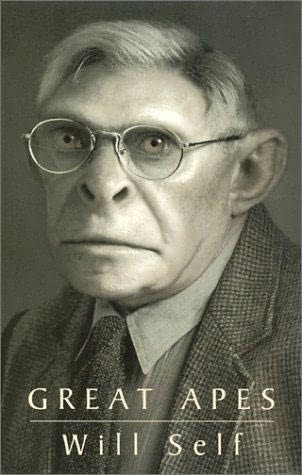
Great Apes — Will Self
Speaking of ickiness…Self’s 1997 novel Great Apes made me totally sick. Nothing repulses me more than images of chimpanzees dressed as humans and Great Apes is the literary equivalent (just look at that cover). After a night of binging on coke and ecstasy, artist Simon Dykes wakes up to find himself in a world where humans and apes have switched roles. Psychoanalysis ensues. While the novel is in part a lovely satire of emerging 21st-century mores, its humor doesn’t outweigh its nightmare grotesquerie. Great Apes so deeply affected us that we haven’t read any of Self’s work since.
The Believer’s 2009 Reader Survey: (What Some Jokers Thought Were) The Best Books of 2008
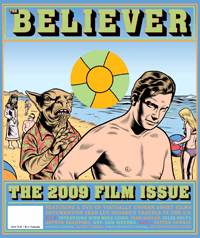
The new issue of The Believer showed up in my overstuffed mailbox today. It’s the film issue, featuring a DVD of short films about Jean-Luc Goddard’s travels in the U.S. My second favorite Jean-Luc! (Seriously, Alphaville is great, but it’s no ST:TNG). The issue also features The Believer‘s annual reader survey. Here are the results, from their website, with our parenthetical thoughts and links.
READER SURVEY RESULTS
- 2666—Roberto Bolaño (This seems pretty obvious. Go, read it, now. Not that awards mater, but it also just won the National Book Critics Circle Award for best fiction).
- Unlucky Lucky Days—Daniel Grandbois
- Lush Life—Richard Price (After hearing a great interview with Price on NPR, I really wanted to read this book–and I really don’t care for detective fiction. And I never got into The Wire. I guess it’s not really genre fiction though. I guess I should read it).
- The Lazarus Project—Aleksandar Hemon
- Netherland—Joseph O’Neill (Heard lots of good things about this, but neglected to solicit a copy).
- Vacation—Deb Olin Unferth (Haven’t read it. Like her short stories in McSweeney’s though).
- Unaccustomed Earth—Jhumpa Lahiri (Unsolicited promo copy of the new trade paperback edition showed up in the mail a few days ago. I will try to read it).
- Arkansas—John Brandon
- A Mercy—Toni Morrison (This topped my best of 2008 list only because I hadn’t read 2666 yet–to be fair, however, they’re both great, totally different books, so no real reason why one should top another).
- Indignation—Philip Roth (Jesus. Do people still read Philip Roth. Who knew?) Continue reading “The Believer’s 2009 Reader Survey: (What Some Jokers Thought Were) The Best Books of 2008”
Caged Bedouins, Uruguayan Cannibals, Mr. Max Tundra, Absent Adventurer Anniversary, and a Few Morsels of Hurricane Lit
Attention:
1. Friends of the ‘klept have embarked on a new culinary adventure. Read all about it at brand new blog Confined Nomad. Their mission:
The goal of this journey is to find cuisines from every United Nations member state, within New York City limits, in alphabetical order. We realize that there are a few flaws to this logic, and will make every attempt to handle these wisely when we reach a questionable issue. For instance, cuisines are not defined by the UN. There are regional specialties, there are countries not internationally recognized, there are border disputes, and new countries are being formed all the time . . . This blog will serve as documentation of the adventure, in which we will do our best to describe not only the food we eat, but also things we learn about its nation of origin, culture, and the immigrant communities here in New York City. We hope this will be much more than a food blog.
The virgin entries on Afghanistan and Albania are tasty fare (sorry!) and we’re looking forward to plenty more delectable treats (yikes! sorry again!).
2. We finally saw Frank Marshall’s 1993 film Alive this weekend. Alive, based on Piers Paul Read’s book of the same name, tells the true story of the Uruguayan Air Force Flight 571 crash of October 13, 1972, in which a Uruguayan rugby team’s chartered flight crashes in the Andes. The survivors eventually resort to cannibalizing the dead to survive (let’s see what happens when Confined Nomad gets to ‘U’ on their list). Despite plenty of strange flaws, including egregious over-acting, the film is oddly great. An intense, chest-tightening narrative that offers few moments of relief, Alive is a real-life horror movie masquerading as an adventure tale. Recommended.

3. With distinguished Englishman Max Tundra’s new album Parallax Error Beheads You ready to drop any day now (glowing review forthcoming), we thought we’d bring up the greatness of his last CD, Mastered by Guy at the Exchange. Max’s MBGATE was easily one of our favorite albums of the early aughties. Weird and tuneful and splendid and frenetic, MBGATE is a neglected classic, perhaps due to its unclassifiable sound. Max programs old Amigas, plays dozens of instruments, and sings along with his sister on a strange group of songs about Michel Gondry, delivery jobs, amino acids, the break up of Don Caballero (with Storm & Stress as consolation prize), and, uh, girls. We love it and so should you. His website is awesome, by the way.

4. Today marks the one-year anniversary of gazillionaire adventurer Steve Fossett disappearing along with his single-engine Bellanca Super Decathlon airplane. We don’t think Fossett is dead, and neither, apparently, does Chris Irvine, who speculated in the Telegraph that Fossett faked his own death. We now invite our readers, again, to speculate on the whereabouts of Mr. Fossett. Check out our Steve Fossett Fan Fiction Contest blog for all the details!

5. Down here in The Florida, we continue to have hurricane concerns. And, because this blog likes to masquerade as a a literary affair, we offer a few lines from books on the subject:
In Shakespeare’s King Lear, Act 3 scene 2, we find one of the earliest usages of the word hurricane in the English language:
Blow, winds, and crack your cheeks! rage! blow!
You cataracts and hurricanoes, spout
Till you have drenched our steeples, drowned the cocks!
You sulphurous and thought-executing fires,
Vaunt-couriers to oak-cleaving thunderbolts,
Singe my white head! And thou, all-shaking thunder,
Strike flat the thick rotundity o’ the world!
Crack nature’s molds, all germens spill at once
That make ingrateful man!
Bit of a drama queen, Lear, what with all these apocalyptic fantasies. Speaking of drama queens, how about the opening lines of Walt Whitman’s “With Husky-haughty Lips, O Sea!”:
With husky-haughty lips, O sea!
Where day and night I wend thy surf-beat shore,
Imaging to my sense thy varied strange suggestions,
(I see and plainly list thy talk and conference here,)
Thy troops of white-maned racers racing to the goal,
Thy ample, smiling face, dash’d with the sparkling dimples of the sun,
Thy brooding scowl and murk–thy unloos’d hurricanes,
Thy unsubduedness, caprices, wilfulness
Fanciful stuff. For a less romanticized description, might we suggest the end of Zora Neale Hurston’s Their Eyes Were Watching God, where a massive hurricane turns Lake Okeechobee into a “monstropolous beast,” a monster that floods the streets and destroys homes. Stay away, Hannah.
AFI’s Stupid Lists: No Love for Horror
The wankers at the American Film Institute just released their lists of top ten films by “genre” (full lists after the jump). Everyone loves to quibble with lists, and there’s plenty weird with theirs. First off, “Animation” is a medium, not a genre. That’s like calling comic books a genre, or TV a genre. But whatever. Also, Shrek on anyone’s top ten is always a bad sign–still, they give Blue Velvet its due and give Groundhog Day some props). What I thought was really odd was that AFI finds room to recognize a “Sports” genre (and on that end, are Raging Bull and Caddyshack really sports movies?), and even a “Courtroom Drama” genre, but doesn’t make a list of the great horror films. Why?
Here’s our list of the great American horror films. We’re sure we’re forgetting a bunch. This blog has been a slapdash affair lately.

1. Night of the Living Dead (the original)
2. Psycho (clearly, not Van Sant’s remake)
3. Alien
4. The Shining
5. Dawn of the Dead (the original)
6. Rosemary’s Baby
7. Re-animator
8. The Thing (John Carpenter)
9. Evil Dead 2
10. Texas Chainsaw Massacre (the original)
The Believer’s 2008 Reader Survey: (What Some Jokers Thought Were) The Best Books of 2007
The current issue of The Believer features the results of the reader’s poll, as well as the editor’s top pick, for the best books published in 2007. The editors chose Tom McCarthy’s Remainder, which we haven’t read, and the readers picked Junot Díaz’s The Brief Wondrous Life of Oscar Wao, probably because the hero is such a nerd. The list follows with our comments; titles are linked to our reviews.
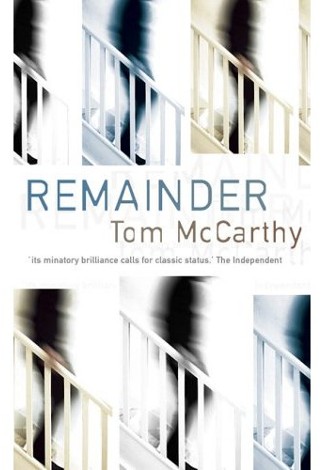
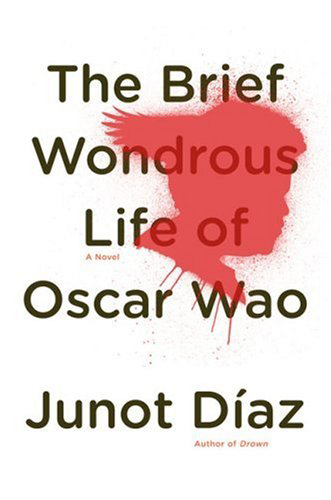
- The Brief Wondrous Life of Oscar Wao—Junot Díaz
- The Yiddish Policemen’s Union—Michael Chabon: We didn’t like this book and are frankly astounded at all the praise it’s garnered.
- The Savage Detectives—Roberto Bolaño: It’s in a stack waiting to be read. The stack is very big though, and the book is very big, so, who knows (in all likelihood it will beat out last year’s reader fave, Pynchon’s impossibly large Against the Day).
- Tree of Smoke—Denis Johnson: We loved it. Top pick of the year. Very divisive, strangely–just read through the Amazon reviews.
- Then We Came to the End—Joshua Ferris
- No One Belongs Here More Than You—Miranda July: Oh my gosh. Seriously? Really? I read half of this at a Barnes & Noble, no exaggeration. I sat and drank coffee and read it. I’m not saying that a book has to take a while to read in order to have weight or substance, but in this particular instance, no, nothing, fluff. This is the kind of thing that people who quit reading after high school mistake for literature.
- On Chesil Beach—Ian McEwan: The library has this on CD; I’ll listen to it this summer. I’ve grappled with the first five pages of Atonement too many times to bother, really. And then I saw the movie, and it sucked. So…
- Zeroville—Steve Erickson
- Like You’d Understand, Anyway—Jim Shepard
- Slam—Nick Hornby: We suspect that The Believer‘s readers are partial to Hornby; would they have given another Young Adult novel a nod? We doubt it.
- Divisadero—Michael Ondaatje: Also in the stack.
- Bowl of Cherries—Millard Kaufman: A pamphlet containing the first three chapters was published as an insert in an issue of McSweeney’s. It was pretty funny.
- Varieties of Disturbance—Lydia Davis
- The Absolutely True Diary of a Part-Time Indian—Sherman Alexie: This was fantastic. And it was YA! We rescind our Hornby complaint.
- The Abstinence Teacher—Tom Perrotta
- Call Me by Your Name—André Aciman
- After Dark—Haruki Murakami: Murakami is the writer we wished that we love but we just can’t get into. We remember reading some of his short fiction years ago, in Harper’s and other places, but even The Elephant Vanishes was a trial to get through.
- Darkmans—Nicola Barker
- Diary of a Bad Year—J. M. Coetzee
- Falling Man—Don DeLillo: Dry, self-important, rarely engaging, and not nearly as good as it was pretending to be, Falling Man was only a step above its dark twin, Cosmopolis. Continue reading “The Believer’s 2008 Reader Survey: (What Some Jokers Thought Were) The Best Books of 2007”
Summer Reading List: Tales of Romance
Summer lovin’: have a blast. You don’t have to read harlequin schlock to get romantically fulfilled on the beach this year.
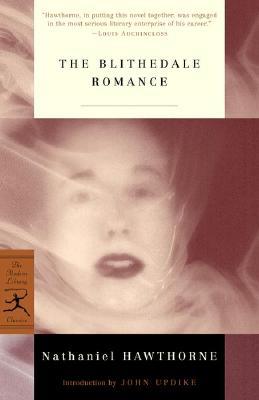
Why not start with an overlooked, under-read classic from American Renaissance master Nathaniel Hawthorne. The Blithedale Romance is a fictionalized account of Hawthorne’s time on Brooke Farm–here called Blithedale–an attempt at a utopian commune founded by artists and free-thinkers. Free lovin’, amorous passions, and, uh, farming. Great stuff–and romance is right in the title.
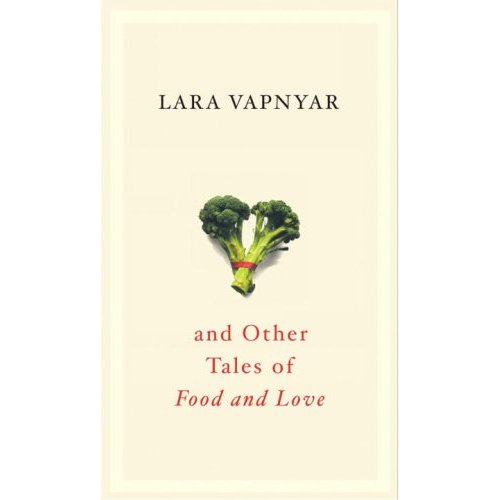
For lighter yet still substantial fare, check out Lara Vapnyar’s Broccoli and Other Tales of Food and Love, a delicious collection of snack-sized short stories (please, please, please forgive this awful extended metaphor). Sly, smart, and occasionally sexy, Vapnyar’s tales of dislocated immigrants continue to linger on the palate long after they’ve been digested (sorry!). The recipe section at the end is the sweetest dessert (ok, I swear I’m done now).
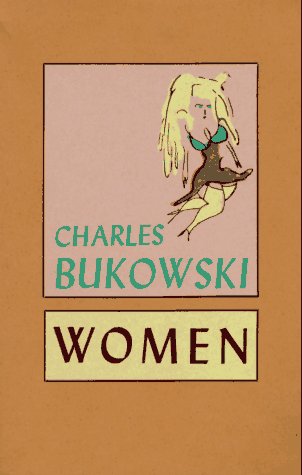
If you like your love stories rougher around the edges, check out Charles Bukowski’s only masterpiece, Women. This rambling novel follows alter-ego Henry Chinaski’s late-in-life successful turn with the ladies. Ugly, unforgiving, honest, and hilarious, Women is one of my favorite books. Also, unlike Henry Miller’s Tropic books, you’ll actually finish this one.
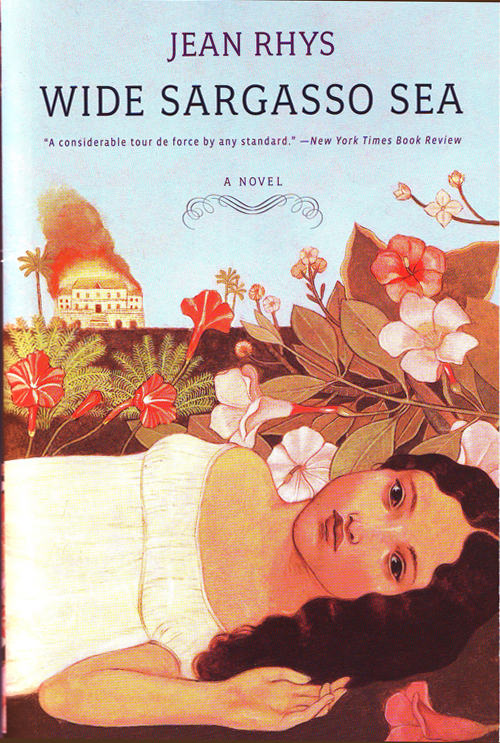
We finally read Charlotte Brontë’s Jane Eyre last summer, and believe it or not, the book is pretty great. Truly a romantic classic, but also a fine comment on gender, class, and social mores in general. And if you like it, check out Jean Rhys’s Wide Sargasso Sea, which tackles the back-story of a certain crazy lady in the attic who didn’t exactly get a voice in Jane Eyre.
Finally, if you want to get very specific, don’t hesitate to search the Romantic Circles website. Plenty of resources and lots of electronic texts: your source for all things Blake, Wordsworth, Coleridge, Shelley, Keats, and more. Good stuff.
Summer Reading List: Tales of Adventure
Indulge yourself this summer by taking a fantastic voyage–literary or literally. To help you get started, check out the following tales of adventure.
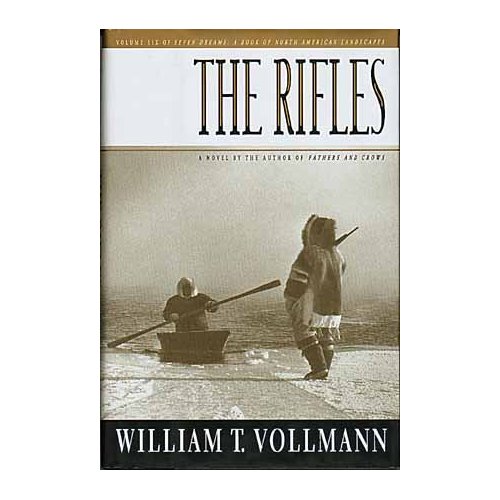
William Vollman’s The Rifles, part of his as-yet-unfinished Seven Dreams series is a brilliant engagement of history, colonialism, identity, and all of those Big Profound Issues that we so adore in our modern literature. It’s also a really cool adventure story, the tale of John Franklin’s nineteenth-century exploration of Inuit territory. Sad, beautiful, breathtaking.
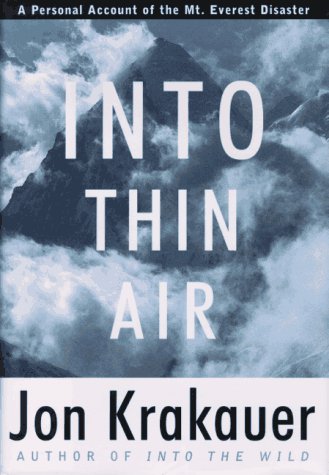
If you prefer your adventure tales uncomplicated by postmodern gambits, check out John Krakauer’s Into Thin Air, a journalistic account of the writer’s 1996 ascent of Mt. Everest, and the disasters that befell his expedition. The word “harrowing” fits well, gentle readers.
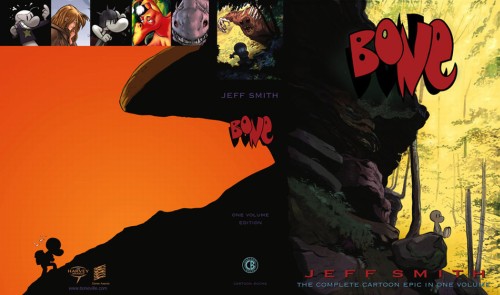
On the lighter-but-not-too-much-lighter side, Jeff Smith’s self-published comic Bone is fantastic; even better, you can get the entire 1300 page run of the whole series in Bone: One Volume Edition. We use the word “delightful” here in an absolutely unpejorative sense, friends: the adventures of Fone Bone, his cousins Phoney Bone and Smiley Bone, and Thorn, Granma Rose, and the Red Dragon are epic in scope yet retain an honest humor that will keep in the most cynical folks laughing. A major literary accomplishment that has been unjustly overlooked.

Also somewhat overlooked is Herman Melville’s Benito Cereno. In Bone, protagonist Fone Bone lugs around a massive copy of Melville’s masterpiece Moby-Dick everywhere he goes–and while that book is undoubtedly a desert island classic, Benito Cereno is an underappreciated gem of a tale. Revealing the strange secret at the heart of this book would spoil it, so suffice to say that the short novel enigmatically investigates slavery and colonialism in ways that beg for closer analysis. Good stuff.
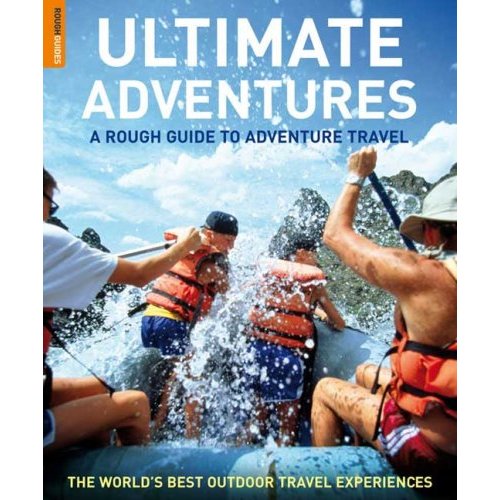
Perhaps, though, you beg for the real thing. In that case, we recommend Ultimate Adventures (from Rough Guides) for all your camel-trekking-in-the-Sahara, rock-climbing-at-Joshua-tree, Pacuare-River-rafting needs. Beautiful photography and tantalizing descriptions are coupled with informative “Need to Know” sections that spell out the who-what-when-where-and-how that will help you get your adventure under way.
Also in the exploratory vein, Where to Go When: The Americas, from DK’s Eyewitness Travel, serves as a kind of travel almanac–the kind that makes you wish you were very, very rich with an excess of free time. If that were the case, you’d be spending nine days in May on the Amazon River, spotting pink river dolphins, gorgeous macaws, and darling squirrel monkeys instead of reading this blog right now. Even if you’re not excessively rich with nothing more pressing to do other than trek the Alaskan fjords, The Americas is fun daydreaming material–perhaps the realist response to Vollman’s Seven Dreams. In any case, Ultimate Adventures and The Americas both come out at the end of this summer, giving you plenty of time to plan that awesome adventure getaway for next year.
Other People’s Lists: The Best Books of 2007

Since we’ve already had our say about the best books of ’07, here’s what some other clowns thought:
The New York Times agreed with us that Denis Johnson’s Tree of Smoke was fantastic. They also give props to Roberto Bolaño’s The Savage Detectives, the reading of which is high on our “to do” list. In their non-fiction superlatives, they highlight music critic Alex Ross’s The Rest is Noise, as do the a couple of the folks over at Slate–although Slate‘s list fails to recognize Tree of Smoke (the book is seriously seriously good good good). The editors of Publisher’s Weekly also cite Johnson’s novel as one of ’07’s best, and they’re one of the few sites out there to mention Don DeLillo’s Falling Man. I’ve just started listening to the audiobook version of Falling Man, and I should be able to weigh in before ’07 is kaput. There’s a better-than-you-would-think-it-would-be write-up at Time of the top-ten graphic novels of 2007. The School Library Journal effectively organizes its list by grade level, a boon to teachers and parents everywhere. That bastion of literary criticism, The Economist, seems to think that Michael Chabon’s The Yiddish Policemen’s Union was something special, although we know better. The writers over at the Village Voice are sensible enough to append the adjective “favorite” instead of “best,” perhaps excusing them from also giving a nod to Chabon’s book (although their mistaking Miranda July for an author cannot be forgiven). When you get sick of reading other people’s list, head over to Book Covers and check out the Best Book Shelves of 2007 (the images in this post are from said list).

Books You Can’t Live Without?
Via the Guardian, a reader list of the Top 100 books you can’t live without. Jane Austen’s Pride and Prejudice tops the list (I’ve never read it but I’ve endured both movie versions)…the Bronte sisters are also well-represented.
Are these people serious?
No William Burroughs, no Alduous Huxley, no Toni Morrison…but Jane Austen shows up no less than three times–and every Thomas Hardy book I can name is on there!
On the whole, the majority of contemporary fiction (novels published in the last 15 years) is total book-club schlock: Dan Brown, Helen Fielding, Alice Sebold, etc. inexplicably co-mingle with Dostoevsky, Melville, Nabokov and García Márquez.
Sheesh. Can we amend this thing?
Every Book Art Garfunkel Has Read over the Past 38 Years
Because you demanded it! We’ve all been dying to know what Art Garfunkel’s been reading over the past 38 years: luckily, when he wasn’t busy starring in Nic Roeg films or walking across America, Art was thoughtful enough to record a list of every book he’s ever read. Link via the AVClub Blog, who always do such a great job digging up such treasure.

Links, Lists, Liars, Laziness
So I have a number of beefs with the end of the year albums and singles lists at Pitchfork and The AV Club, which I will get to momentarily, but a few things first:
Check out the new audioplayer (“Audioklept” on the sidebar) that WordPress has kindly made accessible. I’ll try to update it regularly with awesome-to-moderately awesome tuneage. Now playing: the sweetly saturated sonic screams of Emperor X: the true indie rock.
Ricotta Park has had a makeover. The site looks great, and it looks like Nick will start posting regularly again. Check it out.
Some of the most enjoyable reading I’ve done lately comes from The New York Times Magazine Year in Ideas, via Tomorrowland. Highly recommended!
You can now easily access the marvelous adventures of Dr. Van Keudejep in one place, courtesy of Troglodyte Mignon. Very nice.

Dr. Van Keudejap ’s interrupted suicide – He lived happily ever after, thanks to the tiny troglodyte.
On to the lists. For the past few days, Got to be a Chocolate Jesus has been counting down the year’s best albums. I’m in accord with most of his top five, posted today: TV on the Radio, The Fiery Furnaces, Destroyer, and Joanna Newsom, all faves of mine made the cut, as did The Mountain Goats, a band I’ve never really listened to. If you were to swap out The Mountain Goats with Bonnie ‘Prince’ Billy’s fantastic comeback LP, The Letting Go, I think that would be my top five.
So yes and well now my beefs: first up, like many of you (I’m guessing), I hate hate hate Pitchfork; nonetheless, I visit those jerks daily, as I have for the past seven or eight years. This is the site that gave a “0.0” to The Flaming Lips’ aural odyssey Zaireeka without even listening to it. My major beef with P-fork is that The Fiery Furnaces’ Bitter Tea wasn’t recognized at all; neither did their Top 100 tracks of 2006 find room for Neko Case’s “Star Witness,” which was the best song of 2006. Sure, there were plenty of places where we intersected, but on the whole, their list reaffirms my belief that, in addition to being hacks, these guys have no taste (I blame the editor–some of P-fork’s writers, like Dominique Leone and Drew Daniel have true talent).
Now, The Onion’s AV Club really let me down–generally I love these guys: they’re way less pretentious than most of the music and media blogs, and they tend to have a critical approach fashioned more in the tradition of Creem or classic Rolling Stone. However, they chose The Hold Steady’s Boys and Girls in America–a completely overrated, derivative, and ultimately boring piece of trash–as album of the year. Furthermore, The Decemberists–a band repeatedly given the undeserved descriptor “literary”–also cracked their top ten. Defenders of these loathsome bands usually say that the haters “don’t get” the “meta-cool” of The Hold Steady or the “hyperliterate” Decemberists: they’re wrong: there’s nothing to get: these bands are boring. Just because somebody calls bullshit on something you like doesn’t mean that they “don’t get” it–in the case of the aforementioned hacks, I totally “get it”: these bands lack originality and talent.
Now, on to an artist that I truly “don’t get.” The Liars’ Drum’s Not Dead topped many year end lists, and plenty of my friends loved this album. I didn’t hear what the fuss was about, although I’ll certainly give it a second shot. Maybe it’ll click (that’s how it went down with TV on the Radio). Any fans out there who “get it” and who are willing to explain it?

 Biblioklept