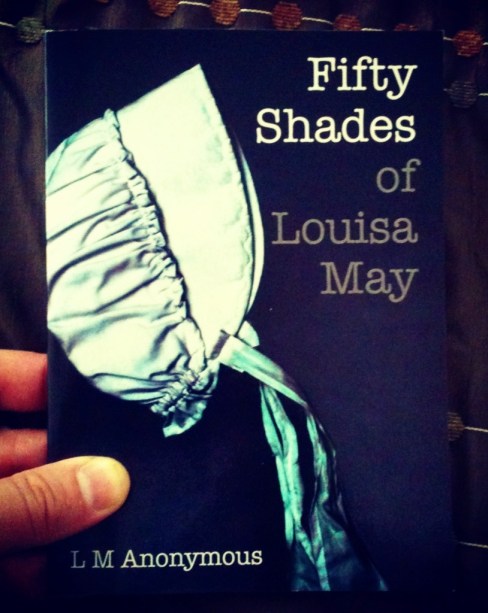
Fifty Shades of Louisa May: A Loving Biography Masquerading as a Smutty Novelty Book

20120818-173921.jpg

Fifty Shades of Louisa May by L.M. Anonymous, is , to all appearances, the kind of cheeky send-up that E.L James’s Fifty Shades of Grey hardly deserves. Satire has the strange, paradoxical power to somehow dignify its target after all, or at least point out how the thing being satirized is, you know, worth actually talking about. However, Louisa May has no proximity to Fifty Shades of Grey, other than the window dressing of its cover and its title, both of which exist somewhere on the thin line between clever and crass. Sure, Louisa May has its share of sex scenes (most are more ridiculous than erotic), but this slim little book is, at its core, really a loving biography of novelist Louisa May Alcott.

The conceit is that Alcott, dipping into her secret vice of a midnight bottle of Madeira, decides to a pen a memoir (that she intends to burn) of her “carnal episodes, some amusing, others touching, but all rife with the sighs and heavings of Love’s labours.” (How the “X-rated woodcuts” that accompany each chapter made their way into the book remains unclear; I suspect that they follow the tradition established in the mashup Pride and Prejudice and Zombies). Organized roughly around Alcott’s difficult life with her transcendentalist parents and their transcendentalist friends, each chapter of Louisa May culminates in an erotic episode, albeit one that our heroine usually witnesses as voyeur and not participant. These episodes tend to involve other transcendentalist figures. In one inspired vignette, Louisa May sneaks out of her house to follow Herman Melville to the Old Manse, where she watches him watch Sophia and Nathaniel Hawthorne get it on:

I heard a small groan from Mr. Melville’s beech tree and saw that his own garments now circled his ankles and he was busily engaged in the art of Onan, his slitted eyes on his mentor, beard shivering with concentration. I looked away quickly—even in my youth I knew that such solitary activity must remain unwitnessed.

The Hawthornes let out a quivering scream, Nathaniel’s voice as high pitched as his wife’s as he rose from his chair to finish the work that his wife had begun. Thus spent, Sophia lay back in his arms. The ever-fastidious Mr. Hawthorne reached out with one hand to set to reordering his manuscript pages.

Mr. Melville let out a low hoot and sent a frothy fusillade across the yard to strike the windowglass with a furious splash.

“Look, my Dove, it appears to be raining,” Sophia said.

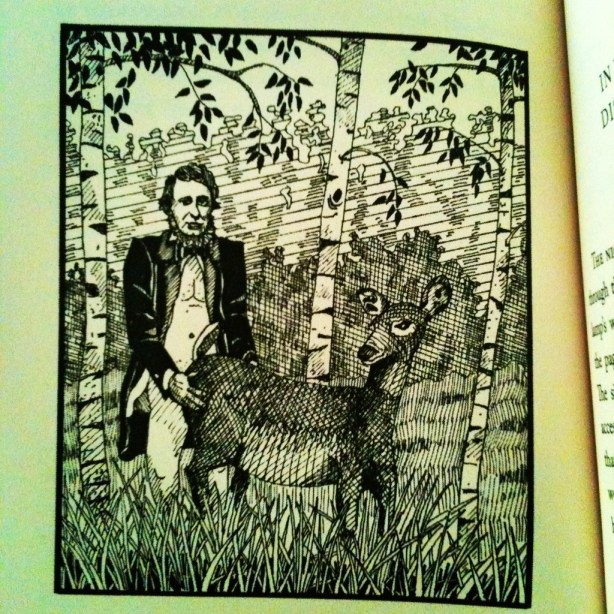
The episode is obviously more comical than erotic, its style—indeed the style of the entire book—a strange mashup of Alcott’s own rhythms and the diction of Victorian smut. There’s something joyously silly in the way L.M. Anonymous throws together various transcendentalists into would-be erotic interludes; when our heroine describes Fruitlands founder Charles Lane jacking off by moonlight, the whole thing feels like a big dirty in-joke for those of us who love this period of American history and literature. And sure, the jokes can be very crude—here’s Henry David Thoreau, nature lover:
20120818-173927.jpg

L.M. Anonymous (“a well-known writer who prefers the cloak of anonymity to the vulgar embrace of rude fame,” according to the back of the book) seems to know his/her history (and attending rhetorical styles) fairly well. I’d have to guess that the author is, if not an Alcott scholar, then at least a passionate enthusiast—because what stands out most about Fifty Shades of Louisa May isn’t the smut but the internal conflicts of our narrator Louisa May.

In Anonymous’s imagination, Alcott is an embittered soul who has never forgiven her father for his foolishness, nor gotten over the fact that she’s the sole source of income for the Alcotts. She badmouths her books as unserious trash, bemoaning that she could do more:

Too often I have found myself diminished by the company of Famous Men to praise them. Had I been but relieved of the burden of supporting the entire legions of Alcotts with my earnings, I could have written novels and poems to equal their best—of that I am most confident. Instead of greatness, I lingered at the Trough of Rubbish too long, achieving only a shining of tin, not the glimmering of gold. But it is too late for me to be concerned with such matters. Time sorts out all writers, revealing each for what they truly were. I only hope that I shall be remembered as much for what I did not achieve as for what I did.

There’s so much tenderness here: Anonymous’s love and respect for his/her subject is plain. The author also seems to write through the book, through the narrator in this passage, as if acknowledging, in some metatextual move, the book’s own novelty status, pointing out that the book, a shaky Grey cash-in, is in some way a part of the Trough of Rubbish, but also that there’s more here too.

I read Fifty Shades of Louisa May in one short sitting, and found it at times amusing, if not especially erotic. I was prepared to to write it off as a silly novelty book—which perhaps it is—but there’s also a real love—and understanding—for Louisa May Alcott that comes through here. Who is it for? I’m not really sure. I’m going to guess that Fifty Shades of Grey fans will be disappointed, and fans of Little Women and its sequels will find their beloved tome trashed by Alcott herself (or at least her character). The book might work best as a primer to the American Renaissance, although I’m not sure which professor would be brash enough to stick this on her syllabus. My hope would be that Grey fans might find in Louisa May an inroad into better writers; at minimum though, they’ll at least be exposed to prose far superior to E.L. James’s trough of rubbish.

Fifty Shades of Louisa May is new in trade paperback from OR Books.
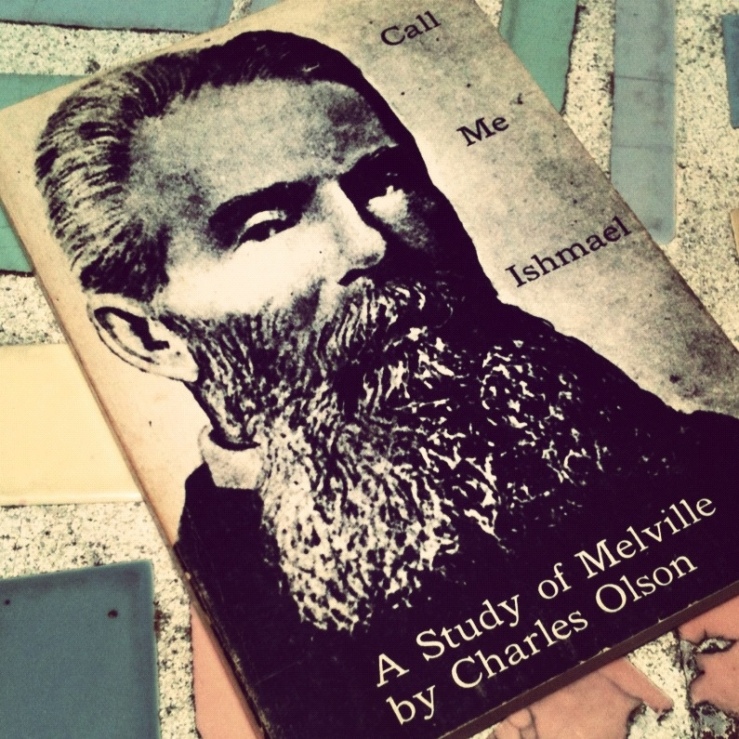
“Half Horse Half Alligator” — I Review Charles Olson’s Inimitable Melville Study, Call Me Ishmael

20120616-141629.jpg

The classical Greeks understood that literature is a form of competition. The eminent literary critic Harold Bloom folded a bit of Freudian psychology into this insight, describing the “anxiety of influence” that lurks beneath the impetus to write, the motivation to enter into an agon with the history of letters, to Oedipally assassinate—or at least assimilate—one’s literary forebears. To put this another way: What does it take to write after, say, The Odyssey? How does one answer to The Book of Job? The gall to write after Don Quixote, after Shakespeare, after Dostoevsky, after George Eliot . . .

What about Moby-Dick? What are the possibilities of even writing about Moby-Dick? (One thinks here of Ishmael’s own futile attempts to measure whales). How could Melville write after Job? After Lear? After Moby-Dick? How did Melville assimilate the texts that presented the strongest anxieties of influence in his opus? Could Melville survive the wreckage of The Pequod? These are the questions that poet-critic Charles Olson tackles—sometimes directly, sometimes obliquely, and always with brisk, sharp language—in Call Me Ishmael, his study of Melville and Moby-Dick.

Here’s one answer to my list of questions. It comes early in Olson’s book:

The man made a mess of things. He got all balled up in Christ. He made a white marriage. He had one son die of tuberculosis, the other shoot himself. He only rode his own space once—Moby-Dick. He had to go fast, like an American, or he was all torpor. Half horse half alligator.

Melville took an awful licking. He was bound to. He was an original, aboriginal. A beginner. It happens that way to the dreaming men it takes to discover America . . . Melville had a way of reaching back through time until he got history pushed back so far he turned time into space. He was like a migrant backtrailing to Asia, some Inca trying to find a lost home.

We are the last “first” people. We forget that. We act big, misuse our land, ourselves. We lose our own primary.

Melville went back, to discover us, to come forward. He got as far as Moby-Dick.

This passage illustrates Olson’s forceful, often blunt prose, the kind of language that cracks directly at Melville’s own impossible prose in Moby-Dick. I think here of the critic James Wood’s notation in his essay “Virginia Woolf’s Mysticism” that

The writer-critic, or poet-critic, has a competitive proximity to the writers she discusses. The competition is registered verbally. The writer-critic is always showing a little plumage to the writer under discussion. If the writer-critic appears to generalize, it is because literature is what she does, and one is always generalizing about oneself.

Olson may generalize as he shows a little plumage to master Melville, cutting through huge swaths of history and making poetic leaps into strange similes, but Call Me Ishmael is ultimately keenly attenuated to detail, to the processes of Melville’s constructions at the historical, economic, psychological, religious, and, yes, literary level. Although a slim 119 pages in my 1947 City Lights edition, Call Me Ishmael nevertheless vividly conveys the sources Melville synthesized to create Moby-Dick.

The book begins with an unsourced account of the whaleship Essex, attacked and destroyed by a sperm whale in the Pacific in 1820, a year after Melville’s birth. Olson trusts his readers to connect The Essex to The Pequod. Unlike so much literary scholarship, Olson’s Ishmael doesn’t torture every element of the text into overwrought explications. He provides an overview of the importance of whaling-industry-as-world’s-fuel source in a chapter that reads more like a prose poem than a stuffy history book, and then, in a chapter appropriately titled “Usufruct,” offers up entries from Melville’s own journals as primary evidence of the material that led to Moby-Dick. Olson rarely sticks his nose in here, letting the reader synthesize the selections.

Olson then plumbs Moby-Dick’s literary roots, delving into Shakespeare, particularly Lear and Antony and Cleopatra. He attends to Melville’s own annotations to Shakespeare, and then points out Melville’s literary/political condensation:

As the strongest force Shakespeare caused Melville to approach tragedy in terms of the drama. As the strongest social force America caused him to approach tragedy in terms of democracy.

It was not difficult for Melville to reconcile the two. Because of his perception of America: Ahab . . .

Ahab is the FACT, the Crew the IDEA. The Crew is where what America stands for got into Moby-Dick. They’re what we imagine democracy to be. They’re Melville’s addition to tragedy as he took it from Shakespeare. He had to do more with the people than offstage shouts in a Julius Caesar. This was the difference a Declaration of Independence made.

The Shakespeare section of Call Me Ishmael marvels: Olson’s perceptive powers simultaneously enlighten and make seemingly-familiar territory dark, strange. He then moves into a discussion of post-Moby Melville, a man perhaps crushed by his own achievement—not by any financial success, no, definitely no, but the metaphysical success. Like a Moses, Melville had found the god he so desperately needed:

Melville wanted a god. Space was the First, before time, earth, man. Melville sought it: “Polar eternities” behind “Saturn’s gray chaos.” Christ, a Holy Ghost, Jehovah never satisfied him. When he knew peaces it was with a god of Prime. His dream was Daniel’s: the Ancient of Days, garment white as snow, hair like the pure wool. Space was the paradise Melville was exile of.

When he made his whale he made his god. Ishmael once comes to the bones a Sperm whale pitched up on land. They are massive, and his struck with horror at the “antemosaic unsourced existence of the unspeakable terrors of the whale.”

When Moby-Dick is first seen he swims a snow-hill on the sea. To Ishmael he is the white bull Jupiter swimming to Crete with ravished Europa on his horns: a prime, lovely, malignant white.

Olson agrees with an 1856 journal entry by Nathaniel Hawthorne that he cites at length: Melville “can neither believe, nor be comfortable in his unbelief.” In Olson’s analysis, after having found god-in-the-whale, Melville plummets into an existential crisis. He gives over to his inner-alligator, torpid, enervated, numb, but still fierce and potent and monstrous. “He denied himself in Christianity,” writes Olson, linking the downward spiral of Melville’s career and family life to this religion.

To this end, Olson is too dismissive of Melville’s later work; when he can find nothing of the “old Melville” to praise in Benito Cereno, Bartleby, or Billy Budd, it’s almost as if he’s willfully ignoring evidence that contradicts his thesis. These are marvelous books, and if they can’t win a contest against Moby-Dick, it’s worth pointing out that little of what’s been written after that book can.

And yet we can write after Melville; we can even write on Melville. The will and vitality of Olson’s forceful, intelligent prose opens a way, or at least exemplifies a way. At the same time, paradoxically, a reading of Call Me Ishmael seems to foreclose the need, if not the possibility, of reading another study of Moby-Dick. This statement is not meant to be a knock against Melville scholarship. Here’s the thing though: life is short, time is limited, and if one plans to read a book about Moby-Dick, it should be Olson’s Call Me Ishmael. It’s great, grand stuff.

Nathaniel Hawthorne on Herman Melville: “He can neither believe, nor be comfortable in his unbelief”

Melville, as he always does, began to reason of Providence and futurity, and of everything that lies beyond human ken, and informed me that he “pretty much made up his mind to be annihilated”; but still he does not seem to rest in that anticipation; and, I think, will never rest until he gets hold of a definite belief.

It is strange how he persists — and has persisted ever since I knew him, and probably long before — in wandering to-and-fro over these deserts, as dismal and monotonous as the sand hills amid which we were sitting. He can neither believe, nor be comfortable in his unbelief; and he is too honest and courageous not to try to do one or the other.

If he were a religious man, he would be one of the most truly religious and reverential; he has a very high and noble nature, and better worth immortality than most of us.

From Nathaniel Hawthorne’s journal entry for November 20, 1856; I encountered the quote in Charles Olson’s study of Melville, Call Me Ishmael.


Five Favorite Fictional Mothers

Happy Mother’s Day! Sure, it’s a marketing scam, but we all love moms, right?

Fascinating moms populate literary fiction, and there’s no shortage of great baddies, evil stepmothers, and distant headcases in our favorite literature—but we thought we’d focus instead on some of the moms that seem to be, you know, really great moms.

(See also: Five Favorite Fictional Fathers, Five Favorite Fictional Sons (the daughters list is surely round the bend)).

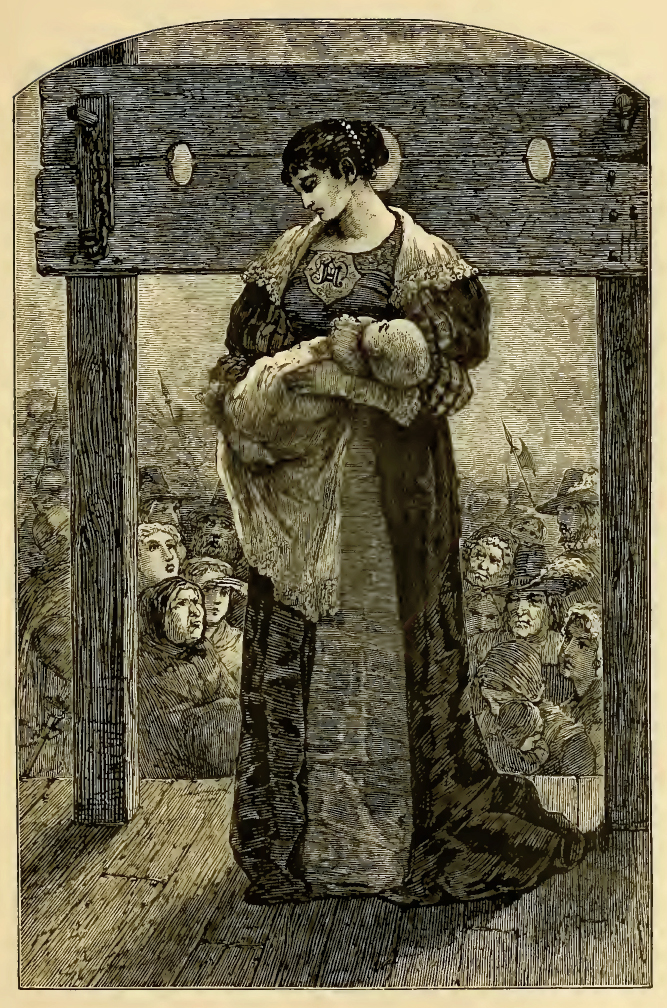
“Hester Prynne & Pearl before the stocks”, an illustration by Mary Hallock Foote from an 1878 edition of The Scarlet Letter

1. Hester Prynne, The Scarlet Letter (Nathaniel Hawthorne)

Hester Prynne is a bundle of contradictions—sin and salvation, radical freedom and reactionary repression, hope and despair—all bound to a deeply patriarchal society that had to control women’s bodies at all turns. Fortunately, there’s no analog for the Puritans’ judgmental, shame-based behavior in our own society (har har). Hester and her daughter Pearl, living in a cottage outside of Boston, are outside the dominant social order. It’s a form of punishment that paradoxically frees the pair, allowing Pearl to grow into a kind of nature spirit—impish and willful, to be sure, but also artistic and able to express herself. Although Pearl is the human doubling of Hester’s titular letter, she’s ultimately no badge of shame, but rather a treasure in her mother’s eyes.

2. Penelope, The Odyssey (Homer et al.)

Patient Penelope weaving and unweaving her husband’s shroud—is she the faithful wife, waiting for Odysseus who’s having adventures asea? Or is she cunningly keeping her son safely alive from the predatory suitors who would certainly want to get him out of the way ASAP. Penelope is an extraordinary and ambiguous figure, but one thing is clear: she loves her son Telemachus.

3. Molly Bloom, Ulysses (James Joyce)

Speaking of Penelope . . . Molly might not be the most faithful wife, but damn if she isn’t a hot mama.

4. Ma Joad, The Grapes of Wrath (John Steinbeck)

Ma Joad never gets a first name in Grapes—she’s an elemental matriarchal force that keeps the family together against every kind of pain. The final scene of this novel is utterly amazing. When Rose of Sharon’s daughter dies in childbirth, Ma Joad directs the mother to nurse a man dying from hunger. All the while, a flood of epic proportions looms. Ma Joad’s determination to live transcends Darwinian impulses here; against the backdrop of infanticide, economic and social genocide, and natural disaster, she still directs her family to a loving, Emersonian course of action.

5. Grendel’s mother, Grendel (John Gardner)

In John Gardner’s fabulous retelling of the Beowulf saga from Grendel’s POV, we find a deeply alienated young man who, try as he might, cannot communicate with the plants and animals around him. Grendel should be a thing of nature, but he is a thinking thing, a thing with a conscience, a soul. He can understand men but they cannot understand him. In one of the book’s saddest conceits, Grendel cannot communicate through speech with his mother, who in many senses seems a creature apart from him. Gardner here dramatizes the radical alienation that all children must feel at some point for their mothers, an alterity grounded in the paradox that, hey, your mom gave birth to you—you came out of her, metaphorically, sure, but also, like, really. Even though Mama Grendel can’t speak to her son, she protects and lovingly cares for him, splitting a few skulls here and there in the process. Motherhood is tough.

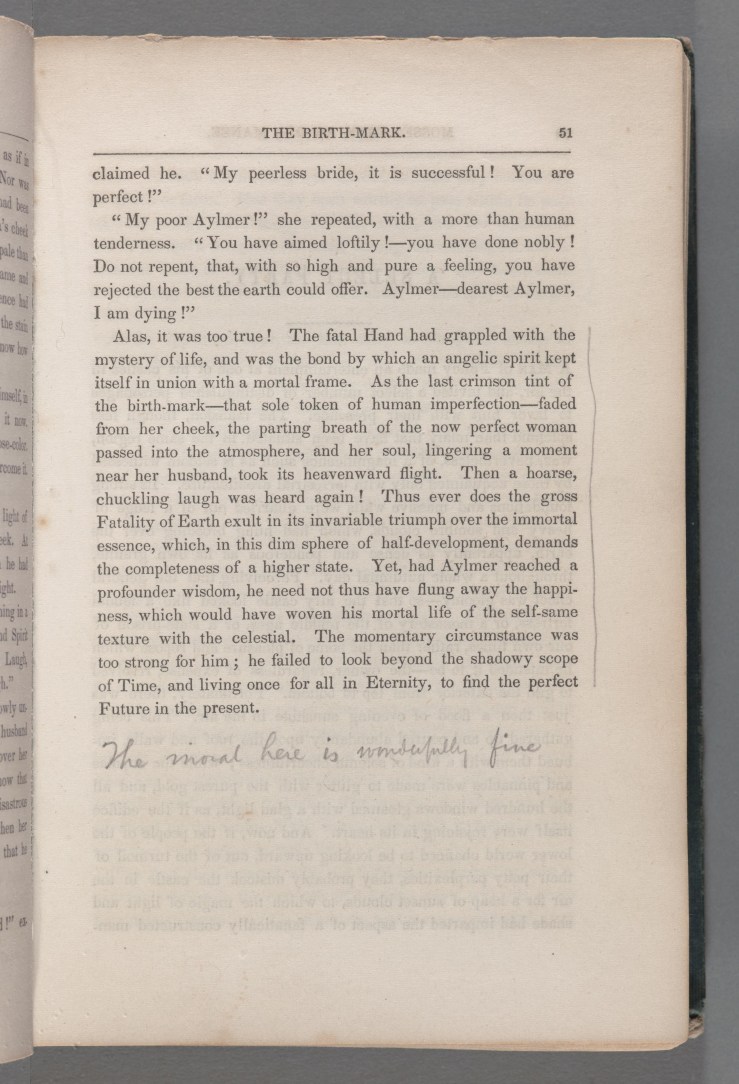
“The Moral Here Is Wonderfully Fine” — Melville Annotates Hawthorne

Herman Melville’s markings and annotations on the last page of Nathaniel Hawthorne’s short story “The Birth-mark.” From Melville’s Marginalia Online.

Books I Didn’t Read in 2011 (And Books I Will Try to Read in 2012)

Okay. So obviously a list of the books I didn’t read in 2011 would be, y’know, long.

This post is about the books I set out to read, tried to read, wanted to read, abandoned, neglected, acquired and thought looked interesting, etc. It’s also about what I want to—what I plan to—read in 2012.

20111228-115819.jpg

A reasonable starting place: I wrote a post in early January of this year detailing the books I would try to read in 2011. I actually read most of the books I named in that post. But:

I failed to read past page 366 of Adam Levin’s incredibly long novel The Instructions, although I think I was a bit too harsh in my semi-review. Chalk it up to exhaustion.

I failed to even begin to try to read William Gaddis’s incredibly long novel JR. (But I swear to read it one year. Not next year, but maybe the year after?).

I failed to read past the first chapter of Katherine Dunn’s Geek Love.

I read most of the Tintin collections I picked up last year, but I didn’t get to volumes 5 or 6.

20111228-115848.jpg

Moving beyond that early post, books that I recall abandoning (although I’m sure there must be more):

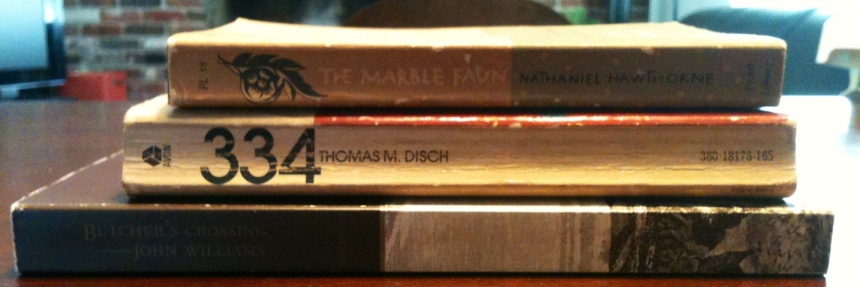
I abandoned Nathaniel Hawthorne’s Italian romance The Marble Faun after about 30 pages.

I abandoned 334 by Thomas Disch after about 50 pages. Somehow simultaneously dense and loose, it struck me as intensely imagined and sloppily composed.

I abandoned John Williams’s Butcher’s Crossing after the first chapter; it was a great opening chapter, but I thought it was going to be, I don’t know, more like Blood Meridian.

I also abandoned Chad Harbach’s big book The Art of Fielding (after 100 pages) because it was lame (notice it’s not pictured above because I traded in that sucker), but I had a nice dialog with some readers who responded to a post I wrote about abandoning it, so that was a plus.

20111228-115828.jpg

Books I bought in 2011 that I aim to read in 2012:

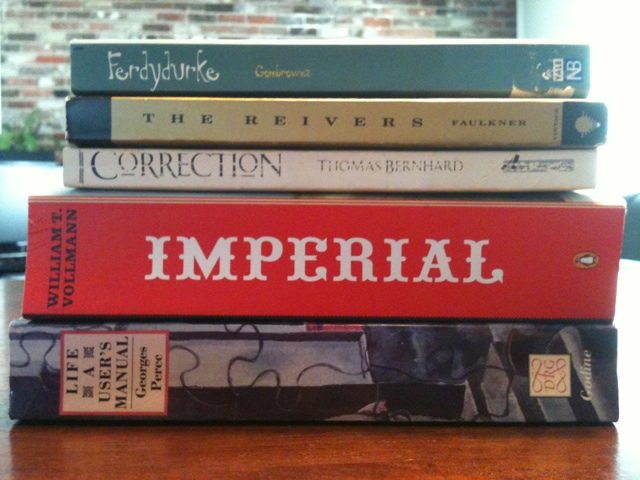
Correction by Thomas Bernhard. Bernhard was a repeated suggestion from readers in the aforementioned Harbach post/rant, and he was apparently a huge influence on W.G. Sebald, so, yes, looking forward to this.

The Reivers by William Faulkner. I read A Light in August this year and reread most of Go Down, Moses. My plan is to read one Faulkner a year for the next ten years.

Ferdydurke by Witold Gambrowicz. I struggled to make it through Gombrowicz’s bizarre jaunt Trans-Atlantyk, but once the novel taught me how to read it, I was enchanted by its strange humor and frenetic syntax. Over some beer and wine, I had a conversation about Ferdydurke with my father-in-law’s priest who is Polish. His pronunciation of Ferdydurke should win an award for charm.

I will read Georges Perec’s big book Life: A User’s Manual.

I have already promised to read William Vollmann’s Imperial.

There are many, many more, of course (too many, really).

20111228-115835.jpg

Books people sent me to read and review that look really cool that I will be reading and reviewing at some point in the very near future:

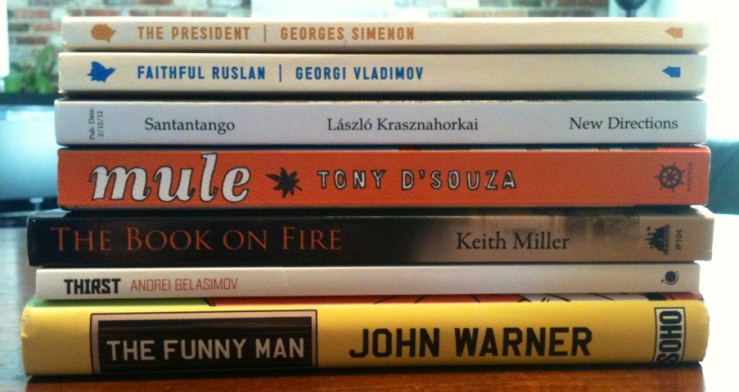
Satantango by László Krasznahorkai: I will read this and review this in the very near future.

The Funny Man by John Warner: Comedy, drugs, celebrity culture.

The Book on Fire by Keith Miller: This one is about a biblioklept. It’s been at the top of my stack for a few months now, but I keep letting myself get distracted.

Thirst by Andrei Gelasimov: Apparently this novella about a maimed alcoholic war vet is funny. (I hate the cover).

Mule by Tony D’Souza: Middle class man sells marijuana cross country. (I love the cover).

Various titles from Melville House’s Neversink line: I’ve got a few in the stack.

Also: I got a Kindle Fire for Christmas. I actually stayed up really late last night reading free public domain books from Hawthorne, Melville, Whitman, and Dickinson; I’ll read a contemporary novel on it this year—Neal Stephenson’s Snow Crash, perhaps? Suggestions welcome!—and try to review both novel and the process of reading the novel on a warm glowing machine.

And: I’m sure there are a ton of novels that will come out in 2012 that I’ll want to read; I’m already primed for Dogma, Lars Iyer’s sequel to Spurious.

So: What are you guys looking forward to reading in 2012? What did you fail to read in 2011?

Read Nathaniel Hawthorne’s Short Story “The Christmas Banquet”

“The Christmas Banquet,” a tale from Nathaniel Hawthorne (from Mosses from an Old Manse; it might be, like, an allegory or something):

“I HAVE HERE attempted,” said Roderick, unfolding a few sheets of manuscript, as he sat with Rosina and the sculptor in the summer-house–“I have attempted to seize hold of a personage who glides past me, occasionally, in my walk through life. My former sad experience, as you know, has gifted me with some degree of insight into the gloomy mysteries of the human heart, through which I have wandered like one astray in a dark cavern, with his torch fast flickering to extinction. But this man–this class of men–is a hopeless puzzle.”

“Well, but propound him,” said the sculptor. “Let us have an idea of him, to begin with.”

“Why, indeed,” replied Roderick, “he is such a being as I could conceive you to carve out of marble, and some yet unrealized perfection of human science to endow with an exquisite mockery of intellect; but still there lacks the last inestimable touch of a divine Creator. He looks like a man, and, perchance, like a better specimen of man than you ordinarily meet. You might esteem him wise–he is capable of cultivation and refinement, and has at least an external conscience–but the demands that spirit makes upon spirit, are precisely those to which he cannot respond. When, at last, you come close to him, you find him chill and unsubstantial–a mere vapor.”

Continue reading “Read Nathaniel Hawthorne’s Short Story “The Christmas Banquet””

Nathaniel Hawthorne’s Book Burning

In his strange story “Earth’s Holocaust,” Nathaniel Hawthorne describes how “this wide world had become so overburdened with an accumulation of worn-out trumpery, that the inhabitants determined to rid themselves of it by a general bonfire.” What ensues is a horrific satire that seems more relevant than ever; the people burn liquor, money, guns, laws, and other sundry items before eventually turning on books—

The truth was, that the human race had now reached a stage of progress so far beyond what the wisest and wittiest men of former ages had ever dreamed of, that it would have been a manifest absurdity to allow the earth to be any longer encumbered with their poor achievements in the literary line. Accordingly a thorough and searching investigation had swept the booksellers’ shops, hawkers’ stands, public and private libraries, and even the little book-shelf by the country fireside, and had brought the world’s entire mass of printed paper, bound or in sheets, to swell the already mountain bulk of our illustrious bonfire. Thick, heavy folios, containing the labors of lexicographers, commentators, and encyclopedists, were flung in, and, falling among the embers with a leaden thump, smouldered away to ashes like rotten wood. The small, richly gilt French tomes of the last age, with the hundred volumes of Voltaire among them, went off in a brilliant shower of sparkles and little jets of flame; while the current literature of the same nation burned red and blue, and threw an infernal light over the visages of the spectators, converting them all to the aspect of party-colored fiends. A collection of German stories emitted a scent of brimstone. The English standard authors made excellent fuel, generally exhibiting the properties of sound oak logs. Milton’s works, in particular, sent up a powerful blaze, gradually reddening into a coal, which promised to endure longer than almost any other material of the pile. From Shakespeare there gushed a flame of such marvellous splendor that men shaded their eyes as against the sun’s meridian glory; nor even when the works of his own elucidators were flung upon him did he cease to flash forth a dazzling radiance from beneath the ponderous heap. It is my belief that he is still blazing as fervidly as ever.

“I am like one of those seeds taken out of the Egyptian Pyramids” — Herman Melville Writes to Nathaniel Hawthorne

From Herman Melville’s June 1851 letter to Nathaniel Hawthorne (read the whole letter here)—

But I was talking about the “Whale” [“Moby-Dick”]. As the fishermen say, “he’s in his flurry” when I left him some three weeks ago. I’m going to take him by his jaw, however, before long, and finish him up in some fashion or other. What’s the use of elaborating what, in its very essence, is so short-lived as a modern book? Though I wrote the Gospels in this century, I should die in the gutter. — I talk all about myself, and this is selfishness and egotism. Granted. But how help it? I am writing to you; I know little about you, but something about myself so I write about myself, — at least, to you. Don’t trouble yourself, though, about writing; and don’t trouble yourself about visiting; and when you do visit, don’t trouble yourself about talking. I will do all the writing and visiting and talking myself — By the way, in the last “Dollar Magazine” I read “The Unpardonable Sin.” He was a sad fellow, that Ethan Brand. I have no doubt you are by this time responsible for many a shake and tremor of the tribe of “general readers.” It is a frightful poetical creed that the cultivation of the brain eats out the heart. But it’s myprose opinion that in most cases, in those men who have fine brains and work them well, the heart extends down to hams. And though you smoke them with the fire of tribulation, yet, like veritable hams, the head only gives the richer and the better flavor. I stand for the heart. To the dogs with the head! I had rather be a fool with a heart, than Jupiter Olympus with his head. The reason the mass of men fear God, and at bottom dislike Him, is because they rather distrust His heart, and fancy Him all brain like a watch. (You perceive I employ a capital initial in the pronoun referring to the Deity; don’t you think there is a slight dash of flunkeyism in that usage?) Another thing. I was in New York for four-and-twenty hours the other day, and saw a portrait of N.H. And I have seen and heard many flattering (in a publisher’s point of view) allusions to the “Seven Gables.” And I have seen “Tales,” and “A New Volume” announced, by N.H. So upon the whole, I say to myself, this N.H. is in the ascendant. My dear Sir, they begin to patronize. All Fame is patronage. Let me be infamous: there is no patronage in that. What “reputation” H.M. has is horrible. Think of it ! To go down to posterity is bad enough, any way; but to go down as a “man who lived among the cannibals”! When I speak of posterity, in reference to myself, I only mean the babies who will probably be born in the moment immediately ensuing upon my giving up the ghost. I shall go down to some of them, in all likelihood. Typee will be given to them, perhaps, with their gingerbread. I have come to regard this matter of Fame as the most transparent of all vanities. I read Solomon more and more, and every time see deeper and deeper and unspeakable meanings in him. I did not think of Fame, a year ago, as I do now. My development has been all within a few years past. I am like one of those seeds taken out of the Egyptian Pyramids, which, after being three thousand years a seed and nothing but a seed, being planted in English soil, it developed itself, grew to greenness, and then fell to mould. So I. Until I was twenty-five, I had no development at all. From my twenty-fifth year I date my life. Three weeks have scarcely passed, at any time between then and now, that I have not unfolded within myself. But I feel that I am now come to the inmost leaf of the bulb, and that shortly the flower must fall to the mould. It seems to be now that Solomon was the truest man who ever spoke, and yet that he a little managed the truth with a view to popular conservatism; or else there have been many corruptions and interpolations of the text. — In reading some of Goethe’s sayings, so worshipped by his votaries, I came across this, “Live in the all.” That is to say, your separate identity is but a wretched one, — good; but get out of yourself, spread and expand yourself, and bring to yourself the tinglings of life that are felt in the flowers and the woods, that are felt in the planets Saturn and Venus, and the Fixed Stars. What nonsense! Here is a fellow with a raging toothache. “My dear boy,” Goethe says to him, “you are sorely afflicted with that tooth; but you must live in the all, and then you will be happy!” As with all great genius, there is an immense deal of flummery in Goethe, and in proportion to my own contact with him, a monstrous deal of it in me.

H. Melville.

P.S. “Amen!” saith Hawthorne.

N.B. This “all” feeling, though, there is some truth in. You must often have felt it, lying on the grass on a warm summer’s day. Your legs seem to send out shoots into the earth. Your hair feels like leaves upon your head. This is the all feeling. But what plays the mischief with the truth is that men will insist upon the universal application of a temporary feeling or opinion.

P.S. You must not fail to admire my discretion in paying the postage on this letter.

Edgar Allan Poe Reviews Nathaniel Hawthorne’s Twice-Told Tales

Edgar Allan Poe reviews Nathaniel Hawthorne’s Twice-Told Tales. Originally published in Graham’s Magazine, April, 1842—

We have always regarded the Tale (using this word in its popular acceptation) as affording the best prose opportunity for display of the highest talent. It has peculiar advantages which the novel does not admit. It is, of course, a far finer field than the essay. It has even points of superiority over the poem. An accident has deprived us, this month, of our customary space for review; and thus nipped in the bud a design long cherished of treating this subject in detail; taking Mr. Hawthorne’s volumes as a text. In May we shall endeavor to carry out our intention. At present we are forced to be brief.

With rare exception–in the case of Mr. Irving’s “Tales of a Traveller” and a few other works of a like cast–we have had no American tales of high merit. We have had no skilful compositions–nothing which could bear examination as works of art. Of twattle called tale-writing we have had, perhaps, more than enough. We have had a superabundance of the Rosa-Matilda effusions–gilt-edged paper all couleur de rose: a full allowance of cut-and-thrust blue-blazing melodramaticisms; a nauseating surfeit of low miniature copying of low life, much in the manner, and with about half the merit, of the Dutch herrings and decayed cheeses of Van Tuyssel–of all this,eheu jam satis!

Mr. Hawthorne’s volumes appear to us misnamed in two respects. In the first place they should not have been called “Twice-Told Tales”–for this is a title which will not bear repetition. If in the first collected edition they were twice-told, of course now they are thrice-told.–May we live to hear them told a hundred times! In the second place, these compositions are by no means all “Tales.” The most of them are essays properly so called. It would have been wise in their author to have modified his title, so as to have had reference to all included. This point could have been easily arranged.

But under whatever titular blunders we receive this book, it is most cordially welcome. We have seen no prose composition by any American which can compare with some of these articles in the higher merits, or indeed in the lower; while there is not a single piece which would do dishonor to the best of the British essayists.

“The Rill from the Town Pump” which, through the ad captandum nature of its title, has attracted more of public notice than any one other of Mr. Hawthorne’s compositions, is perhaps, the least meritorious. Among his best, we may briefly mention “The Hollow of the Three Hills;” “The Minister’s Black Veil;” “Wakefield;” “Mr. Higginbotham’s Catastrophe,” “Fancy’s Show-Box;” “Dr. Heidegger’s Experiment;” “David Swan;” “The Wedding Knell;” and “The White Old Maid.” It is remarkable that all these, with one exception, are from the first volume.

The style of Mr. Hawthorne is purity itself. His tone is singularly effective–wild, plaintive, thoughtful, and in full accordance with his themes. We have only to object that there is insufficient diversity in these themes themselves, or rather in their character. His originality both of incident and of reflection is very remarkable; and this trait alone would ensure him at least our warmest regard and commendation. We speak here chiefly of the tales; the essays are not so markedly novel. Upon the whole we look upon him as one of the few men of indisputable genius to whom our country has as yet given birth. As such, it will be our delight to do him honor; and lest,

Herman Melville on Hawthorne and Shakespeare’s Darkness

A passage from Herman Melville’s appreciation of Nathaniel Hawthorne, “Hawthorne and His Mosses”

Now it is that blackness in Hawthorne, of which I have spoken, that so fixes and fascinates me. It may be, nevertheless, that it is too largely developed in him. Perhaps he does not give us a ray of his light for every shade of his dark. But however this may be, this blackness it is that furnishes the infinite obscure of his background,–that background, against which Shakespeare plays his grandest conceits, the things that have made for Shakespeare his loftiest, but most circumscribed renown, as the profoundest of thinkers. For by philosophers Shakespeare is not adored as the great man of tragedy and comedy.–“Off with his head! so much for Buckingham!” this sort of rant, interlined by another hand, brings down the house,–those mistaken souls, who dream of Shakespeare as a mere man of Richard-the-Third humps, and Macbeth daggers. But it is those deep far-away things in him; those occasional flashings-forth of the intuitive Truth in him; those short, quick probings at the very axis of reality:–these are the things that make Shakespeare, Shakespeare. Through the mouths of the dark characters of Hamlet, Timon, Lear, and Iago, he craftily says, or sometimes insinuates the things, which we feel to be so terrifically true, that it were all but madness for any good man, in his own proper character, to utter, or even hint of them. Tormented into desperation, Lear the frantic King tears off the mask, and speaks the sane madness of vital truth. But, as I before said, it is the least part of genius that attracts admiration. And so, much of the blind, unbridled admiration that has been heaped upon Shakespeare, has been lavished upon the least part of him. And few of his endless commentators and critics seem to have remembered, or even perceived, that the immediate products of a great mind are not so great, as that undeveloped, (and sometimes undevelopable) yet dimly-discernible greatness, to which these immediate products are but the infallible indices. In Shakespeare’s tomb lies infinitely more than Shakespeare ever wrote. And if I magnify Shakespeare, it is not so much for what he did do, as for what he did not do, or refrained from doing. For in this world of lies, Truth is forced to fly like a scared white doe in the woodlands; and only by cunning glimpses will she reveal herself, as in Shakespeare and other masters of the great Art of Telling the Truth,–even though it be covertly, and by

Five Favorite Fictional Mothers

Happy Mother’s Day! Sure, it’s a marketing scam, but we all love moms, right?

Fascinating moms populate literary fiction, and there’s no shortage of great baddies, evil stepmothers, and distant headcases in our favorite literature—but we thought we’d focus instead on some of the moms that seem to be, you know, really great moms.

(See also: Five Favorite Fictional Fathers, Five Favorite Fictional Sons (the daughters list is surely round the bend)).

"Hester Prynne & Pearl before the stocks", an illustration by Mary Hallock Foote from an 1878 edition of The Scarlet Letter

1. Hester Prynne, The Scarlet Letter (Nathaniel Hawthorne)

Hester Prynne is a bundle of contradictions—sin and salvation, radical freedom and reactionary repression, hope and despair—all bound to a deeply patriarchal society that had to control women’s bodies at all turns. Fortunately, there’s no analog for the Puritans’ judgmental, shame-based behavior in our own society (har har). Hester and her daughter Pearl, living in a cottage outside of Boston, are outside the dominant social order. It’s a form of punishment that paradoxically frees the pair, allowing Pearl to grow into a kind of nature spirit—impish and willful, to be sure, but also artistic and able to express herself. Although Pearl is the human doubling of Hester’s titular letter, she’s ultimately no badge of shame, but rather a treasure in her mother’s eyes.

2. Penelope, The Odyssey (Homer et al.)

Patient Penelope weaving and unweaving her husband’s shroud—is she the faithful wife, waiting for Odysseus who’s having adventures asea? Or is she cunningly keeping her son safely alive from the predatory suitors who would certainly want to get him out of the way ASAP. Penelope is an extraordinary and ambiguous figure, but one thing is clear: she loves her son Telemachus.

3. Molly Bloom, Ulysses (James Joyce)

Speaking of Penelope . . . Molly might not be the most faithful wife, but damn if she isn’t a hot mama.

4. Ma Joad, The Grapes of Wrath (John Steinbeck)

Ma Joad never gets a first name in Grapes—she’s an elemental matriarchal force that keeps the family together against every kind of pain. The final scene of this novel is utterly amazing. When Rose of Sharon’s daughter dies in childbirth, Ma Joad directs the mother to nurse a man dying from hunger. All the while, a flood of epic proportions looms. Ma Joad’s determination to live transcends Darwinian impulses here; against the backdrop of infanticide, economic and social genocide, and natural disaster, she still directs her family to a loving, Emersonian course of action.

5. Grendel’s mother, Grendel (John Gardner)

In John Gardner’s fabulous retelling of the Beowulf saga from Grendel’s POV, we find a deeply alienated young man who, try as he might, cannot communicate with the plants and animals around him. Grendel should be a thing of nature, but he is a thinking thing, a thing with a conscience, a soul. He can understand men but they cannot understand him. In one of the book’s saddest conceits, Grendel cannot communicate through speech with his mother, who in many senses seems a creature apart from him. Gardner here dramatizes the radical alienation that all children must feel at some point for their mothers, an alterity grounded in the paradox that, hey, your mom gave birth to you—you came out of her, metaphorically, sure, but also, like, really. Even though Mama Grendel can’t speak to her son, she protects and lovingly cares for him, splitting a few skulls here and there in the process. Motherhood is tough.

“An Earthly Story with a Hellish Meaning” — D.H. Lawrence on The Scarlet Letter

From D.H. Lawrence’s Studies in Classic American Literature, Chapter VII, “Nathaniel Hawthorne and The Scarlet Letter

NATHANIEL HAWTHORNE writes romance.

And what’s romance? Usually, a nice little tale where you have everything As You Like It, where rain never wets your jacket and gnats never bite your nose and it’s always daisy- time. As You Like It and Forest Lovers, etc. Morte D’Arthur.

Hawthorne obviously isn’t this kind of romanticist: though nobody has muddy boots in The Scarlet Letter, either.

But there is more to it. The Scarlet Letter isn’t a pleasant, pretty romance. It is a sort of parable, an earthly story with a hellish meaning.

All the time there is this split in the American art and art- consciousness. On the top it is as nice as pie, goody-goody and lovey-dovey. Like Hawthorne being such a blue-eyed darling, in life, and Longfellow and the rest such sucking- doves. Hawthorne’s wife said she ‘never saw him in time’, which doesn’t mean she saw him too late. But always in the ‘frail effulgence of eternity’.

Serpents they were. Look at the inner meaning of their art and see what demons they were.

You must look through the surface of American art, and see the inner diabolism of the symbolic meaning. Otherwise it is all mere childishness.

That blue-eyed darling Nathaniel knew disagreeable things in his inner soul. He was careful to send them out in disguise.

Always the same. The deliberate consciousness of Americans so fair and smooth-spoken, and the under-consciousness so devilish. Destroy! destroy! destroy! hums the under-consciousness. Love and produce! Love and produce! cackles the upper consciousness. And the world hears only the Love-and- produce cackle. Refuses to hear the hum of destruction under- neath. Until such time as it will have to hear.

The American has got to destroy. It is his destiny. It is his destiny to destroy the whole corpus of the white psyche, the white consciousness. And he’s got to do it secretly. As the growing of a dragon-fly inside a chrysalis or cocoon destroys the larva grub, secretly.

Though many a dragon-fly never gets out of the chrysalis case: dies inside. As America might.

So the secret chrysalis of The Scarlet Letter, diabolically destroying the old psyche inside.

Be good! Be good! warbles Nathaniel. Be good, and never sin! Be sure your sins will find you out..

So convincingly that his wife never saw him ‘as in time’.

Then listen to the diabolic undertone of The Scarlet Letter.

Summer Reading List: Tales of Romance

Summer lovin’: have a blast. You don’t have to read harlequin schlock to get romantically fulfilled on the beach this year.

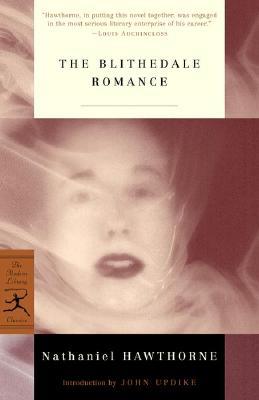
Why not start with an overlooked, under-read classic from American Renaissance master Nathaniel Hawthorne. The Blithedale Romance is a fictionalized account of Hawthorne’s time on Brooke Farm–here called Blithedale–an attempt at a utopian commune founded by artists and free-thinkers. Free lovin’, amorous passions, and, uh, farming. Great stuff–and romance is right in the title.

For lighter yet still substantial fare, check out Lara Vapnyar’s Broccoli and Other Tales of Food and Love, a delicious collection of snack-sized short stories (please, please, please forgive this awful extended metaphor). Sly, smart, and occasionally sexy, Vapnyar’s tales of dislocated immigrants continue to linger on the palate long after they’ve been digested (sorry!). The recipe section at the end is the sweetest dessert (ok, I swear I’m done now).

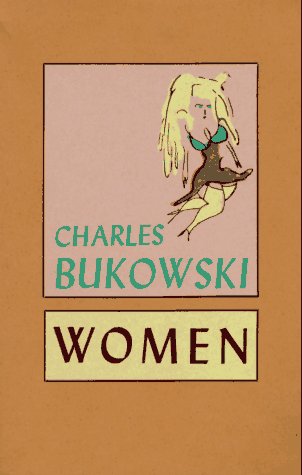
If you like your love stories rougher around the edges, check out Charles Bukowski’s only masterpiece, Women. This rambling novel follows alter-ego Henry Chinaski’s late-in-life successful turn with the ladies. Ugly, unforgiving, honest, and hilarious, Women is one of my favorite books. Also, unlike Henry Miller’s Tropic books, you’ll actually finish this one.

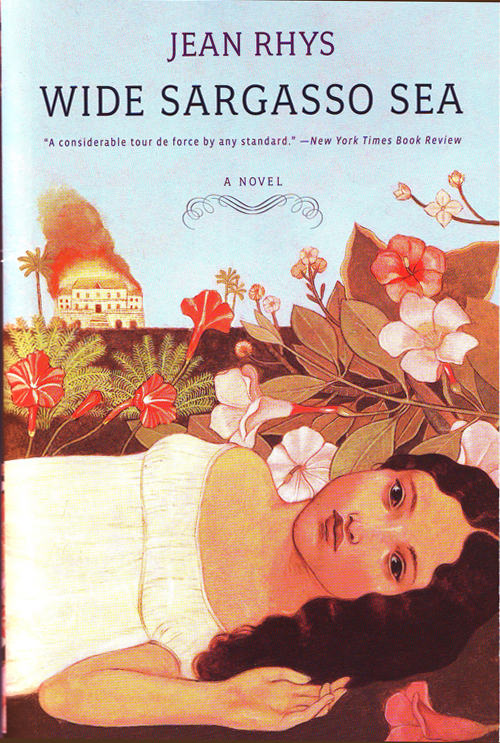
We finally read Charlotte Brontë’s Jane Eyre last summer, and believe it or not, the book is pretty great. Truly a romantic classic, but also a fine comment on gender, class, and social mores in general. And if you like it, check out Jean Rhys’s Wide Sargasso Sea, which tackles the back-story of a certain crazy lady in the attic who didn’t exactly get a voice in Jane Eyre.

Finally, if you want to get very specific, don’t hesitate to search the Romantic Circles website. Plenty of resources and lots of electronic texts: your source for all things Blake, Wordsworth, Coleridge, Shelley, Keats, and more. Good stuff.