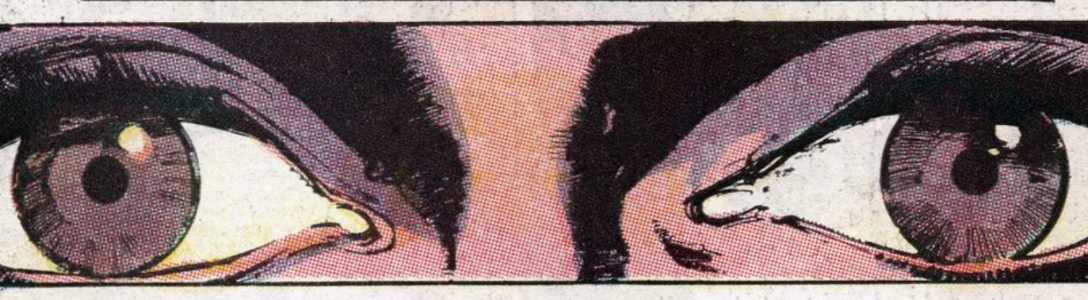
“Fladry” — Ed Skoog

“Fladry”

by

Ed Skoog


Fladry: a line of rope mounted along the top of a fence, from
which are suspended strips of fabric or colored flags that will flap
in a breeze, intended to deter wolves from crossing the fence-line.

USDA National Wildlife Research Center

I am weak and edible. Some human quality
stays weird, alien to the wild, outsiders,
bad sport with spooky habits not just fladry—
other enchantments against order, house paint,
yard art, border fences and the tunnels under borders,
the amen, the wedding ring, the flavored condom.
The wolves are back. I’ve seen them, seen the fladry
ranchers tie, red flags’ flutter to puzzle or annoy,
folk-work tendered back from wood-shadow,
more each year, abjured with clover.
What I like most about the first shot of bourbon
is how it feels like letting go of a grudge.
In the dream, I kill my friend and bury him
lime in the church basement between sump pump
and broken fireplace. On my knees I tile
red stone back to mosaic. Soldiers beat me up
and called me names in my own language,
this one, the one Whitman used to soothe
the dying, limbless, the bleeding, the infected.
Beat me with fists slight more stone
than the shape that holds this pencil.
A house is held together by shapes.
And yet in the ongoing negotiations between
the world where I hold my son and
famine, bombings, hate, prosperity—
two notes, octaves apart
attenuate what’s hidden inside your body
to the invisible. It might help remembering
shadows and not hours. Infinity
also has the contour of a children’s game.
Infants remember fladry, safe in the car seat grasping,
grasping. Some forces are enormous and move
against you, and when you pretend they aren’t
there, surge. Some swing on a hinge
which at night sounds like don’t look back,
don’t look back. Anyone can tie fladry.
See it out riding. I go out at French-horn dawn,
boots in mud, string fladry at intervals,
each tongue labeling the field, calling
beyond language. And if fladry bears
the conditions of a spell, redness of the flag,
the measure between them, it’s flapping
which charms the wolf away, for a term.
Warnings to keep the flock from the wolf’s belly.
Messages for ourselves. See it from there,
turn overall and plaid flannel; we would
tear our own fur to cross these lines.
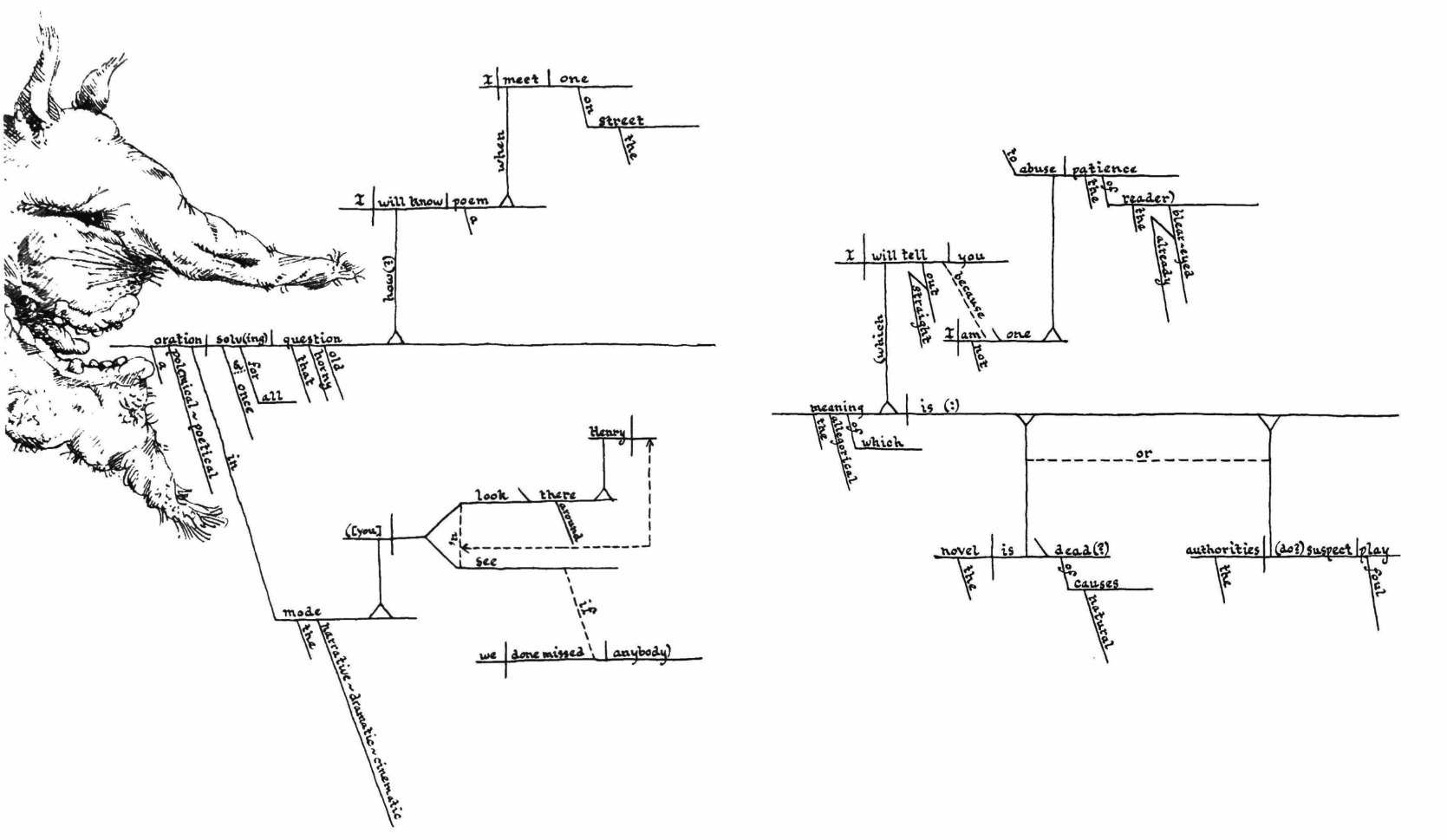
“A Polemical-Poetical Oration in the Narrative-Dramatic-Cinematic Mode” — Peter Michelson

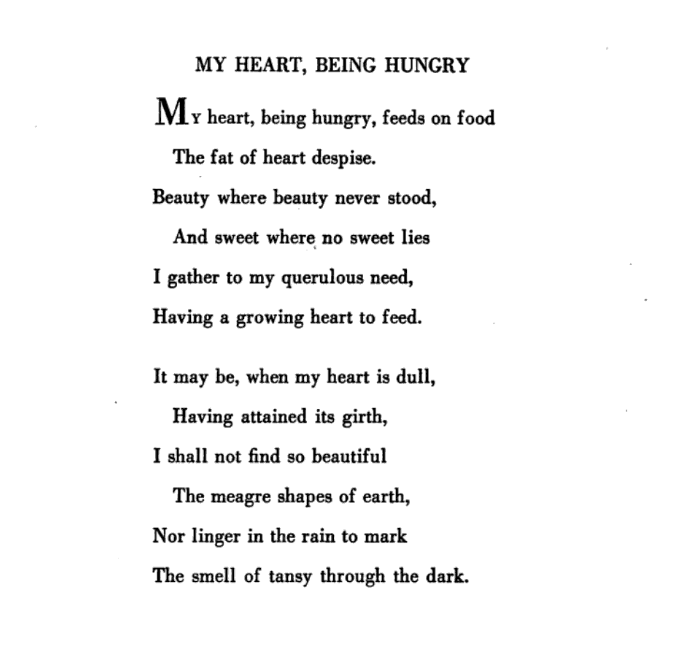
“My heart, being hungry” — Edna St. Vincent Millay

Sharon Olds’ bread

“Bread”

by

Sharon Olds


When my daughter makes bread, a cloud of flour

hangs in the air like pollen. She sifts and

sifts again, the salt and sugar

close as the grain of her skin. She heats the

water to body temperature

with the sausage lard, fragrant as her scalp

the day before hair-wash, and works them together on a

floured board. Her broad palms

bend the paste toward her and the heel of her hand

presses it away, until the dough

begins to snap, glossy and elastic as the torso bending over it,

this ten-year-old girl, random specks of yeast

in her flesh beginning to heat,

her volume doubling every month now, but still

raw and hard. She slaps the dough and it crackles under her palm, sleek and

ferocious and still leashed, like her body, no

breasts rising like bubbles of air toward the surface

of the loaf. She greases the pan, she is

shaped, glazed, and at any moment goes

into the oven, to turn to that porous

warm substance, and then under the

knife to be sliced for the having, the tasting, and the

giving of life.


“Victory” — Denis Johnson

“Victory”

by

Denis Johnson


the woman whose face has just finished breaking
with a joy so infinite

and heavy that it might be grief has won
a car on a giveaway show, for her family,

for an expanse of souls that washes from a million
picture tubes onto the blank reaches

of the air. meanwhile, the screams are packing
the air to a hardness: in the studio

the audience will no longer move, will be caught
slowly, like ancient, staring mammals, figuring

out the double-cross within the terrible progress
of a glacier. here, i am suddenly towering

with loneliness, repeating to this woman’s
only face, this time, again, i have not won.

“The Song of the Demented Priest” — John Berryman

“The Song of the Demented Priest”

by

John Berryman


I put those things there.—See them burn.
The emerald the azure and the gold
Hiss and crack, the blues & greens of the world
As if I were tired. Someone interferes
Everywhere with me. The clouds, the clouds are torn
In ways I do not understand or love.

Licking my long lips, I looked upon God
And he flamed and he was friendlier
Than you were, and he was small. Showing me
Serpents and thin flowers; these were cold.
Dominion waved & glittered like the flare
From ice under a small sun. I wonder.

Afterward the violent and formal dancers
Came out, shaking their pithless heads.
I would instruct them but I cannot now,—
Because of the elements. They rise and move,
I nod a dance and they dance in the rain
In my red coat. I am the king of the dead.

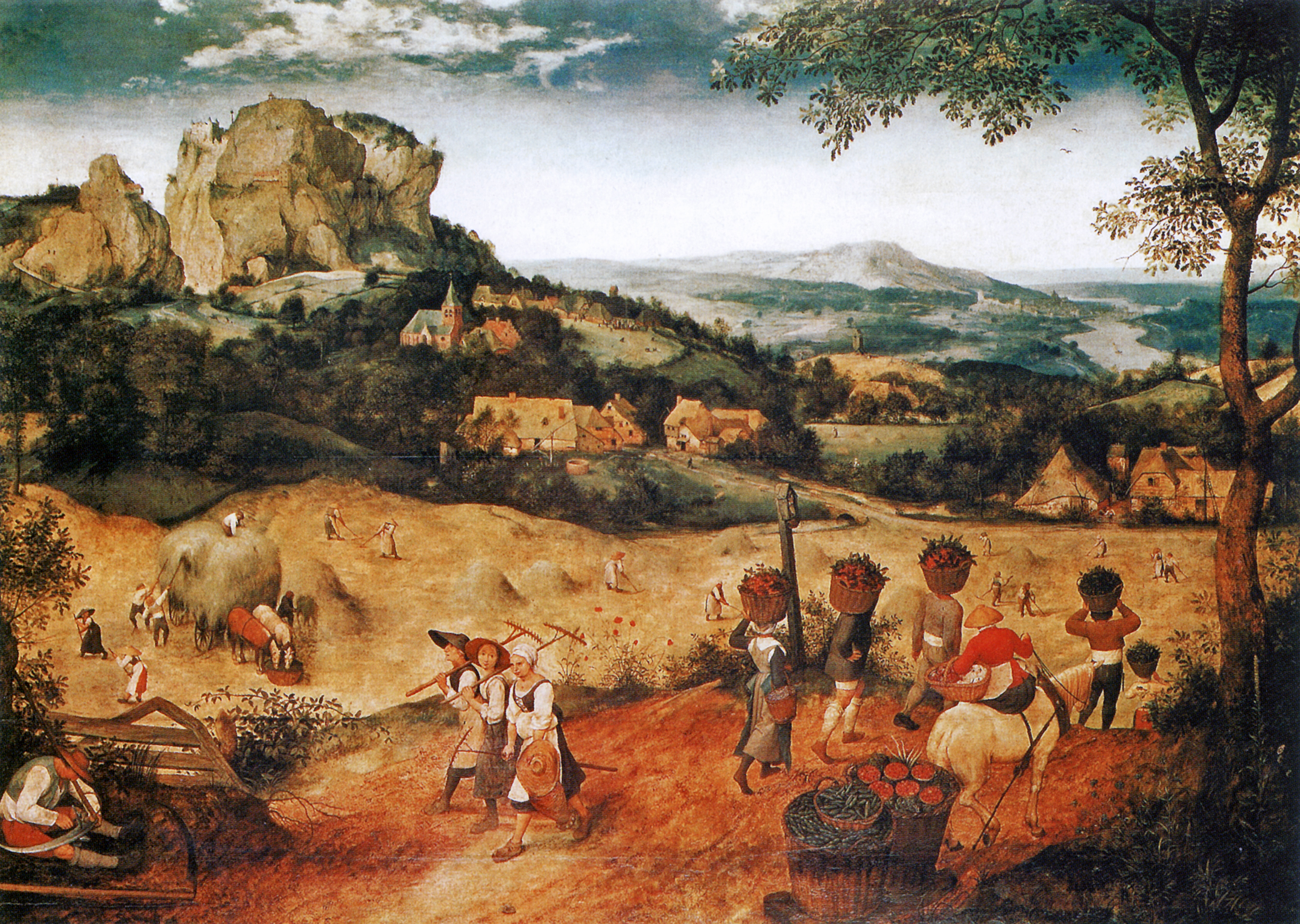
“Haymaking” — William Carlos Williams

“Haymaking”

by

William Carlos Williams


The living quality of
the man’s mind
stands out

and its covert assertions
for art, art, art!
painting

that the Renaissance
tried to absorb
but

it remained a wheat field
over which the
wind played

men with scythes tumbling
the wheat in
rows

the gleaners already busy
it was his own—
magpies

the patient horses no one
could take that
from him


die_heuernte
Haymaking (July), 
1565 by Pieter Bruegel the Elder (c. 1525-1569)


“Of Mere Being” — Wallace Stevens

The Achievements of Capitalism (Donald Barthelme)

The Achievements of Capitalism:

  1. The curtain wall
  2. Artificial rain
  3. Rockefeller Center
  4. Canals
  5. Mystification

From “The Rise of Capitalism” by Donald Barthelme, which you can read in full here. (Or in Sixty Stories, a perfect book).

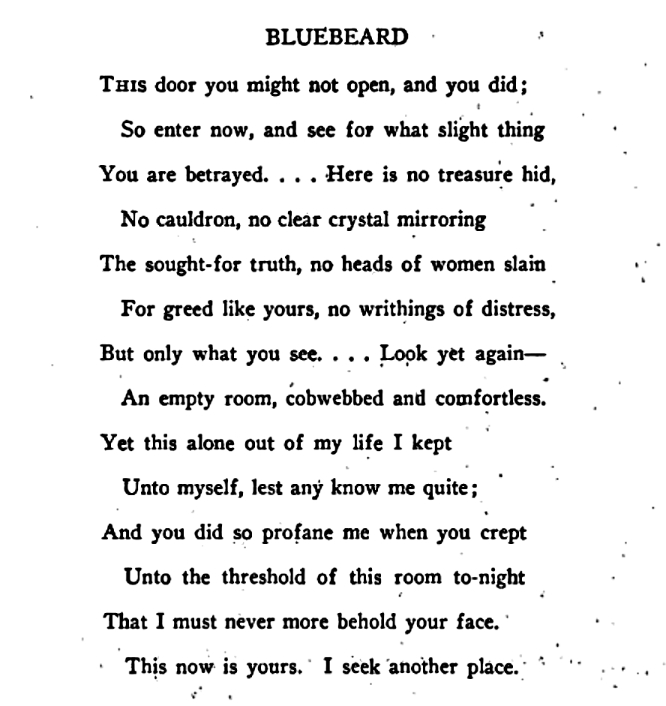
“Bluebeard” — Edna St. Vincent Millay

bluebeard

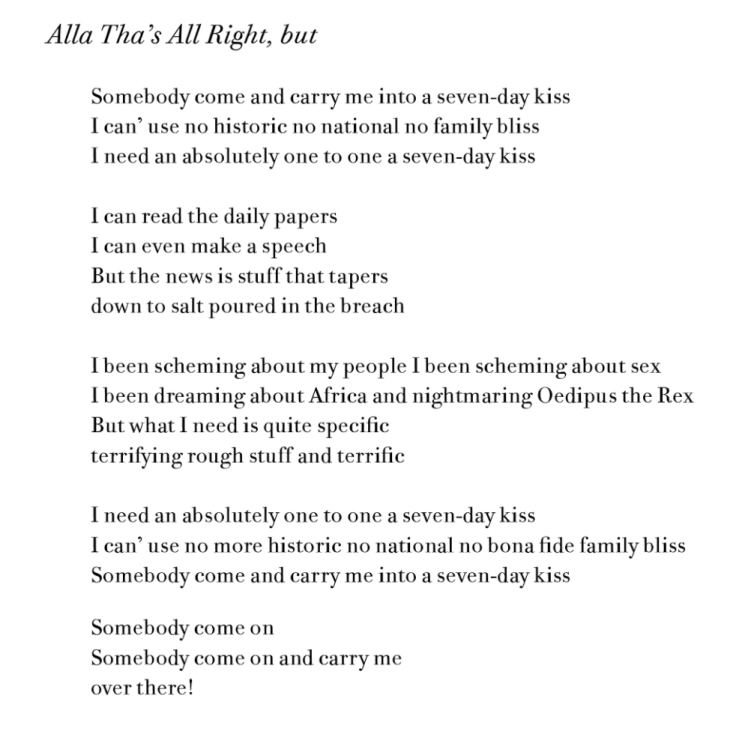
Alla Tha’s All Right, but – June Jordan

june-jordan

“Election Day” — William Carlos Williams”

“Election Day,” William Carlos Williams:

Warm sun, quiet air
an old man sits

in the doorway of
a broken house—

boards for windows
plaster falling

from between the stones
and strokes the head

of a spotted dog

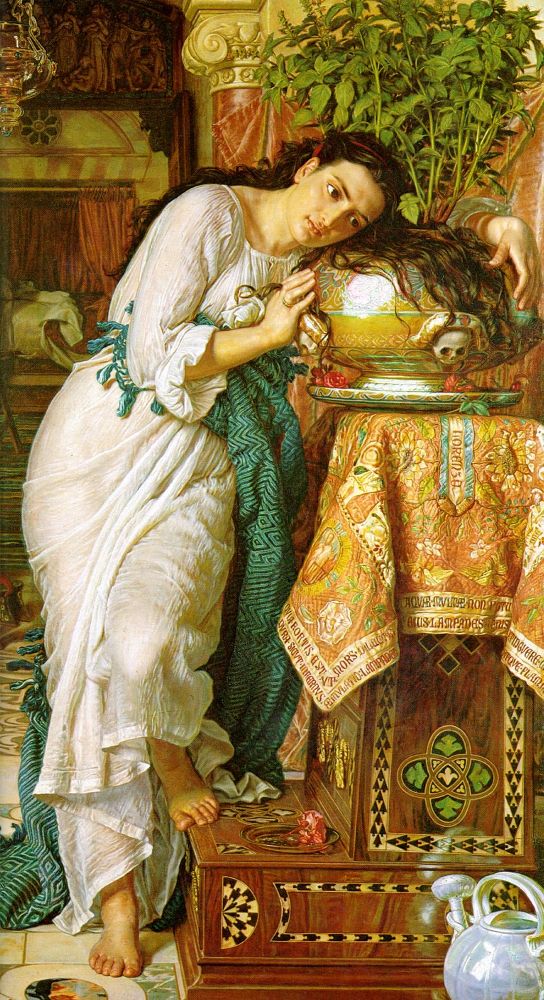
Isabella and the Pot of Basil — William Holman Hunt

isabella-and-the-pot-of-basil-1867


And she forgot the stars, the moon, and sun,
And she forgot the blue above the trees,
And she forgot the dells where waters run,
And she forgot the chilly autumn breeze;
She had no knowledge when the day was done,
And the new morn she saw not: but in peace
Hung over her sweet Basil evermore,
And moisten’d it with tears unto the core.

–John Keats, Isabella, or The Pot of Basil

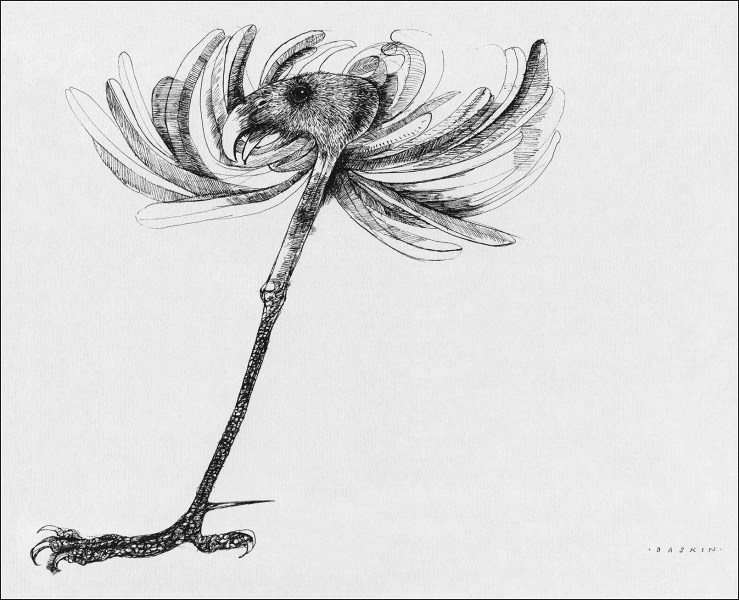
Cave Bird – Leonard Baskin

Cave Bird

From Cave Birds: An Alchemical Cave Drama. Poems by Ted Hughes, illustrations by Leonard Baskin.

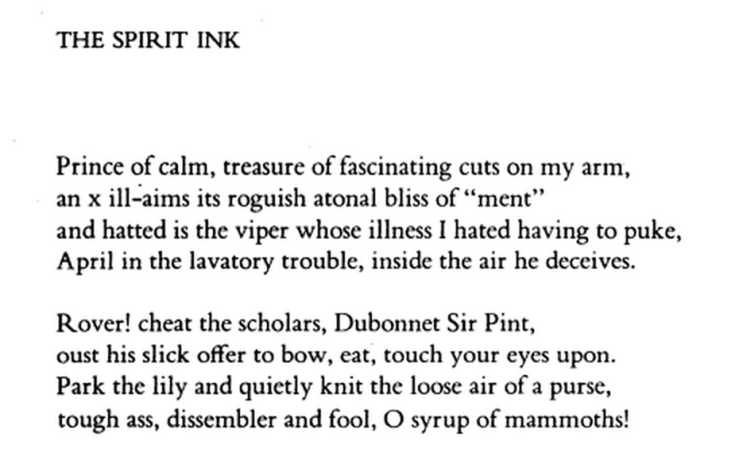
“The Spirit Ink” – Frank O’Hara

Frank O'Hara - The Spirit Ink

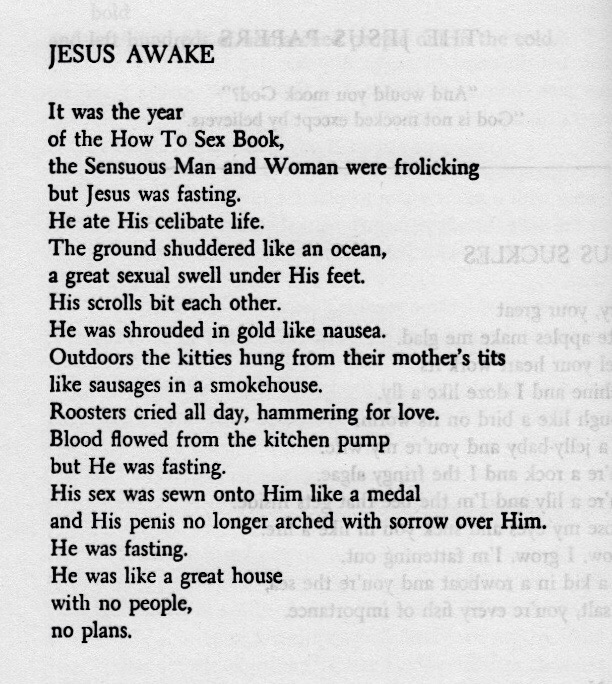
“Jesus Awake” — Anne Sexton

IMG_3721.JPG

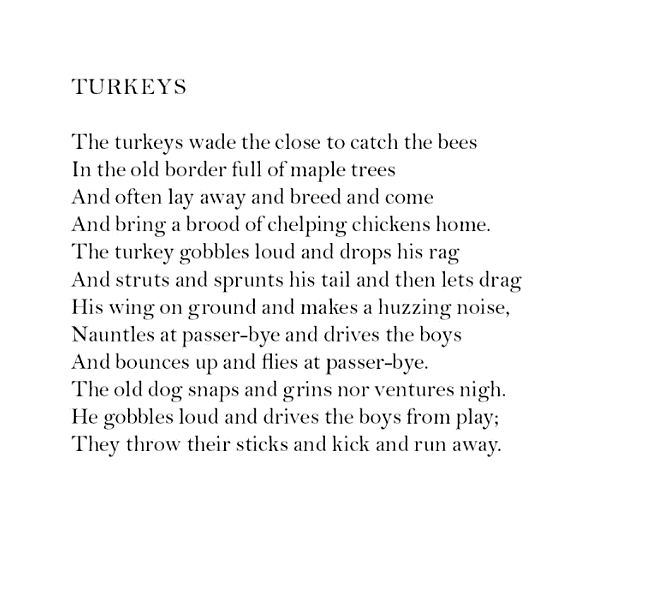
“Turkeys” — John Clare

turkeys