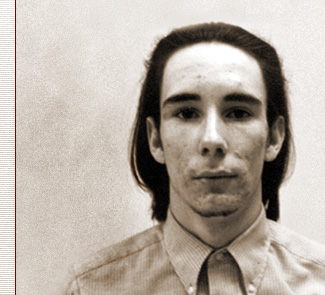
RIP Andrew Sarris

RIP film critic Andrew Sarris, 1928-2012.

Sarris wrote film criticism—meaningful, real writing, not just film “reviews”—for half a century, publishing several books, and writing regularly for first The Village Voice and then The New York Observer. Sarris was one of the earliest proponents in the US of the auteur theory of film (he’s credited with coining the word in his essay “Notes on the Auteur Theory in 1962“), first put forward by Truffaut and other persons active in the French New Wave. In 1971, Sarris got into a good ole fashioned fight with fellow film critic Pauline Kael over the auteur issue when he responded to her Citizen Kane essay “Raising Kane,” contending that, yes, the film was guided by the unique vision of Orson Welles (even if others helped). His response essay is still worth reading.

In his 1968 book The American Cinema: Directors and Directions 1929-1968, Sarris famously named a “pantheon” of 14 top-tier directors: here’s that list:

Charlie Chaplin

Robert Flaherty

John Ford

D.W. Griffith

Howard Hawks

Alfred Hitchcock

Buster Keaton

Fritz Lang

Ernst Lubitsch

F.W. Murnau

Max Ophuls

Jean Renoir

Joseph Von Sternberg

Orson Welles

Sarris later added Billy Wilder to this pantheon.

If you like lists, check out this archive of Sarris’s favorite films by year—from 1958 to 2006.

Like any great critic, whether or not one ultimately agreed with Sarris was beside the point—his scholarship and criticism was insightful and enlightening the kind of writing that frankly makes for better film audiences.

For a more detailed obit, check out Scott Tobias’s piece at AV Club.

RIP Ray Bradbury

RIP Ray Bradbury, 1920-2012.

Thanks for helping teach me how to read.

Here’s Bradbury sharing some writing advice:

RIP Doc Watson

RIP — In Honor of My Desktop PC, 2002-2012

RIP Carlos Fuentes

https://i0.wp.com/hilobrow.com/wp-content/uploads/2012/11/carlos-fuentes-e1352492338103.jpg

RIP Carlos Fuentes, 1928-2012

RIP Levon Helm

What’s there to say? My two year old son and I are listening to Music from Big Pink right now; he’s humming along. He likes to sing. I got into The Band through Bob Dylan, like a lot of people my age—The Basement Tapes, of course—I guess, only to realize that I already knew a lot of the songs. Great music. Levon Helm was clearly the soul of the band (we know he sang all the best Band songs). Dude was rad. He and Garth Hudson played on Deserter’s Songs, Mercury Rev’s last good album. Such a distinctive voice—bright and soulful and deep. “The Night They Drove Old Dixie Down” is one of my favorite songs—complex and sad and strangely triumphant, as good as a Faulkner short story—really better than most—but apples and oranges. Great legacy and great work. RIP Levon Helm.

Harry Crews and Earl Scruggs Interviews to Replay on NPR’s Fresh Air

NPR’s Fresh Air will rebroadcast a 1988 interview with Harry Crews and a 2003 interview with Earl Scruggs today. If you can’t listen live, check out the podcasts (Crews podcast; Scruggs podcast), or download the NPR smartphone app.

From the Crews interview:

I wrote four novels and short stories before I even published anything, and the reason I didn’t publish any of those things was because it wasn’t any good, and the reason it wasn’t any good was because I was trying to write about a world I did not know . . . One night it occurred to me that whatever strength I had was all back in there in Bacon County, Ga., with all that sickness and hookworm and rickets and ignorance and beauty and loveliness. But that’s where it was. It wasn’t somewhere else.

(Thanks to the readers who wrote in about these shows).

RIP Harry Crews — A Rambling Riff on a Southern Great

Harry Crews died today at 76 in Gainesville, FL, where he lived and worked for years.

This isn’t an obituary—I’m sure  you can find them elsewhere (I haven’t looked yet, but they’ll be out there)—it’s more a riff about me than Crews. Solipsistic, narcissistic, sure. Let’s say I feel a sense of unearned pride for the man, a geographical kinship, as if some of his bloody bravura might splatter on me, anoint me, confer on me a glimpse of his strange powers. (And although I would feel this way in any case, I’ll point out that Crews and I shared the same birthday). Maybe I should wait to write, put together a detailed overview of his work, delineate a chronological progression of his life and work . . . But it’s a warm spring day in Florida, I’m three beers down, a small buzz behind my eyes, the whir of the cheap electric fans on my backporch goading me into dim golden memory . . .

I graduated high school in 1997 and went to the University of Florida in Gainesville that fall—just in time to learn that Crews had retired his position in the Creative Writing department (he was also a graduate of the university) that spring. It was disappointing for me.

I’d read a few of Crews’s blistering, blustering novels, dark comic rants about the dirty malfeasance backwood Cracker folk get into after dark, and he’d come to occupy a fabled place in my impressionable mind—a Southern answer to the Bukowski and Henry Miller books I devoured in kind.

I was 18 and dramatically naïve. I honestly thought that I was going to write a Really Great Novel, and I honestly thought that Crews was going to teach me how. In that first semester of college, the poor underpaid graduate student who led the Creative Writing class I took—a class that all but killed a desire to write creatively for years (I write “all but” because I took a second fiction writing class that was the metaphorical nail in the coffin) informed  me that Crews was no longer writer-in-residence (!), that some guy named Padgett Powell had taken up that mantle. This news dispirited me, took some of the wind out of my romantic illusions (without, y’know, properly killing them off). Maybe I’d have stuck it through the program if I thought it might end in a seminar with Crews, it’s hard to say. (I’ll also point out that it took me years to give Padgett Powell a fair read).

I won’t pretend to be sad at the death of Harry Crews: 76 is pretty old if you drank and fought and lived like that man did, and he’s already given more literature to the world than most of us could ever hope to. I was more sad at 18 to learn that I wouldn’t learn from him (not realizing at that age that reading is a way of learning). These statements seem in bad taste as I write them, but I assure you they’re not. You’re being too sensitive. But I do want to connote some reverence for the man, for his work at least, for his tales of rage and poverty, for the truth he sussed out of the swampy south.

Here’s a shift: Barry Hannah, another Southern boy whose work I’ve come to love, was not on my radar until his death in 2010. This isn’t to say I wouldn’t have found his stuff if he hadn’t died then, but I think that we all know what I’m pointing to here, the grand appraisals and reappraisals that we focus on our late writers, whose deaths might entail a second life, a life again in new readers. And Crews deserves readers: His writing is raw and jagged and ugly. It’s hard to imagine someone producing something like A Feast of Snakes or The Gypsy’s Curse today—I mean it would just be too politically incorrect I suppose. Crews is the kind of cult writer whose cult will likely grow a little now, after his death.

Starting places: The anthology Classic Crews collects Crews’s memoir Childhood, the novels Car and The  Gypsy’s Curse, as well as some essays. There’s also Florida Frenzy, an essay collection larded with sex and violence and animals. You can’t go wrong with his novel A Feast of Snakes. Well, maybe you can. It’s actually entirely possible that Crews isn’t for your faint heart or delicate sensibilities—and that’s fine. But for those intrigued, come and get the grit.

“Foggy Mountain Breakdown” — Earl Scruggs

RIP Earl Scruggs.

“For the Dead” — Adrienne Rich

RIP Adrienne Rich. “For the Dead”:

I dreamed I called you on the telephone
to say: Be kinder to yourself
but you were sick and would not answer

The waste of my love goes on this way
trying to save you from yourself

I have always wondered about the left-over
energy, the way water goes rushing down a hill
long after the rains have stopped

or the fire you want to go to bed from
but cannot leave, burning-down but not burnt-down
the red coals more extreme, more curious
in their flashing and dying
than you wish they were
sitting long after midnight

Moebius Penciling and Inking Blueberry (Video)

“Daddy’s Song” — Davy Jones Sings and Dances in a Fun, Surreal Segment from the film Head

RIP Davy Jones

What Would Patrick Bateman Do? — Bret Easton Ellis on the Death of Whitney Houston

Arena #10 (Dogs) — Mike Kelley

(Via/more).

RIP Mike Kelley

RIP artist/musician Mike Kelley. (Obit/more).

RIP Etta James

“Death Is a Very Liberating Thought” — RIP Christopher Hitchens