Faulkner Source Material Discovered

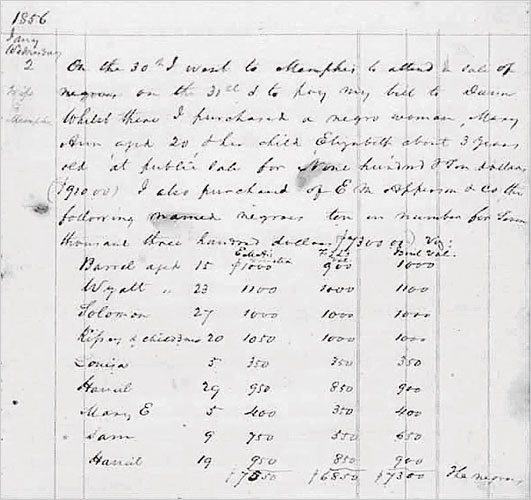
The New York Times reports that “what appears to be the document on which Faulkner modeled that ledger [detailing the genealogy that haunts Go Down, Moses] as well as the source for myriad names, incidents and details that populate his fictionalized Yoknapatawpha County has been discovered.” The article continues:

The original manuscript, a diary from the mid-1800s, was written by Francis Terry Leak, a wealthy plantation owner in Mississippi whose great-grandson Edgar Wiggin Francisco Jr. was a friend of Faulkner’s since childhood. Mr. Francisco’s son, Edgar Wiggin Francisco III, now 79, recalls the writer’s frequent visits to the family homestead in Holly Springs, Miss., throughout the 1930s, saying Faulkner was fascinated with the diary’s several volumes. Mr. Francisco said he saw them in Faulker’s hands and remembers that he “was always taking copious notes.”

History, particularly the strange, paradoxical, and taboo history of the plantation underwrites almost all of Faulkner’s significant fiction, so any historical document that served to inform his writing will be of particular note to enthusiasts and scholars alike.

All Known Zora Neale Hurston WPA Recordings

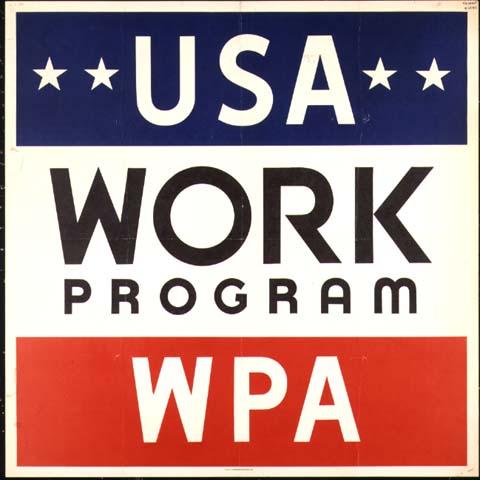
Check out this tidy collection of all known Zora Neale Hurston audio recordings from the 1930s, when the writer put her anthropology degree to work collecting Florida folklore as part of the Works Progress Administration. (We recommend “Tampa” for some good puerile fun (Tampans may be unamused)).

“I Guess My Work All These Years Has Been about Living in Dangerous Times” — Don DeLillo Interviewed on NPR

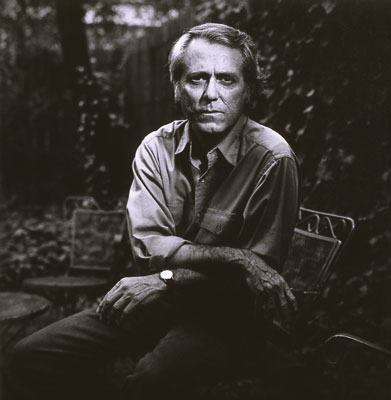
Driving to work this morning in the dark dolorous haze appropriate to a post-Super Bowl Monday, I was more than a little surprised to catch Steve Innskeep interview Don DeLillo on Morning Edition. If you missed the interview, which focuses on DeLillo’s latest, Point Omega, you can listen to it or download it from Morning Edition‘s site. The usually-taciturn DeLillo is particularly reflective, even generous in this interview. “I guess my work all these years has been about living in dangerous times” he says, “and part of this danger has been what the media reports, and how it changes our perceptions.” It’s also kinda strange to hear his voice, which seems frailer and more awkward than I would have imagined. Very cool interview.

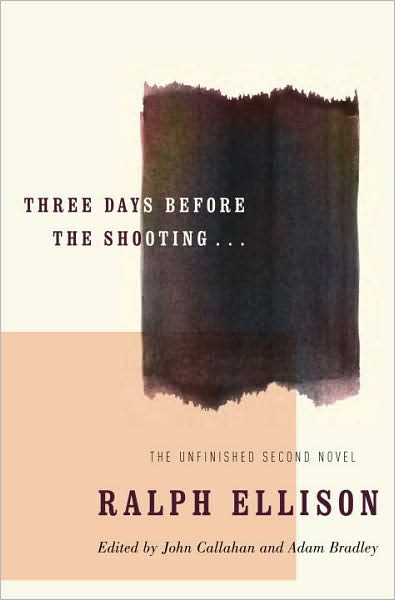
Three Days Before the Shooting . . . — Beginning Ralph Ellison’s Posthumous Second Novel

In 1952, Ralph Ellison secured his place in the American literary canon with the publication of his picaresque verbal tour de force, Invisible Man. He never published another novel in his lifetime. Five years after his death in 1994 saw the publication of Juneteenth, a book cobbled together from the sundry drafts that Ellison had spent over forty years crafting and revising. Those papers ran to over 2000 pages. Now, editors John F. Callahan and Adam Bradley have made good on the promise to release an expanded version of Ellison’s proposed second novel. That effort, new in hardback this month from Random House’s Modern Library series, is Three Days Before the Shooting . . ., a massive, complex, and perplexing volume running to 1101 pages — not including editors’ notes, chronology, prefaces, and introductions.

I usually eschew introductions (or at least read them after I’ve read the text proper) in the hopes of not having my reading colored by some critic’s own thoughts, but in the case of Three Days, with its bulk, with its mystery, it seemed necessary to see what Callahan and Bradley had to say. What, exactly, would I be reading? How was it put together? Is there a real novel here? Our esteemed editors point out that:

. . . one might reasonably have expected to find among [Ellison’s] papers a single manuscript very near to completion, bearing evidence of the difficult choices he had made during the protracted period of the novel’s composition. One might have expected, perhaps, F. Scott Fitzgerald’s The Last Tycoon, a fragmented with a clearly drafted, clearly delineated beginning and middle, whose author’s notes and drafts pointed toward two or three endings, each of which followed and resolved the projected novel as a whole. Or, to cite a more contemporary example, it might have resembled Roberto Bolaño’s 2666; upon its posthumous publication in 2008, Bolaño’s editor remarked that, had the author lived to see it through to publication, “its dimensions, its general content would by no means have been very different from what they are now.” In the extreme, one might have expected something like James Joyce’s Finnegans Wake, a glorious mess of a novel that defies the very generic restraints of the form.

Callahan and Bradley pose these novels only as examples to contrast Ellison’s work as “something else entirely: a series of related narrative fragments, several of which extend to over three hundred manuscript pages in length, that appear to cohere without truly completing one another.” There’s a fun laundry list of where and on what Ellison composed the work, including the various types of paper he used and the different machines on which he wrote. The logistics are important from an editors perspective, of course, and as an interested reader it’s fascinating to see how Callahan and Bradley put all of Ellison’s disparate sources together. But what becomes most apparent in their general introduction to the work is that, even as he was always writing, Ellison was stalling, hoping to revise his novel in light of social changes–only, those social changes were happening relatively rapidly. It took Ellison over eight years to produce and edit Invisible Man, a novel that brilliantly captures American identity in the postwar era. For his second novel, Ellison clearly wanted to engage in such a critique again, but the rapidity of social and cultural change seems to have outpaced his ability to write and edit. He satisfied his public and the literary establishment by publishing excerpts of the novel (eight in total, all reproduced in Three Days), but most of his writing career, at least in terms of publishing, was spent writing (and revising) essays and critiques.

Still. Forty years and only eight published snippets? Really? Our fearless editors seem exasperated themselves, writing, “The longer one puzzles over what Ellison left behind, the more maddening it seems that he did not simply will himself to bring the book to a close, that he didn’t find his way to that ‘meaningful form’ he sought.” And there is so much narrative here; Ellison’s major concern — beyond revising in light of cultural and social upheaval — was simply fitting his pieces into a coherent whole. Not that there isn’t a plot. To borrow again from our generous editors:

The basic plot of Ellison’s novel as it emerges in these manuscripts centers upon the connection, estrangement, and reconciliation of two characters. The one is a black jazzman-turned-preacher named Alonzo Hickman, the other a racist ‘white’ New England Senator named Adam Sunraider, formerly known as Bliss–a child of indeterminate race whom Hickman had raised from infancy to adolescence. The action of the novel concerns Hickman’s efforts to stave off Sunraider’s assassination at the hands of the Senator’s own estranged son, a young man named Severen.

Callahan and Bradley go on to point out that, of course, this is simply the bare bones of the plot; that Three Days teems with characters and voices and motifs and strange little riffs. So far, my reading of the book upholds this assertion–and also suggests that the best way to enjoy this book is simply to dive right in. Yeah, that’s right. Ignore all the context. Skip Callahan and Bradley’s prefatory material completely–it’s well-written, highly informative, and will get right in your way. Just start at page one and enjoy Ellison’s rhythm, his inimitable language, his bizarre sense of humor and his deep pathos.

The book opens with a prologue that details a visit Hickman and his congregation make to Washington, D.C. three days before the shooting of Senator Sunraider. They attempt to warn him but are blocked at all turns. Book One then opens immediately with that assassination attempt, seen from the perspective of a journalist named McIntyre who narrates Book One in first-person. The first few chapters are set in the panicked claustrophobia of the post-shooting Senate where police detain everyone present. These chapters detail the strange rumors that circulate about Sunraider, including

. . . the rumor that for a time during his youth the Senator had been the leader of an organization which wore black hoods and practiced obscene ceremonials with the ugliest and most worn-out prostitutes they could find. Like certain motorcycle gangs of today they also engaged in acts of violence and hooliganism and were accused of torturing people — derelicts and such. They were also said to have distributed Christmas baskets and comic books to the poor.

What a great punchline. These early episodes made me laugh out loud at least three times. They’re also rather unsettling, and, more than anything, intriguing. In short, so far the book compels reading, and it’s hard to believe that such inspired riffs won’t add up to greater things. Our editors warn that the book doesn’t so much “end” as simply “stop,” but, right now, I’m fine with that. Ellison fans who don’t own this will want to pick it up forthwith; anyone daunted by its size, scope, or the context of its creation might miss some really great writing. More to come.
Bright Star — Campion Does Keats

So I finally got around to watching Jane Campion’s Bright Star last night, a film that quietly studies the final years of Romantic poet John Keats and his relationship with Fanny Brawne. When Keats moves next door to the Brawnes, eldest daughter Fanny, a talented seamstress and flighty flirt, soon becomes intrigued by the poet. Keats, with his love for beauty and truth, represents a world of greater depth than the wits and dandies who usually attempt to court Brawne. Their relationship is, of course, doomed from the outset. Perpetually broke Keats doesn’t have the moolah or means to properly engage Brawne in marriage, but that doesn’t stop the pair from undertaking a furtive, pensive love affair, carried out in long walks on the heath and passionate letters. Oh, and Keats gets sick and dies at 25. That shouldn’t be a spoiler if you’ve studied your Romantics properly, now should it?

Both Abbie Cornish who plays Brawne and Ben Whishaw who plays Keats are excellent in their understatement and reserve, but the standout turn in the movie comes from actor Paul Schneider (from NBC’s Parks & Recreation) who plays Keats’s bankrolling friend Charles Armitage Brown. Brown is a lesser poet whose love and envy of Keats leads him to vex Brawne and Keats’s love at every turn, plaguing them with doubt, and that enemy of Romance, Reason. Schneider invests his character with a boorish charm that never veers into the rote tropes that afflict modern romance film. It’s emblematic of the Campion’s film in a way: Bright Star has every opportunity to devolve into a mundane exercise in doomed romance or a stuffy period piece, but under Campion’s delicate care it manages to match the depth of its subject matter.

Campion wrote the screenplay, presumably using letters from the principals as her primary source. She honors her viewers’ intelligence — far too rare these days — by never cobbling her plot together with easy exposition or forced narrative developments, and it’s that sense of history that lends the film authenticity. Cornish’s Brawne is a protagonist whose personality transformations read as real, and Whishaw’s Keats is never a cartoonish mystic or a moody caricature, but a fully-drawn human. Campion also has the good judgment to let her cinematography convey her story, letting gorgeous shots of the English countryside and cloistered chambers alike convey the mood and rhythm of her story. At times, Bright Star‘s beautiful camerawork recalls Terrence Malick, another director who allows film to “happen” to the viewer as an evocative experience rather than a spoon-feeding. Campion also shows considerable restraint with the film’s wonderful score, never allowing it to color a scene unduly when her actors can do a great job on their own. Bright Star avoids all of the pitfalls that might afflict a period piece, and does a far better job handling the subject of Romantic poetry than a movie has any right to. The film is hardly for everyone (sorry guys, no Jason Statham), but it’s very, very good. Recommended.

“If We Do This as a Conversation, It Will Be Easier for Me” — David Foster Wallace

David Foster Wallace’s 2003 interview on German TV station ZDF has been viewable for awhile in its full 84 minute glory, but it’s only just now been uploaded to YouTube in more digestible and manageable 10 minute chunks.

David Peace on Occupied City

We’re currently reading–and really enjoying–David Peace’s Occupied City, a dark and bewildering account of the 1948 Teikoku Bank Massacre in Tokyo. Peace’s book gets its American debut later this week from Knopf. We’ll run a proper review then. For now, here’s Peace discussing the project, his difficulty in writing it, the crime’s contemporary resonance in modern Japan, and how he stole from Rashomon:

“William Burns” — Roberto Bolaño

Hey! Check it out: new (well, new as these things go) fiction from Roberto Bolaño. The New Yorker has published a selection called William Burns,” which may or may not be (but we’re thinking probably is) an excerpt from a longer work, one that will probably come out in the nearish future. Chris Andrews translates. “William Burns” tells the story of the eponymous Californian, a “laid-back guy who never lost his cool,” who seems to be a private investigator entrusted to protect two women from a killer. The story builds in typical Bolaño fashion: plenty of sinister, Lynchian ambiance punctuated by strange humor, with a good shot of banality to smooth things out. Our favorite passage:

If I were a dog, I thought resentfully, these women would show me a bit more consideration. Later, after I realized that none of us were feeling sleepy, they started talking about children, and their voices made my heart recoil. I have seen terrible, evil things, sights to make a hard man flinch, but, listening to the women that night, my heart recoiled so violently it almost disappeared. I tried to butt in, I tried to find out if they were recalling scenes from childhood or talking about real children in the present, but I couldn’t. My throat felt as if it were packed with bandages and cotton swabs.

WSJ Interviews Don DeLillo

The Wall Street Journal has published an interview with Don DeLillo where the reclusivish author discusses the genesis of his new novella, Point Omega. From the interview:

The Wall Street Journal: How did this book evolve?

Don DeLillo: The idea began in the same place where the novel begins — in the sixth floor gallery at the Museum of Modern Art — and at the same time, summer of 2006. I wandered in and there was “24 Hour Psycho,” which I found very interesting to watch and to think about. In fact, I returned two or three times after that, and by the third visit I was fairly certain I wanted to write something about it — the idea of time and motion and the sense of self-conscious seeing, because everything happens in such slow motion and because the imagery is somewhat familiar from the movie itself. I began to wonder about such things, about how we see and what we see, and what we miss seeing when we’re looking at things in a more conventional format. And I decided finally that I wasn’t going to risk writing a piece of nonfiction because I’m not a philosopher or a physicist and I could not study time in the matter that seemed to be warranted. So I placed a character in the gallery and began from there.

The Wall Street Journal seems to be on a streak when it comes to interviewing authors who typically avoid interviews–Cormac McCarthy talked with the financial magazine late last year. Maybe we should scour their archives more closely–who knows, maybe there’s a secret Salinger interview stashed away somewhere.

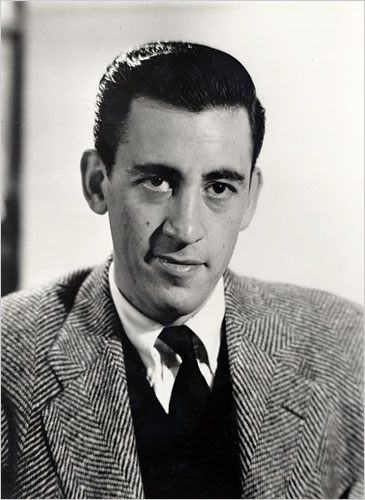
RIP J.D. Salinger

Jane Bites Back — Michael Thomas Ford

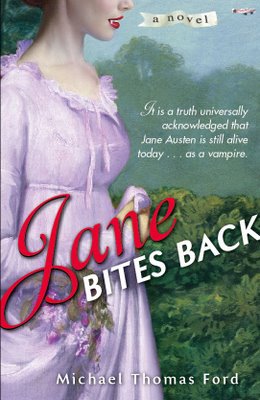
In Michael Thomas Ford’s novel Jane Bites Back, Jane Austen (you know, the Jane Austen) is an incognito vampire/bookstore clerk in upstate New York. Poor Jane is trying to get a new novel published (under a pseudonym, of course), but she suffers scores of rejection letters for her new work. Even worse is the horror of the Jane Austen industry, which, under the auspices of public domain laws, clutters Jane’s own bookshop with awful books that, like, don’t “get” the Austen oeuvre (in the climactic scene of the book’s opening chapter, Vampire Jane gets some measure of revenge by consuming the boorish author of an execrable volume entitled Waiting for Mr. Darcy). Of course, there’s got to be a plot, so Jane does get an offer for a book deal, one that’s complicated by accusations of plagiarism and other woes. To make matters worse, her old lover Lord Byron shows up (yeah, Byron, duh. How else would Jane Austen catch the vampirism?) There are other ghosts of literary past who show up, too, but why spoil surprises?

Jane Bites Back reveres its subject, Jane Austen, even as it blatantly cashes in on the very trend that it satirizes. The book’s program shouldn’t be confused with the absurdity behind Sense and Sensibility and Seamonsters (which we liked) or the wackiness of Pride and Prejudice and Zombies (which we didn’t like), but it does adhere to the same sense of fun. Ford seems to delight in corny, over the top passages, and we’ll take it for granted that his literary tongue is in his cheek when he writes a paragraph like:

When his hand cupped her breasts she gasped, and when his mouth touched her skin she felt her knees buckle. He caught her, sweeping her up in his arms and carrying her to the bed. He placed her atop the sheets and stepped back. She watched through half-closed eyes as he removed his clothes. His chest was lean, his skin pale as milk. When stepped from his trousers she glanced briefly at his manhood before looking away.

His “manhood”?! Jeez, we hope this is parody. In any case, we were laughing. (Sidenote: How does this stack up against the sex scenes in the Twilight books? Are there sex scenes in the Twilight books? What Biblioklept reader will even admit to having read Twilight?)

Ford’s style is, on the whole, redolent with the tropes of YA fiction–not that Jane Bites Back is necessarily YA–but there’s not a challenging sentence in the book, which may or may not be a compliment for the writer. Clear, lucid writing is difficult to do. Still, we tend to value ambiguity around here; being perplexed and furious is a good reaction from time to time. Jane Bites Back reads with an anonymous speed that’s not particularly invigorating.

If we were really feeling adventurous today, we might wax heavy on the all the implications, meta- and otherwise, of a book that purports to criticize the Austen fad while at the same time indulging in it…but we’re not feeling up to it. There’s also a neat Venn diagram in all of this: vampires, Jane Austen, feminism (yeah, there are feminist themes here. Did we forget to mention them? Sorry). Suffice to say that any reader whose ears perk up at the notion of “Jane Austen + vampires” will not be disappointed in this book.

Jane Bites Back is new from Ballantine Books.

“Write the Dirty Words Big and Underline Them and Kiss Them and Hold Them for a Moment” — James Joyce’s Dirty Epistles

Penelope -- Itmar Lerner

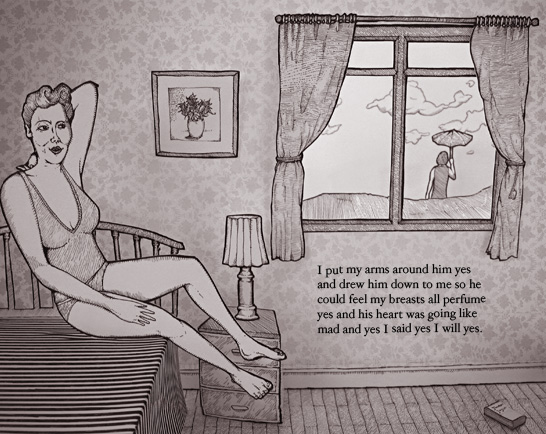
Anyone who’s read the “Circe/Nighttown” chapter of James Joyce’s Ulysses knows that Joyce had more than a passing interest in masochism, gender-role reversals, scatology, and other aspects of “deviant” sexuality (we put the word in quotations in an attempt to remove it from any pejorative or judgmental connotations and at the same time recognize that Joyce aspired to shock or otherwise disrupt his audience in his depictions of sexuality). But if you want to read something really filthy, something purposefully obscene, check out Joyce’s dirty letters to his wife Nora, written over a three month period in 1909 when the couple were separated due to a business trip. Joyce shows a particular fetish for coprophilia, expresses a desire to wear his wife’s underwear, and meticulously describes his wife’s farts. Gross stuff.

William Burroughs’s Stuff

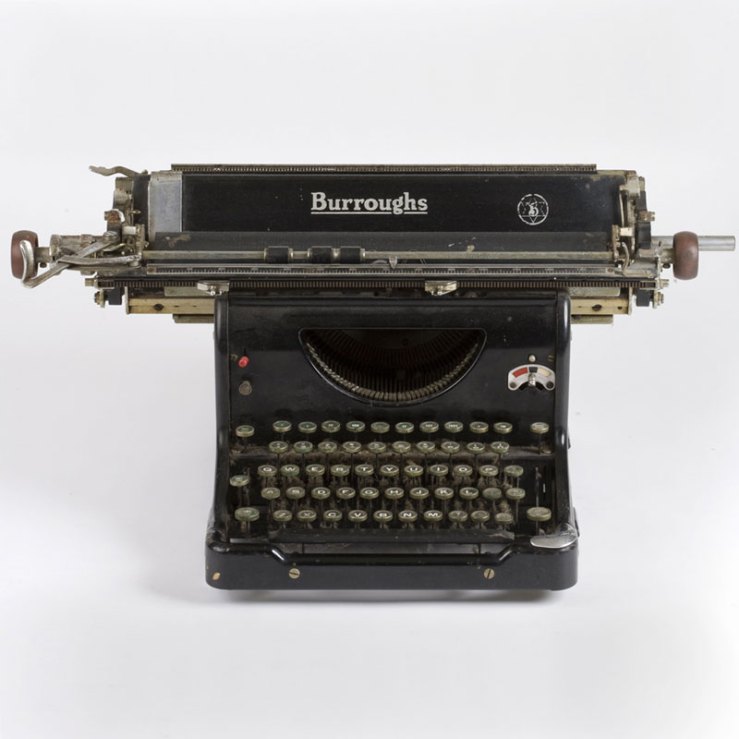
Check out this photo series of William Burroughs’s personal effects at The Morning News. There’s also a really cool interview with the photographer Peter Ross. Great, uh, stuff.

Five Dials Publishes DFW Memorials

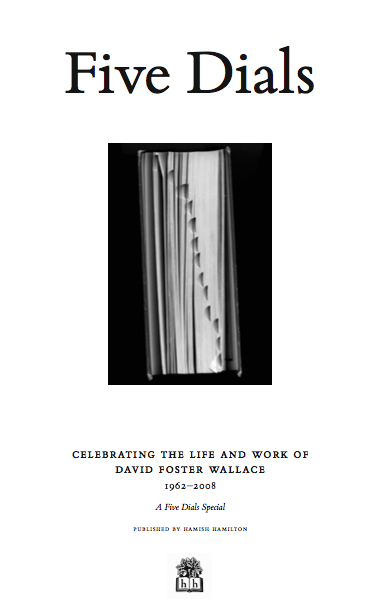
Via Times Flow Stemmed: issue 10 of Five Dials magazine is available for easy-breezy pdf download. The issue collects all the testimonies from the October 2008 memorial service at NYU for the recently-deceased author David Foster Wallace, including moving pieces from his sister, editor, publisher, and writers Zadie Smith, George Saunders, Don DeLillo, and Jonathan Franzen. Here’s what we wrote when we found out about DFW’s death.

Nazi Literature in the Americas — Roberto Bolaño

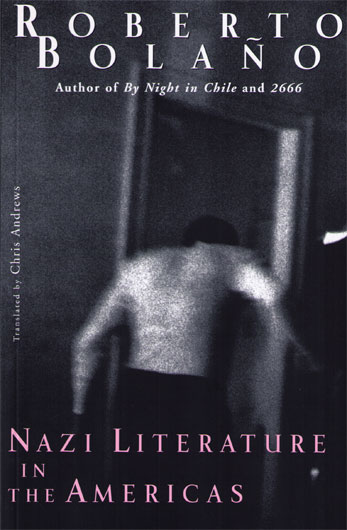
I was talking with a friend last weekend about Roberto Bolaño and he remarked that many of the early slim novels from this remarkable writer tend to read like sketches for his masterwork 2666. This is a more than fair assessment and also one that shouldn’t–and doesn’t–detract from enjoying these books. But it’s difficult to read the nightmare-rant of By Night in Chile or the paranoiac dread invested in the tales in Last Evenings on Earth without recalling the layered themes of violence and art that underpin 2666. Bolaño’s fake-encyclopedia, Nazi Literature in the Americas is perhaps, by its very nature, the sketchiest of these sketches, yet that term, “sketch” — well it’s just plain wrong here. While most of the book’s entries are marked by brevity, none are undercooked. Rather–and I hate that I’m about to crib from critic Francisco Goldman’s blurb on the back of the book, but he’s spot on–the book is a “key cosmology to Bolaño’s literary universe.” In short, Nazi Literature in the Americas helps to confirm that, like J.R.R. Tolkien, Bolaño was a writer with a fully-realized universe at his disposal, one with its own heroes and villains, histories and myths, and yes, like Tolkien, its own literature.

Nazi Literature in the Americas is a stunning, ugly, highly-enjoyable, and often hilarious book. It details the exploits, both literary and non-, of over two dozen fictional writers from North, Central, and South America. While few of the writers are actually practicing Nazis, all are right-wingers and most are crazy failures. Big surprise that Bolaño would write about crazy, failed writers, right? And that is the central paradox of the book: while the writers here are anti-Semites and fascists and neo-Nazis who represent the worst in human values and ethics, they also darkly mirror Bolaño himself, or at least his fictional stand-ins. For example, the (anti-)heroes Ignacio Zubieta and Jesús Fernández-Gómez are Colombian writers who side first with the fascists and then the Nazis, yet they come across as doubles for the Mexican lefty poets Ulises Lima and Arturo Belano, the (anti-)heroes of The Savage Detectives. The pair pops up a few times in the course of the book as well, most notably in the section on Daniela de Montecriesto, who was a minor character in 2666.

She’s not the only character to traverse Bolaño books. The final chapter of Nazi Literature, its longest, tells the story of Ramírez Hoffman, the aviator-poet-serial killer whose story is extended in the novella Distant Star. Hoffman’s entry, besides being the longest, is also the only written in the first-person. The narrator is even identified as “Bolaño.”

At times the reader will find himself sympathizing with Bolaño’s monsters. The sci-fi writer Gustavo Border says: “I have been tormented, spat on, and deceived so often–the only way I could go on living and writing was to find spiritual refuge in an ideal place.” Bolaño immediately cuts the pathos with humor; Border ends his sad comment: “In a way, I’m like a woman trapped in a man’s body.” Elsewhere, what’s most shocking is not how much sympathy Bolaño evokes, but how interesting the literature he describes sounds. Take Segundo José Heredia’s Saturnalia, for instance:

Saturnalia, the story of two young friends who in the course of a week-long journey through France are confronted with the most horrendous acts they have ever witnessed, without being able to tell for sure whether or not they are dreaming. The novel includes scenes of rape, sexual and workplace sadism, incest, impaling, and human sacrifice in prisons crowded to the physical limit; there are convoluted murder plots in the tradition of Conan Doyle, colorful and realistic descriptions of every Paris neighborhood, and, incidentally, one of the most vivid and spine-chilling female characters in Venezuelan literature since 1950: Elisenda, the enemy of the two young men.

It sounds horrific but I’d love to read it. It also sounds like a Bolaño novel, with its nightmare violence, prisons, and detective plots.

In one telling aside, one of Bolaño’s writers realizes that “literature . . . is a surreptitious form of violence.” Bolaño’s oeuvre seems to work from this thesis, or perhaps work to enact this thesis. If the writers of of Nazi Literature are villains, they are also sympathetic in their villainy, not for their racist viewpoints, which are subtly but repeatedly mocked and condemned, but rather for the fact that as writers and artists they have no hope; like Oedipus they are fated to violence. Like Bolaño himself, they both channel and engender violence. Their failure, of course, is to seek to regulate or otherwise give meaning to that violence via ideology and dogma. Tellingly, Bolaño investigates–and perhaps corrects–this failure in his opus 2666 which resists easy answers and scapegoats.

And so to return to our point of entry: Nazi Literature in the Americas will probably be enjoyed most by those who’ve trucked through 2666 or some of Bolaño’s other works. It’s a quick, propulsive read, and while quite funny–and at times scary–it’s most fascinating as a document that further fleshes out the Bolañoverse. Highly recommended.

“The Philosophy of Furniture” — Edgar Allan Poe

“There is reason, it is said, in the roasting of eggs, and there is philosophy even in furniture — a philosophy nevertheless which seems to be more imperfectly understood by Americans than by any civilized nation upon the face of the earth.”

I started Roberto Bolaño’s faux-encyclopedia, Nazi Literature in the Americas last night. In the first section, Edelmira Thompson de Mendiluce creates a room based on Edgar Allan Poe’s essay “The Philosophy of Furniture.” I’d never read or even heard of that essay up until now, and, given Bolaño’s penchant for invention, I wondered for a moment if it even really existed. Edelmira recreates the room according Poe’s specifications and then writes Poe’s Room, her defining novel, in its rich confines. The essay exists outside of Bolaño, of course, as does the room–it’s part of the Edgar Allan Poe National Historic Site.

The Anxiety of Influence

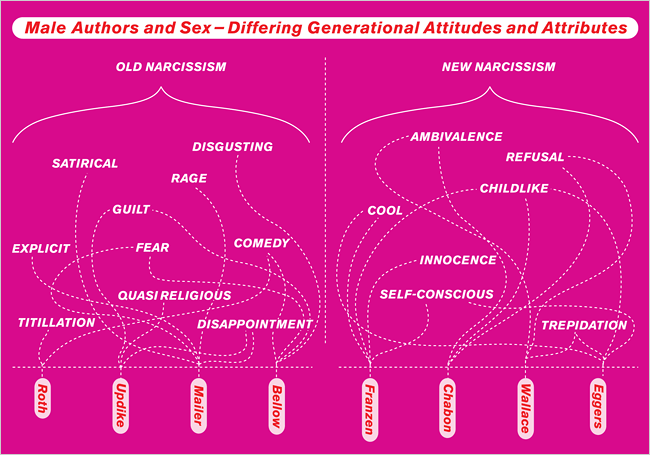
In her essay “The Naked and the Conflicted,” published in today’s New York Times, Katie Roiphe suggests that “we are awfully cavalier about the Great Male Novelists of the last century. It has become popular to denounce those authors, and more particularly to deride the sex scenes in their novels.” By the Great Male Novelists she is, of course, referring to Norman Mailer, John Updike, Philip Roth, and Saul Bellow. She continues: “Even the young male writers who, in the scope of their ambition, would appear to be the heirs apparent have repudiated the aggressive virility of their predecessors.” Roiphe picks a relatively slim sample of “young male writers” to prove her thesis, including David Foster Wallace, Michael Chabon, Dave Eggers, and Jonathan Franzen. Slim sample, but still, quite representative. Her big claim: “The younger writers are so self-­conscious, so steeped in a certain kind of liberal education, that their characters can’t condone even their own sexual impulses; they are, in short, too cool for sex.” Hmmm . . . Perhaps. Makes us think about how writers like Dennis Cooper, Wells Tower, Junot Díaz, or Stephen Elliott might fit into this scheme . . .