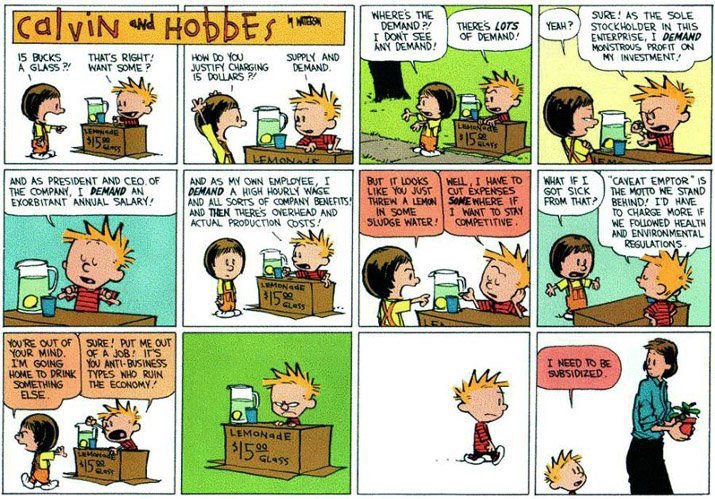
Calvin & Hobbes on Capitalism, Regulation, and “Anti-Business Types”

The AV Club Interviews Cartoonist Kate Beaton (Hark! A Vagrant)

The AV Club interviews Kate Beaton, she of Hark! A Vagrant. Here, she talks a bit about A Game of Thrones

AVC: You were a history major. Do you still read history for fun?

KB: I do, yeah. I pick up books every now and then. The only problem is, I pick up books and I don’t read them, because if I do reading, it’s for a comic. But I will. I will probably pick up the second half of John A. Macdonald’s biography, which comes out this year. [Laughs.] Because I think he’s a fascinating guy. [Macdonald was the first prime minister of Canada. —ed.] I read so much, but it’s always for comics, and there’s not much time in between to just settle down and start reading something for yourself. Recently, I started reading that Game Of Thrones that everybody was reading. It’s kind of a quick and fun read. And that was really nice, because I made time to read something that wasn’t for comics. Reading history for fun will turn my brain into, “How do you make this into a comic?” and then it turns into work. [Laughs.] There’s dangerous waters there.

AVC: I’d love to see the Kate Beaton take on A Game Of Thrones. And that’s at least somewhat less polarizing than politics. You do a lot of literary strips—would you ever consider one about contemporary literature? 

KB: [Laughs.] Oh, no. No. I like doing literature that’s popular, that a lot of people have read or know about, so Game Of Thrones does fit into there. I did do a couple drawings and put them on Twitter, and they get good reactions. But I feel like, for a while, everybody was doing Game Of Thrones something or other, so I just sort of stayed out of there. And besides, you could hardly do a comic about that without spoiling it, because someone new dies every chapter. [Laughs.] It’s likeGame Of Massacres. And you wouldn’t want to ruin that for anybody.
“Don’t Kill Whales” — The Animaniacs Confront Captain Ahab

Roberto Bolaño’s Chair/Arthur Rimbaud’s Fork and Spoon

Photos by Patti Smith

(Story at The New York Times Magazine).

Friday Reading, 10.14.2011

20111014-144043.jpg

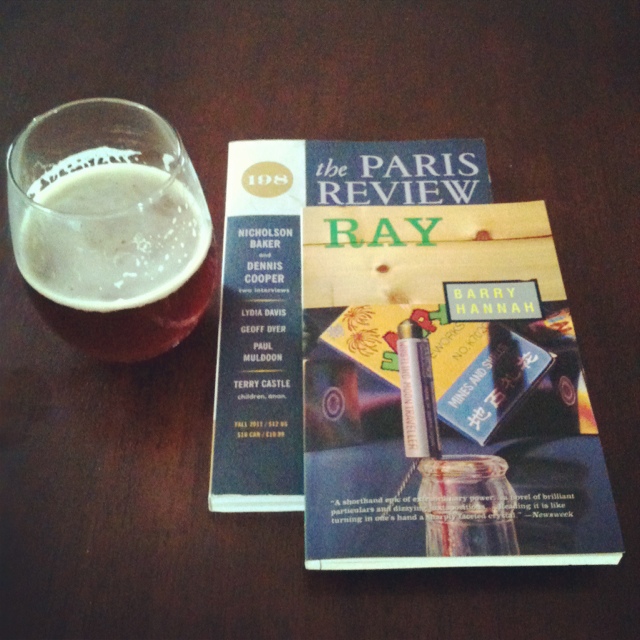
Barry Hannah, The Paris Review, homebrewed ale.

“I Like Violence! I Love Violence!” — Alejandro Jodorowsky

Book Acquired, 10.13.2011

20111013-192351.jpg

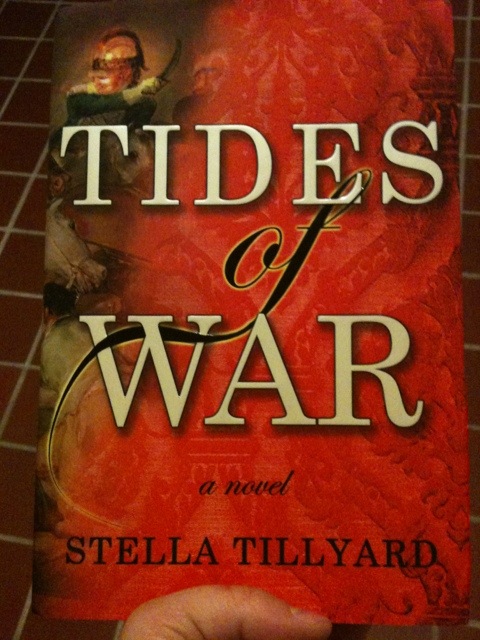
Tides of War, new historical fiction from Stella Tillyard. Publisher (Henry Holt) description—

An epic novel about love and war, set in Regency England and Spain during the Peninsular War (1812-15), by the acclaimed historian and bestselling author of Aristocrats.

Tides of War opens in England with the recently married, charmingly unconventional Harriet preparing to say goodbye to her husband, James, as he leaves to join the Duke of Wellington’s troops in Spain.

Harriet and James’s interwoven stories of love and betrayal propel this sweeping and dramatic novel as it moves between Regency London on the cusp of modernity—a city in love with science, the machine, money—and the shocking violence of war in Spain. With dazzling skill Stella Tillyard explores not only the effects of war on the men at the front but also the freedoms it offers the women left behind. As Harriet befriends the older and protective Kitty, Lady Wellington, her life begins to change in unexpected ways. Meanwhile, James is seduced by the violence of battle, and then by love in Seville.

As the novel moves between war and peace, Spain and London, its large cast of characters includes the serial adulterer and war hero the Duke of Wellington, and the émigrés Nathan Rothschild and Frederic Winsor who will usher in the future, creating a world brightly lit by gaslight where credit and financial speculation rule. Whether describing the daily lives and desires of strong female characters or the horror of battle, Tides of War is set to be the fiction debut of the year.

Dennis Cooper Talks About Being a “Cult Writer”

Again, raiding the Dennis Cooper interview from the new issue of The Paris Review (198/Fall 2011). Cooper discusses what a “normal” novel is in the interview, and here he talks about what it might mean to be a “cult writer.” I’ve long been interested in simply the idea of a “cult novel,” so I liked this bit, and thus share with you, kind reader—

You almost never see my name in print without the phrase cult writer glued to it. When I see that word, cult, attached to an artist, it always seems to be a begrudging way to acknowledge that the artist is talented and valuable to a moderate number of people whose passion for that artist’s work is understandable, to some degree, but nonetheless foreign. It’s a weird term because it’s complimentary but condescending and hierarchical at the same time. My work just seems to be a really odd duck. I feel like I’m on my own. I don’t mind that, but it’s a strange place to be sometimes.

Morphology of Skull of Sigmund Freud — Salvador Dali

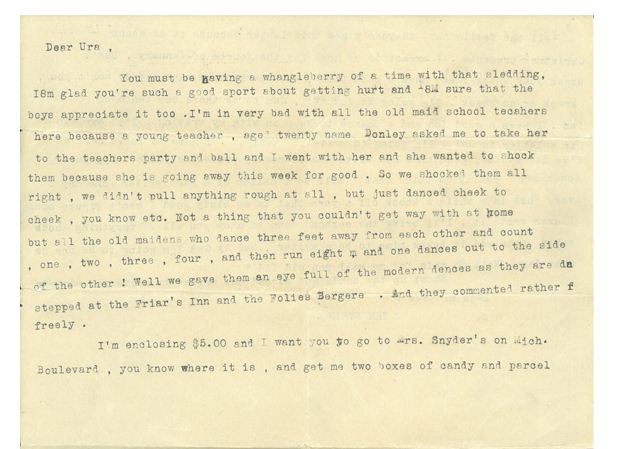
“A Whangleberry of a Time” — Hemingway Writes to His Sister

(Read the entire letter at The Paris Review).

Dennis Cooper on “Normal” Novels

The new issue of The Paris Review (198/Fall 2011) is outstanding, to say the least—Roberto Bolaño, a fantastic essay on translation by Lydia Davis, Geoff Dyer on Tarkovsky, an interview with Nicholson Baker—but one of the major highlights is the interview with Dennis Cooper. From the interview—

Interviewer: What are normal novels?

Cooper: Too much story, too much realism, too much overfamiliarity in general. They bought into the traditional, majority approach in opinion among American writers and arbiters of literature that life is most effectively depicted in fiction via one streamlined, time-proven method—the narrative arc, the sympathetic character, the snowballing plot, et cetera—and when I read a work like that, all I saw were the writers’ slight variations on a central formula that seemed reductive and arbitrary and bogus.

“Life Writes Your Script” — Jonathan Demme

Books Acquired, 10.11.2011

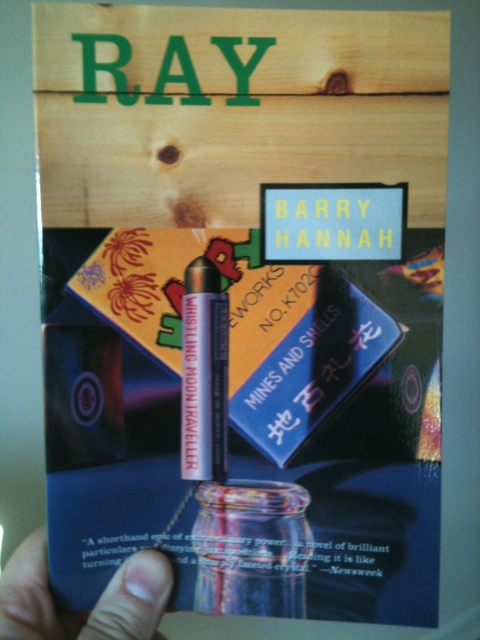
20111011-180342.jpgA nice little gang today: First up is Barry Hannah’s short novel Ray, which I ordered from my favorite local bookstore last week. (On a side note, said bookstore was robbed this week for cash—no books were stolen).20111011-180425.jpg
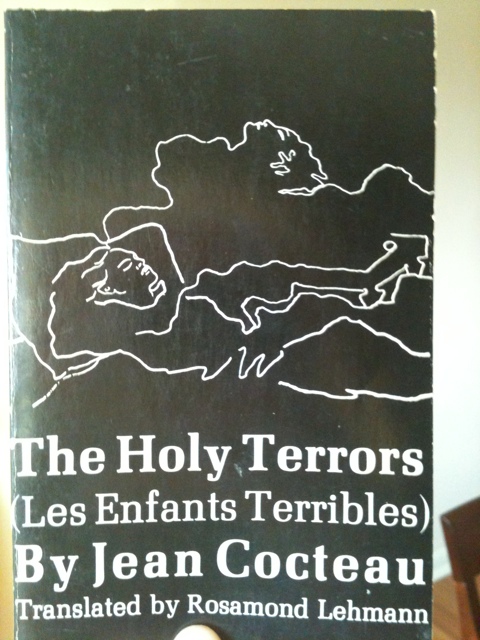
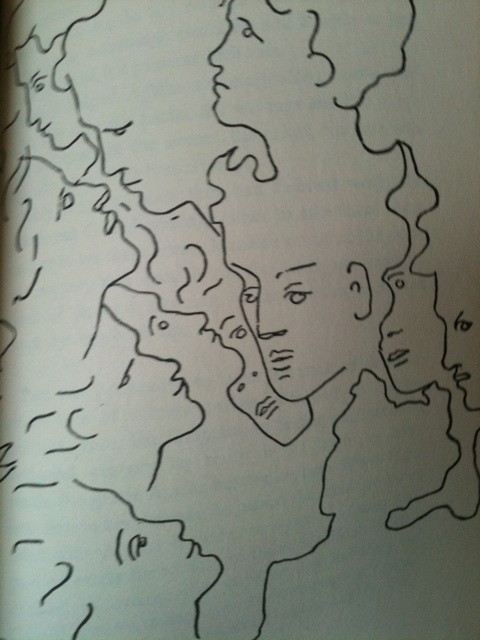
I found Jean Cocteau’s Les Enfants Terribles somewhat randomly, hunting through the “Co”s for something by Dennis Cooper. Sample illustration—

20111011-180442.jpg

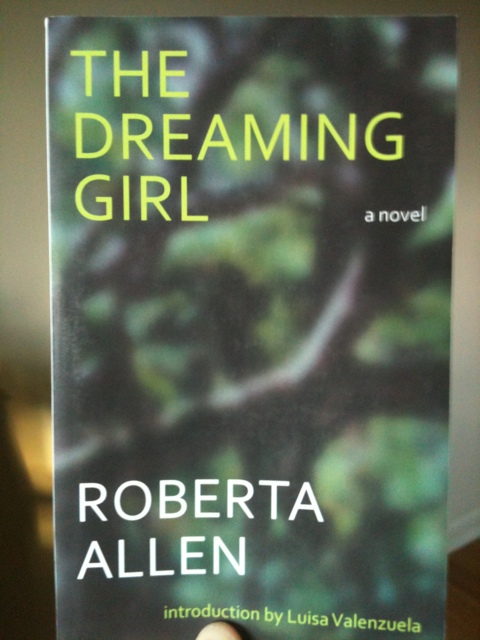
Roberta Allen’s The Dreaming Girl  is forthcoming from Ellipsis Press; the book looks pretty cool and I’ll dip into it tonight. It actually was sent to my old abode, but the folks who live there now are kind people and alerted me. Some serendipity perhaps. Here’s Ken Foster (Village Voice) on The Dreaming Girl:

Told in a series of elliptical tableaux and bound by stream of consciousness, Roberta Allen’s The Dreaming Girl is an example of everything that shouldn’t work, and yet it does. Like a literary descendant of Duras, Allen places her unnamed narrator in an exotic Central American limbo that propels her mind into a mesmerizing state somewhere between memory and fantasy.

20111011-180457.jpg

Recipe Comix

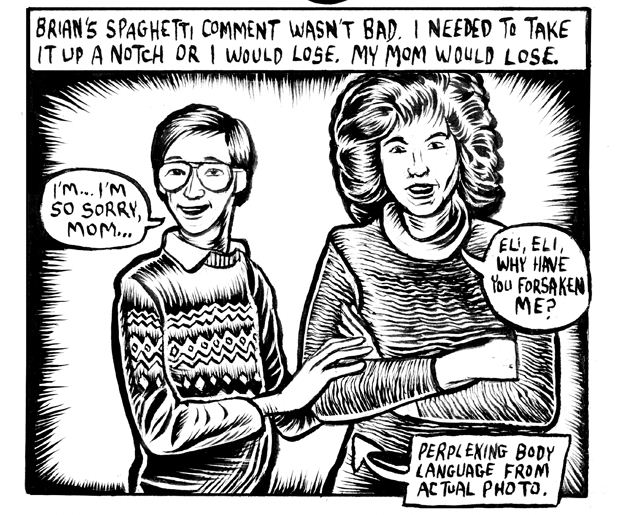
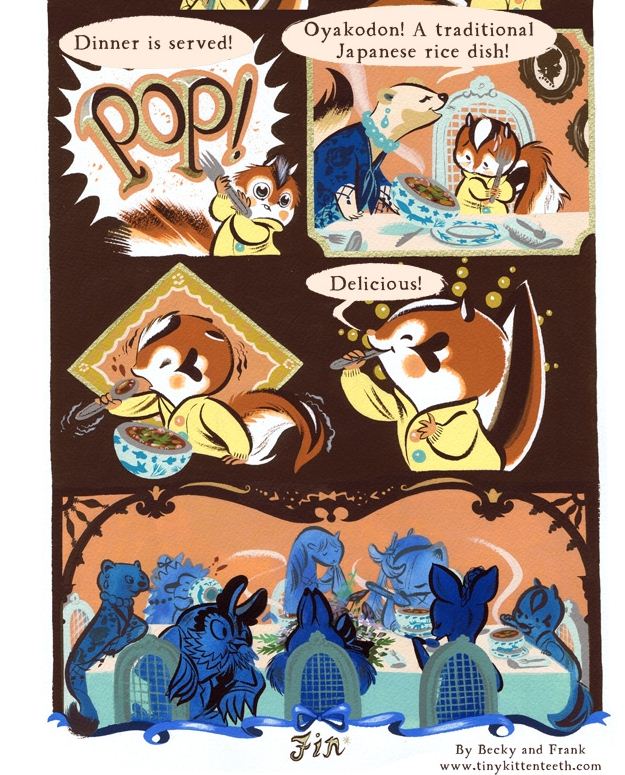
Great collection of recipe comix at Saveur magazine. Marvelous stuff. A few choice panels, plucked not entirely but still somewhat at random—

Eli Valley
Frank Gibson and Becky Dreistadt
Emily Horne


Werner Herzog on Moral Responsibility

Accommodations of Desire — Salvador Dali

Slavoj Žižek at Occupy Wall Street