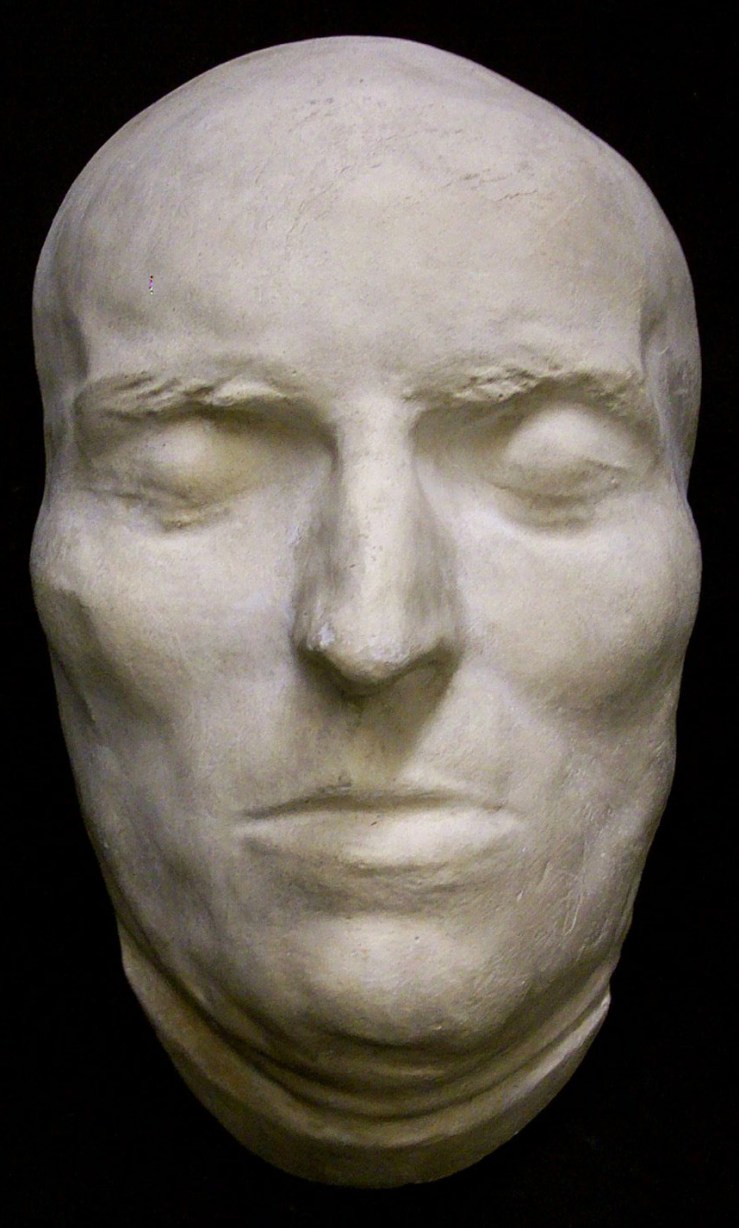
Friedrich Schiller’s Death Mask

Books Acquired, 11.19.2011

20111119-112614.jpg

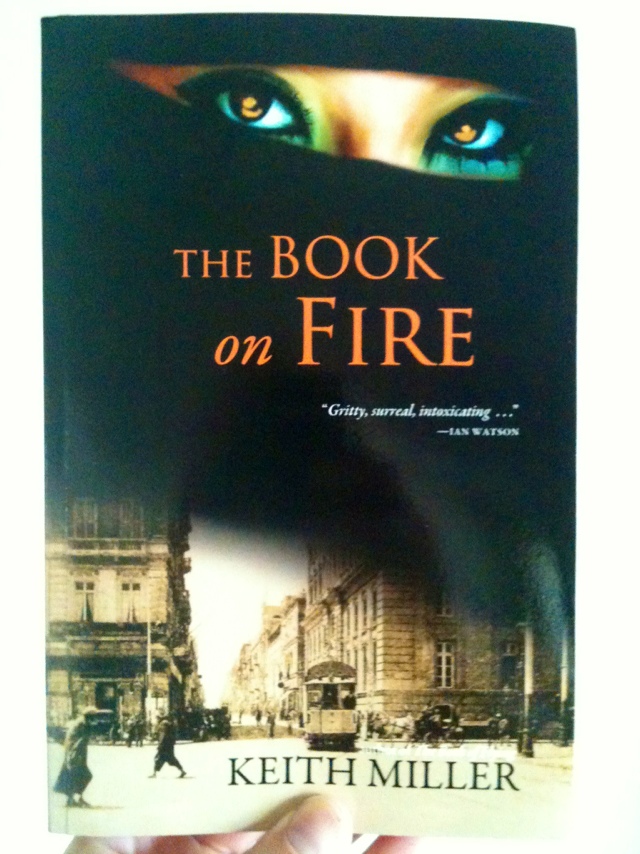
Keith Miller’s novel The Book on Fire features a biblioklept as its protagonist/narrator—so that obviously piqued my interest. The setting also seems cool, so this will find its way close to the top of the review stack. Here’s a description from Miller’s site

Balthazar, book thief and bon vivant, arrives in Alexandria to steal from the famous library. But from the moment he steps off the boat, a veiled figure shadows him. Zeinab, literary prostitute and avenging ghost, will be his chaperone through the city of books. With her help, he succeeds in penetrating the underground library. But once inside, instead of ransacking it, he becomes obsessed with the youngest librarian, Shireen, who was born in the library and is herself more than half book. Their love story forms the heart of the novel. Balthazar schemes to get Shireen out of the library. But Zeinab has plans of her own . . .

20111119-112627.jpg

Andrei Gelasimov’s Thirst is new in English translation next week from, uh, Amazon’s new imprint, Amazon Crossing. Here’s their description—

Masterfully translated from its original Russian by award-winning translator Marian Schwartz, Thirst tells the story of 20-year-old Chechen war veteran, Kostya. Maimed beyond recognition by a tank explosion, Kostya spends weeks on end locked inside his apartment, his sole companion the vodka bottles spilling from the refrigerator. But soon Kostya’s comfortable, if dysfunctional, cocoon is torn open when he receives a visit from his army buddies who are mobilized to locate a missing comrade. It is through this search for his missing friend that Kostya is able to find himself.

Thirst is a nice slim novella, and I enjoyed its opening pages, but I’ve got to grip about the cover. I get that the book deals with alcoholism, but ripping off Absolut Vodka’s iconic design is lame. I get that it’s supposed to be ironic or whatever, but I just really hate it. Anyway, I also hate the cover for David Markson’s Wittgenstein’s Mistress, so it’s silly to gripe about covers. Someone should make up an adage.

Kate Beaton Explains Psychoanalysis at Hark! A Vagrant

Kate Beaton’s take on psychoanalysis. From Hark! A Vagrant.

Roger Ebert’s Negative Review of David Lynch’s Blue Velvet (1986)

“The Zombies” — Donald Barthelme

“The Zombies”

by

Donald Barthelme


In a high wind the leaves fall from the trees. The zombies are standing about talking. “Beautiful day!” “Certainly is!” The zombies have come to buy wives from the people of this village, the only village around that will sell wives to zombies. “Beautiful day!” “Certainly is!” The zombies have brought many cattle. The bride price to a zombie is exactly twice that asked of an ordinary man. The cattle are also zombies and the zombies are in terror lest the people of the village understand this.

These are good zombies. Gris Grue said so. They are painted white all over. Bad zombies are unpainted and weep with their noses, their nostrils spewing tears. The village chief calls the attention of the zombies to the fine brick buildings of the village, some of them one thousand bricks high — daughters peering from the windows, green plants in some windows and, in others, daughters. “You must promise not to tell the Bishop,” say the zombies, “promise not to tell the Bishop, beautiful day, certainly is.” Continue reading ““The Zombies” — Donald Barthelme”

(Just a Really Great Grab of) Books Acquired, 11.18.2011

20111118-155019.jpg

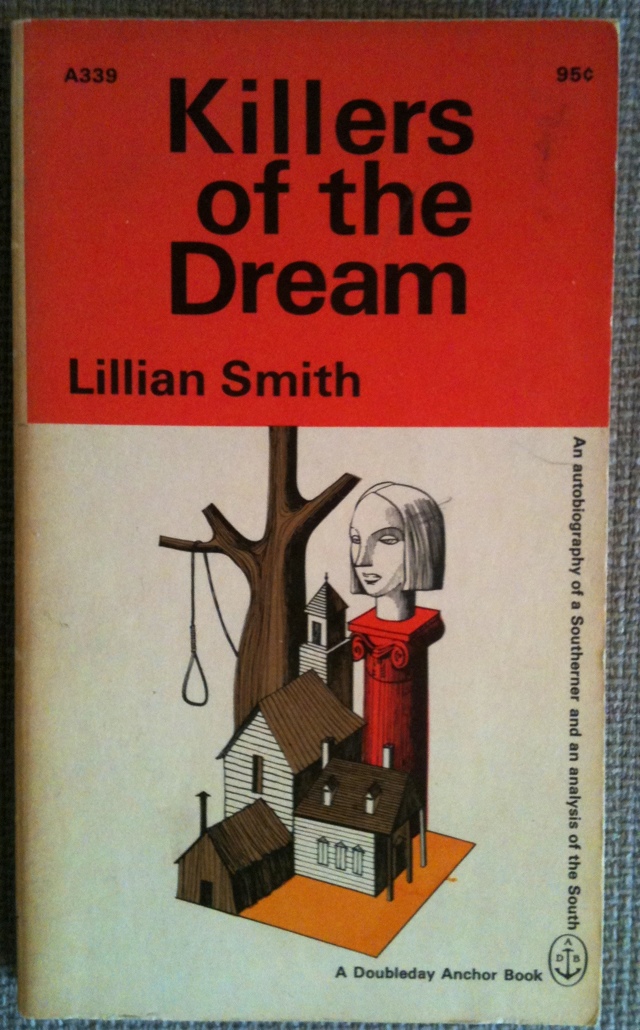
See, this is why I go to my favorite local bookshop at least once once. (It doesn’t hurt that it’s like a mile from my house). I read Lillian Smith’s memoir Killers of the Dream back in grad school, but I checked my copy out from the school library (being like, a poor grad student and whatnot, and Biblioklept not being established enough to rack up, uh, free books). Anyway, this is one of the best covers I think I’ve ever seen; Doubleday seems to be taking a cue from Penguin here. The design is simple, elegant, and appropriately horrific. Anyway, I picked up Smith’s book because I had wanted to use a few passages from it for a particular class I was teaching, but I when I looked for it I realized I didn’t it own it. So. Anyway. If you haven’t read Killers, I highly recommend it: “groundbreaking” would be an understatement here. Smith plumbs the strange hypocrisies of Jim Crow South; more straightforward than Faulkner but equally affecting.

20111118-155032.jpg

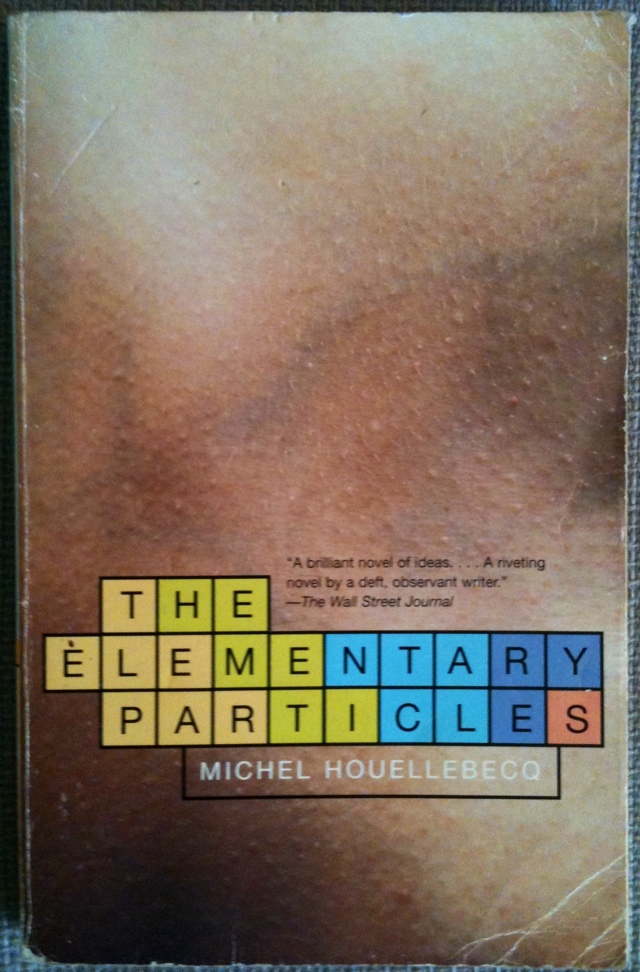
I have a little list I keep in my wallet. It’s ragged and rumpled, and some names are cribbed there in a meandering webby calligraphy that would prove to any team of forensic writing analysts that I cannot write by hand. Anyway, Michel Houllebecq (or, if we’re being honest, a bizarre corruption of that last name) has been on that list for a while—so I was happy to snap this one up. The cover is Ballardian, or maybe, more accurately, Cronenebergian (Cronenbergesque?). More forthcoming.

20111118-155042.jpg

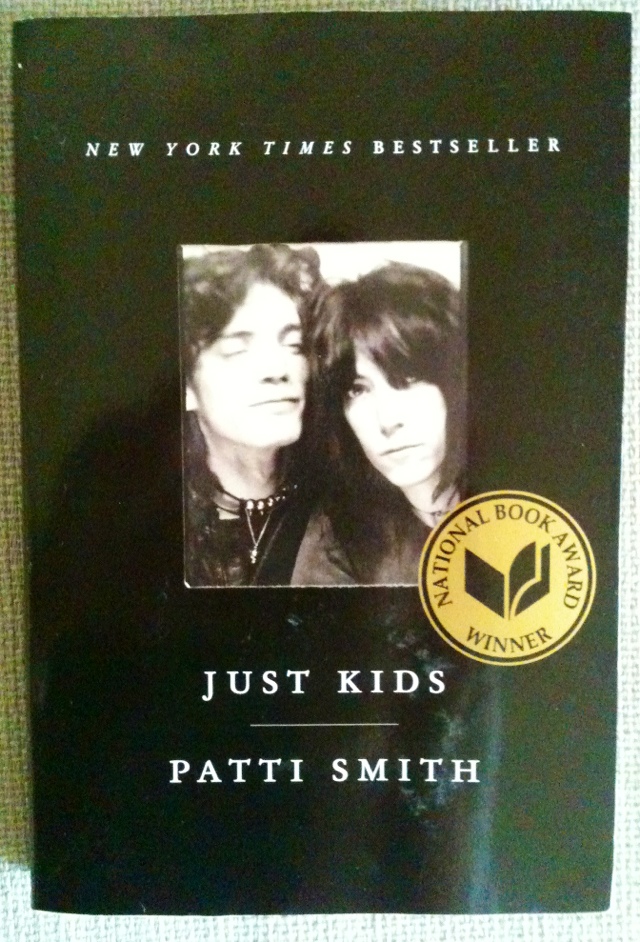
Just Kids: Patti Smith: Robert Mapplethorpe: I was looking under Biographies for Lillian Smith: found this: c’mon, you know this won the Nat’l BA: (or the sticker should tip you): will check out the fuss: extraneous colon: :

Werner Herzog on Types of Stupidity

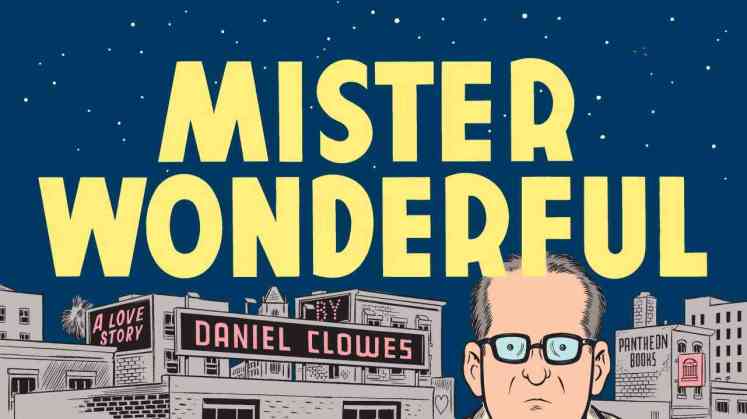
Mister Wonderful — Daniel Clowes

There’s an unexpected sweetness to Mister Wonderful, the latest work from Daniel Clowes (new in hardback from Pantheon). Sure, we’re still deep in Clowes territory here, with misanthropic protagonist Marshall offering up acerbic observations on wealthy yuppies, phony poseurs, and jerks on cell phones—all shot through a lens of self-loathing—but Mister Wonderful (subtitled A Love Story) is optimistic, a study in possibility that never tips over the sheer cliff of despair on the other side of romanticism. With its sense of balance, both emotional and narrative, Mister Wonderful is in some way the “good twin” to last year’s Wilson, a work that pointed to the illusory nature of growth and the futility of human connection.

Where Wilson measured the life of its eponymous protagonist over decades (and in extreme hyperbole) as he sought to regain contact with his estranged family, Mister Wonderful  covers just a few hours in the life of Marshall, a sad man set up on a blind date with nutty Natalie, a woman he immediately pegs as way out of his league. Marshall quickly romanticizes the possibility of a life with Natalie, struggling to keep his composure throughout their coffee and dinner date.
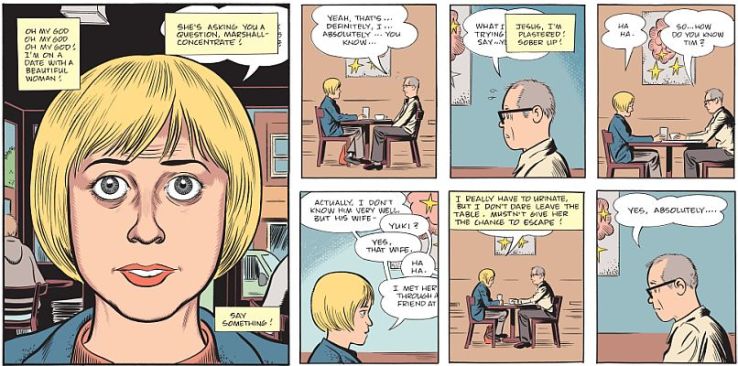
Natalie curtails the date to go to a party with old friends, but a surprise (violent) encounter allows Marshall a sliver of heroism—and a chance for more time with Natalie. They head to the party together, only to run into Natalie’s ex-boyfriend, giving Clowes plenty of oomph for a strong third act.

There’s a cinematic scope to Mister Wonderful. The book is 11″ x 6″, and Clowes makes excellent use of his Sunday’s comic page dimensions, exhibiting a level of detail and precision that imbue in Mister Wonderful an air of realism (one that contrasts the cartoony elements of evil twin Wilson). Clowes’s artistic powers are refined, balanced, and agile; he displays a command of color and shape that help define the strange emotional contours of Mister Wonderful, a book about second chances and those rare moments our interior lives might sync unexpectedly with the concrete possibilities life affords us.

Mister Wonderful is funny and balanced, but it’s not for everyone, including some longtime Clowes fans who might quibble with the book’s apparent slightness. Mister Wonderful clocks in at 80 pages, and while some readers may feel shortchanged, perhaps they are overlooking the scope of the work. Clowes is at the height of his powers here, deftly controlling a spare story about  midlife tumult. There’s maturity and depth in this graphic novella. “Novella” isn’t the right term—Mister Wonderful is closer to a long short story, expertly told. Clowes still exhibits some of the sharp, mean edges that marked his earlier work, but the points are more finely honed, more subtle and precise. Some of the erratic weirdness we find in Clowes’s early stuff isn’t on display here, but this is more on account of Clowes’s stronger command of his medium’s formal elements. The bizarre, cynical spirit remains, however. Thankfully, Clowes makes no attempt to redeem his weirdos, nor does he push them into an unearned, false conclusion. Instead, Mr. Wonderful presents their problems and hang-ups and shortcomings as very real, even as it suggests a tint of unironic optimism. Recommended.
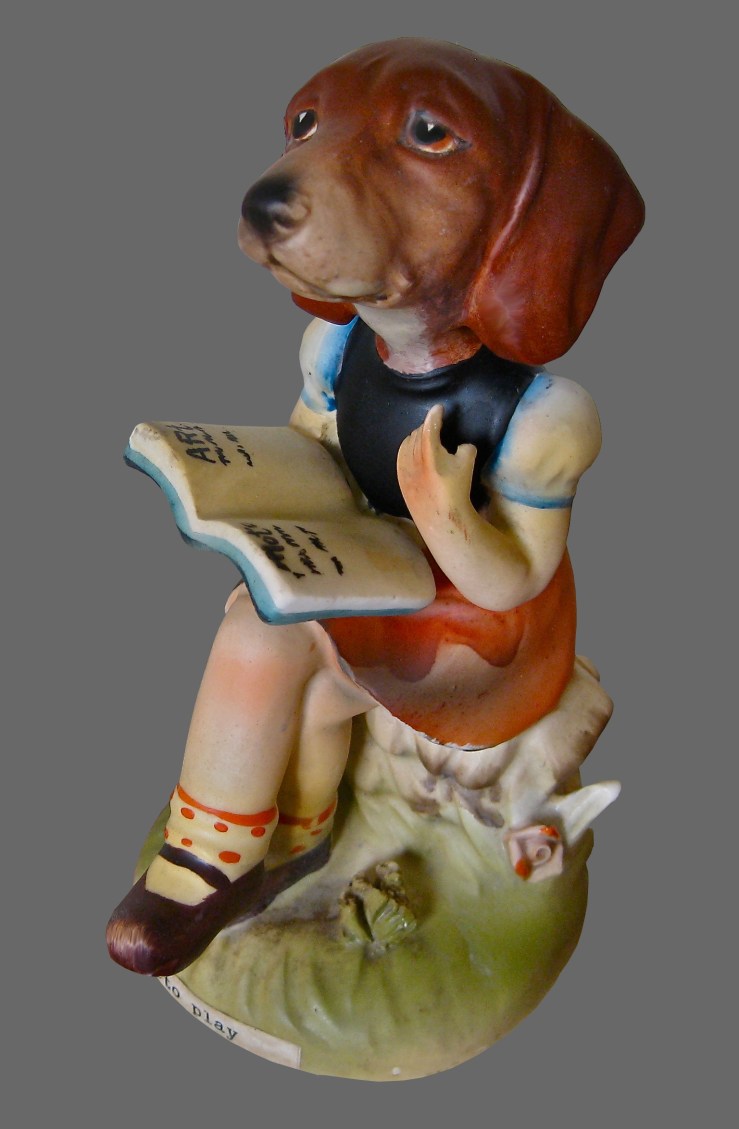
Dachshund Marveling at Joan Didion’s Mastery of the One-Word Sentence — Click Mort

(More and more).

“What Would Socrates Say?” — Woody Allen Attempts Syllogistic Logic

The Triple Hecate — William Blake

“The Mice” — Lydia Davis

“The Mice” a very short story by Lydia Davis (read our review of The Collected Stories of Lydia Davis)—

Mice live in our walls but do not trouble our kitchen. We are pleased but cannot understand why they do not come into our kitchen where we have traps set, as they come into the kitchens of our neighbors. Although we are pleased, we are also upset, because the mice behave as though there were something wrong with our kitchen. What makes this even more puzzling is that our house is much less tidy than the houses of our neighbors. There is more food lying about in our kitchen, more crumbs on the counters and filthy scraps of onion kicked against the base of the cabinets. In fact, there is so much loose food in the kitchen I can only think the mice themselves are defeated by it. In a tidy kitchen, it is a challenge for them to find enough food night after night to survive until spring. They patiently hunt and nibble hour after hour until they are satisfied. In our kitchen, however, they are faced with something so out of proportion to their experience that they cannot deal with it. They might venture out a few steps, but soon the overwhelming sights and smells drive them back into their holes, uncomfortable and embarrassed at not being able to scavenge as they should.

Willem de Kooning on Painting Women

“Mr. Brain” — Russell Edson

“Mr. Brain,” something by Russell Edson

 Mr Brain was a hermit dwarf who liked to eat shellfish off the moon. He liked to go into a tree then because there is a little height to see a little further, which may reveal now the stone, a pebble–it is a twig, it is nothing under the moon that you can make sure of.

So Mr Brain opened his mouth to let a moonbeam into his head.

Why to be alone, and you invite the stars to tea. A cup of tea drinks a luminous guest.

In the winter could you sit quietly by the window, in the evening when you could have vinegar and pretend it to be wine, because you would do well to eat doughnuts and pretend you drink wine as you sit quietly by the window. You may kick your leg back and forth. You may have a tendency to not want to look there too long and turn to find darkness in the room because it had become nighttime.

Why to be alone. You are pretty are you not/you are as pretty as you are not, or does that make sense.

You are not pretty, that is how you can be alone. And then you are pretty like fungus and alga, you are no one without some one, in theory alone.

Be good enough to go to bed so you can not think too much longer.

Marilyn Reads Whitman

(Via. See also and also).

“A Strange Kind of Slavery” — David Foster Wallace on Individuality, Corporatism, and Civic Responsibility

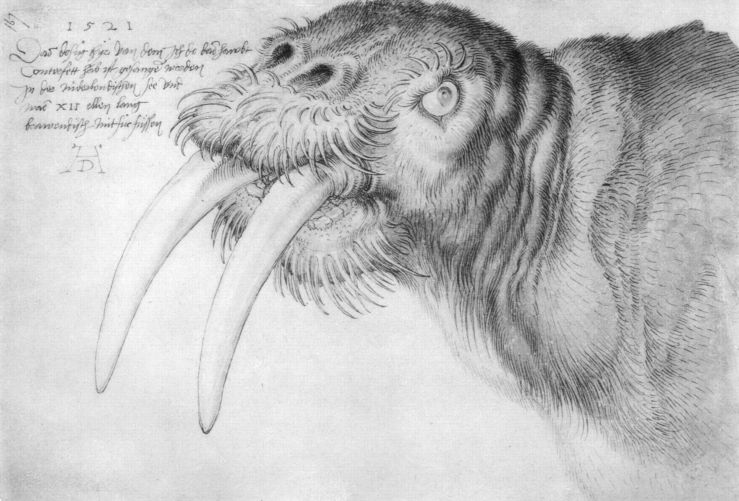
Head of a Walrus — Albrecht Dürer