“My Books Are Forgeries” — Philip K. Dick

Slate has published an excerpt from the forthcoming collection of letters and other ephemera, The Exegesis of Philip K. Dick (by, uh, PK Dick). An excerpt of that excerpt—

My books are forgeries. Nobody wrote them. The goddam typewriter wrote them; it’s a magic typewriter. Or like John Denver gets his songs: I get them from the air. Like his songs, they—my books—are already there. Whatever that means.

The most ominous element from my books which I am encountering in my actual life is this. In one of my novels, Ubik, certain anomalies occur which prove to the characters that their environment is not real. Those same anomalies are now happening to me. By my own logic in the novel I must conclude that my or perhaps even our collective environment is only a pseudo-environment. In my novel what broke through was the presence of a man who had died. He speaks to them through several intermediary systems and hence must still be alive; it is they, evidently, who are dead. What has been happening to me for over three months is that a man I knew who died has been breaking through in ways so similar to that of Runciter in Ubik that I am beginning to conclude that I and everyone else is either dead and he is alive, or—well, as in the novel, I can’t figure it out. It makes no sense.

Moe Szyslak Defines “Postmodernism” for Homer and the Boys (The Simpsons)

William Gibson: “Bleak House Is the Best Steampunk Landscape That Will Ever Be”

From The Paris Review interviewWilliam Gibson on on Charles Dickens’s Bleak House

INTERVIEWER

The Victorians invented science fiction.

GIBSON

I think the popular perception that we’re a lot like the Victorians is in large part correct. One way is that we’re all constantly in a state of ongoing t­echnoshock, without really being aware of it—it’s just become where we live. The Victorians were the first people to experience that, and I think it made them crazy in new ways. We’re still riding that wave of craziness. We’ve gotten so used to emergent technologies that we get anxious if we haven’t had one in a while.

But if you read the accounts of people who rode steam trains for the first time, for instance, they went a little crazy. They’d traveled fifteen miles an hour, and when they were writing the accounts afterward they struggled to describe that unthinkable speed and what this linear velocity does to a perspective as you’re looking forward. There was even a Victorian medical complaint called “railway spine.”

Emergent technologies were irreversibly altering their landscape. Bleak House is a quintessential Victorian text, but it is also probably the best steam­punk landscape that will ever be. Dickens really nailed it, especially in those proto-Ballardian passages in which everything in nature has been damaged by heavy industry. But there were relatively few voices like Dickens then. Most people thought the progress of industry was all very exciting. Only a few were saying, Hang on, we think the birds are dying.


“I Think I Could Make a Picture Better Than That, But I Haven’t Been Given a Second Chance” — Orson Welles Talks About Making Citizen Kane

Nabokov Shows Off Different Lolita Covers

“Hit Me” — A Scene from Terrence Malick’s Film The Tree of Life

“On the Difficulty of Imagining an Ideal City” — Georges Perec

“On the Difficulty of Imagining an Ideal City,” a poem or essay or something—a text—by Georges Perec. The piece is one of the selections in Perec’s collection of miscellany, Species of Spaces and Other Pieces:

I wouldn’t like to live in America but sometimes I would

I’d love to live on the Boulevard St Germain but sometimes I wouldn’t

I wouldn’t like to live on a coral reef but sometimes I would

I wouldn’t like to live in a dungeon but sometimes I would

I wouldn’t like to live in the East but sometimes I would

I love living in France but sometimes I don’t

I’d love to live in Greenland but not for too long

I’d like to live to a hundred but sometimes I wouldn’t

I wouldn’t like to live in Issoudun but sometimes I would

I wouldn’t like to live on a junk but sometimes I would

I wouldn’t like to live in a ksar but sometimes I would

I’d have loved to go in a lunar module but it’s a bit late

I wouldn’t like to live in a monastery but sometimes I would

I wouldn’t like to live at the Hotel Negresco but sometimes I would

I wouldn’t like to live in the open air but sometimes I would

I love living in Paris but sometimes I don’t

I wouldn’t like to live in Quebec but sometimes I would

I wouldn’t like to live by my own resources but sometimes I would

I wouldn’t like to live in a submarine but sometimes I would

I wouldn’t like to live in a tower but sometimes I would

I wouldn’t like to live with Ursula Andress but sometimes I would

I wouldn’t like to live in a village but sometimes I would

I wouldn’t like to live in a wigwam but sometimes I would

I’d love to live in Xanadu but not for ever

I wouldn’t like to live in the Yonne but sometimes I would

I wouldn’t like us all to live in Zanzibar but sometimes I would

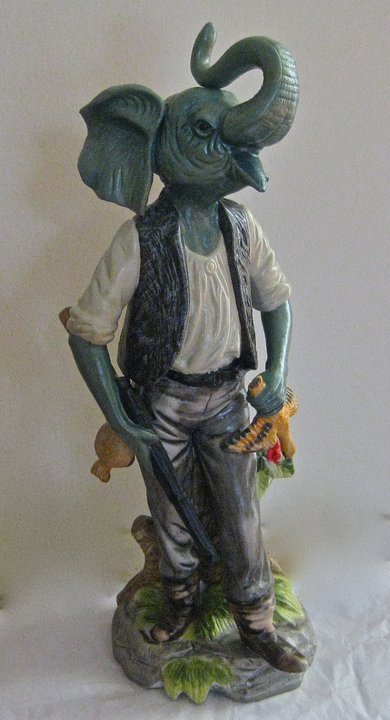
Elephant Disguised as Ernest Hemingway — Click Mort

(More).

Books Acquired, 11.08.2011

20111108-190207.jpg

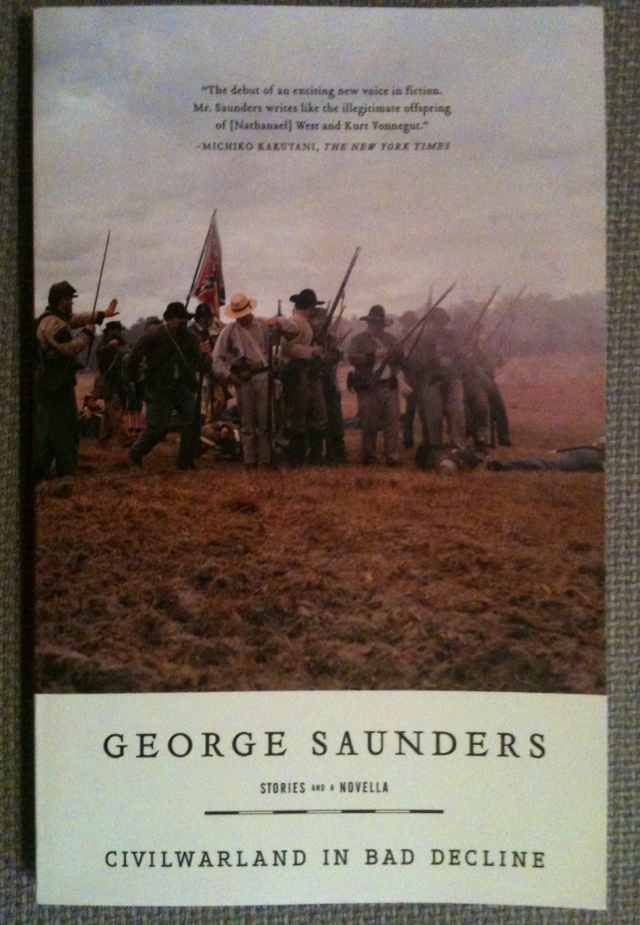
Swung by my favorite local bookstore this afternoon (and, for regular readers who wonder why I seem to do this so often, I might point out that said bookstore is like, 7/10ths of a mile from my house). I picked up George Saunders’s CivilWarLand in Bad Decline after numerous reader suggestions and more or less enjoying his later collection, Pastoralia (review this week?).

20111108-190214.jpg

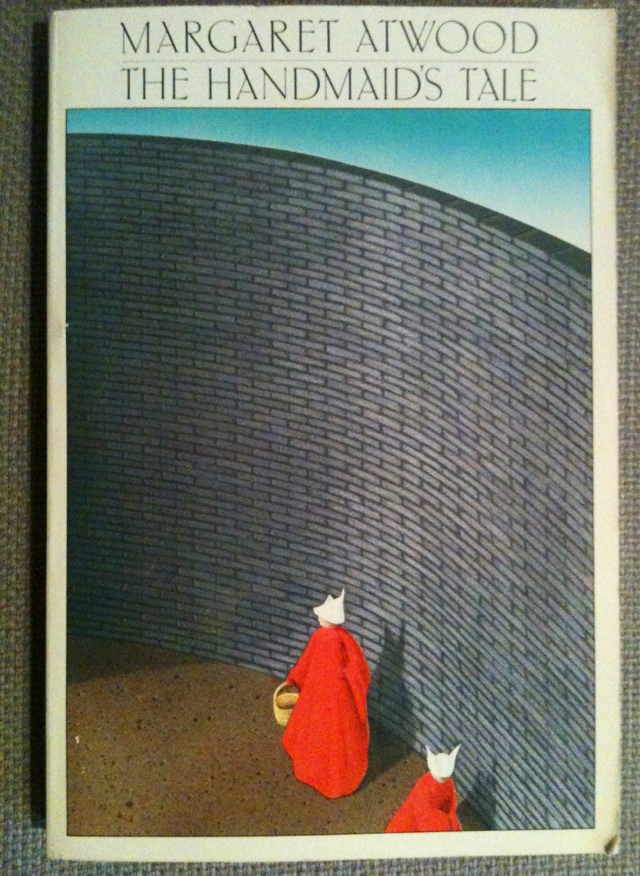
I don’t think the lousy iPhone pic conveys how aesthetically pleasing this tpb version of Margaret Atwood’s novel The Handmaiden’s Tale is. It’s an oversized version, really. I used to own the book but a student permanently “borrowed” it (yes, a guy who posts under the scaredynym “Biblioklept” shouldn’t complain about book theft, but still . . .), and anyway, the version I owned was a cheap mass market paperback copy that I got my mom to buy for me at an airport years ago in Australia, so of course it had no special sentimental value, right?

Klaus Kinski Is Bored

Daisy — Jeff Gillette

(More).

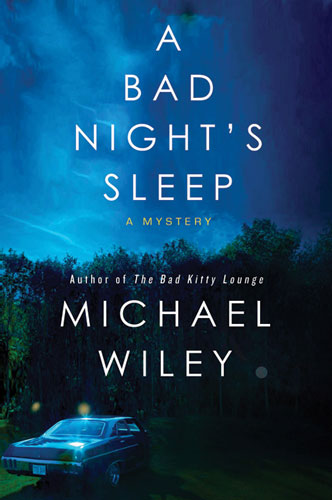
A Bad Night’s Sleep — Michael Wiley

A Bad Night’s SleepMichael Wiley’s third detective novel, opens with protagonist PI Joe Kozmarski working what appears to be a boring job. He’s hired to investigate the repeated robberies of a Chicago construction site. Sure, it’s a glorified nightwatchman gig, but this job might get him closer to retiring in a certain north Florida fishing town he dreams about. The job gets too interesting too quickly, however, when the burglars arrive and begin stealing equipment and material. Then the police show up—and help rob the site. Kozmarski calls 911, more police arrive, and, in the firefight that ensues he shoots—and kills—one of the robber cops.

While waiting in jail to be charged—an event that never quite comes to light—Kozmarski reflects—

Every time I’d seen someone die I’d felt the world go a little quieter like I’d lost part of my hearing, and sooner or later the singing, laughing, and screaming would fade into a hushing wind of white noise. That had happened when my dad died. It had happened when Kevin, a boy I was supposed to be protecting, ended up twisted and broken on his mother’s kitchen floor. It happened. Shooting the cop felt worse. I’d ripped a little hole in the universe and I wondered what sound would fly through it.

Kozmarski’s little hole lets in more than strange sounds. The cop-shooting imperils his PI license, damages his (not exactly heretofore spotless) reputation, and leads undercover cops to threaten him (to the point of firing shots) as he leaves jail. The stress doesn’t exactly help protect his tenuous sobriety either, and Kozmarski’s soon on the sauce again (let’s not even mention that little bag of coke his “friend” sends him to help through these troubled times). Luckily (although that’s hardly an appropriate adverb here), Kozmarski’s friend on the force sets up another job for our distressed hero, one that could clear his name and clean out some of the dirty cops of the Chicago PD. Kozmarski infiltrates the corrupt gang of crooked cops, but as he plumbs deeper into the mystery, the line between good guys and bad guys becomes increasingly nebulous.

A Bad Night’s Sleep is a page turner telegraphed in terse, tense, vivid prose. Wiley’s plot and dialogue alike are hardboiled in the noir tradition of Hammett or Chandler, and his characters and pacing bristle with the gritty immediacy one might find in George V. Higgins. There’s a smart brush of black humor to A Bad Night’s Sleep that comes from Wiley’s characterization and his protagonist’s wry observations. And for all of his hard edges, we find in Kozmarski an engaged protagonist, a man of genuine pathos. Wiley delivers what readers want from an intelligent mystery—keen, suspenseful plotting, sharp action sequences, and a hero we can care about.

A Bad Night’s Sleep is available now in hardback from St. Martin’s Minotaur imprint. Read our interview with Michael Wiley.
Woody Allen on Existentialism

Lars Iyer on Roberto Bolaño’s The Savage Detectives

Great great great essay from Lars Iyer today at The White Review. The essay is called “Nude in Your Hot Tub, Facing the Abyss (A Literary Manifesto After the End of Literature and Manifestos).” You should really just read it; I think Iyer does here what David Shields might have meant to do with Reality Hungeronly Iyer is far more clear and cogent (and not, like, all whiny). Here’s a taste, Iyer on Roberto Bolaño’s novel The Savage Detectives:

A final example of literature that faces its own demise and survives: Bolaño’s The Savage Detectives is a book about an attempt to create a literary vanguard in 1975, written after the conditions for vanguardist practice had collapsed. It is a book about political revolution written in a period after the inevitable failures of such revolutions have revealed themselves. It is a novel about a literary avant-garde and yet the novel itself resists the conceptualization and stylization that a literary avant-garde requires. It is an ecstatic, passionate novel—Bolaño himself describes it as a ‘love letter to my generation’—that plays out as a parody of the desires for Literature and Revolution. It is a novel, like all recent novels, that comes too late, but unlike most others it finds a way to address this lateness. In doing so, The Savage Detectives provides another model for how all would-be authors can appropriately speak about our anachronistic dreams.

The supposed heroes of the book, Ulises Lima and Arturo Belano, leaders of the literary ‘gang’ called the Visceral Realists, are rarely on stage in the novel for very long. For the most part, we hear of them only at a remove, through the disparate narrators Bolaño calls forward to tell their tale. And the verdict on them is mixed – they have an admirer in gauche and excitable law student Madero, whose brilliantly funny diaries bookend The Savage Detectives, but they have their detractors, too. ‘Belano and Lima weren’t revolutionaries. They weren’t writers. Sometimes they wrote poetry, but I don’t think they were poets, either. They sold drugs,’ says one of Bolano’s narrators. ‘The whole visceral realism thing was… the demented strutting of a dumb bird in the moonlight, something essentially cheap and meaningless,’ says another. In the end they head towards ‘catastrophe or the abyss’, as they wander the world, still attempting to strike literary and political poses when the time for Literature and Politics has gone. ‘We fought for parties that, had they emerged victorious, would have immediately sent us into a forced labour camp’, Bolaño writes of his generation. ‘We fought and poured all our generosity into an ideal that had been dead for over fifty years’.

(Read our review of Iyer’s novel Spurious. Read our interview with Iyer).

Bret Easton Ellis on David Fincher’s Film Zodiac

This weekend, Twitter followers of novelist Bret Easton Ellis were treated to BEE’s views on the films of director David Fincher, with particular consideration paid to Fincher’s overlooked (by audiences, at least) 2007 film Zodiac. I liked Ellis’s commentary, not just because I think he’s spot on here, but also because he points out why so many people might not have liked (or, dare I say “got”) Zodiac on first viewing: the movie was mismarketed. Here’s BEE—

In my original review of Zodiac, I pointed to my own early misunderstanding of what the film was—

When Zodiac came out last year, I prejudicially–and wrongly–assumed that the film, the tale of the infamous Zodiac killer who menaced California in the late sixties and early seventies, would be a moody character study, all ominous texture, smoggy chase scenes, and desperate anger à la Fincher’s 1995 thriller, Se7en (that movie where Gwyneth Paltrow’s head gets chopped off), or even worse, Fincher’s awful 1997 effort The Game. Most Hollywood suspense films–Fincher’s included–propel themselves on chase sequences, meaningless yelling, and overstated light and music queues that seem to scream “this is the part where you feel tense.” Zodiac, however, eschews all of these often vacuous tropes in favor of simply telling a story.

Zodiac is a methodical, investigative procedural about truth, a film that looks at what happens when we try to put order to disorder, when we try to give narrative to life’s loose ends—when we try to understand radically stochastic violence. In retrospect, it seems to me that Fincher’s work here is akin to Roberto Bolaño in some ways, and I think that if people went into it understanding that it was going to be a meditation on truth, and not, say, a cops and robbers thriller, they might appreciate it more (for what it’s worth, several people wrote in on my review to tell me how wrong I was about what I liked about the film. I think, like Ellis, they should give it another shot).

“I Think Life Is Full of Anxieties and Fears and Tears. It Has a Lot of Grief in It, and It Can Be Very Grim” — Charles Schulz on Religion

Lots of great quotes from Charles M. Schulz on religion (and more) via Biblioklept reader JESCIE.  Sample—

I don’t know the meaning of life. I don’t know why we are here. I think life is full of anxieties and fears and tears. It has a lot of grief in it, and it can be very grim. And I do not want to be the one who tries to tell somebody else what life is all about. To me it’s a complete mystery.”

All citations are from Charles M. Schulz: Conversations, which I now want to read.


Books Acquired, 11.02.2011

20111106-152604.jpg

I teach a night class on Wednesdays, and although I enjoy it, I also teach morning sections on Wednesdays, so I’m exhausted when I get home over twelve hours later that night. Anyway, I was thrilled to find a nice little packet from Shocken/Pantheon when I came home last Wednesday—a memoir, a graphic novel, and a book that blends and comments on both.

Meir Shalev’s My Russian Grandmother and Her American Vacuum Cleaner is new in translation from Schocken. Their description—

From the author of the acclaimed novel A Pigeon and a Boy comes a charming tale of family ties, over-the-top housekeeping, and the sport of storytelling in Nahalal, the village of Meir Shalev’s birth. Here we meet Shalev’s amazing Grandma Tonia, who arrived in Palestine by boat from Russia in 1923 and lived in a constant state of battle with what she viewed as the family’s biggest enemy in their new land: dirt.

Grandma Tonia was never seen without a cleaning rag over her shoulder. She received visitors outdoors. She allowed only the most privileged guests to enter her spotless house. Hilarious and touching, Grandma Tonia and her regulations come richly to life in a narrative that circles around the arrival into the family’s dusty agricultural midst of the big, shiny American sweeper sent as a gift by Great-uncle Yeshayahu (he who had shockingly emigrated to the sinful capitalist heaven of Los Angeles!). America, to little Meir and to his forebears, was a land of hedonism and enchanting progress; of tempting luxuries, dangerous music, and degenerate gum-chewing; and of women with painted fingernails. The sweeper, a stealth weapon from Grandpa Aharon’s American brother meant to beguile the hardworking socialist household with a bit of American ease, was symbolic of the conflicts and visions of the family in every respect.

The fate of Tonia’s “svieeperrr”—hidden away for decades in a spotless closed-off bathroom after its initial use—is a family mystery that Shalev determines to solve. The result, in this cheerful translation by Evan Fallenberg, is pure delight, as Shalev brings to life the obsessive but loving Tonia, the pioneers who gave his childhood its spirit of wonder, and the grit and humor of people building ever-new lives.

20111106-152615.jpg

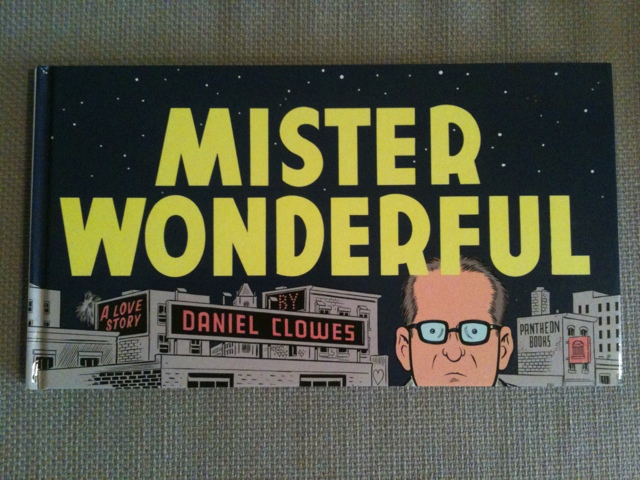
I read Daniel Clowes’s Mister Wonderful that Wednesday night. It was a treat—a wonderful balance of sweetness and acidity. I’m sometimes frightened by how closely I identify with Clowes’s protagonists. Full review next week.

20111106-152627.jpg

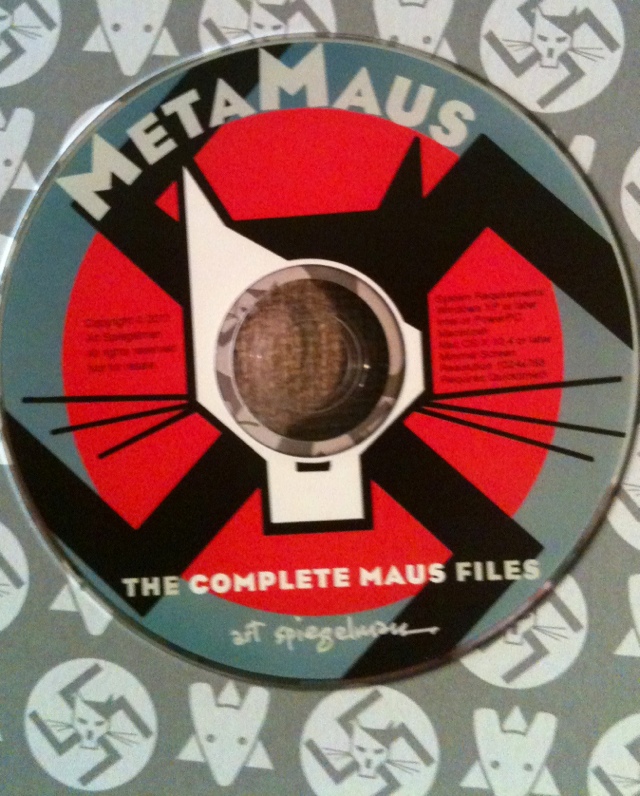
I can’t believe that Art Spiegelman’s MetaMaus hasn’t been remarked upon more—perhaps folks are still digesting it, like me, I guess. I consumed the first 50 pages immediately after finishing Mr. Wonderful, staying up way too late (all of this, accompanied by some mediocre red zin led to a mini-hangover and a generally poor performance teaching classes the next morn). Anyway, MetaMaus is far more engaging than any description of it might suggest. It combines Spiegelman’s cartoons with interviews and other media to detail the process behind creating the original Maus books (or, book singular I suppose is more appropriate). Fascinating stuff, covering memory and art and representation and mice &c. I’ll probably review it in bits and pieces—it seems like too much to process. It also comes with a DVD which I haven’t taken the time to look at yet—-

20111106-152636.jpg