Werner Herzog Talks About John Waters: “He’s the Boldest of the Bold of Filmmakers”

The Reading — Edouard Manet

Storm — Yves Tanguy

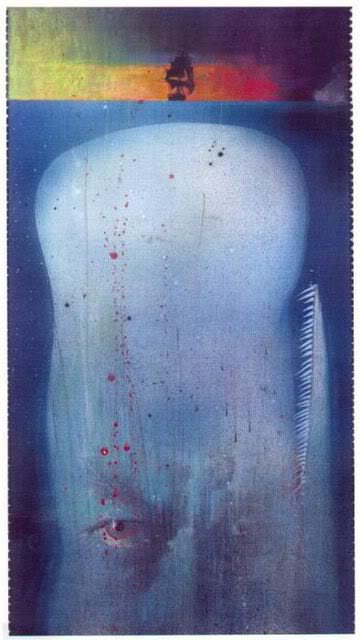
Moby-Dick Illustration — Bill Sienkiewicz

“He Burned Away Like a Comet” — Werner Herzog on Klaus Kinski

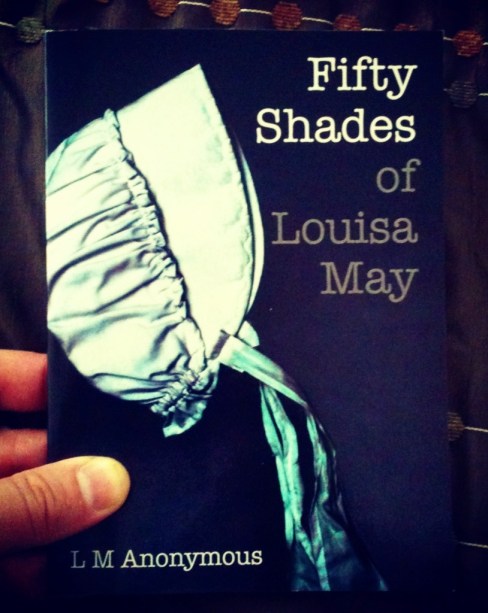
Fifty Shades of Louisa May: A Loving Biography Masquerading as a Smutty Novelty Book

20120818-173921.jpg

Fifty Shades of Louisa May by L.M. Anonymous, is , to all appearances, the kind of cheeky send-up that E.L James’s Fifty Shades of Grey hardly deserves. Satire has the strange, paradoxical power to somehow dignify its target after all, or at least point out how the thing being satirized is, you know, worth actually talking about. However, Louisa May has no proximity to Fifty Shades of Grey, other than the window dressing of its cover and its title, both of which exist somewhere on the thin line between clever and crass. Sure, Louisa May has its share of sex scenes (most are more ridiculous than erotic), but this slim little book is, at its core, really a loving biography of novelist Louisa May Alcott.

The conceit is that Alcott, dipping into her secret vice of a midnight bottle of Madeira, decides to a pen a memoir (that she intends to burn) of her “carnal episodes, some amusing, others touching, but all rife with the sighs and heavings of Love’s labours.” (How the “X-rated woodcuts” that accompany each chapter made their way into the book remains unclear; I suspect that they follow the tradition established in the mashup Pride and Prejudice and Zombies). Organized roughly around Alcott’s difficult life with her transcendentalist parents and their transcendentalist friends, each chapter of Louisa May culminates in an erotic episode, albeit one that our heroine usually witnesses as voyeur and not participant. These episodes tend to involve other transcendentalist figures. In one inspired vignette, Louisa May sneaks out of her house to follow Herman Melville to the Old Manse, where she watches him watch Sophia and Nathaniel Hawthorne get it on:

I heard a small groan from Mr. Melville’s beech tree and saw that his own garments now circled his ankles and he was busily engaged in the art of Onan, his slitted eyes on his mentor, beard shivering with concentration. I looked away quickly—even in my youth I knew that such solitary activity must remain unwitnessed.

The Hawthornes let out a quivering scream, Nathaniel’s voice as high pitched as his wife’s as he rose from his chair to finish the work that his wife had begun. Thus spent, Sophia lay back in his arms. The ever-fastidious Mr. Hawthorne reached out with one hand to set to reordering his manuscript pages.

Mr. Melville let out a low hoot and sent a frothy fusillade across the yard to strike the windowglass with a furious splash.

“Look, my Dove, it appears to be raining,” Sophia said.

The episode is obviously more comical than erotic, its style—indeed the style of the entire book—a strange mashup of Alcott’s own rhythms and the diction of Victorian smut. There’s something joyously silly in the way L.M. Anonymous throws together various transcendentalists into would-be erotic interludes; when our heroine describes Fruitlands founder Charles Lane jacking off by moonlight, the whole thing feels like a big dirty in-joke for those of us who love this period of American history and literature. And sure, the jokes can be very crude—here’s Henry David Thoreau, nature lover:

20120818-173927.jpg

L.M. Anonymous (“a well-known writer who prefers the cloak of anonymity to the vulgar embrace of rude fame,” according to the back of the book) seems to know his/her history (and attending rhetorical styles) fairly well. I’d have to guess that the author is, if not an Alcott scholar, then at least a passionate enthusiast—because what stands out most about Fifty Shades of Louisa May isn’t the smut but the internal conflicts of our narrator Louisa May.

In Anonymous’s imagination, Alcott is an embittered soul who has never forgiven her father for his foolishness, nor gotten over the fact that she’s the sole source of income for the Alcotts. She badmouths her books as unserious trash, bemoaning that she could do more:

Too often I have found myself diminished by the company of Famous Men to praise them. Had I been but relieved of the burden of supporting the entire legions of Alcotts with my earnings, I could have written novels and poems to equal their best—of that I am most confident. Instead of greatness, I lingered at the Trough of Rubbish too long, achieving only a shining of tin, not the glimmering of gold. But it is too late for me to be concerned with such matters. Time sorts out all writers, revealing each for what they truly were. I only hope that I shall be remembered as much for what I did not achieve as for what I did.

There’s so much tenderness here: Anonymous’s love and respect for his/her subject is plain. The author also seems to write through the book, through the narrator in this passage, as if acknowledging, in some metatextual move, the book’s own novelty status, pointing out that the book, a shaky Grey cash-in, is in some way a part of the Trough of Rubbish, but also that there’s more here too.

I read Fifty Shades of Louisa May in one short sitting, and found it at times amusing, if not especially erotic. I was prepared to to write it off as a silly novelty book—which perhaps it is—but there’s also a real love—and understanding—for Louisa May Alcott that comes through here. Who is it for? I’m not really sure. I’m going to guess that Fifty Shades of Grey fans will be disappointed, and fans of Little Women and its sequels will find their beloved tome trashed by Alcott herself (or at least her character). The book might work best as a primer to the American Renaissance, although I’m not sure which professor would be brash enough to stick this on her syllabus. My hope would be that Grey fans might find in Louisa May an inroad into better writers; at minimum though, they’ll at least be exposed to prose far superior to E.L. James’s trough of rubbish.

Fifty Shades of Louisa May is new in trade paperback from OR Books.
The Missal — John William Waterhouse

Black Orpheus (Full Film)

Book Shelves #35, 8.27.2012


20120826-135649.jpg

Book shelves series #35, thirty-fifth Sunday of 2012

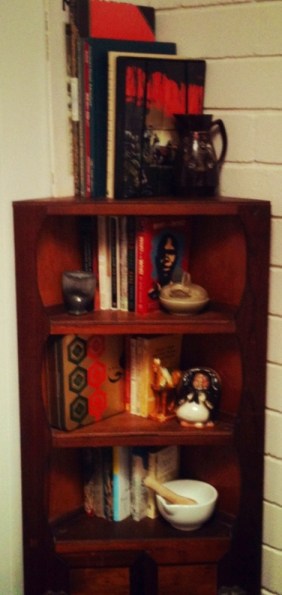
Corner case in the family room. Today’s shelf:

20120826-135655.jpg

The depth makes getting the shadow off the shot almost impossible without using additional lighting.

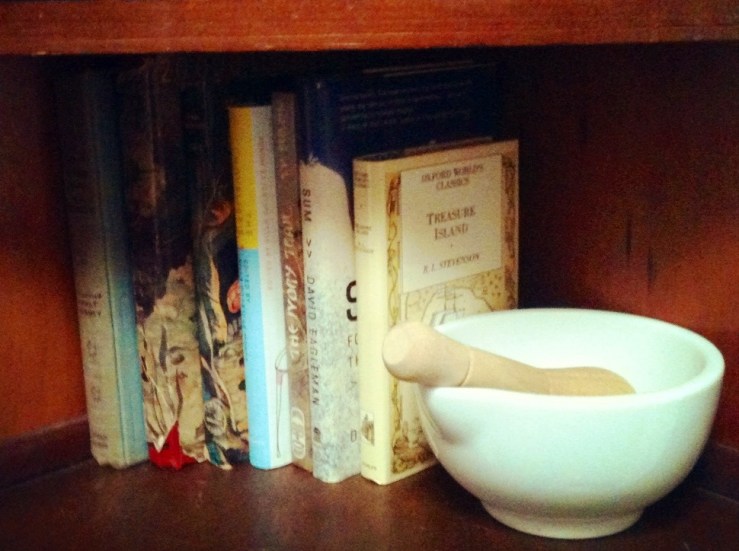
Note the use of mortar and pestle as bookend, a genteel move that screams respectability.

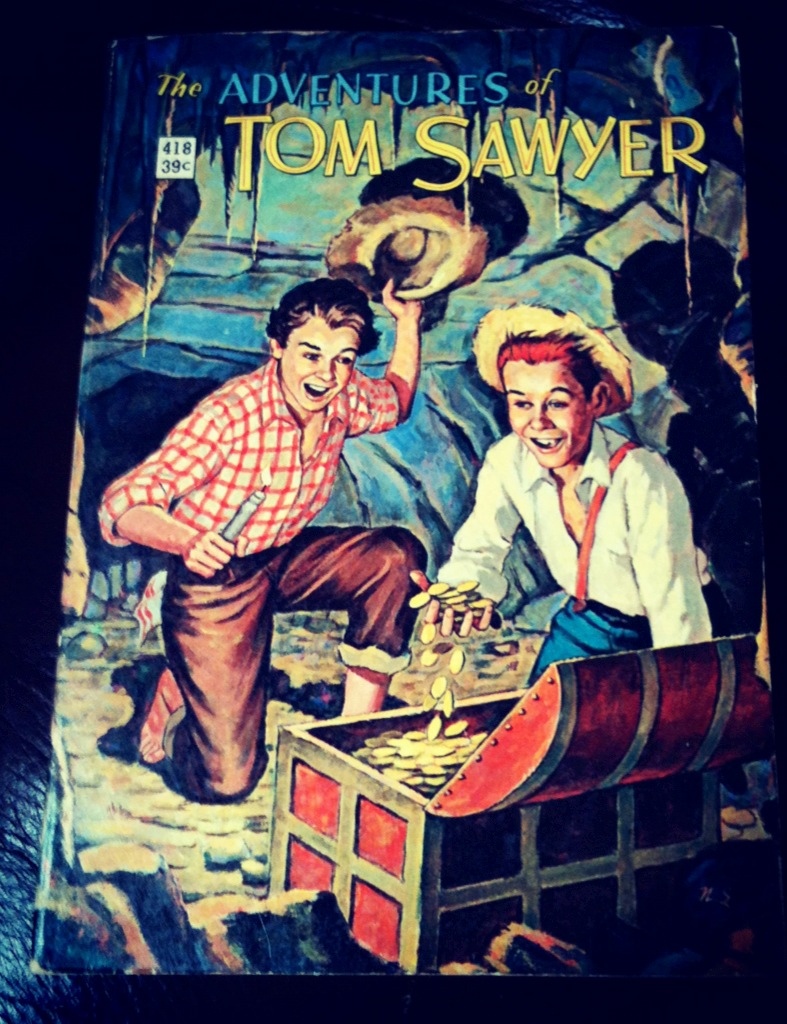
Volumes on this shelf include:

20120826-135702.jpg

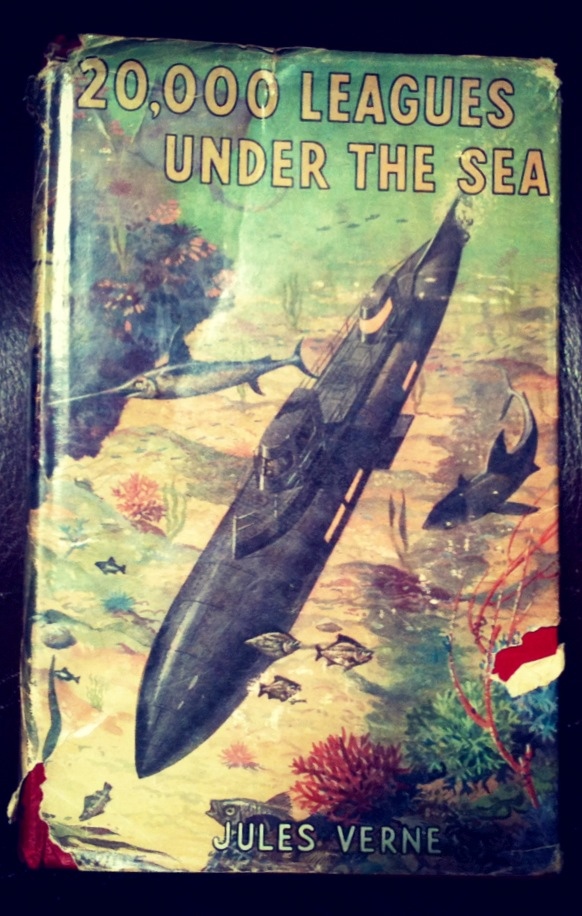
And:

20120826-135710.jpg


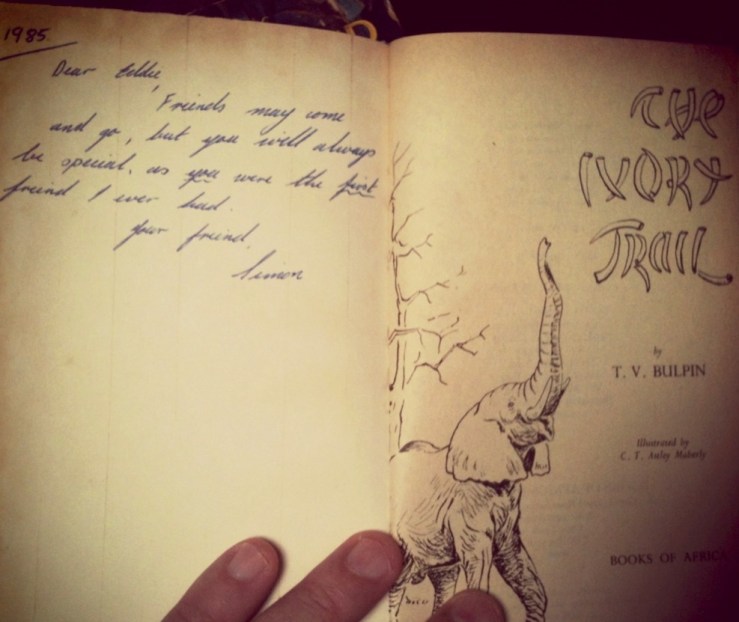
As well as The Ivory Trail, inscribed by my the mother of one of best friends of early childhood (and attributed to him):

20120826-135716.jpg


Moby-Dick Illustration — Tony Millionaire

“The Yellow Paint” — Robert Louis Stevenson


“The Yellow Paint,” a short fable by Robert Louis Stevenson—

In a certain city there lived a physician who sold yellow paint. This was of so singular a virtue that whoso was bedaubed with it from head to heel was set free from the dangers of life, and the bondage of sin, and the fear of death for ever. So the physician said in his prospectus; and so said all the citizens in the city; and there was nothing more urgent in men’s hearts than to be properly painted themselves, and nothing they took more delight in than to see others painted. There was in the same city a young man of a very good family but of a somewhat reckless life, who had reached the age of manhood, and would have nothing to say to the paint: “Tomorrow was soon enough,” said he; and when the morrow came he would still put it off. She might have continued to do until his death; only, he had a friend of about his own age and much of his own manners; and this youth, taking a walk in the public street, with not one fleck of paint upon his body, was suddenly run down by a water-cart and cut off in the heyday of his nakedness. This shook the other to the soul; so that I never beheld a man more earnest to be painted; and on the very same evening, in the presence of all his family, to appropriate music, and himself weeping aloud, he received three complete coats and a touch of varnish on the top. The physician (who was himself affected even to tears) protested he had never done a job so thorough.

Some two months afterwards, the young man was carried on a stretcher to the physician’s house.

“What is the meaning of this?” he cried, as soon as the door was opened. “I was to be set free from all the dangers of life; and here have I been run down by that self-same water-cart, and my leg is broken.”

“Dear me!” said the physician. “This is very sad. But I perceive I must explain to you the action of my paint. A broken bone is a mighty small affair at the worst of it; and it belongs to a class of accident to which my paint is quite inapplicable. Sin, my dear young friend, sin is the sole calamity that a wise man should apprehend; it is against sin that I have fitted you out; and when you come to be tempted, you will give me news of my paint.”

     “Oh!” said the young man, “I did not understand that, and it seems rather disappointing. But I have no doubt all is for the best; and in the meanwhile, I shall be obliged to you if you will set my leg.”

“That is none of my business,” said the physician; “but if your bearers will carry you round the corner to the surgeon’s, I feel sure he will afford relief.”

Some three years later, the young man came running to the physician’s house in a great perturbation. “What is the meaning of this?” he cried. “Here was I to be set free from the bondage of sin; and I have just committed forgery, arson and murder.”

“Dear me,” said the physician. “This is very serious. Off with your clothes at once.” And as soon as the young man had stripped, he examined him from head to foot. “No,” he cried with great relief, “there is not a flake broken. Cheer up, my young friend, your paint is as good as new.”

“Good God!” cried the young man, “and what then can be the use of it?”

“Why,” said the physician, “I perceive I must explain to you the nature of the action of my paint. It does not exactly prevent sin; it extenuates instead the painful consequences. It is not so much for this world, as for the next; it is not against life; in short, it is against death that I have fitted you out. And when you come to die, you will give me news of my paint.”

“Oh!” cried the young man, “I had not understood that, and it seems a little disappointing. But there is no doubt all is for the best: and in the meanwhile, I shall be obliged if you will help me to undo the evil I have brought on innocent persons.”

     “That is none of my business,” said the physician; “but if you will go round the corner to the police office, I feel sure it will afford you relief to give yourself up.”

Six weeks later, the physician was called to the town gaol.

“What is the meaning of this?” cried the young man. “Here am I literally crusted with your paint; and I have broken my leg, and committed all the crimes in the calendar, and must be hanged tomorrow; and am in the meanwhile in a fear so extreme that I lack words to picture it.”

“Dear me,” said the physician. “This is really amazing. Well, well; perhaps, if you had not been painted, you would have been more frightened still.”


The Bath — Alfred Stevens

Man on the Moon — Norman Rockwell

RIP Neil Armstrong, 1930-2012

The Compleat Beatles (Full 1982 Documentary)

In the Jungle, Florida — Winslow Homer

Books Acquired, 8.10.2012 — Or, Here’s What’s New from Picador


20120818-193215.jpg

New stuff from Picador this month.

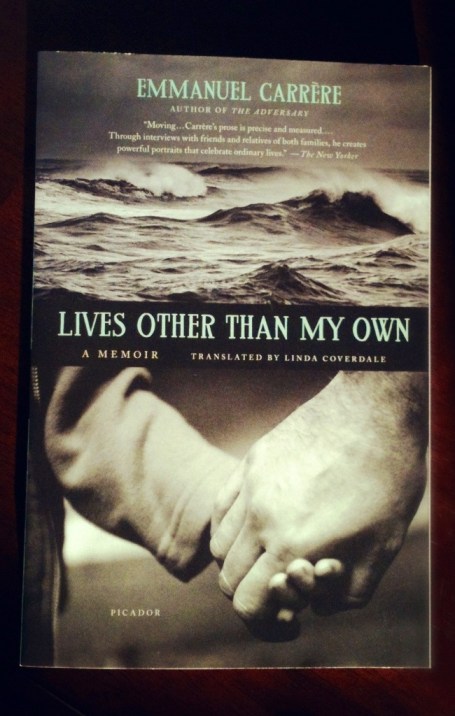
This is the one my wife gravitated to:

20120818-193234.jpg

Lives Other Than My Own, by Emmanuel Carrere. Blurb:

In Sri Lanka, a tsunami sweeps a child out to sea, her grandfather helpless against the onrushing water. In France, a woman dies from cancer, leaving her husband and small children bereft. What links these two catastrophes is the presence of Emmanuel Carrère, who manages to find consolation and even joy as he immerses himself in lives other than his own. The result is a heartrending narrative of endless love, a meditation on courage in the face of adversity, and an intimate look at the beauty of ordinary lives.

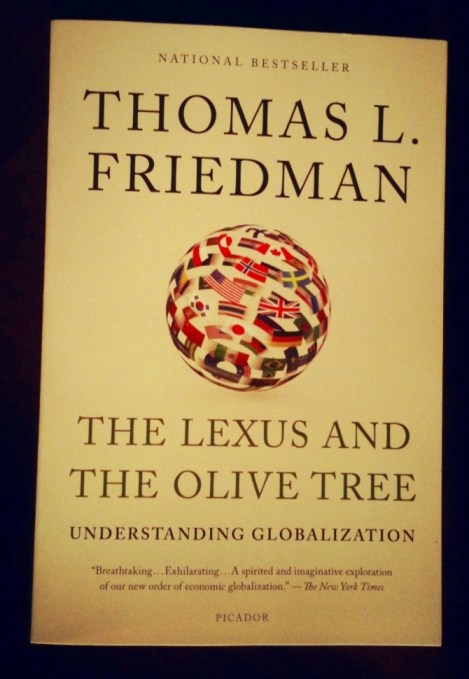
 I guess Picador have a new edition of Thomas Friedman’s The Lexus and the Olive Tree coming out. The book is 12 years old and seems kind of out of date:

20120818-193245.jpg

Do you know about Matt Taibbi’s agon with Thomas Friedman. He’s rough, I tell you, rough.


“Absent-minded Window-gazing” — Franz Kafka


Absent-minded Window-gazing

What are we to do with these spring days that are now fast coming on? Early this morning the sky was gray, but if you go to the window now you are surprised and lean your cheek against the latch of the casement.

The sun is already setting, but down below you see it lighting up the face of the little girl who strolls along looking about her, and at the same time you see her eclipsed by the shadow of the man behind overtaking her.

And then the man has passed by and the little girl’s face is quite bright

“Absent-minded Window-gazing” by Franz Kafka.