Ben Marcus’s The Flame Alphabet (Book Acquired, 1.11.2013)

20130115-162753.jpg

Ben Marcus’s The Flame Alphabet is newish in trade paperback from the nice people at Vintage. I’ve been wanting to read it after absorbing Marcus’s The Age of Wire and String last year. I hear that The Flame Alphabet is more conventional than that earlier work, although a breakfast-menu-as-novel would be more conventional, really. Anyway, this one is up on deck, so no blurbage this time.

In place of the normal blurb I offer with these “book acquired” posts, here’s Marcus on David Markson (from “The Genre Artist,” published in a 2003 issue of The Believer):

 . . . when, for example, David Markson, an expository novelist who fired the starting gun for fictions of information and proved that pure exposition can be alarmingly moving, who purposefully tells instead of shows, is dismissed in The New York Times for failing to provide a story in his novel Reader’s Block, no discussion follows about why, exactly, fiction must have one (at 150 words in the book review, how could any discussion follow?). Nor do we learn what a story might have looked like in such an exquisitely felt book that, to summarize, catalogs the various ways historical figures have hated whole races of people and/or died by their own hands. (Yes, you should read this book.)

Markson should have presumably, under the fiction-must-have-a-story criteria, zeroed in on one of his hundreds of characters and gone deep, doing that good old-time psychological work, the person-making stuff, dramatizing how such an interesting fellow had gone on to hate Jews and/or kill himself. Markson should have used more words like “then.” He should have sequenced. He seems to have forgotten that literature is supposedly a time-based art.

Markson’s amnesia is one of the happy accidents of the last decade of fiction writing. By eschewing a fetishistic, conventional interest in character, or a dutiful allegiance to moment creation, to occurrence itself, Markson accomplishes what a story, slogging through time and obedient to momentum, arguably could not: a commanding, obsessive portrait of single behaviors throughout history, a catalog of atrocity that overwhelms through relentless example. In truth, it’s a novel that can be read as an essay, but unlike most essays, it’s lyrically shrewd, poetry in the form of history, and it’s brave enough to provide creepy, gaping holes where we normally might encounter context (the burden of the conventional essayist).
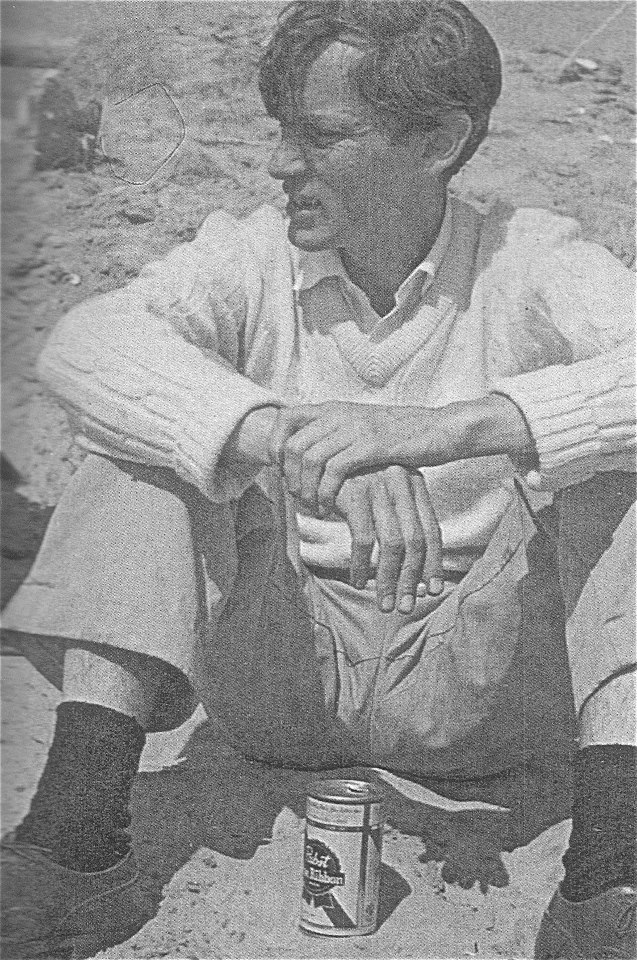
William Gaddis Cold Kickin’ It on the Beach with a Can of PBR

gaddis-beach-pbr

Hipster. (Via The Dalkey Archive’s FB page, via Tiffany Gibert’s Twitter).


“Fear” — Thomas Bernhard

tbf

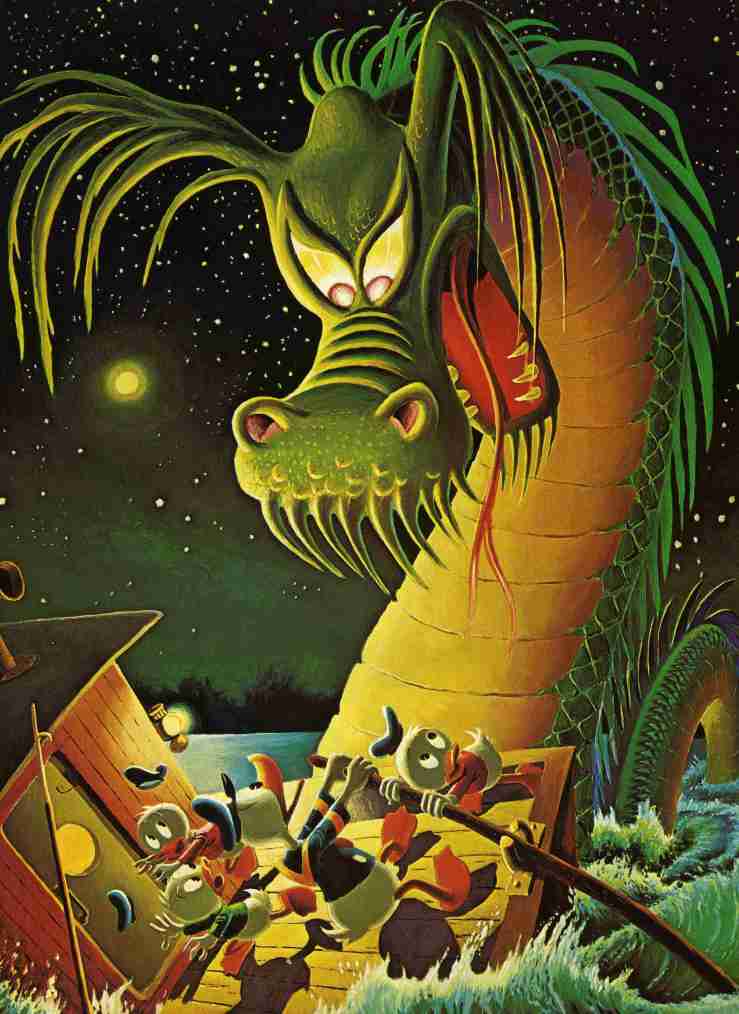
Sea Monster — Carl Barks

dd-sea-monster-comp080

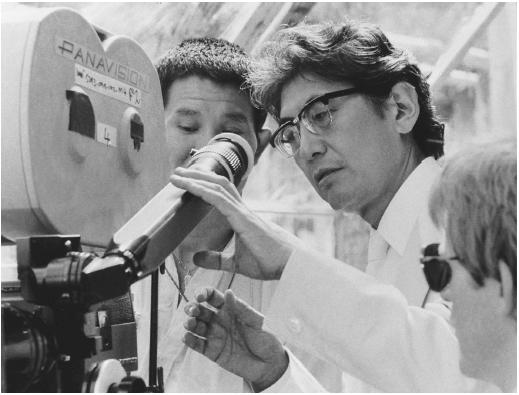
RIP Nagisa Oshima

sjff_02_img0791

RIP Japanese filmmaker Nagisa Oshima, 1932-2013

(Guardian obituaryAV Club obituary)

Diary of a Shinjuku Thief — Nagisa Oshima (Full Film)

“Fear” — Guy de Maupassant

“Fear” by Guy de Maupassant

We went up on deck after dinner. Before us the Mediterranean lay without a ripple and shimmering in the moonlight. The great ship glided on, casting upward to the star-studded sky a long serpent of black smoke. Behind us the dazzling white water, stirred by the rapid progress of the heavy bark and beaten by the propeller, foamed, seemed to writhe, gave off so much brilliancy that one could have called it boiling moonlight.

There were six or eight of us silent with admiration and gazing toward far-away Africa whither we were going. The commandant, who was smoking a cigar with us, brusquely resumed the conversation begun at dinner.

“Yes, I was afraid then. My ship remained for six hours on that rock, beaten by the wind and with a great hole in the side. Luckily we were picked up toward evening by an English coaler which sighted us.”

Then a tall man of sunburned face and grave demeanor, one of those men who have evidently traveled unknown and far-away lands, whose calm eye seems to preserve in its depths something of the foreign scenes it has observed, a man that you are sure is impregnated with courage, spoke for the first time.

“You say, commandant, that you were afraid. I beg to disagree with you. You are in error as to the meaning of the word and the nature of the sensation that you experienced. An energetic man is never afraid in the presence of urgent danger. He is excited, aroused, full of anxiety, but fear is something quite different.”

The commandant laughed and answered: “Bah! I assure you that I was afraid.”

Then the man of the tanned countenance addressed us deliberately as follows:

“Permit me to explain. Fear—and the boldest men may feel fear—is something horrible, an atrocious sensation, a sort of decomposition of the soul, a terrible spasm of brain and heart, the very memory of which brings a shudder of anguish, but when one is brave he feels it neither under fire nor in the presence of sure death nor in the face of any well-known danger. It springs up under certain abnormal conditions, under certain mysterious influences in the presence of vague peril. Real fear is a sort of reminiscence of fantastic terror of the past. A man who believes in ghosts and imagines he sees a specter in the darkness must feel fear in all its horror.

“As for me I was overwhelmed with fear in broad daylight about ten years ago and again one December night last winter.

“Nevertheless, I have gone through many dangers, many adventures which seemed to promise death. I have often been in battle. I have been left for dead by thieves. In America I was condemned as an insurgent to be hanged, and off the coast of China have been thrown into the sea from the deck of a ship. Each time I thought I was lost I at once decided upon my course of action without regret or weakness.

“That is not fear. Continue reading ““Fear” — Guy de Maupassant”

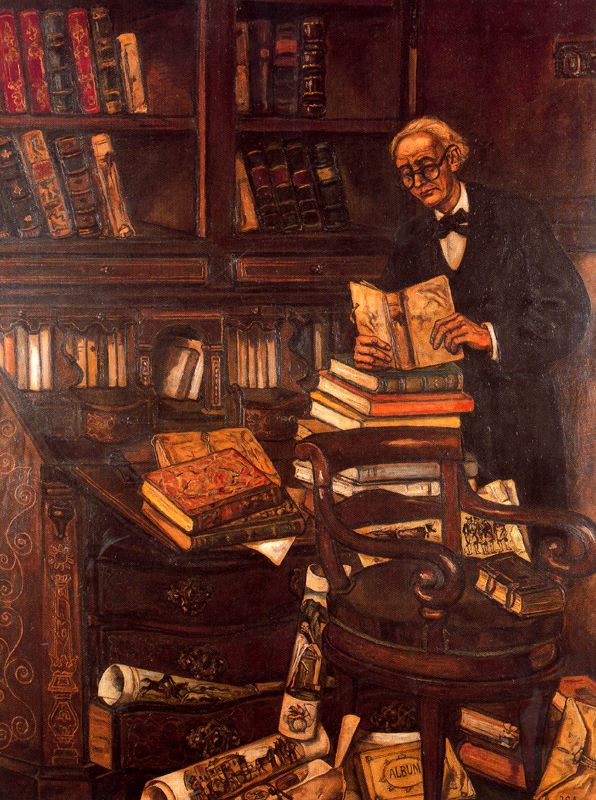
The Bibliophile — Jose Gutierrez Solana

the-bibliophile