Questions (Calvin and Hobbes)

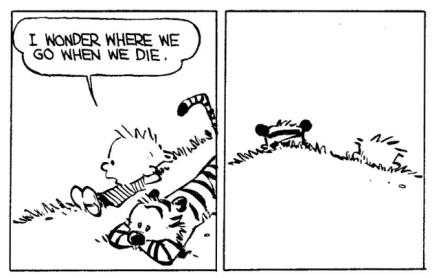
IMG_0133.PNG

IMG_0131.PNG


IMG_0138.PNG

IMG_0136.PNG


IMG_0139.PNG

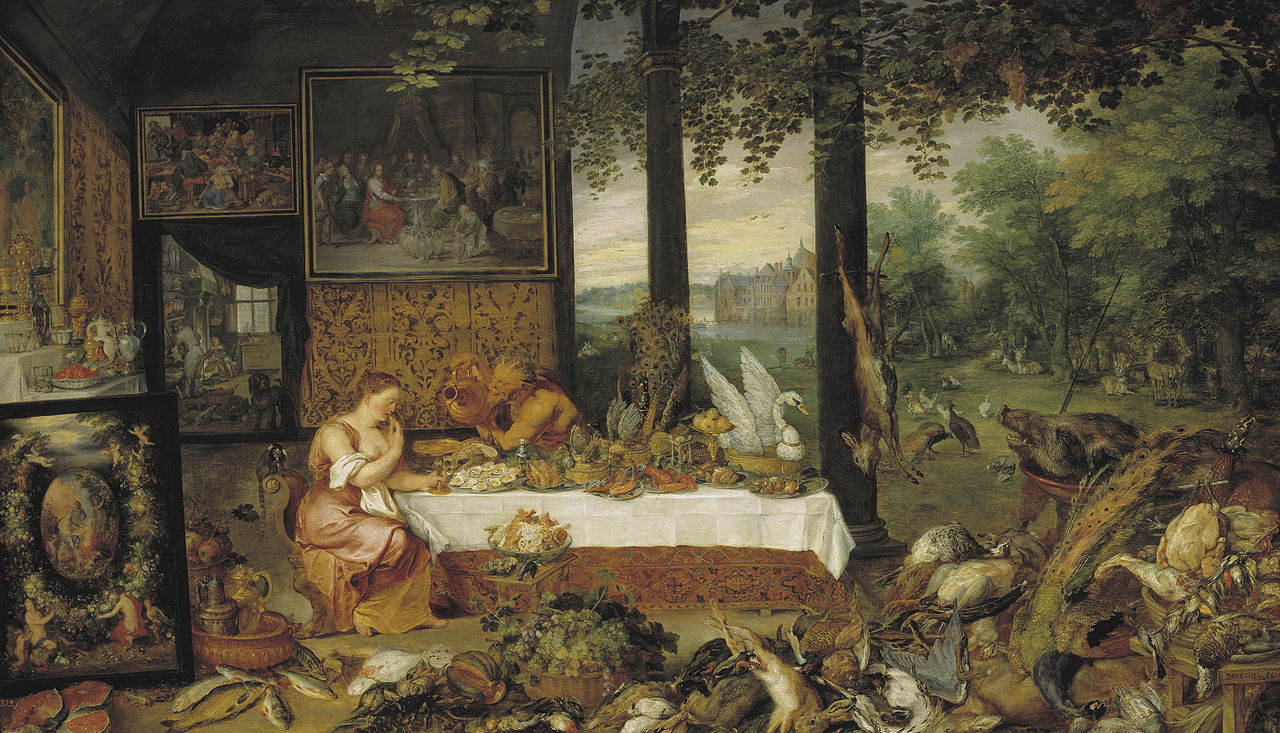
Allegory of Taste — Jan Bruegel the Elder & Peter Paul Rubens

Jan_Brueghel_I_&_Peter_Paul_Rubens_-_Taste_(Museo_del_Prado)

André Holland Reads from David Foster Wallace’s The Pale King

André Holland (of The Knick, which I dug) reads from David Foster Wallace’s The Pale King. (Via Matt Bucher).

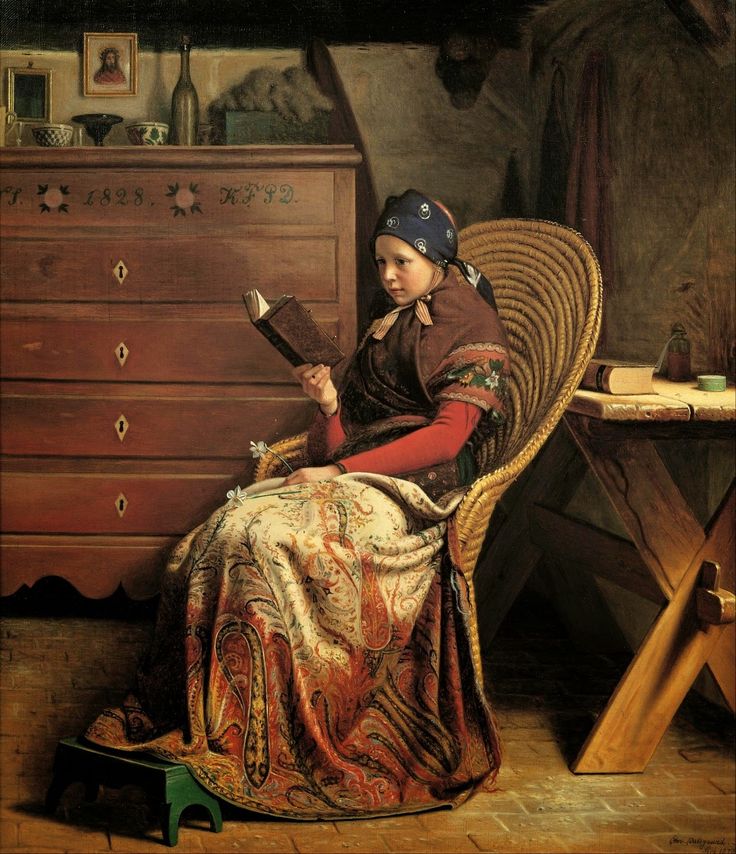
A Young Girl from Salling Reading — Christen Dalsgaard

Woman at a Dressing Table — Gustave Caillebotte

“A long, long sleep, a famous sleep” — Emily Dickinson

Capture

The Cat With Hands — Robert Morgan

Bukowski Wearing a Bukowski T-Shirt

039a65931ea1c4037be6416c832ebdf9

In a Pine Wood — Christen Dalsgaard

Dalsgaard

List with No Name #48

  1. The desire to manufacture and maintain happiness leads our culture, our society, our whatever to repeatedly perform contrived aesthetic scenarios.
  2. Happiness being, perhaps, a modern, or at least modernish, invention.
  3. Modernish affect.
  4. And happiness, we maybe telling ourselves, the goal, the telos, the whatever, of religion, politics, culture.
  5. Like many Americans, I have absolutely no idea what will make me happy.
  6. I know that happiness is not stable.
  7. One of Blake’s chimney sweepers remarks that because he is happy and dances and sings they (God/priest/king) are absolved from the belief that they’ve done him injury.
  8. Religion, or the practice and observance of religion, is the maintenance, repetition, and performance of contrived aesthetic scenarios.
  9. Months ago at a baptism I witnessed a man sway.
  10. The swayer swayed rhythmically: his eyes closed, his brow wrinkled, his mouth downturned in the pretense of ecstasy—he swayed to the guitar-strumming of an Episcopalian priest, who plucked and sang a song I’d never heard.
  11. The assembled witnesses mumbling through words of which they weren’t sure.
  12. (Or mute, glaring, like my brother, my father, myself).
  13. Later the priest reserved damning words for this world.
  14. (I’ve committed no details of the sermon to memory, but we may file the whole damn deal under “Platonic shadows of some other promised Real-to-Come“).
  15. And yet the backdrop of the whole affair—did I mention this baptism was outside?—this backdrop was the mighty north-flowing St Johns River, a beautiful spring day, hot, goddamn was it hot-–this backdrop was beautiful, ecstatically beautiful, the deep dark blue choppy river, so broad, coursed in the background, dotted with white sails—trees: announce them: cypress, sweetbay, oak—they swayed—or their branches swayed, their green leaves tickled in the occasional too-brief wind—the sky blazed azure, that’s the word we have, streaked with violent clouds (they were not fluffy)—birds flew—can I remember them, the birds? Let’s license my memory: let’s say white ibises beat past the spectacle, that black vultures hovered not too close. Let’s imagine limpkins and red-shouldered hawks, like the proud avian who lives in the oak across the street from me. Ospreys. Hell, throw in a bald eagle.
  16. The world, this world, which is to say this particular aesthetic arrangement had the potential to authorize happiness—and yet the man in black yapped on about its utter falsenessthis world, this beautiful beautiful world.
  17. Emily Dickinson claimed to keep the Sabbath at home, by which I think she meant her back yard. Sounds nice there—the sermon is never long, and instead of getting to Heaven at last – you’re going, all along.
  18. (I had to preserve and repeat and maintain the aesthetics of Ms. Dickinson’s dash).
  19. I went and stood in the shade and tried to feel happy.
  20. But the man, the swaying man—his performance of ecstasy—all this, mixed with the sermon to spoil the happiness, which I probably enjoyed just as much—the which there referring to the feeling of feeling spoiled happiness, or rather the feeling of potential happiness spoiled.
  21. That the feeling of the feeling was as pure as it might be, mediated by Nature and its enemy Religion.
  22. And finding the man’s swaying performance so thoroughly unconvincing, having witnessed ecstasy my own damn self, at least once or even twice in thirty-five years.
  23. And maybe even experiencing ecstasy, its edges, its agony.
  24. (Ms. Dickinson reported that she liked a look of agony. Its truth).
  25. That ecstasy, or awe, or reverence, or pick your own synonym, because, hey, language is weak as usual, as always, as always-shall-be—language can’t pin down transcendence to a signifying utterance—where was I, am I?—that ecstasy might be pantomimed in the service of a service, of a system, of a religion—this is the shadow of happiness, the shadow of the ideal of happiness: the problem. The problem.
  26. I was never close enough to hear the infant’s cries, coos, wails, burbles, sounds, which she must have uttered—maybe she slept through the ordeal—but any sounds she made must have been the purest utterances at the occasion, the repetitions of Nature, still outside of the culture in which we had gathered to inscribe her.
  27. I wrote all this for me, not for you, not for anyone else—but let me end with the cloying sentimental jeering pretense that I wrote it for the baptized baby, a supporting character in this narrative, whose life I hope is mostly happy.

Clothes, Clothes, Clothes. Music, Music, Music. Boys, Boys, Boys. (Book Acquired, 11.18.2014)

IMG_3996.JPG

This one looks pretty good: Viv Albertine’s memoir Clothes, Clothes, Clothes. Music, Music, Music. Boys, Boys, Boys. U.S. publisher St. Martin’s Press’s blurb:

Viv Albertine is a pioneer. As lead guitarist and songwriter for the seminal band The Slits, she influenced a future generation of artists including Kurt Cobain and Carrie Brownstein. She formed a band with Sid Vicious and was there the night he met Nancy Spungeon. She tempted Johnny Thunders…toured America with the Clash…dated Mick Jones…and inspired the classic Clash anthem “Train in Vain.” But Albertine was no mere muse. In Clothes, Clothes, Clothes. Music, Music, Music. Boys, Boys, Boys., Albertine delivers a unique and unfiltered look at a traditionally male-dominated scene.

Her story is so much more than a music memoir. Albertine’s narrative is nothing less than a fierce correspondence from a life on the fringes of culture. The author recalls rebelling from conformity and patriarchal society ever since her days as an adolescent girl in the same London suburb of Muswell Hill where the Kinks formed. With brash honesty—and an unforgiving memory—Albertine writes of immersing herself into punk culture among the likes of the Sex Pistols and the Buzzcocks. Of her devastation when the Slits broke up and her reinvention as a director and screenwriter. Or abortion, marriage, motherhood, and surviving cancer. Navigating infidelity and negotiating divorce. And launching her recent comeback as a solo artist with her debut album, The Vermilion Border.

Clothes, Clothes, Clothes. Music, Music, Music. Boys, Boys, Boys. is a raw chronicle of music, fashion, love, sex, feminism, and more that connects the early days of punk to the Riot Grrl movement and beyond. But even more profoundly, Viv Albertine’s remarkable memoir is the story of an empowered woman staying true to herself and making it on her own in the modern world.

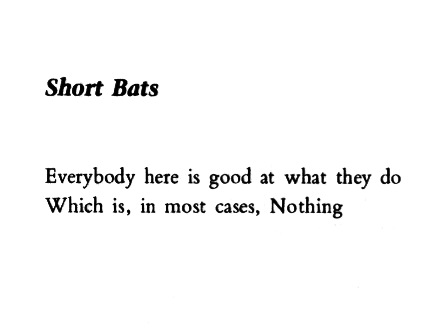
“Short Bats” — Tom Clark

IMG_3222

Melville Cover — Robert Gibbings

Motives for writing (William H. Gass)

Very frequently the writer’s aim is to take apart the world where you have very little control, and replace it with language over which you can have some control. Destroy and then repair. I once wrote a passage in which I had the narrator say, “I want to rise so high that when I shit I won’t miss anybody.” But there are many motives for writing. Writing a book is such a complicated, long-term, difficult process that all of the possible motives that can funnel in will, and a great many of those motives will be base. If you can transform your particular baseness into something beautiful, that’s about the best you can make of your own obnoxious nature.

From a 1978 conversation between John Gardner and William H. Gass.

The Scholar — John Henry Dolph

tumblr_mhm2a92AU31qbyk5qo1_r1_500

The Top 10 Best Novels of 2014

10. The Beekeeper’s Daughter by Sissy Sextuplington

By turns uproarious, scandalous, and emotionally-moving, this kaleidoscopic novel tells the multi-generational story of the Apis clan, from their humble beginnings starting a clandestine honey-service in the catacombs of Ellis Island in the 1890s, to their triumphant crest in the honey-boom of the Buzzing Twenties, to their decline and rebirth from their own ashes/wax over the course of the 20th century. This sting stuns!

9. Cacanisius’ Crossing by Caomh-Caolan FitzSimmons-Hughes

How wonderful that this “lost classic” has been recovered anew! FitzSimmons-Hughes of course wrote the novel over a series of decades; each section was written in the language of the European country he was living in self-imposed exile in at the time. Cacanisius’ Crossing was then translated into Irish Gaelic, and has finally been translated into English. The 1085-page story details the last five minutes in the life of its central character. Kaleidoscopically stunning.

8. Dovetail by Samuel Samold

In this dystopian romance-thriller, society is split into two groups: those who have earned their genetically-grafted tails, and those who must go “SansTail.” Will plucky Becky Fang pass the Trials of Wattle and earn her place in the dominant tribe (along with dreamboat Crispin’s affection)—or will she follow the strange mysteries of the secret resistance force, The Cloacal Tunnel? A compelling stunner.

7. The Kite Runner 2 by Khaled Hosseini

The whole book club bawled. Again.

6. Jimmy Hat Johannson and the Crystal Creeper Caper (A Charleston ‘Nights’ Mystery) by Edwin Turner

I feel a little weird putting my own NaNoWriMo novel on here—not the least because it hasn’t come out yet (FS&G in hardback in the US, March 2016; Penguin in the UK, Australia, Canada, and NZ in May 2016; Japanese and Latvian translations TBD)—but it’s really, really good. I even let a friend look over it to check for any bad writing (there wasn’t any) before I sent it to the Wylie Agency. The plot: Jimmy Hat Johansson is just a good ole boy from a backwoods burg…but a summer job with his Uncle Ray’s lawn business plunges him headfirst into a world of sinister intrigue–housewife murderesses, a corrupt sheriff, and a crystal meth syndicate!

5. The Lumberjack’s Apprentice by Knob Hayden

Knob Hayden’s remarkable journey comes to life in this remarkable collection of stories (The Lumberjack’s Apprentice is a novel-in-stories). Remarkably, this book was Hayden’s thesis for an experimental MFA program offered by the EGS (via Transylvania University, Kentucky). Each short story is a remarkable entry in this angry young man’s tour-de-force-of-truth. Hayden is only 24, but he’s hardly tender—six days as a lumberjack’s apprentice will roughen any soft palms! Our hero also tries his hand as a busboy, a mail clerk at Monsanto, and a cabin boy. This guy has definitely read Jesus’ Son!

4. Working On My Screenplay by Angela Criss

Kudos to Penguin for this achievement. This is a book of tweets from people who have included the phrase “working on my screenplay” in their tweet, interspersed with sketches of kittens. Sure, you might criticize it as lazy, not particularly insightful, barely interesting, the sort of joke that others like John Cage played decades ago, a gimmick, cruel, boring, or smug. But it’s art and it’s subversive and it provides much-needed metacommentary and it can be yours for only 10 bucks!

3. Too Many Cooks: The Novelization by Jonathan Franzen

Stunningly remarkable work from Franzen, who slowly teases out the Adult Swim’s immediate cult-classic 11-minute video to 475 pages in this sweeping multigenerational epic. Stunning to think that Mr. Franzen never even watched the short film!

2. Brooklyn Novel Title TK  by Daktoa Rugburn

Wyoming Strongniece has no idea what to do after college—an internship at a Fortune 500 company offered by one of her father’s friends? An experimental MFA program offered by the EGS? Should she work the summer at her favorite bar, making artisanal cocktails for the surly locals, and continue to support her suicidal roommate Hershey as she tries to launch her acting career? Or maybe—just maybe—she can have it all. A dazzling debut sure to stun and reward.

1. The Sector of Attention by Moses Kingson

In vivid prose, Kingson’s unforgettable 27th novel explores the nadirs and acmes of the human soul. A swirling kaleidoscope of epiphanies and soul-searching, this kaleidoscopic stunner makes us reexamine all we thought we knew about WWII. I can’t wait to actually read it.

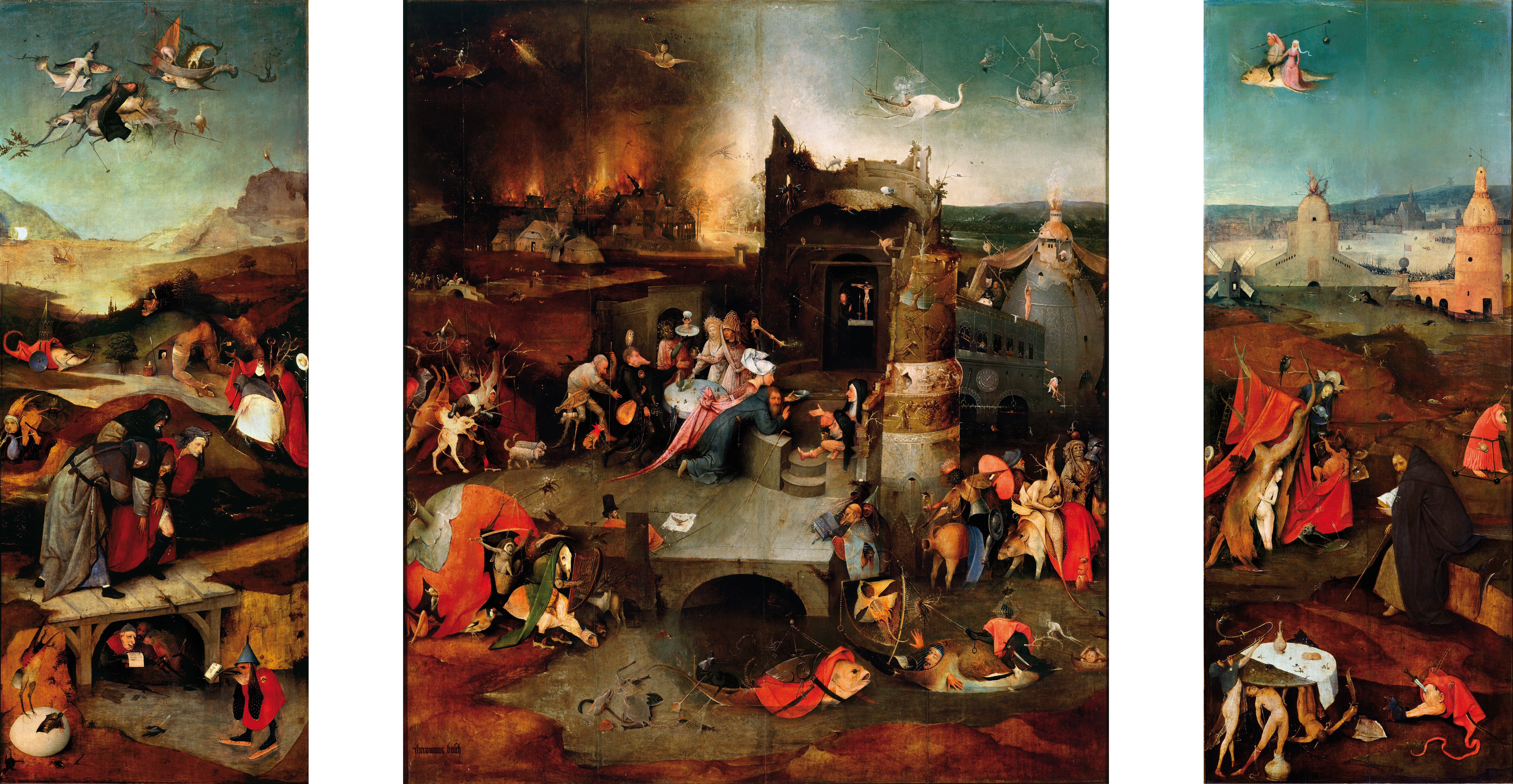
The Temptation of St. Anthony (Detail) — Hieronymus Bosch

8